
Wiring Connectors
- Product
- Qty in Cart
- Quantity
- Price
- Subtotal
-

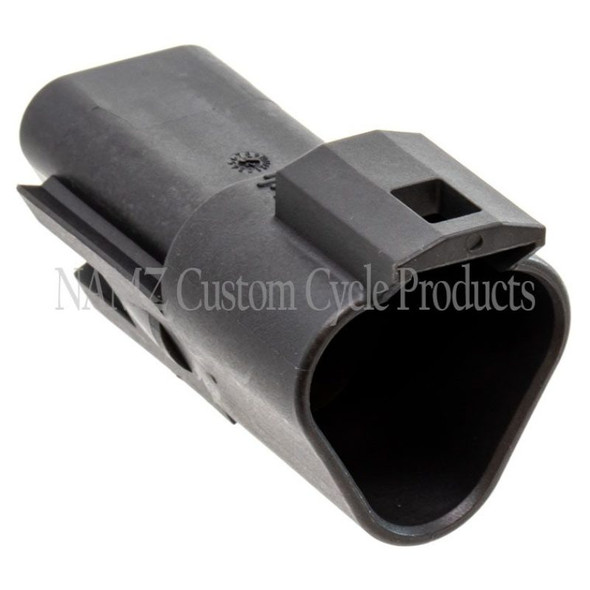
NAMZ Deutsch DT Series 3-Wire Receptacle & Wedgelock - Black (HD 72103-94BK) - DR-3B
NAMZ
MSRP: $3.95$2.97Commonly used on stock applications such as ignitions systems, speedometers and speed sensors. The Plug can be found on Cam Position Sensors and speed sensors.MSRP: $3.95$2.97 -

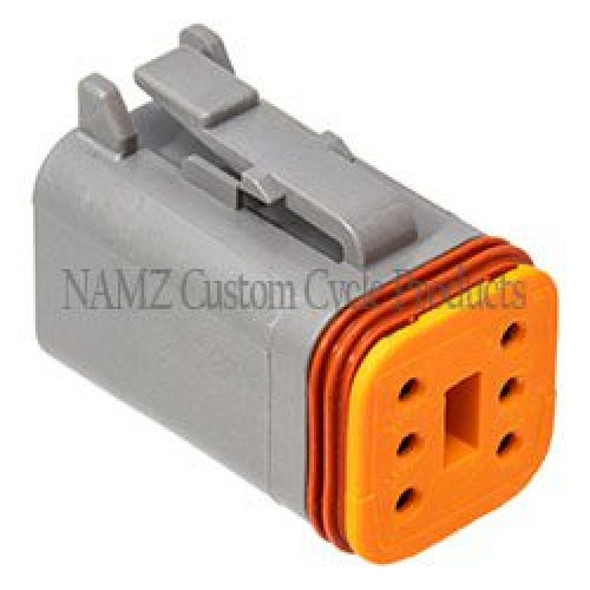
NAMZ Deutsch DT Series 6-Wire Plug & Wedgelock - Grey (Repl. HD 72136-94GY) - DP-6G
NAMZ
MSRP: $8.95$6.74NAMZ Deutsch DT Series 6-Wire Plug & Wedgelock - Grey (Repl. HD 72136-94GY)MSRP: $8.95$6.74 -


NAMZ Deutsch DT Series 2-Wire Plug & Wedgelock - Grey (Repl HD 72132-94GY) - DP-2G
NAMZ
MSRP: $3.95$2.97Each connector includes a silicon rubber seal to resist corrosion and moistureEach connector includes a silicon rubber seal to resist corrosion and moistureThe same connectors, receptacles, and plugs...MSRP: $3.95$2.97 -

XK Glow XKmax 6ft Extension Wire - MX-WIRE-6FT
XKGLOW
$9.59How do I know if this wiring connector will fit my vehicle?Always confirm fitment with your specific vehicle's make, model, and year before purchasing XKGLOW extension wires.What is the recommended...$9.59 -

XK Glow XKmax 18in Extension Wire - MX-WIRE-18
XKGLOW
$5.99What are the benefits of using XKGLOW Extension Wires?XKGLOW Extension Wires deliver reliable power connections for consistent accessory performance and secure, durable wiring for peace of mind on...$5.99 -

XK Glow XKmax 13ft Extension Wire - MX-WIRE-13FT
XKGLOW
$20.39How do I determine if this wiring connector is compatible with my vehicle?Confirm fitment for your specific vehicle application by consulting the detailed compatibility guide before purchasing your...$20.39 -

XK Glow XKmax 12in Extension Wire - MX-WIRE-12
XKGLOW
$5.39Are XKGLOW extension wires compatible with all vehicle models?XKGLOW extension wires achieve robust and dependable electrical connections, but confirm vehicle fitment before purchase to ensure...$5.39 -

AMP Research Replacement OBD2 Module - 19-04763-92
AMP Research
$80.99Does this product fit my vehicle?Verify your specific Chevrolet or GMC truck model for precise fitment confirmation before purchase of these wiring connectors.What is the installation process...$80.99 -
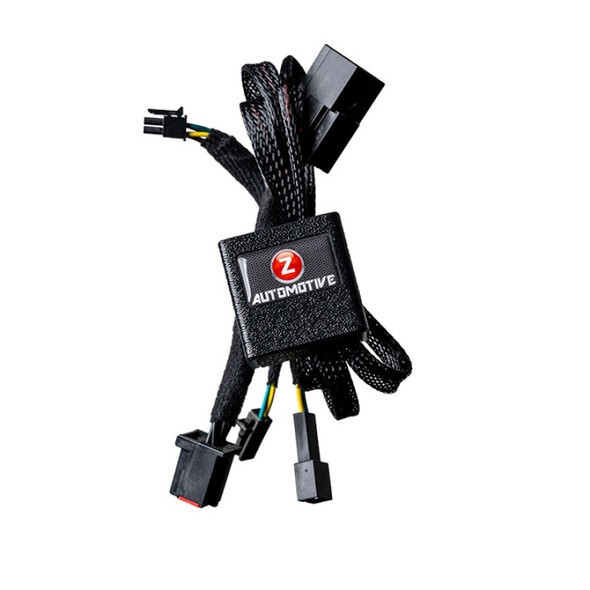
Tazer 2018+ RAM NoLimitz DT Cable Kit - Z_MIM_NL_DT
Tazer
$275.00What is the ZAT Cables?ZAT Cables are advanced wiring connectors designed for enhanced vehicle electrical systems and require professional installation for optimal performance.How do ZAT Cables...$275.00 -
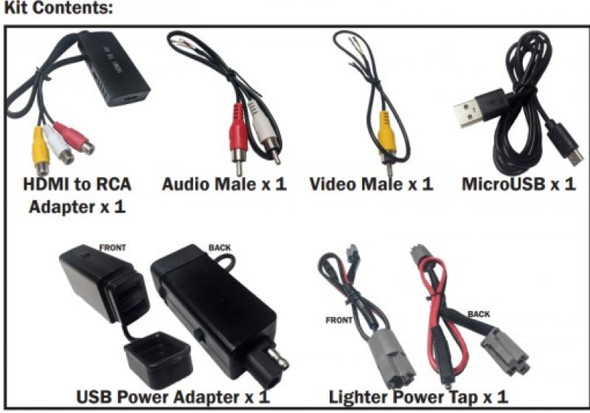
Tazer 15-17 Dodge Challenger/Charger/20-22 Jeep Gladiator/Wrangler HDMI AV Input Kit - Type A - Z_HDMI_KIT_A
Tazer
$189.00What are ZAT Cables?ZAT Cables are advanced wiring connectors engineered for 99.9% signal transfer efficiency, ensuring optimal power delivery to performance vehicles.Are ZAT Cables easy to...$189.00 -

Rugged Radios STX STEREO Straight Cable to Intercom (Select Length) 16 Feet - CS-STX-16
Rugged Radios
MSRP: $80.00$67.59Are these the correct wiring connectors for my specific vehicle model?Confirm fitment with your vehicle's specific make, model, and year before purchasing these Wiring Connectors.Can I install these...MSRP: $80.00$67.59 -

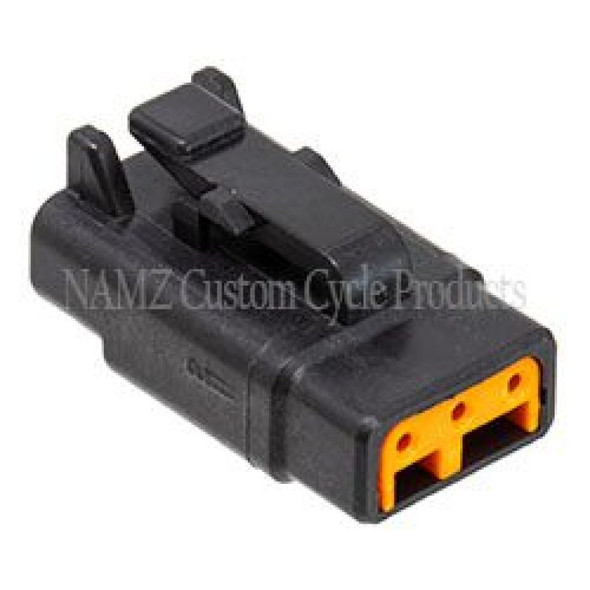
NAMZ Deutsch DTM 3-Position Plug w/3 Stamped Terminals & Wedgelock - Black (HD 74113-98BK) - MDP-3B
NAMZ
MSRP: $8.95$6.74Are NAM Deutsch Connectors compatible with my motorcycle?NAM Deutsch Connectors ensure compatibility when fitment is confirmed with your specific vehicle model and year, guaranteeing a precise...MSRP: $8.95$6.74
Wiring connectors are the critical interface between every sensor, actuator, and power circuit in a performance build — a failed connection under load means lost data, lost power, or a DNF. Motor Sport Mayhem stocks 175 wiring connector products across 161 brands, from entry-level harness repairs to mil-spec race-grade solutions ranging from $1.19 to $11,495.95.
Our Top Picks for Wiring Connectors
Each product below was selected based on technical merit, real-world performance application, and proven results across street and competition builds.
ACL Race Series Main Bearings
ACL | $329.72
Tri-metal bearing construction with additional oil clearance tolerances engineered specifically for high-load, high-RPM engine applications.
- Extra oil clearance specification supports high-volume oil pump upgrades common in forced induction builds
ACT Pilot Bearing
ACT | $17.00
Precision-fit pilot bearing designed to handle the increased radial loads produced by high-clamp performance clutch systems.
- Upgraded material spec over OEM prevents premature wear when paired with aggressive clutch upgrades
AON Clutch Components
Action Clutch | $89.69
Universal race pedal stop that delivers consistent clutch engagement point for repeatable lap times on track.
- Adjustable design accommodates multiple pedal box configurations without permanent modification
AEM Wiring Connectors
AEM | $430.95
K-type thermocouple kit with dedicated wiring connectors built to deliver accurate temperature telemetry in high-heat race environments.
- K-type thermocouple accuracy spans -200°C to +1260°C, covering exhaust, EGT, and coolant monitoring in one kit
AER Wiring Kits
Aeromotive | $358.52
60-amp deluxe fuel pump wiring kit with dedicated relay, fusing, and correct-gauge wire to safely support high-current demand fuel pump upgrades.
- Properly rated wiring eliminates voltage drop at the pump, which is the leading cause of lean conditions on high-horsepower builds
AFE PFADT Mount Set
aFe | $660.00
Polyurethane transmission mount set engineered to eliminate drivetrain deflection under hard acceleration without sacrificing NVH beyond track-acceptable limits.
- Stiffer durometer rating versus OEM rubber reduces axle shaft bind during high-torque launches
ALF Wiring Harness
Air Lift | $97.23
Second-generation wireless air management harness with plug-and-play connector routing for clean, professional air suspension integration.
- Pre-terminated connectors eliminate field splicing, reducing resistance and long-term corrosion failure points
ABR CVT Belts
All Balls Racing | $200.40
Heavy-duty CVT belt engineered with reinforced aramid cords to withstand sustained high-torque off-road and desert running conditions.
- HD compound resists heat soak from extended clutch engagement, directly addressing the primary failure mode of stock CVT belts under performance use
ARX Tail Light Converters
AlphaRex | $395.00
LED tail light assembly with integrated load-resistor-compatible wiring to prevent hyper-flash and error codes common with direct LED retrofits.
- Sealed connector housing meets IP67 ingress protection, critical for exterior lighting exposed to wash, rain, and mud
PA Alta Crank Pulley
Alta | $129.20
Lightened crank pulley that reduces rotating mass at the front of the engine to free up measurable power and improve throttle response.
- CNC-machined aluminum construction delivers consistent belt tension without the harmonic dampener degradation seen on high-mileage OEM units
How to Choose the Right Wiring Connectors
The difference between a connector that lasts and one that fails at 6,000 RPM comes down to three factors: current rating, environmental sealing, and contact material. Undersized wire gauge creates resistance that manifests as voltage drop — a 0.5-volt loss at a fuel injector or ignition coil translates directly into misfires and lost power. Contact plating matters equally: tin-plated contacts oxidize under heat cycling, while gold or silver plating maintains stable resistance over thousands of mate/unmate cycles. For race environments, look for connectors that meet MIL-SPEC or Deutsch connector standards, which define pull-out force, vibration resistance, and temperature ratings in real engineering terms rather than marketing language.
Key Specifications
Wire gauge selection is the foundation of any wiring connector decision. The SAE and DIN standards specify ampacity by gauge — 18 AWG handles up to approximately 16 amps in a chassis application, 12 AWG handles up to 41 amps, and high-current circuits like fuel pumps and cooling fans regularly demand 10 AWG or heavier. Always size for the fuse, not the average load — a connector rated at 20 amps paired with a 30-amp circuit is a fire risk, not a cost savings.
Environmental sealing is non-negotiable for any connector located in the engine bay, wheel well, or exterior of the vehicle. IP67-rated connectors withstand 30-minute immersion at 1 meter depth, which is the practical minimum for underhood use. Silicone seal interfaces and secondary lock mechanisms prevent connector backing out under vibration — both of which are required features on any motorsport application. Unsealed connectors belong only in fully enclosed, climate-controlled interior locations.
Contact material and plating directly affect long-term reliability. Copper alloy contacts with gold plating are the benchmark for signal-level circuits like sensor wiring, where high resistance causes measurement errors. For power circuits, silver-plated copper provides the best conductivity-to-cost ratio and resists the fretting corrosion caused by constant vibration. Aluminum contacts should be avoided entirely in performance applications — the oxide layer that forms on aluminum is resistive and progressive.
Connector body material determines temperature and chemical resistance. Glass-filled nylon (PA66-GF30) is the industry standard, rated to approximately 120°C continuous and resistant to oils and fuel splash. For exhaust proximity or turbo-adjacent locations, look for connectors rated to 150°C or higher, or route wiring away from heat sources using loom and heat sleeve rated to the same temperature. Connector housings that deform or become brittle from heat create intermittent faults that are extraordinarily difficult to diagnose after the fact.
Wiring Connector Ampacity and Gauge Reference Guide
| Wire Gauge (AWG) | Max Ampacity (Chassis) | Typical Application | Recommended Connector Type |
|---|---|---|---|
| 20 AWG | 7–11A | Sensor signals, data lines, trigger wires | Deutsch DTM, Molex MX150 signal |
| 18 AWG | 13–16A | Injectors, ignition coils, solenoids | Deutsch DT, AMP Superseal 1.5 |
| 16 AWG | 18–22A | Cooling fans (small), lighting circuits | Deutsch DT, Tyco Weather Pack |
| 14 AWG | 25–32A | Cooling fans (large), horn, aux lights | Deutsch DT, Delphi Weather Pack |
| 12 AWG | 35–41A | High-flow fuel pumps, high-draw accessories | Deutsch HD, Anderson SB50 |
| 10 AWG | 50–60A | Race fuel pump circuits, ECU power feeds | Deutsch HD, ring terminals with fused block |
Price Guide
Entry ($1.19–$100): Individual connectors, replacement terminals, basic weatherpack kits, and single-circuit relay harnesses fall here. These are the right choice for targeted repairs, supplemental circuits, and builds where you are sourcing connectors individually to assemble a custom harness. Quality varies considerably — stick to name brands even at this tier to avoid contact plating and housing quality shortcuts that fail early.
Mid-range ($100–$500): Pre-engineered wiring kits for specific applications — fuel pump upgrades, air management systems, sensor installations — occupy this range. This is where most enthusiasts and weekend racers land, because a properly engineered kit from a reputable brand eliminates the guesswork of gauge selection, fuse sizing, and relay specification. The documentation and included hardware in this tier justifies the price for most builds.
Premium ($500–$11,495.95): Complete chassis harnesses, multi-channel data acquisition wiring systems, and full race-spec wiring solutions built to mil-spec or FIA homologation standards live at this level. The cost reflects custom-length wire runs, laser-printed identification, fire-rated loom, and connector systems proven in endurance and professional motorsport. Purpose-built race cars, time attack builds, and vehicles with full ECU replacements are the correct applications — this level of investment is not appropriate for a street car with a bolt-on tune.
Who Is This For?
Wiring connectors serve every performance application from basic street modifications to full race car construction, and the usage data across our product range reflects that broad utility.
Engine Performance — 8.5/10
Wiring connectors score highest in engine performance applications because every sensor, injector, coil, and actuator that determines how an engine runs depends on a reliable electrical connection. Upgraded fuel delivery systems and forced induction components introduce significantly higher current demands than stock wiring was designed for, making proper connector and harness upgrades essential rather than optional. The 8.5/10 rating reflects how directly connector quality affects engine tuning precision and reliability.
Racing Competition — 8.2/10
Competition environments subject wiring connectors to vibration, heat cycling, and physical stress far beyond street driving — an 8.2/10 score here reflects that the products in this category meet or approach race-grade requirements. Mil-spec and Deutsch-style connectors with positive locking mechanisms are standard specification for sanctioned race cars because they resist vibration-induced backing-out and can be serviced quickly in a paddock environment. Properly executed electrical systems are consistently cited as one of the highest-ROI investments in a purpose-built race car.
Track / Autocross — 8.2/10
Track and autocross use combines the thermal demands of competition with the need for a vehicle that is also driven to and from events, creating a hybrid requirement for connectors that are both race-grade and street-durable. Data logging, cooling system expansions, and supplemental sensor arrays common on track-prepared vehicles all require additional connector work beyond the OEM harness. An 8.2/10 score confirms this category is genuinely relevant to serious track enthusiasts, not just full race teams.
Drag Racing — 8.2/10
Drag racing places unique demands on wiring connectors: extreme current loads from high-output ignition systems, nitrous solenoids, and line-lock circuits must all function reliably in a fraction-of-a-second event window. High-vibration launches stress every connector lock mechanism in the car simultaneously, which is why drag-specific builds frequently upgrade all underhood connectors to sealed, positive-lock designs rather than relying on OEM push-fit terminals. The 8.2/10 score is consistent with drag racing's zero-tolerance approach to electrical reliability.
Street Performance — 7.6/10
Street performance builds score 7.6/10 because most street modifications involve adding discrete components — upgraded fuel pumps, aftermarket sensors, auxiliary lighting — rather than replacing the entire chassis harness. Proper wiring connector selection for these add-on circuits prevents voltage drop, eliminates fire risk, and ensures the OEM electronics communicate correctly with aftermarket components. IP-sealed connectors are still the recommended choice even for street use, given the exposure to rain, wash water, and engine bay temperatures that cause unsealed connectors to fail over time.
Trusted Wiring Connectors Brands We Carry
AEM brings race-proven sensor and data system wiring connector expertise developed across decades of top-tier motorsport, with connector systems designed to integrate directly with their EMS and data acquisition platforms. Aeromotive's wiring kits are engineered alongside their fuel system components, meaning the wire gauge, relay specifications, and connector ratings are matched to their pump's actual current draw rather than estimated figures. Air Lift has refined their harness connector systems across multiple generations of air management systems, with second-generation designs emphasizing cleaner routing and more reliable sealing. AlphaRex builds IP-rated connector assemblies into their lighting products to address the real-world failure modes of aftermarket exterior lighting, specifically the moisture intrusion and vibration separation that makes budget alternatives short-lived. All Balls Racing sources connector and harness components to the same durability standard as their bearing and seal kits — with an emphasis on off-road vibration and contamination resistance that translates well to any high-abuse application. Action Clutch and Alta round out the category with focused drivetrain and accessory drive components that demonstrate how wiring and electrical connection integrity extends beyond traditional wire-and-terminal assemblies to include every electromechanical interface on the vehicle.
Frequently Asked Questions
Are aftermarket ignition coils okay to run on a performance build?
Aftermarket ignition coils are not only acceptable on a performance build — in many cases they are the correct upgrade when power levels or boost pressures exceed what the OEM coil was designed to fire reliably. The key specification to evaluate is the coil's primary winding resistance and saturation current, which determines how quickly the coil charges between firings at high RPM. Low-quality aftermarket coils use inferior lamination steel in the core, which reduces energy output compared to their rated specifications under sustained use. Reputable performance coil manufacturers publish actual energy output in millijoules — look for 80–130 mJ for naturally aspirated applications and 130 mJ or higher for forced induction. Always verify that the coil connector pinout matches your OEM harness or plan the appropriate adapter wiring to avoid misfires caused by incorrect signal polarity.
Are aftermarket camshaft position sensors any good?
Quality varies significantly in the aftermarket camshaft position sensor market, and the connector and wiring interface is frequently where failures originate rather than the sensor element itself. The sensor generates a digital or analog signal that the ECU uses for cam phasing and injection timing — a connector with elevated resistance or intermittent contact introduces signal noise that the ECU may interpret as a sensor fault or, worse, act on incorrectly. OEM-equivalent sensors from established manufacturers use the same Hall-effect or variable reluctance technology as original equipment, with the same connector body and contact materials. Avoid ultra-budget sensors with non-sealed connectors for any application where the sensor is exposed to oil mist or high under-hood temperatures. For vehicles running aggressive cam timing via variable valve timing systems, use a sensor rated to the same temperature class as the OEM unit.
Are aftermarket head gaskets better than OEM?
For performance applications, quality aftermarket head gaskets are specifically engineered to exceed OEM capability — multi-layer steel construction with controlled compression height, embossed sealing rings, and fire-ring configurations engineered for elevated cylinder pressures are all features not found in the paper or soft composite gaskets used by many OEM manufacturers. The critical specifications are bore diameter, compressed thickness, and fire-ring width — all of which directly affect compression ratio and sealing pressure at the combustion chamber. For engine components operating under boost or high compression, the clamping load from the head fasteners must be matched to the gasket's design spec, which is why performance head gaskets are always used alongside upgraded head studs rather than OEM bolts. Brands like Cometic supply MLS gaskets to professional race teams in applications where OEM gaskets have been proven inadequate. A head gasket is not the place to prioritize cost savings when building an engine for power.
Are aftermarket belt tensioners worth using?
Aftermarket belt tensioners are worth the investment on any high-mileage performance engine or any build that replaces factory accessories with higher-draw alternatives. The OEM tensioner uses a spring-loaded arm with an integrated bearing — both the spring rate and the bearing quality degrade with heat cycling and age, resulting in belt flutter that causes premature belt wear and occasionally belt failure at the worst possible moment. Performance aftermarket tensioners typically use heavier-gauge spring steel, upgraded bearing races, and in some cases billet aluminum arms that resist the flex seen in stamped OEM components. On forced induction applications where an upgraded alternator or additional driven accessories are added, the factory tensioner spring rate may be insufficient for the additional belt load, making an upgrade a functional necessity rather than a preference. Always replace the belt at the same time as the tensioner to get the full service benefit.
Are aftermarket wiring harnesses reliable for daily-driven vehicles?
A properly engineered aftermarket wiring harness from a reputable manufacturer is reliable for daily driving, provided it is sized correctly for the application and installed with correct connector termination techniques. The reliability concern with aftermarket harnesses is almost always installation quality rather than harness quality — improperly crimped terminals, reversed polarity on sealed connectors, and inadequate strain relief at connector bodies are the failure modes that generate complaints about aftermarket electrical components. For a daily-driven vehicle with modifications, a targeted supplemental harness for the added components is more appropriate than a full chassis harness replacement, which is an undertaking that requires significant electrical expertise and is generally reserved for dedicated race vehicles. Any connector used in an engine bay installation should be sealed and rated to at least 125°C to survive the thermal environment over a multi-year service life. When in doubt, consult with a professional fabricator who works in motorsport electrical — fabrication expertise extends directly into professional harness work.
Building something specific? Our performance specialists can help you select the right Wiring Connectors for your application — street, track, or full race build.