
Valve Seals
- Product
- Qty in Cart
- Quantity
- Price
- Subtotal
-

Supertech Ford Duratec 2.5L 5.5mm Viton Valve Stem Seal - Set of 16 - VSI-D5.5E-16
Supertech
MSRP: $38.57$30.86Are these valve seals compatible with my specific vehicle?Confirm valve seal fitment for your specific vehicle application before purchasing these high-performance Supertech valve seals.Can I install...MSRP: $38.57$30.86 -
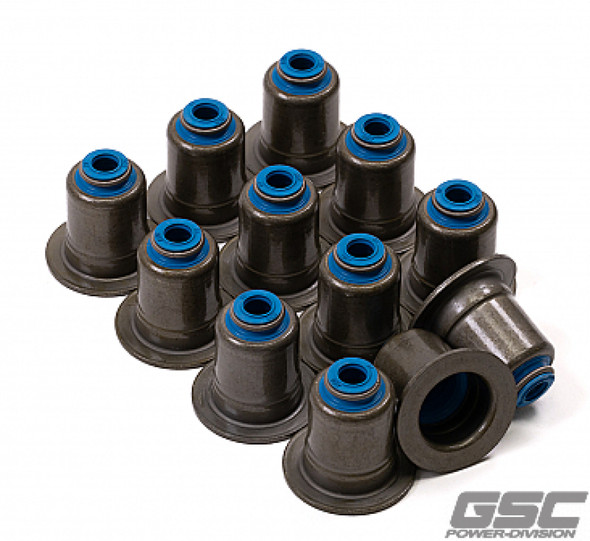
GSC P-D Toyota Supra/BMW B58/N54/S55/S58 Viton Exhaust Valve Stem Seals - Set of 12 - 1089
GSC Power Division
MSRP: $33.25$28.26What is the main function of valve seals?Valve seals prevent oil from entering the combustion chamber and exhaust ports, maintaining engine integrity and reducing emissions.How often should valve...MSRP: $33.25$28.26 -
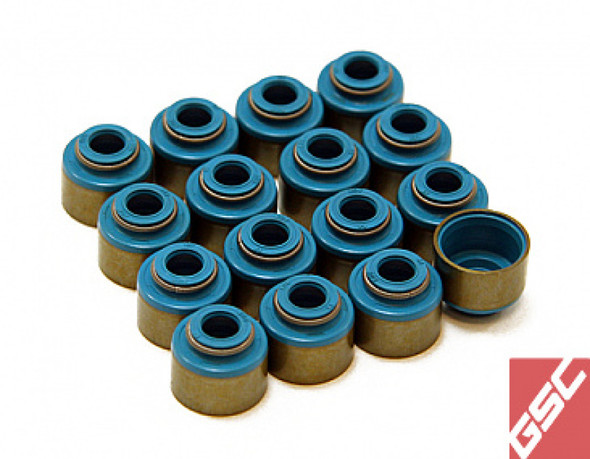
GSC P-D Subaru EJ Series Viton 6mm Valve Stem Seal - Set of 500 - B1022
GSC Power Division
MSRP: $358.63$304.84What is the primary function of valve stem seals?Valve stem seals control oil flow into the combustion chamber, preventing excessive oil consumption and maintaining optimal engine performance.How do...MSRP: $358.63$304.84 -
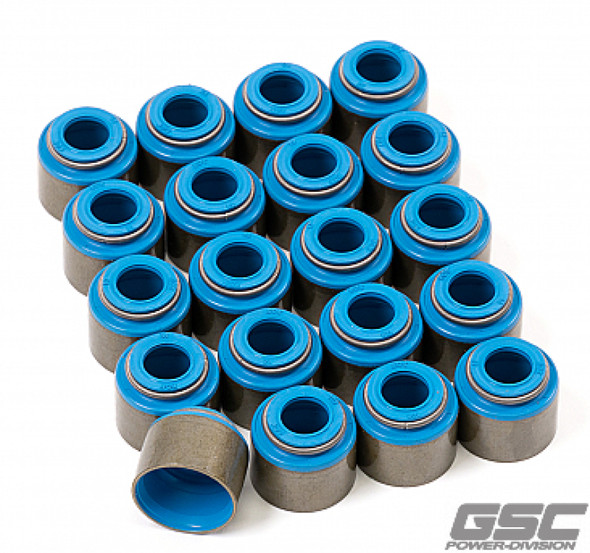
GSC P-D 93-07 Dodge Viper Viton Valve Stem Seals - Set of 20 - 1060
GSC Power Division
MSRP: $33.00$28.05What is the primary function of valve stem seals?Valve stem seals prevent oil from entering the combustion chamber, ensuring optimal engine performance and emission control for your vehicle.Are GSC...MSRP: $33.00$28.05 -
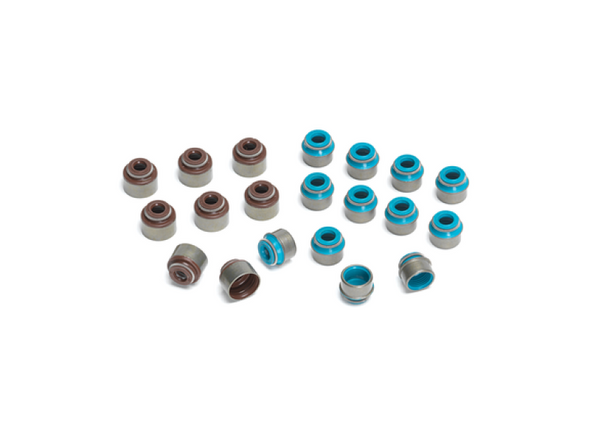
Supertech VW/Audi 7mm Viton Exhaust Valve Stem Seal - Set of 8 - VS-VW7E-8
Supertech
$8.98What are valve stem seals made of?SPT Valve Stem Seals utilize premium materials designed for robust sealing and exceptional durability, ensuring optimal performance across varied engine conditions...$8.98 -
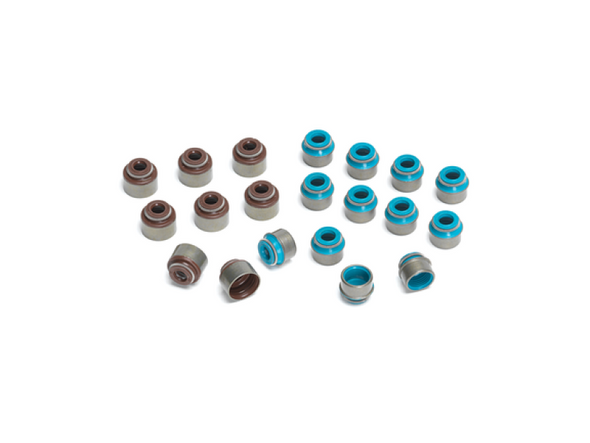
Supertech Mini Prince R56 6mm Viton Integral Valve Stem Seal - Set of 8 - VSI-MIN-R56-8
Supertech
MSRP: $23.63$18.91How do I know if Supertech Valve Stem Seals are compatible with my vehicle?Confirm exact vehicle fitment using our detailed application guide to ensure optimal compatibility and performance for your...MSRP: $23.63$18.91 -
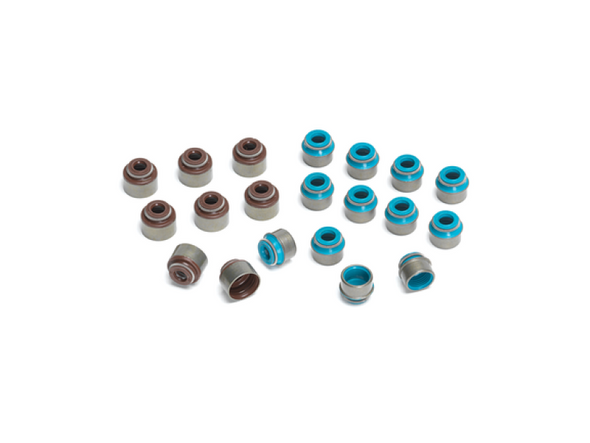
Supertech Mini / Dodge Neon / Mitsubishi 420A 6mm Viton Integral Valve Stem Seal - Set of 8 - VSI-M6E-8
Supertech
MSRP: $19.35$15.49What are valve stem seals?Valve stem seals are critical components that prevent oil from entering the combustion chamber, ensuring proper engine lubrication and performance.How often should valve...MSRP: $19.35$15.49 -
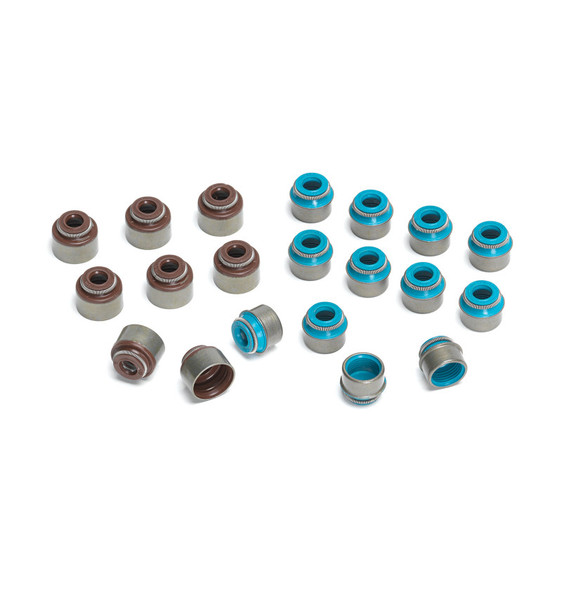
Supertech Mitsubishi EVO X 4B11 Integral Valve Stem Seal - Set of 16 - VSI-M5.5V-16
Supertech
MSRP: $47.29$37.84What are valve stem seals for?Valve stem seals prevent engine oil from entering the combustion chamber, ensuring proper lubrication and optimal engine operation for your specific vehicle fitment.Are...MSRP: $47.29$37.84 -
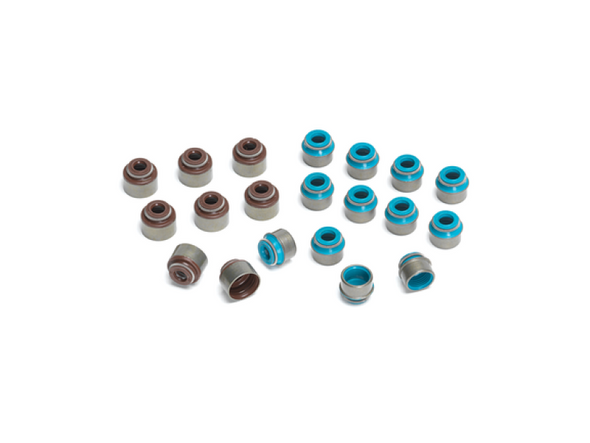
Supertech Ford Ecoboost 2.0L/2.3L Viton Integral Intake Valve Stem Seal - Set of 8 - VSI-FECO20-I-8
Supertech
MSRP: $20.32$16.26How do I know if these valve seals fit my vehicle?Confirm vehicle fitment using our online tool before purchasing these Supertech Valve Stem Seals for precise compatibility.Can I install these valve...MSRP: $20.32$16.26 -
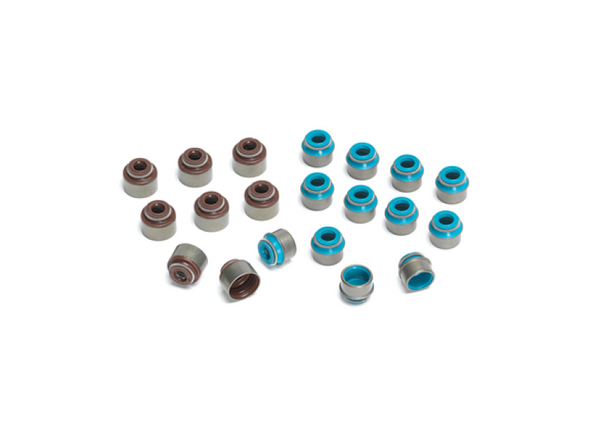
Supertech Ford Ecoboost 2.0L/2.3L Viton Integral Exhaust Valve Stem Seal - Set of 8 - VSI-FECO20-E-8
Supertech
MSRP: $20.32$16.26What is the main function of valve stem seals?Valve stem seals meticulously control oil flow into the combustion chamber, preventing contamination and maintaining optimal engine health across all...MSRP: $20.32$16.26 -
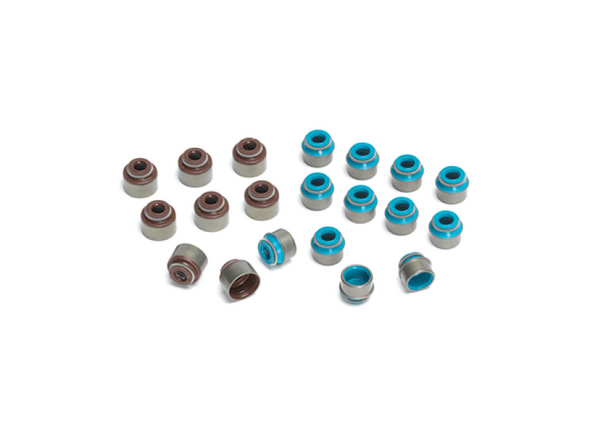
Supertech Ford Duratec 5.5mm Viton Integral Valve Stem Seal w/Spring Seat - Set of 8 - VSI-D5.5E-8
Supertech
MSRP: $19.35$15.49What are valve stem seals and what do they do?Valve stem seals are crucial components that prevent oil from entering the combustion chamber, ensuring optimal engine performance and longevity.Are...MSRP: $19.35$15.49 -
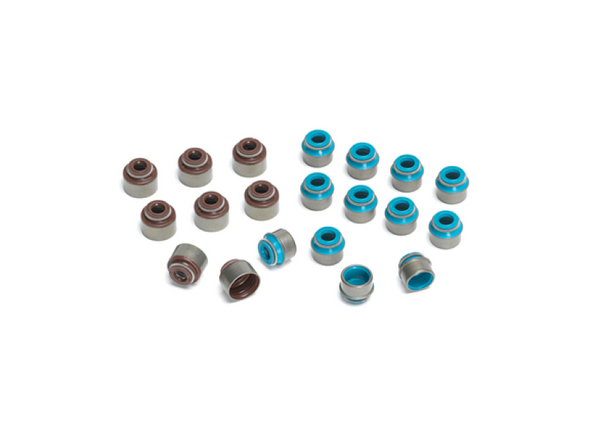
Supertech BMW 6mm Viton Exhaust Integral Valve Stem Seal - Set of 8 - VSI-BM60-E-8
Supertech
MSRP: $20.32$16.26What is the recommended installation process for valve stem seals?Professional installation is recommended for SPT Valve Stem Seals to ensure proper fitment and optimal performance of your engine.How...MSRP: $20.32$16.26
Valve seals control oil metering between the valve stem and guide — a failed or wrong-spec seal means blue smoke, fouled plugs, and a performance engine running on borrowed time. Motor Sport Mayhem stocks 83 valve seal options from 161 brands, covering everything from budget street replacements to race-spec PTFE units engineered for sustained high-RPM and elevated cylinder temperatures.
Our Top Picks for Valve Seals
Every product below was hand-selected based on proven performance, application breadth, and real-world results across street and competition builds.
ACL Race Series Main Bearings
ACL | $329.72
Tri-metal construction with extra oil clearance delivers superior film strength under high-load, high-heat conditions that collapse standard bearings.
- Proven race pedigree with tighter manufacturing tolerances than OEM specification
ACT Pilot Bearing
ACT | $17.00
Precision-ground bearing seat ensures true concentricity between the crankshaft and input shaft, eliminating the vibration that accelerates seal wear.
- Hardened steel construction handles the radial loads generated by aggressive clutch engagement
AON Clutch Components
Action Clutch | $89.69
CNC-machined billet aluminum construction provides a consistent, repeatable clutch pedal feel that protects drivetrain seals from shock loading.
- Universal fitment with adjustable engagement point for both street and competition calibration
AEM Wiring Connectors
AEM | $430.95
K-type thermocouple sensors with sealed connectors give you accurate exhaust and oil temperature data to catch the thermal conditions that destroy valve seals early.
- Four-pack format supports full per-cylinder monitoring on four-cylinder applications or header primaries on V-engines
AER Wiring Kits
Aeromotive | $358.52
A properly wired high-flow fuel pump maintains consistent fuel pressure, preventing the lean spikes that spike combustion temperature and cook valve stem seals prematurely.
- 60-amp relay circuit with dedicated ground eliminates voltage drop across the pump under full-load demand
AFE PFADT Mount Set
aFe | $660.00
Polyurethane subframe mounts reduce chassis flex and drivetrain movement, keeping engine alignment stable so valve train geometry stays within design tolerance.
- Dual-durometer design retains enough compliance to avoid NVH harshness while eliminating the deflection that stresses head gaskets and valve cover seals
ALF Wiring Harness
Air Lift | $97.23
Plug-and-play harness integrates compressor control without splicing into the vehicle's main electrical system, protecting ECU and sensor circuits from voltage spikes.
- Second-generation design includes weatherproof connectors rated for continuous underhood heat exposure
ABR CVT Belts
All Balls Racing | $200.40
High-temp aramid cord reinforcement keeps belt geometry consistent under sustained power delivery, reducing the drivetrain vibration harmonics that accelerate seal fatigue.
- HD-spec construction rated for continuous full-throttle desert and competition use where OEM belts fail within hours
ARX Tail Light Converters
AlphaRex | $395.00
Sequential LED tail lights with integrated load resistors eliminate the voltage irregularities from mismatched bulb draws that corrupt CAN bus signals on modern platforms.
- OEM-style plug fitment with no wire cutting required for a clean, reversible installation
PA Alta Crank Pulley
Alta | $129.20
A lightened crank pulley reduces rotational mass at the front of the engine, improving throttle response while eliminating the harmonic stress that cracks front crank seals over time.
- Billet aluminum construction maintains dimensional stability under the thermal cycling that causes OEM pressed pulleys to shift and destroy seal lips
How to Choose the Right Valve Seals
The single most important buying decision with valve seals is material selection — the difference between a seal that lasts 150,000 street miles and one that hardens and cracks after a single track day often comes down entirely to what the seal is made from. Standard nitrile rubber seals are adequate for low-temperature stock applications, but once you push oil temps above 250°F — which happens quickly on any sustained performance driving — nitrile loses its elasticity and begins to pass oil. Viton (FKM) seals handle continuous temperatures up to approximately 400°F and are the correct choice for any modified street car, turbocharged application, or track build. PTFE-tipped umbrella or positive-lock seals go further still, offering near-zero friction against the valve stem and dimensional stability even under the extreme heat cycles found in dedicated competition engines.
Key Specifications
Stem diameter tolerance is the specification most buyers overlook. A valve seal must grip the stem within a specific clearance window — typically 0.0005" to 0.002" depending on application — because too tight causes friction-induced heat buildup that destroys the seal lip, and too loose allows uncontrolled oil passage. Always verify the seal's bore diameter matches your actual measured stem diameter, not just the application listing, especially when using aftermarket valves with non-OEM stem diameters from brands like Supertech, Brian Crower, or Manley Performance.
Seal style matters as much as material. Umbrella seals ride the valve stem and move with it, metering oil passively — they're the most common OEM design and work well for naturally aspirated street engines. Positive-lock seals press onto the valve guide boss and actively control oil through spring tension against the stem; they provide significantly better oil control in high-lift, high-RPM applications where stem velocity is elevated. For any engine running more than approximately 0.550" lift or spinning above 7,500 RPM regularly, positive-lock Viton or PTFE seals are the correct choice.
Spring pressure inside the seal is the mechanical detail most overlooked in catalog comparisons. A weak garter spring allows the seal lip to flutter away from the stem under intake vacuum pulses, allowing oil ingestion that appears as light blue smoke at idle but clears at speed. Competition-grade seals use stiffer, more precisely wound springs to maintain contact pressure across the full RPM and vacuum range. When comparing seals, look for spring tension specifications rather than relying on marketing descriptions alone.
Fitment to the valve guide boss requires checking both the outer diameter of the seal body and whether the guide has a machined land to register the seal. Guides without a machined seal land can cause positive-lock seals to cock slightly during installation, which creates a leak path immediately. Confirm guide condition before new seals go in — worn or bellmouthed guides will destroy new seals regardless of seal quality, and this is the most common cause of repeat failures after a seemingly successful valve seal service.
Valve Seal Material Selection by Application
| Application | Recommended Material | Max Continuous Oil Temp | Typical Replacement Interval |
|---|---|---|---|
| Stock street replacement | Nitrile (NBR) | 250°F (121°C) | 60,000–100,000 miles |
| Modified street / mild boost | Viton (FKM) | 400°F (204°C) | 80,000–120,000 miles |
| High-boost forced induction street | Viton positive-lock | 400°F (204°C) | 50,000–80,000 miles |
| Road course / track day | PTFE-tipped Viton | 450°F (232°C) | Inspect every engine-out service |
| Drag racing (low cycle count) | Viton positive-lock | 400°F (204°C) | Season or 500 passes, whichever first |
| Full competition / endurance | PTFE positive-lock | 500°F+ (260°C+) | Per engine rebuild schedule |
Price Guide
Entry ($1.19–$130): Individual seals and small sets at this tier are correct for OEM-style replacements on naturally aspirated engines running stock valvetrain geometry and normal oil temperatures. Material quality is typically nitrile or standard-grade Viton — adequate for the application but not appropriate for modified or forced-induction use. This is where you land for a straightforward high-mileage seal replacement on an otherwise stock engine.
Mid-range ($130–$500): This is where the majority of performance builders land, and for good reason — full engine seal kits, race-grade Viton or PTFE sets for complete head rebuilds, and multi-application packs from established brands like Supertech, Cometic Gasket, and GSC Power Division occupy this range. You get engineered tolerance stacks, proper spring rates, and material specs documented for performance use rather than inferred from OEM cross-references.
Premium ($500–$11,495.95): Complete engine sealing systems, full overhaul kits for exotic or rare competition platforms, and professional-grade multi-engine shop packs operate at the upper end of the range. Race teams running full rebuild protocols between events, engine builders assembling multiple competition units, and restorers sourcing complete NOS-equivalent sealing packages for rare powerplants are the actual buyers here. The cost is justified by documented material certifications, precision manufacturing records, and traceability — not by any incremental improvement in the seal itself for a single street application.
Who Is This For?
Valve seals serve everyone from the daily driver owner tackling a smoke-at-startup repair to the full-time race engine builder specifying competition-grade seals for a fresh cylinder head — the usage scores below reflect that range clearly.
Engine Performance — 8.5/10
Valve seals score the highest of any use category here because they are a direct engine performance component — oil passing an intake valve seal doesn't just create smoke, it contaminates the combustion charge, reduces effective octane, and deposits carbon on the valve face that disrupts airflow. Replacing worn seals restores compression efficiency, eliminates carbon fouling of spark plugs, and is often the single cheapest path to recovering lost power in a high-mileage performance engine. For any engine that's down on power with blue smoke at startup or deceleration, seal replacement should precede any other diagnostic work.
Racing Competition — 8.2/10
Competition engines operate at sustained RPM and temperature levels that destroy OEM-spec valve seals within hours, and the 8.2/10 competition score reflects how critical correct seal specification is in this context. A seal that passes even a small amount of oil at high RPM loads the intake port, fouls the combustion chamber, and eventually hydrolocks a cylinder if not caught — race engine builders treat seal specification as a primary rebuild parameter, not an afterthought. The correct material, spring rate, and guide clearance are specified alongside cam profile and compression ratio in any serious engine build sheet.
Track / Autocross — 8.2/10
Track use drives oil temperature and valve train loads far beyond street levels, even in relatively mild engine builds, and the 8.2/10 score here reflects how quickly OEM or economy-grade seals fail under sustained on-track conditions. Sustained high-RPM cornering loads oil against the valve guides in ways that brief street use never replicates, and the resulting oil consumption causes catalyst damage and plug fouling that ends track sessions prematurely. Upgrading to Viton or PTFE seals during any pre-season head service is standard practice for serious track competitors.
Street Performance — 7.6/10
Modified street engines — particularly those running forced induction, upgraded camshafts, or extended oil service intervals — benefit significantly from upgraded seal materials even when the engine isn't being tracked. The 7.6/10 street performance score reflects that most street builds don't push temperatures high enough to destroy nitrile seals immediately, but that Viton seals provide meaningful insurance against the occasional hard pull or hot soak that pushes an otherwise street-driven engine beyond its thermal comfort zone. For any street engine with more than 50,000 miles or any power modification, Viton positive-lock seals are the correct specification at rebuild time.
Drag Racing — 8.2/10
Drag applications are unique in the valve seal world — cycle counts are relatively low compared to road course use, but the thermal shock of rapid warm-up, a short full-power run, and cool-down between rounds is particularly hard on seal lip materials. The 8.2/10 drag racing score reflects that most serious drag builds spec full Viton or PTFE seal sets as standard practice, treating them as a consumable replaced at each engine freshen rather than a long-term component. Oil control at peak RPM during a pass directly affects combustion cleanliness and repeatable power output across a day of competition.
Trusted Valve Seals Brands We Carry
The brands that dominate this category earned their positions through engineering documentation, material traceability, and proven race results rather than marketing spend. Supertech manufactures to tolerances that exceed OEM specifications on stem clearance and spring tension, making their seals the default choice for builders pairing them with aftermarket valves. Cometic Gasket approaches engine sealing as a system, and their valve seal offerings are developed alongside their head gasket and engine gasket sets to ensure compatible compression and thermal behavior across the entire sealing package. GSC Power Division builds specifically for high-output Asian performance engines with documented material specs for sustained boost and elevated valve temperatures, and their seal geometry is validated against their own camshaft and valve offerings. Brian Crower brings motorsport-derived manufacturing discipline to their complete valvetrain ecosystem, including seals specified to work with their stem diameters and guide clearances rather than generic cross-reference data. Manley Performance serves the high-horsepower domestic and import market with seals engineered for the thermal and mechanical loads of 1,000-plus-horsepower applications where seal failure has catastrophic rather than merely inconvenient consequences. Across all these brands, the common thread is documented engineering rather than OEM-equivalent claims — critical when you're specifying seals for a non-standard application.
Frequently Asked Questions
Are aftermarket head gaskets worth using over OEM replacements?
For a stock rebuild on a low-mileage engine with an undamaged deck surface, OEM head gaskets are acceptable and sometimes the most cost-effective choice. However, any engine with a resurfaced head or block, elevated compression, forced induction, or a history of overheating needs an aftermarket multi-layer steel (MLS) head gasket — OEM composite gaskets cannot reliably seal a machined surface that no longer meets the original flatness specification. MLS gaskets require a surface finish of approximately 60–125 Ra microinches to seal correctly, which means they must be paired with proper deck preparation rather than installed on unmodified surfaces. Brands like Cometic Gasket manufacture application-specific MLS units in multiple thickness options, giving builders the ability to correct compression ratio while also upgrading sealing capability. For performance applications, the cost difference between OEM composite and a quality aftermarket MLS unit is trivial relative to the cost of a second head gasket job.
Are aftermarket ignition coils a reliable upgrade?
Quality aftermarket ignition coils from engineering-focused manufacturers deliver measurably higher peak spark energy — typically 15–30% more millijoules than stock coils — which improves combustion efficiency and becomes increasingly important as cylinder pressure rises with boost, compression, or aggressive cam timing. The critical differentiator between reliable aftermarket coils and problematic ones is thermal management: coils that don't adequately dissipate heat from the primary winding will fail earlier than OEM units even if their cold spark output is higher. For forced-induction or high-compression applications where misfire tolerance is zero, verified aftermarket coils are a legitimate upgrade. Direct-fit units with OEM-equivalent connector bodies are the correct choice for street use — universal coils requiring connector adapters introduce additional failure points. Inspect coil boots and towers at every spark plug service, as ozone and heat degrade the insulation regardless of coil brand.
Are ACL race bearings any good for a high-performance build?
ACL Race Series bearings are a proven, globally used choice for performance engine builds, with a tri-metal construction — steel backing, copper-lead overlay, and babbitt surface layer — that provides superior load capacity and conformability compared to standard bi-metal OEM bearings. The extra-oil-clearance variants are specifically engineered for applications running higher-viscosity racing oil or dry-sump systems where clearance tuning is part of the build specification. ACL bearings are manufactured in Australia to tight dimensional tolerances with documented crush height specifications, making them a reliable choice for builders who need repeatable results across multiple engine assemblies. They are widely used as an OEM supplier to several manufacturers, which reflects the production quality control behind what is also sold as an aftermarket racing component. For most naturally aspirated and moderately boosted performance builds, ACL Race Series bearings represent an excellent cost-to-performance ratio — see our full engine bearings selection for the complete range.
Are ACL and King bearings the same quality level?
Both ACL and King Engine Bearings are legitimate race-quality manufacturers with OEM supply contracts, but they take somewhat different engineering approaches that make each better suited to specific applications. King bearings are known for their pMax Black and pMax Coated lines, which apply a polymer-PTFE coating over the bearing surface to reduce initial startup wear and improve emergency dry-running survival — valuable in high-performance builds where oil pressure can momentarily drop during extreme cornering or during first startup after a rebuild. ACL's Race Series focuses on dimensional precision and tri-metal construction, offering extra-clearance variants that give builders fine control over oil film thickness. In direct comparison testing across high-output builds, both brands hold up well under sustained load — the choice often comes down to whether coating technology or extra clearance options better serve the specific build. For a definitive answer, match the bearing specification to your oil system design, clearance targets, and whether the engine is likely to experience any oil starvation scenarios.
Are aftermarket camshaft position sensors reliable?
Aftermarket camshaft position sensors from reputable manufacturers are generally reliable for street use, but the quality gap between budget sensors and engineered replacements is significant — a failing cam position sensor causes timing drift that can produce misfires, poor idle, or in worst cases, timing events that damage valvetrain components including valve seals through abnormal combustion. The critical specification is output signal rise time and voltage swing — a sensor that produces a weak or slow-rising signal will cause the ECU to interpolate position incorrectly at high RPM, which degrades ignition and injection timing precision. OEM sensors remain the safe default for daily-driven vehicles because their signal characteristics are validated for the specific ECU calibration. For a dedicated performance or competition build running an aftermarket ECU, a quality aftermarket sensor properly matched to the trigger wheel tooth count and air gap specification is entirely appropriate. Always verify the trigger wheel-to-sensor air gap during installation — incorrect gap is the primary cause of intermittent failures regardless of sensor brand.
Building something specific? Our performance specialists can help you select the right Valve Seals for your application — street, track, or full race build.