
Throttle Bodies
- Product
- Qty in Cart
- Quantity
- Price
- Subtotal
-
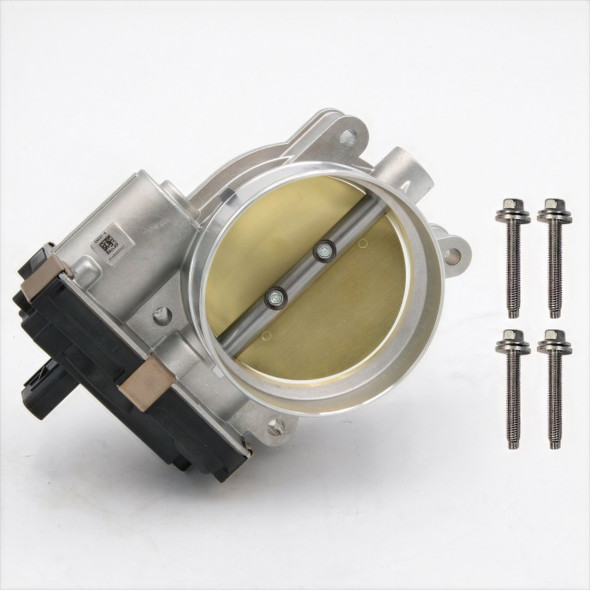
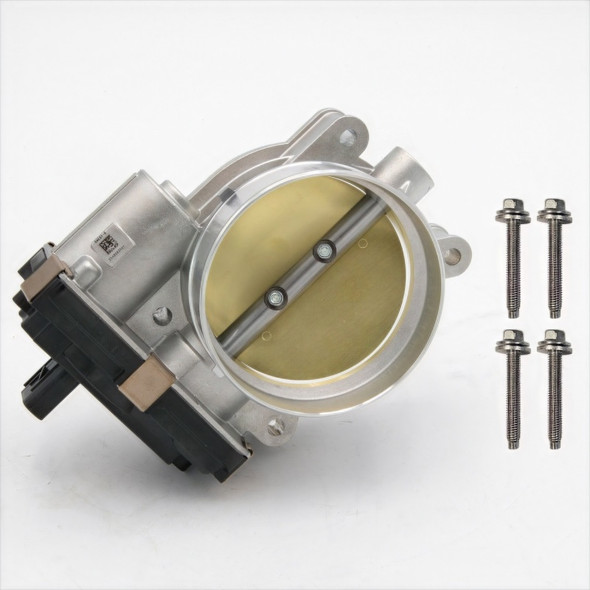
Ford Racing 18-20 Mustang GT 5.0L 87mm Bullitt Throttle Body - M-9926-M50B
Ford Racing
MSRP: $305.00$267.94Will this throttle body fit my 2019 Mustang GT?Confirm vehicle fitment precisely using our dedicated compatibility tool to ensure perfect integration of these Ford Racing Throttle Bodies.How...MSRP: $305.00$267.94 -

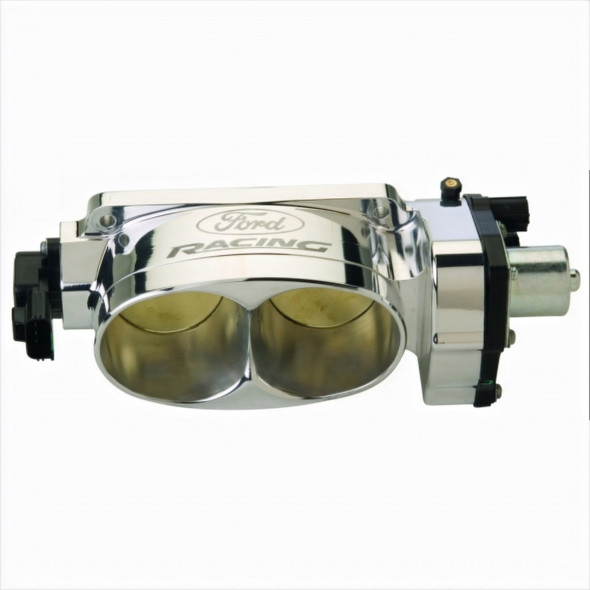
Ford Racing 65mm Cobra Jet Billet Aluminum Throttle Body - M-9926-CJ65
Ford Racing
$1,010.89Will this throttle body fit my vehicle?Confirm fitment with your specific vehicle's VIN and original equipment specifications to ensure a perfect bolt-on installation for your FR Throttle Body.Is...$1,010.89 -

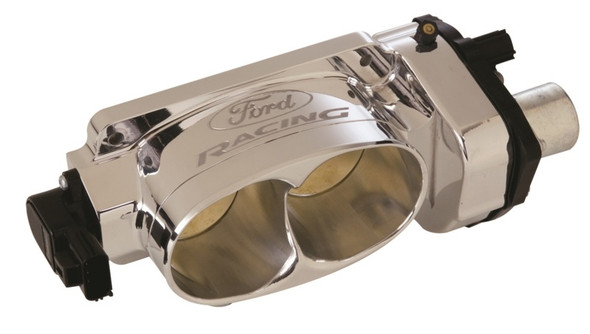
Ford Racing 2005-2010 Mustang GT Billet Throttle Body - M-9926-3V
Ford Racing
$1,029.86Is this throttle body a direct bolt on installation for my 2015 Mustang GT?Confirm fitment with your vehicle using our detailed compatibility guide to ensure this Ford Racing throttle body is a...$1,029.86 -
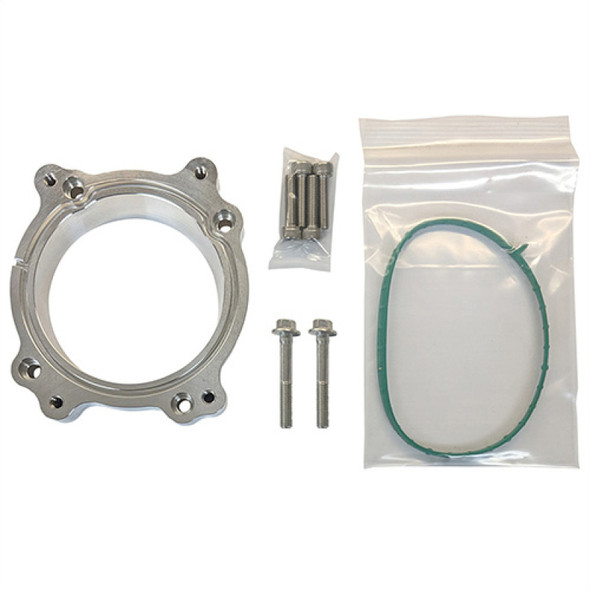
Ford Racing 15-17 Mustang GT 87mm Throttle Body Adapter - M-9474-M5087
Ford Racing
MSRP: $130.00$120.57Will this throttle body fit my 2015-2017 Mustang?This Ford Racing throttle body is engineered for a direct fit on all 2015-2017 Ford Mustang models.What is the benefit of a larger throttle body?A...MSRP: $130.00$120.57 -
FAST Throttle Body LSX 102MM - 54102
FAST
$240.18What is the primary function of a throttle body?Throttle bodies precisely regulate the amount of air entering your engine, directly impacting performance and fuel delivery based on throttle pedal...$240.18 -

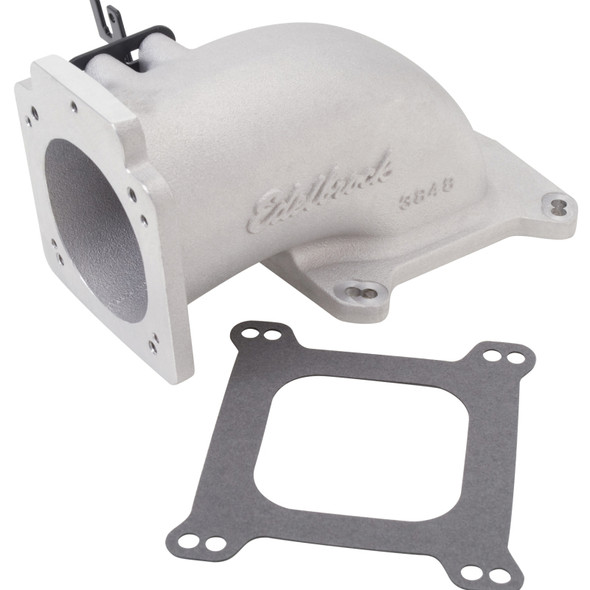
Edelbrock Low Profile Intake Elbow 90mm Throttle Body to Square-Bore Flange As-Cast Finish - 3848
Edelbrock
$196.51Does this throttle body fit my specific vehicle model?Confirm fitment with your vehicle by checking our application guide, ensuring seamless installation across popular LS and Ford 5.0l platforms.Is...$196.51 -
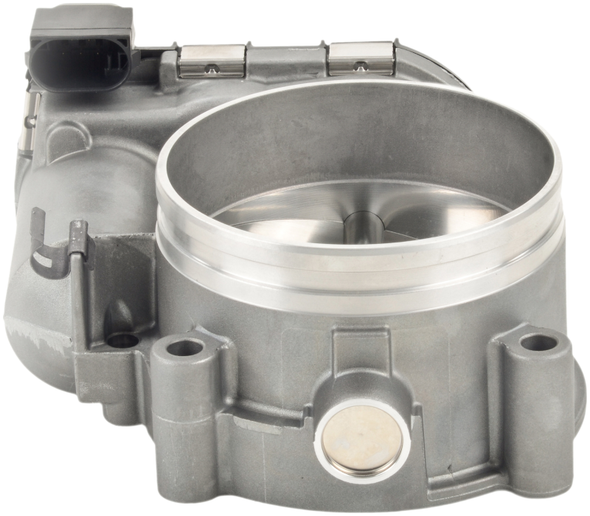
Bosch Electronic Throttle Body Assembly (OE 99760511601) - 0280750473
Bosch
$239.16Can I install this throttle body myself?Professional installation is recommended for this Bosch throttle body to ensure precise fitment and optimal performance in your Porsche 911/918 Spyder/Cayenne...$239.16 -
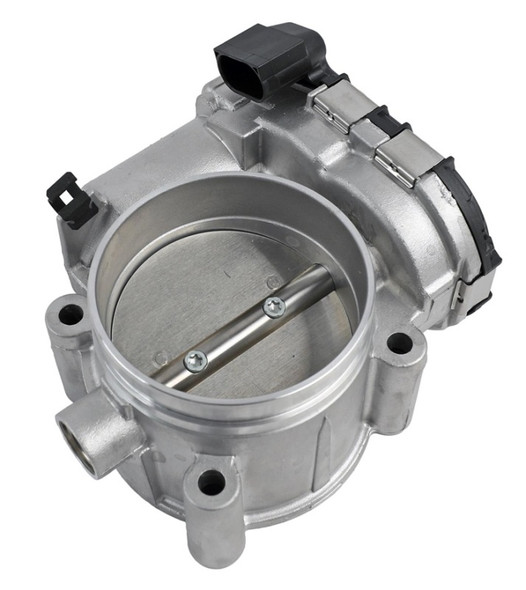
Bosch Electronic Throttle Body Assembly - 0280750156
Bosch
$166.72What is a throttle body?A throttle body is a crucial engine component that regulates airflow into the engine, directly impacting performance based on driver input.Can I install a throttle body...$166.72 -


BLOX Racing Honda K-Series 62.5mm Bore Throttle Body Adapter for RBC Manifold - BXIM-10300-62.5
BLOX Racing
MSRP: $63.00$50.40BLOX Racing Honda K-Series 62.5mm Bore Throttle Body Adapter for RBC ManifoldThis Part Fits:YearMakeModelSubmodel2002-2006AcuraRSXBase2002-2006AcuraRSX<MSRP: $63.00$50.40 -


BLOX Racing 2015+ Dodge Hellcat / Jeep Trackhawk 6.2L 105mm Electronic Billet Throttle Body - Silver - BXIM-00255-SI
BLOX Racing
MSRP: $635.00$587.91Do I need to retune my vehicle after installing a BLOX Racing throttle body?A professional tune is highly recommended after installing a BLOX Racing throttle body to optimize performance and ensure...MSRP: $635.00$587.91 -
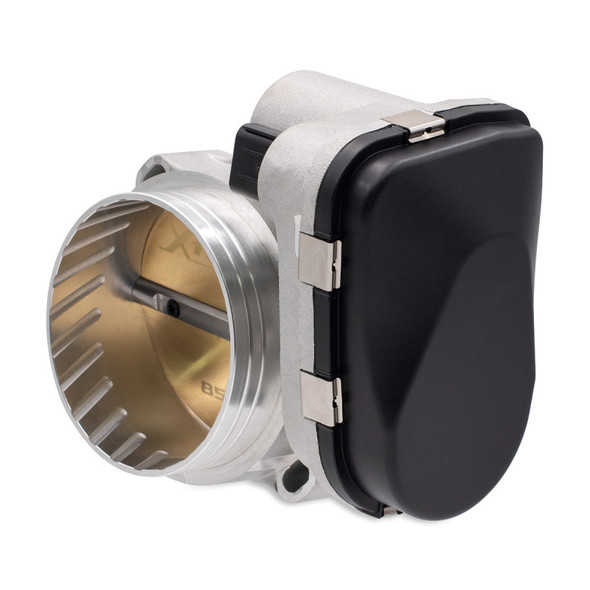
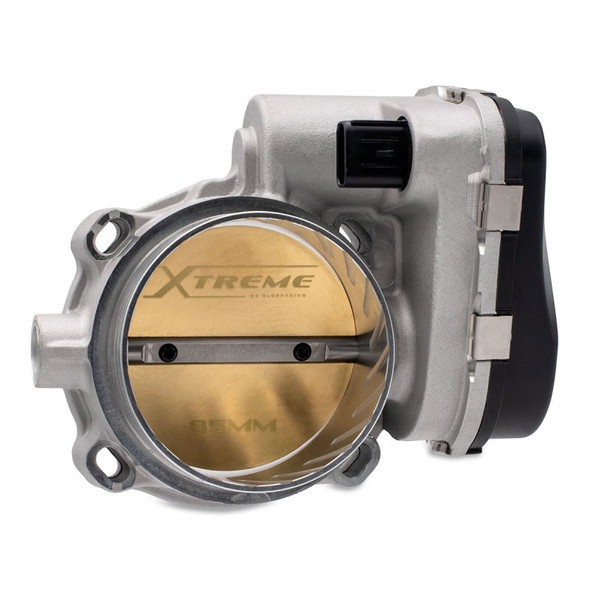
BLOX Racing 13-21 Dodge Charger/Challenger 5.7L/6.4L HEMI 85mm Tuner Series Throttle Body - BXIM-00250
BLOX Racing
MSRP: $420.00$388.85What is the recommended installation process for BX Throttle Bodies?Professional installation is strongly recommended to ensure precise fitment and optimal performance of your BX Throttle Body.How do...MSRP: $420.00$388.85 -

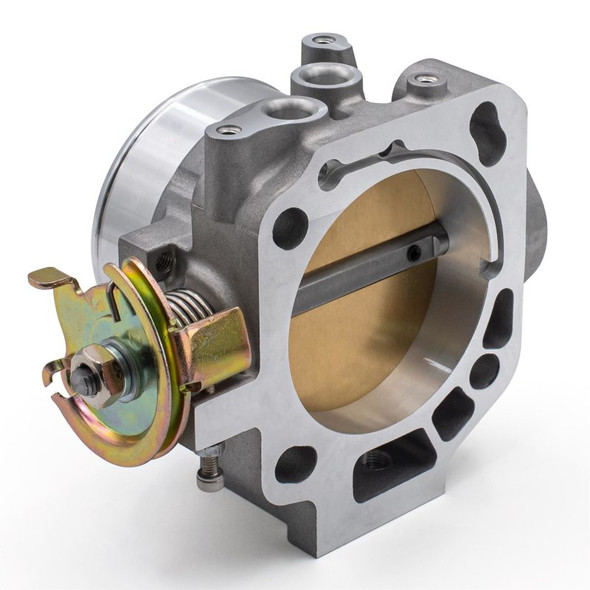
BLOX Racing K-Series Tuner Series 72mm Cast Aluminum Throttle Body - BXIM-00224
BLOX Racing
MSRP: $176.00$162.95Are BLOX Racing Throttle Bodies a direct bolt-on replacement?BLOX Racing Throttle Bodies are designed for specific vehicle fitment; always confirm compatibility before installation to ensure a direct...MSRP: $176.00$162.95
A throttle body is the primary airflow control device between your intake system and engine, and the right bore diameter, blade geometry, and actuator calibration directly determine how fast your engine fills its cylinders under load. Motor Sport Mayhem stocks 82 throttle bodies spanning entry-level replacements to full race-spec units, covering street performance, forced induction, and competition applications from $1.19 to $11,495.95.
Our Top Picks for Throttle Bodies
Each of these products was hand-selected based on engineering quality, performance value, and real-world results across street and competition builds.
ACL Race Series Main Bearings
ACL | $329.72
Tri-metal construction with extra oil clearance spec delivers reliable film thickness under sustained high-RPM throttle loading.
- Extra oil clearance variant engineered for high-output forced induction applications where standard clearances run tight under heat soak
ACT Pilot Bearing
ACT | $17.00
Precision-tolerance pilot bearing that eliminates input shaft runout, protecting drivetrain components exposed to aggressive throttle cycling.
- Manufactured to tighter radial tolerances than OEM spec to handle the shock loading of performance throttle applications
AON Clutch Components
Action Clutch | $89.69
Adjustable race pedal stop that firms up throttle-to-clutch coordination for faster, more consistent lap times.
- Universal fitment with steel construction rated for repeated hard launches without deflection or fatigue
AEM Wiring Connectors
AEM | $430.95
K-type thermocouple kit designed for intake temperature monitoring that directly informs throttle body tuning and air density compensation.
- Four-pack configuration supports multi-point thermal mapping across the intake tract for precise ECU feedback
AER Wiring Kits
Aeromotive | $358.52
60-amp rated wiring kit built to support the fuel delivery demands that high-flow throttle bodies create at wide-open throttle.
- Deluxe harness includes relay, fuse, and proper gauge wire to eliminate voltage drop under sustained full-throttle operation
AFE PFADT Mount Set
aFe | $660.00
Polyurethane subframe mount set that reduces engine movement under hard throttle application, keeping intake geometry and throttle cable alignment consistent.
- Stiffer durometer rating versus OEM rubber mounts measurably improves throttle response feel and repeatability on track
ALF Wiring Harness
Air Lift | $97.23
Second-generation wireless harness that simplifies electrical routing when integrating aftermarket throttle and air management systems.
- Pre-terminated, shielded construction resists EMI interference that can cause erratic throttle position sensor readings
ABR CVT Belts
All Balls Racing | $200.40
Heavy-duty CVT belt engineered to handle the aggressive throttle input and torque spikes common in high-performance off-road applications.
- HD compound resists heat degradation under repeated wide-open throttle events where stock belts routinely fail
ARX Tail Light Converters
AlphaRex | $395.00
LED tail light assemblies with load-matched resistor circuits that prevent the false throttle-off signals triggered by low-draw LED conversions on older ECUs.
- Plug-and-play connector maintains OEM signal integrity so brake and throttle position data is not corrupted by lighting circuit noise
PA Alta Crank Pulley
Alta | $129.20
Lightened crank pulley reduces rotational inertia, sharpening throttle response by decreasing the energy the engine must overcome before accelerating.
- Reduced mass at the crank snout is one of the most cost-effective ways to improve perceived throttle body response on supercharged platforms
How to Choose the Right Throttle Bodies
The throttle body sits at the intersection of your air intake system and your engine's fuel delivery calibration — get the sizing wrong and you either choke peak power or destroy low-end response. The two most common failure points in budget throttle bodies are blade-to-bore sealing tolerance (anything looser than 0.001" causes unmetered air at idle) and the throttle position sensor, which on inferior units drifts under heat and produces erratic fueling signals. On drive-by-wire applications, actuator motor quality is equally critical — a slow or noisy motor introduces lag that no ECU tune can fully compensate for.
Key Specifications
Bore diameter is the spec most buyers focus on, and for good reason — it sets the ceiling on volumetric airflow. A naturally aspirated engine in a street application typically sees the best throttle response and power balance with a bore 5–10mm larger than stock. Go too large without retuning and you flatten the torque curve below 4,000 RPM because air velocity through the bore drops below the threshold needed for strong cylinder filling. On forced induction builds, the calculus changes because the turbo or supercharger is pushing air mass regardless of bore velocity, making larger bores more appropriate even at moderate boost levels.
Material matters significantly for durability and dimensional stability. Cast aluminum bodies are standard across most street and light track applications and perform reliably when sourced from a quality manufacturer with CNC-finished bores. Billet aluminum units machine to tighter tolerances, resist warping under sustained heat cycling, and are the correct choice for dedicated race engines or high-boost applications where intake temps regularly exceed 150°F. Anodizing quality and port-match surface finish also affect long-term sealing and airflow efficiency — raw or poorly finished bores create turbulence at the inlet that costs measurable flow at the top end.
Throttle position sensor (TPS) quality is non-negotiable on any performance application. The TPS feeds live angle data to the ECU every few milliseconds, and the ECU uses that data to calculate fuel trim, ignition timing, traction control thresholds, and launch control parameters. A TPS with sloppy potentiometer tracking or poor temperature compensation will introduce fueling stumbles, inconsistent launch behavior, and in worst cases trigger limp mode under hard acceleration. Always verify that an aftermarket throttle body ships with a calibrated TPS or is designed to accept the OEM sensor in its exact mounting orientation.
For carbureted and individual throttle body (ITB) setups, shaft seal quality is the make-or-break spec. Worn or undersized shaft seals on ITBs allow air bypass that makes synchronizing multiple carbs or throttle bodies accurately nearly impossible, and the resulting imbalance between cylinders shows up as rough idle, uneven power delivery, and increased fuel consumption. On cable-operated bodies, check spring return force ratings — competition applications require stiffer return springs that close reliably at high RPM even if the cable loses tension under chassis flex.
Throttle Body Bore Sizing vs. Engine Displacement and Application
| Engine Displacement | Street Performance (NA) | Forced Induction / Race | ITB Configuration |
|---|---|---|---|
| 1.0L – 1.6L | 52–58mm | 60–65mm | 40–45mm per cylinder |
| 1.6L – 2.0L | 58–65mm | 68–75mm | 44–48mm per cylinder |
| 2.0L – 2.5L | 65–70mm | 75–82mm | 48–52mm per cylinder |
| 2.5L – 3.5L | 70–80mm | 82–92mm | 50–55mm per cylinder |
| 3.5L – 5.0L | 80–90mm | 92–102mm | 52–58mm per cylinder |
| 5.0L+ | 90–102mm | 102–120mm (dual TB) | 55–62mm per cylinder |
Price Guide
Entry ($1.19–$130): This tier covers OEM-replacement throttle bodies, individual seals, gaskets, TPS sensors, and small hardware components — the right choice when your goal is returning a stock or lightly modified engine to factory spec without spending on performance gains you don't need.
Mid-range ($130–$600): The segment where most serious street and light track builds land — expect CNC-bored aluminum bodies with calibrated TPS units, improved blade sealing, and proper port matching; this is where the performance-per-dollar ratio peaks for the majority of enthusiasts pairing a throttle body upgrade with a tune and cold air intake.
Premium ($600–$11,495.95): Billet race-spec units, complete ITB kits with velocity stacks, and fully machined throttle body assemblies for dedicated competition engines — justified when you're building to a power target that requires precisely matched airflow across multiple cylinders, or when the engine is expensive enough that component quality risk is unacceptable.
Who Is This For?
Throttle bodies serve a broad spectrum of builds, from weekend autocross cars to full-competition race engines, with performance scores across all major use cases confirming this is a genuinely cross-discipline category.
Engine Performance — 8.5/10
This is the highest-rated use case in the category and reflects how directly throttle body specifications affect engine output — airflow is literally what the throttle body controls, and every horsepower gain from intake, cam, or head work depends on the throttle body not being the restriction. A correctly sized and properly tuned throttle body is a prerequisite for maximizing any other engine performance modification. At this rating, the category consistently delivers measurable dyno results when paired with supporting modifications.
Racing Competition — 8.2/10
Competition-spec throttle bodies score 8.2 across 190 products because race applications demand zero tolerance for blade sealing failures, actuator lag, or TPS drift during an event — problems that are merely annoying on the street become race-ending on track. Billet construction and individual throttle body setups dominate this use case because they allow precise per-cylinder tuning that spread-bore or single-unit designs cannot match. The range of products suited to this application is deep, covering everything from club racing to professional-level builds.
Track / Autocross — 8.2/10
Track and autocross use scores identically to racing competition at 8.2 across 180 products, but the specific demands differ — autocross rewards instantaneous throttle response at partial openings more than peak WOT flow, making TPS accuracy and blade-to-bore sealing especially critical. A throttle body with a well-mapped progressive blade angle delivers better lap consistency than one tuned purely for maximum flow at 100% opening. Drive-by-wire calibration quality becomes a significant differentiator at this application level.
Street Performance — 7.6/10
Street performance rates 7.6 across 196 products, reflecting that most street builds benefit from a moderate bore increase and improved TPS accuracy rather than all-out race spec components that sacrifice drivability. The correct street-spec throttle body maintains strong low-RPM torque response while opening airflow headroom for mid-range and top-end gains — the balance point that keeps a daily-driven performance car tractable in traffic. Pairing a performance throttle body with a cold air intake and supporting tune consistently returns the best street drivability improvements.
Drag Racing — 8.2/10
Drag racing scores 8.2 across 146 products because the discipline is almost purely about wide-open throttle airflow capacity — there is no partial-throttle cruise phase to optimize for, which means bore size and flow coefficient are the dominant specs. Single large-bore or dual throttle body setups are common at this level, often paired with aggressive forced induction systems where the throttle body must flow adequately under boost pressure differentials that would cause a lesser unit to distort or seal poorly.
Trusted Throttle Bodies Brands We Carry
The brands that consistently perform in this category earn their reputation through machining tolerance, materials sourcing, and real-world validation across competition programs. AEM has built credibility on both sensor technology and throttle body hardware through years of OEM-adjacent development, while Aeromotive's fuel system expertise extends into the supporting components that make throttle body upgrades function reliably at high power levels. Brian Crower and GSC Power Division bring a race engine development background that informs how their components interact with high-lift camshafts and elevated cylinder pressures that place demanding loads on intake tract hardware. Wiseco and Manley Performance have long supplied competition engine builders who understand that every component feeding or surrounding the throttle body must be engineered to the same standard as the throttle body itself. ACL and King Engine Bearings, while primarily known for their engine bearings, represent the kind of precision-tolerance engineering philosophy that the best throttle body manufacturers share — both disciplines live or die by dimensional accuracy measured in thousandths of an inch.
Frequently Asked Questions
Are aftermarket throttle bodies actually worth the upgrade?
Yes, when the bore diameter is correctly matched to your engine displacement and the unit is supported by a proper ECU tune. An oversized throttle body without a corresponding fueling and timing recalibration will deaden low-RPM response and introduce throttle tip-in stumbles because the ECU's stock fuel maps aren't written for the increased airflow rate. A correctly sized aftermarket unit with CNC-finished bore and a quality TPS will improve mid-range response, peak power, and throttle feel simultaneously. The gains are most pronounced on engines that are already running supporting modifications — intake, exhaust, and cam upgrades — where the stock throttle body has become the restriction.
What is the difference between a drive-by-wire and cable-operated throttle body?
A cable-operated throttle body uses a direct mechanical link between the accelerator pedal and the throttle blade shaft, giving a linear, driver-controlled relationship with zero electronic latency. Drive-by-wire units replace the cable with a throttle pedal position sensor and an electric actuator motor in the throttle body itself, with the ECU interpreting the pedal signal and commanding the motor — this allows traction control, launch control, and torque management to intervene by commanding partial throttle even when the driver requests full opening. For pure race applications without electronics, cable throttle bodies remain preferred for predictability and simplicity. Drive-by-wire is essentially universal on modern platforms and can be tuned for excellent response when the actuator calibration and pedal mapping are set up correctly.
How does throttle body bore size affect torque and power?
Bore diameter determines the maximum cross-sectional area available for airflow, which sets the ceiling on mass airflow rate at any given engine RPM and manifold vacuum condition. Too small a bore and air velocity through the opening becomes the limiting factor — the engine cannot flow enough air mass to fill the cylinders at high RPM, truncating peak power. Too large a bore lowers air velocity at partial throttle openings, reducing the momentum effect that helps fill cylinders efficiently at low and mid RPM, which flattens torque where most street driving actually occurs. The optimal bore for a given application is determined by engine displacement, target RPM range, whether forced induction is present, and the volumetric efficiency of the head and cam combination — these variables are why generic sizing charts are starting points, not final answers.
What makes individual throttle bodies better for high-revving engines?
Individual throttle bodies place one dedicated throttle blade directly ahead of each intake runner, eliminating the plenum volume that a single throttle body must pressurize before cylinder filling can occur — at high RPM this plenum lag becomes a meaningful restriction. Each cylinder gets unrestricted, direct access to atmospheric pressure the moment its intake valve opens, which improves volumetric efficiency dramatically in the 6,000–9,000 RPM range where high-performance naturally aspirated engines make peak power. ITB setups also allow intake runner length and velocity stack tuning to be optimized independently per the engine's target power band. The tradeoff is that synchronization and tuning complexity increase significantly, and idle quality requires more careful calibration than a single throttle body setup.
Do I need to retune my ECU after installing an aftermarket throttle body?
On any application where the throttle body bore diameter changes from stock, an ECU recalibration is strongly recommended and in many cases required for the engine to run correctly. The stock fuel and ignition maps are calibrated around a specific airflow response curve tied to the OEM throttle body's bore size, blade angle progression, and TPS voltage output — change any of those parameters and the relationship between throttle position and actual airflow entering the engine shifts. Without a tune, you'll typically see lean conditions at higher throttle openings, rough idle, and possible fault codes from the MAF or MAP sensor detecting uncharacterized airflow. On drive-by-wire platforms, the pedal-to-blade mapping also needs adjustment to restore the intended throttle feel and eliminate any dead zone or abrupt tip-in behavior introduced by the new unit's actuator characteristics.
Building something specific? Our performance specialists can help you select the right Throttle Bodies for your application — street, track, or full race build.