
Hardware - Singles
- Product
- Qty in Cart
- Quantity
- Price
- Subtotal
-

Rock Slide Engineering 2nd Gen Gas Spring Replacement - 4 Door - SL-200-SP4
Rock Slide Engineering
$99.00Rock Slide Engineering 2nd Gen Gas Spring Replacement - 4 DoorMade in the USA$99.00 -

Rock Slide Rebuild Kit Step Slider - 4 Door Driver Side (Gen 3) - REBUILD20-086
Rock Slide Engineering
$249.99Will this hardware fit my specific vehicle?Confirm fitment with your specific vehicle using our detailed application guide before purchase to ensure proper installation and performance.Is...$249.99 -
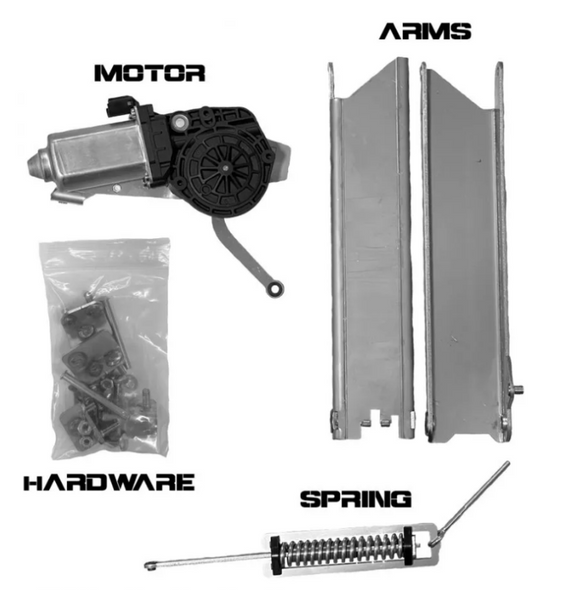
Rock Slide Rebuild Kit For Gen 3 Step Slider - JK/JL/JT 2D/4D Pass - REBUILD20-085
Rock Slide Engineering
$249.99What is RSE Hardware?RSE Hardware is a collection of individual components designed to enhance specific vehicle systems, ensuring robust performance for off-road applications.How long does RSE...$249.99 -
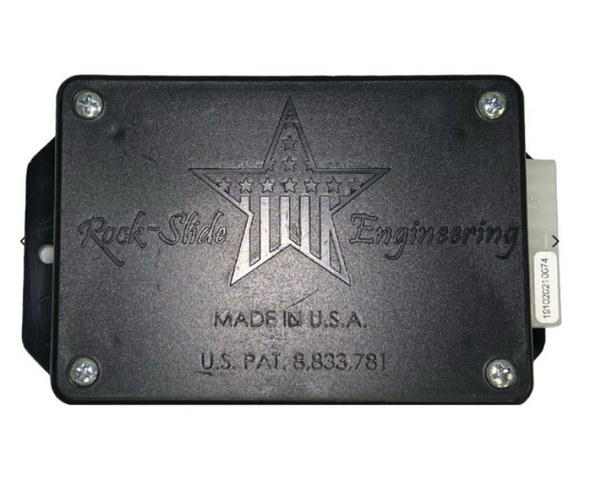
Rock Slide Circuit Board Replacement - BD-SS-800-CIR
Rock Slide Engineering
$132.00Will RSE Hardware fit my vehicle?Confirm precise fitment with your specific vehicle model using our detailed application guide for guaranteed compatibility and optimal performance.Is professional...$132.00 -

Rock Slide Electric Motor/Driver Side New Style - BD-SS-600-DRIVE
Rock Slide Engineering
$132.00Does Rock Slide Engineering offer a warranty for their RSE Hardware?RSE Hardware is engineered for extreme durability and unwavering engine stability, ensuring reliable performance across all...$132.00 -


Rock Slide Any Tire Size Ez Rack Kit / Basic / Steel - AC-TR-102S-1
Rock Slide Engineering
$54.99What is the recommended installation process for RSE Hardware?Professional installation is strongly recommended for RSE Hardware to ensure optimal performance and secure engine mounting.How does RSE...$54.99 -
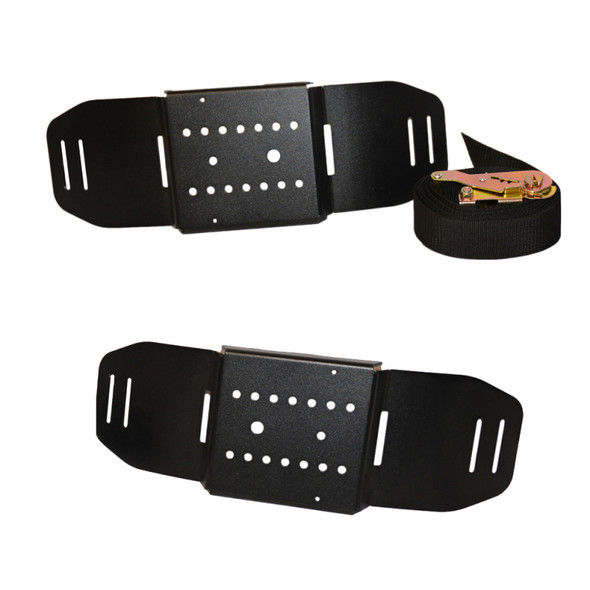

Rock Slide Any Tire Size Ez Rack Kit / Basic / Steel - AC-TR-102S
Rock Slide Engineering
$129.99What is the primary purpose of RSE Hardware?RSE Hardware delivers superior engine reliability and longevity for demanding off-road adventures, ensuring enhanced driving control.Is professional...$129.99 -


Rock Slide 07-22 Jeep JK/JL 2-4 Door Tailgate Table - AC-TB-200
Rock Slide Engineering
$274.99What is the purpose of RSE Hardware?RSE Hardware is engineered for extreme off-road durability and peak performance, delivering unparalleled engine reliability for demanding adventures.Is...$274.99 -

QuadBoss 11-14 Polaris RZR 4 800 Quick-Attach Fastener - 563466
QuadBoss
$66.99What vehicles does the QBS Fastener fit?This fastener fits 2011-2017 Polaris Ranger RZR 4 800, Ranger RZR XP 900, RZR 800, and four additional models.Can I install these fasteners myself?Professional...$66.99 -


QA1 2-1/2in Thrust Bearing Kit w/Washers for 2 Shocks - 7888-109
QA1
MSRP: $47.59$46.81What is a thrust bearing kit?A thrust bearing kit is a component for QA1 coil-over shocks that reduces friction for smoother suspension travel and easier ride height adjustment.Are these parts...MSRP: $47.59$46.81 -

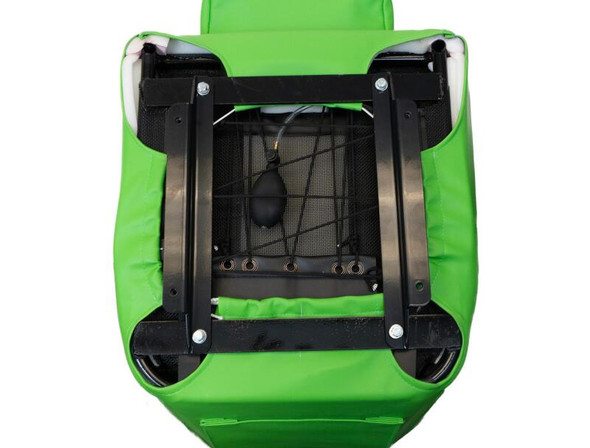
PRP RZR PRO XP to RZR 1000/Turbo Seat Adapter Mount (One Side) - C83
PRP Seats
$93.99What vehicles does the PRP Powersport Mount Hardware fit?This Powersport Mount Hardware is designed for 2015-2024 Polaris General 1000 models and over 30 other specific vehicles.Can I install this...$93.99 -
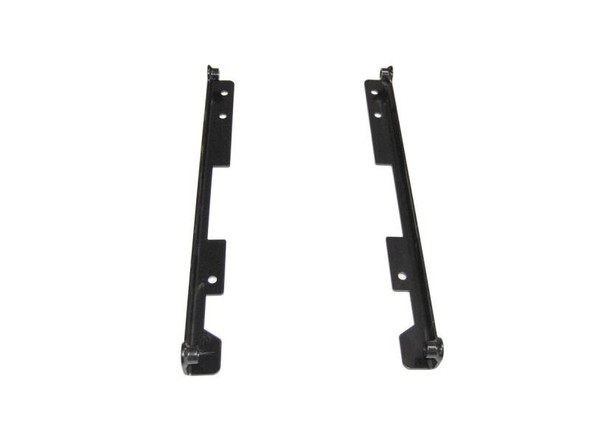

PRP Jeep JK/JKU Front Seat Adapter Mount (One Side) - C38
PRP Seats
$114.99Do these adapter mounts work with my stock seat belt system?PRP Mount Hardware adapter mounts do not integrate with your stock seat belt systems, requiring separate harness solutions for optimal...$114.99
Hardware singles are the individual components — bearings, mounts, belts, sensors, wiring connectors, and precision fasteners — that determine whether a performance build holds together under load or fails at the worst possible moment. Motor Sport Mayhem stocks 294 in-stock hardware singles across 161 brands, spanning $1.19 to $11,495.95, so whether you're replacing one worn piece or spec'ing a full race assembly, you're covered with parts engineered to perform.
Our Top Picks for Hardware - Singles
Each of these parts was hand-selected based on verified performance credentials, real-world fitment accuracy, and value across street and competition applications.
ACL Race Series Main Bearings
ACL | $329.72
Tri-metal bearing construction with extra oil clearance delivers superior film strength under sustained high-RPM and boosted engine loads.
- Tighter manufacturing tolerances than OEM spec reduce journal wear and extend crank life in high-output applications
ACT Pilot Bearing
ACT | $17.00
A precision-fit pilot bearing is the unsung critical link between the transmission input shaft and crankshaft in manual drivetrain systems.
- ACT's dimensional tolerances prevent input shaft wobble that causes premature clutch disc and transmission wear
AON Clutch Components
Action Clutch | $89.69
A properly set pedal stop eliminates over-travel that degrades clutch feel and accelerates fork and bearing wear in performance driving.
- Universal race-spec design allows precise engagement point adjustment critical for consistent lap times and drag launches
AEM Wiring Connectors
AEM | $430.95
K-type thermocouple connectors provide accurate high-temperature measurement up to 1250°C, essential for EGT and oil/coolant monitoring in race applications.
- Shielded wiring construction prevents electrical noise interference that corrupts data acquisition and tuning accuracy
AER Wiring Kits
Aeromotive | $358.52
A 60-amp dedicated wiring harness eliminates voltage drop that starves high-flow fuel pumps and causes lean conditions under wide-open throttle.
- Relay-isolated circuit design protects the ECU and prevents backfeed damage to sensitive engine management hardware
AFE PFADT Mount Set
aFe | $660.00
Polyurethane transmission mounts dramatically reduce drivetrain slop and improve shift precision without the full harshness penalty of solid aluminum mounts.
- Higher durometer rating than OEM rubber resists compression set under sustained torque loads from high-power drivetrain builds
ALF Wiring Harness
Air Lift | $97.23
A purpose-built wireless air management harness eliminates the routing complexity and failure points of traditional hardwired compressor and valve control systems.
- Second-generation architecture improves signal reliability and reduces latency for faster, more consistent ride height adjustments
ABR CVT Belts
All Balls Racing | $200.40
CVT belt quality directly determines power transfer efficiency and service life — a degraded belt bleeds horsepower before it visibly fails.
- All Balls Racing uses aramid fiber reinforcement for higher tensile strength and heat resistance versus standard OEM belt compounds
ARX Tail Light Converters
AlphaRex | $395.00
LED tail light assemblies provide near-instant illumination response versus incandescent bulbs, a measurable safety advantage at track and street speeds.
- Direct OEM connector fitment eliminates wiring adaptation work and ensures clean integration with existing vehicle lighting circuits
PA Alta Crank Pulley
Alta | $129.20
A lightened crank pulley reduces rotational mass at the front of the engine, freeing power that would otherwise be consumed spinning unnecessary material.
- Reduced moment of inertia improves throttle response and engine rev speed, with measurable gains on the dyno in high-revving applications
How to Choose the Right Hardware - Singles
The single biggest mistake builders make with hardware singles is treating them as commodity items — buying on price alone and ignoring material spec, manufacturing tolerance, and application rating. A bearing with the wrong oil clearance, a belt tensioner with insufficient spring load, or a wiring connector not rated for the current draw it'll see can destroy an otherwise sound build. The difference between a good hardware single and a bad one comes down to three things: material quality, dimensional accuracy, and whether the manufacturer actually validates their parts under real operating conditions.
Key Specifications
For engine bearings, the two specs that matter most are bearing material and oil clearance. Bi-metal bearings (steel-backed aluminum) are adequate for mild street builds, but tri-metal constructions — steel backing, copper-lead intermediate layer, and a lead-tin or aluminum-tin overlay — handle the higher unit loads of boosted and high-RPM competition engines. Oil clearance tolerance should be held to within ±0.0001 inches at reputable manufacturers; loose-clearance race variants intentionally run tighter film pressure for better load support.
For drive belts — whether serpentine, timing, or CVT — the construction material defines both heat tolerance and tensile strength. Standard EPDM rubber handles street use, but high-load applications benefit from aramid or Kevlar fiber reinforcement that resists stretch under shock loading. Belt width and tooth profile must match the driven pulley exactly; a mismatch of even half a tooth pitch causes skip under load and can destroy an interference engine instantly.
Wiring hardware — connectors, harnesses, and sensor leads — is rated by current capacity (amperage), insulation temperature rating, and connector sealing class. Street performance installs can tolerate standard automotive-grade connectors rated to 105°C, but engine bay harnesses running near headers or turbochargers need high-temp insulation rated to 150°C or higher. For data acquisition sensors like thermocouples, shielded cable is mandatory — unshielded signal wire picks up ignition interference that corrupts readings.
Mounts and brackets fall into a separate evaluation — here, durometer hardness of the bushing material is the primary spec. OEM rubber mounts typically run 40–55 Shore A, offering isolation but allowing excessive deflection under torque. Performance polyurethane runs 60–80 Shore A, and solid billet aluminum eliminates deflection entirely but transmits all vibration directly into the chassis. For street-driven cars, 70–75 Shore A polyurethane is the correct balance; for dedicated track cars where NVH doesn't matter, solid mounts are justified.
Engine Bearing Oil Clearance Reference by Application
| Application Type | Recommended Main Bearing Clearance | Recommended Rod Bearing Clearance | Bearing Material |
|---|---|---|---|
| Stock Rebuild / Daily Driver | 0.0010" – 0.0020" | 0.0008" – 0.0018" | Bi-metal (Al-alloy overlay) |
| Street Performance / Mild Boost | 0.0018" – 0.0025" | 0.0015" – 0.0022" | Tri-metal (Cu-Pb intermediate) |
| High-Boost / Forced Induction Race | 0.0025" – 0.0032" | 0.0022" – 0.0028" | Tri-metal with coated overlay |
| Drag Racing (short-duration, max power) | 0.0028" – 0.0035" | 0.0025" – 0.0032" | Tri-metal, extra oil clearance |
| Endurance / Circuit Racing | 0.0022" – 0.0030" | 0.0018" – 0.0026" | Tri-metal with PTFE or polymer coating |
| All-Motor High-RPM Competition | 0.0020" – 0.0028" | 0.0018" – 0.0024" | Tri-metal, tighter tolerance grade |
Price Guide
Entry ($1.19–$130): Pilot bearings, individual fasteners, small connectors, and belt tensioner components live in this range — these are legitimate production parts suitable for street rebuilds and budget track builds when spec'd correctly. Don't dismiss low price as low quality here; many single-piece hardware items are simple enough that cost reflects size, not compromise.
Mid-range ($130–$500): This is where most serious builders spend — full bearing sets, complete wiring kits, quality CVT belts, and performance mounts fall here. At this price point you're paying for tighter manufacturing tolerances, better base materials, and brand validation from companies that back their parts with actual engineering data. The majority of street performance and track-day builds are fully served by this tier.
Premium ($500–$11,495.95): Professional-grade transmission and drivetrain mount assemblies, comprehensive sensor and thermocouple packages, and specialized race-only hardware occupy this tier. The cost is justified when failure consequences are catastrophic — an endurance race engine bearing or a critical mount in a 1,000+ whp build isn't the place to value-engineer. If you're running at this level, the part cost is a fraction of the labor and engine cost it protects.
Who Is This For?
Hardware singles serve every level of build — from the weekend autocrosser replacing a worn bearing to the professional drag team spec'ing every fastener and connector from scratch.
Engine Performance — 8.5/10
This is the highest-rated use case in the category, and it makes sense — the majority of hardware singles are internal engine components where precision directly translates to power retention and longevity. Bearings, seals, and sensors determine whether an engine makes its rated power consistently or degrades prematurely under load. At 8.5 out of 10, this category scores above street performance because the parts are inherently closer to the engine's core operating systems.
Racing Competition — 8.2/10
Competition builds demand hardware that holds dimensional stability across wide temperature swings, vibration, and sustained maximum-load cycles that street parts were never designed to survive. The 8.2/10 score reflects a category that's nearly purpose-built for competition — the majority of the 191 competition-rated products here are engineered to race specifications, not street specifications adapted upward. Where the category doesn't score a perfect 10 for racing, it's because some hardware singles — lighting components, for example — are peripheral to direct performance gains on track.
Track / Autocross — 8.2/10
Track and autocross use is tied with competition at 8.2/10 because the demands are similar — repeated high-load cycles, thermal cycling, and zero tolerance for unexpected failure during a session. Hardware singles in this application are particularly valued for their ability to be replaced individually: one worn bearing or a failed sensor shouldn't require a full assembly replacement. The ability to source exact replacement singles is a practical operational advantage for any team running regular track events.
Street Performance — 7.6/10
Street performance scores 7.6/10 — solid but lower than competition ratings because street applications involve more varied duty cycles, emissions compliance considerations, and daily-driving comfort requirements that don't always favor maximum-spec race hardware. That said, 196 products in this category are specifically validated for street performance use, meaning you're not forced into race-only compromises. The best street performance hardware singles balance upgraded material specs with OEM-level fit and function to avoid drivability issues.
Drag Racing — 8.2/10
Drag racing scores 8.2/10 driven by the extreme short-duration load spikes that characterize launches and high-RPM full-throttle passes — conditions that stress bearings, belts, and mounts far beyond what sustained circuit racing produces. The key hardware spec for drag applications is peak load tolerance rather than thermal endurance, which shifts the selection criteria toward stiffer mounts, wider oil clearance bearings, and high-tensile fasteners. With 147 drag-validated products in the catalog, this is a well-supported application.
Trusted Hardware - Singles Brands We Carry
ACL and King Engine Bearings are both recognized as the benchmark suppliers for aftermarket engine bearings — ACL's Race Series uses a distinctive tri-metal construction with polymer-coated overlays, while King's precision manufacturing holds tolerances that rival OEM production lines. ARP has built its reputation over decades supplying fasteners to NASCAR, NHRA, and Formula racing programs, with aerospace-grade material specs that carry directly into the hardware singles catalog. Aeromotive's wiring and electrical hardware reflects the same engineering philosophy as their fuel system components — over-built for the application and validated under real race conditions. All Balls Racing brings a systematic approach to powertrain hardware for off-road and powersports applications, using reinforced materials specifically engineered for high-shock, high-heat environments. ACT and Action Clutch round out the drivetrain hardware side with components engineered specifically for modified performance vehicles where OEM-spec parts simply aren't rated for the torque being transmitted.
Frequently Asked Questions
Are ACL or King bearings better?
Both ACL and King are legitimate race-grade manufacturers, and the honest answer is that the best choice depends on your specific engine and application. ACL's Race Series features a polymer-coated overlay that provides superior dry-start and break-in protection, making it a strong choice for engines that see intermittent use or extended storage between events. King's manufacturing precision and tight tolerance grading is consistently praised in high-RPM applications where dimensional accuracy is the primary concern. For most boosted street and track builds, either brand will outlast an OEM bearing significantly; the difference shows up at extreme power levels where oil film thickness and coating properties become the deciding factors.
Are ACL race bearings coated, and does it matter?
Yes — ACL Race Series bearings use a polymer overlay coating on the bearing surface, which serves two distinct functions. First, it acts as a sacrificial layer during initial startup and break-in, protecting the underlying metal from wear before full oil pressure is established. Second, the coating provides a degree of embedability — the ability to absorb small debris particles that would otherwise score the journal — which is valuable in rebuilt engines where minor contamination is a real risk. The coating does not significantly increase oil clearance specs, so standard clearance recommendations still apply; the coating is an added protection layer, not a replacement for correct bearing selection and proper oiling system setup.
Are aftermarket head gaskets good, or should I stick with OEM?
For a stock or mildly modified engine, OEM head gaskets are engineered to the exact combustion pressures and temperature cycles of that application, and there's no practical benefit to replacing them with aftermarket units. Where aftermarket head gaskets become the correct choice is when cylinder pressure exceeds OEM design limits — boosted builds, stroked engines, and high-compression naturally aspirated applications all benefit from MLS (multi-layer steel) aftermarket gaskets. MLS construction provides superior clamping force retention and surface sealing compared to composite OEM gaskets under elevated cylinder pressure. Brands like Cometic, which we carry extensively, produce application-specific MLS gaskets with bore sizes and thickness options that allow precise compression ratio tuning — something OEM gaskets simply can't offer.
Are aftermarket belt tensioners worth buying?
For a vehicle running stock power on a healthy accessory drive, an OEM replacement tensioner from a quality manufacturer is typically sufficient. Aftermarket tensioners become worth the investment in three specific scenarios: when the accessory drive is being modified (different alternator, power steering pump, added accessories), when engine output has increased significantly and belt slip under load is occurring, or when the OEM tensioner design has a known weak point — usually related to the internal spring or bearing quality. Quality aftermarket tensioners use heavier-duty internal springs and upgraded bearing assemblies that maintain correct belt tension over a wider RPM and load range, preventing the belt slap and micro-slip that causes premature wear across every driven accessory.
Are aftermarket ignition coils okay for performance use?
Aftermarket ignition coils are not just okay — for modified engines running elevated boost, increased compression, or alternative fuels, they're often mandatory. OEM coils are designed to fire the factory-spec spark plug gap at factory cylinder pressures; when cylinder pressure rises due to boost or compression increases, the coil must produce higher voltage to ionize the denser air-fuel charge across the same gap. Quality aftermarket coils are wound to higher output specifications, typically delivering 15–25% more peak voltage than OEM units, which directly reduces misfire probability under load. The key is selecting coils from manufacturers who validate output under actual cylinder pressure conditions rather than just advertising peak voltage figures measured on an open circuit.
Building something specific? Our performance specialists can help you select the right Hardware - Singles for your application — street, track, or full race build.