
Radiators
- Product
- Qty in Cart
- Quantity
- Price
- Subtotal
-
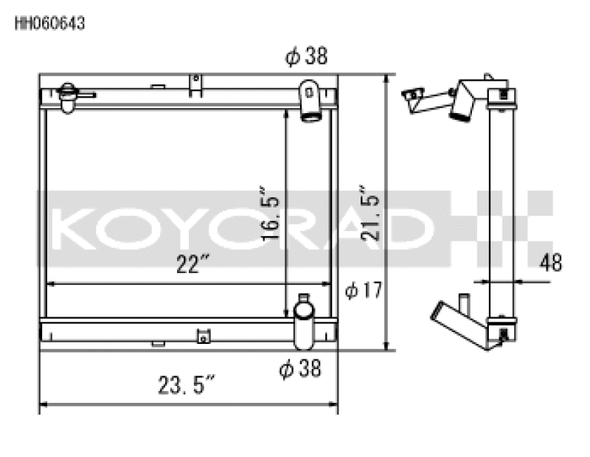

Koyo 89-92 Mazda RX-7 1.3L Late FC Chassis Turbo & Non Turbo Radiator - HH060643
Koyo
MSRP: $508.20$427.59What transmission type is this radiator designed for?This radiator is specifically engineered for manual transmission vehicles, ensuring optimal cooling for high-performance driving scenarios.Is this a direct bolt-on installation?Professional...MSRP: $508.20$427.59 -
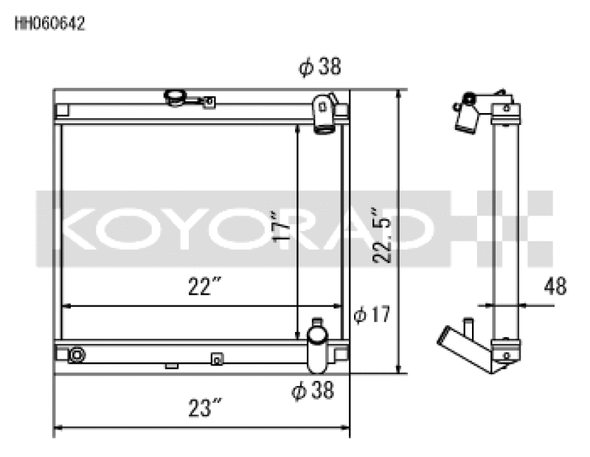
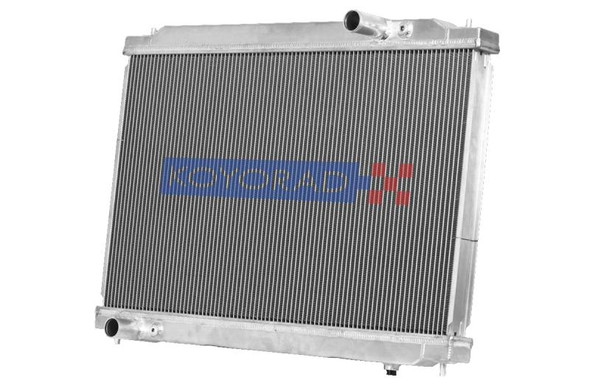
Koyo 86-88 Mazda RX-7 FC NA/Turbo (MT) Radiator - HH060642
Koyo
MSRP: $508.40$427.79What is the optimal engine temperature for my RX-7 FC?KOY Racing Radiators maintain your RX-7 FC's engine within its optimal temperature range for peak power and reliability under demanding conditions.Is professional installation recommended for this...MSRP: $508.40$427.79 -

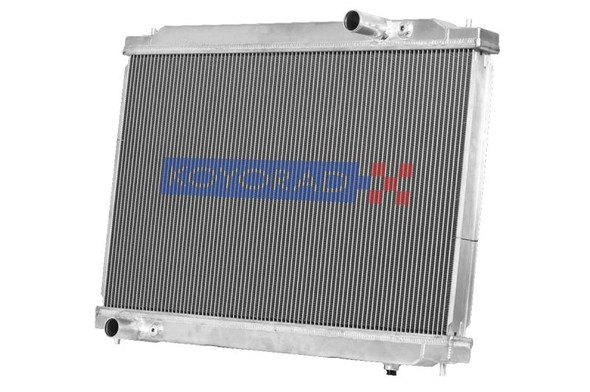
Koyo 03-07 Mitsubishi Evolution 7/8/9 Turbo (MT) Half-Size RACE Radiator - HH032412
Koyo
MSRP: $492.40$414.51Will this radiator fit my Evo 7?KOY Racing Radiators deliver superior engine cooling, engineered for the extreme demands of 2003-2007 Mitsubishi Evolution 7/8/9 Turbo (MT) race applications.How difficult is the installation process?Achieving optimal...MSRP: $492.40$414.51 -
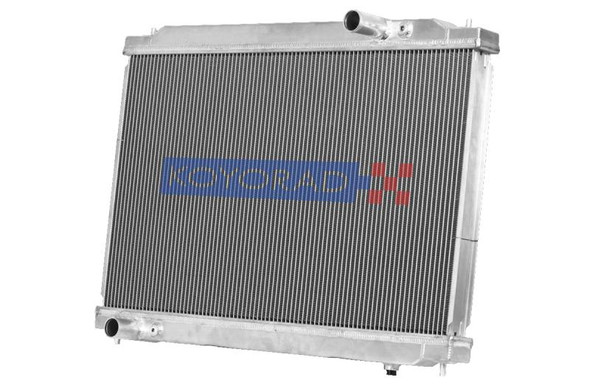

Koyo 03-07 Mitsubishi Evolution 8/9 2.0L Turbo (MT) Radiator - HH031610
Koyo
MSRP: $558.60$469.21What is the primary function of a performance radiator?A performance radiator's primary function is to significantly improve heat dissipation, ensuring your engine operates at optimal temperatures under demanding conditions.How does a KOY Racing Radiator...MSRP: $558.60$469.21 -
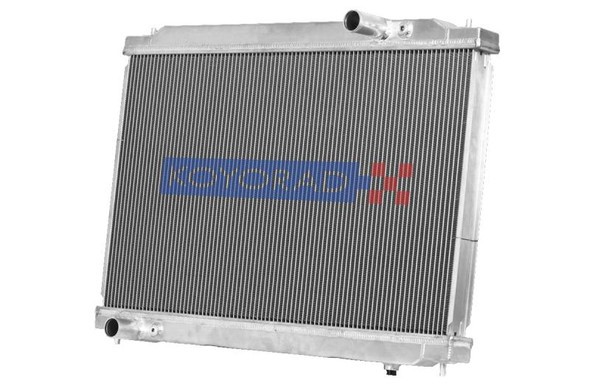
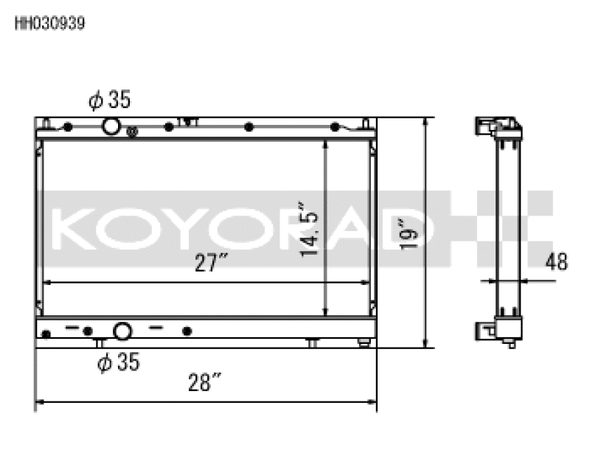
Koyo 97-00 Mitsubishi Evolution 4/5/6 Turbo (MT) Radiator *For use with 03-07 Evo Fan Shroud ONLY* - HH030939
Koyo
MSRP: $551.40$463.26Will this radiator fit my specific vehicle?Koyo Radiators require precise fitment confirmation for your specific vehicle model to ensure proper installation and optimal performance.Is professional installation recommended for this radiator?Professional...MSRP: $551.40$463.26 -


Koyo 68-72 Nissan Skyline L20 I6 MT (KGC10) Radiator (SK-C13 Required) - HH023610
Koyo
MSRP: $536.40$450.88Will this radiator fit my L20 I6 C10?Confirm your vehicle's fitment to ensure this Koyo radiator precisely integrates with your manual transmission L20 I6 C10 chassis.Does this radiator come with a cap?No, the OEM cap is incompatible; this revised filler...MSRP: $536.40$450.88 -
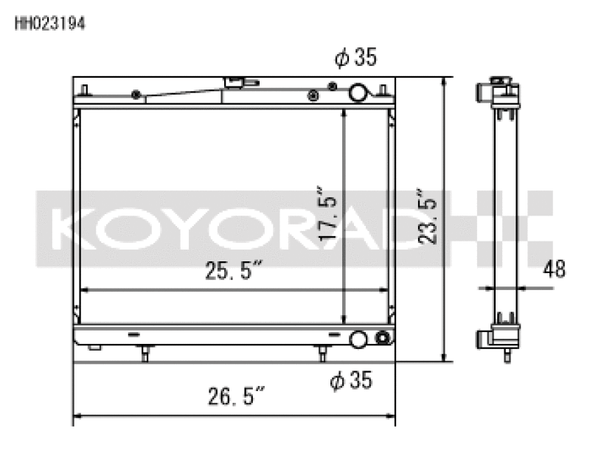

Koyo 00-02 Nissan Skyline GTR 2.6L Turbo Racing Radiator - HH023194
Koyo
MSRP: $558.60$469.21Are Koyo Radiators compatible with my specific vehicle model?Koyo Radiators are meticulously engineered for specific vehicle applications; always confirm exact fitment before purchasing your radiator.What is the typical installation process for a Koyo...MSRP: $558.60$469.21 -
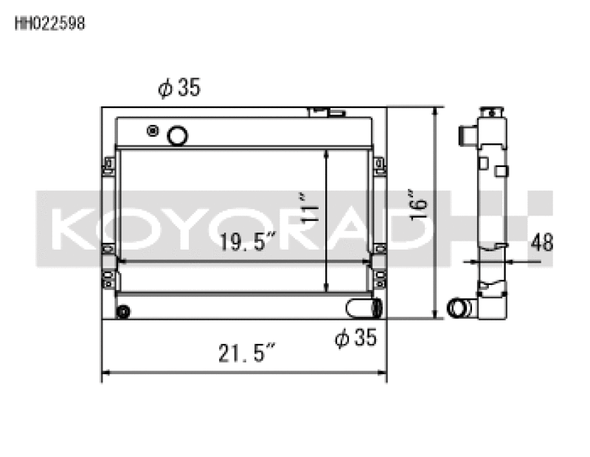

Koyo 68-73 Datsun 510 1.6L (MT) Radiator - HH022598
Koyo
MSRP: $522.20$439.18What manual transmission vehicles does this Koyo radiator fit?This Koyo radiator delivers optimal engine temperature specifically for your 1968-1973 Nissan 510, including wagon models.How difficult is the installation of this radiator?Installation is a...MSRP: $522.20$439.18 -
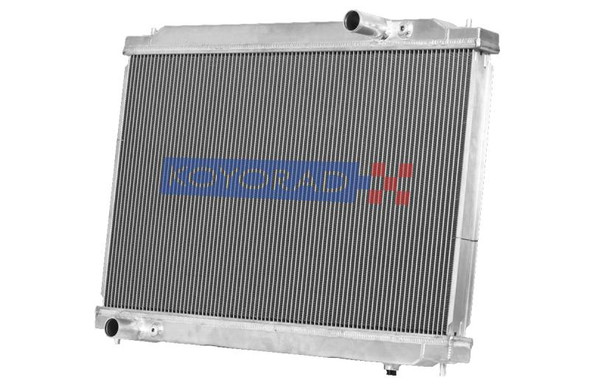

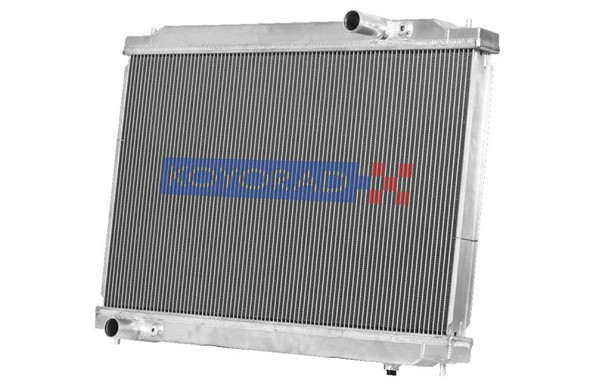
Koyo 09-13 Nissan GT-R 3.8L (AT) Radiator - HH022360
Koyo
MSRP: $821.20$689.59What is the primary function of a performance radiator?Performance radiators are engineered for superior heat dissipation, ensuring consistent engine performance under demanding conditions and preventing power loss.How does an all-aluminum radiator...MSRP: $821.20$689.59 -
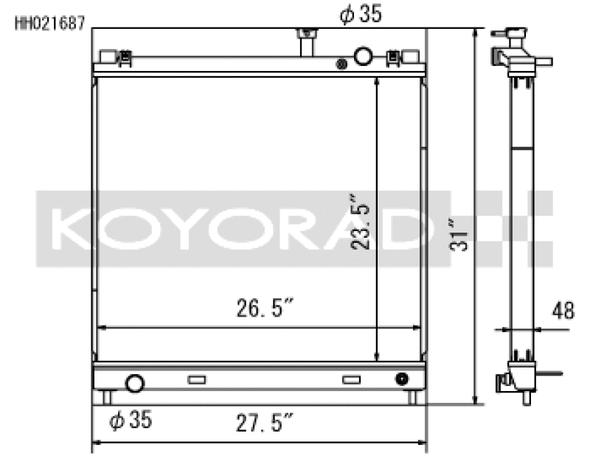
Koyo 04-13 Nissan Titan/Armade/QX56 5.6L V8 (Req. Trans Cooler) Radiator - HH021687
Koyo
MSRP: $645.80$553.29Does this radiator fit my 2008 Nissan Titan?This KOY Racing Radiator is engineered as a direct fit for the 2004-2013 Nissan Titan, ensuring seamless installation and optimal performance.How difficult is it to install this radiator?Installation of this...MSRP: $645.80$553.29 -


Koyo 03-06 Nissan 350Z 3.5L V6 Radiator - HH021568
Koyo
MSRP: $542.20$455.63How do I know if the KOY Racing Radiator is compatible with my vehicle?Confirm radiator compatibility using the provided fitment guide before completing your purchase to ensure a precise installation.What is the installation process for a KOY Racing...MSRP: $542.20$455.63 -
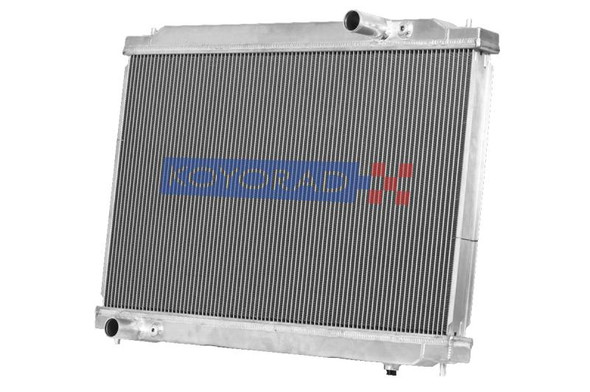

Koyo 1998-Aug 2000 Nissan Skyline GT-R R34 2.6L Turbo Radiator - HH020879
Koyo
MSRP: $559.60$470.00Will this radiator fit my R34 GT-R?This Koyo radiator precisely fits only R34 GT-R models manufactured between 1998 and August 2000.Do I need professional installation for this radiator?Professional installation is strongly recommended to ensure this...MSRP: $559.60$470.00
A performance radiator is the foundation of any serious cooling system — it determines how much thermal load your engine can sustain under hard acceleration, sustained high RPM, and extreme ambient conditions. Motor Sport Mayhem stocks 547 radiators and cooling components across 45 brands, from budget-friendly street upgrades to full race-spec aluminum cores engineered for zero thermal compromise.
Our Top Picks for Radiators
Every product below was selected based on engineering quality, real-world thermal performance, and proven results across street, track, and competition builds.
AER Coolant Pumps
Aeromotive | $375.55
A high-flow electric coolant pump delivering 27 GPM with universal remote-mount capability for routing flexibility in tight engine bays or custom builds.
- Electric-driven flow eliminates the parasitic loss and flow-rate limitations of a belt-driven OEM pump at high RPM
AFE Radiators
aFe | $1,268.00
Bar-and-plate aluminum construction delivers significantly greater core density and burst strength compared to tube-and-fin OEM designs under sustained high-load conditions.
- Includes application-matched silicone hoses, making this a direct-fit thermal upgrade that requires no custom fabrication
AMS Expansion Tanks
AMS | $449.95
An auxiliary intercooler expansion tank engineered to maintain consistent intercooler coolant volume on turbocharged applications where heat-soak resistance is critical.
- Addresses the thermal saturation limitation of OEM reservoir sizing on forced-induction platforms running elevated boost
AND Cooling Plates
Anderson Composites | $539.10
A composite radiator cover that seals the OEM gap between the radiator core and surrounding shroud to force all incoming airflow through the core rather than bypassing around it.
- Improving core airflow efficiency at low speeds and during sustained track sessions is often worth more in coolant temperature reduction than a core upgrade alone
AWE Heat Exchangers
AWE Tuning | $995.00
A liquid-to-air heat exchanger engineered to dramatically reduce charge air temperatures on supercharged applications where intake temps directly limit power ceiling.
- Larger core volume increases heat-soak capacity and extends back-to-back pull consistency on the street and in competition
BDD Xtruded Trans Coolers
BD Diesel | $999.95
A double-stacked extruded transmission cooler designed to handle the extreme ATF heat generated under heavy towing, steep grades, and repeated high-load cycles.
- Double-stacked core geometry doubles heat rejection capacity without requiring additional mounting space versus two separate cooler installations
BX Radiators
BLOX Racing | $180.00
A two-row aluminum core radiator that delivers a direct OEM-position upgrade with substantially improved thermal capacity at an accessible entry-level price point.
- Full aluminum construction eliminates the plastic end-tank cracking failure mode common to aged OEM radiators on high-mileage sport compact platforms
BMR Radiator Supports
BMR Suspension | $199.95
A tubular steel radiator support that replaces the OEM stamped sheetmetal unit to reduce flex, maintain core alignment under hard launches, and add a sway bar mount point.
- Core misalignment from a flexing OEM support causes airflow bypass and hose chafe — a rigid support is a foundational upgrade before any core swap
BOS Water Pumps
Bosch | $226.46
A 50-watt OE-spec electric water pump engineered to OEM replacement tolerances, offering the reliability and sealing quality that aftermarket substitutes frequently fail to match.
- OE supplier-grade internal components mean this pump meets the original design flow rate and pressure spec without tuning or calibration changes
COBB Radiator Shroud
COBB | $435.00
A carbon fiber radiator shroud that seals and directs airflow through the cooling stack while eliminating the heat retention of the OEM plastic shroud in high-underhood-temperature applications.
- Carbon fiber's near-zero thermal conductivity prevents the shroud itself from radiating absorbed heat back into the intake and charge air path
How to Choose the Right Radiator
The single biggest mistake buyers make is treating a radiator as a commodity part. Core construction method, tank material, tube pitch, and fin density each have measurable impact on thermal rejection capacity — and the wrong combination for your application will leave you with the same coolant temperature problems you started with. What separates a performance radiator from an OEM replacement is not just size: it's the engineering balance between flow volume, pressure drop, and surface area across a specific operating temperature range.
Key Specifications
Core construction: Tube-and-fin cores are the OEM standard — lower cost, lighter weight, and adequate for stock power levels. Bar-and-plate cores use a denser, brazed construction that handles higher flow pressures, resists core damage from debris, and rejects more heat per unit area. For anything running boost, high-compression forced induction, or sustained track use, bar-and-plate is the correct choice. The tradeoff is modest weight gain and slightly higher pressure drop, neither of which matters in performance applications.
Row count and core thickness: More rows do not automatically mean better cooling. A thicker two-row core with optimized tube pitch and fin spacing will frequently outperform a shallow three-row unit with poor airflow velocity through the core. Target core thickness based on your fan and shroud airflow capacity — if your fan cannot pull adequate CFM through a 3-inch-plus core, you're adding restriction without adding cooling. Pair any core upgrade with a shroud and fan audit.
Tank material: Aluminum end tanks welded to an aluminum core offer uniform thermal expansion, superior pressure resistance, and no degradation over time. OEM units use crimped plastic tanks on aluminum cores — these develop micro-cracks from repeated heat cycling, particularly in performance applications where operating temperatures run higher and pressure spikes more frequently. Full aluminum construction eliminates this failure mode entirely.
Transmission and oil coolers: Engine coolant temperature is only one thermal variable in a performance build. Automatic transmission fluid degrades rapidly above 200°F — every 20°F above that threshold halves ATF service life. Dedicated external transmission coolers, especially in drivetrain-stressed towing or competition applications, are not optional if you want transmission longevity. Similarly, engine oil coolers become necessary once power output climbs beyond what the OEM cooling capacity was sized for.
Radiator Core Sizing Reference by Application and Heat Load
| Application | Recommended Core Thickness | Core Construction | Additional Cooling Components |
|---|---|---|---|
| Stock / Mild Street (up to 10% power increase) | 1.0"–1.5" | Tube-and-fin, aluminum tanks | OEM fan, upgraded shroud seal |
| Moderate Street Performance (10–40% power increase) | 1.5"–2.0" | Tube-and-fin or bar-and-plate | High-CFM electric fan, full shroud |
| Forced Induction Street / Spirited Track Use | 2.0"–2.5" | Bar-and-plate aluminum | Dual electric fans, oil cooler, trans cooler |
| Dedicated Track / Autocross | 2.5"–3.0" | Bar-and-plate aluminum, high fin density | Dual high-CFM fans, oil cooler, coolant overflow tank |
| Competition / Race Build | 3.0"+ | Full race bar-and-plate, TIG-welded tanks | Electric water pump, remote thermostat, separate ATF and oil coolers |
| Heavy Towing / High-Load Diesel | 2.0"–3.0" | Bar-and-plate aluminum | Transmission cooler (external, dedicated), EGT management |
Price Guide
Entry ($1.38–$150): This tier covers individual components — hoses, fittings, expansion tanks, shroud hardware, and basic fan guards. You are not buying a complete radiator at this price point, but these parts are legitimate upgrades that address sealing inefficiencies, hose degradation, and airflow bypass that cost coolant temperature without requiring a full core replacement.
Mid-range ($150–$500): The majority of enthusiast radiator purchases land here, and for good reason. Full aluminum tube-and-fin and bar-and-plate radiators, quality electric fans, transmission coolers, and electric water pumps are all available in this range from brands with real engineering behind them. This is where a street performance or track-day build gets its cooling foundation sorted without overbuilding for the application.
Premium ($500–$2,390): Race-spec bar-and-plate cores, liquid-to-air heat exchangers for supercharged applications, high-capacity stacked transmission coolers, and carbon fiber airflow management components occupy this tier. The cost is justified when sustained maximum-load operation — sustained towing, endurance racing, or high-boost competition — creates thermal demands that mid-tier hardware genuinely cannot meet. Buying premium for a lightly modified street car is money spent ahead of the actual bottleneck.
Who Is This For?
Radiator and cooling system upgrades serve an exceptionally wide range of customers — from a commuter running a higher-mileage engine that needs a reliable OEM-quality replacement to a full race team managing thermal loads that would destroy stock cooling hardware in a single session.
Track / Autocross — 8.2/10
Track and autocross use is where cooling hardware is most unforgiving — sustained high RPM, low vehicle speed between turns, and repeated hard acceleration cycles stack heat faster than any street scenario. With 164 products scoring 8.2 out of 10 for this application, the category is genuinely well-suited to track demands. Aluminum bar-and-plate cores, high-CFM shrouded fan setups, and dedicated oil coolers are the baseline expectation for any car running regular track days, not optional upgrades.
Racing Competition — 8.2/10
Full competition builds score identically to track day hardware at 8.2/10, but the product selection within those 158 applicable products skews toward race-specific components: electric water pumps to eliminate belt-driven pump cavitation at high RPM, remote-mount thermostats for precise coolant temperature control, and oversized cores that maintain stable coolant temps across full race distance. For engine components running at competition power levels, thermal management is not a secondary concern — it is a performance variable.
Heavy Towing — 8.2/10
Heavy towing ties for the highest application score at 8.2/10, which reflects how severely sustained high-load, low-airspeed towing stresses OEM cooling systems. The 44 products rated for this application are specifically engineered for the thermal demands of towing: thick-core radiators with high-capacity transmission coolers are the core combination, since ATF overheating is typically the first failure point, not coolant temperature. This is a use case where investing in a proper dedicated transmission cooler delivers measurable protection against the most common towing-related drivetrain failures.
Street Performance — 7.8/10
With 196 products scoring 7.8/10 for street performance, this is the broadest segment in the category and covers everything from a simple aluminum radiator swap on a modified daily to a full electric fan and coolant reservoir upgrade on a turbocharged street car. Street performance products balance maximum thermal capacity with OEM-compatible fitment, keeping installation straightforward without requiring custom fabrication. The score reflects genuine performance gains available without track-only compromises in fan noise, coolant warm-up time, or serviceability.
Easy DIY Install — 7.8/10
A 7.8/10 DIY score across 75 products indicates that a meaningful portion of this catalog is designed for straightforward home installation — direct-fit aluminum radiators, bolt-on transmission cooler kits, and drop-in electric fan assemblies are all achievable with basic hand tools and mechanical confidence. The category does include components — remote-mount water pumps, custom-routed oil cooler lines — that require more fabrication skill, but the majority of performance radiator upgrades are accessible to a motivated home mechanic without specialized equipment.
Trusted Radiator Brands We Carry
The brands leading this category have earned their position through engineering depth, not marketing spend. Mishimoto backs every product with a lifetime warranty and has built one of the most extensive fitment databases in the aftermarket — their all-aluminum core designs and silicone hose kits set the benchmark for direct-fit street and track upgrades. CSF supplies cooling systems to factory motorsport programs and applies that race engineering directly to their aftermarket catalog, which is why their products command a higher average price and deliver measurable temperature reductions over OEM hardware. Koyo is an OEM supplier to major Japanese manufacturers and produces some of the most precisely engineered tube-and-fin cores available — their tolerances and brazed joint quality are genuinely OEM-grade or better. SPAL is the global reference standard for high-CFM electric fans used in motorsport and OEM applications alike, with airflow efficiency and reliability data that no generic fan brand can match. BD Diesel dominates the heavy-duty diesel transmission cooler segment with extruded-core designs purpose-built for maximum ATF heat rejection under sustained towing loads. Perrin Performance and Wehrli round out the catalog with application-specific cooling solutions engineered to the precise thermal demands of the turbocharged platforms they specialize in.
Frequently Asked Questions
Are aftermarket radiators any good?
Quality aftermarket radiators from established brands are not just good — for performance applications, they are categorically better than OEM replacements in the ways that matter most. Full aluminum construction eliminates the plastic end-tank cracking failure mode of OEM units, bar-and-plate cores reject more heat per unit volume under sustained load, and aftermarket units are typically available in thicker core configurations not offered at the OEM level. The critical qualifier is brand selection: engineering-backed brands with documented testing data produce genuinely superior products, while no-name import radiators frequently fail to meet their advertised core dimensions and weld quality. Stick to brands with real fitment data, warranty support, and a track record in the performance community.
Are aftermarket radiator hoses worth it?
Silicone aftermarket radiator hoses are worth the upgrade on any vehicle that sees elevated coolant temperatures, sustained high-load operation, or high mileage. OEM rubber hoses degrade from heat cycling, hardening and developing micro-cracks that lead to slow leaks before any visible external failure — silicone resists this degradation and maintains flexibility across a far wider temperature range. Silicone hoses also hold shape under high-flow conditions where a collapsing OEM lower hose can starve the water pump inlet and cause cavitation. The fitment precision of quality aftermarket hoses is equally important — a hose that requires excessive clamping force to seal is compensating for a dimensional mismatch that will cause problems over time.
Are aftermarket transmission coolers worth it?
For any automatic transmission operating under towing loads, performance driving, or high-ambient-temperature conditions, an aftermarket transmission cooler is one of the highest-value thermal upgrades available. ATF begins to oxidize and lose viscosity above 200°F, and every 20°F increase in sustained operating temperature above that threshold roughly halves the fluid's service life and degrades clutch pack performance over time. OEM transmission coolers — typically integrated into one side of the radiator core — are sized for normal operating conditions, not sustained maximum-torque scenarios. A standalone external transmission cooler with dedicated airflow removes ATF heat independently of engine coolant temperature, which is particularly important during high-load towing when both systems are under simultaneous stress.
Are aluminum coolant reservoirs better than plastic?
Aluminum coolant reservoirs are superior to plastic in every performance-relevant metric: they do not crack from sustained elevated pressure, they do not degrade from long-term chemical exposure to modern ethylene glycol coolant formulations, and they do not become brittle from repeated heat cycling. OEM plastic reservoirs are a cost and weight optimization that is entirely appropriate for stock vehicles — but performance builds that run higher coolant pressures, elevated temperatures, or aggressive coolant blends will eventually crack a stock plastic reservoir. Aluminum units also dissipate heat through the reservoir walls, providing a minor but real additional cooling surface area. For a daily driver with stock power and coolant temps, OEM plastic is adequate; for anything modified, aluminum is the correct long-term choice.
Are aftermarket water pumps as good as OEM — and are they worth it?
The answer depends entirely on whether you are replacing a failed OEM pump or upgrading for performance. For a straight OEM replacement, quality-tier aftermarket pumps from OEM supplier brands match original specifications and are entirely appropriate. For performance applications, electric water pumps represent a genuine upgrade over mechanically driven units: they deliver consistent, electronically controlled flow rate regardless of engine RPM, eliminate the parasitic drag of a belt-driven pump, and can continue circulating coolant after engine shutdown to prevent heat-soak damage in turbocharged applications. The caveat is that cheap off-brand water pumps — particularly on European vehicles with plastic impeller designs — frequently use inferior materials that fail within 30,000 miles; this is a component where spending for quality-tier parts is not optional.
Building something specific? Our performance specialists can help you select the right Radiators for your application — street, track, or full race build.