
Radiator Hoses
- Product
- Qty in Cart
- Quantity
- Price
- Subtotal
-


Mishimoto 97-01 Honda Prelude Black Silicone Hose Kit - MMHOSE-PRE-97BK
Mishimoto
MSRP: $176.00$159.95Which vehicles will the Mishimoto Silicone Radiator Hoses fit?Mishimoto Silicone Radiator Hoses are engineered to precisely fit your 1994-2001 Honda Accord and Prelude models.What is the recommended...MSRP: $176.00$159.95 -

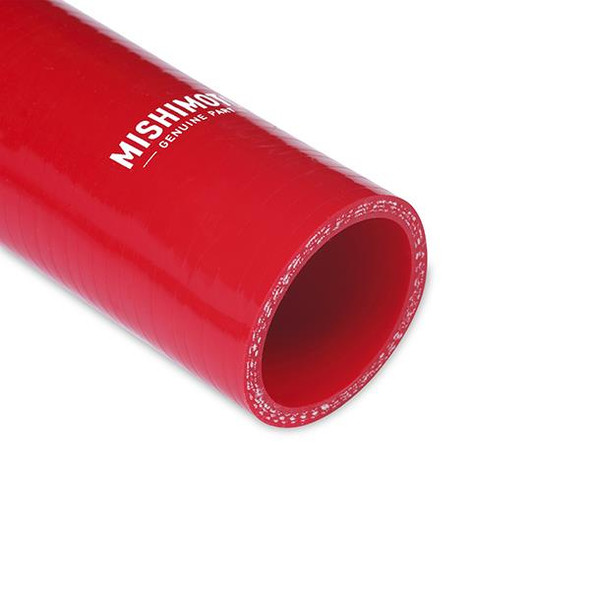
Mishimoto 15+ Ford Mustang GT Red Silicone Upper Radiator Hose - MMHOSE-MUS8-15URD
Mishimoto
MSRP: $124.00$112.95What is the difference between silicone and rubber radiator hoses?Silicone radiator hoses offer superior heat and pressure tolerance compared to traditional rubber for enhanced engine cooling system...MSRP: $124.00$112.95 -
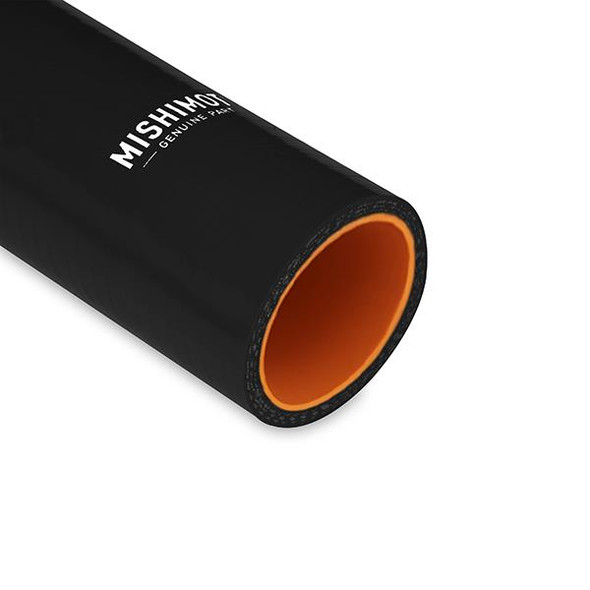

Mishimoto 15+ Ford Mustang GT Black Silicone Upper Radiator Hose - MMHOSE-MUS8-15UBK
Mishimoto
MSRP: $124.00$112.95Are Mishimoto radiator hoses durable?Mishimoto radiator hoses feature four layers of silicone with heat-resistant embedded fibers for exceptional durability and superior heat resistance.How long will...MSRP: $124.00$112.95 -


Mishimoto 2015+ Ford Mustang GT Silicone Lower Radiator Hose - Red - MMHOSE-MUS8-15LRD
Mishimoto
MSRP: $249.00$225.95Will the Mishimoto Silicone Radiator Hoses fit my 2015-2017 Ford Mustang?Mishimoto Silicone Radiator Hoses are engineered to precisely fit your 2015-2017 Ford Mustang, ensuring seamless integration...MSRP: $249.00$225.95 -
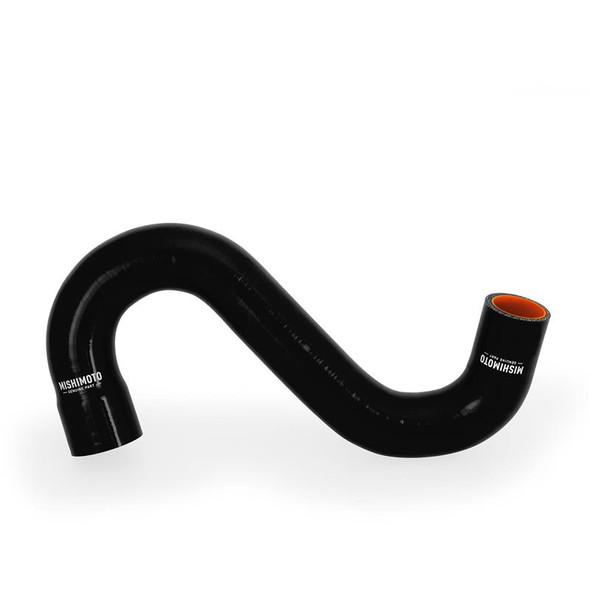
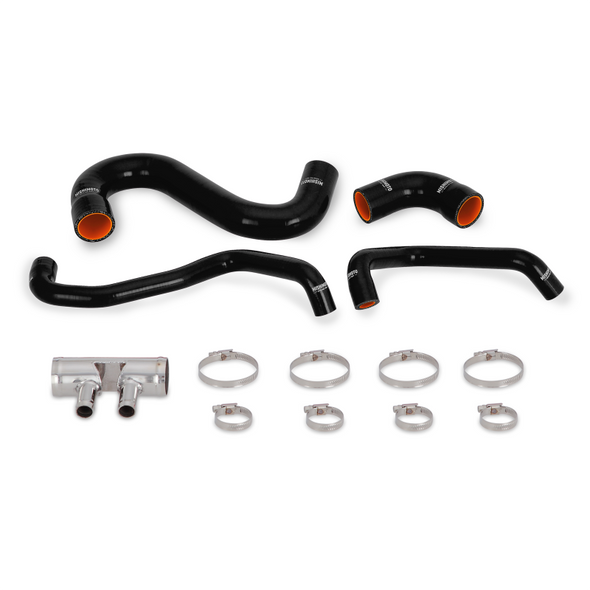
Mishimoto 2015+ Ford Mustang GT Silicone Lower Radiator Hose - Black - MMHOSE-MUS8-15LBK
Mishimoto
MSRP: $249.00$225.95What is the primary function of the MM Silicone Radiator Hose?The Mishimoto Silicone Radiator Hose ensures superior cooling efficiency, delivering consistent engine performance under demanding...MSRP: $249.00$225.95 -
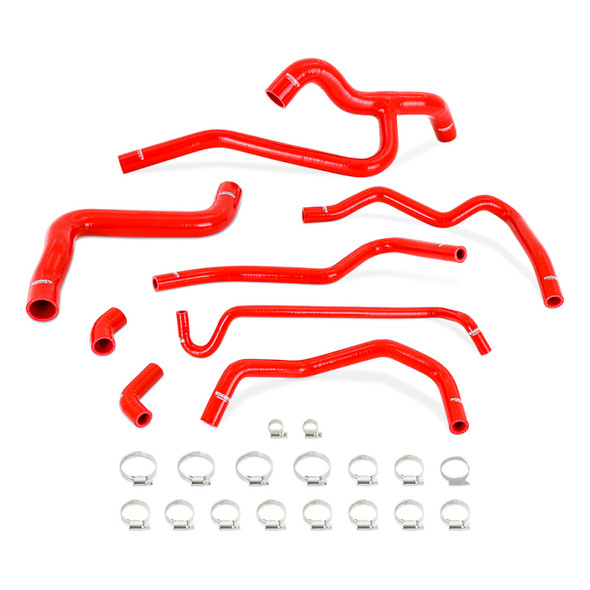

Mishimoto 05-10 Mustang V6 Silicone Radiator & Heater Hose Kit - Red - MMHOSE-MUS40-05RD
Mishimoto
MSRP: $315.00$285.95Does the Mishimoto silicone radiator hose kit fit my 2007 Ford Mustang?Yes, this Mishimoto silicone radiator hose kit is engineered to precisely fit your 2007 Ford Mustang, ensuring optimal cooling...MSRP: $315.00$285.95 -
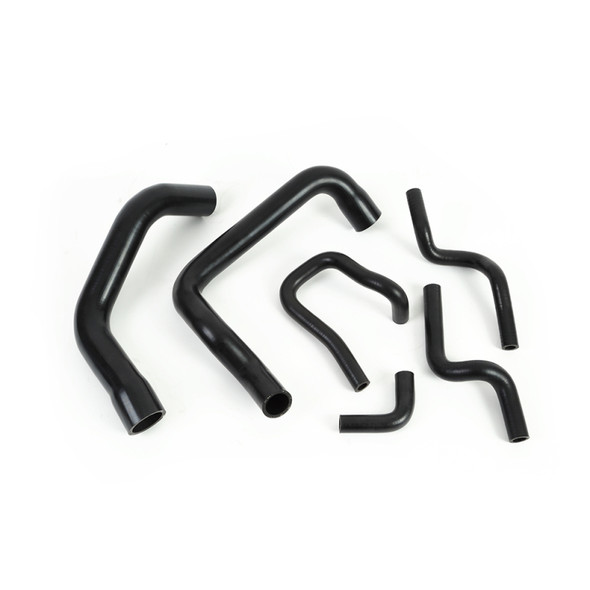

Mishimoto 86-93 Ford Mustang/Capri 5.0 EPDM Replacement Hose Kit - MMHOSE-MUS-86E
Mishimoto
$99.95Are these radiator hoses a direct replacement?These direct-fit EPDM coolant hoses are designed specifically for 1986-1993 Ford Mustang and Mercury Capri models, ensuring seamless installation.How...$99.95 -

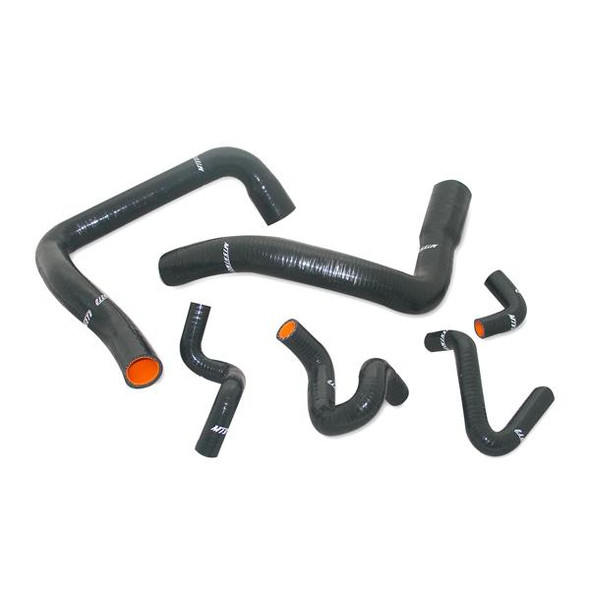
Mishimoto 86-93 Ford Mustang Black Silicone Hose Kit - MMHOSE-MUS-86BK
Mishimoto
MSRP: $224.00$203.95What is the maximum temperature the Mishimoto radiator hose can withstand?Mishimoto radiator hoses withstand extreme heat up to 330 degrees Fahrenheit, ensuring optimal engine protection during...MSRP: $224.00$203.95 -


Mishimoto 10-13 Mazdaspeed 3 2.3L Black Silicone Hose Kit - MMHOSE-MS3-10BK
Mishimoto
MSRP: $250.00$226.95Are Mishimoto radiator hoses a direct fit for my vehicle?Confirm vehicle fitment using our online tool; Mishimoto radiator hoses are engineered for precise, direct-fit installation on compatible...MSRP: $250.00$226.95 -
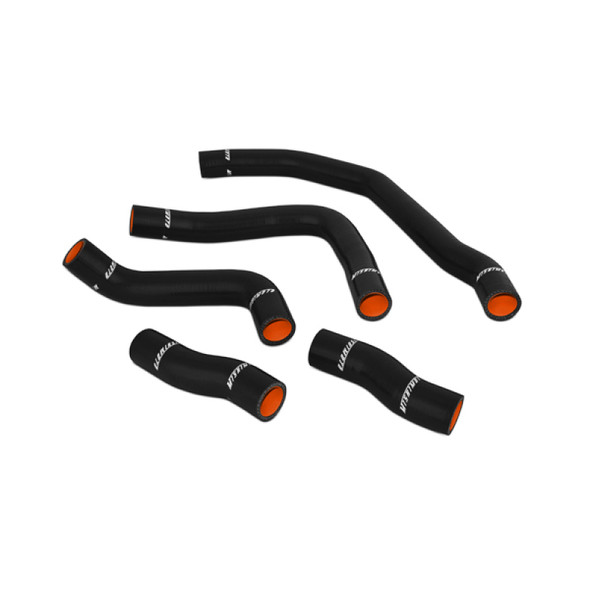
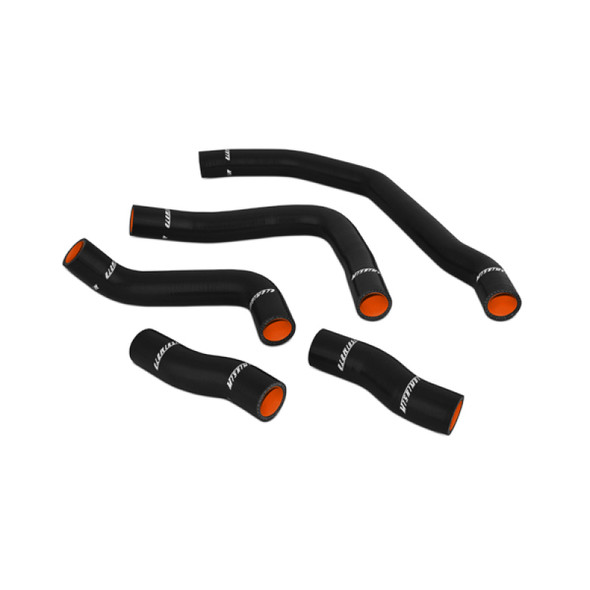
Mishimoto 90-99 Toyota MR2 Turbo Black Silicone Hose Kit - MMHOSE-MR2-90BK
Mishimoto
MSRP: $184.00$166.95What is the expected lifespan of a Mishimoto silicone radiator hose?Mishimoto silicone radiator hoses significantly exceed OEM rubber hose lifespan due to their robust construction and superior...MSRP: $184.00$166.95 -
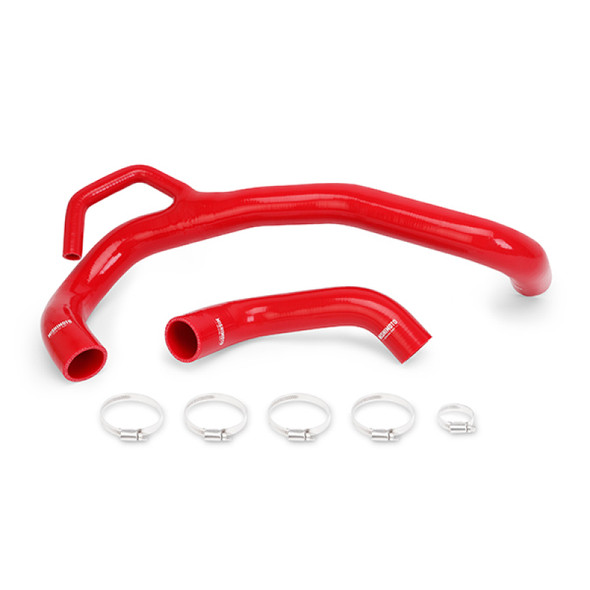
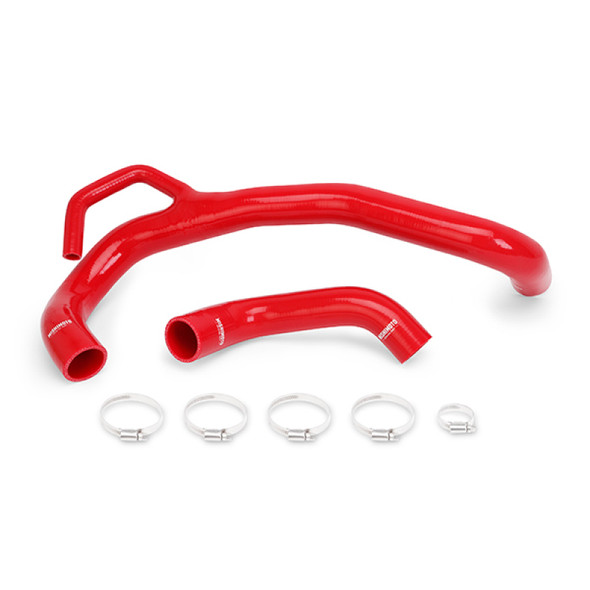
Mishimoto 2011+ Mopar LX Chassis 6.4L Hemi Red Silicone Hose Kit - MMHOSE-MOP64-11RD
Mishimoto
MSRP: $231.00$209.95Which vehicles are compatible with the Mishimoto MM Silicone Radiator Hose Kit?These Mishimoto MM Silicone Radiator Hoses precisely fit 2011-2014 Chrysler 300, Dodge Challenger, and Dodge Charger...MSRP: $231.00$209.95 -


Mishimoto 2011+ Mopar LX Chassis 6.4L Hemi Black Silicone Hose Kit - MMHOSE-MOP64-11BK
Mishimoto
MSRP: $231.00$209.95Are Mishimoto radiator hoses compatible with my vehicle?Confirm fitment using our compatibility guide to ensure these Mishimoto radiator hoses are designed for your specific vehicle.Is professional...MSRP: $231.00$209.95
Radiator hoses are the pressurized conduit between your engine and cooling system — the first point of failure when heat, boost, or age degrades the factory rubber. Motor Sport Mayhem stocks 245 performance radiator hoses from 45 brands, spanning from direct OEM-fit replacements to full silicone race kits built to handle sustained 30+ PSI coolant pressure and underhood temperatures that destroy stock components.
Our Top Picks for Radiator Hoses
Every product below was selected based on real-world performance credentials, engineering quality, and verified fitment across street and competition applications.
AER Coolant Pumps
Aeromotive | $375.55
A 27 GPM high-flow electric coolant pump designed for universal remote-mount installations demanding consistent flow independent of engine RPM.
- Electric-drive design eliminates belt-driven flow restrictions at low RPM — critical for idle-heavy track conditions and paddock cooldown cycles
AFE Radiators
aFe | $1,268.00
A bar-and-plate GT Series radiator bundled with matching black silicone hoses, delivering a complete thermal management upgrade in a single kit.
- Bar-and-plate core construction offers superior pressure resistance and thermal capacity over stock tube-and-fin designs under sustained high-load conditions
AMS Expansion Tanks
AMS | $449.95
An auxiliary intercooler expansion tank engineered to increase coolant volume and eliminate aeration in high-output forced induction cooling circuits.
- Increased reservoir volume stabilizes intercooler coolant temps across back-to-back pulls — directly relevant for turbocharged street and track applications
AND Cooling Plates
Anderson Composites | $539.10
A carbon fiber radiator cover that channels airflow precisely through the core while adding structural rigidity and weight savings over the factory plastic shroud.
- Carbon fiber construction saves meaningful weight over OEM plastic while improving airflow direction — a functional gain that also cleans up the engine bay visually
AWE Heat Exchangers
AWE Tuning | $995.00
A purpose-built ColdFront heat exchanger that dramatically increases charge air cooling capacity for supercharged applications requiring sustained low inlet temps.
- Increased core volume and optimized flow path reduce heat soak between runs — the primary performance limiter on water-to-air intercooled platforms
BDD Xtruded Trans Coolers
BD Diesel | $999.95
A double-stacked extruded transmission cooler kit built for heavy-duty thermal loads where factory transmission fluid temps regularly exceed safe operating thresholds.
- Double-stacked core geometry nearly doubles surface area versus single-pass coolers — essential for towing and performance diesel applications where ATF temps are the primary durability concern
BX Radiators
BLOX Racing | $180.00
A 2-row aluminum radiator delivering a proven core upgrade over the factory single-row unit at an accessible price point for budget-conscious performance builds.
- Aluminum core transfers heat more efficiently than the OEM plastic-tank/aluminum-core hybrid and withstands higher system pressures without degrading over time
BMR Radiator Supports
BMR Suspension | $199.95
A tubular steel radiator support that replaces the flimsy factory stamped unit while integrating a sway bar mount for a clean, dual-function front-end upgrade.
- Tubular construction adds chassis rigidity at the front clip — a measurable handling benefit on dedicated track cars where front-end flex affects steering precision
BOS Water Pumps
Bosch | $226.46
A 50W OE-spec electric water pump engineered to direct-fit OEM applications where factory pump failure is a known reliability concern.
- Bosch's OEM supplier pedigree means this pump meets or exceeds the original design spec — the right call when you need reliability over maximum flow rate
COBB Radiator Shroud
COBB | $435.00
A carbon fiber radiator shroud that seals airflow through the core on high-output EcoBoost platforms where underhood heat management directly affects charge air temperatures.
- Proper shroud sealing forces all available ram air through the radiator core rather than bypassing it — a low-cost thermal gain that compounds with other cooling upgrades
How to Choose the Right Radiator Hoses
The factory rubber hose that left the assembly line was engineered to last under normal operating pressures — typically 13–16 PSI at coolant temps up to 230°F. The moment you increase power output, run forced induction, push the car on track, or simply log enough miles, that baseline spec becomes a liability. The difference between a quality aftermarket hose and a failed one comes down to three things: wall construction, reinforcement layer count, and the temperature rating of the inner liner compound. A hose rated to 50 PSI burst pressure and 350°F continuous service is not the same product as one rated to 30 PSI and 257°F — and that gap becomes critical under sustained hard use.
Key Specifications
Silicone is the dominant aftermarket material for a reason. Compared to EPDM rubber, silicone maintains its elasticity and structural integrity across a far wider temperature range — typically -65°F to 350°F versus EPDM's practical ceiling around 257°F. More importantly, silicone does not harden, crack, or swell over time the way rubber does when exposed to modern coolant formulations containing OAT or HOAT additives. For any car that sees track days or elevated underhood temperatures, silicone is the material specification to target, not a luxury upgrade.
Reinforcement ply count is the specification most buyers overlook. A single-ply hose is adequate for naturally aspirated street applications running standard 15–16 PSI cooling systems. Turbocharged engines, engines with upgraded water pumps, and any application with a higher-capacity radiator running tighter thermostat control should be looking at 3-ply or 4-ply construction. Each additional polyester or aramid reinforcement layer increases burst pressure rating and reduces expansion under sustained pressure — hose ballooning is a real failure mode that restricts flow before the hose ever visually fails.
Hose ID (inner diameter) must match the cooling system's flow requirements. Dropping to a smaller ID than OEM to save money creates a restriction point that raises coolant velocity, reduces heat transfer dwell time in the radiator, and increases system pressure upstream of the constriction. Conversely, upsizing ID without a corresponding increase in pump capacity achieves nothing. For most street and track builds, matching OEM ID in a higher-spec silicone construction is the correct upgrade path. Upsizing ID makes sense only when paired with a higher-flow water pump and matched radiator inlet/outlet ports.
For forced induction platforms, pay specific attention to the charge air cooler circuit hoses if your car uses a water-to-air intercooler — these hoses operate in a separate low-pressure circuit but are exposed to extreme heat cycles that degrade standard rubber rapidly. The forced induction cooling circuit demands silicone construction and proper clamp land length on both ends. Inspect clamp land surface finish — a smooth, parallel surface without molded ridges is required for leak-free sealing with constant-tension clamps at elevated temperatures.
Radiator Hose Specification Guide by Application
| Application Type | Recommended Material | Minimum Ply Count | Recommended Burst Pressure Rating |
|---|---|---|---|
| Daily Driver / OEM Replacement | EPDM Rubber or 1-ply Silicone | 1-ply | 30 PSI minimum |
| Street Performance (N/A) | 3-ply Silicone | 3-ply | 50 PSI minimum |
| Street Performance (Forced Induction) | 4-ply Silicone | 4-ply | 80 PSI minimum |
| Track / Autocross | 4-ply Silicone | 4-ply | 80–100 PSI |
| Competition / Race | Reinforced Silicone or Stainless-Lined Silicone | 4–6-ply | 100+ PSI |
| Heavy Tow / High Thermal Load | 4-ply Silicone with Heat Shield Sleeve | 4-ply | 80 PSI minimum, 350°F+ rated |
Price Guide
Entry ($1.38–$100): This range covers direct OEM-replacement hoses in EPDM rubber or basic single-ply silicone. Brands like Gates operate here with products that meet or exceed original equipment specs for daily driving. These are the right choice for a stock-power street car where longevity and leak-free fit matter more than pressure ratings. Expect standard temperature ratings and single-ply construction.
Mid-range ($100–$400): Most performance enthusiasts land here. This bracket covers multi-ply silicone kits from proven performance brands, delivering genuine material upgrades over OEM rubber at prices that make sense for modified street cars and weekend track drivers. Construction quality, reinforcement ply count, and temperature ratings all improve meaningfully over the entry tier. This is where the investment pays dividends in reliability under hard use.
Premium ($400–$2390.00): Full cooling system overhauls, complete silicone hose kits for high-output competition engines, and bundled cooling packages including radiators, hoses, and ancillary components live in this range. The cost is justified for dedicated race builds, high-power forced induction street cars, and applications where a single cooling failure ends a race weekend or damages an engine. Premium products in this tier are engineered to work as a system, not as individual components.
Who Is This For?
Radiator hoses serve every level of performance use — from a daily commuter needing a reliable OEM-quality replacement to a dedicated race team managing coolant temps at the limit of the engine's thermal tolerance.
Track / Autocross — 8.2/10
Track and autocross use earns the highest usage score in this category because the failure consequences are most severe and most immediate. Sustained high-RPM operation, repeated heat cycles, and elevated system pressures from performance thermostats push standard rubber hoses to failure faster than any other application. A silicone hose upgrade is one of the most cost-effective reliability modifications available to a track-day driver — it removes a common failure point before it becomes a DNF or an engine-damaging overheat event.
Racing Competition — 8.2/10
Competition applications score equally high as track use because the engineering demands are equivalent — and the tolerance for failure is zero. Race-spec hoses in this category are built for known operating conditions: specific pressure ratings, fixed routing constraints, and thermal environments that exceed anything a street car experiences. Purpose-built competition hoses often include stainless braid or aramid reinforcement layers that maintain dimensional stability under the pressure spikes generated by high-flow racing water pumps.
Heavy Towing — 8.2/10
Heavy towing creates a sustained thermal load that is arguably harder on cooling system components than a track session — because track sessions end and the car cools down, while towing can sustain maximum thermal load for hours. Coolant temperatures under heavy tow regularly approach or exceed 230°F, and the combination of sustained heat and elevated system pressure accelerates rubber hose degradation faster than any other street application. Upgrading to high-temperature rated silicone hoses on a tow vehicle is straightforward preventive maintenance with a clear cost-benefit.
Street Performance — 7.8/10
Street performance builds score well here because modified engines — even modestly tuned naturally aspirated platforms — generate more heat than the factory cooling system was designed to handle. An engine making 20–30% more power than stock is generating proportionally more thermal load, and the OEM hoses were sized and spec'd for stock output. Silicone upgrades on a street performance build extend service life, eliminate the soft-spot bulging common in aged OEM hoses, and provide confidence for spirited driving without constant inspection anxiety.
Engine Performance — 7.8/10
Engine performance modifications and cooling system upgrades are directly linked — any increase in combustion efficiency or output requires a cooling system capable of handling the additional thermal rejection. Hose selection is part of the broader engine components strategy, particularly on boosted applications where intercooler circuit hoses operate in parallel with the main coolant circuit. A performance-grade hose set is the foundation that keeps everything else in the cooling system performing as designed.
Trusted Radiator Hoses Brands We Carry
The brands that dominate this category earned their position through engineering depth and real-world validation. Mishimoto built its reputation on extensive fitment coverage and rigorous pressure-cycle testing across thousands of platform-specific kits, making them a default choice for enthusiasts who want a verified fit. Gates brings OEM-supplier credibility — they manufacture original equipment hoses for major automakers, which means their aftermarket product line is engineered to the same dimensional and material standards. Perrin Performance focuses on platform-specific fitment precision for high-demand enthusiast applications, with construction specs designed for forced induction environments. Wehrli Custom Fabrication targets the diesel performance segment specifically, where towing-induced thermal loads demand silicone construction that outlasts any factory rubber component. DEI rounds out the category with heat management solutions including hose sleeves and wraps that address underhood temperature at the source — a complementary approach that extends the service life of any hose regardless of brand. Together these brands cover every application from OEM-grade replacement to full race construction.
Frequently Asked Questions
Are aftermarket radiator hoses worth it?
For any car that sees elevated power output, track use, or high mileage, yes — aftermarket silicone radiator hoses are a straightforward cost-benefit upgrade. The factory EPDM rubber hoses are engineered for stock thermal and pressure conditions with a defined service life; they harden, swell, and crack as OAT and HOAT coolant formulations degrade the rubber compound over time. Silicone hoses are chemically inert to modern coolants, maintain their elasticity across a far wider temperature range, and carry burst pressure ratings that exceed what most factory cooling systems can generate even with performance upgrades. For a daily driver with no modifications, quality OEM-replacement rubber is fine — the calculus changes the moment you add power, track the car, or run a higher-output thermostat.
Are aluminum coolant reservoirs and tanks better than plastic?
Aluminum tanks outperform plastic in every dimension that matters under performance conditions. Plastic degrades with repeated thermal cycling — the material fatigues, becomes brittle, and develops micro-cracks that can release coolant under pressure without warning. Aluminum maintains structural integrity through thousands of heat cycles, handles higher sustained temperatures without deforming, and can be repaired by welding if physically damaged rather than requiring full replacement. For forced induction applications where intercooler coolant circuits generate aggressive heat cycles, aluminum reservoir construction is the correct engineering choice — the weight penalty over plastic is negligible and the durability gain is significant.
Are aftermarket water pumps as good as OEM — and are they worth it?
Quality aftermarket water pumps from established manufacturers — particularly those with OEM supplier heritage — match or exceed OEM specification for flow rate, seal construction, and bearing longevity. The value proposition depends entirely on the application: for a stock engine on a daily driver, a direct OEM-spec replacement in the $150–$250 range is the rational choice. For performance builds, electric water pumps offer a meaningful engineering advantage — they deliver consistent flow regardless of engine RPM, can be controlled independently of engine speed for post-run cooldown, and eliminate the parasitic accessory load of a belt-driven pump. The premium for electric construction is justified on any engine where consistent coolant flow at low RPM or idle is a performance or safety concern.
Are aftermarket radiators any good?
Aftermarket radiators from reputable performance brands are not just good — they are measurably superior to OEM units for performance applications. The factory radiator is sized for normal operating conditions with defined coolant temperature targets; it was not engineered for sustained high-load operation, track driving, or increased power output. Performance aftermarket radiators use aluminum construction throughout (versus OEM plastic-tank designs), larger core thickness, and denser fin-per-inch counts to increase heat rejection capacity — often by 25–50% over the OEM unit. Bar-and-plate core construction, available in the premium tier, adds burst pressure resistance that tube-and-fin designs cannot match. For a high-power or track-focused build, an upgraded radiator is a foundational investment in long-term engine reliability.
Are aftermarket transmission coolers worth it for performance and towing applications?
Automatic transmission fluid operating above 200°F degrades at an accelerating rate — fluid life is cut in half for every 20°F above the 175°F optimal operating range, and sustained operation above 250°F causes irreversible seal and clutch pack damage. The factory transmission cooler is sized for normal driving conditions, not sustained towing loads or the heat generated by repeated hard acceleration in a performance application. An aftermarket transmission cooler with meaningfully more surface area than the OEM unit is one of the highest return-on-investment upgrades available for any tow vehicle or performance automatic transmission — the component cost is modest compared to the cost of a transmission rebuild or replacement. For diesel trucks and heavy tow applications, an upgraded cooler is essentially mandatory preventive maintenance. See our broader drivetrain category for complementary transmission performance components.
Building something specific? Our performance specialists can help you select the right Radiator Hoses for your application — street, track, or full race build.