
Grips
- Product
- Qty in Cart
- Quantity
- Price
- Subtotal
-
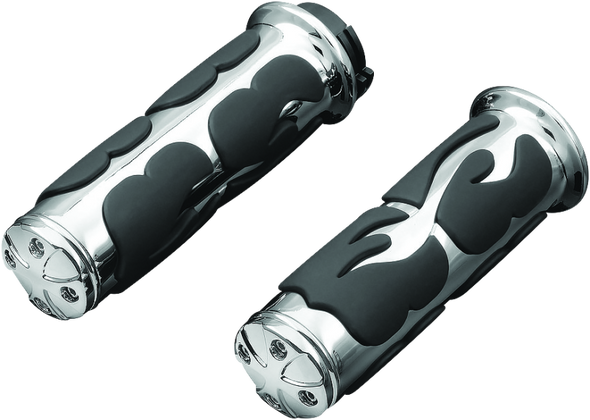
Kuryakyn ISO Flame Grips Throttle-By-Wire Chrome - 6269
Kuryakyn
$110.99Will these grips fit my Harley Davidson?Confirm fitment with your specific vehicle, as these grips are designed for throttle-by-wire Harley-Davidson models, ensuring proper integration.Are these...$110.99 -
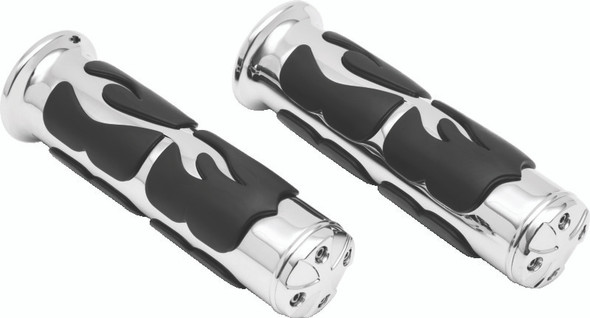
Kuryakyn ISO Flame Grips Metric Universal 1inch Chrome - 6262
Kuryakyn
$122.99What is the install type for the Kuryakyn KUR Hand Grips D?KUR Hand Grips D feature a universal install type, simplifying fitment across a wide range of motorcycles.How do the Kuryakyn KUR Hand Grips...$122.99 -
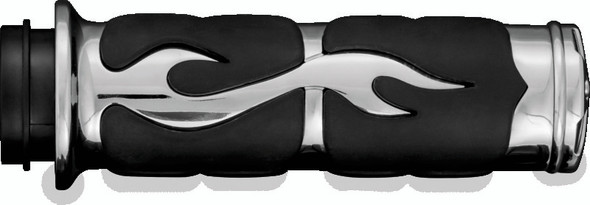

Kuryakyn ISO Flame Grips Metric Chrome - 6261
Kuryakyn
$120.99What is the install process for these grips?Professional installation is recommended for these Kuryakyn Grips to ensure proper fitment and a secure, comfortable ride.Are these grips comfortable for...$120.99 -


Kuryakyn ISO Flame Grips Dual Cable Chrome - 6260
Kuryakyn
$110.99Will these grips fit my bike?KUR Hand Grips D require a fitment confirmation with your specific vehicle to ensure proper installation and function.Are these grips difficult to install?Professional...$110.99 -


Kuryakyn Stiletto End Caps Chrome - 6249
Kuryakyn
$58.99How do I determine if the KUR Hand Grips D fit my motorcycle?Confirm fitment with your vehicle's specific make, model, and year before installation to ensure compatibility with your motorcycle.Are...$58.99 -

Kuryakyn ISO Grip End Cap Chrome (Ea) - 6244
Kuryakyn
$38.99What is the primary benefit of the Kuryakyn KUR Hand Grips D?KUR Hand Grips D deliver a secure and comfortable grip for enhanced control on every ride, directly improving rider confidence.Are these...$38.99 -
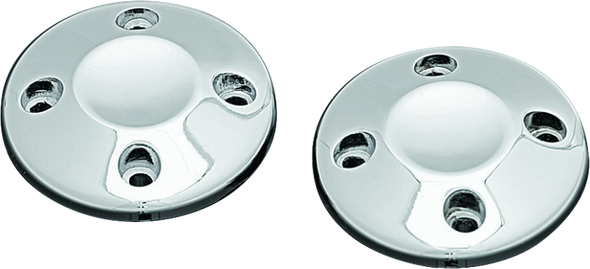
Kuryakyn ISO Grip End Caps (Pair) - 6243
Kuryakyn
$59.99How do I confirm these grips will fit my motorcycle?Kuryakyn Grips D require you to confirm specific vehicle fitment before purchase to ensure proper installation and function.Is professional...$59.99 -

Kuryakyn Universal ISO Grip 1inch Bars Chrome - 6240
Kuryakyn
$114.99Will these grips fit my motorcycle?KUR Hand Grips D offer universal fitment, easily accommodating 1995-2022 Honda VT1300 models and select Suzuki cruisers.How difficult are these grips to...$114.99 -


Kuryakyn Grip End Weights Chrome - 6238
Kuryakyn
$55.99What are the main benefits of Kuryakyn Grips?KUR Hand Grips eliminate harsh handlebar vibrations, providing a secure grip and transforming your bike's aesthetics for a smoother, more enjoyable ride...$55.99 -

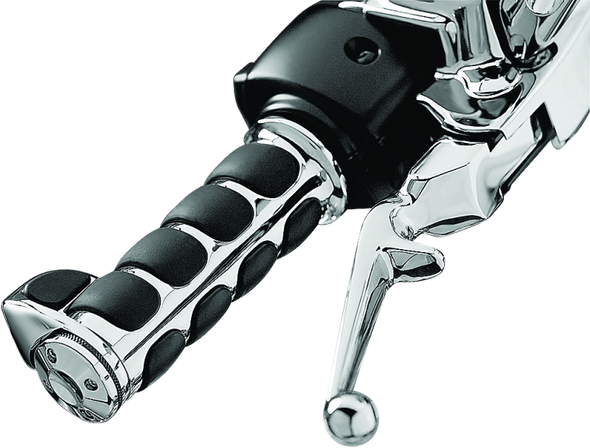
Kuryakyn ISO Grips With Throttle Boss Throttle-By-Wire Chrome - 6228
Kuryakyn
$127.99Will the KUR Hand Grips D fit my motorcycle?Confirm exact motorcycle fitment using the provided vehicle compatibility checker before purchasing these Kuryakyn grips.Are Kuryakyn grips difficult to...$127.99 -


Kuryakyn ISO Grips Without Throttle Boss Throttle-By-Wire Chrome - 6227
Kuryakyn
$107.99Are these grips compatible with throttle by wire Harley models?Kuryakyn Hand Grips D are specifically designed for throttle by wire Harley models, ensuring seamless electronic throttle operation and...$107.99 -

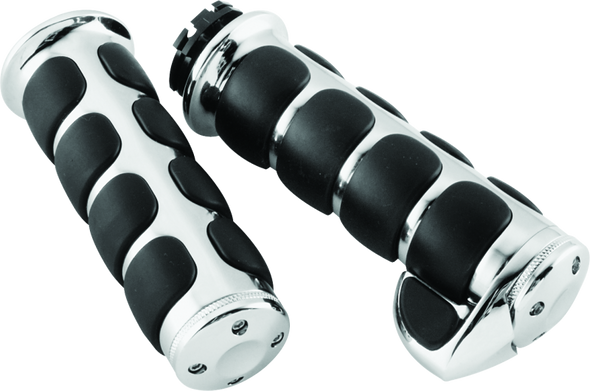
Kuryakyn ISO Grips With Throttle Boss Dual Cable Chrome - 6212
Kuryakyn
$127.99What is the primary benefit of the cushioned rubber inserts in Kuryakyn Grips D?Cushioned rubber inserts deliver significantly reduced vibration, ensuring a noticeably smoother ride and enhanced...$127.99
Grips are the primary contact point between rider and machine — the right compound, diameter, and construction directly affect throttle feedback, hand fatigue, and overall control confidence at every speed. Motor Sport Mayhem carries 264 grip and control products across 16 brands, from sub-$2 replacement options to full premium ergonomic systems priced past $1,500.
Our Top Picks for Grips
Every product below was selected by our performance team based on real-world application results, verified fitment data, and value across street, track, and off-road use cases.
ACB Endurance X
Acerbis | $158.12
A full handguard and grip protection system built for endurance and adventure riding where hand fatigue and impact damage are genuine race-day concerns.
- Reinforced shield construction designed to absorb branch strikes, roost, and low-speed tip-over impact without transferring force to the rider's hands
ABR Accel Pump Rebuild Kits
All Balls Racing | $25.13
A precision rebuild kit that restores throttle response by addressing accelerator pump wear — the root cause of hesitation and inconsistent throttle feel in carbureted applications.
- OEM-spec tolerances with upgraded seal materials that resist fuel degradation better than original components
BKM Heated Grips
BikeMaster | $113.99
Electrically heated grip system with LCD controller that delivers measurable temperature management for cold-weather riding without sacrificing feel or throttle accuracy.
- Integrated LCD switch allows precise heat-level selection, eliminating the guesswork of single-setting heated grip designs
BKC Mid Controls
Bikers Choice | $958.99
A complete extended mid-control kit that repositions foot and hand controls simultaneously to correct ergonomic geometry for taller riders or custom riding positions.
- 2-inch extension corrects reach geometry without requiring custom fabrication or compromising brake and clutch cable routing
BUR Handlebars
Burly Brand | $531.95
A high-rise handlebar that fundamentally changes upper-body ergonomics, shifting rider weight rearward and opening up control reach for upright or custom seating positions.
- 12-inch rise height is purpose-built for riders who need full arm extension without bar riser stacking, preserving structural integrity at the clamp point
CRG RC2 Clutch
CRG Constructors | $199.95
A fully adjustable universal clutch lever assembly that allows riders to dial in reach and pivot feel to match hand size and riding style without cable replacement.
- CNC-machined aluminum construction with adjustable pivot geometry reduces lever deflection and maintains consistent pull weight across operating temperature ranges
CYC Probend Ultra
Cycra | $192.78
A competition-grade handguard system with integrated HCM clamp designed for 1-1/8-inch bars, offering MX and enduro riders a direct bolt-on impact and deflection defense.
- HCM clamp system provides a rigid connection point that eliminates the lateral flex seen in standard bolt-on guard designs under repeated impact
HRL E-bike Foot Pegs
Hardline | $70.14
Purpose-built foot pegs for electric bike platforms where weight distribution and platform grip are critical for aggressive trail and technical terrain riding.
- Platform geometry and pin pattern are optimized for the lower center-of-gravity characteristics of electric-powered two-wheelers versus conventional moto pegs
KUR Floorboards G
Kuryakyn | $699.99
A driver floorboard kit that expands foot placement range and reduces long-haul vibration transmission compared to standard peg systems on touring platforms.
- Chrome-finished cast construction with isolation mounting reduces high-frequency drivetrain vibration from reaching the rider's feet on extended touring runs
NAT Footpeg Hardware
National Cycle | $40.46
A precision footpeg bracket that serves as the structural foundation for footpeg upgrades, ensuring correct mounting geometry and load transfer to the frame.
- Machined to 76mm specification with black finish that resists corrosion from road salt, water, and brake fluid contact in the lower frame environment
How to Choose the Right Grips
The grip category covers far more than a rubber tube on a handlebar — it spans throttle control hardware, foot peg platforms, lever assemblies, handguards, control kits, and heated grip systems, all of which affect how efficiently you translate intention into machine input. Cheap grips fail through compound breakdown, core slippage on the bar, or dimensional inconsistency that creates throttle stick and imprecise lever reach. Quality starts with the right inner diameter for your bar spec, the correct compound durometer for your application, and mounting hardware that won't loosen under vibration load.
Key Specifications
Bar diameter is the first non-negotiable spec. Standard street bars run 7/8-inch (22.2mm) at the grip area, while most modern off-road and adventure bars use 1-1/8-inch (28.6mm) tapered designs. A grip designed for one diameter installed on the other will either slip under torque load or crack from being stretched beyond its elastic limit — neither is acceptable on a throttle or clutch-side grip where control precision is safety-critical.
Compound durometer determines grip in wet conditions, vibration damping, and long-term wear rate. Softer compounds in the 40–55 Shore A range absorb more vibration and fatigue the hands less on long rides, but wear faster and can deform under aggressive throttle inputs. Harder compounds in the 60–70 Shore A range last longer and give more precise feedback in competition settings, but transmit more vibration — relevant if you're riding hard terrain without bar vibration dampers or suspension upgrades that handle high-frequency inputs upstream.
For lever assemblies and controls, adjustability matters more than most riders expect until they've run a properly fitted lever. Reach adjustment — the distance from bar to lever blade — directly affects modulation. A rider with small hands pulling a lever set for full reach is working from a mechanical disadvantage on every braking and clutch input. CNC-machined aluminum levers with six-position or stepless reach adjustment solve this problem structurally rather than with workarounds like moving the lever clamp position along the bar.
Foot peg platform area and pin height are the specs that separate off-road performance pegs from street equipment. Off-road applications need aggressive 6–10mm pins, wide platforms (70mm+), and steel or chromoly construction that survives rock strikes and log crossings. Street touring applications prioritize platform size for comfort over long days, often with isolation mounting to reduce vibration. Mounting pitch — the distance between peg mount holes — varies by frame, and non-OEM brackets that don't replicate this dimension precisely will introduce lateral stress into the footpeg assembly under load.
Grip and Control Specification Reference Guide
| Application | Bar Diameter | Recommended Compound / Material | Key Spec to Match |
|---|---|---|---|
| Standard Street / Cruiser | 7/8 in (22.2mm) | 55–65 Shore A rubber or gel composite | OD consistency 1.25–1.35 in for gloved fit |
| MX / Off-Road Competition | 1-1/8 in (28.6mm) tapered | 45–55 Shore A soft compound with waffle or diamond pattern | Full-waffle pattern; 120mm usable length minimum |
| Adventure / Dual Sport | 1-1/8 in (28.6mm) tapered or straight | 50–60 Shore A hybrid compound | Vibration-dampening core; handguard compatibility |
| Track / Road Racing | 7/8 in (22.2mm) | 60–70 Shore A firm compound or foam over hard core | Minimal rotational compliance; consistent OD under heat |
| Touring / Long Haul | 7/8 in or 1 in (25.4mm) | Heated grip element + 45–55 Shore A outer | Heater watt rating matched to alternator output; LCD control preferred |
| Electric Bike / eMTB | 22.2mm or 31.8mm clamp | Lock-on aluminum collar with rubber outer | Lock-on collars mandatory — no glue-on on twist-throttle eBike setups |
Price Guide
Entry ($1.99–$50): Replacement-grade rubber grips, basic foot peg hardware, and rebuild consumables — correct choices when you need OEM-equivalent function restored quickly and budget is the constraint. Quality varies significantly; check compound hardness ratings and verify bar diameter compatibility before buying at this tier.
Mid-range ($50–$200): Where the majority of performance-focused riders should be spending — CNC-machined lever assemblies with reach adjustment, compound-upgraded grips with vibration damping, competition handguard systems, and heated grip kits with temperature control all fall here. You're buying measurable ergonomic and feedback improvements over stock, not just cosmetic upgrades.
Premium ($200–$1,524.95): Full control kit replacements, complete floorboard systems, high-rise handlebar packages, and integrated ergonomic platform builds justify the cost for custom builds, long-distance touring setups, or competition machines where every contact point is purpose-engineered. At this price tier, fitment precision and finish quality are part of the value proposition alongside function.
Who Is This For?
The grip and controls category serves a wide spectrum of riders — from weekend trail riders and daily commuters to full competition racers and long-haul touring enthusiasts — with different performance priorities driving product selection at every level.
Weekend Off-Roading — 8.2/10
Off-road riding scores highest in this category for good reason — grip, handguard, and foot peg quality has a direct and immediate impact on rider safety and control when terrain is unpredictable. Soft-compound waffle grips, wide platform pegs with aggressive pin height, and impact-resistant handguard systems are all high-demand products for this application. The physical punishment absorbed by grips and controls in off-road riding means replacement cycles are shorter and upgrade value is higher than in any other use case.
Racing Competition — 7.5/10
Competition use demands grips and controls that deliver consistent tactile feedback lap after lap without fatigue-inducing vibration or imprecise lever feel. Adjustable lever assemblies with repeatable reach settings, firm-compound grips that don't deform under sustained throttle loads, and foot peg platforms engineered for boot sole engagement are the category's competition priorities. At this level, tolerances matter — sloppy pivot points in a lever or a grip that rotates under hard throttle inputs are performance deficits, not just inconveniences.
Track / Autocross — 7.5/10
Track applications share the competition score because the demands overlap significantly — consistent lever pull weight, grip compounds that perform across operating temperatures, and ergonomics dialed for an aggressive forward riding position. Riders running track days benefit specifically from adjustable reach levers that can be set precisely for gloved hand dimensions and allow clean one-finger modulation on both brake and clutch inputs. This is also where aluminum throttle tube upgrades make their strongest case, given the rotational precision they provide over plastic OEM units.
Street Performance — 7.2/10
Street riders upgrading from stock grips and controls are typically chasing two things: reduced hand vibration on longer rides and more precise lever feel for traffic-speed braking. Vibration-damping grip compounds and gel-core designs address the former; CNC lever kits with reach adjustment address the latter. Bar end weights — which add mass to the end of the handlebar to dampen standing-wave vibration at specific RPM ranges — are a high-value street upgrade that most riders don't consider until they've experienced them.
Daily Driving Comfort — 7.1/10
Commuter and daily-use riders place sustained comfort above peak performance metrics, making grip compound softness, handlebar vibration isolation, and ergonomic control positioning the dominant purchasing drivers. Heated grips score particularly well in this application, extending the comfortable riding season in cold climates without requiring full winter riding gear upgrades. Floorboard and footpeg platform upgrades also deliver outsized comfort returns on daily-ridden machines where accumulated fatigue across weeks and months of riding is a real concern.
Trusted Grips Brands We Carry
The brands leading this category have earned their positions through engineering depth and application-specific product development, not marketing spend. Renthal supplies handlebar and grip systems to factory MX teams and backs those race-derived specs with street and trail products built to the same dimensional tolerances. ProTaper built its reputation on tapered handlebar engineering for off-road and has extended that geometry expertise across a grip lineup with compound options covering everything from enduro to supermoto. CRG Constructors focuses on lever precision — their adjustable assemblies are the reference point most track riders compare competitors against — while Cycra owns the handguard and bar protection space with integrated systems that combine structural protection with ergonomic design. Kuryakyn leads the touring and cruiser segment with floorboard and control systems engineered for long-haul comfort and chrome-quality aesthetics, and Acerbis rounds out the competition protection category with handguard and grip systems tested in world-level enduro and cross-country racing. Burly Brand commands the custom handlebar space with premium high-rise options that carry the highest average price in the category for justified reasons of fitment quality and finish.
Frequently Asked Questions
Are 36cm handlebars too narrow for most riders?
For the majority of adult riders, 36cm (roughly 14.2 inches) is significantly narrower than optimal — most street and off-road applications benefit from 600–800mm (roughly 24–32 inches) of usable bar width, which allows the shoulders to drop into a natural position and gives the leverage needed for steering input at speed. Narrow bars force the elbows in, reducing steering torque and accelerating shoulder fatigue on technical terrain or long rides. The correct width depends on shoulder width and riding discipline — MX riders often run wider bars for maximum leverage, while road racers may run narrower to reduce wind resistance in a tuck. If you're questioning whether bars are too narrow, they probably are — wider bars rarely hurt, while bars that are too narrow create measurable control deficits.
Are adjustable clutch and brake levers actually worth the money?
Yes — for any rider whose hand size doesn't perfectly match the OEM lever reach, adjustable levers are one of the highest-return ergonomic upgrades available. Stock levers are engineered to a middle-of-the-road reach dimension that fits nobody particularly well; a proper reach adjustment moves the lever blade 10–20mm closer or farther from the grip, allowing one- or two-finger operation without wrist hyperextension. CNC-machined aftermarket levers also improve over stock by eliminating the pivot slop and inconsistent pull weight that appears in cast OEM levers as they wear. On the track, where modulation precision matters most, the difference between a well-fitted adjustable lever and a stock unit is immediately measurable in lap times and braking confidence.
Are aftermarket foot pegs worth upgrading from stock?
Aftermarket foot pegs are worth the investment for any rider who spends significant time in conditions where boot sole grip matters — off-road, track, or aggressive street riding all qualify. OEM pegs are designed for comfort and liability reasons with rounded pin profiles and modest platform area; aftermarket performance pegs use sharper, taller pins (6–10mm versus stock 3–5mm) and wider platforms that bite into boot soles and hold foot position under hard acceleration and braking. For touring riders, the upgrade argument shifts to platform size and vibration isolation rather than grip — a larger floorboard platform reduces leg fatigue on multi-hour rides in ways that feel minor at first and become unmistakable after 200 miles. Not all foot pegs are interchangeable — mounting pitch, pin diameter, and axle spec vary by frame, so fitment verification is mandatory before purchase.
Are aluminum throttle tubes worth using over stock plastic?
Aluminum throttle tubes offer genuine performance benefits in precision-demanding applications — they eliminate the flex and dimensional inconsistency that develops in plastic OEM tubes over time, which directly affects throttle return speed and the tactile feedback you get from small throttle inputs. Plastic tubes can ovalize slightly at the grip contact zone, creating a notchy feel and variable return tension that throws off throttle control in technical riding. Aluminum tubes maintain their geometry indefinitely, are more resistant to heat deformation in high-ambient-temperature conditions, and typically pair with higher-quality cam profiles for smoother action. For casual street riding, the difference is subtle; for track and off-road use where precise throttle modulation is a performance variable, the upgrade is straightforward to justify.
Are bar ends worth adding to street handlebars?
Bar end weights are one of the most underrated handlebar upgrades for street riders — they add mass to the open end of the handlebar tube, which shifts the resonant frequency of the bar assembly away from the RPM range where the engine naturally vibrates, reducing the buzzing sensation that causes hand numbness on longer rides. The physics are straightforward: heavier bar ends damp higher-frequency resonance more effectively, and the change is typically noticeable within the first 20 minutes of riding. Weighted bar ends also serve a secondary safety function by capping the end of the handlebar tube and preventing clothing or gear from catching on an exposed edge. Beyond vibration control, bar end mirrors and weighted grip ends are legitimate ergonomic upgrades rather than purely cosmetic additions — the comfort improvement on highway-speed rides is real and consistent across different riders.
Building something specific? Our performance specialists can help you select the right Grips for your application — street, track, or full race build.