
Controls
- Product
- Qty in Cart
- Quantity
- Price
- Subtotal
-
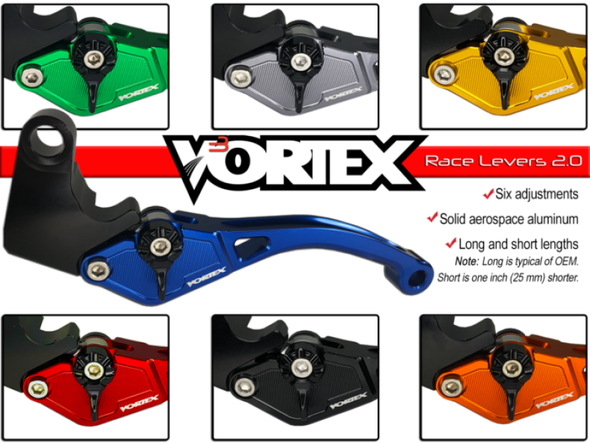
Vortex Racing H-L202 HR06 Brake Lever Long- Black - MSM-T-756004
Vortex Racing
$85.81What is the installation process for the Vortex Racing VTX 2.0 Brake Lever?Confirm fitment for your specific motorcycle model; professional installation is strongly recommended for optimal...$85.81 -
 $85.81
 -
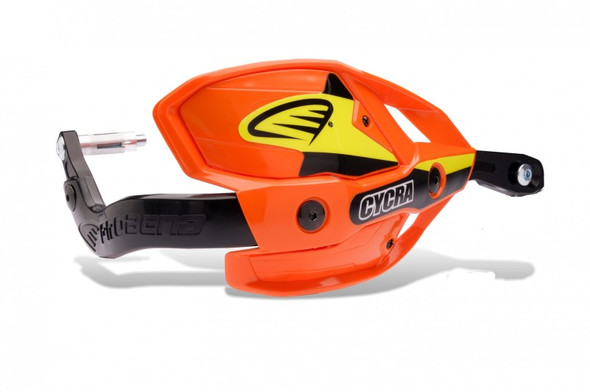
Cycra Probend Ultra Bar Pack - Orange - MSM-T-625005
Cycra
MSRP: $133.32$108.01What is the primary benefit of the CYC Probend Ultra Bar Pack?The CYC Probend Ultra Bar Pack delivers a vibrant, race-inspired aesthetic, personalizing your motorcycle with a clean, uncluttered...MSRP: $133.32$108.01 -
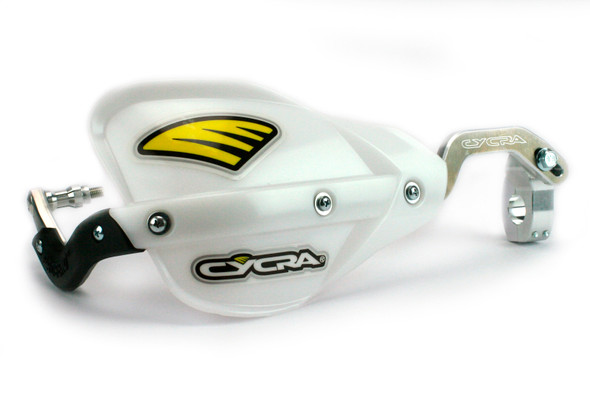
Cycra CRM Racer Pack 7/8 in. - Natural - MSM-T-624959
Cycra
MSRP: $148.83$120.57What is the primary benefit of the Cycra CRM Racer Pack for racing applications?Cycra CRM Racer Pack hand guards deliver optimal leverage, significantly enhancing steering inputs for superior...MSRP: $148.83$120.57 -

Cycra Probend Ultra w/HCM Clamp 1-1/8 in. - Green - MSM-T-667730
Cycra
MSRP: $199.95$161.99What is the purpose of Cycra Probend Ultra Hand Guards?Cycra Probend Ultra Hand Guards deliver rock-solid lever security with the robust HCM clamp system for enhanced rider confidence and control.Can...MSRP: $199.95$161.99 -
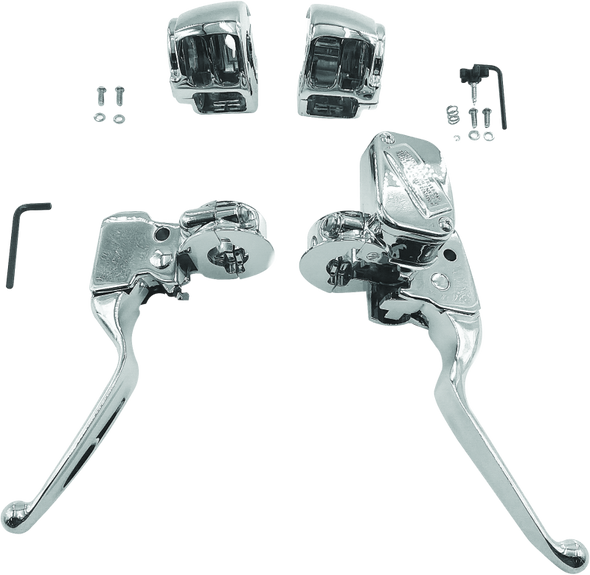
Bikers Choice 15-17 Softail Chrome Handlebar Control Kit 1/2 Inch Bore Single Disc - MSM-T-602956
Bikers Choice
$499.99Is this handlebar control kit compatible with my 15-17 Softail model?Confirm fitment with your specific 15-17 Softail vehicle; professional installation ensures proper integration of this handlebar...$499.99 -
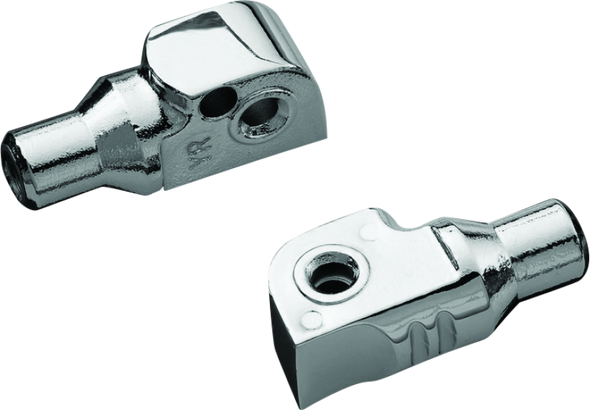
Kuryakyn Tapered Peg Adapter Yamaha Rear Chrome - MSM-T-604848
Kuryakyn
$49.99Are these rear footpegs specific to the Stryker model?Yes, these Kuryakyn Adapters B are designed for a factory-matched fit specifically on 2011-2013 Stryker motorcycles.Do these require professional...$49.99 -
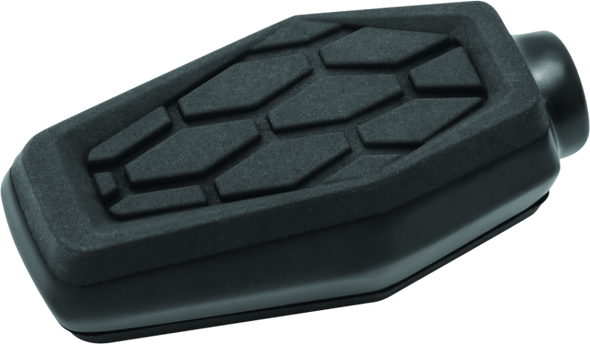
Kuryakyn Hex Shift Peg Indian Black - KURYAKYN5913
Kuryakyn
MSRP: $44.99$36.44What is the best way to install KUR Shift Pegs C?KUR Shift Pegs C require professional installation to ensure correct fitment and secure attachment on your motorcycle.How do KUR Shift Pegs C improve...MSRP: $44.99$36.44 -
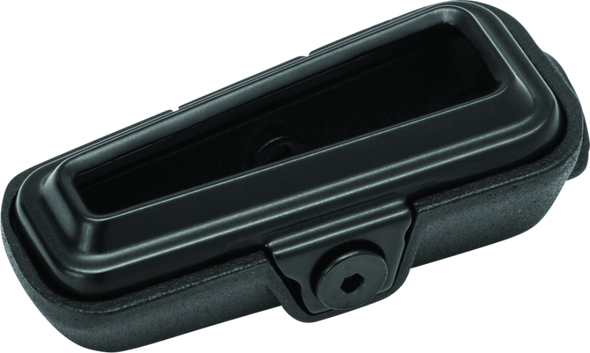
Kuryakyn Dillinger Shift Peg Black - KURYAKYN6715
Kuryakyn
MSRP: $44.99$36.44Are Kuryakyn Shift Pegs C compatible with my motorcycle?Confirm fitment with your specific vehicle to ensure seamless integration of these Kuryakyn Shift Pegs C.Is professional installation required...MSRP: $44.99$36.44 -
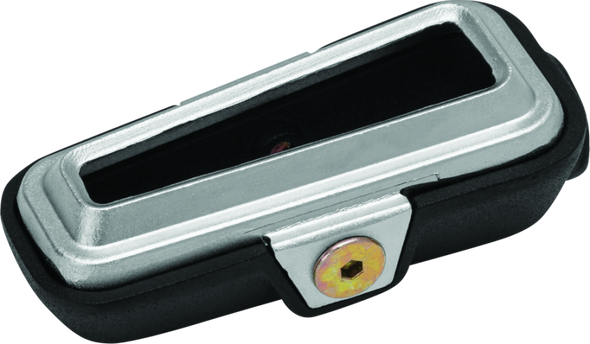
Kuryakyn Dillinger Shift Peg Silver - KURYAKYN6714
Kuryakyn
MSRP: $44.99$36.44Does the Kuryakyn Dillinger Shift Peg have different finishes available?The Kuryakyn Dillinger Shift Peg in Silver features a premium nickel finish, offering both durability and a refined aesthetic...MSRP: $44.99$36.44 -
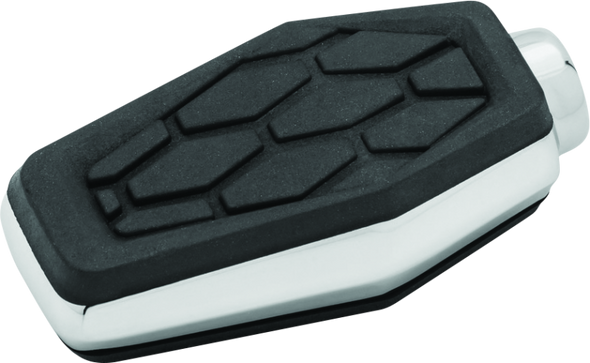
Kuryakyn Hex Shift Peg Indian Chrome - KURYAKYN5912
Kuryakyn
MSRP: $44.99$36.44Do the Kuryakyn shift pegs fit my Indian motorcycle?Confirm fitment with your specific Indian motorcycle model to ensure proper installation and seamless operation of these enhanced shift pegs.Can I...MSRP: $44.99$36.44 -

Kuryakyn Footpeg Adpt Rear Sat Blk Bmw - KURYAKYN8834
Kuryakyn
MSRP: $45.95$18.62Are these footpegs designed for passenger use?Yes, these Kuryakyn passenger footpegs are specifically engineered to provide secure and comfortable seating for your motorcycle's rear rider.Do I need a...MSRP: $45.95$18.62
Motorcycle controls are the direct physical interface between rider and machine — handlebars, levers, foot pegs, grips, handguards, and throttle assemblies that determine ergonomics, feedback precision, and rider fatigue across every riding discipline. Motor Sport Mayhem stocks 1,408 in-stock controls from 16 proven brands, spanning $1.99 entry-level hardware to $1,524.95 premium touring and race-grade assemblies.
Our Top Picks for Controls
Each of these was selected based on performance engineering, real-world durability, and measurable value across street, off-road, and competition applications.
ACB Endurance X Handguard
Acerbis | $158.12
A full-wrap adventure handguard engineered for high-impact resistance without sacrificing lever clearance or wind deflection performance on long-haul off-road routes.
- Scores highest in the category for weekend off-roading and overlanding applications where knuckle protection and debris deflection are non-negotiable
ABR Accel Pump Rebuild Kit
All Balls Racing | $25.13
A precision rebuild kit that restores accelerator pump response to OEM or better tolerances, directly addressing throttle lag caused by worn diaphragms and check valves.
- Best entry-level value for restoring crisp throttle control on carbureted performance machines without replacing the entire carburetor assembly
BKM Heated Grips w/ LCD Switch
BikeMaster | $113.99
A 7/8-inch heated grip set with an integrated LCD controller that delivers precise temperature management for extended cold-weather riding comfort without handlebar modification.
- LCD heat-level display sets this apart from basic heated grips — eliminates guesswork on temperature setting during daily commutes and touring runs
BKC Extended Mid Control Kit
Bikers Choice | $958.99
A complete 2-inch extended mid-control kit that repositions foot controls for improved ergonomics on stretched or lowered builds without compromising brake or shift linkage geometry.
- Full kit approach eliminates piecemeal fitment issues — all linkage, hardware, and mounting included for a clean, functional install on Dyna-platform cruisers
BUR Gorilla Bar 12in Handlebar
Burly Brand | $531.95
A 12-inch rise handlebar built from heavy-wall steel with a premium powder coat finish, engineered to deliver commanding, upright ergonomics for tall-bar cruiser and custom chopper applications.
- 12-inch rise demands cable and line extensions on most builds — factor that into total cost, but the structural rigidity and visual stance are unmatched at this price point
CRG SC2 Clutch Assembly
CRG Constructors | $199.95
A universal-fit adjustable clutch assembly machined from billet aluminum with a multi-position reach adjuster, delivering race-level engagement precision with a short-throw pull optimized for track use.
- CRG's folding tip design and on-the-fly reach adjustment make this the benchmark for riders who demand tactile feedback and crash survivability in one package
CYC Probend Ultra Handguard
Cycra | $192.78
A competition-grade handguard system built around a CrMo alloy backbone with an HCM clamp for 1-1/8-inch bars, combining deflection strength with a low-profile design that doesn't restrict lever movement.
- HCM clamp system provides rock-solid bar attachment without flex under hard off-road impacts — the preferred setup for enduro and motocross competition handguard protection
HRL E-Bike Foot Pegs
Hardline | $70.14
Purpose-built electric bike foot pegs with a platform surface and mounting geometry optimized for the unique frame dimensions and rider weight distribution demands of performance e-bikes.
- One of the few peg solutions purpose-engineered for electric platform geometry rather than adapted from ICE fitments — fit, function, and load ratings are application-specific
KUR Driver Floorboard Kit
Kuryakyn | $699.99
A chrome driver floorboard kit engineered for large-displacement touring platforms, offering a significantly expanded foot platform surface that reduces fatigue on multi-day rides compared to standard pegs.
- Kuryakyn's floorboard geometry and rubber isolation pad combination absorbs vibration while maintaining positive brake and shift linkage engagement — the standard for touring comfort upgrades
NAT Footpeg Bracket Hardware
National Cycle | $40.46
A precision-machined 76mm footpeg mounting bracket in black that provides the correct offset geometry for aftermarket peg installation on touring-class motorcycles where OEM bracket dimensions create clearance conflicts.
- Exact 76mm offset spec eliminates the guesswork in multi-part control builds — necessary hardware when swapping floorboards or pegs on platforms with non-standard OEM mounting points
How to Choose the Right Controls
The single most important factor separating performance controls from shelf-filler is material integrity at the interface point — the place where force transfers between your body and the machine. Cheap levers flex under hard braking and lose tactile feedback exactly when you need it most. Undersized bar stock fatigues and cracks at weld points under vibration. Stamped-steel foot pegs collapse their serrations under load, turning into skating rinks when wet. Quality controls are made from 6061 or 7075 aluminum billet, CrMo steel, or high-impact polymer composites with defined load ratings — and every spec should be stated by the manufacturer, not implied.
Key Specifications
Handlebar diameter and rise matter for every component downstream. The two standard handlebar diameters are 7/8-inch (22mm) and 1-1/8-inch (28.6mm) — your grips, handguards, clamps, and controls must all match. Rise, width, sweep, and pullback determine rider triangle geometry, and any meaningful change in rise requires you to assess cable, brake line, and throttle tube length before you wrench anything off. A 2-inch rise increase on a stock setup will pull cables tight and create a dangerous binding point — always mock up bar position before committing.
Lever reach and pivot geometry define feel more than material alone. Adjustable levers allow you to tune the distance from bar to blade in 3 to 6 discrete positions, typically ranging from 60mm to 80mm of reach. This matters most for riders with smaller hands who otherwise cannot reach the bite point without repositioning their grip — a compromise that kills both control and endurance. Blade shape — straight versus curved — also changes leverage ratio and pull weight, with shorter blades requiring more force but providing more precise modulation for braking and clutch engagement.
Foot peg platform size, serration depth, and mounting offset are three separate specifications that all interact. A wider platform distributes load across more of the boot sole, reducing fatigue on long rides. Deeper serrations — typically 2 to 4mm on performance pegs versus 1mm or less on OEM — bite through mud and debris to maintain grip. Mounting offset determines whether the peg sits in the correct position relative to your knee and hip angle; getting this wrong creates a crooked lower-body position that loads your spine asymmetrically over distance.
Throttle tube fit and material directly impact throttle response feel. Aluminum throttle tubes run tighter tolerances than OEM plastic units, reducing rotational slop that manifests as dead travel at tip-in. The tube must match your bar's outer diameter precisely — even a 0.5mm mismatch creates binding or excessive play. On carbureted machines, throttle tube diameter also influences how quickly the slide opens relative to grip rotation, which affects low-RPM response characteristics independent of jetting or needle position. If you're chasing fueling sharpness, check your fuel delivery components alongside your throttle tube spec.
Handlebar Specification Reference Guide
| Application Type | Recommended Rise | Recommended Width | Bar Diameter |
|---|---|---|---|
| Motocross / Enduro | 3.5 – 5.5 in | 31 – 33 in (787 – 838mm) | 1-1/8 in (28.6mm) |
| Adventure / Dual-Sport | 2.5 – 4.5 in | 30 – 32 in (762 – 813mm) | 7/8 in or 1-1/8 in |
| Naked / Streetfighter | 1.0 – 3.0 in | 28 – 30 in (711 – 762mm) | 7/8 in (22mm) |
| Cruiser / Bobber | 4.0 – 14.0 in | 26 – 30 in (660 – 762mm) | 1 in (25.4mm) |
| Touring / Bagger | 2.0 – 5.0 in | 27 – 30 in (686 – 762mm) | 1 in (25.4mm) |
| Road Race / Track | Clip-on / 0 – 1.5 in | 26 – 28 in (660 – 711mm) | 7/8 in (22mm) |
Price Guide
Entry ($1.99 – $50): Rebuild kits, replacement hardware, basic grip sets, and mounting brackets live here — these are maintenance-tier and fitment components, not upgrade pieces. Quality is functional, materials are adequate, and the use case is restoration or completing a parts kit, not performance gain.
Mid-range ($50 – $300): This is where most serious riders land, and for good reason — adjustable billet levers, performance handguards, aluminum throttle tubes, competition-spec foot pegs, and quality handlebar sets all exist in this range. Materials step up to aircraft-grade aluminum, CrMo alloy, and reinforced polymer. Fitment tolerances tighten, finish quality improves, and you start seeing measurable ergonomic and feedback benefits over OEM.
Premium ($300 – $1,524.95): Full control kits, high-rise custom handlebars, complete mid or forward control systems, and touring floorboard packages with integrated linkage occupy this tier. The cost is justified when you're building a complete ergonomic overhaul — typically on custom, long-travel touring, or race builds where every component needs to work as a system rather than a collection of individual parts. If you're only swapping one piece, mid-range is almost always the smarter investment.
Who Is This For?
Controls products serve a wider cross-section of riders than almost any other category — from weekend trail riders and daily commuters to circuit racers and long-haul touring adventurers, with meaningful product options scoring high across all major use cases.
Weekend Off-Roading — 8.2/10
Controls score highest in this category for off-road use, and the data reflects reality — handguards, wide-profile handlebars, and aggressive foot pegs with deep serrations are the single highest-impact upgrades for dirt riders after suspension. The combination of knuckle protection, improved ergonomic position, and reliable grip in mud and wet conditions directly reduces rider fatigue and crash consequence. Off-road controls must survive impacts that would destroy road-focused components, which is why CrMo and reinforced composite construction is standard at this end of the market.
Racing Competition — 7.5/10
At this score, controls are a legitimate competitive variable rather than a comfort upgrade — precision-adjustable levers with short throw and defined bite points, lightweight billet components that reduce unsprung and rotating mass, and rigid throttle assemblies with zero free play all contribute to lap-time consistency. Competition riders tune lever reach and pivot position the same way they tune suspension preload — it's part of setup, not an afterthought. Pair your controls upgrades with attention to your braking system for the most measurable track gains.
Track / Autocross — 7.5/10
Tied with racing competition at 7.5/10, track and autocross use demands controls that respond predictably at the edge — consistent lever feel through fade cycles, foot pegs that lock boot position under hard braking and acceleration loads, and handlebars that transmit chassis feedback without filtering it out. This application penalizes both too much compliance (rubber-damped touring setups) and too much rigidity (pure CrMo race setups without vibration isolation), landing most track riders in the mid-range billet aluminum tier.
Street Performance — 7.2/10
Street performance riders upgrading controls are primarily chasing ergonomic improvement and feedback quality rather than outright lap times — adjustable levers that eliminate reach compromise, grips with better vibration damping, and foot pegs with improved platform angle for a natural knee position. The 7.2/10 score reflects that street controls upgrades are high-value and accessible but don't carry the same pure performance delta as they do in a closed-course environment where every lap exposes the same control input patterns repeatedly.
Overlanding / Expedition — 7.2/10
Overlanding ties street performance at 7.2/10 but for completely different reasons — the priority here is endurance over thousands of miles of variable terrain, where hand fatigue, wrist angle, and foot position become genuine injury risks over time. Heated grips extend the riding season into cold conditions. Full-wrap handguards protect against branch strikes and rotor wash on remote trails. Wide platform foot pegs in combination with forward or mid-control positioning let riders stand for extended periods without cramping. Controls are a longer-term investment for this use case, but the payoff compounds across every mile.
Trusted Controls Brands We Carry
The brands dominating this category earned their position through engineering specificity rather than broad catalog coverage. ProTaper built its reputation manufacturing handlebars to precise bend geometry specs used by professional motocross athletes, with wall thickness and alloy specs that define the segment standard. Renthal has supplied handlebars and grips to factory race teams for decades, maintaining its position through consistent dimensional accuracy and material quality across both street and off-road lines. CRG Constructors focuses almost exclusively on lever systems, producing billet aluminum assemblies with machining tolerances that translate directly into measurable engagement consistency. Cycra brings composite engineering expertise to handguard systems — their multi-layer polymer and alloy constructions set the benchmark for impact energy absorption. Kuryakyn leads in touring and cruiser controls with a catalog spanning floorboards, pegs, and bar accessories that balance aesthetic quality with genuine ergonomic function. Acerbis crosses the off-road and adventure sectors with handguard and handlebar-adjacent products that are widely adopted in enduro and rally raid competition at both amateur and professional levels.
Frequently Asked Questions
Are 36cm handlebars too narrow for most riders?
36cm (approximately 14.2 inches) is significantly narrower than the 26–33 inch range used on the vast majority of production motorcycles, which means yes — for most riders, this width will compromise steering leverage, body mechanics, and balance, particularly at low speed. Handlebar width should roughly correlate with shoulder width to allow natural arm extension and efficient weight transfer through corners. Narrower bars can reduce aerodynamic drag on road race applications, but that tradeoff only makes sense on clip-on setups where the rider is already in an aggressive tuck. For any upright or adventure riding position, bars this narrow will accelerate arm fatigue and reduce steering precision. The practical minimum for most street and off-road applications is 26 inches (660mm).
Are adjustable clutch and brake levers actually worth the upgrade?
Adjustable levers are worth it for nearly every rider who spends meaningful time on a motorcycle — the ability to tune reach distance from bar to blade by 15–20mm eliminates the grip compromise that forces smaller-handed riders to reposition their hand to reach the bite point. That repositioning costs you leverage, response time, and grip security simultaneously. Quality adjustable levers also tend to use harder anodized aluminum that resists deformation in tip-over crashes far better than OEM cast levers. The caveat is that cheap adjustable levers use plastic adjustment wheels and pot-metal pivot hardware that wear out faster than OEM — spend in the $80–$200 range for levers where the adjustment mechanism is machined metal throughout.
Are aftermarket foot pegs worth it, and are all foot pegs the same?
Aftermarket foot pegs are worth it, and no — foot pegs are not interchangeable or equivalent across the category. The differences that matter are platform width, serration depth and pattern, mounting offset, and material. OEM pegs are typically stamped or cast steel with shallow serrations and minimal platform surface, optimized for cost rather than grip or ergonomics. Performance aftermarket pegs use machined or forged aluminum or stainless steel with aggressive knurled or shark-fin serration patterns that maintain grip through mud, water, and boot sole wear. Platform width on performance pegs can be 30–50% larger than OEM, which distributes body weight more evenly across the ball of the foot and reduces long-ride fatigue significantly. Mounting offset is peg-specific — confirm the spec matches your frame mounting point before ordering.
Are aluminum throttle tubes worth upgrading from plastic OEM?
Aluminum throttle tubes are worth it on any machine where throttle feel is a performance variable rather than a convenience — the tighter manufacturing tolerances of machined aluminum versus injected plastic OEM tubes eliminate the rotational play that creates a dead zone at initial tip-in. On OEM plastic tubes, that play can represent 5–10 degrees of grip rotation before the slide begins moving, which destroys low-RPM throttle modulation. Aluminum tubes also resist deformation under handlebar clamp torque, which is a common cause of stiff or binding throttle action when OEM plastic tubes are clamped unevenly. The upgrade is straightforward on most platforms and the $40–$80 cost is one of the highest value-per-dollar control upgrades available for carbureted machines.
Are bar ends worth adding to handlebars?
Bar ends serve two distinct functions, and whether they're worth it depends on which one you need. As vibration dampeners, weighted bar ends (typically 80–150 grams each) shift the harmonic resonance frequency of the handlebar tube, reducing the high-frequency buzz that causes hand numbness on long rides — this is measurably effective on inline-four and single-cylinder engines where primary vibration is pronounced. As crash protection, bar ends with a slightly protruding profile prevent the bar end from digging into the pavement and transferring rotation force to the steering assembly during a tip-over. The weakest argument for bar ends is purely aesthetic — if you're adding them only for looks with no attention to weight or profile, you're skipping the functional benefit. Weighted aluminum or brass bar ends in the 100–130 gram range per side represent the optimal balance of vibration control and handlebar natural frequency management.
Building something specific? Our performance specialists can help you select the right Controls for your application — street, track, or full race build.