
Brake Kits - OE
- Product
- Qty in Cart
- Quantity
- Price
- Subtotal
-


Power Stop 17-18 GMC Acadia Front Autospecialty Brake Kit - KOE7409
PowerStop
$205.35What is included in the PowerStop Autospecialty Kit?The Autospecialty Kit includes Z17 Evolution Plus ceramic pads, Autospecialty brake rotors, and stainless-steel hardware for a complete OE...$205.35 -
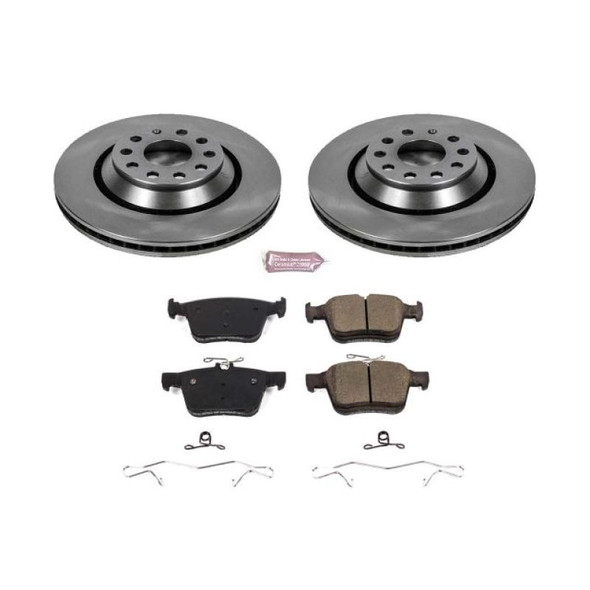

Power Stop 17-18 Audi RS3 Rear Autospecialty Brake Kit - KOE7084
PowerStop
$172.08What is the intended application for this brake kit?PSB Autospecialty Kits are engineered for daily driving comfort and enhanced stopping power, fitting seamlessly into your OE setup.Are these brake...$172.08 -


Power Stop 15-19 Cadillac Escalade Rear Autospecialty Brake Kit - KOE6562
PowerStop
$195.76Are PowerStop Autospecialty Kits compatible with my vehicle?PowerStop Autospecialty Kits are designed for precise fitment, ensuring seamless integration with your specific vehicle's braking system...$195.76 -


Power Stop 15-17 Chrysler 200 Front Autospecialty Brake Kit - KOE6538
PowerStop
$193.08What is the primary benefit of the Z17 Evolution Plus brake pads?Z17 Evolution Plus ceramic pads deliver confident stopping power with a validated low-dust formula for a cleaner vehicle appearance...$193.08 -


Power Stop 13-18 Lexus ES300h Rear Autospecialty Brake Kit - KOE6520
PowerStop
$131.48Does this brake kit fit my 2015 Toyota Camry?Yes, this PowerStop Autospecialty Kit is designed as a direct OE replacement for your 2015 Toyota Camry, ensuring perfect fitment.Is this a difficult...$131.48 -


Power Stop 13-19 Honda Accord Front Autospecialty Brake Kit - KOE6515
PowerStop
$184.26Are these PowerStop brake kits compatible with my vehicle?Confirm exact fitment using your vehicle's year, make, and model to ensure this bolt-on Autospecialty Kit is a perfect match.How difficult is...$184.26 -
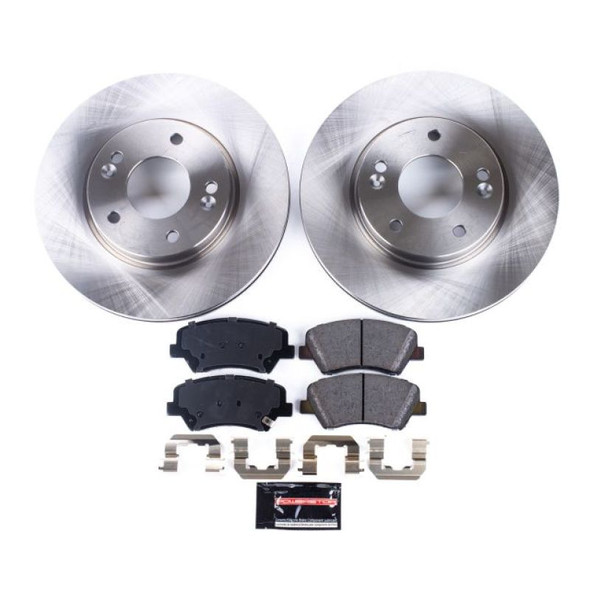

Power Stop 11-16 Hyundai Elantra Front Autospecialty Brake Kit - KOE6503
PowerStop
$153.99How can I confirm if this brake kit is compatible with my vehicle?Confirm vehicle fitment using our provided tool, ensuring a perfect match for your specific make and model. This guarantees optimal...$153.99 -
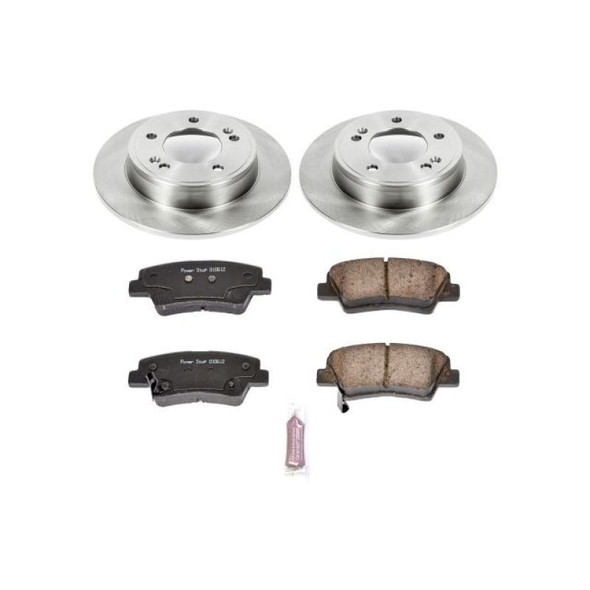

Power Stop 11-19 Hyundai Elantra Rear Autospecialty Brake Kit - KOE6501
PowerStop
$108.98What's included in the PowerStop Autospecialty Kit?This PowerStop Autospecialty Kit includes Z17 Evolution Plus ceramic pads and Autospecialty brake rotors, plus stainless-steel hardware for a...$108.98 -

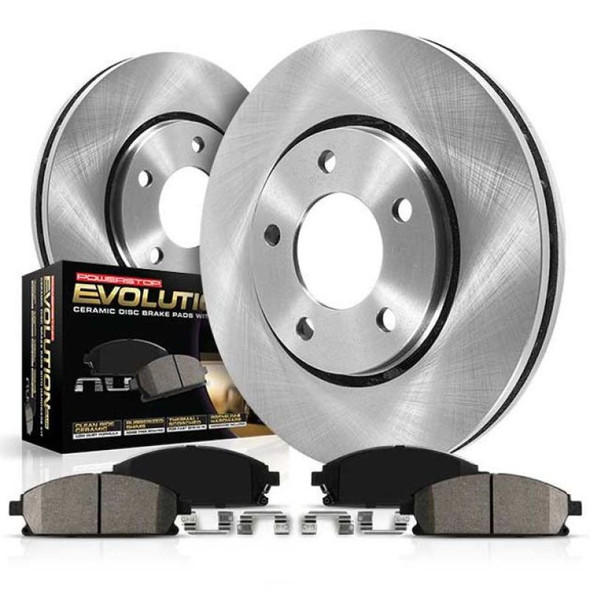
Power Stop 13-18 Nissan Altima Front Autospecialty Brake Kit - KOE6494
PowerStop
$173.20What is the main difference between OE replacement and performance brake kits?OE replacement brake kits like the PSB Autospecialty Kit are designed for factory-level performance and fitment, ensuring...$173.20 -

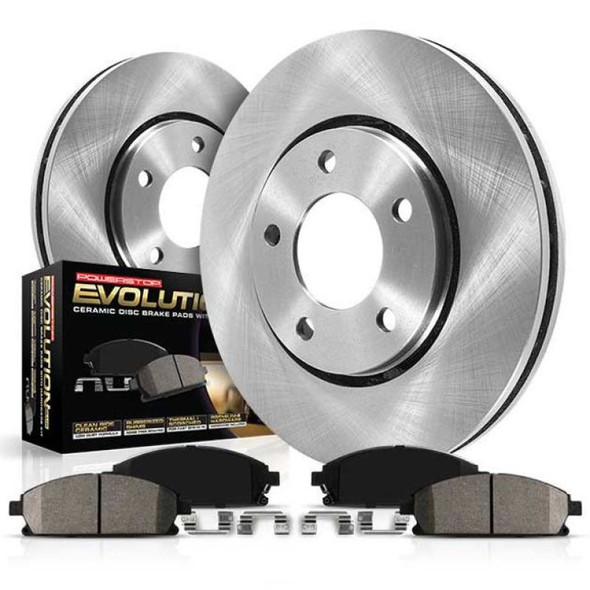
Power Stop 12-18 Ford F-150 Rear Autospecialty Brake Kit - KOE6271
PowerStop
$241.15What is included in the PowerStop Autospecialty Kit?This Autospecialty Kit includes Z17 Evolution Plus ceramic pads, Autospecialty brake rotors, and stainless-steel hardware for a complete OE style...$241.15 -

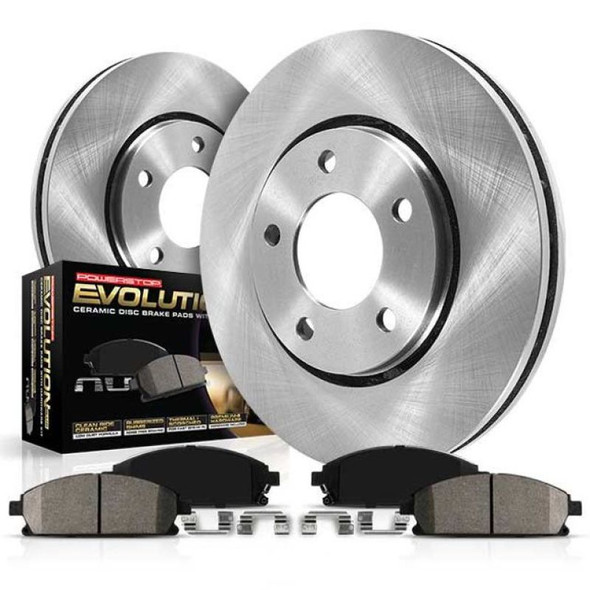
Power Stop 13-16 Subaru BRZ Front Autospecialty Brake Kit - KOE6111
PowerStop
$151.66What is the main advantage of the Z17 Evolution Plus brake pads?Z17 Evolution Plus ceramic pads deliver confident stopping power for everyday driving and spirited maneuvers with a low dust formula...$151.66 -

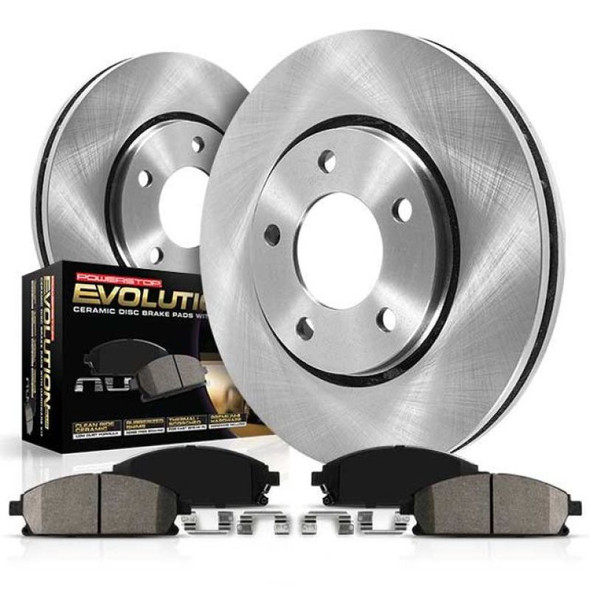
Power Stop 16-18 Subaru Crosstrek Rear Autospecialty Brake Kit - KOE6107
PowerStop
$125.50What is the expected lifespan of the pads and rotors in this kit?This Autospecialty Kit provides reliable stopping power for everyday driving, with longevity determined by driving habits and...$125.50
OE brake kits are complete, vehicle-specific braking system solutions that match or exceed factory specifications — covering rotors, calipers, pads, lines, and hardware in a single, fitment-verified package. Motor Sport Mayhem stocks 81 brake kits across 53 brands, from entry-level caliper rebuild kits to full six-piston big brake conversions engineered for both street and competition use.
Our Top Picks for Brake Kits - OE
Each kit below was selected based on engineering quality, real-world stopping performance, and proven fitment across the applications our customers actually build.
ALC Front Brake Kits
Alcon | $3,450.00
A 376x42mm rotor paired with a forged six-piston caliper delivers serious thermal capacity for high-demand front axle loads.
- Alcon's motorsport-derived caliper design provides consistent pedal feel under repeated high-energy stops
ABR Caliper Rebuild Kits
All Balls Racing | $73.99
A cost-effective caliper restoration solution that restores OE hydraulic integrity without replacing the entire caliper assembly.
- Includes all seals, boots, and hardware to eliminate brake drag and fluid bypass in aging calipers
AMS Brake Lines
AMS | $144.95
Stainless steel braided construction eliminates the hydraulic expansion inherent in OE rubber brake lines under high-pressure braking events.
- Four-line kit maintains consistent pedal firmness critical for performance and track applications
ART ABS Kits
Artec Industries | $98.99
A 60-tooth tone ring ABS retrofit solution purpose-built for axle swap applications where factory ABS compatibility must be preserved.
- Precision-machined ring maintains correct pulse frequency for accurate ABS controller signal output
BKM Brake Rotors
BikeMaster | $264.99
OE-specification replacement rotors engineered to restore factory braking performance with dimensional accuracy that prevents caliper binding or runout.
- Stainless construction resists corrosion in high-moisture operating environments common to powersports
BKC Brake Caliper
Bikers Choice | $399.99
A direct-replacement rear caliper that replicates OE geometry and hydraulic bore sizing for a bolt-on restoration of factory braking authority.
- Black finish and period-correct casting profile maintains the visual integrity of vintage builds
BX Brake Master Cylinders
BLOX Racing | $124.80
An OE-spec master cylinder replacement that restores hydraulic pressure generation without the failure modes common to aged OEM units.
- Non-ABS bore sizing ensures correct pedal ratio and system pressure for non-ABS brake conversion builds
BMR Brake Kits for Conversions - D&S
BMR Suspension | $1,339.95
A complete drilled-and-slotted rotor plus caliper conversion kit engineered specifically to fit within a 15-inch wheel envelope without caliper clearance issues.
- Red caliper finish and surface-vented rotor design combine thermal management with visual presence
BRB Big Brake Kits
Brembo | $1,995.00
Brembo's GT-series big brake kit delivers a 316mm two-piece slotted rotor and two-piston cast caliper system engineered to the same tolerances as Brembo's OEM motorsport supply contracts.
- Two-piece rotor construction allows independent hat and disc replacement, reducing long-term ownership cost
BRE OE Equivalent Rotors
Brembo OE | $1,798.75
An OE-equivalent front disc brake kit built to the exact specifications of the factory system on one of the most brake-intensive production platforms ever built.
- Brembo supplies this application at the OEM level, meaning this kit carries the same metallurgical and dimensional standards as the original factory hardware
How to Choose the Right Brake Kits - OE
The difference between a brake kit that stops a vehicle confidently and one that fades, judders, or fails prematurely comes down to three things: rotor metallurgy, caliper bore quality, and system-level fitment tolerance. Grey iron rotors with consistent carbon content across the casting resist thermal cracking far better than recycled-metal castings that produce hot spots and uneven wear. Caliper piston bores machined to within ±0.001-inch maintain hydraulic seal integrity over thousands of cycles, while sloppier tolerances allow fluid bypass and a soft pedal. When a brake kit is labeled OE or OE-equivalent, it should mean those standards are met — not just that the bolt pattern matches.
Key Specifications
Rotor diameter and minimum thickness are the first specs to verify. Rotor diameter governs leverage — larger rotors create more braking torque for the same caliper clamping force, which is why high-performance applications always upsize. Minimum thickness (discard thickness) must be checked against actual rotor measurements before installation; running a rotor below spec accelerates heat concentration and increases cracking risk. For OE replacement kits, confirm the rotor hat offset matches the original — even a 2mm variance will shift the rotor laterally into the caliper and cause uneven pad wear.
Caliper piston area determines hydraulic mechanical advantage. A caliper with larger total piston area generates more clamping force from the same master cylinder pressure, which improves stopping power without requiring a higher pedal effort. Multi-piston calipers also distribute pad load more evenly across the friction surface, eliminating the tapered wear that single-piston sliding calipers produce on aggressive street or track duty. When evaluating caliper kits, look for pistons made from aluminum or stainless steel — phenolic pistons insulate heat from the fluid but can crack under sustained high-temperature cycling.
Brake lines are a frequently overlooked component in a complete brake kit. OE rubber lines expand under pressure, absorbing hydraulic energy that should be moving the caliper piston — stainless steel braided lines with a PTFE inner liner eliminate that expansion entirely, producing a firmer, more consistent pedal. For any application that sees track use or high-heat street driving, upgrading to braided stainless lines as part of the brake kit is not optional — it is a baseline requirement for consistent system behavior. Always verify that replacement lines meet DOT FMVSS 106 standards regardless of brand.
ABS tone ring compatibility is critical in any axle-swap or brake conversion application. The ABS controller interprets wheel speed based on tooth count and signal frequency — if an aftermarket axle or hub uses a different tooth count than the original ring, the controller will read false wheel speed differentials and trigger ABS intervention incorrectly, or disable ABS entirely. Matching tooth count (typically 48, 60, or 100 teeth depending on application era) to the existing ABS reluctor wheel standard is a non-negotiable fitment requirement, not a recommendation. Verify controller compatibility before finalizing any tone ring selection.
Rotor Diameter vs. Recommended Caliper Piston Area by Vehicle Weight Class
| Vehicle Weight Class | Recommended Rotor Diameter (Front) | Minimum Caliper Piston Area (Front) | Typical Application |
|---|---|---|---|
| Under 2,500 lbs | 255–280mm | 2,200–2,800 mm² | Lightweight sports, powersports conversions |
| 2,500–3,200 lbs | 280–310mm | 2,800–3,400 mm² | Compact performance, sport coupes |
| 3,200–4,000 lbs | 310–345mm | 3,400–4,200 mm² | Mid-size performance sedans and SUVs |
| 4,000–5,000 lbs | 345–380mm | 4,200–5,500 mm² | Full-size trucks, performance SUVs |
| 5,000–7,000 lbs (towing) | 380–420mm | 5,500–7,000 mm² | Heavy-duty trucks, high-GVWR tow vehicles |
| Over 7,000 lbs (severe duty) | 420mm+ | 7,000+ mm² | Race trucks, off-road competition, emergency vehicles |
Price Guide
Entry ($0.20–$138): This range covers individual hardware components — caliper rebuild seals, ABS tone rings, banjo bolts, and bleed hardware — rather than full kits. Ideal for restoring hydraulic integrity to existing calipers or completing a larger OE-spec rebuild on a budget. Quality varies widely; stick to brands with OEM supplier credentials or documented racing heritage.
Mid-range ($138–$1,000): The majority of complete brake kit purchases land here, and for good reason — this range covers full rotor-and-pad replacement sets, stainless brake line kits, replacement calipers, and entry-level big brake upgrades from brands like Stoptech, PowerStop, and Brembo OE. Fitment accuracy and material quality improve substantially over entry-level hardware, and most mid-range kits include everything needed for a complete axle installation.
Premium ($1,000–$3,743.73): Purpose-engineered big brake kits, OE-exact replacement systems for factory high-performance platforms, and motorsport-derived caliper-and-rotor combinations occupy this tier. Wilwood, Alcon, and Brembo GT-series kits in this range use race-proven caliper architecture, multi-piece rotor designs, and forged or billet caliper bodies that justify the cost in applications where brake failure is not an option. If your build operates at sustained high speeds, carries significant mass, or is driven on track, the premium tier is where the engineering margins exist to keep you safe.
Who Is This For?
OE brake kits serve a wider range of drivers than most categories — from daily commuters restoring factory feel to full-competition builds demanding race-grade thermal capacity.
Street Performance — 8.3/10
Street performance scores highest in this category because OE-spec and OE-equivalent brake kits are precisely matched to what high-performance street vehicles demand: consistent modulation, fade resistance during aggressive driving, and cold-bite characteristics that work from the first application of the day. Upgrading from a worn stock system to a quality OE-equivalent kit restores factory brake bias and pedal feel while eliminating the judder and noise that degraded OEM components introduce. For street builds that also see occasional hard driving, the OE specification baseline is the correct starting point before considering further upgrades to performance brake pads.
Track / Autocross — 7.8/10
Track and autocross applications score well because many OE brake kits — particularly those from brands with motorsport OEM supplier relationships — are engineered to handle the thermal loads of repeated hard stops on circuit. The key differentiation at this level is rotor mass and caliper material; cast iron rotors above a minimum thermal mass threshold resist fade through extended sessions, while aluminum caliper bodies reduce unsprung weight and improve heat dissipation geometry. Drivers who run track days regularly should prioritize kits with larger rotor diameters and multi-piston calipers to maximize the window before fluid boil becomes a liability, and should pair any brake kit with purpose-specific slotted rotors for optimal gas and debris evacuation.
Racing Competition — 7.5/10
Competition use demands the highest specification hardware within this category — forged monobloc calipers, large-diameter two-piece rotors, and high-temperature-rated hydraulic components that maintain performance at sustained rotor temperatures above 600°C. OE brake kits designed for factory high-performance platforms often meet or approach these specifications, which is why factory OEM brake suppliers frequently cross-sell into the competition aftermarket. At this level, brake bias adjustment, pad compound selection, and rotor cooling duct routing matter as much as the hardware itself — the kit is the foundation, not the complete solution.
Easy DIY Install — 7.4/10
OE-spec brake kits score well for DIY because the fitment process mirrors a stock brake replacement — no custom brackets, no drilling, no caliper adapter machining in most applications. Kits that include all hardware, new caliper bolts, and installation instructions eliminate the parts-hunting that makes partial upgrades frustrating. The critical DIY checkpoint is brake fluid compatibility and proper bleeding sequence; a complete brake kit installation that skips a thorough bleed will deliver a spongy pedal regardless of hardware quality.
Heavy Towing — 7.0/10
Towing applications impose sustained, high-energy braking loads that stock brake systems on many trucks and SUVs are not sized to handle comfortably — brake fade on long downhill grades with a loaded trailer is a direct consequence of undersized rotor mass and insufficient caliper clamping area. OE-equivalent brake kits sized for the heavy-duty end of the towing spectrum address this by increasing rotor diameter and using higher-friction pad compounds that maintain performance across broader temperature ranges. Any tow-vehicle brake upgrade should be matched with a compatible brake controller calibration to maintain balanced front-to-rear brake bias under load.
Trusted Brake Kits - OE Brands We Carry
The brands that dominate this category have earned their position through verifiable engineering credentials, not marketing. Brembo holds OEM supply contracts with some of the most demanding factory performance programs in the world, and their OE-equivalent kits are manufactured to those same dimensional and metallurgical standards. EBC brings a broad catalog depth backed by compound-specific friction material research that spans street, track, and powersports applications. Wilwood engineers their caliper bodies in-house in Camarillo, California, with forged billet construction and racing-proven seal technology across a catalog that spans drag racing to road course competition. Stoptech developed the Sport Touring Evolved brake philosophy around rotor geometry and caliper piston staging that reduces heat transfer to the fluid — a legitimate engineering differentiator. PowerStop has built market credibility through Z-series compound-specific brake kits that bundle matched rotors, pads, and hardware for one-box OE replacement. Hawk Performance rounds out the friction material expertise with HPS and HP Plus compounds that dramatically expand the usable temperature window over generic OE-replacement pads without sacrificing cold-start behavior.
Frequently Asked Questions
Are aftermarket brake calipers as good as OEM?
High-quality aftermarket calipers from established brands meet or exceed OEM specifications in most measurable categories — bore tolerances, seal durability, and piston material quality are frequently superior to OEM calipers sourced from lower-tier Tier 2 suppliers. The critical variable is brand selection: a caliper from a manufacturer with an OEM supply relationship or documented motorsport use carries genuine engineering validation, while budget no-name calipers often use recycled aluminum alloys and inferior seal compounds that fail prematurely under thermal cycling. For a direct OEM replacement, verify that the aftermarket caliper matches the original bore diameter exactly — even a 0.5mm bore size difference changes pedal travel and system pressure characteristics. Calipers from brands like Brembo OE, Wilwood, and Stoptech are consistently validated against factory specifications and in many cases used by OEM programs as primary supply.
Are aftermarket master cylinders reliable?
Aftermarket master cylinders from reputable performance brands are reliable when the bore diameter matches the original unit — master cylinder bore size directly controls hydraulic ratio and pedal travel, so substituting a different bore diameter degrades brake balance and feel even if the unit is mechanically sound. The primary failure mode of aftermarket master cylinders from lower-quality sources is internal seal degradation under high-temperature fluid exposure — DOT 4 and DOT 5.1 fluids are hygroscopic and will attack seals not rated for sustained thermal cycling. Always verify DOT compliance of the replacement unit and flush the system with fresh, uncontaminated fluid at installation. For performance and track applications, a master cylinder with a remotely adjustable or bias-bar-compatible design provides an additional tuning variable worth considering.
Are ABS tone rings magnetic?
Most passive ABS tone rings used in automotive applications are ferromagnetic — they are manufactured from steel and interact with a magnetic reluctor-type sensor that generates an AC voltage signal as each tooth passes. The frequency of that signal is what the ABS controller reads as wheel speed, which is why tooth count must match the original specification exactly during any axle swap or hub conversion. Active ABS systems used in newer vehicles use magnetized encoder rings — often embedded in wheel bearing seals — that interact with Hall-effect sensors, and these rings are themselves magnetic rather than simply ferromagnetic. Mixing passive and active ABS component types will result in complete ABS system failure, so identify your system type before purchasing any tone ring or sensor replacement.
Are black coated rotors worth it?
Black coated rotors — typically zinc or e-coat treated — are worth the modest price premium for corrosion resistance on non-friction surfaces, specifically the hat, vane, and outer edge, which are not contacted by the brake pad. These coatings prevent the surface rust that causes brake judder on vehicles that sit for extended periods, and they eliminate the visual degradation of orange rust weeping through wheel spokes on street builds. The friction surface itself burns clean within the first several brake applications regardless of coating, so coating has zero effect on stopping performance — it is purely a durability and aesthetic consideration. For daily-driven vehicles in high-humidity or high-salt environments, coated rotors meaningfully extend service life compared to bare iron castings.
Are backing plates necessary on a brake system?
Backing plates — also called dust shields — are technically not required for brake function, but they serve two practical purposes that matter depending on application: they deflect road debris from entering the rotor and caliper area, and they act as a partial heat shield between the rotor and wheel bearing assembly. On vehicles driven in conditions with significant water, mud, or debris exposure, removing backing plates accelerates bearing contamination and increases caliper seal wear from particulate intrusion. For track-only builds, backing plates are frequently removed to improve rotor cooling airflow — the tradeoff is acceptable when the vehicle is not exposed to the debris and moisture that makes the shield necessary. For street and mixed-use vehicles, retaining or replacing worn backing plates is the correct decision for long-term system durability.
Building something specific? Our performance specialists can help you select the right Brake Kits - OE for your application — street, track, or full race build.