
Battery Chargers
- Product
- Qty in Cart
- Quantity
- Price
- Subtotal
-

REDARC BCDC Classic 25A In-Vehicle DC Battery Charger w/MPPT Solar Control & Smart Battery Monitor - BCDC12025B
REDARC
MSRP: $758.00$689.00How many batteries can the REDARC RDC Dual Battery Charger charge?The RDC Dual Battery Charger is engineered to manage both your vehicle's start battery and an auxiliary battery, ensuring...MSRP: $758.00$689.00 -
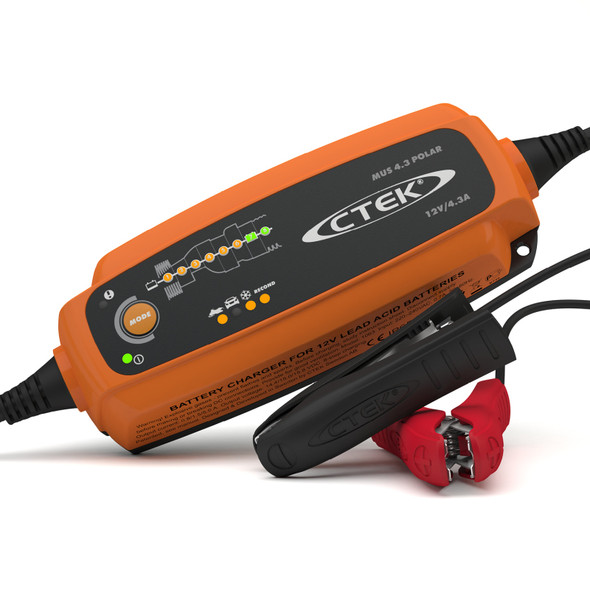

CTEK Battery Charger - MXS 5.0 Polar - 12V - 56-958
CTEK
MSRP: $189.99$179.99What is the best way to maintain my vehicle's battery for daily driving?Maintaining your vehicle's battery for daily driving is best achieved with CTEK MXS chargers, ensuring reliable starts every...MSRP: $189.99$179.99 -


CTEK Battery Charger - US 0.8 - 12V - 56-865
CTEK
MSRP: $64.99$61.99Is it safe to leave the CTEK XS charger plugged in all the time?Yes, CTEK XS chargers utilize advanced technology for continuous safe charging, ensuring optimal battery health and readiness for...MSRP: $64.99$61.99 -


CTEK Battery Charger - MXS 7.0 - 56-353
CTEK
MSRP: $209.99$199.99Are CTEK chargers compatible with all battery types?CTEK MXS chargers are engineered for broad compatibility, but always confirm fitment with your specific vehicle and battery chemistry before...MSRP: $209.99$199.99 -


CTEK Battery Charger - 15A NXT 15 NA - 12V - 40-727
CTEK
MSRP: $399.99$379.99What is the best battery charger for infrequent use?CTEK Chargers NXT delivers optimal battery health, maintaining 100% charge for vehicles used infrequently or for extended periods.Can I install...MSRP: $399.99$379.99 -
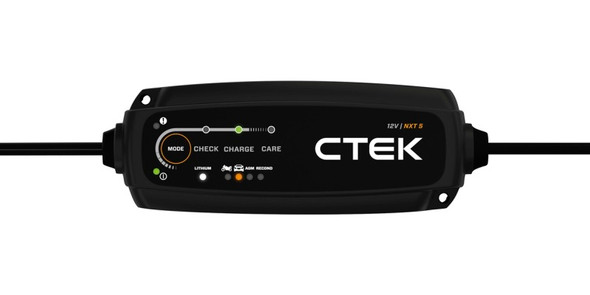
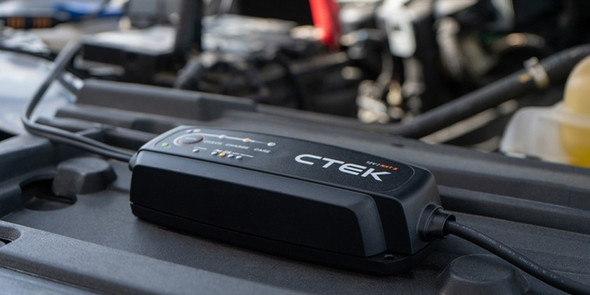
CTEK Battery Charger - 4.3A NXT 5 NA - 12V - 40-658
CTEK
MSRP: $129.99$124.99What is the main purpose of the CTEK NXT battery charger?CTEK NXT battery chargers deliver optimal battery health for reliable starts and maximize battery lifespan, saving on replacements.Is the CTEK...MSRP: $129.99$124.99 -
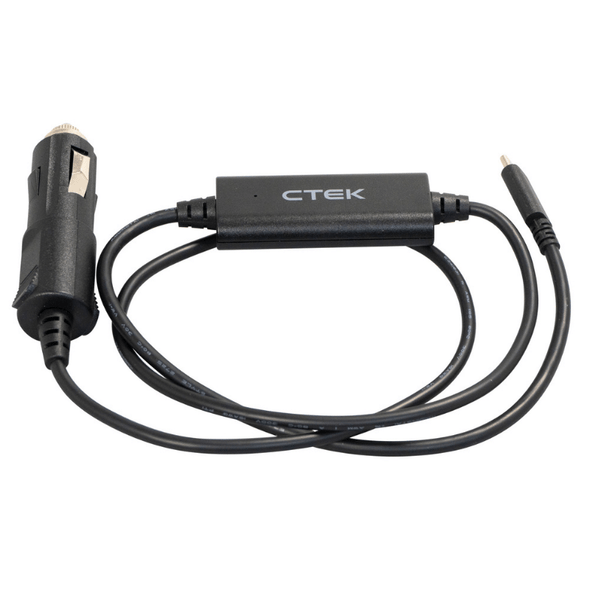

CTEK CS FREE USB-C Charging Cable w/12V Accessory Plug - 40-464
CTEK
MSRP: $59.99$56.99Is the CTEK CS Free compatible with my vehicle?Confirm fitment with your vehicle's specific make and model to ensure seamless integration with this advanced Battery Charger.How easy is the CTEK CS...MSRP: $59.99$56.99 -
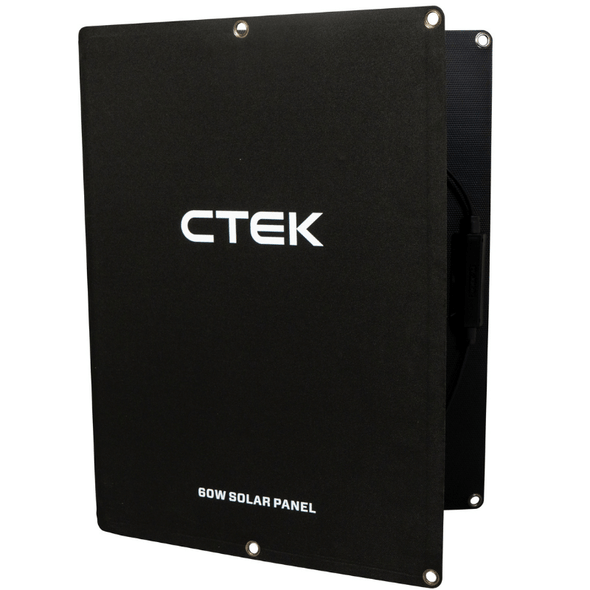

CTEK CS FREE Portable Solar Charging Kit - 12V - 40-463
CTEK
MSRP: $209.99$199.99What type of battery does the CTEK CS FREE support?This versatile 12V battery charger expertly maintains all common 12-volt lead-acid battery types, ensuring peak performance and longevity.Is the...MSRP: $209.99$199.99 -


CTEK CS FREE Portable Battery Charger - 12V - 40-462
CTEK
MSRP: $209.99$199.99What type of batteries does the CTEK CS Free charge?CTEK CS Free charges WET MF Ca/Ca AGM and EFB 12-volt batteries, ensuring reliable power for diverse automotive needs.Do I need to be a...MSRP: $209.99$199.99 -
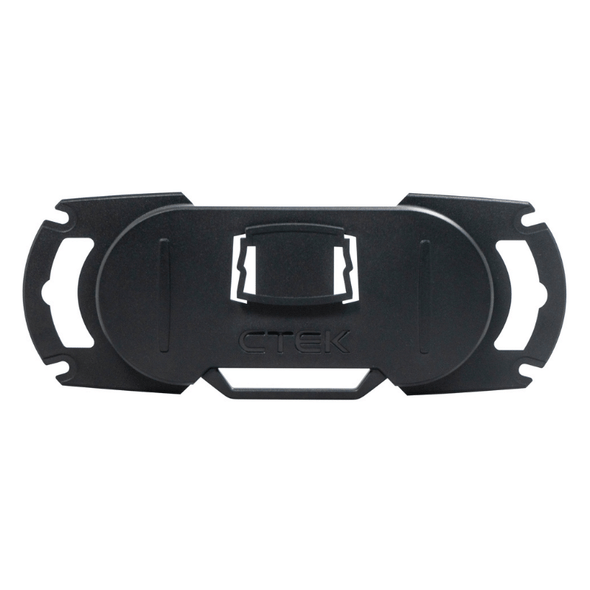

CTEK CS FREE Wall Mount w/Slide-Lock Function - 40-375
CTEK
MSRP: $59.99$56.99Is the CTEK CS FREE a universal battery charger?The CTEK CS FREE is designed for broad compatibility, but confirm fitment with your specific vehicle model for optimal charging performance.What makes...MSRP: $59.99$56.99 -

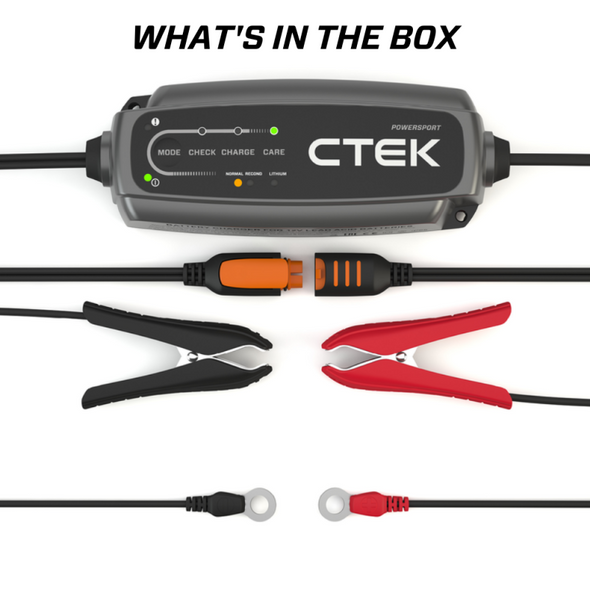
CTEK Battery Charger - CT5 Powersport - 2.3A - 40-339
CTEK
MSRP: $89.99$84.99Can I use this CTEK CT5 battery charger on my classic car?Confirm fitment with your vehicle's battery specifications for optimal performance and safe operation of your classic car.Is professional...MSRP: $89.99$84.99 -


CTEK PRO25S Battery Charger - 50-60 Hz - 12V - 40-328
CTEK
MSRP: $449.99$427.99What is the best way to charge my vehicle's battery?Utilize a CTEK charger for optimal battery health, ensuring reliable starts every time by maintaining a 100% charge.Is CTEK a good brand for...MSRP: $449.99$427.99
A battery charger is the most overlooked piece of electronics in any performance or race build — the wrong charger destroys expensive AGM and lithium cells through overcharge, sulfation, or chemistry mismatch, while the right one extends battery life by years and keeps your vehicle ready to fire on demand. Motor Sport Mayhem stocks 73 chargers across 28 brands, from entry-level trickle maintainers to multi-bank smart chargers and dual-input DC-DC units engineered for overlanding and competition.
Our Top Picks for Battery Chargers
Every unit below was selected based on charging technology, chemistry compatibility, build quality, and proven real-world performance across street, track, and expedition applications.
ANT AG 49 Restart Battery - Lithium
Antigravity Batteries | $1,349.99
Lithium Group 49 battery with integrated Re-Start technology that self-recovers from deep discharge events that would permanently kill a conventional AGM cell.
- Integrated Re-Start circuitry eliminates the need for a dedicated jump pack on track days or remote expeditions
AM Battery Accessories
AutoMeter | $103.31
Compact 12V emergency jump starter delivering 800A peak current — enough to crank high-compression performance engines without a traditional charger on hand.
- 800A peak output handles demanding starting loads where a standard trickle charger cannot provide emergency cranking assistance
BTN Battery Charger
Battery Tender | $739.95
Ten-bank selectable 6V/12V smart charger built for shops and collectors maintaining multiple vehicles simultaneously without risking overcharge on any individual battery.
- Independent per-bank voltage selection means you can maintain a 6V classic alongside modern 12V AGM and lithium packs on the same unit
BKM Batteries - Lithium
BikeMaster | $304.99
Second-generation lithium-ion motorcycle battery engineered for weight reduction and high cold-cranking output in a direct OEM-footprint replacement form factor.
- Lithium-ion 2.0 chemistry requires a lithium-compatible smart charger — pairing with the wrong lead-acid charger profile will degrade cell capacity permanently
BKC Battery Accessories
Bikers Choice | $45.99
OEM-profile ribbed battery side cover for vintage FL-series applications where proper battery enclosure directly affects both vibration protection and electrical safety.
- Correct battery enclosure prevents terminal contact with conductive chassis components — a common source of parasitic drain and dead-battery faults on older builds
COBB Battery Tie Down
COBB | $75.00
Billet aluminum battery tie-down machined to keep the battery secured under high-g cornering loads where stock plastic hardware routinely fails on modified builds.
- Rigid billet construction eliminates battery movement that causes terminal chafing, connector fatigue, and intermittent electrical faults during track use
CTEK Chargers - D250
CTEK | $569.99
Dual-input DC-DC smart charger accepting alternator or solar input across an 11.5–23V range, purpose-built for dual-battery overlanding and expedition systems.
- Wide input voltage tolerance allows reliable charging from both standard and high-output alternators without risking secondary battery overcharge
CUS Battery Tie Downs
Cusco | $76.50
Anodized aluminum competition tie-down designed for direct-fit installation on the BRZ/FR-S/86 platform where weight distribution and battery retention both matter on track.
- Anodized finish resists corrosion from battery acid vapor, a failure mode that destroys untreated steel hardware within one season in a closed engine bay
FSG Heat Trollers
FIRSTGEAR | $134.99
Single-channel remote heat controller that manages 12V accessory load draw — critical for rider-heated gear applications where unregulated draw accelerates battery discharge on cold-weather rides.
- Regulated PWM output prevents the uncontrolled current spikes that shorten battery life when resistive heated accessories run directly off the charging circuit
FR Alternator Kits
Ford Racing | $447.80
Factory-engineered high-output alternator kit that addresses the root charging deficit created when aftermarket electrical loads exceed the stock alternator's sustained output capacity.
- Upgrading to a higher-output alternator is the correct fix when a battery repeatedly discharges despite a healthy smart charger — the charger cannot compensate for chronic undercharging at idle
How to Choose the Right Battery Charger
The single most important specification in any battery charger purchase is chemistry compatibility — a charger programmed for flooded lead-acid uses a bulk/absorption/float algorithm that will overcharge a lithium iron phosphate cell past its 14.6V ceiling and trigger BMS shutdown or, in unprotected cells, cause permanent capacity loss. AGM batteries require a slightly lower float voltage than flooded cells (13.6V vs 13.8V), and lithium chemistries need a dedicated constant-current/constant-voltage profile with no float stage. Getting this wrong on a $1,000+ lithium battery is an expensive lesson — buy the charger that explicitly lists your battery chemistry on its specification sheet, not just in marketing copy.
Key Specifications
Output amperage determines how quickly a depleted battery recovers. The rule of thumb is a charge rate of 10–20% of the battery's amp-hour capacity for overnight conditioning — a 20Ah motorcycle battery charges correctly at 2–4A, while a 100Ah dual-battery auxiliary pack needs 10–20A to fully recover in a reasonable timeframe. Undersized chargers left permanently connected as maintainers are fine; undersized chargers used for recovery charging waste hours and leave cells partially sulfated at the top of charge where they can't accept current efficiently.
For dual-battery and overlanding setups, DC-DC chargers are categorically different from AC mains chargers — they condition current from the alternator or a solar input rather than wall power, using multi-stage algorithms to properly charge a secondary battery without back-feeding the vehicle's primary battery or tripping the alternator's voltage regulator. A simple voltage-sensing relay (VSR) is not a charger; it's a switch, and it will not fully charge a secondary AGM or lithium battery without a proper DC-DC charging stage in the circuit.
Temperature compensation is a specification that separates professional-grade chargers from consumer units. Battery charge acceptance varies approximately 3–4mV per cell per degree Celsius — a charger applying a fixed 14.4V absorption voltage in a 0°C garage is effectively undercharging by nearly half a volt compared to what that same battery needs. Units with integrated temperature sensors or external sensor ports adjust voltage dynamically, extending cycle life significantly in climates with seasonal temperature swings of 40°C or more.
For multi-vehicle shops and collectors, bank charger capacity and isolation architecture matter as much as output specs. Each bank must be independently isolated so a shorted or heavily sulfated battery on one channel cannot affect the charge profile delivered to the healthy batteries on adjacent channels. Look for per-bank status indication — a unit that only shows an overall system status gives you no diagnostic information when one battery in ten is failing to accept charge.
Battery Charger Output Selection by Application
| Application | Typical Battery Capacity | Recommended Charge Rate | Charger Type |
|---|---|---|---|
| Motorcycle / Powersport | 5–20 Ah | 0.8–2A (maintain) / 2–4A (recover) | Smart maintainer, lithium-compatible |
| Street Performance (single battery) | 40–70 Ah | 4–8A (maintain) / 8–15A (recover) | Multi-stage smart charger, AGM/lithium mode |
| Track / Race (lightweight lithium) | 10–30 Ah LiFePO4 | 5–10A lithium profile only | Lithium-specific smart charger, no float stage |
| Overlanding Dual Battery | 80–200 Ah auxiliary | 20–40A DC-DC from alternator | DC-DC charger / MPPT solar combo unit |
| Heavy Towing / Commercial | 100–200 Ah AGM | 15–30A multi-stage | High-output smart charger, temperature compensation |
| Shop / Collection (multi-vehicle) | Various | 2–4A per bank | Multi-bank independent smart charger |
Price Guide
Entry ($0.99–$99): Simple trickle maintainers and basic smart chargers with single-stage or two-stage charging algorithms — suitable for seasonal storage of motorcycles, ATVs, and classics where you need to keep a healthy battery topped off, not recover a deeply discharged one. Most units in this range lack temperature compensation and have limited chemistry mode options.
Mid-range ($99–$400): Where the majority of serious enthusiasts land — multi-stage smart chargers with selectable chemistry modes (AGM, lithium, standard flooded), temperature compensation, recondition cycles, and reliable protection against reverse polarity and short circuit. Units here can genuinely recover mildly sulfated lead-acid batteries and maintain lithium packs safely long-term.
Premium ($400–$3,333.85): Professional DC-DC dual-input chargers for expedition and overlanding dual-battery systems, high-amperage multi-bank shop chargers for maintaining entire fleets or race programs simultaneously, and integrated lithium battery systems with onboard electronics — the cost is justified when the battery being maintained costs $500–$1,500 and downtime at a remote trailhead or between race sessions is unacceptable.
Who Is This For?
Battery chargers and charging accessories serve a wider range of applications than any other single electrical category — from a weekend rider keeping a motorcycle battery alive in winter storage to an overland expedition team running a full dual-battery 12V system hundreds of miles from the nearest power outlet.
Overlanding / Expedition — 7.2/10
Overlanding is the highest-scoring application in this category and the one that drives demand for the most sophisticated charging hardware. Running refrigeration, lighting, communication equipment, and recovery gear off a secondary battery requires DC-DC charging that can harvest alternator output efficiently during transit and accept solar input when stationary — neither of which a standard AC mains charger addresses. A properly specified dual-battery charging system is as mission-critical as the suspension on any serious expedition build.
Weekend Off-Roading — 7.3/10
Weekend off-road use scores 7.3/10 in this category because auxiliary electrical loads — winches, light bars, lockers, and air compressors — create significant discharge events that a stock charging system often cannot fully recover between uses. A smart charger used between outings ensures the battery begins every run at full capacity, which is particularly important for winch systems where a partially discharged battery loses cranking power precisely when maximum draw is demanded. Pairing a quality charger with upgraded light bars and auxiliary lighting ensures your electrical system keeps pace with your accessory build.
Street Performance — 7.1/10
Street performance vehicles modified with high-draw audio systems, aftermarket ECUs, data loggers, and auxiliary fans place demands on the charging system that the OEM battery and alternator calibration never anticipated. A smart charger used during storage or between events recovers charge that a modified charging system may not fully replenish at normal driving cycles. Vehicles where engine modifications have significantly increased idle current draw — particularly those running forced induction with intercooler fans or water injection — benefit most from a dedicated smart charging routine.
Easy DIY Install — 8.4/10
This category scores its highest marks at 8.4/10 for DIY install accessibility — virtually every charger and maintainer in the range connects with two clamps or a pre-wired pigtail connector, requiring zero specialized tools or technical knowledge to operate correctly. That accessibility is why battery maintenance is often the first performance habit adopted by new enthusiasts, and why maintaining charging discipline pays dividends across every other performance upgrade by ensuring the electrical foundation is solid.
Racing Competition — 6.6/10
Racing applications score 6.6/10 — lower than street use because competition vehicles typically run purpose-built lithium starting batteries sized to the minimum viable capacity for weight savings, and between-session charging is handled by dedicated fast chargers or team infrastructure rather than individual maintainers. Where this category earns its place in racing is in the paddock, maintaining multiple vehicles across a race weekend, and in the lithium battery accessory ecosystem including secure tie-downs, isolation switches, and battery boxes that sanctioning bodies increasingly mandate for safety compliance.
Trusted Battery Charger Brands We Carry
CTEK's reputation in this category is built on the engineering precision of their multi-stage charging algorithms and their leadership in DC-DC charging technology for dual-battery systems — their units are used as reference standards by battery manufacturers for warranty testing. Battery Tender pioneered the set-and-forget maintainer category and remains the benchmark for long-term storage charging, with a product range that now covers lithium chemistry alongside their original flooded and AGM profiles. Antigravity Batteries approaches the category from the battery side, building charging accessories and lithium systems that integrate directly with their Re-Start battery technology for a closed-loop solution. REDARC, an Australian manufacturer with deep roots in heavy vehicle and expedition electrical systems, produces some of the most robust DC-DC chargers and battery management systems in the catalog — their units are specified for commercial and emergency service vehicle applications where failure is not an option. BikeMaster and Yuasa Battery both bring decades of powersport-specific charging expertise, covering the sub-20Ah lithium and AGM motorcycle battery segment with chargers calibrated to the tight capacity windows those batteries require.
Frequently Asked Questions
Are battery boxes necessary for performance and race applications?
Battery boxes are required by most sanctioning bodies (SCCA, NASA, and NHRA among them) whenever a battery is relocated from its OEM position or mounted in the passenger compartment — and for good reason. A battery that breaks free under impact becomes a 30-pound projectile carrying concentrated sulfuric acid or, in lithium cases, a thermal runaway risk in an enclosed cabin. Even outside of competition, a properly sealed and vented battery box protects surrounding electrical components from acid vapor corrosion, which is a slow but consistent killer of wiring harnesses in sealed engine bays. For street builds where relocation is not involved, a quality battery hold-down and tray with appropriate venting provides equivalent protection without the added enclosure.
Are battery isolators safe to use in dual-battery systems?
Battery isolators are safe when correctly specified, but they are frequently misapplied — the most common error is using a diode-based isolator on a system with a lithium secondary battery, where the diode's 0.6–0.7V voltage drop causes chronic undercharging that degrades the lithium cells over dozens of cycles. A DC-DC charger or a field-effect transistor (FET)-based isolator eliminates this voltage drop and provides actual charge management rather than simple voltage-sensing isolation. For high-current applications like winching, make sure the isolator's continuous current rating exceeds your maximum draw with appropriate margin — an isolator running at its rated limit will overheat and fail at the worst possible moment.
Are CTEK chargers worth the price premium over budget alternatives?
CTEK chargers justify their pricing through multi-stage charging precision, genuine chemistry-specific modes, and build quality that survives years of regular use in harsh garage and vehicle environments — budget chargers claiming smart charging often use simplified two-stage algorithms that only approximate proper multi-stage behavior. The reconditioning cycle that CTEK units include can recover mildly sulfated batteries that a simple charger would classify as dead, which represents real money saved on battery replacement. Their temperature compensation accuracy and the quality of their spark-proof protection circuitry are measurably better than most alternatives at equivalent or lower price points — this is a category where the difference between a $30 charger and a $150 charger shows up directly in battery longevity.
Are Chinese LiFePO4 batteries safe for performance applications?
LiFePO4 chemistry is inherently more thermally stable than lithium cobalt oxide or lithium nickel manganese cobalt chemistries — the relevant safety question is whether the battery includes a properly engineered battery management system (BMS) that protects against overcharge, over-discharge, over-current, and short circuit conditions. Many budget Chinese LiFePO4 cells use genuine prismatic or cylindrical cells with adequate chemistry, but pair them with undersized BMS boards that trip unexpectedly under high cranking loads or fail entirely after repeated deep cycles. For street use with modest electrical loads, a quality budget LiFePO4 with a verified BMS can be adequate; for competition use, the potential for a BMS shutdown at a critical cranking moment and the absence of the Re-Start-type recovery technology found on premium units makes the price premium for established brands a reasonable investment.
Can a DC-DC charger like the CTEK D250 series charge lithium batteries?
The D250 series includes a dedicated lithium charging mode that applies the correct constant-current/constant-voltage profile without a float maintenance stage — float voltage on lithium iron phosphate cells accelerates degradation because the chemistry does not benefit from trickle maintenance the way lead-acid does. The wide input voltage range on this unit handles the varying output of both standard and high-output alternators without overvoltage risk to the secondary battery. Verify that your specific secondary lithium battery's BMS is compatible with the charge current output of the unit you select — some smaller-capacity lithium packs have BMS boards that trip at charge currents above 10–15A, and exceeding that threshold will cause repeated shutdown cycling rather than a completed charge.
Building something specific? Our performance specialists can help you select the right Battery Chargers for your application — street, track, or full race build.