
Silicone Couplers & Hoses
- Product
- Qty in Cart
- Quantity
- Price
- Subtotal
-

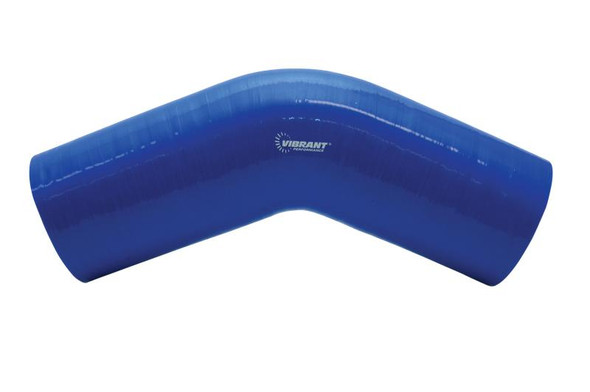
Vibrant 4 Ply Reinforced Silicone Elbow Connector - 1.25in ID x 8in Leg 45 Deg Elbow (BLACK) - 2969
Vibrant
MSRP: $55.99$41.50Are these hoses suitable for all types of automotive fluids?These Vibrant 4 Ply Hoses are specifically designed for water coolant and air service only, not for fuel or oil applications.What is the...MSRP: $55.99$41.50 -

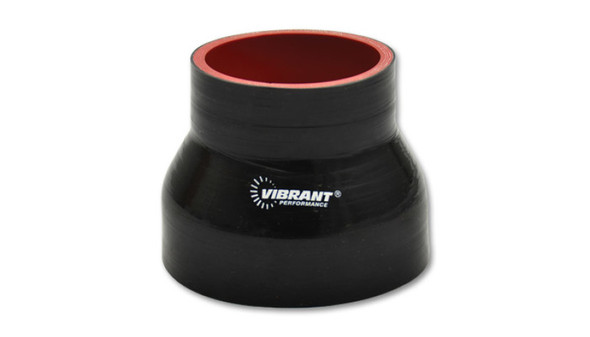
Vibrant 4 Ply Reinforced Silicone Transition Connector - 2.25in I.D. x 3in I.D. x 3in long (BLACK) - 2770
Vibrant
MSRP: $38.59$28.50What is the temperature range of these silicone hoses?Vibrant VIB 4 Ply Hoses are rated for extreme temperatures ranging from minus 65 Fahrenheit to 350 Fahrenheit, ensuring reliability in diverse...MSRP: $38.59$28.50 -

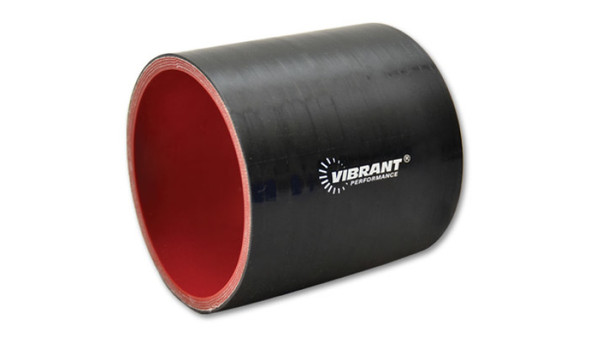
Vibrant 2-1/8in I.D. x 3in Long Gloss Black 4 Ply Aramid Reinforced Silicone Hose Coupling - 19825
Vibrant
MSRP: $18.50$13.79What is the recommended installation type for these Vibrant silicone hoses?Professional installation is recommended to ensure proper fitment and performance for these high-performance silicone hoses...MSRP: $18.50$13.79 -

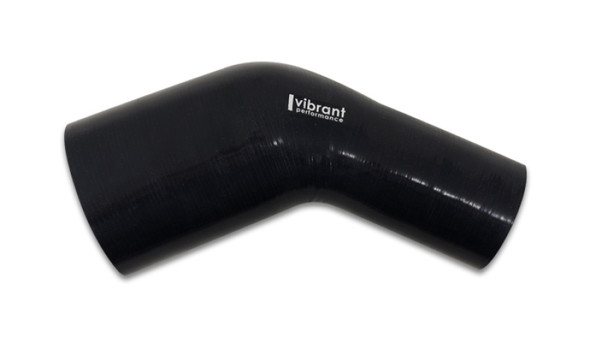
Vibrant 45 Degree Silicone Transition Elbow Hose ID 3.50in x 2.50in - 19764
Vibrant
MSRP: $92.99$72.99Will this Vibrant 4 Ply Hoses fit my 2005 Subaru WRX STI?Confirm fitment with your vehicle before purchasing to ensure proper installation and optimal performance for your 2005 Subaru WRX STI.How...MSRP: $92.99$72.99 -


Vibrant 4 Ply Aramid Reducer Coupling 4.5in Inlet x 5in Outlet x 3in Length - Black - 2929
Vibrant
MSRP: $65.99$49.99What is the primary function of Vibrant silicone hoses in a performance vehicle?Vibrant 4-ply silicone hoses are engineered to deliver unwavering engine performance by reliably handling extreme...MSRP: $65.99$49.99 -

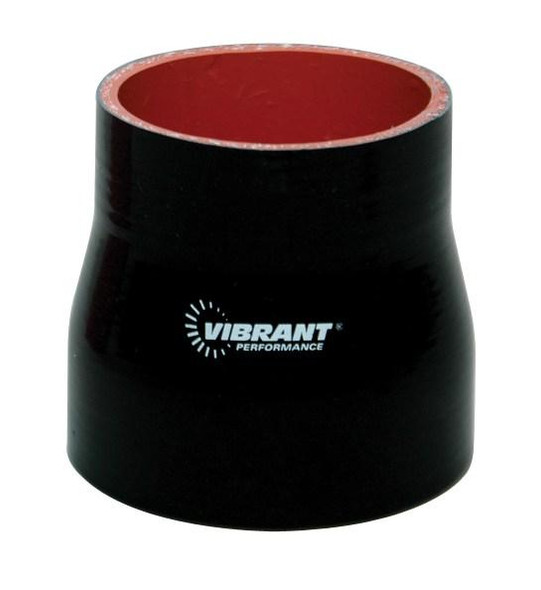
Vibrant 4 Ply Aramid Reducer Coupling 2.5in I.D. x 4in I.D. - Gloss Black - 2928
Vibrant
MSRP: $44.99$33.50What is the primary function of a silicone transition hose?Silicone transition hoses facilitate a smooth and effective transition from one inlet diameter size to another, optimizing airflow for...MSRP: $44.99$33.50 -

Vibrant 4 Ply Aramid Reducer Coupling 1.75in Inlet x 1.25 Outlet x 3in Length - Black - 2923
Vibrant
MSRP: $26.99$19.99What is the temperature range for Vibrant 4-Ply Hoses?Vibrant 4-Ply Hoses are rated for extreme temperatures, reliably functioning from -65 degrees Fahrenheit to 350 degrees Fahrenheit.Can I install...MSRP: $26.99$19.99 -
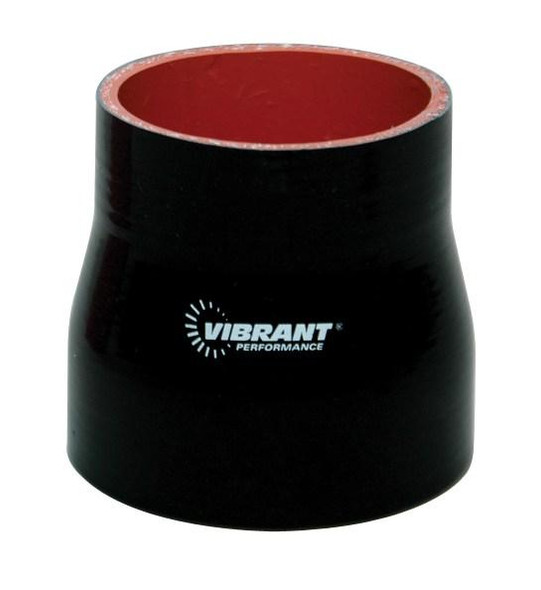
Vibrant 4 Ply Aramid Reducer Coupling 1.5in Inlet x 1in Outlet x 3in Length - Black - 2922
Vibrant
MSRP: $23.79$17.79Vibrant Performance Aramid Reinforced Silicone Transition Hose Couplers feature a smooth and effective transition from one inlet diameter size to another. This coupler is intended for use in...MSRP: $23.79$17.79 -


Vibrant 4 Ply Reducer Coupling 1.25in x 1.50in x 3in Long (BLACK) - 2921
Vibrant
MSRP: $24.99$18.79What makes Vibrant's 4 Ply Hoses superior to standard silicone hoses?Vibrant's 4 Ply Hoses feature aramid reinforcement, delivering superior strength and resilience against extreme pressures and...MSRP: $24.99$18.79 -
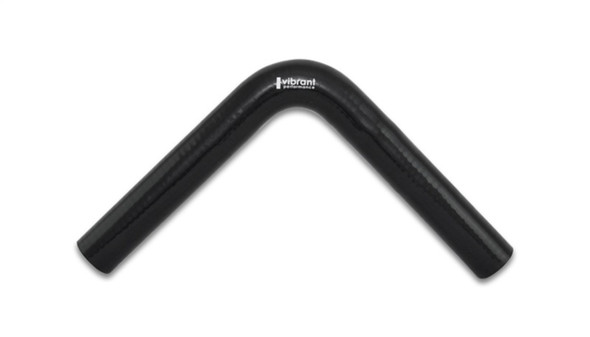
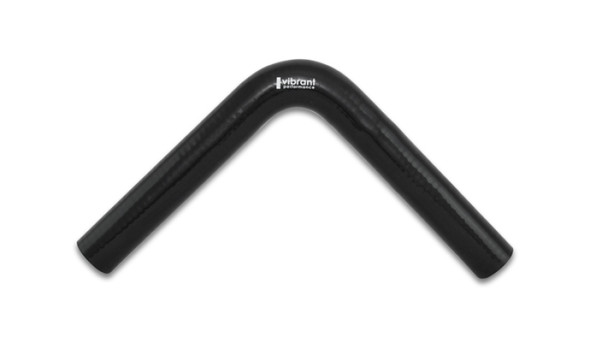
Vibrant 4 Ply Reinforced Silicone Elbow Connector - 1.25in ID x 8in Leg 90 Deg Elbow (BLACK) - 2919
Vibrant
MSRP: $62.29$46.29How do I ensure the VIB 4 Ply Hoses are compatible with my vehicle?Confirm fitment with your specific vehicle application before purchasing these silicone couplers and hoses for optimal integration...MSRP: $62.29$46.29 -
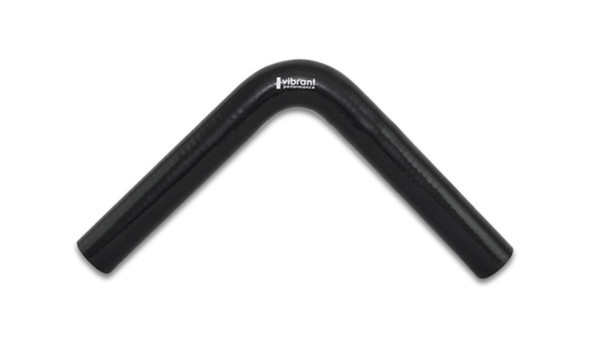

Vibrant 4 Ply Reinforced Silicone Elbow Connector - 1in ID x 8in Leg 90 Deg Elbow (BLACK) - 2918
Vibrant
MSRP: $53.99$39.99What makes Vibrant silicone hoses superior to standard rubber hoses?Vibrant 4 Ply Hoses utilize high-temperature resistant aramid reinforcement for superior durability and heat protection over...MSRP: $53.99$39.99 -

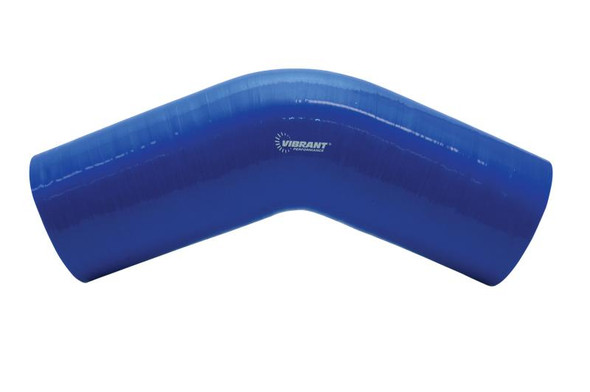
Vibrant 4 Ply Reinforced Silicone Elbow Connector - 5in ID x 4in Leg 45 Deg Elbow (BLACK) - 2917
Vibrant
MSRP: $142.99$112.99What is the operating temperature range of Vibrant 4 Ply Hoses?Vibrant 4 Ply Hoses operate reliably between -75 degrees Fahrenheit and 392 degrees Fahrenheit, ensuring consistent performance in...MSRP: $142.99$112.99
Silicone couplers and hoses are the structural connectors between intake tubes, intercoolers, throttle bodies, and turbo plumbing — components where material quality and dimensional precision directly determine boost retention, heat resistance, and long-term reliability. Motor Sport Mayhem stocks 301 silicone coupler and hose products across 49 brands, from entry-level street replacements to race-grade multi-ply reinforced systems rated beyond 50 PSI continuous pressure.
\n\nOur Top Picks for Silicone Couplers & Hoses
\nEach of these products was selected based on engineering quality, verified fitment, and real-world performance results across street, track, and competition applications.
\nAEM IND Cold Air Intakes
\nAEM Induction | $629.99
\nPrecision-molded intake systems with integrated silicone coupler connections engineered for consistent MAF signal and airflow velocity.
\n- \n
- Designed to maintain airtight sealing through the full RPM range without coupler collapse under vacuum \n
AFE Black Series Stage-2 Carbon Fiber Cold Air Intakes
\naFe | $1,606.00
\nFull carbon fiber intake housing paired with high-durometer silicone couplers capable of sustained high-heat performance at elevated power levels.
\n- \n
- Multi-ply silicone coupler construction handles elevated underhood temperatures without deforming or cracking \n
AIR Cold Air Intake Kit
\nAiraid | $472.99
\nComplete intake system utilizing silicone transition couplers engineered to maintain laminar airflow and prevent turbulence at the intake entry point.
\n- \n
- Heavy-wall silicone construction resists deformation under sustained wide-open-throttle negative pressure conditions \n
PA Alta Intake
\nAlta | $369.75
\nApplication-specific intake system with silicone couplers dimensionally matched to OEM interface points for zero-leak forced induction connections.
\n- \n
- Tight dimensional tolerances on coupler bore diameter prevent boost creep and false MAF readings on turbocharged applications \n
AMS Air Intakes
\nAMS | $999.95
\nRace-developed intake system with reinforced silicone coupler sections engineered specifically for high-boost, high-displacement forced induction platforms.
\n- \n
- Four-ply reinforced silicone construction prevents ballooning under sustained boost pressure above 20 PSI \n
ARB Safari V-Spec Snorkels
\nARB | $699.95
\nHigh-clearance snorkel system utilizing heavy-duty silicone intake couplers rated for water immersion, extreme dust, and sustained off-road abuse.
\n- \n
- UV-stabilized, oil-resistant silicone coupler material maintains seal integrity across extreme temperature and environmental exposure ranges \n
AWE S-FLO Intakes
\nAWE Tuning | $1,895.00
\nCompetition-developed carbon intake system with precision silicone interface couplers engineered for maximum airflow volume on high-output naturally aspirated and forced induction platforms.
\n- \n
- Polyester braid-reinforced silicone couplers eliminate flex under high-RPM intake pulse pressure spikes \n
BAJ Powersports Hood Scoop Kits
\nBaja Designs | $432.95
\nPowersports-specific hood scoop system with integrated silicone inlet couplers designed to seal against dust ingestion in high-vibration off-road environments.
\n- \n
- Silicone coupler flexibility absorbs chassis flex and drivetrain vibration without cracking or losing clamp-seal integrity \n
GBE Monster-Ram Intake
\nBanks Power | $898.00
\nHigh-flow diesel intake manifold system with heavy-wall silicone couplers engineered to handle the elevated charge temperatures and pressure cycles of turbocharged diesel applications.
\n- \n
- Silicone formulation rated for continuous intake charge temperatures exceeding 200°F without surface degradation or clamp slip \n
BBK Cold Air Intake Kit
\nBBK | $449.99
\nStreet-tuned cold air intake with mandrel-bent intake tube and silicone coupler connections precision-sized to maintain factory MAF sensor positioning and signal accuracy.
\n- \n
- Coupler inner diameter tolerances held within ±0.5mm to ensure repeatable airflow measurements and prevent check-engine codes on sensor-equipped platforms \n
How to Choose the Right Silicone Couplers & Hoses
\nThe single most important distinction in this category is ply count and reinforcement type — a two-ply unreinforced silicone coupler may hold on a naturally aspirated street car, but it will balloon, split, or blow off on a boosted application running 15+ PSI without a polyester or aramid braid layer between plies. Material durometer, inner diameter tolerance, and temperature rating separate couplers that last a season from ones that last a decade.
\n\nKey Specifications
\nPly count is the starting point: street-grade silicone couplers typically run two to three plies with polyester reinforcement, while race and high-boost applications demand four-ply construction with aramid (Kevlar) braid for pressure resistance above 30 PSI continuous. A coupler rated at a burst pressure of 80 PSI may only be safely operated at 40–50 PSI continuous — always apply a 2:1 safety margin when sizing couplers for forced induction systems.
\nInner diameter tolerance directly affects sealing and airflow. Quality couplers hold ±0.5mm bore tolerance across the full coupler length — loose-tolerance couplers allow the clamp to seat unevenly, creating micro-leaks that cause boost loss and false sensor readings on MAF-equipped systems. On turbocharged and supercharged platforms, even a 1–2% boost leak compounds into measurable power loss and potential lean conditions under load. Check that the coupler's stated ID matches both pipe ODs it bridges — a 2.5" coupler on a 2.5" pipe with a 2.375" mating surface will not seal properly under pressure.
\nTemperature rating matters as much as pressure rating. Standard silicone handles continuous temperatures from -65°F to 350°F, which covers most naturally aspirated and mildly boosted applications. High-performance formulations — typically identified as \"high-temp\" or \"HTS\" grades — extend the continuous rating to 450°F or higher, critical for post-intercooler hot-side routing, turbo outlet connections, and applications where charge air temperatures regularly exceed 250°F. Never use standard EPDM rubber hoses in these locations — they crack, harden, and collapse within a single season of heat cycling.
\nWall thickness determines both collapse resistance and clamp retention. Thin-wall couplers (3mm) save weight and work fine under positive pressure but will collapse under vacuum in high-flow naturally aspirated builds pulling strong negative pressure at the coupler. For intake applications upstream of the throttle body — where the engine pulls vacuum — a minimum 5mm wall thickness prevents coupler suck-in at peak RPM. For intercooler charge pipes and boost hoses downstream of the turbo or supercharger, wall thickness is secondary to ply count and burst rating. Always match coupler geometry — straight, 45-degree, 90-degree, and reducer couplers each have specific applications and must be selected based on the routing geometry, not just what fits the end connections.
\n\nSilicone Coupler Specification Guide by Application
\n| Application | Recommended Ply Count | Minimum Wall Thickness | Continuous Pressure / Temp Rating |
|---|---|---|---|
| Naturally Aspirated Intake (street) | 2-ply, polyester braid | 3–4mm | Vacuum rated / up to 300°F |
| Turbocharged Intake — Mild Boost (under 15 PSI) | 3-ply, polyester braid | 4–5mm | 25 PSI continuous / up to 350°F |
| Turbocharged — High Boost (15–30 PSI) | 4-ply, polyester or aramid braid | 5–6mm | 45 PSI continuous / up to 400°F |
| Race / Competition (30+ PSI sustained) | 4-ply, aramid (Kevlar) braid | 6mm+ | 60+ PSI continuous / up to 450°F |
| Diesel Turbo (charge air / EGR) | 4-ply, high-temp silicone | 5–6mm | 40 PSI continuous / up to 500°F |
| Coolant / Radiator Bypass | 2-ply, polyester braid | 4mm | 20 PSI continuous / up to 350°F |
Price Guide
\nEntry ($4.95–$150): Individual straight and elbow couplers, reducer hoses, and OEM-replacement silicone sections fall in this range — ideal for targeted repairs, single coupler upgrades, and naturally aspirated intake builds where cost efficiency matters more than burst-pressure ratings. Quality varies widely at this level; prioritize ply count and inner diameter accuracy over brand recognition.
\nMid-range ($150–$800): This is where the majority of complete intake system coupler kits, full boost hose sets, and multi-piece intercooler pipe kits land — the sweet spot for turbocharged street builds, track-day cars, and diesel performance trucks where you need proven pressure ratings without the cost of full race-spec materials. Brands like Vibrant, Mishimoto, and Airaid deliver consistent four-ply construction and accurate tolerances in this segment.
\nPremium ($800–$4,012.37): Full intake systems with integrated carbon fiber housings, complete race-plumbing kits for high-boost competition builds, and application-specific multi-component kits with OEM-grade fitment engineering occupy this tier. The cost is justified when boost levels, power output, or competition regulations demand zero-compromise sealing, maximum flow, and materials that survive repeated thermal cycling in sustained race conditions.
\n\nWho Is This For?
\nSilicone couplers and hoses serve builders across the full performance spectrum — from weekend autocrossers tightening up an intake leak to full race teams plumbing a high-boost competition engine.
\n\nEngine Performance — 8.6/10
\nThis is the highest-rated use case in the category for good reason: a leaking or collapsed coupler is a direct power robber on any forced induction application, and replacing degraded rubber hoses with quality silicone is one of the highest-return-per-dollar modifications available. The score reflects how directly coupler integrity ties to consistent boost delivery, accurate sensor readings, and repeatable dyno results. Builders focused on engine output should prioritize this upgrade early, particularly on any car that still runs factory rubber intake hoses or coupler connections.
\n\nStreet Performance — 8.1/10
\nStreet performance scores closely behind pure engine performance because the real-world benefit — eliminating boost leaks, preventing heat soak on charge air tubing, and removing the failure risk of aging rubber — is felt immediately and consistently in daily driving conditions. Silicone's resistance to oil contamination and heat cycling makes it far more durable than OEM rubber over years of street use. For street builds, three-ply polyester-reinforced couplers in the correct diameter hit the price-to-durability target without overbuilding.
\n\nEasy DIY Install — 8.1/10
\nSilicone couplers score an 8.1/10 for DIY ease because most installations require only basic hand tools — hose clamps, a screwdriver or nut driver, and basic torque on clamp hardware. The flexibility of silicone simplifies routing compared to rigid pipe and allows minor alignment corrections that rigid connections cannot accommodate. The critical caution: always re-torque clamps after the first heat cycle, as silicone compresses slightly under the clamp seat when first exposed to operating temperature.
\n\nTrack / Autocross — 7.2/10
\nTrack and autocross applications score 7.2/10 — slightly lower than street because at sustained competition power levels, coupler selection becomes more application-specific and installation precision matters more. Sustained wide-open-throttle runs, hard braking thermal cycles, and high-vibration environments all stress couplers in ways that occasional street driving does not. At this level, four-ply construction and proper clamp selection (T-bolt clamps over worm-gear clamps) are non-negotiable for reliability through a full competition season.
\n\nDrag Racing — 7.2/10
\nDrag racing scores 7.2/10 because the load profile is intense but brief — a drag application demands maximum burst pressure resistance for the duration of a pass, but thermal cycling is less extreme than endurance track work. The primary failure mode in drag racing is coupler blow-off under peak boost spike at the hit, which makes clamp type, coupler wall thickness, and beaded-pipe interface more critical than temperature rating. Bead-rolled or flanged pipe ends combined with T-bolt clamps eliminate blow-off risk that worm-gear clamps cannot fully prevent above 25 PSI.
\n\nTrusted Silicone Couplers & Hoses Brands We Carry
\nThe brands that dominate this category earn their position through dimensional precision, material consistency, and engineering validation across a wide range of applications. Vibrant Performance has built its reputation on tight ID tolerances and a comprehensive catalog covering virtually every coupler geometry in straight, elbow, and reducer configurations — their four-ply construction is consistent across the range. Mishimoto applies OEM-level fitment engineering to their silicone coupler kits, with application-specific wall thicknesses validated against factory boost and temperature specifications. aFe brings race-developed intake engineering to street and competition products, using silicone sections that are tested as part of complete flow-optimized systems rather than as generic fittings. Banks Power has decades of diesel performance credibility behind their high-temp coupler specifications, where sustained exhaust-side temperatures demand formulations that standard silicone suppliers don't produce. Airaid and AEM Induction both develop their silicone coupler sections in conjunction with the intake tubes they connect, ensuring that coupler ID, wall stiffness, and clamp band placement are matched to the specific airflow and pressure demands of each system rather than sourced as off-the-shelf components.
\n\nFrequently Asked Questions
\n\nAre AEM and K&N the same company?
\nAEM Induction and K&N Engineering are separate companies with distinct engineering philosophies, though both are owned under the same parent corporation. K&N built its brand on oiled cotton gauze filter media and broad vehicle coverage, while AEM focuses more heavily on complete intake system engineering, sensor compatibility, and dry-flow filter technology. Their product lines overlap in cold air intake systems but differ significantly in filter construction, coupler design, and tuning focus. For performance builds, the choice between them comes down to filter media preference and system-level engineering priorities — neither is universally superior across all applications.
\n\nAre aftermarket intake manifolds worth upgrading?
\nAftermarket intake manifolds deliver measurable gains when the factory unit is a documented restriction — typically on high-output or heavily modified engines where OEM plenum volume and runner length were engineered around emissions and packaging rather than peak power. On stock or mildly modified engines, the gain is usually minimal because the manifold is not the limiting factor in the intake system. Where manifold upgrades make the most sense is in conjunction with larger throttle bodies, ported heads, and camshaft upgrades that collectively shift the engine's volumetric efficiency ceiling. Silicone couplers connecting a new manifold to the throttle body and intake tube are a required part of any manifold upgrade — the connection points must seal perfectly to prevent vacuum leaks that destabilize fueling and idle. See our Engine Components section for manifold options.
\n\nAre aftermarket throttle bodies actually effective?
\nA larger throttle body improves airflow only when the engine's tune and supporting modifications can actually use the increased flow volume — on a stock or near-stock engine, a larger throttle body typically produces no measurable power gain and can worsen low-RPM drivability. The throttle body becomes a restriction on engines making over approximately 400 WHP with aggressive camshafts and intake work, where airflow demand at peak RPM genuinely exceeds the factory bore's flow capacity. When upgrading, the silicone coupler connecting the throttle body to the intake tube must be sized to match the new throttle body bore — mismatched coupler IDs create turbulence and partially negate the airflow benefit of the larger unit.
\n\nAre cold air intakes actually worth buying?
\nCold air intakes produce real, repeatable gains when they accomplish two things simultaneously: reduce intake restriction below the factory airbox and move the filter to a location that consistently receives cooler, denser air than the hot air trapped in the engine bay. The density advantage of air at 60°F versus 120°F is approximately 10% — that translates directly into a 10% improvement in the air mass delivered per intake stroke, which the engine management system converts into additional fuel and power. The silicone couplers connecting the intake tube to the throttle body and filter housing are critical components — a poorly sealed coupler connection introduces hot air and unmetered air that the ECU cannot compensate for, producing lean conditions and negating the intake's benefit. Quality couplers with proper T-bolt or double-bead clamps are not optional on any cold air intake installation. Browse our full Cold Air Intakes selection for complete systems.
\n\nAre closed box intakes better than open-element designs?
\nClosed box intakes — systems that fully enclose the filter in an isolated airbox sealed from engine bay heat — consistently outperform open-element designs in real-world street and track use because they protect the filter from the 150–200°F ambient temperatures that radiate off the engine and surrounding components. Open-element filters placed in the engine bay without heat shielding often draw air that is 40–80°F hotter than ambient outdoor temperature, which offsets the airflow advantage of the less-restrictive filter design. In controlled conditions like drag racing where ambient temperatures and run durations are short, open-element designs can outperform closed boxes due to lower restriction. For street and track-day use where the engine sees sustained operating cycles, a properly sealed closed box with quality silicone coupler connections between the box outlet and intake tube produces more consistent power than any open-element design positioned in the same underhood location.
\n\nBuilding something specific? Our performance specialists can help you select the right Silicone Couplers & Hoses for your application — street, track, or full race build.
\n\n" } ```