
Air Intake Systems
- Product
- Qty in Cart
- Quantity
- Price
- Subtotal
-

aFe Magnum Force Stage-2Si Cold Air Intake System w/PDS Filter 09-12 Porsche 911 Carrera(997)H6-3.6L - AFE54-83038D
aFe
$734.00How often should I clean the filter?The Pro DRY S filter is washable and reusable, typically requiring cleaning every 30,000 miles depending on driving conditions and environment.Is professional...$734.00 -
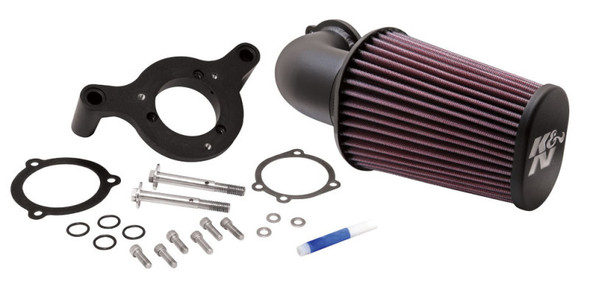
K&N 01-14 Harley-Davidson Softail DYNA Performance Intake Kit - K&NENGINEERING57-1125
K&N Engineering
$314.99Will this K&N 57 FIPK Air Intake fit my vehicle?Confirm vehicle fitment using our online compatibility tool before purchase to ensure precise integration with your specific engine.How difficult is...$314.99 -

K&N 96-99/01 Mustang Cobra Performance Intake Kit - K&NENGINEERING57-2523-2
K&N Engineering
$367.99What is the typical horsepower gain from a K&N 57 FIPK Cold Air Intake?This K&N 57 FIPK performance air intake system typically delivers a significant horsepower and torque boost, enhancing your...$367.99 -

K&N 2015 Harley-Davidson FLTRXS Road Glide AirCharger Performance Intake - K&NENGINEERING63-1131
K&N Engineering
$314.99Can I install this K&N Motorcycle Air Intake System myself?Professional installation is recommended for this K&N Motorcycle Air Intake System to ensure optimal performance and a precise fitment.How...$314.99 -
 $356.43
 -

Injen 2014 Hyundai Genesis Sedan 3.8L V6 Polished Short Ram Intake with MR Technology - INJENSP1393P
Injen
$348.93Will this intake fit my car?Confirm vehicle fitment using our interactive tool to ensure precise compatibility for your specific make and model.How long does installation typically take?Installing...$348.93 -

Injen 06-11 Honda Civic Hybrid 1.3L 4 cyl Polished Dyno-Tuned Air Intake w/ Web Nano-Fiber Filter - INJENSP1580P
Injen
$353.56Will this cold air intake fit my vehicle?Confirm vehicle fitment using our compatibility tool before purchasing this Injen SP Cold Air Intake system.How difficult is the installation?Installing this...$353.56 -
 $195.95
 -
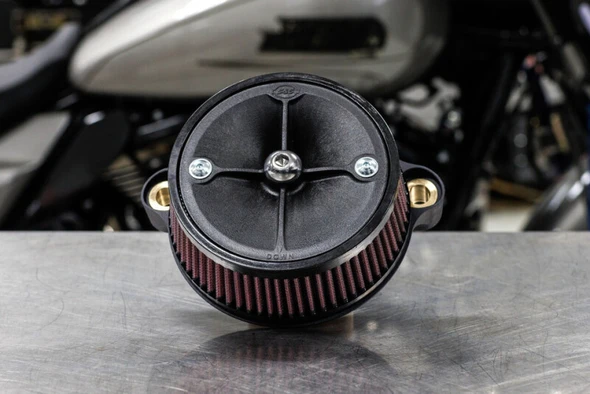
S&S Cycle 2023 CVO M8 Touring Models w/ VVT Stealth Air Cleaner Kit - S&SCYCLE170-0803
S&S Cycle
$195.95What is the primary benefit of installing the S&S Cycle Stealth Air Cleaner Kit on my 2023 CVO M8 Touring Model?This S&S Cycle Stealth Air Cleaner Kit delivers enhanced airflow, yielding a more...$195.95 -

aFe Takeda Momentum Pro Dry S Cold Air Intake System 20-21 Toyota Supra L6-3.0L (T) B58 - AFE56-70050D
aFe
$451.00What is the recommended maintenance for the Takeda Momentum Cold Air Intake?The aFe Takeda Momentum intake's Pro DRY S filter requires simple cleaning and re-oiling, making maintenance remarkably...$451.00 -

aFe Rapid Induction Dynamic Air Scoop 2021+ Ford F-150V6/V8 - Blue - AFE52-10010SL
aFe
$82.00Will this air scoop fit my 2018 Subaru WRX STI?Confirm vehicle fitment using our comprehensive compatibility tool to ensure proper installation and performance for your 2018 Subaru WRX STI.Is...$82.00 -
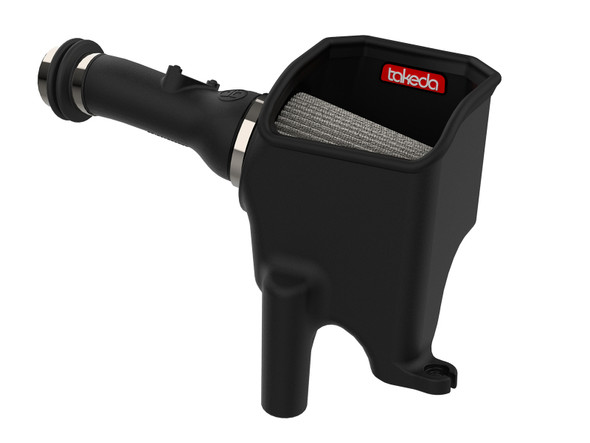
aFe Takeda Intakes Stage-2 PDS AIS 16-19 Honda Civic I4-1.5L (t) - AFE56-10008D
aFe
$354.00What is the estimated horsepower increase with the Takeda Stage-2 intake?The Takeda Stage-2 Cold Air Intake System, when properly installed, delivers a noticeable surge in horsepower and torque for...$354.00
Air intake systems are the foundational engine breathing upgrade — replacing restrictive OEM airboxes and filters with higher-flow designs that reduce intake air temperature and increase charge density for measurable horsepower and torque gains. Motor Sport Mayhem stocks 3,066 intake products across 49 brands, ranging from bolt-on drop-in filters to full carbon fiber race intake systems priced from $4.95 to $4,012.37.
Our Top Picks for Air Intake Systems
Each of these intakes was selected based on engineering quality, real-world dyno-verified performance, and proven fitment reliability across street, track, and off-road applications.
AEM IND Cold Air Intakes
AEM Induction | $629.99
Precision-engineered cold air routing draws intake charge from outside the engine bay for consistent low-temperature air delivery at all RPMs.
- MAF-compatible design preserves closed-loop fueling accuracy without requiring a tune on street applications
AFE Black Series Stage-2 Carbon Fiber Cold Air Intakes
aFe | $1,606.00
True dry-flow carbon fiber construction delivers maximum heat rejection and structural rigidity for high-horsepower forced induction and naturally aspirated race applications.
- Pro Dry S filter media offers oil-free filtration with multi-layer progressive density for high-flow airflow without risk of MAF sensor contamination
AIR Cold Air Intake Kit
Airaid | $472.99
A complete bolt-on intake system with a sealed airbox housing that isolates the filter from underhood heat for consistent cold air delivery on both V6 and V8 configurations.
- SynthaFlow oiled cotton gauze filter media provides excellent filtration efficiency while maintaining low restriction across a broad RPM range
PA Alta Intake
Alta | $369.75
Platform-specific intake engineering optimized for turbocharged small-displacement engines where inlet charge temperature management is critical to knock resistance and boost efficiency.
- Designed specifically for forced induction applications where cooler inlet air directly reduces the turbo's required compression work and improves intercooler effectiveness
AMS Air Intakes
AMS | $999.95
Open airbox architecture engineered for high-revving, high-displacement inline-six performance engines where maximum unrestricted airflow at peak RPM is the primary design target.
- Race-proven open airbox geometry reduces pressure drop at the inlet by eliminating the tortuous OEM routing path that creates measurable power loss above 5,000 RPM
ARB Safari V-Spec Snorkels
ARB | $699.95
Raised air intake snorkel system relocates the engine's air pickup point to roofline height for water crossing capability and access to cooler, cleaner ambient air above road dust level.
- V-Spec ram-style head design uses forward vehicle motion to generate positive pressure at the inlet, recovering airflow energy lost in conventional low-mount air box designs
AWE S-FLO Intakes
AWE Tuning | $1,895.00
S-FLO carbon fiber intake system engineered for twin-turbocharged high-performance applications where both left and right cylinder bank inlet tracts must deliver equal and unrestricted airflow.
- Aerospace-grade carbon fiber construction reduces radiated heat absorption versus aluminum while simultaneously cutting system weight compared to OEM plastic and rubber components
BAJ Powersports Hood Scoop Kits
Baja Designs | $432.95
Powersports hood scoop intake system designed for turbocharged side-by-side vehicles operating in high-dust environments where both airflow and filtration quality are equally critical.
- Elevated scoop positioning draws air above the primary dust cloud generated at wheel level, dramatically extending filter service intervals in off-road race and trail conditions
GBE Monster-Ram Intake
Banks Power | $898.00
High-flow intake manifold and inlet system engineered for turbodiesel applications where maximizing charge air volume directly translates to towing torque and EGT reduction under load.
- Larger inlet bore cross-section reduces intake restriction at the turbocharger compressor outlet, lowering exhaust gas temperatures and improving diesel combustion efficiency under sustained heavy load
BBK Cold Air Intake Kit
BBK | $449.99
Mandrel-bent aluminum cold air intake tube with a titanium silver finish designed for V8 muscle car applications where intake tract diameter and smooth internal surface finish are the primary airflow variables.
- CARB EO certification (model-year dependent) makes this a compliant street upgrade in emissions-tested states without sacrificing meaningful performance gains over the OEM airbox
How to Choose the Right Air Intake System
The difference between a quality intake system and a cheap imitation comes down to three factors: inlet tube geometry, filter media efficiency, and thermal management. A poorly designed intake that routes warm underhood air past the filter defeats the entire purpose of the upgrade — cooler, denser air contains more oxygen per cubic foot, and that directly translates to more complete combustion and more power. The best systems combine a large-diameter mandrel-bent or molded inlet tube with a properly sealed heat shield or cold air box, and a filter with a filtration efficiency rating above 99% at 5–10 microns. CARB Executive Order (EO) compliance matters for street-driven vehicles in emissions-controlled states — verify your intake carries a valid EO number if you're in California or a CARB-adopting state.
Key Specifications
Inlet tube diameter is the most misunderstood specification in intake shopping. Tube diameter should match your engine's actual airflow demand — running an oversized tube on a stock low-displacement engine reduces air velocity and can actually hurt low-end torque response. A naturally aspirated four-cylinder in stock trim typically performs best with a 2.5" to 3" inlet tube, while a modified V8 or turbocharged engine can benefit from 3.5" to 4" tubing. The tube's internal surface finish matters too: mandrel-bent aluminum holds tighter dimensional tolerances than rotary-bent tube and eliminates the internal wrinkling that creates turbulence and pressure drop.
Filter media selection determines both filtration effectiveness and service interval. Oiled cotton gauze filters — the dominant design from brands like K&N Engineering and Airaid — offer excellent flow rates and very long service life when properly maintained, but they require periodic cleaning and re-oiling and must never be over-oiled or the excess oil can coat MAF sensor wires and trigger fault codes. Dry-flow synthetic media, used by aFe in their Pro Dry S lineup and by AEM Induction in several fitments, eliminates the MAF contamination risk and typically needs no maintenance beyond occasional cleaning with compressed air. For dusty or off-road environments, a higher-efficiency two or three-stage filter is non-negotiable — look for a rated dust capacity above 200 grams before the filter restricts flow.
The heat shield or enclosure design separates a true cold air intake from a warm air intake wearing different packaging. A partial heat shield mounted to an open-element filter in the engine bay will see air temperatures 30–60°F above ambient at highway speeds — that's enough heat soak to cost 5–8% of peak power relative to a properly sealed cold air system drawing from outside the engine bay or from behind the bumper fascia. Full sealed cold air boxes that connect to the factory fresh air duct location deliver the most consistent inlet air temperatures across all operating conditions, especially in stop-and-go traffic when underhood temperatures peak.
For forced induction applications, the intake system's role changes significantly — the turbocharger or supercharger compressor outlet feeds the intercooler before the throttle body, so the pre-compressor intake primarily affects turbo spool response and compressor inlet conditions. In this context, minimizing inlet restriction and pressure drop at the compressor inlet is the top priority, and carbon fiber or reinforced polymer construction helps prevent collapse under the negative pressure the compressor creates. Any intake upgrade on a boosted engine should be paired with a review of your intercooler capacity and charge pipe routing for best results.
Intake Tube Diameter vs. Engine Airflow Demand
| Engine Output Range | Recommended Inlet Tube Diameter | Typical Application | Notes |
|---|---|---|---|
| Up to 150 HP | 2.25" – 2.75" | Stock or lightly modified 4-cylinder NA | Larger tubing reduces air velocity and hurts throttle response at this output level |
| 150 – 250 HP | 2.75" – 3.0" | Modified 4-cylinder, stock 6-cylinder NA | Sweet spot for most bolt-on street builds; balances flow and velocity well |
| 250 – 400 HP | 3.0" – 3.5" | Performance V6, small-block V8, turbocharged 4-cylinder | Most aftermarket intakes in this category target this range; verify MAF housing compatibility |
| 400 – 600 HP | 3.5" – 4.0" | Boosted V6/V8, modified LS/LT engines | Requires properly sized throttle body and intake manifold to realize gains at the tube |
| 600 – 900 HP | 4.0" – 4.5" | High-boost forced induction, supercharged V8 | Twin inlet designs or dual-path intakes common at this level; filter sizing critical |
| 900+ HP | 4.5"+ or dual inlet | Pro touring, drag race, full race builds | Airflow demand exceeds single-inlet capacity; purpose-built systems with fabricated hat or plenum required |
Price Guide
Entry ($4.95–$150): This range covers replacement air filters, filter wraps, and basic inlet hardware — legitimate maintenance and mild performance upgrades, but not a complete intake system. Drop-in high-flow replacement filters from brands like K&N Engineering and aFe fall here and offer a real, if modest, improvement over a clogged OEM paper element with zero installation complexity.
Mid-range ($150–$600): The vast majority of performance enthusiasts land in this range, and for good reason — complete cold air intake kits from Airaid, Injen, BBK, and Volant deliver genuinely measurable airflow improvements with vehicle-specific fitment, heat shields, and quality filter media all included at a price that makes sense for street and occasional track use. This is where the best value-to-performance ratio lives for naturally aspirated and lightly boosted applications.
Premium ($600–$4,012.37): Carbon fiber systems, dual-inlet race setups, full intake manifold replacements, and off-road snorkel systems occupy this tier — these are purpose-engineered products for specific high-output or extreme-environment applications. Brands like AWE Tuning, AMS Performance, COBB, and aFe's top-tier Black Series lines justify the cost through material quality, dyno-verified power gains on high-output platforms, and fitment precision that budget alternatives simply cannot match at the power levels these systems are designed to serve.
Who Is This For?
Air intake systems serve builders ranging from daily drivers chasing better throttle response to full race teams managing compressor inlet conditions on 1,000+ HP builds — the right system depends entirely on your application and power goals.
Engine Performance — 8.6/10
Air intake systems score the highest of any use case for raw engine performance, and that reflects the physics: intake restriction is one of the first and most accessible bottlenecks in the engine's breathing cycle. Reducing inlet air temperature by even 10°F increases charge density enough to support more fuel and produce more power without any other changes to the engine. For naturally aspirated engines, the gains are real but modest — typically 3–8 HP on a well-designed system; for turbocharged and supercharged engines, the compressor efficiency gains from a less restrictive inlet can push those numbers considerably higher.
Street Performance — 8.1/10
The street performance score of 8.1 reflects how broadly applicable quality intake systems are for daily-driven performance vehicles — improved throttle response, a more pronounced intake sound, and measurable mid-range torque improvement are all legitimate street benefits that you feel on every drive. Most street-oriented systems include the necessary emissions compliance hardware, retain the factory MAF sensor location, and install in under an hour with basic hand tools. The balance between performance gain, drivability, and legal compliance is best served by a sealed cold air system from an established brand rather than an open-element short ram that pulls hot underhood air.
Easy DIY Install — 8.1/10
An 8.1 install score puts air intakes among the most accessible performance upgrades in the catalog — most complete kit systems require nothing beyond a screwdriver, pliers, and 45–60 minutes of time. The install process on virtually every vehicle-specific kit follows the same sequence: remove the OEM airbox and inlet duct, install the new intake tube and heat shield with the supplied hardware, mount the filter, and reconnect the MAF and any breather hoses. The only meaningful trap for DIY installers is MAF sensor handling — the sensor wire grid is extremely fragile and must never be touched or blown with compressed air during installation.
Track / Autocross — 7.2/10
Track and autocross applications score a solid 7.2, but the requirements shift compared to street use — at sustained high RPM and elevated ambient temperatures, a heat-soaked open-element intake can actually perform worse than a factory system, making enclosure design the dominant selection criterion for track use. Closed box cold air systems that continuously draw from outside the engine bay maintain more consistent intake temperatures across a full track session than open-element designs. For competition classes with intake regulations, verify that your chosen system meets class rules before purchase — some sanctioning bodies restrict inlet diameter, filter type, or intake manifold design.
Drag Racing — 7.2/10
Drag racing applications also score 7.2, with the key distinction that a single wide-open-throttle pass generates much less heat soak than a 20-minute track session — this means short ram and open-element designs that would suffer on a road course can perform well in drag applications where consistent cold ambient temperatures and short run durations minimize heat soak concerns. At higher power levels, drag racers prioritize maximum peak airflow over all other considerations, and at that point the intake system choice becomes inseparable from throttle body sizing, intake manifold design, and engine component selection as a complete system.
Trusted Air Intake Systems Brands We Carry
The brands that dominate this category earn their position through engineering depth, not marketing spend. aFe Power leads our catalog with 895 products engineered across street and race applications, backed by in-house dyno testing and a filter media development program that rivals OEM supplier standards. K&N Engineering built the high-flow washable filter market and maintains rigorous filtration efficiency certifications that make their systems credible for daily drivers concerned about engine longevity. Injen Technology brings one of the largest vehicle-specific fitment databases in the industry, with particular strength in import performance applications where MAF calibration and inlet geometry precision are critical. Airaid has earned a strong reputation in the truck and SUV segment with sealed intake systems that deliver consistent cold air temperatures under real-world load conditions. COBB Tuning approaches intake design as part of a complete engine management ecosystem — their systems are engineered to work in concert with their Accessport calibration tools for mapped power gains rather than just hardware swaps. Volant and AEM Induction round out the serious street performance segment with high-quality systems that consistently show up on professional builds and enthusiast vehicles where proven fitment and durable construction matter more than price.
Frequently Asked Questions
Are AEM and K&N the same company?
AEM Induction and K&N Engineering are separate, independently operated companies — they are not the same brand and are not owned by the same parent organization. Both design and manufacture their own intake systems, filter media, and related products with distinct engineering philosophies: K&N built its business on oiled cotton gauze filter technology and holds the broadest vehicle fitment database in the industry, while AEM Induction has a stronger motorsport-derived engineering program and offers both oiled and dry-flow filter options across their lineup. They compete directly in the cold air intake market, and choosing between them typically comes down to vehicle fitment availability, filter media preference, and specific system design rather than any fundamental quality difference between the two brands.
Are cold air intakes actually worth it?
A well-designed cold air intake system from a reputable brand delivers genuine, measurable performance improvements — dyno-verified gains of 5–15 HP are realistic on naturally aspirated engines, and turbocharged engines often see more significant gains because reduced inlet restriction improves compressor efficiency across a wider RPM range. The key word is "cold" — a system that routes the filter into the engine bay without a proper heat shield or cold air box is delivering warm air to your engine, which increases knock tendency, reduces charge density, and partially or fully negates any flow improvement from the larger tube. Paired with appropriate supporting modifications like a less restrictive exhaust system, the intake upgrade becomes part of a complementary package where each component multiplies the other's effectiveness.
Are closed box cold air intakes better than open-element designs?
For the vast majority of street and track applications, a sealed closed-box cold air intake that routes fresh air from outside the engine bay delivers better real-world performance than an open-element design sitting in the engine bay, because thermal consistency matters more than peak instantaneous flow rate. An open-element filter reaches underhood air temperatures of 160–200°F in stop-and-go traffic, compared to 70–90°F for a sealed system drawing from the bumper or fender well — that 80–100°F temperature difference represents a measurable reduction in charge density and available oxygen per cycle. Open-element designs do have legitimate applications in closed-course racing where the vehicle is moving continuously and underhood temperatures are better managed, but for street use, closed box designs win on thermal performance across all real-world operating conditions.
Are carbon fiber intake systems actually worth the premium price?
Carbon fiber intake systems are worth the price premium specifically when two conditions are met: the application demands maximum weight reduction and thermal resistance, and the engine output level is high enough that small efficiency gains are worth significant investment. Carbon fiber has inherently low thermal conductivity compared to aluminum — it does not absorb and radiate underhood heat the way a metal tube does — which helps maintain lower air temperatures at the filter and throughout the inlet tract under sustained high-load conditions. At street performance output levels, the power difference between a quality aluminum cold air intake and a carbon fiber system of the same design is small; at 600+ HP forced induction levels where inlet air temperature management has compounding effects on boost pressure, intercooler load, and knock threshold, the carbon fiber system's thermal advantage becomes significantly more meaningful.
Are aftermarket intake manifolds worth upgrading?
Aftermarket intake manifolds deliver some of the largest naturally aspirated power gains available through bolt-on upgrades, but they require matching engine modifications to realize their full potential — a high-flow manifold on an otherwise stock engine will show minimal gains because the camshaft, head ports, and throttle body become the new restriction. The primary engineering variables in manifold design are plenum volume (which affects mid-range torque versus top-end power) and runner length and taper (which determines the RPM range where intake pulse tuning peaks) — performance manifolds are designed around a specific RPM target and application. For engines being built with upgraded camshafts, ported cylinder heads, and a larger throttle body, a correctly matched intake manifold is one of the highest-return investments in the entire engine build; on an otherwise stock daily driver, a drop-in filter or complete cold air intake kit will deliver better value per dollar spent.
Building something specific? Our performance specialists can help you select the right Air Intake Systems for your application — street, track, or full race build.