
Air Filters - Drop In
- Product
- Qty in Cart
- Quantity
- Price
- Subtotal
-

BMC 91-95 Honda Civic V 1.4i 16V Replacement Panel Air Filter - BMCFB213/01
BMC
$82.50What is the primary function of a BMC Panel Air Filter?BMC Panel Air Filters are engineered to provide optimal airflow, ensuring your engine breathes freely for improved performance.How do BMC Panel...$82.50 -

K&N 2019 Jeep Cherokee L4-2.0L F/I Turbo Replacement Drop In Air Filter - K&NENGINEERING33-5088
K&N Engineering
$67.19How do I know if a K&N drop-in air filter will fit my vehicle?Confirm fitment using K&N's online vehicle lookup tool to ensure precise compatibility with your specific car, truck, or SUV model.How...$67.19 -

K&N 2015 Hyundai Sonata Replacement Air Filter 2.4L - K&NENGINEERING33-5026
K&N Engineering
$67.19How do I install a K&N Drop-in Air Filter?Installing your K&N Drop-in Air Filter is straightforward, requiring no special tools or modifications to your existing airbox.What is the expected lifespan...$67.19 -

BMC 05+ Ford Focus II 2.5L ST Replacement Panel Air Filter - BMCFB145/01
BMC
$85.80Does this filter fit my 2008 Ford Focus ST?Confirm fitment using our vehicle selector to ensure this BMC Panel Air Filter precisely matches your 05+ Ford Focus II 2.5L ST.How easy is it to install...$85.80 -

BMC 2009+ Nissan Cube 1.5 DCI Replacement Panel Air Filter - BMCFB432/01
BMC
$85.80Will this air filter fit my 2009+ Nissan Cube 1.5 DCI?This BMC panel air filter is specifically designed as a direct replacement, ensuring a perfect fit for your 2009+ Nissan Cube 1.5 DCI.How easy is...$85.80 -

BMC 2008 Buick Regal V 2.0 Turbo Replacement Panel Air Filter - BMCFB594/20
BMC
$85.80Is this a direct fit for my 2008 Buick Regal V 2.0 Turbo?This BMC panel air filter is engineered for a direct fit, ensuring seamless installation for your 2008 Buick Regal V 2.0 Turbo.What is the...$85.80 -

BMC 11-14 Chrysler 200 3.6L V6 Replacement Panel Air Filter - BMCFB904/20
BMC
$86.90What is the primary benefit of installing a BMC panel air filter?BMC panel air filters deliver enhanced airflow for your 3.6L V6 engine, providing a noticeable upgrade to your vehicle's breathing...$86.90 -
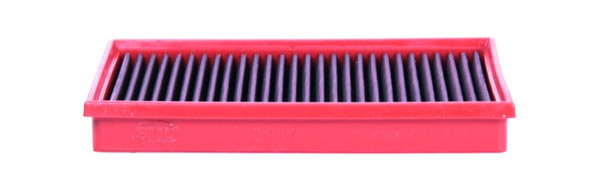
BMC 2018+ Audi Q3 (F3) 35 TFSI 1.5 Replacement Panel Air Filter - BMCFB01027
BMC
$86.90Will this air filter fit my 2018 Audi Q3?Confirm your 2018 Audi Q3 (F3) 35 TFSI 1.5 engine fitment to ensure seamless installation of this specific panel air filter.How easy is it to install a BMC...$86.90 -
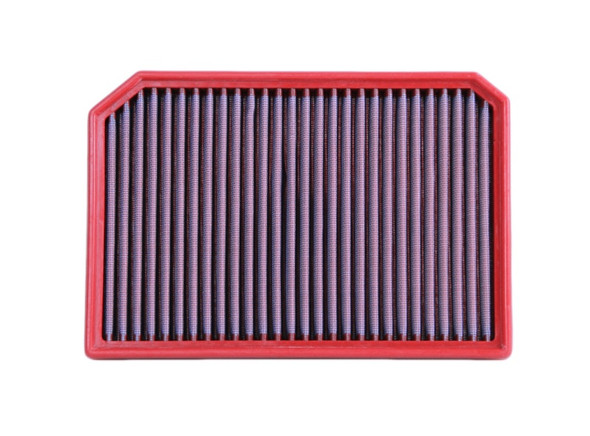
BMC 2018 Mercedes Class A (W177) A 220 / A 250 Replacement Panel Air Filter - BMCFB01045
BMC
$93.50What is the primary benefit of upgrading to a BMC Panel Air Filter?BMC Panel Air Filters deliver optimized airflow for enhanced engine responsiveness, ensuring smoother, more potent power delivery...$93.50 -

BMC 02-12 Isuzu D-Max 2.4L Replacement Panel Air Filter - BMCFB741/01
BMC
$93.50What vehicles is this air filter compatible with?This BMC panel air filter is specifically designed as a direct replacement for 2002-2012 Isuzu D-Max 2.4L models, ensuring precise fitment.How...$93.50 -

aFe MagnumFLOW Air Filters OER PDS A/F PDS VW Passat 90-97 - AFE31-10045
aFe
$97.00Are there any special considerations for installing this air filter?This aFe P5R drop-in air filter is designed for a direct fit, ensuring a straightforward installation process to maintain your...$97.00 -

aFe MagnumFLOW Air Filters OER PDS A/F PDS BMW X5 01-06 L6-3.0L - AFE31-10104
aFe
$97.00How often should I replace my drop-in air filter?Replacing your aFe P5R drop-in air filter every 15,000 miles ensures optimal engine performance and superior filtration for your vehicle.What is the...$97.00
Drop-in air filters are direct-fit replacements for your OEM paper element that increase airflow, reduce intake restriction, and in many cases can be cleaned and reused — making them one of the highest-return bolt-on upgrades available. Motor Sport Mayhem stocks 882 drop-in air filters across 40 brands, priced from $8.99 to $944.99, covering everything from daily drivers to purpose-built race cars.
Our Top Picks for Air Filters - Drop In
Each of these filters was selected based on filtration efficiency, flow rate, fitment precision, and documented real-world performance gains across street and competition applications.
AEM IND Universal Air Filter
AEM Induction | $83.99
AEM's Dryflow media delivers high-flow filtration with zero oil contamination risk to MAF sensors — no re-oiling required after cleaning.
- Synthetic dry media filters down to 10 microns while maintaining excellent airflow across the full RPM range
AFE Universal Pro-G 7 Filter
aFe | $319.00
aFe's Pro Guard 7 seven-layer progressive media provides military-grade filtration efficiency, purpose-built for high-dust and severe-duty operating environments.
- Seven-layer progressive cotton gauze construction balances sub-5-micron filtration with high CFM airflow capacity for forced-induction and diesel applications
AIR Direct Fit Dry Air Filter
Airaid | $241.99
Airaid's SynthaFlow dry media is a precision OEM-geometry replacement that increases flow capacity over stock without requiring periodic oiling or risking sensor fouling.
- Exact-fit OEM housing geometry means true drop-in installation with no spacers, adapters, or modifications required
ABR Air Filters
All Balls Racing | $34.56
All Balls Racing delivers direct-fit powersports air filtration at a price point that makes regular replacement practical for high-hour off-road and UTV applications.
- OEM-spec fitment with upgraded media density makes this an ideal service-interval replacement for powersports platforms running in dusty terrain
PA Alta Direct Fit Filter
Alta | $82.45
Alta's direct-fit replacement is engineered for performance intake systems, providing a compatible high-flow media upgrade without sacrificing housing seal integrity.
- 2.75-inch ID inlet specification ensures a leak-free, airtight connection in performance cold air intake configurations
AMS Air Filters
AMS | $129.95
AMS Performance replacement filter kits are built to complement their Alpha intake systems, using high-density cotton gauze media that supports the airflow demands of tuned and boosted platforms.
- Designed as a system-matched replacement, this filter maintains the full flow potential of the Alpha intake without compromising filtration efficiency under boost
AWE S-FLO Filters
AWE Tuning | $125.00
AWE Tuning's S-FLO filter is a high-surface-area, high-flow element engineered specifically to reduce intake restriction on turbocharged platforms where pre-compressor airflow is critical to boost response.
- Oversized filter surface area reduces air velocity through the media, lowering restriction while maintaining filtration quality at elevated airflow volumes
GBE Ram Air Filter Elements
Banks Power | $119.00
Banks Power dry filter elements are engineered for high-volume diesel and gas truck applications where consistent airflow under towing, hauling, and sustained load is non-negotiable.
- Dry media construction eliminates oil migration risk in high-vibration diesel environments while delivering flow rates that support upgraded injector and turbo combinations
BBK Air Filter Replacement
BBK | $59.99
BBK's replacement high-flow filter is the correct service element for BBK cold air intake systems, maintaining system-matched airflow and filtration performance across the service life of the intake.
- Using the OEM-matched replacement filter preserves the calibrated flow characteristics that BBK's intake was originally tuned and tested with
BDD Crank Case Vent Filters
BD Diesel | $524.95
BD Diesel's crankcase vent filter kit eliminates unfiltered blow-by vapor from re-entering the intake tract, protecting intercoolers, throttle bodies, and intake manifolds from oil contamination on high-mileage diesel platforms.
- Separating crankcase vapor before it reaches intake components is a critical long-term reliability upgrade on any diesel engine running elevated boost or extended service intervals
How to Choose the Right Air Filters - Drop In
The core decision in this category comes down to media type, filtration efficiency, and flow rate — three factors that exist in a direct engineering trade-off. A filter that flows more air is typically less restrictive, but the filtration media must still capture particles down to at least 5–10 microns to protect rings, cylinder walls, and turbocharger compressor wheels from abrasive damage. OEM paper filters are conservative by design — they prioritize filtration certainty over flow. Aftermarket drop-in filters close the gap by using cotton gauze, synthetic fiber, or foam media with higher surface area and lower pressure drop, achieving better flow without sacrificing meaningful filtration efficiency.
Key Specifications
Media type is the first specification to evaluate. Oiled cotton gauze filters — the construction used by most premium brands — use multiple layers of woven cotton with a light oil charge that captures particulates electrostatically. These filters flow exceptionally well and are washable and reusable, but they require correct re-oiling after service. Over-oiling is one of the most common installation errors and can contaminate mass airflow sensors, triggering fault codes and affecting fueling calibration. If your vehicle uses a hot-wire MAF sensor, dry synthetic media is a safer service choice.
Dry synthetic filters, used by several brands in this catalog, eliminate the oiling variable entirely. They use fine synthetic fiber layers that trap particles mechanically rather than electrostatically. Filtration efficiency is comparable to oiled media in most road conditions, and the maintenance cycle is simpler — wash, air dry, reinstall. For turbocharged and supercharged applications, pre-compressor restriction has an outsized effect on boost response and compressor efficiency, making a low-restriction drop-in filter a meaningful upgrade even before considering any other intake modification. Pairing a high-flow drop-in filter with a cold air intake system compounds the airflow benefit further.
Fitment precision is non-negotiable for drop-in filters. A filter that doesn't seal correctly against the airbox lid allows unfiltered air to bypass the media entirely — an outcome worse than a restrictive OEM element. Check sealing flange dimensions, pleat count, and filter height against your factory airbox specifications. Pleat depth and count directly determine effective filtration surface area: more pleats at greater depth increase media area without increasing the filter's overall footprint, which is why high-quality filters in a standard geometry can flow significantly more than an OEM element of the same external dimensions.
For competition and track applications, consider how the filter will behave under extended high-load operation. Foam filters, commonly used in powersports and off-road applications, offer excellent dust capacity and are easy to service in the field, but their flow characteristics change more significantly as they load up compared to cotton gauze. For drag racing applications where filtration load is low and maximum peak airflow matters most, a high-flow cotton gauze element is typically the correct choice. For endurance or off-road events where dust loading is a real concern, a deeper-pleat synthetic or multi-layer gauze filter with higher dirt-holding capacity is the better engineering decision.
Air Filter Performance Reference: Media Type vs. Application
| Media Type | Typical Flow Improvement vs. OEM Paper | Filtration Rating | Best Application |
|---|---|---|---|
| OEM Paper / Cellulose | Baseline (0%) | 5–10 microns (high efficiency) | Stock engine, warranty-sensitive builds |
| Oiled Cotton Gauze (multi-layer) | 10–20% increase in CFM | 5–10 microns (with proper oil charge) | Street performance, track days, drag racing |
| Dry Synthetic Fiber | 8–15% increase in CFM | 5–10 microns (mechanical capture) | MAF-equipped engines, daily driven performance builds |
| Foam (open cell) | 15–25% increase in CFM | 20–40 microns (variable by pore size) | Powersports, off-road, UTV, controlled-environment racing |
| Multi-Layer Progressive Gauze | 12–18% increase in CFM | 3–7 microns (high-performance) | Severe duty diesel, forced induction, towing |
| Dry Flow Synthetic (high-density) | 10–16% increase in CFM | 5 microns | Turbocharged street cars, supercharged applications |
Price Guide
Entry ($8.99–$45.00): This range covers OEM-spec replacement filters, powersports-fitment elements, and basic high-flow upgrades from brands like Uni Filter, Spectre, and Vibrant. These are entirely appropriate for service replacements on daily drivers, powersports platforms, and budget builds. Flow improvement over OEM is real but modest, and filtration quality is adequate for normal road use. Expect single-layer or basic two-layer gauze construction.
Mid-range ($45.00–$150.00): The majority of performance enthusiasts land here, and for good reason. This range covers precision-fit, multi-layer cotton gauze and dry synthetic elements from K&N, AEM, aFe, BBK, Injen, and Banks Power. Construction quality increases substantially — better sealing flanges, higher pleat counts, deeper media, and more rigorous fitment testing. Reusability makes the economics work strongly in this tier's favor over multiple service intervals.
Premium ($150.00–$944.99): Premium pricing is justified by race-spec construction, proprietary media engineering, and system-matched fitment for high-output builds. Brands like HKS, BMC, and BD Diesel operate here with filters designed for turbocharged, supercharged, or severe-duty diesel applications where filtration failure has catastrophic consequences. The crankcase vent filtration category and multi-filter system kits also occupy this tier. If you're running modified fueling, elevated boost, or extended competition events, the cost of a premium filter is trivially small compared to the cost of an engine failure.
Who Is This For?
Drop-in air filters serve a range of applications from daily commuters looking for a simple performance upgrade to dedicated competition builds where every CFM of airflow matters — here's how this category performs across each use case.
Easy DIY Install — 8.7/10
Drop-in filters are the highest-rated category in this catalog for ease of installation, and it's well deserved. The entire job requires removing the airbox lid, pulling the OEM element, dropping in the replacement, and reinstalling — typically a 10-minute task with no tools beyond a screwdriver or your hands. No cutting, welding, or calibration is required. This is one of the few performance upgrades where the installation difficulty is genuinely zero, making it an ideal first modification for new enthusiasts.
Engine Performance — 8.6/10
The engine performance score reflects the direct mechanical relationship between intake restriction and power output. Every drop in air pressure across a restrictive filter costs the engine potential energy — on naturally aspirated engines, even a 0.5 inHg reduction in intake restriction can yield measurable gains at peak RPM. On turbocharged and supercharged engines, the effect compounds: reduced pre-compressor restriction improves compressor efficiency, lowers intake air temperatures, and allows the turbo to operate closer to its peak efficiency island. This is why high-flow drop-in filters are consistently one of the first recommended upgrades on any boosted platform.
Street Performance — 7.9/10
For street-driven performance vehicles, drop-in filters deliver a genuine improvement in throttle response and mid-range pull without requiring any supporting modifications. The airbox remains intact, heat soak management stays in place, and the filter functions within the vehicle's factory tune. For drivers who have also invested in exhaust upgrades or engine component modifications, a drop-in filter ensures the intake side of the air cycle isn't the limiting factor.
Racing Competition — 7.4/10
Dedicated competition builds often move beyond drop-in filters toward full intake systems with airbox isolation, ram air ducting, and velocity stacks — which is why this category scores slightly lower for pure competition use. However, in spec classes where intake modifications are restricted, a high-quality drop-in is the only legal option and becomes critically important. For endurance racing and rally where reliability under sustained high load matters more than peak dyno numbers, a well-sealed, high-dirt-capacity drop-in filter is the correct engineering choice.
Track / Autocross — 7.5/10
Track and autocross use demands consistent airflow performance across multiple heat cycles, where an OEM paper element that has absorbed moisture from overnight storage or humid conditions can become measurably more restrictive than a dry synthetic or gauze element. The 7.5/10 score here reflects the fact that a drop-in filter is an excellent baseline upgrade for track use, but serious autocross and circuit drivers typically pair it with intake and heat shielding upgrades to address underhood heat soak at low-speed events. At higher-speed circuits where ram pressure builds in the intake, a clean high-flow drop-in contributes meaningfully to sustained power output.
Trusted Air Filters - Drop In Brands We Carry
The brands that dominate this category earned their position through documented engineering, not marketing claims. K&N Engineering pioneered the oiled cotton gauze performance filter and holds ISO 5011 test certifications validating their flow and filtration data — their catalog depth of over 1,100 SKUs reflects decades of OEM-matched fitment development. aFe Power competes at a higher average price point by focusing on multi-layer progressive media technology that targets both street and severe-duty diesel applications, with particular strength in forced-induction platforms. BMC, with Italian motorsport heritage and OEM supply relationships with manufacturers including Ferrari and Ducati, produces filters to tolerances that justify their premium price — their cotton gauze construction and sealing flange precision are reference-quality. AEM Induction's Dryflow synthetic technology addresses the MAF contamination concern directly, making them the go-to choice for electronically sensitive modern platforms. Injen and Spectre round out the catalog for enthusiasts seeking reliable mid-range performance at accessible price points, with proven fitment libraries covering a wide range of domestic and import applications.
Frequently Asked Questions
Are aftermarket drop-in air filters actually better than OEM?
In measurable airflow terms, yes — a quality aftermarket drop-in filter will consistently outperform an OEM paper element in flow rate, typically reducing intake restriction by 10–20% depending on media type and construction. OEM filters are designed to conservative filtration standards for a broad population of service intervals and driving conditions, which means they leave performance on the table by design. A multi-layer cotton gauze or high-density synthetic filter achieves comparable or better particle capture efficiency while moving significantly more air at the same pressure differential. The practical caveat is quality: the benefit applies to filters from established brands with published ISO 5011 test data, not unverified budget imports with no documented filtration efficiency ratings.
Are BMC air filters better than K&N?
They serve overlapping but distinct markets, and the honest answer depends on application. BMC filters use a proprietary cotton gauze and resin treatment process developed through direct OEM and motorsport partnerships, with particularly tight sealing flange tolerances and consistent media density across production batches. K&N's advantage is catalog breadth, documented ISO-certified test data, and a mature washable filter ecosystem with decades of field performance data. In back-to-back flow testing, differences between premium brands at this tier are small — typically within 2–5% CFM. Where BMC commands its price premium is in applications requiring precision-fit for high-end European platforms and motorsport-specification builds where construction consistency matters more than any single dyno number.
Are BMC air filters worth the price?
For the right application, yes. BMC filters are priced above the segment average — averaging around $118 in this catalog — which reflects their motorsport-grade construction, OEM supplier heritage, and precision fitment engineering. If you're running a highly tuned or turbocharged platform where intake seal integrity and consistent filtration performance under elevated airflow are critical, the price difference over a mid-range alternative is justified by the engineering margin. For a stock or mildly modified daily driver, a quality filter in the $50–$90 range will deliver nearly identical real-world performance with no meaningful operational difference.
Are cheap engine air filters any good?
This depends entirely on what "cheap" means in this context. A genuine brand-name filter in the $8.99–$30 range from a manufacturer like Uni Filter or Spectre is a real performance product with documented construction quality — inexpensive because it targets a specific powersports or compact-vehicle fitment, not because it's poorly made. The filters to avoid are unbranded or counterfeit products with no published filtration efficiency data, no ISO 5011 testing, and no documented OEM fitment verification. These pose a real risk: a filter that doesn't seal correctly or has inadequate filtration media can allow abrasive particles to reach the intake valves, cylinder walls, and turbocharger compressor — damage that far exceeds the cost savings. Stick to recognized brand names and verify filtration ratings before installing.
Are washable and reusable air filters actually cost-effective over time?
Yes, and the math is straightforward. A quality washable cotton gauze filter at $60–$100 can be cleaned and reused for 50,000–100,000 miles or more with proper maintenance, while OEM paper elements typically require replacement every 15,000–30,000 miles at $15–$40 per service interval. Over a 100,000-mile ownership period, a reusable filter typically pays for itself after the second or third OEM replacement cycle. The cost of the cleaning kit — typically $10–$15 for a cleaner and oil charge for oiled filters — is minimal. The one condition is correct servicing: filters that are cleaned with improper solvents, insufficiently dried before oiling, or over-oiled will underperform and can cause sensor damage, negating the cost and performance benefit entirely.
Building something specific? Our performance specialists can help you select the right Air Filters - Drop In for your application — street, track, or full race build.