
Wheel Accessories
- Product
- Qty in Cart
- Quantity
- Price
- Subtotal
-


Project Kics Kyokugen Spare Adapter Wrench Key - 30884
Project Kics
$22.90What is the purpose of the PJK Spare Lock Key?This PJK Spare Lock Key provides a crucial replacement for lost keys, ensuring your Project Kics wheel locks remain functional and secure.How do I ensure the PJK Spare Lock Key is compatible with my...$22.90 -
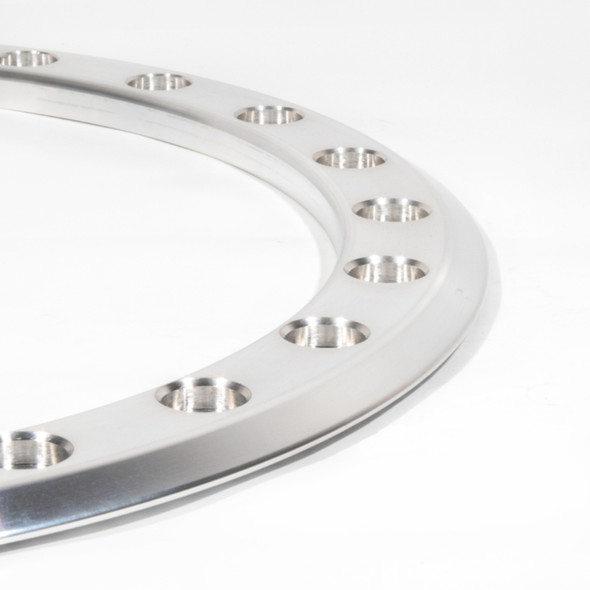

Method Beadlock Ring - 17in Forged - Style 1.2 - Machined - BR-DB17-1.2-A
Method Wheels
$149.00What is a beadlock ring for off-road wheels?A beadlock ring mechanically secures the tire bead to the wheel, preventing deflation under extreme pressure and ensuring tire integrity during aggressive off-road maneuvers.Do I need professional installation...$149.00 -

Wheel Mate 1/4oz Low Profile Wheel Weight - Black - 39922
Wheel Mate
$56.14What is the primary purpose of using wheel weights?Wheel weights precisely counteract imbalances in your wheels and tires, ensuring perfect balance for a smoother, more controlled driving experience.Are wheel weights a DIY installation?Professional...$56.14 -

Wheel Mate Muteki Key Adapter 12x1.25 - 30809G
Wheel Mate
$22.02Wheel Mate Muteki Key Adapter 12x1.25$22.02 -
 $17.43
 -
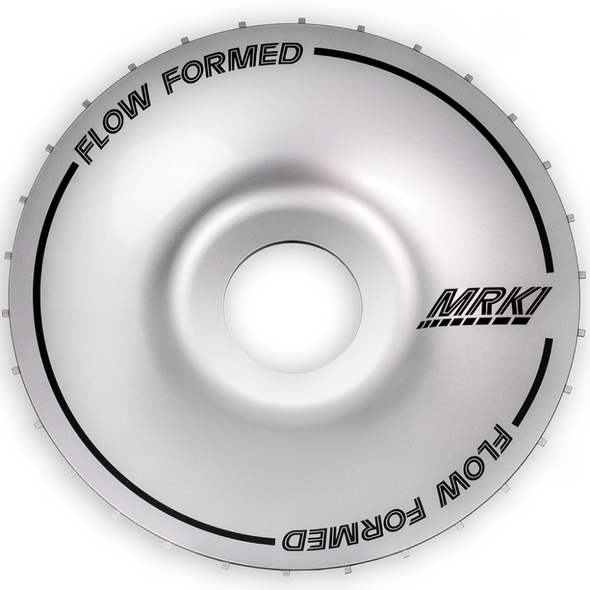

Konig Aero Cover for MRK1 Wheels - Single - AROCOVER
Konig
$76.70Are these wheel covers a universal fit?KNG Aero Wheel Covers require precise fitment verification with your specific vehicle model for optimal performance and secure installation.How difficult are these wheel covers to install?Professional installation...$76.70 -

Raceline Spline Lug Nut Kit with Spline Key 12 x 1.5 - 16 Pack - Chrome - RLUG-CS20C
Raceline
$36.00Will these lug nuts fit my UTV?Confirm fitment with your specific UTV model before ordering to ensure proper compatibility with Raceline UTV lug nuts.Can I install these lug nuts myself?Professional installation is recommended for Raceline UTV lug nuts...$36.00 -
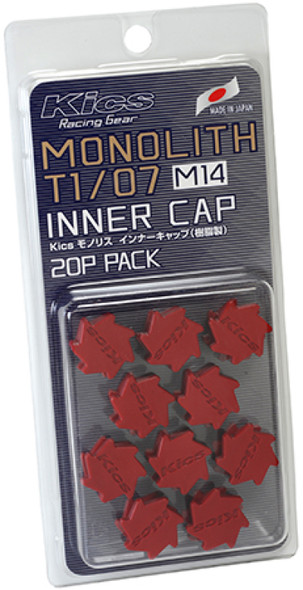
Project Kics M14 Monolith Cap - Red (Only Works For M14 Monolith Lugs) - 20 Pcs - WCMF4R
Project Kics
MSRP: $49.00$48.55What is the primary benefit of PJK Monolith Lug Nut Caps?PJK Monolith Lug Nut Caps deliver a clean, finished aesthetic to your wheels, enhancing overall visual appeal and complementing performance setups.Are PJK Monolith Lug Nut Caps difficult to...MSRP: $49.00$48.55 -
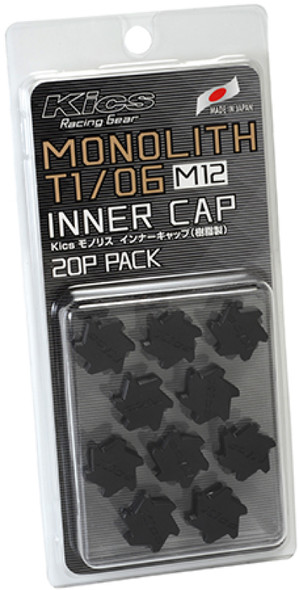
Project Kics M12 Monolith Cap - Black (Only Works For M12 Monolith Lugs) - 20 Pcs - WCMF1K
Project Kics
MSRP: $49.00$48.55Will these lug nut caps fit my car?Confirming vehicle fitment before purchase ensures precise integration with your specific wheel studs and lug nuts.How difficult is it to install these lug nut caps?Professional installation is recommended for optimal...MSRP: $49.00$48.55 -

Project Kics Leggdura Racing Valve Cap Set Blue - WCKIVU
Project Kics
$34.30Are these valve caps universal?Project Kics Leggdura Racing Valve Caps require confirmation of fitment with your specific vehicle's valve stems for guaranteed compatibility.Can I install these myself?Professional installation is recommended for Project...$34.30 -
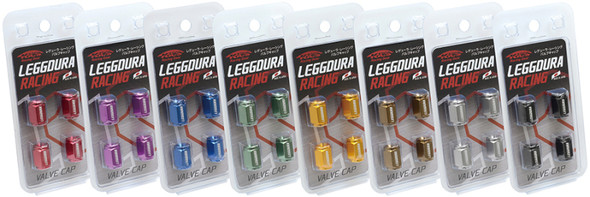
Project Kics Leggdura Racing Valve Cap Set Black - WCKIVK
Project Kics
$34.30What is the material of Project Kics Leggdura valve caps?Project Kics Leggdura Racing Valve Caps are precision-machined from high-grade aluminum, ensuring exceptional durability and a premium finish for your Wheel Accessories.How do I install Project...$34.30 -
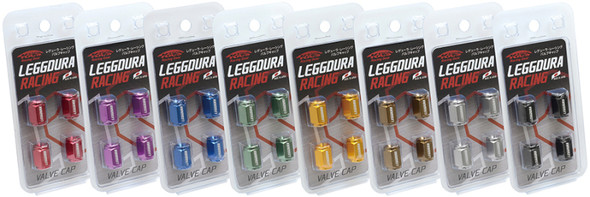
Project Kics Leggdura Racing Valve Cap Set Gold - WCKIVA
Project Kics
$34.30Is there a specific way these valve caps should be installed?Professional installation is recommended for PJK Leggdura Racing Valve Caps to ensure proper sealing and prevent damage during fitment.Do these valve caps enhance tire performance?These valve...$34.30
Wheel accessories are the hardware-level components that determine whether your wheels are safely secured, properly centered, and optimally positioned — everything from lug nuts and wheel studs to spacers, valve stems, and swingaway tire carriers. Motor Sport Mayhem stocks 86 in-stock wheel accessories across 58 brands, ranging from $1.99 entry-level hardware to $1,137.31 competition-grade assemblies, so every build level is covered with parts that actually meet the tolerance demands of performance driving.
Our Top Picks for Wheel Accessories
Each of these products was selected based on verified fitment precision, material quality, and real-world performance across street, track, and off-road applications.
ADD Tire Carriers
Addictive Desert Designs | $698.98
Heavy-duty steel fabrication rated for full-size spare tires on demanding off-road and overland setups where a flimsy carrier is a liability.
- Built to withstand high-cycle fatigue loads from trail vibration and rough terrain
AVN Lug Nuts
Advan | $52.72
Precision-machined chromoly lug nuts with a 12x1.25 thread pitch and durable black finish engineered for track use without loosening under thermal cycling.
- Correct seat geometry is critical — these use a tapered seat designed to match forged aftermarket wheels
AFE Wheel Spacers
aFe | $144.00
Billet 6061-T6 aluminum hub-centric spacers machined to a 5x114.3 bolt pattern with a 70.5mm center bore for zero runout and proper load transfer.
- Hub-centric design eliminates the vibration problems that plague lug-centric spacers at speed
ABR Wheel Spacer Kits
All Balls Racing | $21.49
Complete front wheel spacer kits designed to OEM tolerances for dirt and off-road motorcycles, ensuring correct axle preload and bearing alignment right out of the box.
- Application-specific kitting prevents the measurement errors that cause premature bearing wear on moto builds
ARB Swingaway Carriers
ARB | $875.95
ARB's swingaway spare tire carrier integrates with rear bar systems to deliver a rigidly mounted, full-size spare solution engineered for expedition-grade load cycles.
- Swingaway pivot mechanism maintains rear access without sacrificing structural integrity under load
ARP Wheel Stud Kits
ARP | $84.59
ARP's wheel studs are cold-forged from 8740 chromoly steel and rated to 190,000 PSI tensile strength — the benchmark spec for high-load wheel fastener applications.
- Cold-forging aligns the grain structure of the steel along the stud axis, dramatically improving fatigue life over cut-thread OEM studs
BBS Wheel Spacer & Bolt Kits
BBS | $69.00
A complete 10mm hub-centric spacer kit with matching 14x1.5 bolts on a 5x112 pattern and 66.5mm center bore, purpose-built for European platform fitments requiring precise offset correction.
- Including longer bolts in the kit is the correct approach — spacers that ship without bolts force compromised thread engagement
BKM Valve Stems
BikeMaster | $247.99
Chrome tubeless valve stems machined to precise seating tolerances for motorcycle rim applications where vibration and heat cycles accelerate rubber valve stem failure.
- Metal valve stems eliminate the UV degradation and ozone cracking that causes rubber stems to fail unexpectedly at highway speed
BKC Wheel Accessories
Bikers Choice | $103.99
Chrome spoke sets matched to steel hub dimensions for 16-inch rims, delivering OEM-equivalent structural integrity with a polished aesthetic upgrade for classic motorcycle builds.
- Spoke tension uniformity across all 40 spokes is critical to true running — these are cross-referenced to OEM spoke geometry
BX Wheel Studs
BLOX Racing | $175.20
Grade-5 titanium extended wheel studs in M12x1.5 with a burnt titanium finish, offering a measurable weight reduction over steel studs with no sacrifice in clamping load for track-spec Honda fitments.
- Extended length increases thread engagement when running spacers, keeping minimum engagement spec above the critical 1x-diameter threshold
How to Choose the Right Wheel Accessories
The single biggest mistake buyers make in this category is treating wheel fasteners and spacers as commodity hardware — the tolerances, material grades, and seat geometry of these components directly determine whether your wheels stay on under load. A lug nut with the wrong seat angle (conical vs. ball vs. flat) will appear fully torqued while making only point contact with the wheel, and that contact will fail progressively under heat and vibration. Spacers sourced from unknown suppliers are frequently machined with center bores that are 0.5–1.5mm undersized or oversized, which either causes press-fit binding or leaves the wheel lug-centric instead of hub-centric — both failure conditions at speed. The components in this category span a wide range of criticality: a valve cap is low-stakes, but a wheel stud is a life-safety fastener that warrants material certification.
Key Specifications
For lug nuts and wheel bolts, the three non-negotiable specs are thread pitch, seat type, and shank length. Thread pitch must match the stud exactly — M12x1.25 and M12x1.5 are not interchangeable and cross-threading a mismatched nut is a catastrophic failure waiting to happen. Seat type — conical (60°), ball radius, or flat with washer — must match the wheel's seat pocket geometry. Running a conical nut in a ball-seat wheel concentrates all clamping force on a thin ring of contact rather than distributing it across the full seat, which causes galling, fretting, and eventual loosening. Shank length matters when spacers are added to the stack — the rule is a minimum of 1x the fastener diameter in thread engagement, which means a 12mm stud needs at least 12mm of nut engagement after the spacer is accounted for.
For wheel spacers, hub-centric vs. lug-centric is the most important distinction in the entire buying decision. A hub-centric spacer has a machined center pilot that matches the hub OD and the wheel center bore precisely, meaning the hub — not the lug hardware — bears the lateral shear loads. A lug-centric spacer relies entirely on the lug nuts to locate the wheel radially, which creates micro-movement, induces vibration, and fatigues studs faster. Thickness matters beyond aesthetics: spacers under 5mm are generally not long enough to include an extended hub register, so anything below that threshold should only be used with matched extended lug bolts. Material grade for spacers should be 6061-T6 aluminum at minimum — T6 temper provides the yield strength needed to handle clamping loads without creeping under torque.
Wheel studs are graded by tensile strength, and the difference between OEM mild steel studs (typically 90,000–120,000 PSI) and aftermarket chromoly or titanium studs (160,000–190,000 PSI) is meaningful in high-load applications. Cold-forged studs are stronger than machined studs because forging aligns the grain flow with the geometry rather than cutting across it. For track use or heavy vehicles, upgrading the studs before adding spacers is best practice — the spacer increases the moment arm acting on the stud, so the stud's fatigue life becomes the critical limiting factor. Extended studs require corresponding lug nuts with matching thread pitch and appropriate nut length to achieve full engagement.
Valve stems are often overlooked until a blowout on the highway makes them impossible to ignore. Rubber snap-in stems are rated for low-speed, low-pressure applications — most are not rated above 65 PSI or 130 mph. Metal clamp-in stems handle higher pressures and resist the vibration fatigue that cracks rubber stems at the rim seal. For TPMS-equipped vehicles, the sensor housing is an integrated part of the valve assembly and must be replaced with a compatible unit — mixing TPMS sensors with incompatible caps or stems risks sensor damage and loss of pressure monitoring. Aluminum and brass valve caps offer better corrosion resistance and a more secure seal than plastic caps, which matter most in track environments where tire pressures are frequently adjusted.
Wheel Spacer Thickness vs. Application Reference Guide
| Spacer Thickness | Construction Type | Fastener Requirement | Typical Application |
|---|---|---|---|
| 3–5mm | Flat plate (lug-centric or hub-centric) | OEM-length studs or bolts — verify engagement | Minor offset correction, brake clearance |
| 5–10mm | Hub-centric with extended register recommended | Extended studs or longer wheel bolts required | Flush fitment with OEM wheels, cosmetic stance |
| 10–20mm | Hub-centric bolt-on strongly recommended | Dedicated extended studs — 1x diameter minimum engagement | Aftermarket wheel fitment, track brake clearance |
| 20–30mm | Bolt-on hub-centric (spacer bolts to hub) | Kit must include extended studs or bolts rated for application | Wide-body fitment, lifted trucks, significant track widening |
| 30mm+ | Bolt-on hub-centric only — verify bearing load rating | Full stud kit replacement; verify hub bearing capacity | Dedicated race builds, maximum track widening, specialty applications |
Price Guide
Entry ($1.99–$50): Rubber valve stems, plastic center caps, basic lug nut sets, and application-specific small hardware land in this range — entirely appropriate for daily drivers running stock or mild setups where safety margins are not being stressed. Quality varies significantly at this tier; buy from known brands and verify torque specs.
Mid-range ($50–$300): This is where most enthusiasts find the best value — hub-centric spacer kits, chromoly lug nut sets, ARP-grade wheel stud kits, and metal valve assemblies. The materials jump significantly here: 6061-T6 billet machining replaces cast or stamped hardware, and thread tolerances tighten to performance specs. Most street performance and autocross builds are fully served at this tier.
Premium ($300–$1,137.31): Titanium stud kits, forged complete wheel bolt packages from Project Kics, and fabricated tire carrier systems from ARB or Addictive Desert Designs occupy this range. The cost is justified by material certification, weight reduction, extended fatigue life, or structural engineering that entry hardware cannot match — relevant for competition builds, overland expedition rigs running full-size spares in remote terrain, and track builds where wheel retention hardware is inspected and logged.
Who Is This For?
Wheel accessories serve a wider range of builds than any other single hardware category — from a $2 valve cap on a commuter car to a $1,100 expedition tire carrier on a purpose-built overland rig.
Weekend Off-Roading — 7.5/10
Off-road applications score highest in this category because the demands on wheel hardware are most extreme: continuous vibration, axle articulation, mud packing, and hard landings all stress lug hardware, spacers, and valve stems simultaneously. Tire carriers become essential rather than optional once a full-size spare is required for remote trail use. The combination of shock loading and corrosive environments means material quality and corrosion resistance matter more here than in any other application.
Street Performance — 7.3/10
Street performance builds use wheel accessories primarily for offset correction with spacers, fastener upgrades ahead of power or brake system modifications, and aesthetic refinement with lug nut sets and center cap upgrades. The critical spec for street performance is maintaining legal offset ranges while achieving brake caliper clearance — a task that requires precisely machined hub-centric spacers rather than cheap lug-centric alternatives. Upgraded studs are a logical companion to big brake kits, since increased brake torque multiplies the shear loads acting on the wheel fasteners. If you're adding a big brake kit, check our brakes, rotors & pads category alongside your spacer selection.
Track / Autocross — 7.3/10
Track and autocross applications demand the highest fastener quality in the category — thermal cycling from repeated hard braking causes standard lug nuts to loosen at a rate that performance chromoly hardware resists by a significant margin. Many sanctioning bodies require locking lug nuts or specific stud lengths as part of tech inspection, which makes brand compliance documentation — something McGard and ARP provide — a practical necessity. Extended studs are often mandatory when spacers are part of the setup to ensure thread engagement meets safety minimums under inspection.
Overlanding / Expedition — 7.3/10
Expedition builds require wheel accessories that function reliably when failure means being stranded hundreds of miles from the nearest shop. Swingaway tire carriers, quality valve stem hardware, and bolt-on hub-centric spacers for lifted applications are the core of an expedition wheel accessory package. Weight distribution of the spare tire matters on long wheelbase builds — an improperly mounted full-size spare generates significant lateral torque on the mounting point, which is why engineered carriers rated for full-size tire weights are worth the premium over fabricated alternatives.
Visual / Aesthetic Upgrade — 6.8/10
Aesthetic upgrades score slightly lower not because the products underperform visually, but because this category is dominated by functional hardware where appearance is a secondary attribute. That said, center caps, lug nut sets in anodized or colored finishes, chrome valve stems, and spoke sets for classic motorcycle wheels deliver genuine visual transformation at accessible price points. The best aesthetic upgrades in this category are ones that also improve function — a forged lug nut set that looks better than OEM while also torquing more consistently is a better choice than a cosmetic-only piece.
Trusted Wheel Accessories Brands We Carry
The brands that dominate this category earn their position through material certification and engineering rigor, not marketing. ARP has been the benchmark for high-strength wheel studs for decades — their cold-forged 8740 chromoly construction and published tensile ratings are the standard against which every other fastener brand is measured. McGard built their reputation as an OEM supplier to major European manufacturers, and their wheel lock systems are specified at the factory level precisely because their tolerances hold up under continuous use. Project Kics brings Japanese motorsport precision to forged lug nut and wheel bolt systems, with average prices reflecting the engineering investment in their chromoly alloy compositions. BBS, known primarily for wheels, extends that same precision manufacturing into spacer and bolt kit hardware machined to match their own wheel tolerances. For off-road and overland applications, ARB's fabricated steel structures and Addictive Desert Designs' tire carrier systems are trusted by expedition builders for their structural load ratings and real-world durability in remote environments. Wheel Mate rounds out the category with an extensive range of hub-centric spacer applications across a wide bolt pattern matrix, making them the practical go-to for fitment-specific spacer solutions across diverse platforms.
Frequently Asked Questions
Are aftermarket lug nuts actually safe to use?
Yes, provided you buy from manufacturers who publish material grades and match the seat geometry to your specific wheel. The failure mode of aftermarket lug nuts is almost always a seat type mismatch — not material failure — where a conical nut is run in a ball-seat wheel or vice versa, creating point contact instead of distributed clamping. Reputable brands like McGard, Project Kics, and Advan machine their nuts to tight tolerances with published thread class specifications, which makes them equal to or better than OEM hardware. The other critical check is thread pitch: confirm M12x1.25 vs. M12x1.5 or the correct SAE spec before installing, since cross-threading a mismatched nut destroys the stud and creates a dangerous preload loss. Avoid any lug nut without a published material spec or one that appears to have a painted or plated seat surface, as coatings on the seating face interfere with proper clamping.
Are ARP wheel studs stronger than stock OEM studs?
Yes, by a significant margin in most applications — ARP's 8740 chromoly wheel studs are rated to 190,000 PSI tensile strength versus 90,000–120,000 PSI for typical OEM mild steel studs. The strength advantage comes from both the alloy and the cold-forging process, which aligns the grain structure of the metal along the stud axis rather than cutting across it as machining does. For street driving on a stock vehicle, OEM studs are adequate, but for any application adding power, weight, track use, or wheel spacers, the increased fatigue life of ARP hardware is a genuine safety margin. Cold-forged studs also maintain their thread form more consistently under repeated torque cycles, which means the torque values you set during installation are maintained longer between checks. ARP is the dominant brand in this segment precisely because they publish their testing methodology — not just claim strength numbers.
Are wheel spacers from discount retailers safe?
Discount or unbranded wheel spacers are a legitimate safety concern because the critical spec — center bore diameter — is frequently machined incorrectly, and there is no material certification to verify the aluminum alloy grade. A center bore that is even 0.5mm undersized will prevent the spacer from seating fully on the hub register, leaving a gap that concentrates load on the lug fasteners instead of the hub face — this is the most common cause of stud failure with budget spacers. A bore that is oversized makes the assembly lug-centric rather than hub-centric, introducing runout and vibration that worsens with speed. The other common problem with discount spacers is insufficient thickness to include a proper hub register, meaning the spacer has no pilot feature at all. Stick to brands that specify both the hub bore and the wheel bore dimensions, publish the aluminum alloy grade (6061-T6 is the minimum), and include matching extended fasteners in the kit.
Are aluminum valve caps better than rubber ones?
For most performance and track applications, yes — aluminum and brass valve caps provide a more consistent seal, resist UV and ozone degradation that cracks rubber over time, and do not deform under repeated removal and installation cycles the way plastic caps do. The practical advantage in a track environment is that metal caps hold a tighter thread engagement, which reduces the risk of air leakage when tire pressures are being adjusted frequently between sessions. The one caveat with aluminum caps on steel valve stems is galvanic corrosion — dissimilar metals in a wet environment can cause the cap to seize onto the stem, which is why brass caps (closer in galvanic potential to steel) are preferred on steel TPMS stems. On an all-metal valve stem made of brass or stainless, aluminum caps are a clean, lightweight upgrade with no downside. Never over-torque valve caps regardless of material — the valve core seal is what retains pressure, not the cap.
Are all rim center caps the same size?
No — center caps vary significantly in bore diameter, depth, retention method, and clip pattern, and there is no universal standard across manufacturers or even across a single manufacturer's product lines. The bore diameter of the cap must match the center bore of the wheel, which ranges from roughly 54mm on compact platforms to 74mm and beyond on trucks and European performance vehicles. Beyond diameter, the retention mechanism varies: some caps use a snap-ring clip, others use a friction fit, and aftermarket wheels frequently use proprietary bayonet systems. This is why OEM-spec center caps are not interchangeable between brands even when the bore appears similar — the depth profile and clip engagement geometry differs. When sourcing replacement caps, measure the wheel's center bore diameter and note the clip count and diameter before ordering, or verify against the wheel manufacturer's specifications directly.
Building something specific? Our performance specialists can help you select the right Wheel Accessories for your application — street, track, or full race build.