
Bike Stands
- Product
- Qty in Cart
- Quantity
- Price
- Subtotal
-

Vortex Racing 01-04 Suzuki GSX-R1000,01-05 GSX-R600,00-05 GSX-R750 Rear Set- Black - RS503K
Vortex Racing
MSRP: $463.95$394.36Are Vortex Racing VTX Adjustable Rear Sets worth the upgrade from stock?Vortex Racing VTX Adjustable Rear Sets are a significant upgrade, offering nine distinct riding positions for personalized...MSRP: $463.95$394.36 -

Vortex Racing 06-23 Yamaha YZF-R6 Rear Set- Black - RS634K
Vortex Racing
MSRP: $514.95$437.71How do Vortex Racing VTX Adjustable Rear Sets improve my motorcycle's performance?Vortex VTX Adjustable Rear Sets enhance performance by providing extensive adjustment options for optimal rider...MSRP: $514.95$437.71 -
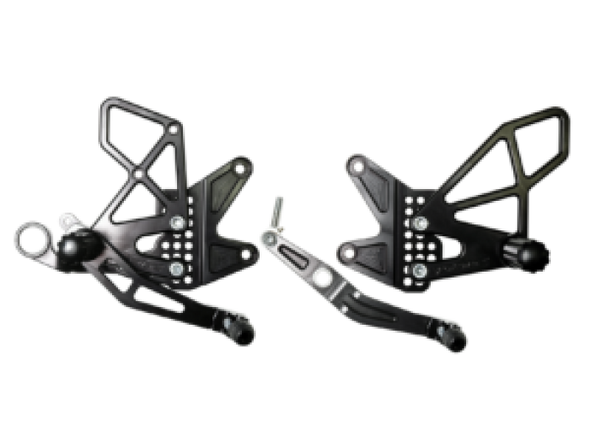
Vortex Racing 06-16 Yamaha YZF-R6 Rear Set- Black - RS616K
Vortex Racing
MSRP: $463.95$394.36Are these rear sets compatible with my motorcycle?Confirm exact fitment for your specific motorcycle model before purchase to ensure seamless bolt-on installation of these premium rear sets.How...MSRP: $463.95$394.36 -
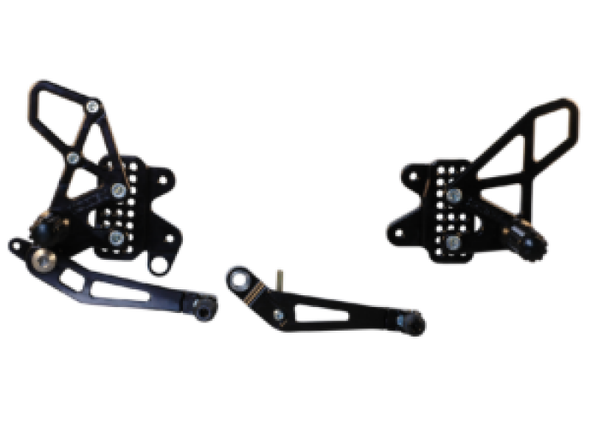
Vortex Racing 11-23 Suzuki GSX-R600,GSX-R750 Rear Set- Black - RS582K
Vortex Racing
MSRP: $463.95$394.36Are Vortex Racing VTX Adjustable Rear Sets worth the upgrade over stock components?Vortex Racing VTX Adjustable Rear Sets offer significant ergonomic and protective advantages, justifying the upgrade...MSRP: $463.95$394.36 -

Vortex Racing 6-10 Suzuki GSX-R600, GSX-R750 Rear Set- Black - RS553K
Vortex Racing
MSRP: $463.95$394.36Are these rearsets adjustable?VTX Adjustable Rear Sets offer 12 distinct footpeg positions with extensive forward, backward, and vertical range for precise rider customization.Are these adjustable...MSRP: $463.95$394.36 -

Vortex Racing 21-24 Kawasaki XZ-10R Ninja ZX1000 Rear Set- Black - RS404K
Vortex Racing
MSRP: $514.95$437.71Are these rearsets compatible with my motorcycle?Confirm fitment with your specific vehicle for these Vortex Racing adjustable rearsets, ensuring a precise bolt-on installation.How difficult is it to...MSRP: $514.95$437.71 -

Vortex Racing 21-22 BMW M1000RR,20-24 BMW S1000RR Rear Set- Black - RS186K
Vortex Racing
MSRP: $514.95$437.71How do Vortex Racing VTX Adjustable Rearsets improve my bike's ergonomics?Vortex Racing VTX Adjustable Rearsets unlock 16 distinct foot peg positions, allowing precise adjustments for your ideal...MSRP: $514.95$437.71 -

Vortex Racing 03-07 Suzuki SV1000 S,03-10 SV650 Adjustable Rearsets- Black - RS505K
Vortex Racing
MSRP: $463.95$394.36How do Vortex Racing VTX Adjustable Rear Sets improve rider control?These rear sets enhance control by providing 9 adjustment positions for optimal ergonomic fitment tailored to your riding style...MSRP: $463.95$394.36 -


Vortex Racing 04-07 Honda CBR1000RR,03-06 CBR6100 RR Adjustable Rearsets- Black - RS205K
Vortex Racing
MSRP: $463.95$394.36Will these rear sets fit my bike?VTX Adjustable Rear Sets require confirming specific vehicle fitment before purchase to ensure compatibility with your motorcycle model.Can I install these...MSRP: $463.95$394.36 -

Vortex Racing Rearsets Replacement Rear Set- Black - RS671K
Vortex Racing
MSRP: $514.95$437.71What is the maximum adjustment range of the Vortex Racing VTX Adjustable Rear Sets?These VTX Adjustable Rear Sets offer a maximum adjustment of 17mm up and down, and 23mm forward and back from OEM...MSRP: $514.95$437.71 -
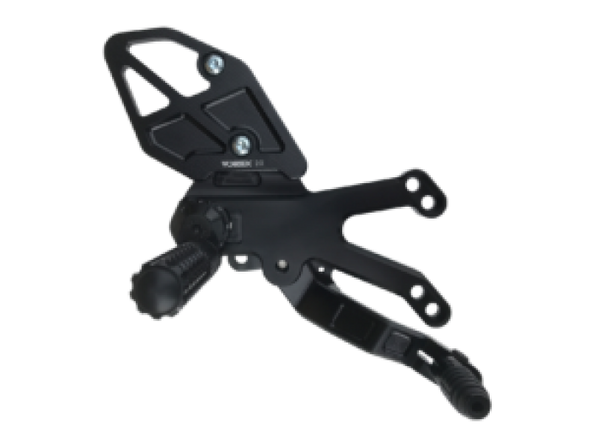
Vortex Racing 15-24 Yamaha YZF-R3 Rear Set- Black - RS628K
Vortex Racing
MSRP: $514.95$437.71How do Vortex VTX Adjustable Rear Sets improve rider control?Vortex VTX Adjustable Rear Sets improve rider control through 32 precise adjustments, enabling a perfectly dialed-in riding position for...MSRP: $514.95$437.71 -

Vortex Racing 07-23 Honda CBR600 RR Adjustable Rearsets- Black - RS265K
Vortex Racing
MSRP: $463.95$394.36What are the benefits of Vortex Racing VTX Adjustable Rear Sets for motorcycles?Vortex Racing VTX Adjustable Rear Sets offer superior control by retaining stock heat shields and plastic trim,...MSRP: $463.95$394.36
Bike stands and loading ramps are the foundation of any serious pit setup — the right stand keeps your motorcycle stable for maintenance, tire changes, and suspension work, while the right ramp determines whether loading goes smoothly or becomes a liability. Motor Sport Mayhem stocks 57 in-stock options across 11 brands, from sub-$30 triangle stands to 5,000 lb-rated aluminum loading ramps, covering every application from weekend trail riding to professional race support.
Our Top Picks for Bike Stands
Each of these products was selected based on verified load ratings, material quality, and real-world performance across garage, pit lane, and trailhead use cases.
ACB 711 Bike Stand
Acerbis | $111.12
A rigid, purpose-built pit stand engineered for stable single-point support during paddock maintenance and suspension adjustments.
- Durable polymer construction resists fuel, oil, and impact at a fraction of the weight of steel alternatives
BKM Stair Ramp
BikeMaster | $399.00
A stair-style loading ramp that uses a stepped tread design to reduce slip risk and give riders controlled footing during loading and unloading.
- Stepped tread surface provides superior grip over flat aluminum channel ramps, particularly with knobby off-road tires
CUS Vehicle Ramps
Cusco | $88.20
Low-profile slope ramps designed as a left/right separate-type pair, ideal for getting low-clearance bikes and vehicles onto service surfaces without scraping.
- Separate L/R configuration allows width adjustment to suit different track widths and tire spacing
CYC Moto Stand
Cycra | $90.18
A fold-up pit stand that collapses flat for transport and deploys quickly in the paddock, making it practical for race day where setup time is limited.
- Folding frame design cuts storage footprint significantly compared to fixed-leg stands without compromising load stability
EXC Bike Stands
Excel | $26.68
A no-frills triangular stand that delivers reliable static support for routine maintenance at the lowest price point in the category.
- Triangle geometry provides a wide, inherently stable base with minimal material, proven across decades of pit use
GEN Loading Ramps
GEN-Y Hitch | $849.95
Heavy-duty 8-foot aluminum loading ramps rated at 5,000 lbs capacity per ramp, built for loading ATVs, side-by-sides, and heavy equipment onto trailers.
- 5,000 lb per-ramp rating at 96 inches of length gives a manageable 6-degree approach angle that protects low-slung exhaust and frame rails
LND Ramps
LUND | $55.67
A universal ramp kit designed to clamp onto standard dimensional lumber, letting you build a custom-width ramp from locally sourced material for a fraction of the cost of a purpose-built unit.
- Fits 2x8 through 2x10 planks, giving you flexibility to match ramp width and capacity to your specific load requirements
MAT Ramps
Matrix Concepts | $197.96
An extruded aluminum loading ramp with a surface texture engineered to grip both knobby motocross tires and street rubber without channeling mud that could cause slipping.
- Aluminum extrusion construction delivers high strength-to-weight ratio, keeping ramp weight manageable for one-person setup and breakdown
QBS Ramps B
QuadBoss | $601.99
A 50-inch wide bi-fold ramp designed specifically to accommodate the wide stance of ATVs and side-by-sides while folding in half for compact storage.
- Bi-fold design at 72 inches deployed length provides a gentler approach angle than shorter ramps at equivalent trailer height
RRP Trailer Mates
Race Ramps | $238.40
Rear trailer mate ramps with a precision 10.9-degree angle of approach, engineered from solid foam core that won't spark, dent, or scratch vehicle underbodies.
- 10.9-degree approach angle is calculated to prevent front splitter and belly pan contact on lowered vehicles where standard metal ramps cause damage
How to Choose the Right Bike Stands
The single biggest mistake buyers make in this category is choosing based on price alone without verifying load capacity, approach angle, or contact-point compatibility — all three determine whether a stand or ramp is genuinely usable for your application or a safety risk waiting to happen.
Key Specifications
Load rating and safety factor: Every ramp and stand carries a rated load capacity, but what matters equally is the safety factor built into that rating. Quality aluminum ramps are typically engineered to 3:1 or 4:1 safety factors — meaning a ramp rated at 1,500 lbs should genuinely withstand 4,500–6,000 lbs before structural failure. Cheap imported ramps frequently omit safety factor data entirely, which is a red flag. Always match rated capacity to the heaviest load you'll move, not the average, and factor in dynamic loading — a bike rolling across a ramp creates momentary forces well above its static weight.
Approach angle and ground clearance: Ramp angle is the most critical spec for loading lowered bikes, ATVs with low-mounted exhaust, or any vehicle with limited belly clearance. Approach angle is determined by ramp length relative to trailer deck height — a longer ramp always produces a shallower angle at the same trailer height. As a practical reference, most stock motorcycles can handle up to 15 degrees without grounding; lowered or track-prepped bikes often need 10 degrees or less. This is why ramp length matters as much as capacity rating. If you're running an aftermarket exhaust system with a low-mounted collector or mid-pipe, verify your approach angle before purchasing.
Stand contact geometry and frame compatibility: Pit stands are not universally compatible — the contact point geometry, whether swingarm spool, frame cradle, or front axle fork, must match your specific bike's chassis design. Stands that support via swingarm spools require the correct spool diameter (typically 8mm or 10mm thread) and will not function safely on bikes without spools installed. Frame-cradle stands need to match the frame tube diameter and orientation. Verify compatibility before purchasing; a mismatched contact point concentrates load incorrectly and can crack frames or bend swingarms under repeated use.
Surface and material durability: Aluminum is the dominant ramp material for good reason — it offers excellent strength-to-weight ratio, natural corrosion resistance, and won't spark against concrete or metal trailer decks. Extruded aluminum ramps are stronger than plate aluminum of equal thickness because the extrusion process aligns the grain structure along the load axis. For stands, high-density polymer and welded steel are both proven materials; polymer offers lighter weight and chemical resistance, while steel provides higher rigidity for heavy bikes above 400 lbs. Check the surface texture of any ramp — aggressive cross-hatching or punch-plate patterns grip knobby tires effectively, while smooth aluminum becomes dangerously slippery when wet or mud-contaminated.
Loading Ramp Approach Angle Reference by Trailer Deck Height
| Trailer Deck Height | Ramp Length Needed for 10° | Ramp Length Needed for 15° | Recommended Use Case |
|---|---|---|---|
| 18 in (457 mm) | ~102 in (8.5 ft) | ~68 in (5.7 ft) | Lowered bikes, full race builds, low exhaust |
| 24 in (610 mm) | ~137 in (11.4 ft) | ~91 in (7.6 ft) | Lowered/lightly modified bikes and ATVs |
| 30 in (762 mm) | ~171 in (14.2 ft) | ~114 in (9.5 ft) | Standard motorcycles, lightly loaded ATVs |
| 36 in (914 mm) | ~205 in (17 ft) | ~137 in (11.4 ft) | Stock height bikes, high-clearance off-road machines |
| 42 in (1067 mm) | ~240 in (20 ft) | ~160 in (13.3 ft) | Full-size ATVs, UTVs, high-bed truck loading |
| 48 in (1219 mm) | ~274 in (22.8 ft) | ~182 in (15.2 ft) | UTV/SxS, heavy equipment, tall enclosed trailers |
Price Guide
Entry ($11.01–$100): Triangle stands, basic polymer pit stands, and universal ramp hardware kits live in this range — functional for light bikes and routine garage maintenance, but load ratings and build quality vary significantly, so verify specs carefully before committing to a ramp in this tier for anything above 400 lbs.
Mid-range ($100–$400): This is where most serious enthusiasts and racers land — extruded aluminum ramps with verified load ratings, folding pit stands with quality hinge hardware, and stair-style loading ramps that genuinely reduce slip risk all appear here, offering the right balance of portability, durability, and safety margin for weekly track and trail use.
Premium ($400–$849.95): Bi-fold wide-body ramps, heavy-duty aluminum loading ramps with 5,000 lb-per-ramp ratings, and commercial-grade pit equipment occupy this tier — justified for UTVs, side-by-sides, repeated heavy loading cycles, or any professional race support operation where failure is not an acceptable outcome.
Who Is This For?
Bike stands and loading ramps serve a wide spectrum of riders and racers, from weekend trail enthusiasts to full professional pit crews — and the usage data reflects genuine cross-category demand.
Track / Autocross — 7.8/10
This category scores a near-top 7.8 out of 10 for track and autocross use, and it makes complete sense — a race weekend without a reliable pit stand is a genuine maintenance liability. Stands used at the track need to survive concrete paddock surfaces, fuel and oil contamination, and repeated single-person operation under time pressure. Ramps also matter here for enclosed trailer setups, where consistent loading and unloading across a full season demands durable, non-deforming surfaces.
Weekend Off-Roading — 7.8/10
Tied with track use at 7.8 out of 10, off-road applications drive heavy demand for loading ramps specifically — trail riders and off-road racers load and unload bikes multiple times per outing, often on uneven terrain at trailheads where stability is not guaranteed. Wide ramps and high-traction surface textures become critical in this context, as does ramp weight when you're managing setup solo at a remote location. Pit stands also see use in the field for chain adjustments and tire pressure checks between stages.
Racing Competition — 7.7/10
At 7.7 out of 10, dedicated racing competition is nearly inseparable from track use in this category — the difference is that competition-level use demands consistent repeatability across an entire race season, not just a few events. Stands used in competition environments need to hold a bike securely while mechanics apply torque to suspension components or swap wheels under race-day pressure without rocking or tipping.
Street Performance — 7.3/10
Street performance riders score this category at 7.3 out of 10, primarily driven by garage maintenance needs — oil changes, brake work, and suspension adjustments all require a stable stand to work safely under a motorcycle. Ramps also appear in street performance use for lifting low-clearance bikes onto garage platforms or service mats without scraping bodywork or exhaust.
Overlanding / Expedition — 6.8/10
At 6.8 out of 10, overlanding and expedition use represents a growing segment — adventure riders loading dual-sport and ADV bikes onto truck beds or trailers for multi-day trips need ramps that are lightweight enough to carry on the vehicle and durable enough to handle repeated field use far from any shop. Compact folding ramps and lightweight aluminum options are particularly valued in this application where cargo weight is a genuine constraint.
Trusted Bike Stands Brands We Carry
The brands in this category hold their position through engineering credibility and proven field performance, not marketing spend. Matrix Concepts dominates pit stand and ramp design for motocross and off-road with aluminum fabrication that has been refined through decades of professional race team feedback. Vortex Racing brings race-derived precision to pit equipment, with tight manufacturing tolerances that matter when a stand needs to support a bike consistently across a full race season. QuadBoss focuses on ATV and UTV-specific load solutions where ramp width and heavy-duty ratings are non-negotiable, while Acerbis applies its polymer engineering expertise — the same material science used in their bodywork — to produce stands that resist chemical degradation in pit environments. Race Ramps occupies a specialized niche with foam-core construction that protects lowered vehicles and won't spark or scratch on enclosed trailer floors, and GEN-Y Hitch targets the commercial-grade end of loading ramps where structural integrity under repeated heavy loads is the defining requirement. Cycra and Cusco round out the lineup with application-specific solutions — Cycra for paddock portability and Cusco for precision low-clearance slope applications.
Frequently Asked Questions
Are aluminum ramps as strong as steel ramps?
Extruded aluminum ramps are fully comparable to steel ramps for motorcycle and ATV loading applications — the structural difference comes down to geometry and engineering, not raw material strength alone. Aluminum has approximately one-third the density of steel, so manufacturers compensate with thicker extrusion profiles and more complex cross-section geometry that delivers equivalent or superior bending resistance. The practical advantage is that a properly engineered aluminum ramp rated at 1,500 lbs will weigh significantly less than a steel ramp at the same rating, making solo setup far more manageable. The key is verifying that the ramp carries a published load rating with a stated safety factor — unrated aluminum ramps from unverified sources should not be trusted regardless of apparent thickness.
Is a ramp safer than stairs for loading a motorcycle?
For motorcycle loading specifically, a continuous-surface ramp is generally safer than a stair-style design because it allows the tire to roll smoothly without the risk of a wheel edge dropping into a tread gap under load. However, stair ramps provide significantly better foot traction for the rider walking the bike up, which reduces slip incidents — particularly on wet or muddy days. The best outcome is a ramp with a continuous rolling surface for the tire combined with textured side rails or integrated tread steps for the rider's footing, which is why stair-style ramps with channel centers have become popular. Surface texture on the tire contact zone matters more than ramp style for preventing tire slip.
Can step ramps be used indoors?
Step ramps are fully usable indoors and are commonly used in garage environments for loading bikes onto service platforms, lifts, or storage mezzanines. The primary indoor consideration is surface protection — metal ramps with sharp edges or aggressive textures can damage sealed concrete, epoxy floors, or workshop mats, so rubber-tipped feet or anti-slip pads on the ramp base are important. Foam-core ramps like those from Race Ramps are particularly well suited to indoor use because they cannot scratch or scuff finished floor surfaces. Ventilation is not a concern with ramps themselves, but any indoor loading operation with a running engine requires adequate airflow — shut the engine off before using a ramp indoors where possible.
How do you maintain a step ramp?
Aluminum ramps require minimal but consistent maintenance — rinse mud and debris from the tread surface after every outdoor use, as compacted grit acts as an abrasive that degrades the texture over time and can cause slip. Inspect all hinge points and locking mechanisms on folding ramps before each use for cracks, bent pins, or worn locking tabs, since hinge failure under load is the most common cause of ramp-related incidents. Periodically check the ramp's connection hooks or lips for deformation — a hook that no longer seats flush on a trailer edge creates a pivot point that can cause the ramp to kick out under load. Polymer and foam-core ramps should be inspected for compression damage or cracking at the edges; once the structural foam or polymer shows visible cracking, the ramp's load rating is compromised and it should be replaced.
What makes a pit stand worth the investment over a basic triangle stand?
A basic triangle stand is adequate for stable static support during simple maintenance tasks, but a purpose-built pit stand adds adjustability, a positive locking mechanism, and contact geometry designed for specific swingarm or frame configurations that a triangle stand cannot replicate. The functional difference becomes clear during suspension work or wheel removal, where the bike must stay perfectly level and stationary while significant torque is applied — a stand that rocks or shifts under those conditions is a safety hazard. Premium pit stands also accommodate a wider range of bike weights and frame geometries, which matters if you're maintaining multiple bikes across a season. For riders doing serious mechanical work — brake pad changes, suspension setup, or bearing replacements — the investment in a quality stand pays back immediately in reduced risk and faster, more accurate work.
Building something specific? Our performance specialists can help you select the right Bike Stands for your application — street, track, or full race build.