
Sway Bars
- Product
- Qty in Cart
- Quantity
- Price
- Subtotal
-
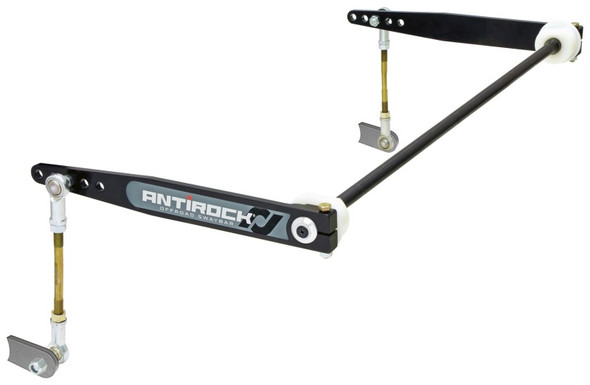
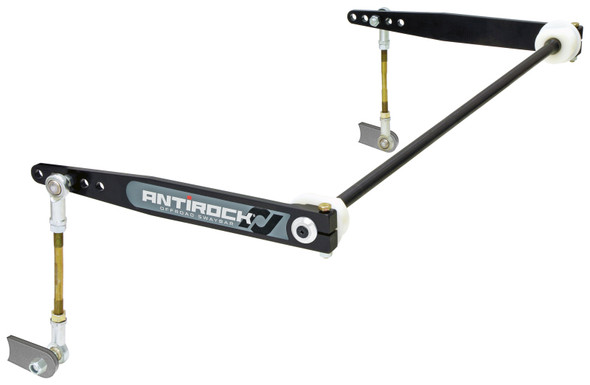
RockJock YJ Antirock Sway Bar Kit Front Bolt-On Steel Arms - CE-9900YJF
RockJock
$554.00Will these fit my Jeep Wrangler JK?ROK Antirock sway bars offer direct bolt-on replacement, confirming fitment with your specific Jeep Wrangler JK is essential.How difficult is the installation process?Installing ROK Antirock sway bars is a...$554.00 -
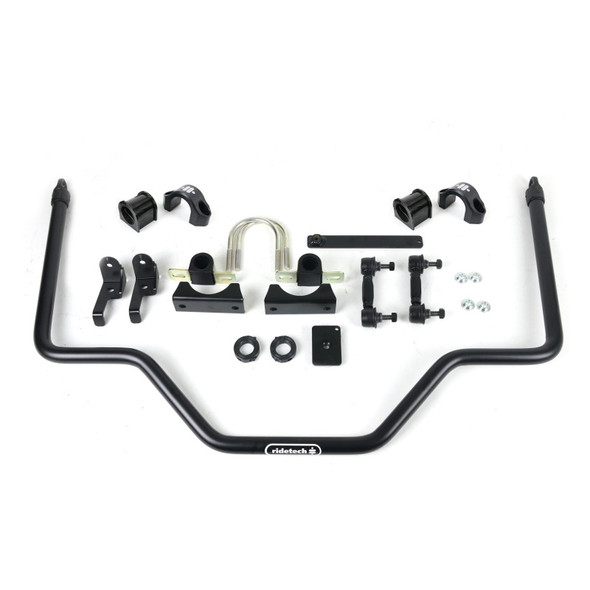

Ridetech 2015+ Ford F150 Rear Sway Bar Kit - 12299122
Ridetech
$595.00Will this sway bar fit my F-150?This rear sway bar is engineered to directly bolt-on to your 2015-2025 Ford F-150, ensuring a perfect factory-like fit.How difficult is installation?Installing this rear sway bar is straightforward thanks to its bolt-on...$595.00 -


Ridetech 63-82 Chevy Corvette Front Sway Bar - 11539101
Ridetech
$495.00What is the primary function of a sway bar?Sway bars transfer body roll forces from one side of the suspension to the other, reducing body lean during cornering.How difficult is the installation of the RID Sway Bars?Professional installation is...$495.00 -
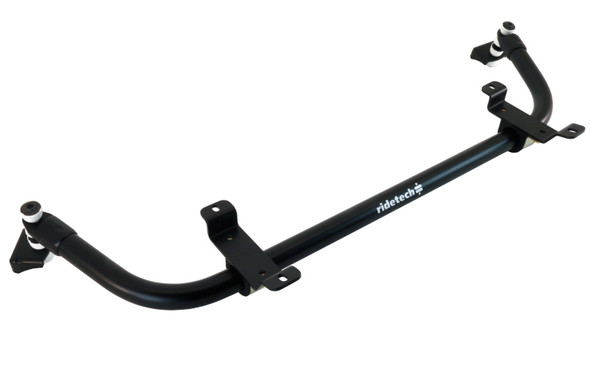

Ridetech 63-87 Chevy C10 2WD Front MuscleBar Sway Bar use with Stock Lower Arms - 11369120
Ridetech
$425.00What is the primary benefit of installing a sway bar?Sway bars dramatically reduce body roll, providing a flatter cornering experience and enhancing overall vehicle stability for performance driving.How does this sway bar improve my truck's...$425.00 -
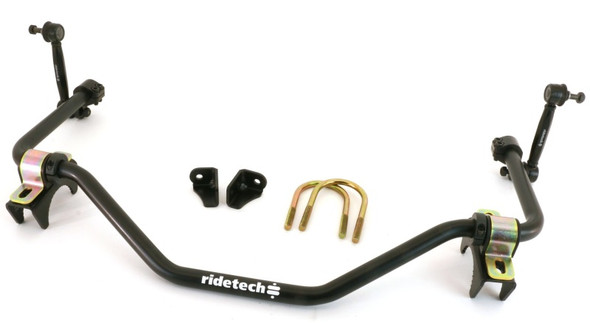

Ridetech 68-72 GM A-Body Rear MuscleBar - 11249122
Ridetech
$495.00How does the RID Sway Bar kit install on my vehicle?RID Sway Bars are designed for a straightforward bolt-on installation, including all necessary frame and axle brackets for a secure fit.Can I adjust the stiffness of the RID Sway Bar?Adjust the sway...$495.00 -
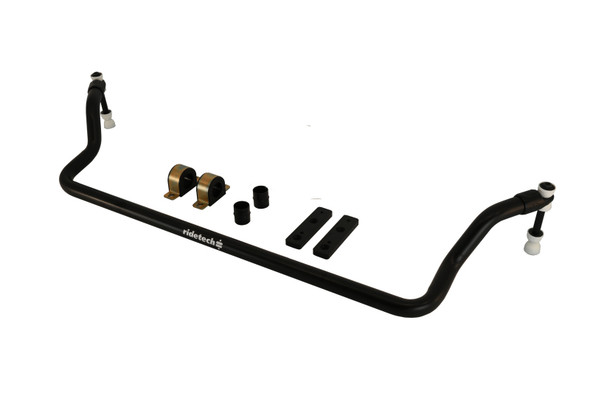

Ridetech 68-72 GM A-Body Front MuscleBar - 11249120
Ridetech
$395.00Are these sway bars compatible with my stock suspension components?RID Sway Bars are designed for use with stock or Ridetech lower arms, ensuring seamless integration with your existing setup.Is professional installation necessary for these sway...$395.00 -
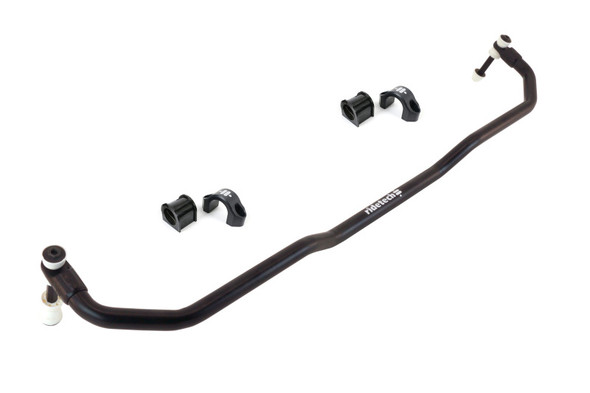

Ridetech 67-69 Camaro Firebird and 68-74 Nova Front MuscleBar - 11169120
Ridetech
$375.00Will these sway bars fit my 1967-1969 F-Body?RID Front Sway Bars are engineered specifically for 1967-1969 GM F-Body vehicles, ensuring a precise fit for optimal performance.Are these sway bars bolt-on?Installing these RID Sway Bars is straightforward...$375.00 -


Ridetech 67-69 Camaro Firebird Rear MuscleBar Sway Bar Modular design w/ PosiLinks - 11169102
Ridetech
$525.00Can I install the RID Sway Bars on my stock 1967-1969 Camaro or Firebird without modifications?RID Sway Bars are designed for weld-in installation, requiring professional fabrication for optimal fitment on your 1967-1969 F-Body.What is the primary...$525.00 -


Ridetech 58-64 Impala Front MuscleBar - 11059120
Ridetech
$375.00What models do these RID Sway Bars fit?RID Sway Bars are engineered for 1958-1964 Chevrolet models, ensuring precise fitment for optimal performance enhancements.Is professional installation recommended for these sway bars?Professional installation is...$375.00 -
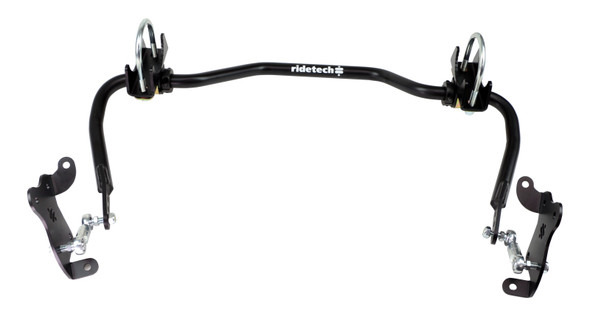

Ridetech 58-64 Chevy Impala MUSCLEbar Sway Bar Rear - 11059102
Ridetech
$525.00Will these sway bars fit my 1962 Chevrolet Bel Air?These RID Sway Bars are engineered for a precise bolt-on fitment on 1958-1964 Chevrolet Bel Air models and similar platforms.Are these sway bars adjustable?Experience instant responsiveness with the RID...$525.00 -
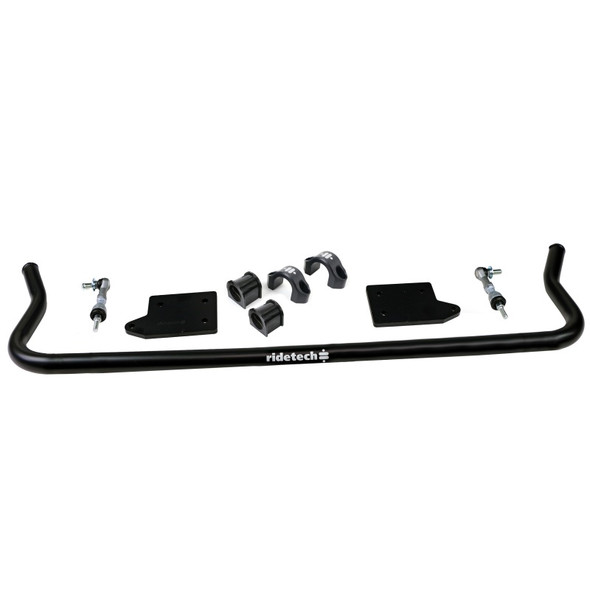

Ridetech 55-57 Chevy Front MuscleBar must use StrongArms - 11019100
Ridetech
$445.00Will this RID Sway Bar fit my stock 1955-1957 Bel Air?This RID Sway Bar is specifically engineered for the 1955-1957 Bel Air and requires Ridetech lower arms for proper installation.What kind of improvement can I expect from installing a RID Sway...$445.00 -


QA1 67-69 GM F-Body/68-74 X-Body Front Sway Bar - 1-1/4in - 52816
QA1
MSRP: $386.58$348.95What makes these sway bars better than stock?QAP Sway Bars deliver razor-sharp handling and reduced body roll, outperforming stock components for confident cornering on any road.How difficult is the installation process?Bolt-on installation simplifies...MSRP: $386.58$348.95
A sway bar — also called an anti-roll bar — is a torsional spring that connects the left and right suspension members to resist body roll during cornering, directly controlling how load transfers across the axle and how much grip each tire maintains at the contact patch. Motor Sport Mayhem stocks 763 sway bars across 109 brands, from budget-friendly polyurethane bushing kits to full adjustable competition bars, covering street, track, and off-road applications with average pricing of $425.29 and options from $1.14 to $13,544.00.
Our Top Picks for Sway Bars
Every product below was selected based on demonstrated performance value, engineering quality, and real-world results across street and competition applications.
AEM IND Strut Bars
AEM Induction | $346.99
Chassis-stiffening strut tower bars that reduce flex at the front suspension mounting points, improving sway bar response and steering precision as a system.
- Works in tandem with front sway bars by eliminating strut tower deflection that undermines anti-roll geometry
AFE Coilover Systems
aFe | $3,729.00
Single-adjustable coilover systems engineered for street-to-track transitions, pairing directly with upgraded sway bars for a complete, tunable suspension package.
- Featherlight aluminum construction keeps unsprung weight low so sway bar stiffness changes have maximum effect on handling balance
ALF Wireless Air Control Systems
Air Lift | $1,363.99
Wireless air management systems that complement active suspension setups, allowing real-time ride height adjustment that affects how front and rear sway bars load during cornering.
- Precise pressure control enables deliberate balance tuning front-to-rear, working in sync with fixed or adjustable sway bar settings
ABR Steering Racks
All Balls Racing | $209.62
Heavy-duty replacement steering racks for off-road applications where sway bar disconnects and suspension articulation demand upgraded steering components to match.
- Rebuilt to tighter tolerances than worn OEM units, ensuring steering feel is not compromised when running disconnected sway bar setups on trail
PA Alta Adj Control Arms
Alta | $339.15
Adjustable rear control arms that set proper suspension geometry so sway bars operate at their designed angles rather than fighting bind from incorrect arm positioning.
- Corrects rear geometry after lowering springs or coilover installation, which is essential for sway bars to deliver consistent roll resistance
ANT Micro-Start Tire Inflator
Antigravity Batteries | $24.99
Compact, portable tire inflator that lets you dial in precise tire pressure at the track or trail — a critical variable that interacts directly with sway bar tuning and overall handling balance.
- Accurate pressure management is as important as sway bar selection when fine-tuning understeer and oversteer balance
ARB BP51 Coilovers
ARB | $4,580.69
Bypass-style coilovers purpose-built for heavy truck off-road duty, providing the controlled body motion platform that makes sway bar tuning effective at speed on rough terrain.
- Internal bypass technology separates low- and high-speed damping, which directly affects how aggressively you can run front and rear sway bars off-road
ART Coils
Artec Industries | $351.99
Fabricated front coil buckets that reestablish correct spring and bumpstop geometry on lifted platforms, maintaining the chassis baseline that sway bar performance depends on.
- Laser-cut and CNC-formed steel construction ensures dimensional accuracy so sway bar end link angles stay within design tolerances after a lift
AST 5100 Series Coilovers
AST | $4,554.00
Competition-spec coilovers with independent rebound and compression adjustment, allowing precise damper tuning to work in concert with sway bar stiffness settings at circuit level.
- OEM-supplier engineering heritage and motorsport-validated valving make these the correct pairing for aggressive aftermarket anti-roll bar upgrades on track cars
AWE Chassis Bars
AWE Tuning | $435.00
Drivetrain stabilizer bars with polyurethane mounts that reduce powertrain movement, keeping chassis geometry consistent so front and rear sway bars work from a stable, predictable platform.
- Polyurethane mount material eliminates the bushing deflection that allows drivetrain torque to shift chassis load in ways that interfere with sway bar tuning
How to Choose the Right Sway Bars
The most important decision in sway bar selection is diameter and wall thickness — a larger diameter bar is exponentially stiffer because stiffness scales with the fourth power of radius, meaning a 3mm diameter increase can nearly double torsional resistance. Solid bars are stiffer per unit weight for a given diameter, while hollow bars allow manufacturers to hit a target stiffness rate at lower mass, which matters for unsprung weight budgets on performance and competition builds. Bushing material is the second critical variable: OEM rubber bushings allow deflection that softens effective bar stiffness by 15–25% under load, while polyurethane reduces that compliance significantly, and spherical or pillow-ball mounts eliminate it entirely for true zero-deflection performance. End link geometry determines whether the bar loads symmetrically — bent or incorrect-length end links introduce bind that creates uneven stiffness side-to-side, which is exactly the unpredictable handling behavior you're trying to eliminate.
Key Specifications
Bar diameter is specified in millimeters and is the primary stiffness determinant. Most OEM front bars run 19–24mm on passenger cars and 25–32mm on trucks; aftermarket performance upgrades typically jump 4–8mm over stock, which represents a meaningful handling change. Rear bar sizing relative to front bar sizing controls the understeer-oversteer balance of the vehicle — increasing rear bar stiffness relative to front pushes the car toward oversteer, while a stiffer front bar relative to rear promotes understeer. Getting this ratio right for your application requires knowing your baseline setup and what balance the chassis needs.
Adjustable sway bars add significant value for enthusiasts who use their vehicles across multiple contexts — a three-position adjustable bar can run soft for daily comfort, medium for canyon roads, and stiff for track days without swapping hardware. The adjustment is made by relocating the end link attachment point along a drilled arm section, which changes the effective lever length and therefore the bar's torsional load. The tradeoff is that multi-hole adjustable designs can introduce slight flex at the adjustment points compared to a fixed one-piece bar at equivalent diameter, so pure competition builds often prefer a fixed bar at the optimal diameter over an adjustable design.
Material grade matters at the top end of the market. Most quality aftermarket bars use SAE 1045 or 1065 high-carbon steel, which offers superior fatigue resistance compared to the lower-grade steel in economy replacement parts. Some competition bars use chromoly (4130 or 4140) for a higher strength-to-weight ratio, enabling hollow construction without sacrificing stiffness targets. Coating quality — whether powdercoat, e-coat, or raw steel — affects corrosion resistance over the bar's service life, particularly important for daily-driven vehicles or off-road use where moisture exposure is continuous.
When pairing a sway bar upgrade with other suspension work, sequence matters. If you're running coilovers or lowering springs, install and corner-balance the car first, then determine sway bar sizing — because ride height changes alter end link angles, which affects how the bar loads and what effective stiffness you're actually getting. Similarly, worn bushings elsewhere in the suspension will absorb the gains from a stiffer bar, so address compliance issues throughout the system before assuming the bar is the limiting factor.
Sway Bar Diameter vs. Application Stiffness Guide
| Bar Diameter (mm) | Construction Type | Relative Stiffness vs. OEM | Recommended Application |
|---|---|---|---|
| 16–20mm | Solid | OEM baseline / mild upgrade | Daily driving comfort, light street use |
| 21–25mm | Solid or hollow | +30–60% over stock | Street performance, spirited driving |
| 26–30mm | Solid or hollow | +80–140% over stock | Street/track dual-use, autocross |
| 31–35mm | Hollow (competition) | +150–250% over stock | Track days, time attack, club racing |
| 36–40mm | Hollow (race spec) | +300%+ over stock | Purpose-built race cars, formula chassis |
| Adjustable (multi-hole) | Solid or hollow arm | Variable by position | Multi-use vehicles requiring balance tuning |
Price Guide
Entry ($1.14–$200): This range covers replacement bushings, end links, hardware kits, and OEM-equivalent solid replacement bars — the right choice when a worn stock bar needs restoration to baseline performance rather than an upgrade. Quality varies significantly; stick to known brands and verify bushing durometer ratings.
Mid-range ($200–$600): The performance sweet spot where most street and dual-use enthusiasts land — expect properly-engineered hollow or oversized solid bars with polyurethane bushing kits, adjustable end links, and meaningful stiffness gains over OEM without sacrificing driveability. Brands like Whiteline, Eibach, H&R, and Superpro operate heavily in this range with consistent engineering quality.
Premium ($600–$13,544): Adjustable competition bars, full anti-roll bar systems with remote adjustment, and race-homologated setups live here — justified for track cars, dedicated race builds, and vehicles where precise balance tuning is a performance requirement rather than a preference. Expect chromoly construction, pillow-ball mounts, and often full system engineering rather than individual bars.
Who Is This For?
Sway bars serve everyone from daily commuters looking to reduce body roll to professional racing teams fine-tuning chassis balance at circuit speed — the application determines the spec, not the other way around.
Racing Competition — 8.1/10
Sway bars score at the top of the usage matrix for competition because anti-roll bar tuning is a primary chassis balance tool in professional and amateur racing alike. At this level, teams run independent front and rear adjustable bars to dial in exact understeer-oversteer balance for each track configuration, tire compound, and fuel load. The ability to change bar stiffness in the paddock between sessions — without changing spring rates — makes anti-roll bars the fastest and most cost-effective chassis tuning variable available.
Track / Autocross — 8.0/10
Track and autocross applications score nearly as high as competition because the performance gains from proper bar sizing are immediately felt and objectively measurable in lap times. Reducing body roll keeps tire contact patches flatter through corners, which directly improves lateral grip — no other single suspension component delivers a more obvious handling improvement at this use level. Autocross specifically benefits from stiffer rear bars to sharpen rotation in tight technical courses, while track use typically demands a more balanced front-rear stiffness ratio for high-speed stability.
Street Performance — 7.7/10
Street performance is rated 7.7/10 because an upgraded sway bar is one of the highest-value handling modifications available for a driven street car — the cost-to-benefit ratio beats nearly every other chassis modification at comparable price points. A well-matched front and rear bar upgrade transforms a soft, wallowing OEM setup into something that feels genuinely planted without making the ride harsh, especially when combined with quality polyurethane bushings. The key for street use is avoiding over-stiffening the rear relative to the front, which creates snap oversteer on low-grip road surfaces.
Weekend Off-Roading — 7.7/10
Off-road scores 7.7/10 because sway bar management is a central off-road tuning consideration — specifically the decision between running a stiffer on-road bar versus disconnecting or running a softer bar for maximum axle articulation on the trail. Quick-disconnect sway bar systems have become a standard off-road upgrade precisely because they let drivers connect for highway stability and disconnect at the trailhead for articulation. For overlanding and technical off-road, the bar selection balances on-road body roll control against the wheel travel needed to maintain traction on uneven terrain.
Daily Driving Comfort — 6.2/10
Daily comfort scores 6.2/10 — not because sway bars are irrelevant to comfort, but because the primary comfort drivers are spring rate and damper tuning, with sway bars playing a secondary role. A quality bar at OEM-equivalent stiffness with fresh polyurethane bushings can actually improve the feel of a worn suspension by eliminating the slop and clunking that degraded rubber introduces. Enthusiasts who daily drive should prioritize matching front and rear bar rates to their spring setup rather than simply sizing up both bars aggressively.
Trusted Sway Bar Brands We Carry
Eibach has been a benchmark anti-roll bar manufacturer for decades, supplying OEM programs while developing performance bars with precise rate engineering and proven motorsport results across global touring car series. Whiteline built its reputation specifically in chassis geometry and anti-roll bar engineering, offering one of the broadest fitment libraries of adjustable bars with bushing systems engineered to work as a matched set. H&R brings German suspension engineering heritage with bars validated on the Nürburgring and in European motorsport, typically offered as part of complete suspension system packages. Superpro's strength is in bushing science — their bar mount and end link bushing compounds are engineered to specific durometers for different applications, which determines how much of a bar's rated stiffness actually transfers to the chassis. Energy Suspension has supplied the performance bushing market for over 40 years with polyurethane formulations tuned for both performance and durability across street and competition use. Across this catalog of 109 brands, the depth ranges from track-only specialists to OEM-tier suppliers, ensuring the right engineering pedigree is available at every performance level.
Frequently Asked Questions
Are adjustable sway bars worth it?
Adjustable sway bars are genuinely worth the premium for any driver who uses their vehicle across multiple performance contexts — street, canyon, and track — because they eliminate the compromise of running a single fixed-rate bar across all conditions. The adjustment mechanism changes the end link attachment point along a slotted or multi-hole arm, altering the effective lever length and therefore the bar's torsional load rate without replacing hardware. For a pure track car or a dedicated daily driver, a fixed bar at the optimal diameter is equally effective and often mechanically stiffer at the adjustment point. The value of adjustability is maximized when you're actively tuning understeer-oversteer balance for different conditions or tire compounds.
Are adjustable drop links worth it?
Adjustable drop links — also called adjustable end links — are worth it whenever ride height has changed from stock, because a fixed-length OEM end link forces the sway bar to operate at an incorrect angle that introduces pre-load or bind, undermining the bar's intended rate and creating unpredictable handling. After any lowering modification, the end links typically need to be shortened to restore the bar to its neutral position with the suspension at ride height; adjustable links allow you to dial this in precisely rather than buying fixed-length links at a guessed dimension. On lifted off-road vehicles the problem is reversed — the OEM links become too short and the bar binds in droop, which restricts articulation. The performance gain from correctly-set end links is not theoretical — bind-induced pre-load can effectively stiffen one side of the bar relative to the other, creating a car that pulls or feels asymmetric through corners.
Are aftermarket control arms worth it for performance builds?
Aftermarket control arms are worth it in two clear scenarios: when OEM arms have worn bushings that compromise geometry, and when a performance or lift application demands geometry correction that OEM arm lengths cannot provide. Quality aftermarket arms use heavier wall tubing, better bushing compounds — typically polyurethane or spherical — and often allow caster or camber adjustment that the OEM design doesn't accommodate. For performance street and track use, corrected geometry from proper-length arms ensures that sway bars, springs, and dampers all operate within their design parameters; a misaligned control arm geometry invalidates much of what a sway bar upgrade is trying to achieve. The honest caveat is that not all aftermarket arms are better than OEM — budget arms with thin-wall tubing and economy bushings can be worse, so brand engineering heritage and material specifications matter significantly.
Are aftermarket bump stops worth upgrading?
Aftermarket bump stops are a frequently overlooked suspension upgrade that directly affects how a sway bar behaves at suspension limits. OEM foam or rubber bump stops are tuned to absorb impact at full compression but provide no progressive rate increase as the suspension approaches the limit — meaning sway bar load spikes abruptly at full compression rather than building progressively. Performance bump stops, typically microcellular or hydraulic jounce-type designs, provide a rising rate that progressively loads the suspension as travel increases, which smooths out the transition and prevents the sudden grip loss that occurs when an OEM bump stop bottoms. For track use and high-speed off-road, bump stop tuning is a legitimate chassis engineering variable, not an afterthought.
Are aftermarket lower control arms as good as OEM?
Quality aftermarket lower control arms from established engineering brands can equal or exceed OEM specification, but the market range is wide enough that the honest answer depends entirely on who made the arm and for what application. OEM arms are engineered to precise geometry specifications and safety standards for a specific vehicle's suspension design, with rubber bushings deliberately tuned for compliance to filter NVH — aftermarket arms that use spherical bearings or stiffer polyurethane bushings will transmit more road noise and vibration as a direct tradeoff for improved geometry precision. For performance builds where chassis stiffness and accurate geometry are priorities over ride refinement, a well-engineered aftermarket arm is often the better choice, particularly if it adds adjustment capability the OEM arm lacks. The risk is in the budget end of the market where dimensional accuracy, weld quality, and bushing durability can be inferior to OEM — in those cases, a rebuilt OEM arm with fresh bushings is the safer choice.
Building something specific? Our performance specialists can help you select the right Sway Bars for your application — street, track, or full race build.