
Lift Kits
- Product
- Qty in Cart
- Quantity
- Price
- Subtotal
-
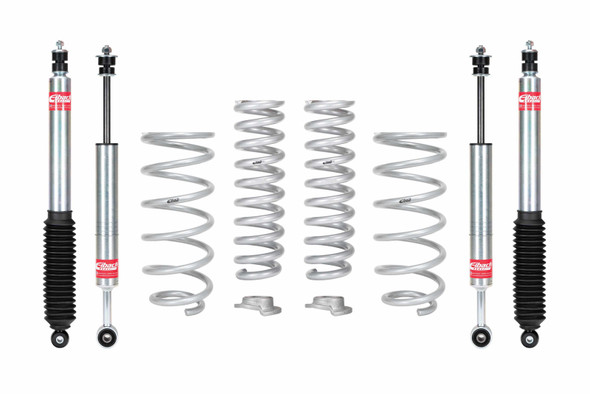

Eibach 10-24 Toyota 4Runner Pro-Truck Lift Kit - Stage 1 - E80-82-071-05-22
Eibach
MSRP: $1,250.00$1,125.00What is the difference between Eibach Pro-Truck Lift Kits and standard lift kits?Eibach Pro-Truck Lift Kits feature a matched system of lift springs and shocks, engineered for increased travel and...MSRP: $1,250.00$1,125.00 -

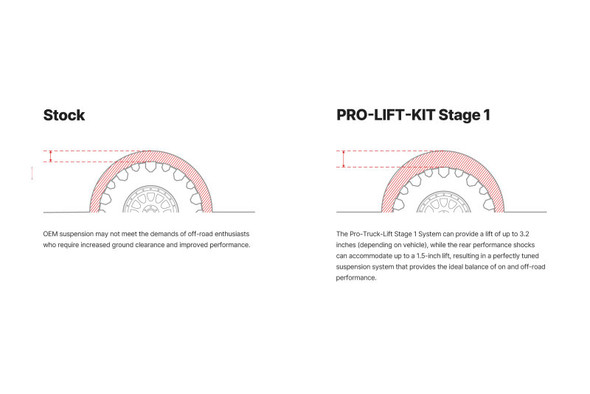
Eibach Pro-Truck Lift Kit for 10-18 Toyota 4Runner (Must Be Used w/ Pro-Truck Front Shocks) - E80-82-071-01-22
Eibach
MSRP: $1,250.00$1,125.00What is the lift height?Confirm specific lift height for your vehicle application during fitment verification for optimal suspension geometry.Is installation difficult?Professional installation is...MSRP: $1,250.00$1,125.00 -
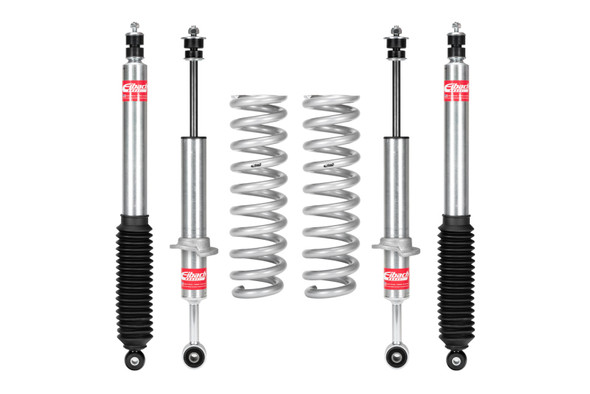
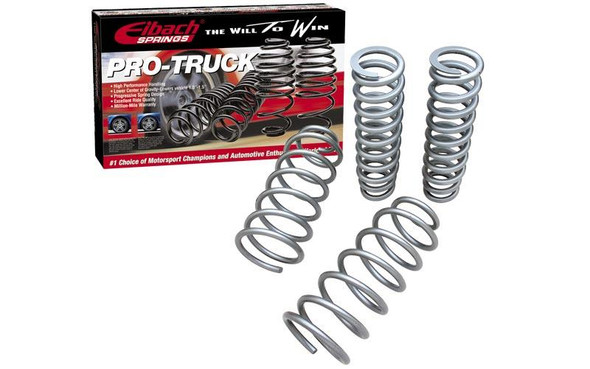
Eibach Pro-Truck Lift Kit for 16-18 Toyota Tacoma - E80-82-069-01-22
Eibach
$910.00What is the PRO-TRUCK-LIFT Stage 1 system?The PRO-TRUCK-LIFT Stage 1 system is an advanced suspension upgrade designed for increased travel and enhanced off-road capability.Are these lift kits...$910.00 -
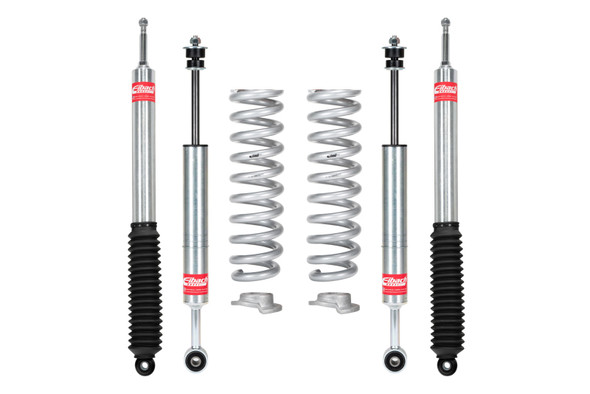
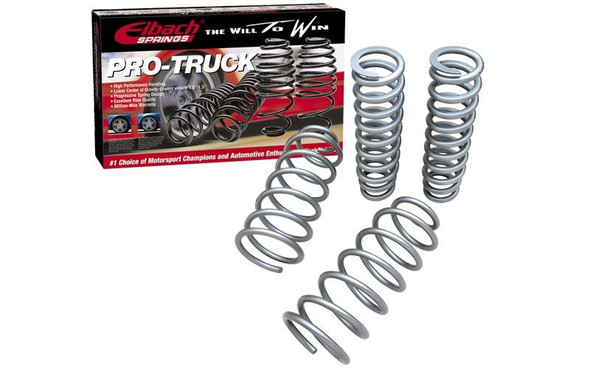
Eibach Pro-Truck Lift Kit for 07-15 Toyota Tundra - E80-82-067-01-22
Eibach
$910.00How much lift does the PRO-TRUCK-LIFT Stage 1 system provide?The PRO-TRUCK-LIFT Stage 1 system for your Tundra provides a significant lift, maximizing ride height without stressing critical factory...$910.00 -


Eibach 00-06 Toyota Tundra V8 4.7L 4WD Pro-Truck-Lift Stage 1 Kit - E80-82-066-02-22
Eibach
$910.00Will this lift kit fit my vehicle?Confirm fitment with your specific vehicle before purchasing to ensure perfect integration with your existing suspension components.How difficult is the installation...$910.00 -

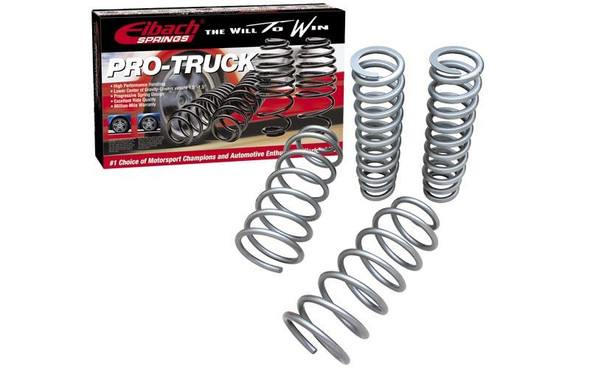
Eibach Pro-Truck Lift Kit for 00-06 Toyota Tundra 2WD Only - E80-82-066-01-22
Eibach
$910.00How do I know if the Eibach Pro-Truck Lift Kit is compatible with my Toyota Tundra?Eibach Pro-Truck Lift Kits offer precise fitment; confirm your specific Toyota Tundra model year and configuration...$910.00 -
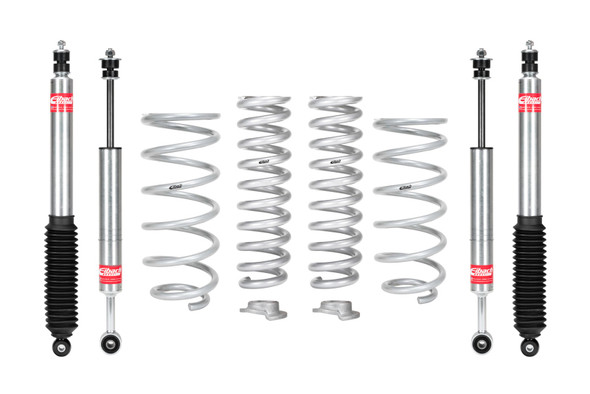
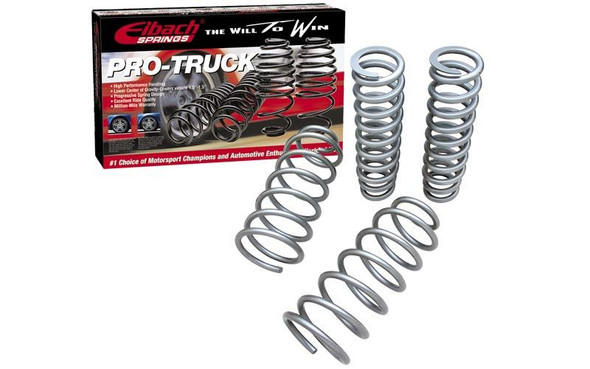
Eibach Pro-Truck Lift Kit for 07-09 Toyota FJ Cruiser - E80-82-008-01-22
Eibach
MSRP: $1,250.00$1,125.00What is the expected lifespan of Eibach lift kits?Eibach lift kits, built with off-road race spring technology and OE quality, are engineered for ultimate durability and long-term performance.Can I...MSRP: $1,250.00$1,125.00 -

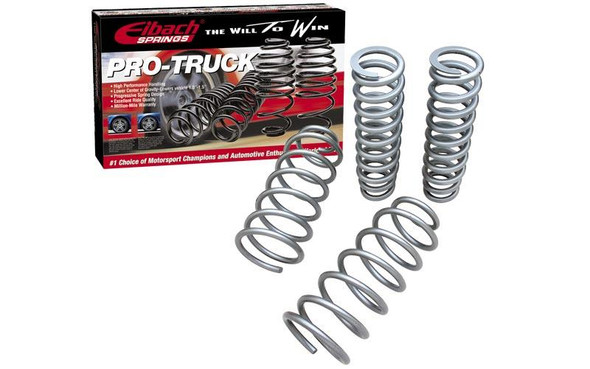
Eibach Pro-Truck Lift Kit for 05-15 Toyota Tacoma (6-Lug Wheel Only Model) - E80-82-007-01-22
Eibach
$910.00What is the expected lifespan of Eibach Pro-Truck Lift Kits?Eibach Pro-Truck Lift Kits are engineered for unwavering durability, leveraging OE quality standards and off-road race spring technology...$910.00 -


Eibach 22-23 Nissan Frontier Pro-Truck Lift System - E80-63-045-01-22
Eibach
$910.00What is the best lift kit for my 2022-2026 Nissan Frontier?Eibach Pro-Truck Lift Kits are the premier choice for your 2022-2026 Nissan Frontier, offering unparalleled off-road performance.How...$910.00 -


Eibach Lexus GX460 Pro-Truck-Lift - E80-59-006-01-22
Eibach
MSRP: $1,250.00$1,125.00How much lift does this kit provide?Eibach PRO-TRUCK-LIFT Stage 1 systems are engineered for a balanced lift, enhancing ground clearance without excessive modification.Do I need to purchase other...MSRP: $1,250.00$1,125.00 -
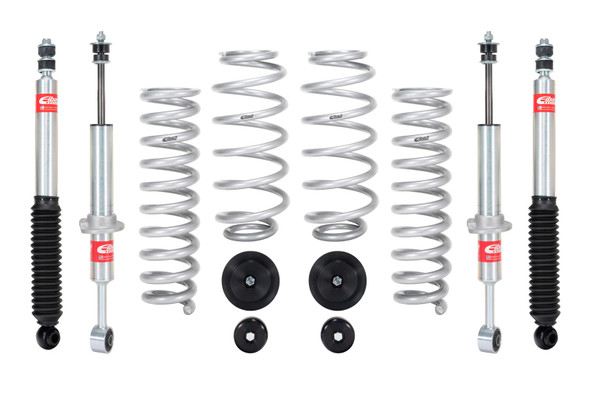

Eibach Pro-Truck Lift Kit System for 03-09 Lexus GX470 - E80-59-005-01-22
Eibach
MSRP: $1,272.22$1,145.00Can I install this lift kit myself or do I need professional installation?Professional installation is recommended for the Eibach Pro-Truck Lift Kits to ensure optimal performance and safety for your...MSRP: $1,272.22$1,145.00 -


Eibach 22-23 Ford F-150 Lightning Dual eMotor Pro-Truck Lift Stage 1 - E80-35-061-01-22
Eibach
MSRP: $1,305.56$1,175.00Are Eibach lift kits compatible with my specific truck model?Eibach Pro-Truck Lift Kits are engineered for precise fitment; confirm your exact vehicle model before purchase for optimal performance...MSRP: $1,305.56$1,175.00
A lift kit raises a vehicle's ride height by relocating or replacing suspension components — including spacers, coilovers, control arms, and coil buckets — to increase ground clearance, accommodate larger tires, and improve off-road articulation. Motor Sport Mayhem stocks 386 lift kit products from 109 brands, ranging from $1.14 to $13,544, covering everything from basic leveling hardware to full long-travel race-prepped systems.
Our Top Picks for Lift Kits
Every product below was hand-selected based on engineering quality, real-world performance data, and proven results across street, trail, and competition applications.
AEM IND Strut Bars
AEM Induction | $346.99
Bolt-on chassis bracing that reduces front suspension flex during aggressive cornering and lift applications where strut tower geometry is affected.
- Reinforces strut tower alignment — critical when suspension geometry changes with a lift
AFE Coilover Systems
aFe | $3,729.00
Single-adjustable coilover platform engineered for street-to-track transition with precise ride height adjustment across a meaningful range.
- Monotube damper construction delivers consistent damping force regardless of ride height setting
ALF Wireless Air Control Systems
Air Lift | $1,363.99
Wireless air management allows on-the-fly ride height adjustment without manual intervention, ideal for vehicles requiring variable lift across different terrain or load conditions.
- Integrated EZ-mount tank system simplifies installation while maintaining full-range pressure control
ABR Steering Racks
All Balls Racing | $209.62
A direct-replacement steering rack designed to restore factory steering geometry after a lift changes the steering axis inclination and bump steer characteristics of the front end.
- Precision-rebushed internals prevent the looseness and wander that develops after suspension height changes stress OEM rack components
PA Alta Adj Control Arms
Alta | $339.15
Adjustable rear control arms allow camber and toe correction after ride height changes, preventing the alignment drift that degrades handling and accelerates tire wear.
- Solid-body aluminum construction eliminates the bushing compliance that causes alignment shift under load
ANT Micro-Start Tire Inflator
Antigravity Batteries | $24.99
A compact tire inflator purpose-built for trail and off-road use where lifted vehicles run reduced tire pressures for traction and need quick reinflation before returning to pavement.
- Compatible with the Antigravity XP-series jump starters, keeping your trail kit consolidated to a single power source
ARB BP51 Coilovers
ARB | $4,580.69
A bypass-style internal floating piston coilover with independent compression and rebound adjustment, delivering 2.5 inches of lift with trail-proven damping performance at the top tier of the segment.
- 2.5-inch bore body handles the heat generated during extended off-road use without fade or cavitation
ART Coils
Artec Industries | $351.99
Laser-cut and CNC-formed steel coil buckets that relocate the front spring perch for increased lift height while retaining OEM bump stop positioning to protect drivetrain components at full droop.
- DOM steel construction and full-penetration welds handle the high cyclic stress loads of rock crawling and trail articulation
AST 5100 Series Coilovers
AST | $4,554.00
A competition-specification coilover system with a 5100-series internals platform that provides ride height adjustment alongside race-grade damping calibration validated at the highest levels of circuit motorsport.
- Threaded body with independently adjustable spring perch allows precise corner-weight tuning once ride height is set
AWE Chassis Bars
AWE Tuning | $435.00
A polyurethane-mounted drivetrain stabilizer that controls driveline movement introduced when suspension geometry changes alter torque reaction paths through the chassis.
- Polyurethane bushing compound is firmer than OEM rubber without transmitting the NVH of solid aluminum mounts — the right trade-off for a street-driven lifted vehicle
How to Choose the Right Lift Kits
The single most important distinction in lift kit selection is whether the system corrects suspension geometry or simply adds height — because every inch of lift moves ball joints, CV axles, and driveshaft angles away from their engineered operating range, and a quality lift kit accounts for that, while a cheap spacer stack does not. Material quality, weld integrity on fabricated components, shock valving calibration for the new ride height, and whether the kit includes alignment correction hardware are the variables that separate a lift that handles well from one that wanders, wears tires, and stresses CV joints.
Key Specifications
Lift height is measured in inches of suspension travel change at the wheel, not at the body — a 3-inch lift kit moves the suspension pickup points and spring perches to achieve that height, which means the shocks, springs, control arm geometry, and in many cases the differential drop or cam bolts must all be recalibrated simultaneously. Systems that address only one component while leaving others at OEM specification create bind, bump steer, and premature failure. Always verify that a kit includes extended brake lines, longer sway bar end links, and geometry correction where applicable.
Shock absorber valving is the most underestimated specification in a lift kit. A stock shock valved for factory ride height will be partially extended at all times once a lift is installed, operating outside its designed damping range. Purpose-built lift shocks are valved for the new extended position, meaning the piston stroke sits in the center of the shock body at static ride height — this is what delivers both off-road compliance and on-road stability. Monotube designs are preferred over twin-tube for lifted applications because their larger oil capacity resists fade during extended off-road cycles.
Spring rate selection for a lift must account for the additional unsprung weight of larger tires, any added armor or accessories, and the leverage effect of increased ride height on spring load. A spring that is too soft will bottom out on the bump stops under trail loads; one that is too stiff will cause the axle to skip over obstacles rather than articulate. For coilover-based lift systems, the ability to swap spring rates without replacing the entire shock is a significant long-term value advantage. Look for kits with at least a ±0.5-inch ride height adjustment range above and below the target lift height.
Control arm geometry becomes critical at lifts above 2.5 inches on IFS vehicles, where upper ball joint angles exceed the 15–20 degree operating range that most OEM joints are designed for. Extended upper control arms with repositioned ball joint locations maintain proper joint angles while also correcting caster, which improves straight-line tracking and steering returnability. On solid-axle platforms, longer-travel shocks and adjusted track bar length are the primary geometry concerns — the track bar must be corrected to prevent axle shift under articulation, which causes the dreaded death wobble at highway speeds. Pair your lift with quality bushing kits and verify shocks and struts are valved for the new ride height range.
Lift Height vs. Required Supporting Modifications
| Lift Height | Suspension Type | Required Supporting Mods | Max Tire Size Gain (Typical) |
|---|---|---|---|
| 0.5"–1.5" | IFS / Solid Axle | Extended sway bar end links, alignment check | +0"–1" over stock |
| 2"–2.5" | IFS | Extended UCAs, alignment correction, longer brake lines | +1"–2" over stock |
| 2"–3" | Solid Axle | Track bar correction, longer shocks, sway bar drop | +2"–3" over stock |
| 3"–4" | IFS | Extended UCAs, diff drop or cam bolts, CV axles, alignment | +2"–3" over stock |
| 4"–6" | Solid Axle | Full geometry correction, driveshaft lengthening, steering stabilizer, brake line extension | +3"–5" over stock |
| 6"+ | IFS / Solid Axle | Long-travel control arms, custom driveshafts, high-steer kit, bypass shocks, full alignment rebuild | +4"–6"+ over stock |
Price Guide
Entry ($1.14–$200): This tier covers individual components — spacers, leveling pucks, coil spacers, and hardware — suited to mild leveling applications of 1 to 1.5 inches where the goal is a level stance and modest tire clearance without a full system overhaul. Quality varies significantly at this price point; look for billet aluminum or quality steel construction and avoid cast pot-metal spacers that crack under sustained load cycling.
Mid-range ($200–$1,500): Most truck and SUV owners land in this range, where complete bolt-on lift systems include purpose-valved shocks, springs, geometry correction hardware, and all necessary brackets for a true 2- to 4-inch lift. This is where the quality gap between brands becomes most apparent — the difference between a system that drives well on-road and one that wanders aggressively comes down to shock valving precision and whether geometry correction components are included.
Premium ($1,500–$13,544): Long-travel race-prepped systems, bypass shock configurations, full coilover replacements with billet components, and air suspension platforms built for competition or extreme expedition use occupy this tier. The engineering hours invested in suspension kinematics, the quality of machined billet parts, and the performance of race-validated damper internals justify the cost for builds where ground clearance, articulation, and high-speed off-road capability are primary objectives — not just aesthetics.
Who Is This For?
Lift kits serve a spectrum of users from weekend trail drivers to full competition off-road racers, and the right system depends entirely on how the vehicle is used and what performance envelope it needs to cover.
Racing Competition — 8.1/10
Lift kits score at the top of the usage matrix for racing competition because long-travel suspension systems are the foundation of any competitive off-road race build — rock crawling, desert racing, and ultra4 competition all require suspension that articulates far beyond OEM limits while maintaining damping control at speed. At this application level, lift is inseparable from shock tuning, and the systems used are purpose-engineered for race duty with high-volume bypass dampers and remote reservoirs. The 128 products in this tier are selected for builds where on-road compromise is irrelevant and maximum performance envelope is the only metric.
Track / Autocross — 8.0/10
This score reflects coilover-based ride height adjustment systems that allow corner weighting, camber correction, and precise geometry tuning — the category includes height-adjustable platforms used to lower and fine-tune as well as those used to raise clearance in applications with aggressive aero or diffuser packaging. The 132 products scoring here are primarily coilover systems and adjustable control arms where ride height change enables performance alignment settings impossible at stock height. Pairing lift or height-adjustable suspension with quality coilovers unlocks the full range of alignment adjustability.
Street Performance — 7.7/10
Street performance applications score well because a properly lifted truck or SUV with quality shocks and corrected geometry handles better than a stock vehicle on large tires — the lift removes the bound-up geometry that causes vague steering and body roll on over-tired OEM suspensions. The 192 products at this score level represent complete bolt-on systems engineered to deliver improved on-road handling alongside the clearance gain. Proper shock valving for the new ride height is the variable that separates a performance-oriented lift from one that feels loose and unpredictable on pavement.
Weekend Off-Roading — 7.7/10
The 85 products in this segment cover the most common use case: a daily-driven vehicle that sees trail use on weekends and needs enough ground clearance for moderate rock, rut, and washboard terrain without becoming impractical on the commute. Systems in this category prioritize a balance of ride quality, articulation, and ease of installation over outright competition performance. The key specification here is shock stroke — enough travel to clear obstacles without bottoming out, with valving that doesn't punish highway driving.
Overlanding / Expedition — 7.2/10
Expedition vehicles carry significant additional weight in the form of roof tents, gear, fuel, and water, which means lift kits for this application must use springs rated for laden weight, not just bare vehicle curb weight — an oversight that causes sagging and degraded handling on most budget kits. The 72 products in this category are selected for sustained durability under load, long service intervals in remote conditions, and compatibility with the additional stress of heavy, loaded axles cycling over rough terrain for extended periods. Air suspension platforms that auto-correct for varying loads score particularly well in this segment.
Trusted Lift Kits Brands We Carry
The brands leading this category earned their positions through application-specific engineering rather than generalist part production — Skyjacker has built lift-specific suspension geometry solutions for over 50 years, with valving calibrated for lifted ride heights from the ground up rather than adapted from lowered applications. FOX brings desert racing and OEM development heritage to their off-road lift systems, with internal bypass and remote reservoir technology derived directly from race programs. ICON occupies the premium end of the market with fully adjustable, billet-machined systems built to compete at long-travel performance levels where most catalog brands stop. Bilstein brings German-engineered monotube damper technology and extensive OEM fitment data to their lift-compatible shock and strut lineup, ensuring precise valving for each application rather than universal compromises. ARB validates their systems in some of the most extreme expedition environments on earth, giving their geometry and damping solutions credibility that bench-tested catalog products cannot match. Artec Industries and similar fabrication-oriented brands serve the builder segment where structural components — coil buckets, control arm brackets, and frame reinforcement — must meet weld-quality standards that sustain high-cycle rock crawling loads without fatigue cracking.
Frequently Asked Questions
Are aftermarket control arms actually good, and are they better than OEM?
Aftermarket control arms built for lifted applications are specifically engineered to do something OEM arms cannot: maintain correct ball joint operating angles and provide proper caster correction at non-stock ride heights. OEM arms are optimized for a single geometry position — the factory ride height — and their ball joint angles, bushing compliance rates, and arm lengths are all calibrated for that position only. Quality aftermarket arms use repositioned ball joint mounts, stronger chromoly or billet aluminum construction, and adjustable geometry to outperform OEM once any height change is introduced. The caveat is quality: poorly made aftermarket arms with undersized ball joints and loose-tolerance fabrication are worse than OEM in every metric, so brand selection and fitment verification are non-negotiable. For lifted vehicles, properly engineered aftermarket control arms are not just better than OEM — they are a functional requirement for safe handling and alignment stability.
Are aftermarket bump stops worth installing on a lifted vehicle?
Aftermarket bump stops are one of the most overlooked components in a lift system and are absolutely worth the investment when increased suspension travel is involved. When you add lift height, the stock bump stops often no longer contact the suspension at the right point in the travel arc — either engaging too early and limiting articulation, or allowing metal-to-metal contact at full compression when they're repositioned. Quality aftermarket bump stops, especially progressive-rate polyurethane or hydraulic units, absorb the energy of hard compression events gradually rather than with the abrupt impact of a rubber bump, protecting axle shafts, CV joints, and frame-mounted components from shock loads. On lifted vehicles used off-road, a properly positioned aftermarket bump stop is protecting thousands of dollars in drivetrain components from impacts that happen every trail run.
Are adjustable sway bar end links worth it on a lifted vehicle?
Adjustable sway bar end links are not optional at lift heights above 2 inches — they are a geometry correction requirement. When ride height increases, the sway bar end link angle steepens and the bar pre-loads in a bind at static ride height, which simultaneously limits suspension articulation and applies constant stress to the sway bar mounts and bushings. Adjustable drop links restore the end link to its designed perpendicular angle at the new ride height, allowing the bar to function within its engineered range. Beyond geometry correction, adjustable links allow disconnection for maximum articulation in off-road use — a feature that makes a significant difference in wheel travel on technical terrain. The cost of quality adjustable end links is minimal relative to the alignment and articulation problems they solve.
Are aftermarket lower control arms worth it on a lifted IFS truck or SUV?
On independent front suspension platforms with lifts above 2 inches, aftermarket lower control arms are worth the investment because they directly address CV axle angle — the most common point of failure on lifted IFS vehicles. Stock lower arms allow the CV axle to operate at steep downward angles at the lifted ride height, accelerating wear on the outer CV joint and creating vibration under load that is often mistaken for driveshaft balance issues. Extended aftermarket lower arms relocate the lower ball joint outboard and downward, reducing axle angle and dramatically extending CV joint service life. They also correct the bump steer that develops when lower arm geometry moves away from the designed arc. The engineering investment in a quality set of lower control arms pays back in avoided drivetrain repairs within two to three years on a heavily used lifted vehicle.
Are aFe shocks good quality for lifted applications?
aFe's control line of shocks and coilover systems — developed under the Pfadt engineering brand — are built to a monotube standard with consistent internal tolerances and application-specific valving that puts them well above the mass-market tier. Their systems are validated for street and track use with damping curves that balance ride quality with body control, making them a credible option for performance-oriented lifted builds where on-road handling is not sacrificed entirely for off-road capability. The single-adjustable platforms in their lineup give users meaningful damping range adjustment without the complexity of remote reservoir systems, which suits street-performance and occasional track applications well. Compared to the premium long-travel off-road brands, aFe positions itself in the performance street segment — not the competition desert racing segment — which is the correct way to evaluate them against alternatives in that price range.
Building something specific? Our performance specialists can help you select the right Lift Kits for your application — street, track, or full race build.