
Chassis Bracing
- Product
- Qty in Cart
- Quantity
- Price
- Subtotal
-

Cusco Power Brace Front Member 17+ Lexus RC200t/300/350 - 988 492 FM
Cusco
MSRP: $305.00$274.50Will these braces fit my specific vehicle model?Confirm fitment with your vehicle using our detailed compatibility guide before purchase for guaranteed chassis bracing integration.Do I need professional installation for these braces?Professional...MSRP: $305.00$274.50 -

Cusco Front Power Brace 17+ Lexus RC200t/300/350 - 988 492 F
Cusco
MSRP: $305.00$274.50Will these CUS Power Braces fit my specific vehicle?Confirm vehicle fitment before purchase to ensure these CUS Power Braces integrate perfectly with your chassis.Is professional installation recommended for CUS Power Braces?Professional installation is...MSRP: $305.00$274.50 -
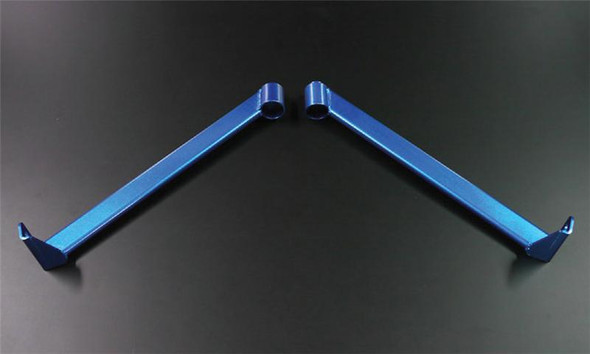

Cusco Power Brace Rear Member Side Subaru BRZ / Toyota 86 - 965 492 RS
Cusco
MSRP: $270.00$243.00How much does the Cusco Power Brace Rear Member Side improve steering response?This chassis bracing transforms rear chassis rigidity, delivering significantly sharper steering response for improved driver confidence.Is professional installation required...MSRP: $270.00$243.00 -
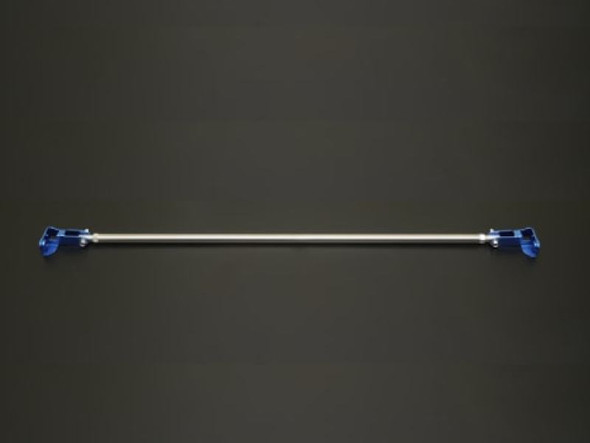
Cusco Power Brace Rear Pillar Subaru BRZ / Toyota 86 - 965 492 RP
Cusco
MSRP: $175.00$157.50What is the primary function of Cusco Power Braces?Cusco Power Braces minimize chassis flex, delivering razor-sharp steering response for immediate feedback and flatter cornering during aggressive maneuvers.Are Cusco Power Braces easy to...MSRP: $175.00$157.50 -

Cusco Power Brace Rear Lateral Sway Bar Bracket Subaru BRZ / Toyota 86 - 965 492 RL
Cusco
MSRP: $245.00$220.50Will these Cusco Power Braces fit my car?Confirm precise fitment with your vehicle's specific make, model, and year before purchase to ensure optimal chassis bracing integration.Is it easy to install Cusco Power Braces?Professional installation is...MSRP: $245.00$220.50 -

Cusco Power Brace Front Lower Arm Plus Subaru BRZ / Toyota 86 - 965 492 FP
Cusco
MSRP: $270.00$243.00How does chassis bracing enhance a vehicle's performance?CUS Power Braces reduce chassis flex, delivering razor-sharp steering response and significantly improving cornering stability for immediate feedback and control.Is professional installation...MSRP: $270.00$243.00 -


Cusco Power Brace Front Lower Arm Subaru BRZ / Toyota 86 - 965 492 FL
Cusco
MSRP: $175.00$157.50Are these Cusco power braces made of aluminum?Cusco Power Braces are constructed from high-strength steel, ensuring exceptional rigidity and durability for your vehicle's chassis.Can I install these Cusco power braces myself?Professional installation is...MSRP: $175.00$157.50 -
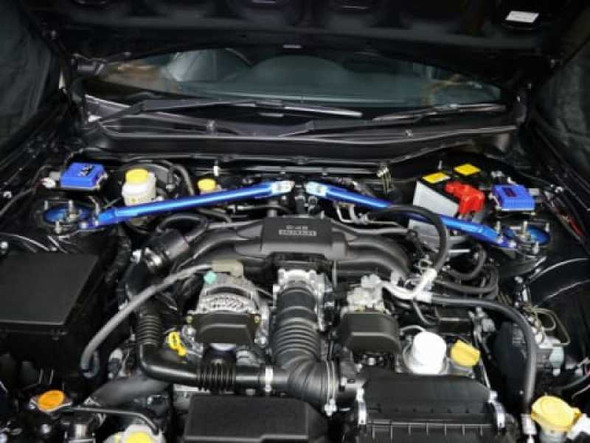
Cusco PowerBrace Strut Support Fr Strut to Firewall 35mm OD Non-Adj Subaru BRZ/Toyota 86/Scion FR-S - 965 492 ERB
Cusco
MSRP: $245.00$220.50What is the main benefit of installing Cusco Power Braces?Cusco Power Braces deliver razor-sharp steering response and flatter cornering by effectively minimizing chassis flex for immediate driver feedback.Is professional installation required for Cusco...MSRP: $245.00$220.50 -

Cusco Power Brace ZVW30 PRIUS CENTER - 951 492 C
Cusco
MSRP: $280.00$252.00What is a Cusco Power Brace?Cusco Power Braces are advanced chassis bracing components engineered to significantly reduce body flex for enhanced suspension performance.How difficult is it to install a Cusco Power Brace?Professional installation is...MSRP: $280.00$252.00 -
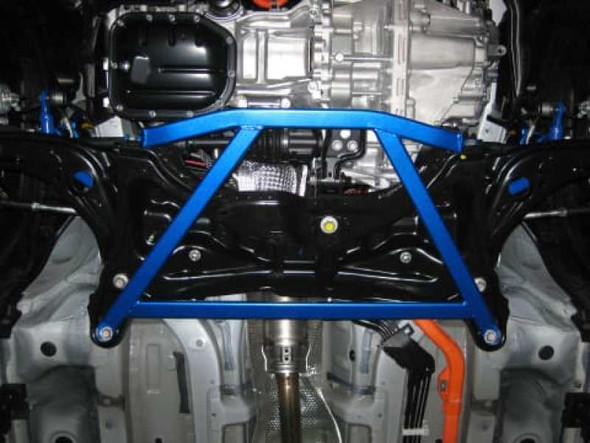
Cusco Lower Arm Bar Ver II 4 pts Toyota Prius C Aqua - 949 477 A
Cusco
MSRP: $245.00$220.50Will this chassis bracing fit my car?Confirm exact fitment for your vehicle before purchase to ensure proper installation and optimal chassis bracing performance.How difficult is it to install this chassis bracing?Professional installation is recommended...MSRP: $245.00$220.50 -

Cusco 22+ Toyota GR86 / Subaru BRZ (ZD8/ZN8) Rear Trunk Plus Power Brace - 6C1 492 TP
Cusco
MSRP: $305.00$274.50Is this a direct bolt-on installation?Professional installation is recommended for these CUS Power Braces to ensure optimal alignment and secure chassis bracing integration.Will this product fit my specific vehicle model and year?Confirming exact fitment...MSRP: $305.00$274.50 -

Cusco Power Brace Front Cross Member (Rear Side) 22+ Toyota GR86 (ZN8) / 22+ Subaru BRZ (ZD8) - 6C1 492 FM
Cusco
MSRP: $290.00$261.00Will CUS Power Braces fit my vehicle?CUS Power Braces require confirmation of specific vehicle fitment to ensure proper installation and performance enhancement of your chassis.How difficult is it to install CUS Power Braces?Professional installation is...MSRP: $290.00$261.00
Chassis bracing encompasses every structural reinforcement that reduces body flex, maintains suspension geometry under load, and translates driver inputs into predictable handling responses — and Motor Sport Mayhem stocks 144 in-stock options spanning entry-level tower braces to full competition subframe systems. A rigid chassis is the foundation every other suspension upgrade depends on; without it, spring rates, alignment settings, and damper tuning all work against an unstable baseline.
Our Top Picks for Chassis Bracing
Every product below was selected based on engineering quality, real-world performance results, and value across street, track, and off-road applications.
AEM IND Strut Bars
AEM Induction | $346.99
A direct bolt-on strut tower brace that reduces front-end flex and improves steering response without chassis modification.
- CNC-machined aluminum construction keeps unsprung weight low while delivering measurable torsional rigidity gains
AFE Coilover Systems
aFe | $3,729.00
A single-adjustable coilover system engineered to replace the entire OEM suspension assembly with a track-validated damping and spring package.
- Featherlight monotube construction reduces unsprung mass while the integrated chassis mounting hardware stiffens the suspension pickup geometry
ALF Wireless Air Control Systems
Air Lift | $1,363.99
A wireless management system that provides on-demand chassis height and load leveling control without running cab-mounted hard lines.
- Bluetooth-enabled wireless control eliminates in-cab wiring complexity while maintaining precise PSI management for chassis attitude adjustment
ABR Steering Racks
All Balls Racing | $209.62
A fully rebuilt OEM-spec replacement steering rack that restores precise front-end geometry and eliminates the flex and slop that degrades handling in high-use applications.
- Precision-remanufactured internals and upgraded seal materials deliver OEM or better fitment tolerances at a fraction of dealer replacement cost
PA Alta Adj Control Arms
Alta | $339.15
Adjustable rear control arms that allow dialing in precise rear alignment geometry to correct camber and toe settings compromised by lowering or track use.
- Polyurethane bushing construction eliminates the deflection inherent in OEM rubber, locking in alignment corrections under hard cornering loads
ANT Micro-Start Tire Inflator
Antigravity Batteries | $24.99
A compact tire inflator attachment for Antigravity jump starters, essential for maintaining correct tire pressure when chassis setup and handling balance are being dialed in at the track or trail.
- Portable inflation capability supports trackside tire pressure management, which directly affects chassis behavior and contact patch loading
ARB BP51 Coilovers
ARB | $4,580.69
A fully rebuildable, bypass-style coilover system designed for extreme off-road chassis control across heavily laden expedition and competition builds.
- Internal bypass technology separates low-speed and high-speed damping circuits, maintaining chassis composure across wildly variable terrain and load conditions
ART Coils
Artec Industries | $351.99
Heavy-gauge steel front frame coil buckets engineered to relocate the spring perch and maintain OEM bump stop compatibility on lifted chassis.
- 3/16" and 1/4" steel construction with full-penetration welds prevents the frame cracking common with underbuilt aftermarket coil conversion hardware
AST 5100 Series Coilovers
AST | $4,554.00
A competition-grade coilover kit built to FIA and motorsport homologation standards, delivering fully tunable chassis dynamics for circuit and rally applications.
- Separate bump and rebound adjustment with remote reservoir option allows precise corner-by-corner chassis balance tuning unavailable in any street-grade damper
AWE Chassis Bars
AWE Tuning | $435.00
A drivetrain stabilizer bar with polyurethane mount that controls transmission movement under hard acceleration and shifting, reducing driveline slop and chassis-transmitted vibration.
- Polyurethane mounting isolator balances NVH characteristics against drivetrain rigidity, a compromise that pure solid mounts sacrifice entirely
How to Choose the Right Chassis Bracing
The single most important factor separating effective chassis bracing from wasted money is whether the part addresses the specific flex mode your chassis actually suffers from — strut tower movement, subframe deflection, firewall rotation, or rear tub twist all require different solutions, and the wrong brace in the wrong location does nothing measurable. Material grade, tube diameter, wall thickness, and mounting point integrity all determine whether a brace transfers load effectively or simply adds weight. DOM (drawn over mandrel) steel and 6061-T6 aluminum are the industry standards for structural bracing — anything thinner than 1.5mm wall on steel or thinner than 3mm on aluminum should be treated with skepticism. Mounting hardware quality matters equally; a brace is only as rigid as its weakest attachment point, and cast or undersized hardware introduces the same compliance you're trying to eliminate.
Key Specifications
For strut tower braces and front cross-braces, tube outer diameter should be a minimum of 25mm for street use and 32mm or larger for track applications. Wall thickness on steel units should be 2mm minimum; on aluminum, look for 4mm or better. Triangulated designs — where the brace ties into three or more mounting points — outperform straight two-point bars because they resist both lateral and rotational chassis movement. The geometry of the brace matters: a bar that runs at an angle to the chassis centerline under tension is far more effective than one aligned parallel to a flex axis.
Subframe bracing and rear chassis stiffening kits demand close attention to mounting hardware torque specs and thread engagement depth. Many OEM subframe bolt holes are not designed for the shear loads that a performance brace introduces, and reinforcement plates or inserts are frequently required for the bracing to function as designed. Any brand that ships these inserts in the box is communicating that they understand the actual structural problem — treat that as a positive quality indicator.
Adjustable components — drop links, sway bar end links, and control arms — introduce length and geometry variables that must be set correctly to be beneficial. An adjustable drop link set to the wrong length will preload the sway bar at static ride height, creating handling asymmetry. Before purchasing adjustable components, confirm that your alignment shop has the equipment and reference data to properly set the geometry after installation. For coilover-equipped vehicles, adjustable control arms are often mandatory rather than optional because ride height changes shift geometry beyond OEM alignment range.
For off-road and truck applications, frame-mounted bracing must be evaluated for compatibility with existing skid plates, crossmembers, and differential clearance. Rock sliders, rocker guards, and cage mounting points all interact with chassis bracing geometry — a component designed for an unmodified chassis may conflict with existing fabrication work. Always cross-reference frame section dimensions and verify that added bracing doesn't block access to maintenance points or compromise ground clearance on lifted builds.
Chassis Bracing Specification Guide by Application
| Application | Minimum Tube OD / Material | Recommended Mounting Points | Key Performance Gain |
|---|---|---|---|
| Street Performance (FWD/AWD) | 25mm OD / 6061-T6 aluminum | Strut towers + firewall | Reduced understeer, sharper turn-in |
| Track / Autocross | 32mm OD / DOM steel or 6061-T6 | Strut towers, subframe, rear shock mounts | Consistent alignment geometry under sustained cornering load |
| Road Racing / Competition | 38mm OD / DOM or chromoly steel | Full cage integration, subframe connectors, firewall tie-in | Elimination of chassis flex as a suspension variable |
| Weekend Off-Road | 1.75" OD / 0.120" wall DOM steel | Frame rails, crossmembers, axle truss | Reduced frame twist on articulation, improved droop travel |
| Overlanding / Expedition | 2.0" OD / 0.120" wall DOM steel | Frame connectors, skid plate mounts, rear crossmember | Load-bearing stability under GVW with heavy cargo |
| Daily Driver (comfort priority) | 22mm OD / aluminum or mild steel | Strut towers minimum | Modest NVH reduction, improved tire wear consistency |
Price Guide
Entry ($1.14–$213): This range covers individual bushings, hardware kits, replacement end links, and single-point braces — legitimate components for targeted fixes like worn OEM rubber or a failed drop link, but not for builds requiring systemic chassis stiffening. Quality varies significantly at this price point; prioritize brands with OEM supplier credentials over generic hardware.
Mid-range ($213–$1,500): The majority of serious enthusiasts land here, where full strut brace kits, adjustable control arm sets, sway bar upgrade packages, and quality subframe bracing systems live. At this level you're getting engineered fitment, correct material specifications, and real-world validation — the components that deliver the most measurable handling improvement per dollar spent.
Premium ($1,500–$13,544.00): Competition coilover systems, full chassis brace kits with integrated subframe connectors, air management systems, and race-spec control arm packages occupy this range. The cost is justified for dedicated track cars, heavily modified off-road builds, and builds where alignment precision and damper adjustability are non-negotiable — not for vehicles that primarily see street use.
Who Is This For?
Chassis bracing serves a wide spectrum of drivers — from the daily commuter chasing better tire wear and reduced body flex to the circuit racer eliminating every variable between suspension geometry and pavement.
Racing Competition — 8.1/10
Chassis bracing scores highest in competition use because a compliant chassis is the enemy of repeatable lap times — when the tub flexes, camber changes unpredictably mid-corner and the driver's inputs stop translating linearly to vehicle response. At this level, subframe connectors, full roll cage tie-ins, and spherical-bearing control arm pivots are standard rather than optional. The 128 competition-focused products in this category reflect genuine demand from racers who understand that power and aero mean nothing on a chassis that won't hold geometry.
Track / Autocross — 8.0/10
Track and autocross use scores nearly as high as full competition because the same physics apply — hard braking, trail braking, and sustained lateral G all stress chassis mounting points in ways that OEM engineering doesn't fully account for, especially on cars with any power modifications. Strut tower braces, upgraded sway bar end links, and adjustable rear arms are the core upgrades that deliver the most measurable lap time improvement for this use case. The 132 track-focused products here span everything from entry-level tower braces to full coilover systems designed around circuit suspension geometry.
Street Performance — 7.7/10
Street performance rates 7.7/10 because chassis bracing improvements are immediately felt in normal driving — tighter steering response, reduced body roll in corners, and more predictable behavior under hard acceleration all improve with even basic structural reinforcement. For modified street cars running stiffer springs or upgraded sway bars, chassis bracing is a prerequisite: stiffening compliance components without addressing chassis flex simply transfers load to mounting points not designed for it. The 192 street-oriented products in this category represent the broadest selection, covering the widest range of platforms and budgets.
Weekend Off-Roading — 7.7/10
Off-road chassis bracing scores identically to street performance at 7.7/10 but for entirely different mechanical reasons — articulation, frame twist, and impact loads on uneven terrain are the failure modes being addressed rather than lateral G. Skid plate mounting, axle truss reinforcement, and frame crossmember bracing prevent the chassis fatigue cracking that develops over time on vehicles used hard off pavement. The 85 off-road-focused products here are weighted toward heavier-gauge steel construction and thread-in hardware that tolerates mud, vibration, and impact better than the aluminum components optimized for circuit use.
Overlanding / Expedition — 7.2/10
Overlanding scores 7.2/10 — lower than pure off-road use because the emphasis shifts from dynamic flex management to static load-bearing stability under heavy cargo. Frame connectors, rear crossmember reinforcement, and upgraded suspension mounting hardware all prevent the gradual chassis fatigue that manifests as cracking and loosening over tens of thousands of loaded miles. The 72 overlanding-relevant products in this category skew toward bolt-on frame reinforcement and quality replacement hardware rather than the geometry-focused components that dominate the track segment.
Trusted Chassis Bracing Brands We Carry
The brands that dominate this category earn their reputation through engineering consistency and real-world validation, not marketing. Whiteline has built its reputation on suspension geometry correction and chassis bushing systems backed by precise deflection data across hundreds of vehicle platforms, while Superpro delivers comparable bushing quality with a strong OEM replacement pedigree for fleet and performance use alike. Energy Suspension pioneered the polyurethane bushing market in North America and remains the benchmark for material consistency and durometer accuracy across its product line. For complete chassis dynamics systems, Eibach's multi-decade involvement in factory motorsport programs and H&R's German engineering heritage give both brands credibility that extends well beyond their spring catalogs into full chassis setup packages. At the premium off-road end, ARB's vertical integration — engineering, manufacturing, and testing within the same organization — produces chassis components held to tolerances uncommon in the aftermarket. Artec Industries rounds out the fabrication-grade segment with domestically produced, weld-ready structural components that meet the demands of competitive off-road builds where commercial bracing products fall short.
Frequently Asked Questions
Are adjustable sway bars worth it?
Adjustable sway bars are worth it when you need to tune chassis balance across different driving conditions or corner configurations — fixed-rate bars lock you into a single compromise between understeer and oversteer that may not suit every track layout or load scenario. The ability to independently adjust front and rear roll stiffness lets you dial out push in slow corners or rotate the car more aggressively in high-speed sweepers without changing springs. For street use, the benefit is less pronounced unless you regularly change between loaded touring and spirited solo driving, but for any driver who attends multiple track events per season, the tuning flexibility pays for itself quickly in lap time consistency. The key spec to verify is adjustment range — bars with fewer than three adjustment positions offer limited real-world tuning benefit over a well-chosen fixed-rate upgrade.
Are adjustable drop links worth it?
Adjustable drop links are worth it specifically when your ride height differs from OEM — on lowered vehicles, standard drop links create a sway bar operating angle that preloads the bar at static ride height and distorts its dynamic response throughout the suspension travel range. Correcting this angle with an adjustable link restores the sway bar to its designed operating geometry, allowing it to function as engineered rather than fighting against a built-in preload. For vehicles at stock ride height, adjustable links offer minimal benefit unless worn OEM links are being replaced, in which case quality fixed-length replacements are adequate. Thread-in adjustment with jam-nut lockdown and spherical rod ends are the construction details that separate genuine performance links from adjustable hardware that loosens over time.
Are aftermarket control arms any good?
Quality aftermarket control arms are not only good — for modified vehicles, lowered applications, or track use, they're frequently superior to OEM units because they're designed around the actual operating conditions rather than OEM cost targets. The critical differentiators are bushing material (polyurethane or spherical bearings versus OEM rubber), wall thickness of the arm itself, and the quality of the ball joint or pivot hardware. Brands with motorsport homologation or documented race use have validated their designs under conditions that exceed anything street use demands. The failure mode to avoid is cheap cast construction — arms should be either forged, CNC-machined from billet, or fabricated from quality tube steel. An arm that flexes under cornering load defeats the purpose of replacing the OEM unit entirely.
Are aftermarket bump stops worth it?
Aftermarket bump stops deliver measurable handling improvement in two specific scenarios: when progressive rate damping at full compression is needed to prevent harsh bottom-out on track, and when ride height changes have left OEM bump stops contacting too early or too late in the travel range. OEM bump stops are engineered around OEM ride height and spring rates — change either variable significantly and the bump stop calibration is no longer correct. Foam jounce bumpers are the performance standard for track applications because they provide a progressive rate increase through compression rather than the sudden harsh stop of bottoming on a conventional rubber bump stop. For off-road builds, extended-travel bump stops prevent shock shaft damage at full droop and protect steering and drivetrain components from overextension.
Are aftermarket lower control arms worth it?
Aftermarket lower control arms are worth it when the OEM arms are a genuine limitation — which is most often the case on lowered vehicles where OEM geometry results in excessive negative camber gain, on lifted trucks where OEM arm length creates poor CV axle angles, and on track cars where OEM rubber bushings introduce compliance that degrades steering precision. Upgraded lower arms with adjustable geometry allow a proper alignment to be dialed in after ride height changes, something that's often impossible with OEM arms outside their designed operating range. Material and bushing choices matter significantly: a DOM steel or forged aluminum arm with polyurethane bushings will outperform OEM rubber in responsiveness but may transmit more NVH — a trade-off that's entirely acceptable for performance applications and manageable for daily driving. Pair any lower arm upgrade with a proper four-wheel alignment using the new adjustment range, otherwise the investment doesn't reach its full potential.
Building something specific? Our performance specialists can help you select the right Chassis Bracing for your application — street, track, or full race build.