
Camber Kits
- Product
- Qty in Cart
- Quantity
- Price
- Subtotal
-

UMI Performance 82-92 GM F-Body Spherical Caster/Camber Plates - 2040-R
UMI Performance
$259.99UMI’s heavy duty caster and camber plates allow you to make alignment changes that are not permitted with the factory strut mounts. These heavy duty strut mounts are fully TIG welded using ¼” steel...$259.99 -
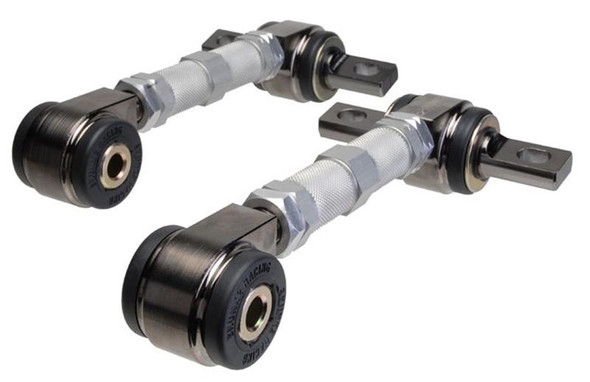
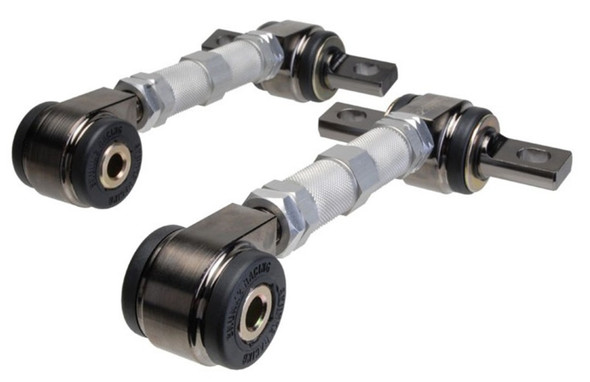
Skunk2 Pro Series 88-00 Honda Civic/CRX/Del Sol/90-01 Acura Integra Adjustable Rear Camber Kits - 516-05-0500
Skunk2 Racing
MSRP: $179.25$170.29Skunk2's Rear Camber Kit for all '88-'00 Civics and '90-'01 Integras, including CRXs and del Sols, is based off of the same adjustable camber kit technology the company's been using on its own race...MSRP: $179.25$170.29 -


ISC Suspension 93-01 GC8 Rear Camber Plates - RCS001
ISC Suspension
MSRP: $215.00$155.00Will these camber plates fit my 1998 Subaru Impreza WRX STI?ISC Camber Plates specifically fit 1993-2001 GC8 Subaru Imprezas, ensuring precise rear wheel alignment for your performance vehicle.Do I...MSRP: $215.00$155.00 -
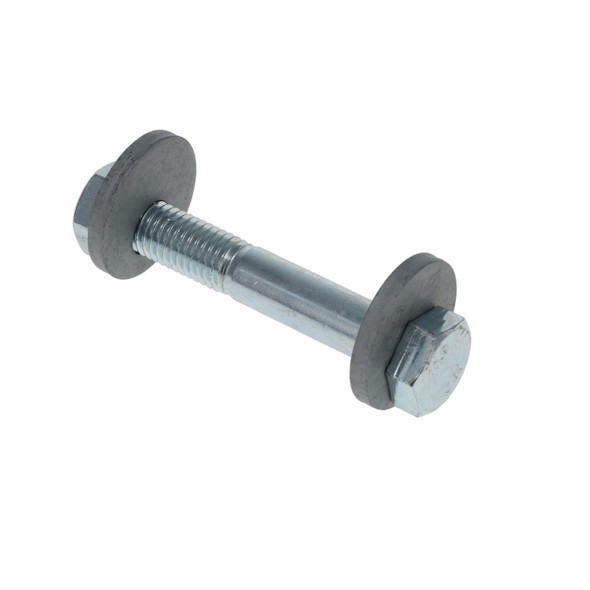
SPC Performance 17-20 Genesis G80/18-20 Hyundai Elantra GT Rear Adjustable Camber Cam (+/-.75.) - 84095
SPC Performance
$16.38How do I determine if this SPC Camber Kit will fit my vehicle?Confirm fitment with your specific vehicle using our online compatibility tool before purchasing this bolt-on camber kit.What is the...$16.38 -
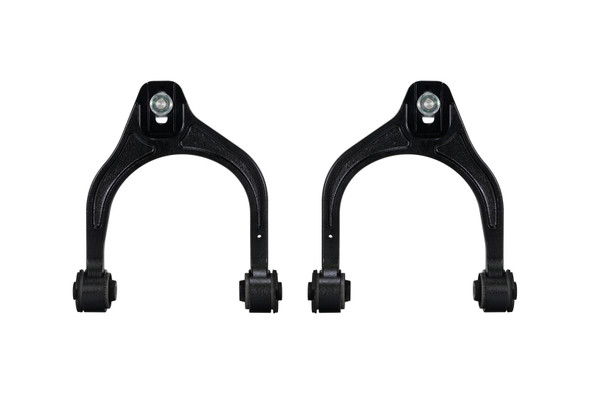

Eibach Pro-Alignment Rear Camber / Toe Kit for 03-08 Nissan 350z / 03-07 Infiniti G35 Coupe / 03-06 - 5.72050K
Eibach
MSRP: $332.22$299.00What is the primary purpose of an alignment kit?Alignment kits enable precise adjustment of wheel angles, correcting suspension geometry for optimal tire contact and handling on performance vehicles...MSRP: $332.22$299.00 -
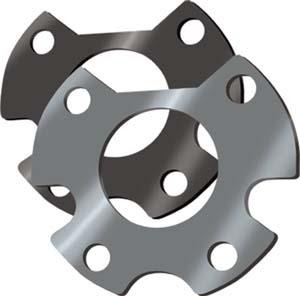

SPC Performance 99-05 VW Golf/Jetta/00-06 Audi TT Nylon Toe Shim (0.13deg.) - 71520
SPC Performance
$6.30What is the main purpose of SPC Caster/Camber Shims?SPC Caster/Camber Shims precisely correct rear camber and toe for improved tire contact and balanced handling performance on your vehicle.How much...$6.30 -


Whiteline 01-05 Honda Civic ES & EU / 02-06 Acura RSX Type S DC5 Rear Camber adj kit - upper c/arm - KCA368
Whiteline
$56.88What vehicles are compatible with these camber adjustment kits?Whiteline Camber Adj Kits are engineered to precisely fit 1997-2006 Acura RSX, Honda Civic, and CR-V models.Is it recommended to install...$56.88 -
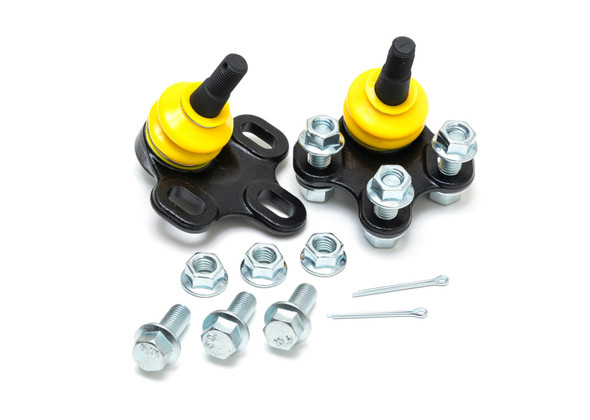

Whiteline 2015+ Honda Civic X FC / FK / SI / RS Lower Ball Joint Front Camber Adjuster Kit - KCA468
Whiteline
$165.88What are the benefits of a Whiteline Camber Kit?Whiteline Camber Adj Kits fine-tune camber settings for optimum tyre contact, enhancing vehicle handling and increasing tyre life.Can I install a...$165.88 -
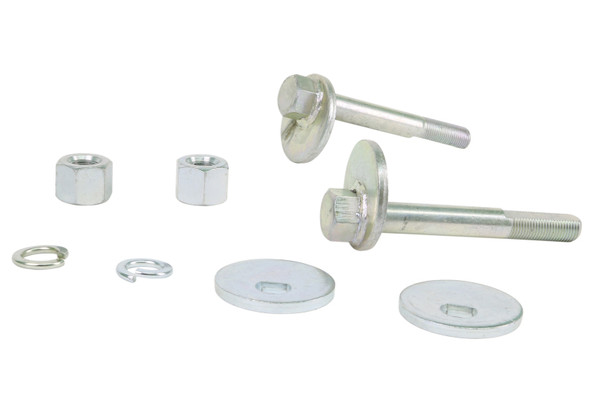

Whiteline 63-82 Chevrolet Corvette C2/C3 Adjustable Camber Bolt - KCA448
Whiteline
$42.88What do Whiteline Camber Adj Kits replace?Whiteline Camber Adj Kits replace old, worn, or rusted factory lower inner control arm camber bolts for improved functionality.How much adjustment do...$42.88 -

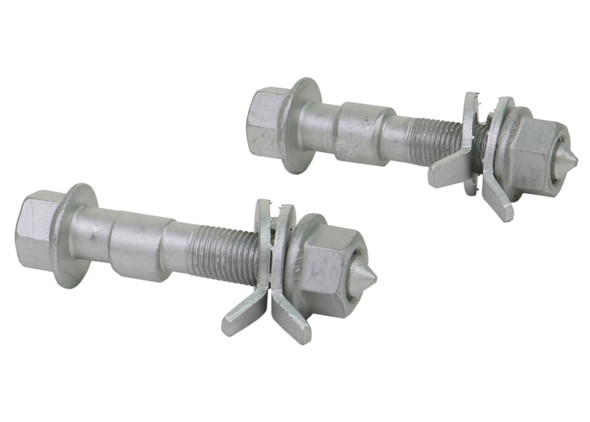
Whiteline 90-93 Toyota Celica GT-Four Turbo AWD ST185 Front Camber adj bolt kit-17mm - KCA417
Whiteline
$52.88How much camber adjustment can I get with these kits?Whiteline WL Camber Adj Kits provide a generous adjustment range of up to plus or minus 0.75 degrees for precise wheel alignment.Are these camber...$52.88 -
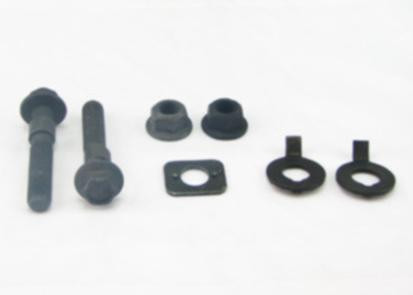
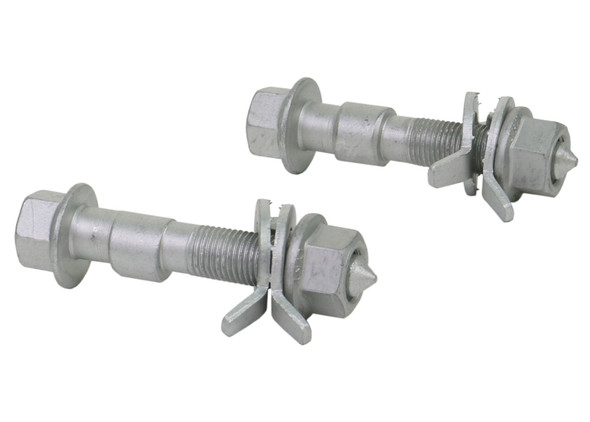
Whiteline 01-05 Honda Civic / 02-06 Acura RSX Type S / 12+ Subaru BRZ Front Camber Adj Bolt Kit-16m - KCA416
Whiteline
$52.88What are camber kits?Camber kits are suspension components that allow for precise adjustment of wheel alignment angles, enhancing vehicle handling and tire wear for your specific application.Can I...$52.88 -
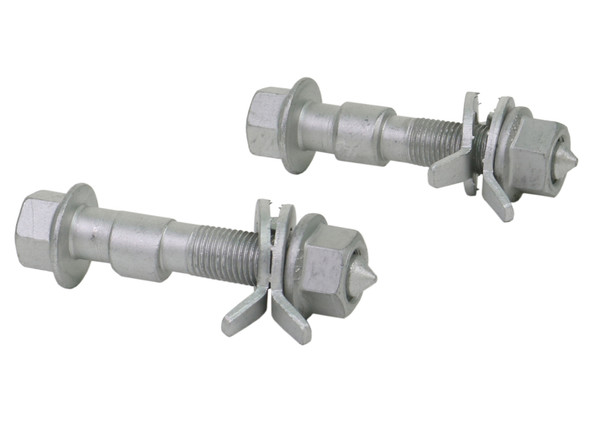
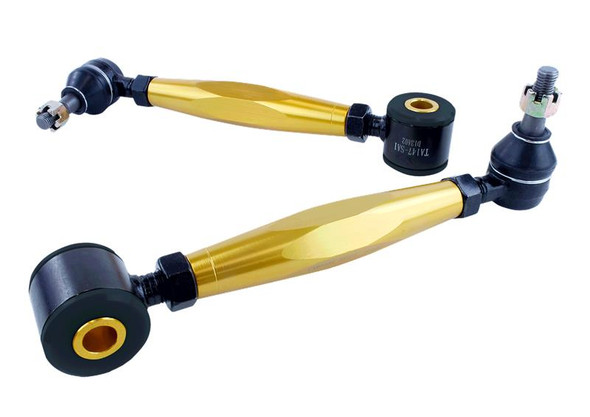
Whiteline 90-93 Toyota Celica GT-Four Turbo AWD ST185 Rear / 00-05 Toyota Celica Front / 91-99 Toyot - KCA415
Whiteline
$52.88What is the largest adjustment range offered by the WL Camber Adj Kits?The WL Camber Adj Kits deliver the largest adjustment range of up to plus or minus 0.75 degrees for optimal camber alignment.How...$52.88
Camber kits are precision alignment components that restore or dial in wheel angle after suspension modifications, correcting geometry that factory arms cannot achieve and directly affecting tire contact patch, handling balance, and wear rates. Motor Sport Mayhem stocks 236 camber kits across 109 brands — from bolt-in correction hardware under $50 to full adjustable arm systems built for competition — covering street, track, and off-road applications.
Our Top Picks for Camber Kits
Every product below was selected by our performance specialists based on engineering quality, real-world alignment range, and proven results across street and competition builds.
AEM IND Strut Bars
AEM Induction | $346.99
Strut tower bracing reduces chassis flex to keep your camber alignment consistent under lateral load — a critical complement to any camber correction setup.
- Stiffens the strut mounting plane, preventing dynamic camber deviation during hard cornering
AFE Coilover Systems
aFe | $3,729.00
Single-adjustable coilover systems with integrated camber plates allow simultaneous ride height and alignment tuning in a single platform.
- Top-mount camber plate adjustment pairs directly with damper settings for a fully dialed geometry package
ALF Wireless Air Control Systems
Air Lift | $1,363.99
Wireless air management lets you adjust ride height on demand, which directly changes camber curve behavior — useful for vehicles that run aggressive static camber setups.
- Remote height adjustment compensates for load-dependent camber shift without requiring physical alignment changes
ABR Steering Racks
All Balls Racing | $209.62
A worn or sloppy steering rack introduces dynamic toe and camber error that no alignment procedure can permanently correct — a quality replacement eliminates that variable entirely.
- Tight rack tolerances are a prerequisite for stable camber alignment in any performance or off-road application
Alta Adjustable Control Arms
Alta | $339.15
Adjustable rear control arms are the most effective method of correcting camber on lowered vehicles, providing a genuine range of adjustment that fixed OEM arms cannot offer.
- Threaded adjustment allows fine-tuning camber in small increments without removing the arm from the vehicle
ANT Micro-Start Tire Inflator
Antigravity Batteries | $24.99
Maintaining correct tire pressure is inseparable from camber setup — even a well-dialed alignment loses its effectiveness when tire pressures are inconsistent across an axle.
- Compact inflator keeps tire pressure consistent at the track or trail, protecting your alignment investment
ARB BP51 Coilovers
ARB | $4,580.69
Bypass coilover systems engineered for lifted applications require a matched camber correction solution to prevent accelerated inner tire wear caused by increased positive camber from the lift.
- Purpose-built for lifted geometry where camber deviation is greatest and correction is most critical
Artec Coil Buckets
Artec Industries | $351.99
Frame-level coil mount fabrication establishes the foundation geometry from which all downstream camber and caster settings derive — getting this right prevents compounding alignment errors.
- Precision-welded mounting positions preserve intended suspension geometry angles through the full range of articulation
AST 5100 Series Coilovers
AST | $4,554.00
Competition-grade coilovers with integrated camber top mounts give serious track drivers the ability to set negative camber precisely and repeatably between events.
- Race-spec upper mounts provide camber adjustment ranges that exceed what conventional bolt-in kits can deliver
AWE Chassis Bars
AWE Tuning | $435.00
Drivetrain and chassis stabilizers reduce subframe and powertrain movement that can induce dynamic camber and toe changes under hard acceleration and braking.
- Polyurethane-bushed stabilizers hold subframe position so your static alignment numbers translate accurately to dynamic behavior
How to Choose the Right Camber Kit
The single most important distinction in this category is the difference between camber correction hardware — bolts, eccentric washers, and shims — and true adjustable geometry components like adjustable control arms, camber plates, and knuckle relocation brackets. Correction hardware is limited in range and works by exploiting factory slop in existing mounting holes; it typically delivers 1–2 degrees of adjustment at most and is adequate only for mild street lowering. Adjustable arms and plates use threaded rod ends or slotted mounting points engineered specifically for a defined adjustment range, and those are the only appropriate choice once you exceed 1.5 inches of ride height change, run dedicated track tires, or are dialing in a competition alignment.
Key Specifications
Adjustment range is the first specification to evaluate. Most bolt-in camber bolts offer ±1.0 to ±1.5 degrees of correction. Adjustable control arms typically provide ±2.0 to ±4.0 degrees depending on arm length and design. Camber plates for strut-based suspensions commonly offer 2–4 degrees of negative camber adjustment from center. If your intended alignment target falls outside the kit's rated range, no amount of installation care will get you there — verify the range against your target before purchasing.
Material and joint quality separate budget correction hardware from professional-grade components. Quality adjustable arms use chromoly or 6061 billet aluminum construction with Heim joints or spherical rod ends rather than rubber bushings. Spherical rod ends maintain precise geometry through suspension travel and do not deflect under load the way rubber-bushed OEM arms do — critical for track use where dynamic alignment accuracy is as important as static alignment accuracy. For street applications, polyurethane-bushed adjustable arms offer an acceptable middle ground between the harshness of spherical joints and the compliance of rubber.
Thread quality and locking mechanisms determine long-term reliability. Look for fine-thread adjustment with a positive locking collar or jam nut arrangement. Coarse-thread adjusters are prone to walking under vibration; fine-thread designs hold their set position across tens of thousands of road miles or multiple track sessions without re-checking. Stainless or zinc-coated hardware on the adjustment threads prevents seizing, which is the most common failure mode that makes future re-adjustment impossible without destroying the component.
For lifted off-road applications, the geometry correction required is fundamentally different from a lowered street car. A significant lift increases positive camber by pushing the lower ball joint outward; the correction requires either a cam bolt in the lower control arm mount, a true adjustable lower arm, or a differential-thickness leveling spacer that addresses caster simultaneously. Addressing camber alone on a lifted vehicle without correcting the associated caster change will produce a vehicle that pulls under braking and wanders at highway speeds. Always treat camber and caster as a system when correcting for lift.
Camber Adjustment Range by Application Type
| Application | Typical Ride Height Change | Recommended Camber Range | Appropriate Kit Type |
|---|---|---|---|
| Mild street lowering | 0.5"–1.0" | 0° to -1.5° | Camber bolts / eccentric washers |
| Aggressive street lowering | 1.0"–2.5" | -1.5° to -2.5° | Adjustable control arms or camber plates |
| Street / track dual use | 1.0"–2.0" | -2.0° to -3.5° | Adjustable arms + camber plates (coilover) |
| Dedicated track / autocross | 1.5"–3.0" | -2.5° to -4.5° | Adjustable arms + competition camber plates |
| Moderate lift (off-road) | 2.0"–3.5" | 0° to +0.5° (correction back to spec) | Cam bolts + adjustable UCA |
| Aggressive lift (off-road) | 4.0"–6.0"+ | Correct to 0° ± 0.3° | Full adjustable upper/lower control arms |
Price Guide
Entry ($1.14–$200): Camber bolts, eccentric bolt kits, and shim-style correction hardware live here — appropriate for stock-height or mildly lowered daily drivers where the factory mounting point geometry still gets you close to spec. Quality varies significantly; look for hardened steel construction and a proper lock nut system. These are not appropriate for track use or significant ride height changes.
Mid-range ($200–$1,000): This is where most performance enthusiasts and serious street drivers find their solution — adjustable control arms, quality camber plates, and complete geometry correction kits with genuine adjustment range. At this price point you get proper rod-end or spherical joint construction, a meaningful degree of adjustability, and hardware that will survive repeated alignment changes without failing. The overwhelming majority of builds, including dedicated autocross and light track cars, are well served at this level.
Premium ($1,000–$13,544): Competition-spec adjustable suspension systems with integrated camber adjustment, full coilover platforms with race-grade camber plates, and complete front or rear geometry packages for purpose-built track and off-road vehicles. At this level you are paying for precision-machined components with certified material specs, extended adjustment ranges beyond what the mid-tier offers, and the ability to make repeatable, documented alignment changes between sessions. Weekend track warriors and club racers with specific alignment targets will see real lap time benefits; street-only builds will not.
Who Is This For?
Camber kits serve a wide spectrum — from the daily driver correcting tire wear after a spring swap to the competition driver chasing tenths with a custom alignment — and the usage data across our 236-product catalog reflects that range clearly.
Racing Competition — 8.1/10
This category scores highest for racing competition because precise, repeatable wheel geometry is one of the few tuning variables available to a driver and engineer that costs nothing in lap time once dialed in. Dedicated race builds routinely target -3° to -4.5° of negative camber at the front axle to maximize contact patch under lateral load, angles that are impossible to achieve without purpose-built adjustable components. The 128 competition-rated products in our catalog reflect genuine demand from drivers who treat alignment as a performance variable, not just a maintenance item.
Track / Autocross — 8.0/10
Autocross and track day drivers represent the largest technical use case for adjustable camber hardware outside of full racing, and the 8.0/10 score across 132 products reflects how central geometry tuning is to lap time at this level. A well-set negative camber figure reduces understeer, sharpens turn-in response, and distributes cornering load more evenly across the tire contact patch — all measurable in cone counts and lap timers. Camber plates combined with adjustable arms give autocross competitors the ability to run more aggressive settings than street driving permits and reset to a legal street alignment for the drive home.
Street Performance — 7.7/10
Street performance builds score 7.7/10 across 192 products, making this the largest single use case by product count in the catalog — which accurately reflects that most camber kits are bought by enthusiasts correcting geometry after lowering springs or coilovers rather than by dedicated racers. A lowered street car running out-of-spec positive camber will destroy the outer edges of its tires within 10,000–15,000 miles; correcting to a mild negative figure of -0.5° to -1.5° simultaneously eliminates the wear issue and improves steering response. At this use level, adjustable arms or camber bolts provide a straightforward cost-effective fix.
Weekend Off-Roading — 7.7/10
Off-road applications tie street performance at 7.7/10 across 85 products, reflecting a different but equally important geometry problem: lifts create positive camber deviation that causes rapid inner tire wear on-road and reduces stability on-trail. Correcting camber after a lift is not optional for any vehicle driven regularly on pavement — it is a maintenance requirement that protects tire investment and preserves steering feel. Adjustable upper control arms are the standard solution for lifted independent suspension platforms, while cam bolts handle correction on solid axle applications where the geometry deviation is less severe.
Daily Driving Comfort — 6.2/10
Daily driving comfort scores a moderate 6.2/10 across 162 products, which accurately captures the tradeoff: camber correction for a daily driver is necessary after suspension modifications but is not inherently a comfort upgrade. Rubber-bushed adjustable arms and OEM-style camber correction hardware maintain acceptable NVH levels for daily use, while spherical-jointed competition arms introduce additional road noise and harshness. If daily comfort is the primary concern, the selection of joint type within the camber kit matters as much as the adjustment range.
Trusted Camber Kit Brands We Carry
The brands that dominate this category have earned their position through engineering consistency and real-world validation across thousands of alignment setups. Whiteline has built its reputation specifically on geometry correction hardware — their eccentric bolt kits and adjustable arms cover an exceptionally broad range of platforms with well-documented adjustment specifications. Eibach brings OEM-tier engineering tolerances to adjustable geometry components, backed by race program validation across multiple series. H&R's suspension geometry expertise translates directly into camber correction products engineered to work in conjunction with their spring and coilover systems. Superpro approaches the category from a bushing and compliance angle, offering geometry-correcting arms that use their proprietary polyurethane compounds to balance adjustability with street-appropriate NVH. Energy Suspension rounds out the mid-range with accessible bushing-based geometry components that bring measurable alignment improvement at entry-level price points, while KONI's alignment-compatible strut and shock platforms are engineered with defined camber plate compatibility for their performance product lines.
Frequently Asked Questions
Are aftermarket control arms worth it for camber correction?
For any vehicle that has been lowered more than one inch or lifted more than two inches, aftermarket adjustable control arms are worth the investment over bolt-in camber correction hardware. Factory control arms have a fixed length and mounting geometry that places the wheel at a specific angle only at stock ride height — deviating from that height introduces camber error that factory arms cannot correct. Adjustable arms with threaded rod ends or slotted mounting points allow you to bring camber back to spec and then fine-tune beyond that for performance. The cost difference between camber bolts and quality adjustable arms is typically recovered within one set of tires by eliminating accelerated inner or outer edge wear.
Are aftermarket control arms as good as OEM?
Quality aftermarket adjustable control arms built from chromoly or billet aluminum with proper rod ends are not just as good as OEM — they are geometrically superior for any modified ride height because they do what OEM arms are physically incapable of doing: adjusting. Where OEM arms typically have an advantage is in NVH compliance, since factory rubber bushings absorb more road noise and minor vibration than aftermarket spherical joints. For daily drivers, polyurethane-bushed aftermarket arms split the difference well. For track use, the precision and rigidity of spherical-jointed aftermarket arms is the correct engineering choice, and no OEM component delivers equivalent alignment accuracy under dynamic cornering loads.
Are adjustable drop links worth it for camber and alignment work?
Adjustable drop links are specifically a sway bar end link solution rather than a direct camber correction component, but they are worth including in any suspension geometry overhaul because incorrect drop link length causes the sway bar to preload one side of the suspension at ride height — which introduces an asymmetric load that works against your alignment settings. After lowering, standard drop links are often too long and bind the bar; adjustable units restore the correct bar angle and neutral preload. For vehicles running lowering springs or coilovers alongside camber correction hardware, adjustable drop links complete the geometry package and prevent a common overlooked source of handling inconsistency.
Are aftermarket bump stops worth it alongside camber kits?
Aftermarket bump stops matter to camber work because they define the limit of suspension travel — and at full bump, your camber angle will reach its most extreme value in the curve. If the vehicle contacts a deteriorated or incorrectly sized bump stop during aggressive cornering or over a compression, it alters the effective motion ratio of the suspension and can temporarily spike camber to a value far outside your alignment target. Progressive-rate aftermarket bump stops extend the controlled travel range, soften the transition at the limit, and ensure the camber curve stays predictable through the full stroke. On lowered cars especially, where the suspension is already operating closer to bump, this interaction is not theoretical — it occurs regularly under hard use.
Are aftermarket lower control arms good for maintaining camber under load?
Aftermarket lower control arms are one of the highest-leverage geometry investments available precisely because the lower arm establishes the pivot point that determines where your wheel sits in the camber arc at every point in suspension travel, not just at static ride height. A stock rubber-bushed lower arm deflects under lateral cornering load, causing the wheel to temporarily adopt a different camber angle than your static alignment target — this is called compliance camber and it works against you by reducing the contact patch when you need it most. A quality aftermarket lower arm with a solid or spherical pivot bushing eliminates that deflection, making your static alignment numbers translate accurately to dynamic handling. For track and performance street applications, this is a more technically meaningful upgrade than simply adjusting existing geometry with camber bolts alone.
Building something specific? Our performance specialists can help you select the right Camber Kits for your application — street, track, or full race build.