
Alignment Kits
- Product
- Qty in Cart
- Quantity
- Price
- Subtotal
-
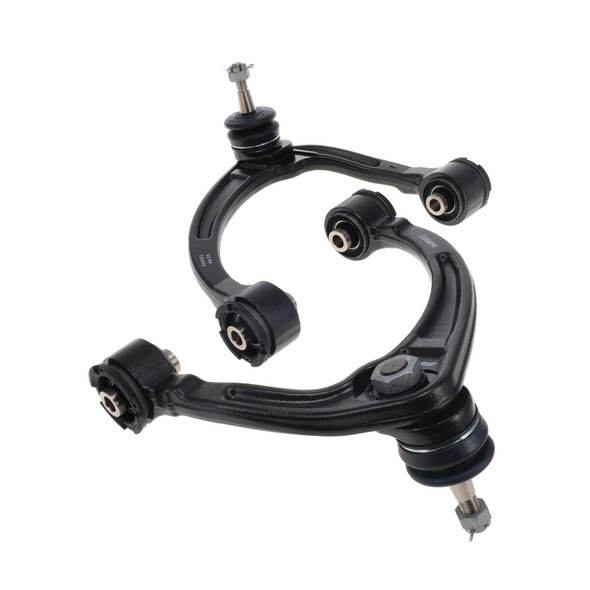
SPC Performance GM Colorado/Canyon Front Upper Adj. Control Arms (PR) - 35790
SPC Performance
$849.96Will the SPC Performance SPC Adjustable Arms fit my 2015-2022 Chevrolet Colorado or GMC Canyon?Yes, these SPC Adjustable Arms are engineered for a direct bolt-on fitment on 2015-2022 Chevrolet Colorado and GMC Canyon models.How difficult is the...$849.96
Alignment kits are the precision hardware that corrects, adjusts, or expands the factory suspension geometry range — covering camber, caster, and toe — to restore proper handling after a lift or drop, or to dial in aggressive corner-entry angles for track use. Motor Sport Mayhem stocks 88 alignment kit products across 109 brands, priced from $1.14 to $13,544.00, so whether you're correcting camber on a lowered street car or dialing in race-spec geometry, the right solution is in stock and ships fast.
Our Top Picks for Alignment Kits
These products were hand-selected by our engineering team based on proven performance, real-world fitment reliability, and the best value across a range of builds and budgets.
AEM IND Strut Bars
AEM Induction | $346.99
A strut tower brace that ties the front suspension mounting points together to reduce chassis flex and maintain consistent alignment geometry under hard cornering loads.
- Reduces front-end flex that causes dynamic toe and camber shift during aggressive driving
AFE Coilover Systems
aFe | $3,729.00
A single-adjustable coilover system engineered for street and track duty with ride height adjustment that directly enables proper alignment correction after lowering.
- Ride height adjustability allows the suspension to be set to the geometry window where alignment specs are achievable
ALF Wireless Air Control Systems
Air Lift | $1,363.99
A wireless air management system that gives precise, on-the-fly ride height control — critical for maintaining alignment-correct ride heights across varying load conditions.
- Consistent air pressure control keeps suspension geometry within the alignment target range regardless of load
ABR Steering Racks
All Balls Racing | $209.62
A direct-replacement steering rack built to tighter tolerances than OEM, eliminating the worn-in slop that corrupts toe settings and causes unpredictable steering response.
- Worn or loose steering racks make holding a precise toe alignment impossible — replacement is a foundational alignment fix
PA Alta Adjustable Control Arms
Alta | $339.15
Adjustable rear control arms that restore and expand camber and toe adjustment range beyond the factory spec — essential when ride height changes take geometry out of the OEM alignment window.
- Adjustable pivot geometry means you can dial in exact rear alignment angles rather than accepting whatever the factory eccentric bolts allow
ANT Micro-Start Tire Inflator
Antigravity Batteries | $24.99
A compact, portable tire inflator that ensures correct tire pressure is set and maintained — because alignment geometry is only as accurate as the tire pressure it was set at.
- Tire pressure directly affects ride height and contact patch shape, both of which influence real-world alignment behavior
ARB BP51 Coilovers
ARB | $4,580.69
A remote-reservoir bypass coilover system purpose-built for lifted applications where maintaining correct suspension geometry and caster angle under travel is the primary engineering goal.
- Engineered with specific valving and travel geometry to keep caster and camber curves predictable through the full suspension stroke
ART Coil Buckets
Artec Industries | $351.99
Fabricated steel coil spring relocation buckets that reposition the spring mounting point to correct geometry and droop travel when running significant suspension lifts.
- Repositioning coil buckets is a foundational step to restoring correct caster and axle centerline geometry on lifted solid-axle builds
AST 5100 Series Coilovers
AST | $4,554.00
A competition-grade coilover platform with ride height and damping adjustability that delivers the precise geometry control required for alignment-sensitive track and racing applications.
- Competition coilover platforms enable corner-by-corner alignment fine-tuning that fixed OEM geometry hardware simply cannot deliver
AWE Chassis Bars
AWE Tuning | $435.00
A drivetrain stabilizer that uses a polyurethane mount to control powertrain movement and reduce the dynamic load shifts that throw front suspension alignment out under hard acceleration.
- Reducing powertrain torque steer and movement keeps the front geometry stable and preserves the alignment set at the shop
How to Choose the Right Alignment Kits
The difference between a functional alignment kit and one that costs you tire wear, handling instability, and a return trip to the alignment rack comes down to three things: adjustment range, material quality, and pivot precision. Cheap camber bolts made from soft mild steel will deflect under cornering load, making your alignment setting meaningless at the limit. Quality alignment hardware uses aircraft-grade or chromoly steel, precision-machined pivot bores held to ±0.001" tolerance or better, and hardware that clamps without binding — so the setting you dial in on the alignment rack is the setting your suspension actually runs.
Key Specifications
Adjustment range is the first spec to evaluate. OEM camber bolts typically offer ±1.5° of correction — adequate for a mild drop but insufficient for aggressive lowering or lift scenarios. Quality aftermarket alignment kits extend that range to ±3.0° or beyond on camber, and purpose-built control arms can provide adjustable caster correction of 2–4° on top of that. If your modification pushed geometry outside the OEM window, confirm the kit's adjustment range covers the delta before buying.
Material and bushing construction determines durability and on-track consistency. Forged steel or billet aluminum arms outperform cast units under cyclical fatigue loading. Bushing material matters just as much: OEM-style rubber bushings isolate NVH but deflect under load, causing alignment shift; polyurethane bushings reduce deflection significantly; spherical rod ends eliminate deflection entirely at the cost of increased NVH. Match the bushing specification to the application — sphericals are the correct choice for track and race builds, while polyurethane works well for performance street use. For bushing replacement as part of your alignment correction work, our bushing kits category has direct options.
For suspension lift applications, alignment correction is not optional — it's structural. A lifted solid-axle or independent front suspension changes the caster angle, often severely, which causes steering wheel returnability loss, bump steer, and accelerated tire wear. Caster correction brackets, cam bolts, and adjustable upper control arms are the standard solution, and the correct choice depends entirely on how much lift is in play and what the OEM caster angle was to begin with.
On lowered street and track cars, camber correction is the most common need. As ride height drops, the upper strut mount geometry pulls the top of the wheel inward, generating negative camber beyond the spec range. Camber plates, adjustable top hats, and eccentric-bore alignment bolts all address this, but only camber plates and adjustable arms provide a repeatable, lockable setting — critical if you're having the car aligned professionally. Pair your alignment hardware work with properly set coilovers or lowering springs to ensure ride height and geometry are set simultaneously.
Alignment Correction Range by Modification Level
| Modification Level | Typical Camber Deviation | Typical Caster Deviation | Recommended Hardware |
|---|---|---|---|
| Stock / Minor (0–1" drop or lift) | 0° to –1.0° | 0° to –0.5° | OEM-spec bolts or minor eccentric adjustment |
| Mild (1–2" drop or 1–3" lift) | –1.0° to –2.5° | –0.5° to –1.5° | Camber bolts, adjustable end links, cam bolts |
| Moderate (2–3" drop or 3–5" lift) | –2.5° to –4.0° | –1.5° to –3.0° | Adjustable upper control arms, camber plates, caster correction brackets |
| Aggressive (3"+ drop or 5"+ lift) | –4.0° to –6.0°+ | –3.0° to –5.0°+ | Full adjustable control arm sets, geometry correction brackets, custom pivots |
| Race / Competition (corner-weight setup) | –2.0° to –5.0° (intentional) | +4.0° to +8.0° (intentional) | Full-adjustable arms with spherical bearings, camber plates, bumpsteer correction |
| Off-Road Extreme (6"+ lift, long-travel) | Varies by arm length | –3.0° to –6.0°+ | Long-travel control arms, diff drop, track bar relocation, caster wedge kits |
Price Guide
Entry ($1.14–$213): Covers individual camber bolts, eccentric cam bolt kits, alignment shims, and basic toe correction hardware — legitimate, useful tools for minor adjustments after a modest suspension change, but limited in adjustment range and not suitable for aggressive modifications or track alignment work.
Mid-range ($213–$1,500): Where most enthusiasts land — this budget covers quality adjustable control arms, full camber plate sets, polyurethane-bushed alignment arms, and complete front or rear alignment correction kits with meaningful adjustment range and the material quality to hold settings under load.
Premium ($1,500–$13,544.00): Full coilover-integrated alignment systems, competition-spec adjustable arm sets with spherical bearings, complete long-travel geometry correction packages, and air-ride management systems — justified for serious track builds, dedicated race cars, show vehicles requiring millimeter-precise geometry, and lifted expedition rigs where geometry precision is a safety requirement.
Who Is This For?
Alignment kits serve a broader range of performance builds than most people realize — from competitive circuit racers chasing hundredths of a second to weekend off-roaders correcting caster after a lift, the geometry hardware needs are different but the precision requirements are equally real.
Racing Competition — 8.1/10
Alignment kits score highest for racing competition because geometry is a primary performance variable at this level — not an afterthought. Race teams use full-adjustable control arms with spherical rod ends to set exact camber, caster, and toe angles for each track configuration, and they adjust between sessions based on tire wear data. At 8.1/10, this is the use case that demands the most from alignment hardware in terms of precision, repeatability, and resistance to deflection under load.
Track / Autocross — 8.0/10
Track and autocross builds score nearly as high as full racing at 8.0/10 because the physics are identical — negative camber keeps the contact patch flat through corners, caster provides steering feel and return, and toe settings balance stability with turn-in response. Most track-day and autocross cars run –2.0° to –3.5° front camber and slightly negative or zero rear camber, targets that typically require dedicated alignment hardware beyond what factory eccentrics can reach. Pairing alignment hardware with quality shocks and struts maximizes the investment.
Street Performance — 7.7/10
Street performance applications score 7.7/10 because a lowered, stiffened street car that hasn't had alignment geometry corrected will eat tires and handle unpredictably — defeating the purpose of the performance investment. Camber correction arms, adjustable rear toe links, and camber plates restore the geometry that lowering springs and coilovers disturb, turning a car that pulls and feathers tires into one that tracks straight and corners with intent.
Weekend Off-Roading — 7.7/10
Off-road applications match street performance at 7.7/10 for different reasons — here, alignment correction after lifting is mandatory rather than performance-focused. Running a lifted 4x4 without correcting caster causes death wobble at highway speeds, accelerated ball joint wear, and poor steering return. Caster correction upper control arms, track bar relocation brackets, and geometry correction kits are safety-critical components on any lift above 2.5 inches.
Overlanding / Expedition — 7.2/10
Overlanding builds score 7.2/10 because the load conditions are more demanding than typical weekend use — heavy gear, long-distance travel, and mixed terrain put sustained stress on geometry hardware in ways that OEM components and cheap correction parts aren't designed to handle. Expedition-spec alignment hardware needs to maintain its settings under continuous heavy load and vibration, which puts a premium on material quality, clamp force, and bushing durability over simple price-per-degree of adjustment.
Trusted Alignment Kits Brands We Carry
The brands that dominate this category earned their position through engineering depth, not marketing — and the field is competitive. Whiteline has built its reputation on geometry correction with an extensive range of adjustable arms and correction kits designed specifically for the alignment consequences of lowering and lifting. Eibach integrates alignment correction into its suspension systems, ensuring their geometry hardware is developed alongside their spring and damper products for a matched solution. H&R brings European motorsport engineering to alignment hardware, with components developed and validated on race circuits before reaching the street. Superpro specializes in polyurethane-bushed replacement and correction arms that thread the needle between OEM comfort and performance rigidity, making them a go-to for street-biased builds. For extreme off-road and competition applications, ARB and ICON bring purpose-built geometry correction hardware developed through actual race and expedition programs where failure consequences are measured in more than tire wear. Energy Suspension's bushings and alignment components round out the category with proven durability at accessible price points for builds that need reliable correction without spherical-bearing complexity.
Frequently Asked Questions
Are adjustable control arms actually worth it over OEM or fixed aftermarket arms?
For any build where ride height has been changed or where you're setting up a car for track use, adjustable control arms are absolutely worth the investment over fixed alternatives. Fixed arms — whether OEM or aftermarket replacements — lock you into a single geometry position, which may not be achievable or optimal after a suspension modification. Adjustable arms let you dial in exact camber and caster angles, lock them in, and return to the same setting after maintenance without relying on a shop's alignment machine to re-establish baseline. The cost premium over fixed arms is recovered in tire life and setup repeatability within a few alignment sessions.
Are aftermarket control arms as good as OEM, or do they sacrifice quality for adjustability?
Quality aftermarket control arms from reputable manufacturers are not only equal to OEM — in most performance applications they're superior in ways that matter for the intended use. OEM arms are engineered for mass-production tolerances and NVH compliance over a 10-year service life; aftermarket performance arms are typically made from forged or CNC-machined chromoly or 6061 aluminum with tighter pivot bore tolerances and load ratings sized for performance use. The caveat is that budget-tier aftermarket arms from unknown manufacturers can absolutely be inferior to OEM — material quality, weld quality, and bushing specification are where corners get cut, and those shortcuts show up as deflection, wear, and alignment drift under load.
Are adjustable drop links worth the price premium over OEM units?
Yes, when you've changed ride height — and especially when you've added or upgraded a sway bar. OEM drop links are fixed-length and engineered to position the sway bar at the correct working angle at stock ride height; lower or raise the car and the bar operates at an angle that changes its effective spring rate and introduces bind. Adjustable drop links restore the sway bar to its correct perpendicular working angle, ensuring the bar's rated stiffness is actually what the suspension sees. For a track car or aggressively lowered street build, the alignment and handling consistency gains from correct drop link length are meaningful enough to justify the cost difference over fixed OEM units.
Are adjustable sway bars worth it for street and track use?
Adjustable sway bars are one of the highest-return setup tools available because they let you tune understeer and oversteer balance without changing springs, dampers, or alignment — directly at the car. On a street car, a stiffer front bar and softer rear bar increases understeer for predictable daily driving; reverse that for a track car with a planted rear and you sharpen front turn-in response. Most factory sway bars are fixed-rate compromises; adjustable aftermarket units with multiple end-link attachment points give you 2–4 effective spring rate positions per end, which translates into a wide tuning envelope. The bar only delivers its intended benefit when paired with correctly set drop link geometry, which brings the alignment kit selection back into the equation.
Are aftermarket bump stops worth installing, and do they affect alignment?
Aftermarket bump stops are worth it specifically because they control the end of wheel travel in a way that protects geometry hardware from shock loading — and yes, they have a direct relationship with alignment behavior. Bottoming out on OEM rubber bump stops causes an abrupt suspension lockup that generates severe instantaneous camber and toe changes, stresses control arm bushings, and can shift pressed-in alignment components over time. Progressive-rate foam or hydraulic bump stops extend the contact zone, ramping up resistance gradually rather than creating a hard stop, which keeps the suspension operating in its designed geometry range even at full compression. For track use and off-road applications where suspension travel is regularly maximized, upgraded bump stops are a prerequisite for maintaining the alignment geometry you paid to set correctly.
Building something specific? Our performance specialists can help you select the right Alignment Kits for your application — street, track, or full race build.