
Air Suspension Kits
- Product
- Qty in Cart
- Quantity
- Price
- Subtotal
-
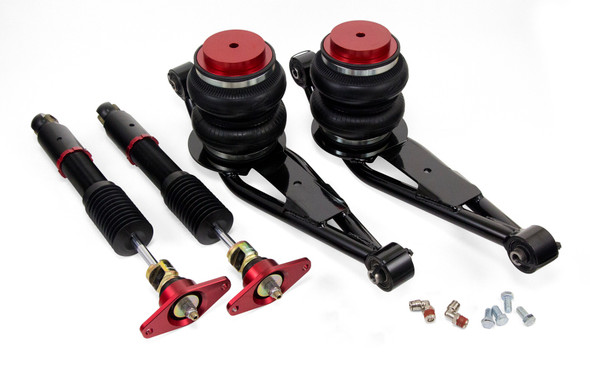
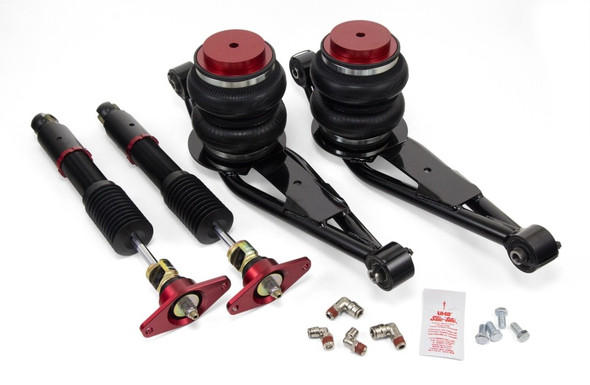
Air Lift Performance 11-16 Ford Focus / 10-13 Mazda 3 Rear Kit - 78643
Air Lift
$1,517.99What is the maximum drop from stock ride height?ALF Performance Rear Kits achieve a maximum drop of five point two inch, allowing for an aggressive stance and customizable ride height.Can I install...$1,517.99 -


Air Lift Performance Front Kit for 08-17 Nissan GTR R35 - 78518
Air Lift
$1,664.99What are the primary benefits of the ALF Performance Front Kits?ALF Performance Front Kits deliver unparalleled grip and razor-sharp handling with a compact, high-performance air spring and 30 levels...$1,664.99
Air suspension kits replace conventional steel springs with pressurized air bags and management systems, allowing real-time ride height adjustment, load leveling, and tunable spring rates without physically swapping components. Motor Sport Mayhem stocks 259 air suspension kits across 109 brands — from entry-level compressor bundles to full competition-grade systems — priced from $1.14 to $13,544.
Our Top Picks for Air Suspension Kits
Each of these was hand-selected based on verified performance data, build quality, and real-world results across street, track, and off-road applications.
AEM IND Strut Bars
AEM Induction | $346.99
Triangulates the strut towers to reduce chassis flex under high lateral load, improving suspension geometry consistency when air pressure changes ride height.
- Laser-cut and CNC-formed steel construction maintains tower spacing under sustained cornering stress
AFE Coilover Systems
aFe | $3,729.00
Single-adjustable damping matched to a lightweight aluminum body gives you repeatable, tunable damping for drivers transitioning between street and track use.
- Inverted monotube design reduces unsprung weight while improving heat dissipation during extended sessions
ALF Wireless Air Control Systems
Air Lift | $1,363.99
Wireless Bluetooth management with an integrated tank and compressor eliminates cab-through wiring runs while giving you smartphone-controlled pressure adjustments on demand.
- EZ-Mount bracket system significantly reduces install complexity versus hard-plumbed alternatives
ABR Steering Racks
All Balls Racing | $209.62
A precision-rebuild steering rack is critical on lifted air suspension setups where increased suspension travel amplifies bumpsteer and tie rod angle errors.
- All-inclusive bearing and seal kit ensures full rack rebuild without sourcing individual components separately
PA Alta Adjustable Control Arms
Alta | $339.15
Adjustable rear control arms correct camber and toe alignment errors introduced when air suspension lowers a vehicle beyond the factory geometry envelope.
- Spherical rod ends replace rubber bushings to eliminate deflection-induced alignment drift under load
ANT Micro-Start Tire Inflator
Antigravity Batteries | $24.99
A compact portable inflator is an essential companion for air suspension systems when the onboard compressor is off or the vehicle is parked for extended periods.
- Designed to integrate with Antigravity jump-start packs, adding utility without a separate power source
ARB BP51 Coilovers
ARB | $4,580.69
Bypass-style internals with independently tunable compression zones make these the benchmark for light truck builds that demand compliant articulation at low speeds and controlled damping at high speeds.
- 2.5-inch bore with remote reservoir dramatically increases fluid volume for fade resistance on extended off-road runs
ART Coils / Frame Coil Buckets
Artec Industries | $351.99
Fabricated frame coil buckets relocate spring perches to support longer travel spring configurations while retaining OEM bump stop positioning for controlled droop limiting.
- 3/16-inch laser-cut steel with full-perimeter weld seams handles the torsional loads generated by aggressive flex events
AST 5100 Series Coilovers
AST | $4,554.00
Competition-grade monotube dampers with independently adjustable rebound and compression deliver the precise damping control required for timed event use where setup repeatability is non-negotiable.
- Separate high- and low-speed compression circuits allow corner-by-corner tuning without full rebuild cycles
AWE Chassis Bars
AWE Tuning | $435.00
A drivetrain stabilizer with polyurethane mounts reduces powertrain movement that becomes amplified when air suspension lowers ride height and changes drivetrain angles.
- Polyurethane durometer balances NVH suppression with the positional control rubber mounts cannot provide
How to Choose the Right Air Suspension Kit
The single biggest differentiator in air suspension quality is the air spring itself — specifically the bellow material, ply rating, and rated pressure range. Cheap single-ply rubber bellows crack under UV exposure and ozone degradation within two to three seasons; quality kits use double-ply reinforced rubber or Goodyear-spec neoprene rated to 200 PSI or higher. Beyond the bag, the compressor duty cycle and tank volume determine how quickly and reliably you can adjust ride height — undersized compressors overheat during repeated cycling, which kills seals and valves. Every other component downstream — airlines, fittings, solenoid valves, and the management controller — needs to be rated to the same operating pressure as the bag, or you'll chase leak points indefinitely.
Key Specifications
Air spring operating pressure is your primary performance lever. Street-oriented comfort systems typically operate between 25 and 80 PSI, giving a broad adjustable range without requiring heavy-duty compressors. Performance and truck applications that need load support or aggressive lowering demand springs rated to 150–200 PSI, paired with compressors that can sustain continuous operation without thermal shutdown. The rated static load capacity of the air spring — expressed in pounds at a specific pressure — must exceed the corner weight of the vehicle at maximum inflation; exceeding this ceiling fatigues the bellow material at the crimp ring, which is the most common catastrophic failure point.
Management system quality separates a reliable daily-driven air suspension from a frustrating one. Analog needle valves and manual push-button controllers work but require the driver to judge pressure by feel. Digital management systems with PSI sensors and preset ride-height memory eliminate guesswork and allow repeatable setups — critical if you're switching between a slammed show position and a functional driving position multiple times per day. Wireless Bluetooth management adds convenience but introduces a dependency on battery charge and app stability; always verify the system can operate manually if the wireless link fails.
Airline material and fitting quality is underrated and frequently the root cause of slow leaks that plague budget systems. DOT-approved nylon tubing with push-to-connect brass fittings handles street use adequately, but for vehicles that see temperature extremes or high-vibration environments, stainless braided PTFE lines with AN-threaded fittings are significantly more durable. Any compression fitting that contacts the airline OD rather than mechanically gripping the inner wall will migrate under vibration — this is the most common install error on DIY air setups. Using the correct fitting for the airline specification is not optional; it's a safety-critical system that supports vehicle weight at all times.
Tank volume and compressor output work together to set fill time and recovery rate. A 3-gallon aluminum tank with a single 480C-equivalent compressor will raise a full-size vehicle from ground to drive height in approximately 25–35 seconds under ideal conditions — acceptable for most street applications. Dual-compressor setups cut that fill time roughly in half and provide redundancy if one unit fails. For off-road applications where the system is also managing ride height over terrain in real time, a minimum 5-gallon tank with a high-output compressor is the practical baseline. Pair your air management system with reliable shocks and struts rated for the travel range your air spring allows — the damper and spring must be matched or the system will either bottom out or top out destructively.
Air Spring Pressure vs. Load Capacity Reference Guide
| Vehicle Weight Class | Recommended Operating Pressure | Minimum Spring Burst Rating | Suggested Tank Volume |
|---|---|---|---|
| Compact / Sub-2,800 lb | 20–60 PSI | 150 PSI | 1.5–2.5 gal |
| Mid-Size Sedan / 2,800–3,600 lb | 30–80 PSI | 175 PSI | 2.5–3.5 gal |
| Full-Size Car / 3,600–4,400 lb | 40–100 PSI | 200 PSI | 3.5–5.0 gal |
| Light Truck / SUV 4,400–5,800 lb | 50–120 PSI | 200 PSI | 5.0–7.0 gal |
| Heavy Truck / Tow Application 5,800–8,500 lb | 60–150 PSI | 250 PSI | 7.0–10.0 gal |
| Competition / Slammed Show Build | 5–200 PSI (full range) | 250 PSI minimum | 3.0–5.0 gal dual-compressor |
Price Guide
Entry ($1.14–$200): Individual components — fittings, airlines, inflators, and small hardware — that support an existing system or complete a partial kit build. Appropriate for upgrades, repairs, or first-time builders sourcing individual pieces rather than a complete system. Quality varies significantly in this range; stick to established brands for pressure-rated components.
Mid-Range ($200–$1,500): Complete management systems, individual air spring assemblies, and entry-level full kits land here. This is where most street and show builds start — a capable wireless management system or a full corner kit for a single axle. Build quality becomes more consistent above $500, and you'll find systems with real PSI gauges, preset memory, and durable bellow materials rather than generic OEM-replacement hardware.
Premium ($1,500–$13,544): Full four-corner kits with integrated management, dual compressors, large-format tanks, and digitally controlled solenoid manifolds. Performance suspension brands in this range engineer air systems for dynamic load management rather than just static ride height change — critical for track-capable street cars, expedition-loaded trucks, and vehicles where alignment geometry must remain consistent across the full height range. The cost is justified by engineering depth: finite-element-analyzed bracket geometry, race-proven bellow compounds, and management software with active leveling algorithms.
Who Is This For?
Air suspension kits serve an exceptionally wide range of applications — from precision-tuned competition builds to load-leveling work trucks — and the usage data across our in-stock catalog reflects that breadth clearly.
Racing Competition — 8.1/10
The highest-rated use case in our catalog isn't an accident — competition-grade air suspension allows corner weight adjustment, ride height optimization for downforce targets, and spring rate changes between sessions without physical spring swaps. At the top of the category, multi-way adjustable systems with independent high- and low-speed compression circuits deliver the precision that closed-course competition demands. Pairing air springs with matched coilovers or monotube dampers is the standard approach in this application.
Track / Autocross — 8.0/10
Track and autocross applications score nearly as high as full competition, driven by the same need for adjustable geometry and repeatable setup without the budget of a full race program. Air suspension allows a single vehicle to run a lower, stiffer setup at the track and return to a compliant street height for the drive home — eliminating the need for two separate suspension configurations. The key requirement here is that the air spring and damper work as an engineered system; mismatched components from different kits will not deliver consistent damping behavior across the ride-height range.
Street Performance — 7.7/10
Street performance represents the largest product volume in this category at 192 applicable units, and the 7.7/10 score reflects how well modern air suspension has closed the gap with traditional coilover setups for spirited daily driving. Adjustable preload through air pressure lets drivers tune understeer and oversteer balance without corner weight scales, and ride-height memory presets make the transition between comfort and performance driving seamless. The limiting factor at the street performance level is typically the management system — invest in a pressure-accurate digital controller and the rest of the system will perform proportionally better.
Weekend Off-Roading — 7.7/10
Off-road applications score identically to street performance but for entirely different reasons — the value here is in real-time ride height management over terrain and load leveling under payload. Airing up increases ground clearance on the trail; airing partially down reduces spring rate and improves tire compliance over rocky surfaces. The durability requirement is significantly higher in this application — bellow materials must resist ozone, mud, UV, and mechanical abrasion, which is why purpose-built off-road air spring kits differ materially from street-focused counterparts.
Overlanding / Expedition — 7.2/10
Overlanding applications prioritize load leveling and long-term reliability over adjustability range, scoring 7.2/10 across 72 applicable products. A heavily loaded expedition rig with a rooftop tent and gear can see a 600–900 lb increase in rear axle load over an empty configuration — air suspension corrects the resulting squat and maintains headlight aim and brake bias without permanent spring rate changes. Compressor reliability and airline durability are the critical specifications for expedition use, where a failure 200 miles from the nearest shop is a genuine problem. Complement your suspension setup with upgraded suspension geometry components to maintain alignment under full expedition load.
Trusted Air Suspension Kit Brands We Carry
The brands that dominate this category earned their positions through engineering credibility, not marketing. Air Lift is the definitive name in street and show air management — decades of bellow development and proprietary compressor technology make them the default specification for build shops. ARB brings race-proven off-road engineering from Australian Outback testing programs directly into their air-assisted damper systems. aFe has expanded from intake systems into suspension with featherweight aluminum damper bodies that set the benchmark for power-to-weight ratio in street-track coilover applications. AST and Bilstein bring OEM-supplier-grade manufacturing tolerances to aftermarket fitments — Bilstein's monotube gas pressure technology is directly derived from rally and touring car programs and is deployed in their premium street and performance lines. ICON rounds out the premium tier with billet-machined components and independently tested spring rates that are stamped on the product rather than estimated — transparency that reflects genuine engineering investment. Across all brands, the common thread is documented burst ratings, traceable material certifications, and engineering validation against real-world load cycles rather than static bench tests.
Frequently Asked Questions
Are aftermarket control arms worth it for a vehicle running air suspension?
Yes — and they become more critical, not less, when air suspension is involved. Factory control arms are designed around a fixed OEM ride height; when air suspension lowers or raises the vehicle beyond that envelope, the geometry the OEM arm was engineered for breaks down, producing camber gain curves, bumpsteer, and toe changes that the OEM calibration never accounted for. Adjustable aftermarket arms with spherical rod ends allow you to correct static alignment at any ride height in the system's range, and the elimination of rubber bushings removes the positional compliance that makes alignment readings inconsistent. For any air suspension build that operates across a significant height range — more than 2 inches — adjustable control arms are not optional if handling precision matters.
Are aftermarket control arms as good as OEM?
For street use within OEM geometry parameters, quality OEM-replacement aftermarket arms are equivalent to factory in durability and often superior in repairability — you can replace a worn spherical bearing in a quality aftermarket arm where an OEM pressed-in ball joint requires the entire arm. For performance applications, purpose-built aftermarket arms use higher-tensile tubular steel or billet aluminum that is both lighter and stronger than stamped factory steel, with documented yield strength rather than inferred OEM specs. The honest caveat is that not all aftermarket is quality aftermarket — arms from unverified offshore suppliers have failed bend tests at loads OEM arms pass without issue. Stick to brands with documented material certifications and load ratings, and the answer is clearly yes.
Are aftermarket bump stops worth upgrading on an air suspension build?
Absolutely, and this is one of the most overlooked components in a complete air suspension build. Factory bump stops are calibrated for OEM spring rates and OEM travel limits — when air suspension changes the effective spring rate or extends travel beyond the factory droop point, the OEM bump stop engages too early, too late, or with the wrong progressive rate. Aftermarket jounce bumpers engineered for extended travel use a staged progressive rate that loads gradually rather than creating an abrupt stop, which both protects the air spring bellow from over-compression and preserves handling balance in emergency maneuvers. For off-road applications with significant suspension travel, hydraulic bump stops add velocity-sensitive resistance that prevents the violent bottom-out events that can bend control arms and damage air spring mounting hardware.
Are adjustable drop links worth adding to an air suspension setup?
Adjustable drop links are directly necessary on any vehicle where air suspension changes ride height by more than approximately 1.5 inches, because the factory sway bar end link is a fixed length calibrated for one specific ride height. When the vehicle is lowered, a fixed-length drop link places the sway bar in a pre-loaded bind at rest, which creates unpredictable on-center handling and accelerates end link bushing wear; when raised, it reduces effective sway bar rate by changing the leverage angle. Adjustable drop links let you set the end link length so the sway bar sits at its neutral zero-preload position at your most frequently used ride height, restoring the intended anti-roll rate. Combine these with quality bushing kits at the sway bar mount points to eliminate the secondary compliance that undermines end link geometry corrections.
Are adjustable sway bars worth the cost on an air-suspended vehicle?
For vehicles that use air suspension across a wide performance range — from comfort street driving to track sessions — an adjustable sway bar is genuinely one of the most effective handling tools available. Stiff anti-roll rates that control body motion at the track generate excessive understeer and a harsh ride on the street; adjustable bars let you dial down the anti-roll rate for daily driving and increase it for performance use, complementing the spring rate changes your air system provides through pressure adjustment. The engineering value is in the ability to tune front-to-rear roll stiffness balance independently — shifting the balance front-biased reduces understeer, rear-biased reduces oversteer, and this can be done without changing spring rates or alignment. The cost is justified for any enthusiast who drives the same vehicle in meaningfully different contexts and wants predictable, tuned handling in each.
Building something specific? Our performance specialists can help you select the right Air Suspension Kits for your application — street, track, or full race build.