
Programmers & Chips
- Product
- Qty in Cart
- Quantity
- Price
- Subtotal
-

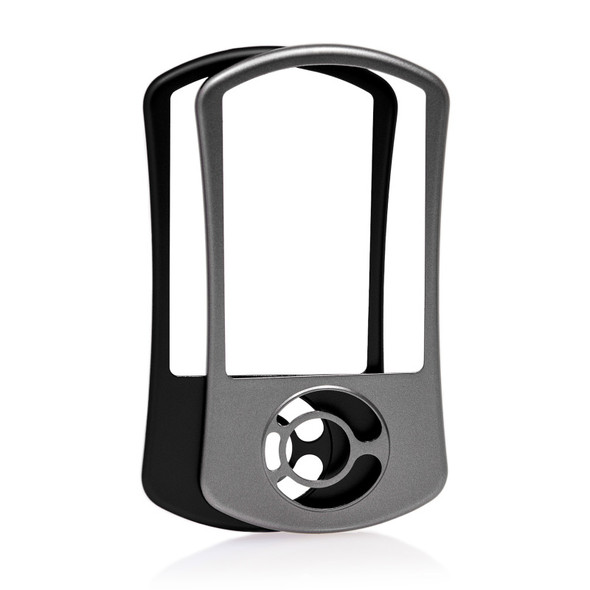
Cobb 17-19 Porsche 718 Cayman / Boxster Accessport V3 w/ PDK Flashing - AP3-POR-010-PDK
COBB
MSRP: $2,540.00$2,286.00Will this fit my Porsche?Confirm vehicle fitment before purchase; this programmer and tuner requires exact model year compatibility for optimal operation.Is this tuner difficult to...MSRP: $2,540.00$2,286.00 -
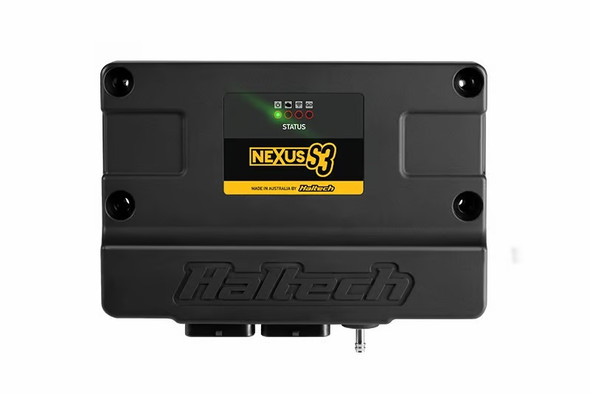
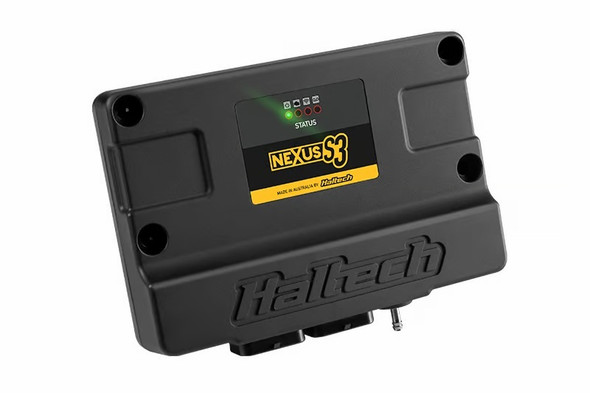
Haltech NEXUS S3 (ECU Only) - HT-213000
Haltech
$2,411.59Is the HAL NEXUS S3 ECU compatible with my specific vehicle model?Confirm fitment for your specific vehicle model to ensure optimal integration and performance with the HAL NEXUS S3 ECU.Can I install...$2,411.59 -


Haltech NEXUS S2 (ECU Only) - HT-212000
Haltech
$1,948.44Is the HAL NEXUS S2 ECU compatible with my specific vehicle model?Confirm fitment with your specific vehicle model before purchase to ensure proper integration and optimal performance of this...$1,948.44 -
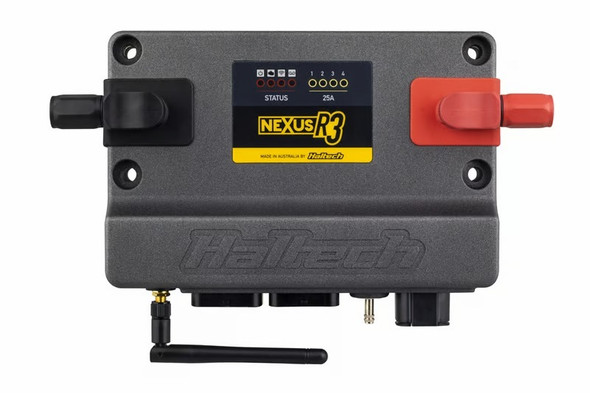
Haltech NEXUS R3 VCU - HT-193000
Haltech
$2,752.30What is the HAL NEXUS R3 VCU?The HAL NEXUS R3 VCU is an advanced engine control unit designed for unparalleled engine performance and responsiveness across a wide range of vehicle configurations.Is...$2,752.30 -

Haltech Elite 2500 Adaptor Harness ECU Kit - HT-151359
Haltech
$2,651.15Is this HAL Elite 2500 ECU compatible with my Nissan 300ZX Z32?The HAL Elite 2500 ECU Kit is specifically designed for Nissan 300ZX Z32 models with manual transmissions.How complex is the...$2,651.15 -
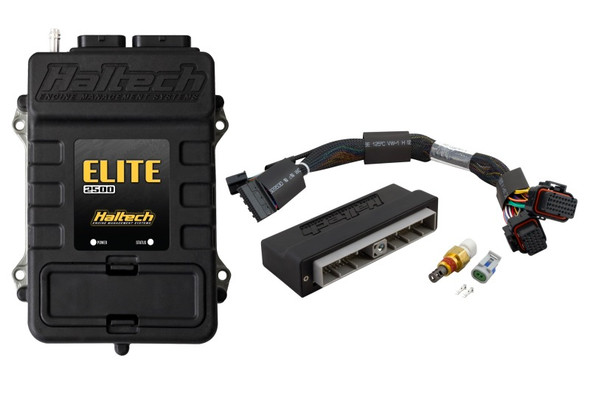
Haltech Elite 2500 Adaptor Harness ECU Kit - HT-151358
Haltech
$2,651.15Does the HAL Elite 2500 ECU & Kits fit my specific vehicle model?Confirm exact vehicle fitment for the HAL Elite 2500 ECU & Kits before purchase to ensure seamless integration and optimal performance...$2,651.15 -
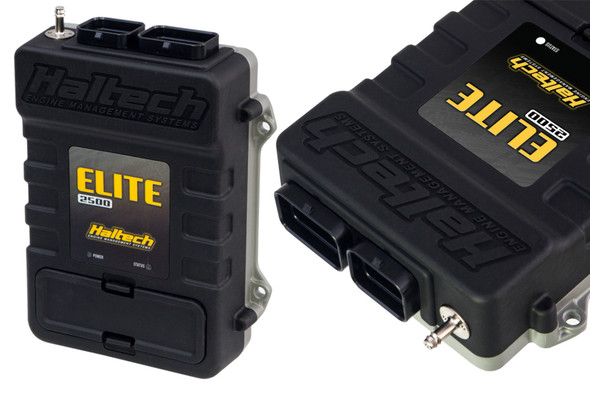
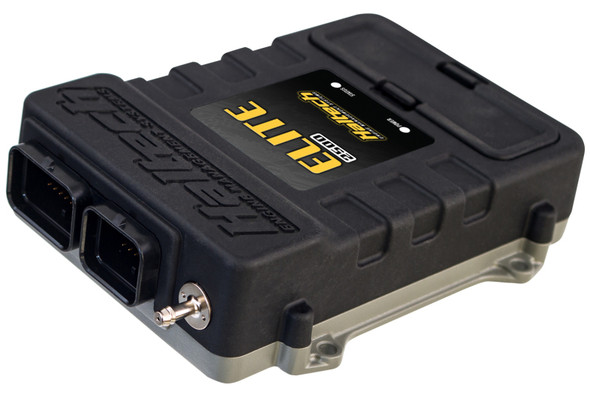
Haltech Elite 2500 Adaptor Harness ECU Kit - HT-151357
Haltech
$2,651.15Does the Elite 2500 ECU support my specific Nissan Skyline model?The HAL Elite 2500 ECU Kit is designed for seamless plug-and-play installation on Nissan Skyline R32 GTS-T/GT-R and R33/R34 GT-R...$2,651.15 -

Haltech Elite 2500 Adaptor Harness ECU Kit - HT-151331
Haltech
$2,651.15What is the installation process for the HAL Elite 2500 ECU?Professional installation is recommended for the HAL Elite 2500 ECU to ensure precise calibration and optimal performance integration.What...$2,651.15 -
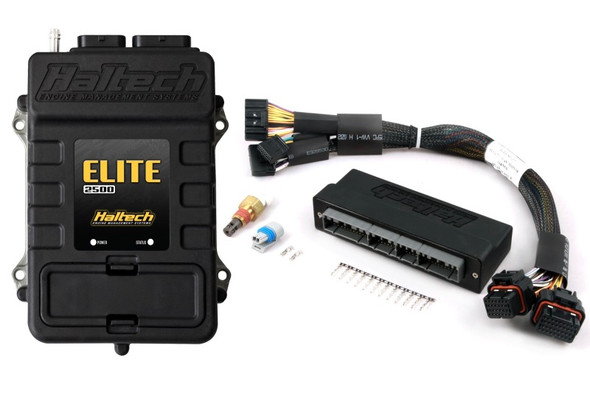
Haltech Elite 2500 Adaptor Harness ECU Kit - HT-151325
Haltech
$2,651.15What is the best way to ensure optimal performance with the Haltech Elite 2500 ECU?Achieving precise fuel and ignition control for optimal power delivery requires professional installation and...$2,651.15 -
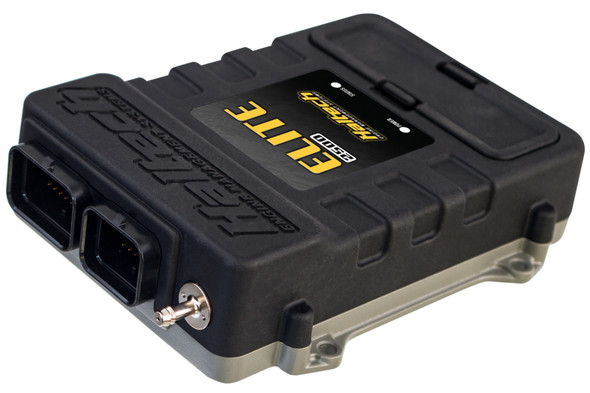

Haltech Elite 2500 Premium Universal Wire-In Harness ECU Kit - HT-151304
Haltech
$2,608.56What are the core advantages of using the HAL Elite 2500 ECU?The HAL Elite 2500 ECU unlocks maximum engine potential, achieving precise fuel and ignition control for optimal power delivery and...$2,608.56 -
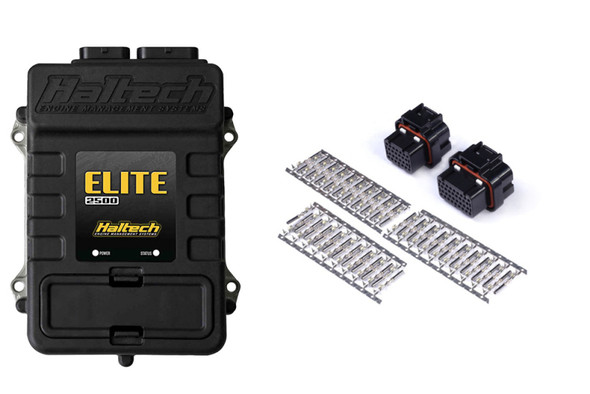
Haltech Elite 2500 ECU & Plug and Pin Set - HT-151301
Haltech
$2,222.07What is the Haltech Elite 2500 ECU?The Haltech Elite 2500 ECU is an advanced engine management system delivering unparalleled control for peak power and responsiveness across various applications.How...$2,222.07 -
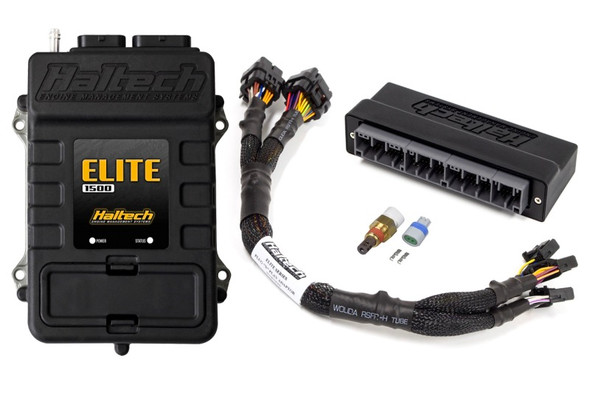
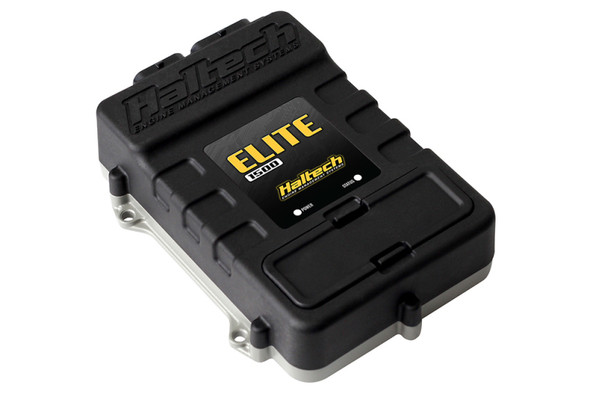
Haltech Elite 1500 Adaptor Harness ECU Kit - HT-150962
Haltech
$2,257.20Is this ECU compatible with my 2003 Honda S2000 AP1?Yes, the HAL Elite 1500 ECU Kit is designed as a plug-and-play solution specifically for the 2000-2004 Honda S2000 AP1 model.What is the primary...$2,257.20
Performance programmers and chips are the most direct way to extract measurable power, torque, and efficiency gains from a factory ECU or replace it entirely with a purpose-built engine management system — spanning everything from plug-and-play throttle response modules to full standalone race ECUs. Motor Sport Mayhem stocks 345 products across 37 brands, ranging from $3.99 entry-level switches and sensors to $3,371.71 professional-grade tuning platforms used in competition-level builds.
Our Top Picks for Programmers & Chips
Every product below was hand-selected by our technical team based on demonstrated performance gains, installation reliability, and real-world results across street, diesel, and motorsport applications.
AEM Throttle Controller
AEM | $277.95
Eliminates factory drive-by-wire throttle lag by remapping pedal input curves for immediate, linear throttle response without touching the base ECU tune.
- Plug-and-play harness integration with no permanent wiring modifications required
aFe Scorcher Module
aFe | $593.00
Intercepts and optimizes factory sensor signals on turbocharged applications to raise boost targets and recalibrate fueling without requiring a dyno tune.
- Pre-loaded maps developed on aFe's in-house dyno for precise air-fuel and boost calibration
ARB Linx Controller
ARB | $659.95
Centralized vehicle accessory interface that replaces a rat's nest of individual switches with a single Bluetooth-controlled hub managing up to eight accessory outputs.
- Each output is individually programmable for on/off, pulse, or timer-controlled activation via smartphone app
ATS Solenoid Block Conversion Kit
ATS Diesel | $194.99
Replaces failure-prone OEM governor pressure solenoid blocks on older diesel automatics with precision-machined billet housings and upgraded solenoid valves for consistent shift pressure control.
- Addresses the root cause of erratic shift behavior and transmission slippage in high-mileage diesel applications
AutoMeter InVision Digital Dash
AutoMeter | $1,360.83
Full-color LCD digital instrument cluster that consolidates all critical engine parameters — RPM, coolant temp, oil pressure, fuel level, and more — into a single configurable display replacing an entire analog gauge cluster.
- Direct OEM plug-and-play fitment eliminates custom wiring and preserves factory dash aesthetics
Banks Power Derringer Tuner with iDash
Banks Power | $889.00
Inline signal optimizer for diesel applications that continuously reads and modifies fuel rail pressure and injection timing signals to safely maximize power output, bundled with Banks' real-time DataMonster gauge display.
- Active safety monitoring pulls timing back automatically if exhaust gas temperature or boost pressure exceed safe thresholds
BD Diesel High Idle Control
BD Diesel | $342.95
Allows manual or automatic elevated idle speed programming on Duramax diesel applications to accelerate engine warm-up, maintain hydraulic pressure for PTO equipment, and extend alternator charge cycles during stationary operation.
- Programmable RPM target and activation logic via in-cab switch without modifying factory ECU calibration
Bikers Choice Mini Push Button Switch
Bikers Choice | $17.99
Compact, universal-mount momentary push button switch rated for motorcycle and custom vehicle electrical systems where space is limited and clean wiring aesthetics matter.
- Weatherproof contact design handles the vibration and moisture exposure inherent in open-air and off-road applications
Bosch Oxygen Sensor
Bosch | $126.11
OEM-specification wideband or narrowband oxygen sensor that feeds accurate exhaust gas composition data to the ECU for closed-loop fuel trim corrections — the foundation of any properly functioning fuel management system.
- Bosch pioneered the automotive oxygen sensor and remains the OEM supplier for the majority of production engines worldwide
Boss Audio Off-Road Camera
Boss Audio | $54.99
Rugged front or rear camera designed specifically for off-road and powersports applications, providing real-time visual feedback for obstacle navigation and vehicle monitoring in environments where standard cameras fail.
- IP-rated weatherproof housing survives mud, water immersion, and the sustained vibration typical of trail and off-road use
How to Choose the Right Programmers & Chips
The single most important buying decision in this category is understanding what layer of the engine management system you actually need to modify — because a signal interceptor, a flash tuner, and a standalone ECU are fundamentally different tools with different capabilities, costs, and risk profiles. A signal interceptor works by modifying sensor outputs before they reach the factory ECU, which means the factory ECU retains control and the OBD system remains largely intact — ideal for emissions-legal street builds. A flash tuner rewrites tables directly inside the factory ECU, offering deeper calibration access (ignition timing, fuel maps, rev limiters, VTEC/VVT points) but requiring a solid base map validated for your specific hardware combination. A standalone ECU like those from Haltech or similar platforms bypasses the factory unit entirely, handing full control to the calibrator — this is the only viable path for heavily modified engines where factory sensor scaling and injection duty cycle limits have been exceeded.
Key Specifications
Communication protocol compatibility is non-negotiable. Modern vehicles use CAN bus, while older platforms may rely on K-Line, J1850, or proprietary OEM protocols. A tuning device that cannot correctly decode your vehicle's specific CAN network will either fail to connect or produce inaccurate data — check protocol support before purchasing, not after. For diesel applications specifically, the injection system type (common rail vs. mechanical pump vs. HEUI) dictates which signal lines are available to intercept or remap, and choosing a tuner not designed for your injection architecture will yield zero results regardless of price.
Map count and user-adjustable parameters directly determine the ceiling of what a device can achieve. Entry-level modules typically carry two to three preloaded maps (stock, economy, performance) with no user adjustment — functional for simple power gains but unable to account for supporting modifications like upgraded cold air intakes or forced induction hardware changes. Mid-tier and professional platforms expose fuel trims, ignition advance, boost targets, and cam timing as live-adjustable parameters, which is essential if your build involves multiple hardware changes that must be tuned together.
Logging resolution and sensor input count matter enormously for safety and calibration accuracy. Any tuning platform used on a modified engine should be capable of logging at minimum 10Hz across key channels — RPM, MAP, MAF (if applicable), coolant temp, intake air temp, and wideband lambda. Systems with onboard wideband O2 sensor integration eliminate the need for a separate fuel delivery monitoring setup and reduce wiring complexity. For standalone ECU applications, look at the number of injector driver channels, ignition outputs, and auxiliary I/O — a 4-cylinder engine needs a minimum of 4+4, but a sequential high-RPM build benefits from individual cylinder trim capability.
Build quality separates reliable daily-driven units from units that fail at the worst possible moment. The PCB should be conformal-coated for moisture resistance, connectors should be automotive-grade Deutsch or Molex Micro-Fit rated for the temperature range of their mounting location, and the housing should be aluminum or high-grade glass-filled nylon — not bare PCB or consumer-grade ABS. For underhood mounting, confirm the unit's operating temperature ceiling exceeds the maximum ambient temperature of its mounting location, which can exceed 120°C near exhaust routing or turbo housings.
Tuning Platform Selection Guide by Application Type
| Application Type | Recommended Platform Tier | Minimum Required Features | Typical Price Range |
|---|---|---|---|
| Lightly modified street vehicle, minimal hardware changes | Plug-and-play signal module / throttle controller | OBD2 pass-through, 2–3 preloaded maps, no logging required | $50–$350 |
| Intake + exhaust + minor supporting mods, street/weekend use | Flash tuner with preloaded or custom-file capability | ECU read/write access, 4+ map slots, basic data logging (5Hz+) | $350–$700 |
| Diesel tow/work truck with injector or turbo upgrades | Inline diesel module or diesel-specific flash tuner | EGT monitoring, boost control, rail pressure adjustment, safety limiters | $400–$1,000 |
| Forced induction build, track day / autocross | Full-featured flash tuner or entry standalone ECU | Wideband integration, boost control output, 10Hz+ logging, VE table access | $700–$1,500 |
| Heavily modified engine, boosted drag / circuit race build | Fully programmable standalone ECU | Sequential injection/ignition, individual cyl. trim, motorsport data logging, CAN output | $1,200–$3,400 |
| OEM-replacement ECU calibration / professional shop use | Professional licensing platform (multi-vehicle read/write) | Unlimited VIN credits or credits-based model, binary editing, dealer-level access | $200–$1,500 (credits variable) |
Price Guide
Entry ($3.99–$270): This range covers switches, sensors, individual solenoids, OBD-connected monitor displays, and basic signal modules — components that handle a single discrete function rather than comprehensive tuning. They are entirely appropriate for vehicles that need a specific fix (a replacement O2 sensor, a high-idle controller, a push-button switch for an accessory circuit) rather than a broad performance calibration. Expect no data logging, no user-adjustable parameters, and limited technical support from the manufacturer.
Mid-range ($270–$900): The majority of street performance enthusiasts land here because this tier delivers genuine, measurable power gains through proper ECU calibration access or well-engineered inline modules developed on actual dynamometers. Brands like aFe, Banks Power, Dynojet, and COBB occupy this space with products that balance accessibility (minimal tuning knowledge required) with real performance headroom. Most mid-range platforms include logging capability, multiple map slots, and smartphone or gauge-display integration — significantly raising the safety ceiling over entry-level modules.
Premium ($900–$3,371.71): Professional-grade standalone ECUs from Haltech, full-featured flash platforms from COBB at the top of their line, Ford Racing calibration tools, and comprehensive professional licensing platforms like HP Tuners occupy this tier. The cost is justified by unlimited calibration flexibility, motorsport-grade data acquisition, direct factory or race team engineering pedigree, and the ability to support power levels and engine configurations that no plug-and-play device can handle. This is the correct tier for any build targeting 400+ wheel horsepower on a boosted engine, competition racing, or any application where an off-the-shelf map simply does not exist.
Who Is This For?
Performance programmers and chips serve a remarkably wide spectrum — from a commuter looking for sharper throttle response to a professional race team running a fully bespoke engine calibration — and the usage data from our product catalog makes those distinctions quantifiable.
Easy DIY Install — 8.9/10
This is the category's highest-scoring use case, and it reflects how the market has evolved: the majority of products here are designed to connect via OBD2 port, inline harness tap, or direct ECU connector with no permanent modification and no soldering. Manufacturers have invested heavily in guided setup via smartphone apps and step-by-step instruction sets that walk through the process without requiring a laptop or professional calibrator. For a first-time installer, a plug-and-play module or inline signal optimizer is genuinely manageable in a driveway with basic hand tools in under an hour.
Engine Performance — 8.7/10
Engine performance is the core value proposition of this category — every product here ultimately exists to make an engine run more powerfully, more efficiently, or more precisely than the factory calibration allows. The 8.7/10 score reflects the density of genuine, dyno-validated products in the catalog versus categories where performance claims are harder to substantiate. Whether the mechanism is advancing ignition timing at high octane, raising boost targets on a turbocharged engine, optimizing diesel injection pulse width, or recalibrating VVT cam angles, the performance gains are measurable on a dynamometer and felt immediately on the road or track.
Street Performance — 8.0/10
With 171 products applicable to street use — the largest single use-case pool in the catalog — street performance is where this category does most of its work. Factory ECU calibrations are deliberately conservative: they must accommodate 87-octane fuel in markets where premium isn't guaranteed, account for worst-case manufacturing tolerances, and meet emissions standards across a wide operating range. A properly calibrated tune exploits the gap between those conservative factory targets and what the engine hardware is actually capable of delivering — typically 15–40 horsepower on naturally aspirated engines and significantly more on boosted platforms with supporting modifications.
Drag Racing — 7.9/10
Drag racing imposes unique calibration demands: the engine sees wide-open throttle almost immediately from a standing start, inlet air temperature varies run to run, and launch control, two-step rev limiters, and nitrous or boost staging logic must be programmed precisely. A 7.9/10 score reflects that the majority of this catalog's products support these functions at some level, though entry-tier modules lack the granular control serious competitors need. For bracket racing or index racing where consistency is paramount, the logging capability of mid-to-premium platforms allows run-to-run analysis of boost build, fuel pressure, and timing — the data needed to close ET variations to tenths of a second.
Track / Autocross — 7.7/10
Road course and autocross calibration differs from drag tuning in one critical way: the engine cycles through the full RPM range repeatedly across an entire session rather than one short burst, which means cooling system interaction, high coolant temperature enrichment strategies, and oil temperature protection all become part of the calibration conversation. A 7.7/10 score here acknowledges that while most products deliver useful gains on track, only mid-tier and premium platforms give calibrators the tools to dial in partial-throttle driveability, traction control integration, and thermal protection strategies that make a car genuinely fast over a full session rather than just on the first lap. Pairing a proper tune with upgraded brakes and suspension extracts the most from track day hardware investments.
Trusted Programmers & Chips Brands We Carry
The brands that dominate this catalog earned their positions through engineering credibility, not marketing spend. Haltech has been manufacturing standalone ECUs in Australia since 1986 and supplies hardware to professional motorsport teams across multiple sanctioning bodies — their products represent the upper tier of programmable engine management. COBB Tuning built its reputation on closed-loop accessport platforms that democratized ECU flashing for enthusiasts, backed by an Accesstuner Pro ecosystem used by professional calibrators globally. Banks Power's engineering team holds multiple SAE technical papers on diesel performance and holds CARB Executive Orders on emissions-legal products — their diesel modules are among the most rigorously validated in the industry. aFe's performance modules are dyno-developed in-house and cover a broad range of gas and diesel applications with CARB-compliant options for emissions-sensitive markets. HP Tuners built a professional-grade multi-vehicle licensing platform that is now standard equipment in OEM and racing calibration shops across North America, while Dynojet's Power Commander platform has over two decades of motorcycle and automotive tuning data feeding its preloaded map libraries. For diesel transmission and drivetrain control, ATS Diesel and BD Diesel bring heavy-duty engineering backgrounds rooted in commercial and competition diesel applications where failure is not an option.
Frequently Asked Questions
Are performance programmers and chips actually worth buying?
Yes — for the right application and the right product tier, the gains are real and measurable. A factory ECU is calibrated to a compromise point that satisfies legal, warranty, fuel quality, and manufacturing variation requirements — not to maximize performance for your specific engine, fuel, and hardware combination. A properly validated tune from a reputable brand will deliver measurable torque and horsepower gains on a dynamometer, not just a subjective seat-of-the-pants impression. The critical word is "properly validated" — a reputable manufacturer develops maps on actual hardware with wideband oxygen sensors and engine safety parameters in place, which separates legitimate products from cheap counterfeit chips that do nothing or worse, cause engine damage. Mid-range and premium platforms from established brands consistently deliver returns that justify their cost within the first year of street or track use.
Are premium tuning platforms worth the extra cost over budget modules?
For serious performance applications, absolutely — the capability gap between a $50 module and a $1,000+ flash tuner is not marginal, it is architectural. Premium platforms provide live data logging at 20Hz or higher, user-adjustable fuel and ignition tables, closed-loop boost control, individual cylinder trim, and integration with wideband O2 sensors — none of which are available on budget signal interceptors. The higher cost also reflects professional-grade hardware: conformal-coated PCBs, automotive-rated connectors, and firmware that is actively maintained and updated as vehicle software revisions are released. For a modified engine with upgraded intake, exhaust, or forced induction hardware, a budget module calibrated for a stock engine will leave significant power on the table and may run dangerously lean under certain conditions — a premium platform with proper calibration eliminates that risk.
Are standalone ECUs better than flash tuners for performance builds?
Standalone ECUs are not categorically better — they are the correct tool for specific applications where the factory ECU's hardware limits have been exceeded or where the OEM system architecture cannot support the required features. If your engine uses injectors running above 85% duty cycle at peak demand, requires cam trigger patterns the factory ECU cannot decode (common with engine swaps), or needs features like sequential gearshift cut, traction control via individual wheel speed inputs, or nitrous staging logic, a standalone is the only path forward. For modified but otherwise stock-architecture engines still using factory sensors and injection hardware, a high-quality flash tune on the factory ECU is often more streetable, easier to live with daily, and produces equivalent or better results than an entry-level standalone. The decision should be based on technical requirements, not perceived prestige of the platform.
Will a performance programmer void my factory warranty?
In the United States, the Magnuson-Moss Warranty Act prohibits a manufacturer from voiding a warranty solely because an aftermarket part was installed — the dealer must demonstrate a causal link between the modification and the specific failure being claimed. However, if an ECU flash directly causes a detectable change to calibration parameters and the dealership can read that change (which modern OBD systems often record via ECU reflash counters), they have grounds to deny warranty claims on related components — engine, transmission, and emissions systems specifically. CARB Executive Order (EO) products are explicitly emissions-legal in California and cannot trigger emissions-related warranty denial; non-EO products installed in California or states following CA emissions law carry legal risk beyond warranty concerns. The practical advice: understand your warranty exposure before flashing, and keep stock calibration files if warranty repairs may be needed.
Do performance chips and programmers work on diesel engines differently than gas engines?
Yes — diesel tuning targets fundamentally different parameters than gasoline engine calibration because diesel combustion is compression-ignited and load-controlled by fueling quantity rather than throttle position. The primary levers in diesel tuning are injection timing (degrees before TDC), injection pulse width (fueling quantity), rail pressure (which affects atomization quality and energy per injection event), and turbocharger boost targets — there is no throttle body or spark timing to adjust. Diesel-specific modules and tuners are engineered around these parameters and must include exhaust gas temperature monitoring as a safety input, because over-fueling a diesel raises EGT to levels that destroy turbochargers and melt pistons far faster than an analogous over-fueled gasoline engine would detonate. Quality diesel tuning products from brands with diesel-specific engineering backgrounds build hard EGT limits into their calibrations — this is a non-negotiable safety feature to verify before purchasing any diesel tuner.
Building something specific? Our performance specialists can help you select the right Programmers & Chips for your application — street, track, or full race build.