
Fuel Tanks
- Product
- Qty in Cart
- Quantity
- Price
- Subtotal
-

Titan Fuel Tanks 25-26 RAM 2500/3500 Cummins 4WD Crew Cab Short Bed 52 Gallon XXL Mid-Ship Fuel Tank - 7030125
Titan Fuel Tanks
MSRP: $1,329.00$1,262.55Are Titan Fuel Tanks the best replacement fuel tanks on the market?TFT XXL Mid-Ship Fuel Tanks deliver unparalleled freedom with massive 52 gallon extra capacity, best for overlanding expeditions.What is the installation process for the TFT XXL Mid-Ship...MSRP: $1,329.00$1,262.55 -
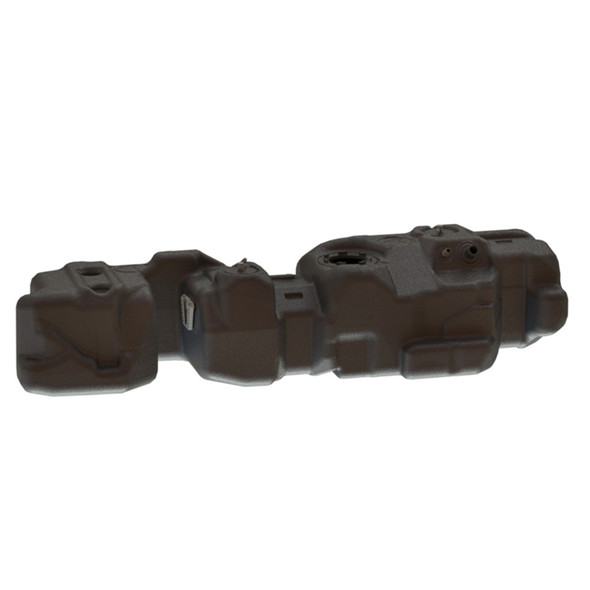

Titan Fuel Tanks 17-24 Ford F-250/F-350 PowerStroke Crew Cab Short Bed 55 Gallon XXL Mid-Ship Tank - 7020217
Titan Fuel Tanks
MSRP: $1,349.00$1,281.55What is the fuel tank capacity of the Titan Fuel Tanks XXL Mid-Ship Replacement Fuel Tank?These XXL Mid-Ship Fuel Tanks offer an impressive 55 gallon extra capacity for your compatible Super Duty truck.How do I install a Titan Fuel Tanks XXL Mid-Ship...MSRP: $1,349.00$1,281.55 -


Radium Engineering R22A Radium Fuel Cell - 22 Gallon - 20-0622
Radium Engineering
MSRP: $1,199.95$1,139.95Will this fuel tank fit my car?Confirm specific vehicle fitment before purchasing; professional installation ensures optimal integration of this advanced fuel tank.How is this fuel tank installed?Professional installation is strongly recommended for this...MSRP: $1,199.95$1,139.95 -
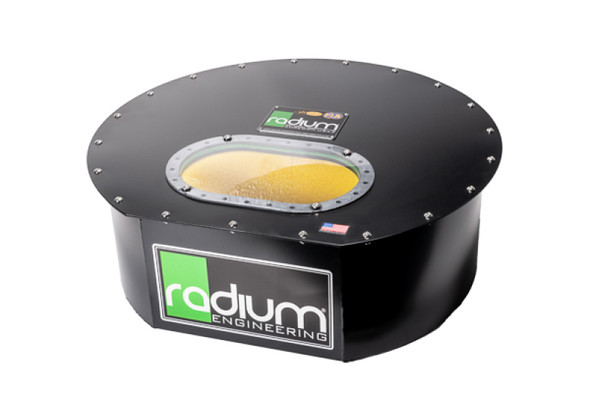

Radium Engineering R10.5A Fuel Cell - 10.5 Gallon - Spare Tire - 20-0611
Radium Engineering
MSRP: $1,099.95$1,044.95What is the capacity of the RAD Fuel Cell?The RAD Fuel Cell boasts a substantial 10.5 gallon capacity, providing ample fuel for extended racing sessions.Is this fuel cell designed for DIY installation?Professional installation is strongly recommended for...MSRP: $1,099.95$1,044.95 -


Aeromotive 68-70 Dodge Charger Hellcat Swap Fuel Tank - 18859
Aeromotive
$1,148.64Is the fuel tank compatible with my stock 1968 Dodge Charger?This specific fuel tank is engineered for 1968-1969 Dodge Chargers, guaranteeing a direct fit for your Hellcat swap project.Can I install this fuel tank myself?Professional installation is...$1,148.64
Fuel tanks and fuel cells are the foundation of any performance fuel system, supplying clean, consistent fuel volume under the sustained G-loads, heat, and pressure demands that OEM tanks are never engineered to handle. Motor Sport Mayhem stocks 101 fuel tanks across 58 brands — from lightweight off-road replacement tanks to fully baffled aluminum race cells rated for competition use.
Our Top Picks for Fuel Tanks
Every product below was selected based on verified performance credentials, real-world fitment reliability, and value relative to the application it was built for.
ACB Fuel Tanks
Acerbis | $436.73
High-density polyethylene construction delivers a 6.0-gallon extended-range capacity with a direct OEM mounting footprint for off-road applications.
- Precision-molded HDPE resists fuel permeation and impact damage in technical terrain
AEM Fuel Pressure Regulators
AEM | $222.95
Fully adjustable fuel pressure regulation ensures consistent rail pressure across the full RPM range when tank and pump upgrades push beyond OEM regulator limits.
- Anodized billet aluminum body with wide adjustment range suits both forced induction and naturally aspirated builds
AER Fuel Systems
Aeromotive | $3,624.93
A 15-gallon brushless integrated fuel cell engineered for serious competition builds where fuel starvation under load is simply not acceptable.
- Brushless spur pump eliminates brush wear failure modes and delivers consistent flow at sustained high-demand operation
AFE ProGuard Fuel Filter
aFe | $74.00
High-efficiency diesel fuel filtration protects injection system components downstream by removing contaminants that destroy common-rail injector tolerances.
- Direct-fit design maintains factory flow rates while exceeding OEM filtration efficiency specifications
ADG AirDog II-5G A/F Separator
AirDog | $854.00
Dual-stage air and fuel separation system eliminates entrained air and vapor from diesel fuel before it reaches the high-pressure pump, preventing cavitation and injection pulse irregularity.
- Rated at 165 GPH with integrated filtration to handle the increased fuel demand of modified diesel builds
ABR Fuel Pump Kits
All Balls Racing | $310.11
Complete fuel pump module assembly restores factory fuel delivery integrity on powersports platforms where OEM pump failures cause hard-start and lean-running conditions.
- Full module replacement — pump, strainer, sender, and housing — eliminates piecemeal repairs that introduce new failure points
AMS Flex Fuel Kit
AMS | $999.95
CAN-bus integrated flex fuel kit allows the ECU to read ethanol content in real time, enabling the tune to adjust fueling and timing automatically for any ethanol blend up to E85.
- Includes integrated fuel filter to protect the ethanol content sensor and downstream injection hardware from contamination
ATS Fuel Regulators
ATS Diesel | $74.99
Electronic fuel pressure regulator kit addresses a well-documented failure point on early Powerstroke platforms, restoring proper injection control pressure and eliminating hard-start and stall conditions.
- Direct OEM replacement with improved sealing tolerances to prevent the pressure bleed-down that degrades cold-start injection quality
BBK Fuel Pump
BBK | $419.99
A 300 LPH in-tank fuel pump delivers the sustained flow rate required when engine modifications push fuel demand beyond what the factory pump can reliably supply at high RPM.
- Drop-in tank fitment avoids external line routing complications while providing a substantial flow increase over the OEM unit
BDD Injection Pumps
BD Diesel | $883.95
Stock-exchange CP3 injection pump restores factory fuel delivery pressure on high-mileage common-rail diesel platforms where pump wear causes rail pressure drop under load.
- Remanufactured to OEM specifications with a core exchange program that keeps upfront cost competitive with unreliable budget alternatives
How to Choose the Right Fuel Tank
The gap between a functional fuel tank and the right fuel tank comes down to three variables: material, capacity, and internal baffling. Steel OEM tanks corrode from the inside out when ethanol-blended fuels sit long-term, creating particulate contamination that kills fuel pumps and clogs injectors. Aluminum tanks eliminate corrosion entirely and reduce weight, but require proper anodizing or internal coating to remain compatible with E85 and racing fuels. Polyethylene tanks — standard on most powersports and off-road platforms — resist corrosion and impact damage but must meet EPA and CARB permeation standards to be road-legal. A tank that fails any of these material requirements will cost more in downstream damage than it saved at purchase.
Key Specifications
Capacity selection is not simply about range — it directly affects weight distribution and center of gravity. A full 15-gallon aluminum race cell adds approximately 90 lbs of fuel weight, and its placement relative to the chassis centerline will shift handling balance measurably. For circuit and road course applications, a smaller capacity cell mounted low and centrally is almost always preferable to a large tank positioned high or at either end of the wheelbase. Calculate your target fuel load for the longest stint you'll run, then size the tank to carry that volume with a minimal reserve — excess capacity is dead weight.
Internal baffling is the specification most commonly ignored on street builds and most commonly responsible for fuel starvation failures on track. An unbaffled tank allows the fuel pickup to uncover under sustained lateral, longitudinal, or combined G-loads — exactly the conditions that occur in every corner, braking zone, and acceleration phase on circuit. Purpose-built race cells use foam baffling, surge tanks, or swirl pot designs to maintain a consistent fuel volume around the pump inlet regardless of dynamic load. If you're running any aggressive street or track driving, baffle quality should be a primary selection criterion, not an afterthought.
For forced induction and flex fuel applications, tank compatibility with high-ethanol blends must be confirmed before purchase — many stock and budget aftermarket tanks use seals, coatings, and pickup tubes that degrade rapidly on E30 and above. Stainless or ethanol-compatible nitrile seals, an anodized or epoxy-lined interior, and a rated-compatible sending unit are the minimum requirements for an E85 fuel system build. Pairing a properly rated tank with a high-flow in-tank pump and a correctly sized fuel delivery system upstream prevents the lean-spike failures that detonate pistons on aggressive flex fuel tunes.
Fitment tolerance is the final variable that separates professional-grade tanks from budget alternatives. Mounting flange geometry, sender unit bore diameter, pump hanger design, and vent line positioning must all match the chassis exactly — a tank that requires modification to install will almost certainly introduce a leak point or a pump alignment problem that causes premature failure. Always verify OEM dimensional compatibility data before purchasing a direct-fit replacement, and for custom fabrication applications, confirm that the tank's bung locations match your pump, sender, and return line specifications before committing to a mounting position.
Fuel Tank Capacity vs. Application Reference Guide
| Application | Recommended Capacity | Baffling Requirement | Material Recommendation |
|---|---|---|---|
| Daily Street / Street Performance | OEM or +0–3 gallons | OEM baffling acceptable | Steel OEM, HDPE replacement, or coated aluminum |
| Autocross / Time Attack | 5–10 gallons (minimized for weight) | Foam or surge tank required | Aluminum with internal foam baffle |
| Road Course / Endurance | 10–15 gallons (stint-dependent) | Full foam cell or swirl pot required | Aluminum race cell, SFI/FIA-rated recommended |
| Drag Racing | 5–8 gallons (rear-bias acceptable) | Anti-slosh baffle required | Aluminum cell, rear-mount positioning |
| Off-Road / Powersports | OEM or extended range (+1–3 gallons) | OEM-style baffling or foam | HDPE or impact-resistant polyethylene |
| Diesel Tow / Work Truck | OEM replacement or auxiliary tank | OEM baffling sufficient | Steel OEM-spec or heavy-gauge aluminum |
Price Guide
Entry ($1.16–$200): This range covers individual components — replacement fuel caps, sending units, sealing hardware, and filtration elements. You're not buying a complete tank at this price point, but these parts are critical maintenance items that affect the performance and safety of whatever tank they're fitted to. Quality varies significantly; prioritize compatibility and material ratings over price at this level.
Mid-range ($200–$1,000): The majority of direct-fit replacement tanks, extended-capacity powersports tanks, and entry-level aluminum race cells live here. This is where most street performance and light track-day builds will find the right solution — enough engineering to handle real performance demands without the fabrication-grade specifications that competition-only builds require. Brands like Acerbis, Walbro, and Fuelab deliver well-engineered products throughout this range.
Premium ($1,000–$6,439.78): Purpose-built aluminum race cells with integrated pump systems, SFI-rated bladder cells, and complete high-flow fuel system assemblies occupy this tier. The cost is justified by competition-grade baffling, certified materials, brushless pump technology, and the engineering redundancy that prevents fuel starvation failures at speed. If you're building a car that will see sustained track use, timed competition, or forced induction power levels above 600 whp, this is the appropriate budget range.
Who Is This For?
Fuel tanks serve every segment of the performance spectrum — from weekend trail riders needing more range to full competition builds where fuel starvation means a DNF or a detonation event.
Engine Performance — 8.7/10
This category scores highest in engine performance because fuel delivery is the direct upstream variable for everything happening inside the combustion chamber — air-fuel ratio, injection timing, and fuel pressure stability are all tank-and-delivery-system outputs. Modified engines that demand higher fuel volume than OEM delivery systems can supply will detonate, run lean, or simply hit a hard fuel cut at the top of the rev range. A correctly specified tank, pump, and regulator combination is a prerequisite for any serious engine build, which is why 188 products in this category are rated for engine performance applications.
Racing Competition — 8.1/10
With 179 products rated for competition use and a score of 8.1 out of 10, fuel tanks are a structural requirement for any sanctioned racing build — not an upgrade. Most road course, drag, and rally sanctioning bodies mandate approved fuel cells with specific baffle, bladder, and rollover valve requirements that OEM tanks cannot meet. A competition fuel cell also provides a measurable safety advantage by containing fuel in the event of a collision, where an OEM tank will rupture. Selecting a cell that meets your specific sanctioning body's requirements is non-negotiable before any car runs in competition.
Drag Racing — 8.2/10
Drag racing scores 8.2 out of 10 across 137 products because the application creates a unique and extreme fuel delivery demand: maximum sustained fuel flow at wide-open throttle for a compressed time window, combined with violent longitudinal acceleration that can uncover a poorly baffled pickup in seconds. High-horsepower drag builds also frequently run methanol or E85, which requires ethanol-compatible tank materials throughout. A rear-mounted aluminum cell with an anti-slosh baffle and an appropriately rated high-pressure pump is the standard solution for drag race fuel system builds.
Track / Autocross — 8.1/10
Track and autocross applications score 8.1 out of 10 with 165 products because lateral G-loads at these events consistently expose the baffling inadequacy of OEM tanks — even in otherwise stock vehicles. Fuel starvation under sustained cornering loads presents as a momentary lean spike or full cut, which on a turbocharged engine can cause detonation before the driver realizes what's happening. A properly baffled replacement tank or a surge tank setup added to an existing OEM tank is one of the highest-value reliability modifications for any track-day car.
Street Performance — 7.8/10
Street performance scores 7.8 out of 10 across 192 products — the highest product count in the usage matrix — because most fuel system upgrades begin with street-driven vehicles that need more fuel delivery capacity to support engine modifications without compromising daily drivability. A street performance fuel system needs to function reliably through cold starts, low-speed traffic, varying fuel grades, and long-term fuel storage conditions that a pure race system never encounters. The overlap between street performance and track use is where most enthusiasts spend their budget, and it's the segment with the widest range of technically appropriate solutions.
Trusted Fuel Tank Brands We Carry
Aeromotive has been the benchmark for high-pressure performance fuel systems for over 25 years, with their billet aluminum construction and brushless pump technology setting the standard for sustained high-flow competition applications. Acerbis built their reputation manufacturing precision HDPE tanks for professional off-road racing teams, where durability under impact is as critical as fuel capacity. Fuelab engineers their regulators and components to tighter pressure tolerances than most competitors, making them a preferred choice for high-horsepower forced induction builds where pressure variance directly affects tune stability. AirDog's air-fuel separation technology addresses a diesel-specific engineering problem — entrained air in the fuel supply — with a purpose-built solution that protects injection system longevity on modified and high-mileage platforms. Walbro has supplied OEM and aftermarket in-tank pump solutions to the industry for decades, and their turbine pump designs remain the volume standard for in-tank performance upgrades across a wide range of displacement and fuel type applications. Fleece Performance focuses specifically on diesel fuel system engineering, offering injection pump and delivery components that are engineered to handle the increased fuel demands of tuned and compound-turbocharged diesel builds.
Frequently Asked Questions
Are aluminum fuel tanks better than steel?
Aluminum tanks offer three concrete advantages over steel: they do not corrode internally when exposed to ethanol-blended fuels, they are significantly lighter — typically 40–60% weight reduction for equivalent capacity — and they can be fabricated into complex shapes that optimize chassis packaging. Steel tanks are less expensive to manufacture and more resistant to puncture damage from road debris, which is why OEM manufacturers still use them for cost and durability reasons. For performance and track applications, aluminum is the correct choice; for heavy-duty work truck and towing platforms where puncture resistance and cost are priorities, high-quality steel remains competitive. The internal coating or anodizing process on an aluminum tank is critical — an uncoated interior will develop oxide contamination that damages fuel pumps and injectors over time.
Are aftermarket fuel pumps worth it?
Aftermarket fuel pumps are worth the investment whenever engine modifications have increased fuel demand beyond what the OEM pump can sustain at full throttle — typically any build exceeding 15–20% above factory power output. OEM pumps are engineered to a specific flow rate and pressure target for the factory tune; when injector duty cycle climbs or fuel pressure demands increase, the OEM unit runs at maximum capacity continuously and fails prematurely. A quality aftermarket in-tank pump from an established brand will deliver higher flow rates, operate at lower temperatures under sustained load, and often carry better warranty terms than the OEM part it replaces. The key specification to match is LPH (liters per hour) at your target fuel rail pressure — not free-flow LPH ratings, which are measured at zero backpressure and overstate real-world delivery capacity.
Are aftermarket fuel filters any good?
Quality aftermarket fuel filters from performance-oriented brands consistently meet or exceed OEM filtration efficiency, and in many diesel applications they outperform factory filtration by offering finer micron ratings and higher water-separation efficiency. The critical specification is the filter's rated micron rating relative to the injection system it protects — common-rail diesel injectors require filtration to 2–4 microns to prevent premature nozzle wear, while port-injected gasoline engines are more tolerant of coarser filtration. Aftermarket filters that incorporate a serviceable element rather than a sealed throwaway unit also reduce long-term maintenance costs on high-mileage platforms. Avoid unknown-brand budget filters that advertise OEM compatibility but provide no filtration efficiency data — in a common-rail system, a single tank of contaminated fuel through an inadequate filter can destroy a set of injectors worth thousands of dollars.
Are aftermarket fuel rails worth it?
Aftermarket fuel rails become necessary — not merely beneficial — when injector sizing, fuel pressure targets, or injector spacing requirements exceed what the OEM rail can accommodate. Billet aluminum rails with larger internal bore diameters reduce pressure drop across the rail at high injector duty cycles, maintaining consistent pressure at all injectors simultaneously rather than starving the cylinders furthest from the fuel inlet. Rails with -6AN or -8AN end feed ports also simplify integration with braided stainless fuel line systems used in performance builds. For naturally aspirated engines with stock or mildly upgraded injectors operating below 80% duty cycle, the OEM rail is rarely the limiting factor — the return on investment is much higher in forced induction, high-injector-flow, or flex fuel applications where rail pressure uniformity directly affects air-fuel ratio consistency across all cylinders.
Are Aeromotive fuel pressure regulators good?
Aeromotive regulators are among the most technically respected in the performance fuel system market, with a design lineage developed directly from their competition fuel system engineering. Their billet aluminum construction, stainless internal components, and wide adjustment range — typically 40–75 PSI on their performance units — make them suitable for everything from mild street builds to high-horsepower forced induction applications running E85. The regulator's ability to maintain stable rail pressure under rapidly changing fuel demand is the specification that matters most for performance tuning, and Aeromotive's units are consistently praised for low pressure variance across the operating range. Their average product price of $710 across the catalog reflects a broad range from entry regulators to complete fuel system assemblies — the regulator product line specifically sits well within the range that serious enthusiasts consider reasonable for a component that directly protects their tune and injection hardware.
Building something specific? Our performance specialists can help you select the right Fuel Tanks for your application — street, track, or full race build.