
Fuel Pump Hangers
- Product
- Qty in Cart
- Quantity
- Price
- Subtotal
-


Radium 2022+ Toyota GR86 / 2022+ Subaru BRZ Fuel Hanger (Pumps Not Included) - 20-1074
Radium Engineering
MSRP: $529.95$503.45What vehicles are compatible with the Radium Engineering Fuel Pump Hanger?The Radium Engineering Fuel Pump Hanger is designed for a direct fit in 2022 through 2024 model year Subaru BRZ and Toyota GR86 vehicles.How difficult is the installation of the...MSRP: $529.95$503.45 -
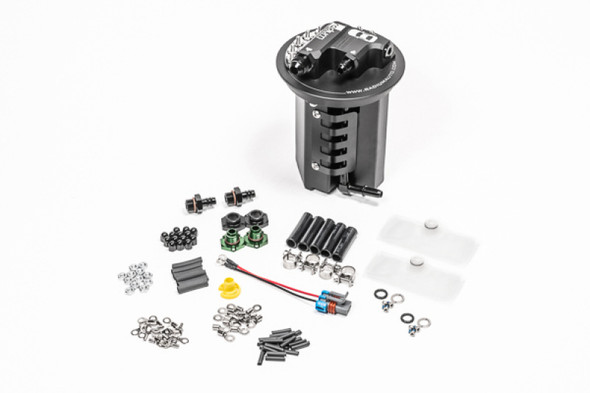

Radium 12-21 Toyota GT86 / 12-20 Subaru BRZ / 12-16 Scion FR-S Fuel Hanger (Pumps Not Included) - 20-1073
Radium Engineering
MSRP: $529.95$503.45How does the Radium Engineering RAD Fuel Hanger ensure reliable fuel delivery for high-performance applications?The RAD Fuel Hanger achieves unparalleled fuel delivery reliability by providing a robust foundation for dual-pump setups, even under extreme...MSRP: $529.95$503.45 -


Radium Engineering 89-05 Mazda MX-5 Miata Fuel Hanger (Pumps Not Included) - 20-1020
Radium Engineering
MSRP: $609.95$579.45What vehicles is the Radium Engineering Fuel Pump Hanger compatible with?Radium Engineering Fuel Pump Hangers are specifically engineered for a seamless drop-in installation on the 1989-2005 MX-5 Miata.How difficult is it to install the Radium...MSRP: $609.95$579.45 -


Radium Engineering FR-S/BRZ/GT86/GR86 Fuel Hanger Plumbing Kit w/ Microglass Filter - 20-0966-05
Radium Engineering
MSRP: $659.95$626.95How do Radium Engineering fuel hanger plumbing kits ensure vehicle compatibility?Radium Engineering fuel hanger plumbing kits are designed with precise fitment considerations, requiring users to confirm vehicle compatibility before purchase for seamless...MSRP: $659.95$626.95 -
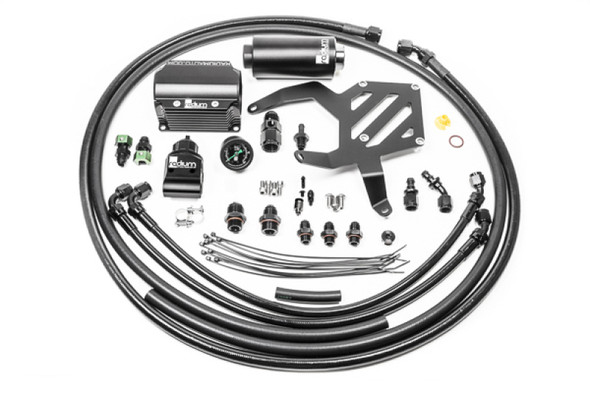

Radium Engineering FR-S/BRZ/GT86/GR86 Fuel Hanger Plumbing Kit w/ Stainless Filter - 20-0966-03
Radium Engineering
MSRP: $679.95$645.95Does the Radium Engineering fuel hanger plumbing kit fit my vehicle?Confirm vehicle fitment using our extensive compatibility database to ensure seamless integration with your specific application.What is the installation difficulty for the Radium...MSRP: $679.95$645.95 -
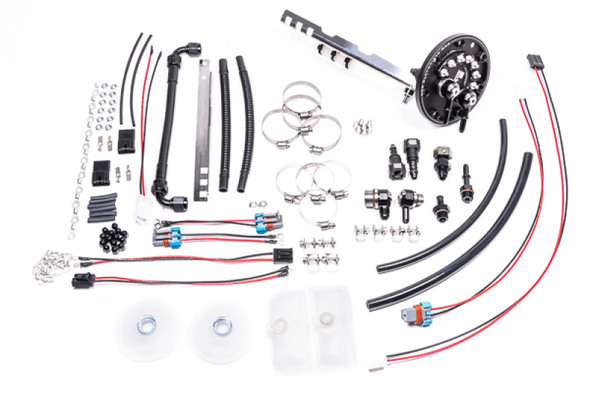

Radium Toyota Chaser/Mark II/Cresta Fuel Hanger - Pumps Not Included - 20-0940
Radium Engineering
MSRP: $549.95$522.45How does the Radium Engineering fuel hanger improve engine performance?The Radium Engineering fuel hanger ensures consistent fuel flow for maximum engine power and responsiveness by supporting up to two aftermarket pumps.What is the installation process...MSRP: $549.95$522.45 -


Radium Engineering Nissan R35 GT-R Fuel Hanger Feed Kit - Stainless - 20-0851-03
Radium Engineering
MSRP: $659.95$626.95How do Rad fuel hangers impact track performance?Rad fuel hangers deliver maximum fuel flow, essential for the demanding conditions of track driving and racing.What is the installation process for Rad fuel hangers?Professional installation is recommended...MSRP: $659.95$626.95 -
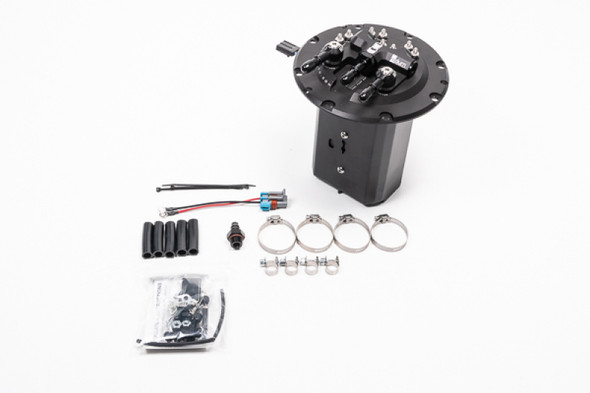
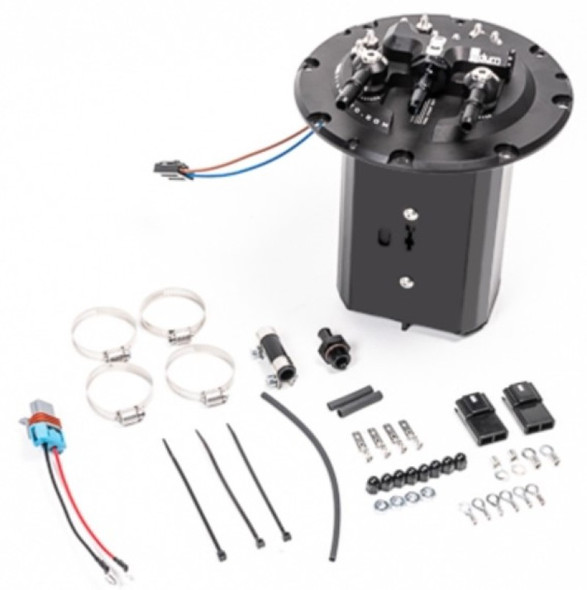
Radium Subaru Fuel Hanger For Walbro F90000267/274/285 - Pumps Not Included - 20-0782-00
Radium Engineering
MSRP: $512.95$500.27What Subaru models are compatible with the Radium Engineering Fuel Hanger?The Radium Engineering Fuel Hanger is engineered for a direct fitment in 2008-2020 Subaru Impreza, WRX, and WRX STI models.How difficult is it to install the Radium Engineering...MSRP: $512.95$500.27 -


Radium Subaru Fuel Hanger For Deatschwerks DW400 - Pumps Not Included - 20-0781-00
Radium Engineering
MSRP: $539.95$512.95Which Subaru Impreza models are compatible with the Radium Fuel Hanger?The Radium Fuel Hanger is engineered to fit 2008-2020 Subaru Impreza, WRX, and WRX STI models, ensuring precise integration.How easy is it to install the Radium Fuel Hanger?This...MSRP: $539.95$512.95 -
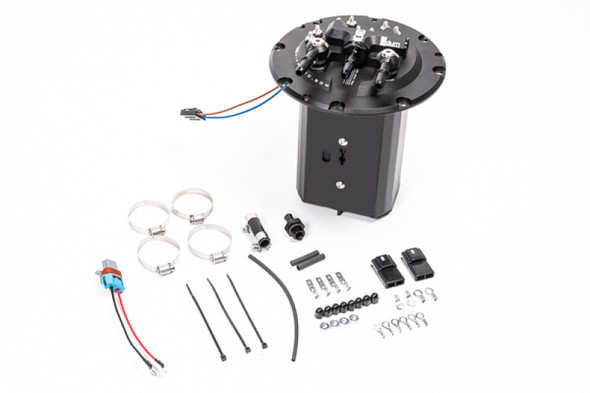
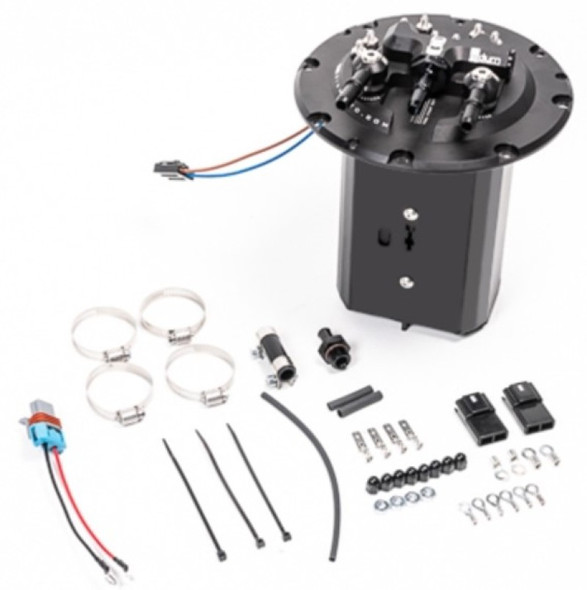
Radium Subaru Fuel Hanger For Walbro GSS342 or AEM 50-1200 - Pumps Not Included - 20-0780-00
Radium Engineering
MSRP: $519.95$493.95Will the Radium Engineering RAD Fuel Hangers fit my 2015 Subaru WRX?RAD Fuel Hangers are engineered for a precise fitment, directly replacing the factory in-tank unit for your 2015 Subaru WRX.How difficult is the Radium Engineering RAD Fuel Hangers...MSRP: $519.95$493.95 -
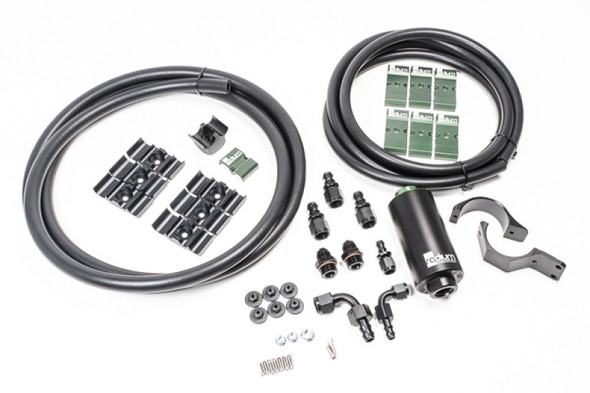

Radium Engineering Toyota MK5 Supra Fuel Hanger Plumbing Kit - Stainless - 20-0761-03
Radium Engineering
MSRP: $499.95$474.95What is a fuel pump hanger?A fuel pump hanger secures your fuel pump within the tank, facilitating the routing of fuel lines to the engine for optimal delivery.What is the install type for this product?Professional installation is recommended to ensure...MSRP: $499.95$474.95 -
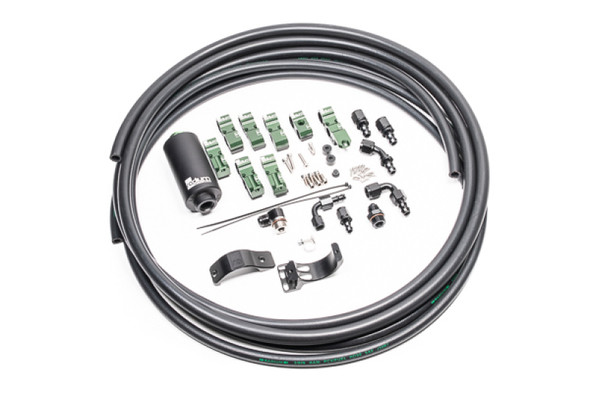

Radium Engineering Early Nissan Fuel Hanger Plumbing Kit Microglass Filter - 20-0703-05
Radium Engineering
MSRP: $529.95$503.44Is this kit compatible with my vehicle?Confirm vehicle fitment carefully; RAD Fuel Hanger Plumbing Kits are designed for specific applications to ensure proper installation and function.What is the micron rating of the fuel filter?Achieve optimal fuel...MSRP: $529.95$503.44
A fuel pump hanger is the structural assembly that suspends your in-tank fuel pump, filter sock, and feed/return lines within the fuel tank — and it is the single most critical component determining whether your engine receives clean, pressurized fuel under every load condition from idle to wide-open throttle. Motor Sport Mayhem stocks 100 fuel pump hangers across 58 brands, ranging from basic OEM-replacement units to billet dual-pump race assemblies engineered for 1,000+ horsepower builds.
Our Top Picks for Fuel Pump Hangers
Each of these selections was chosen based on demonstrated performance, engineering quality, and real-world results across street, track, and competition applications.
ACB Fuel Tanks
Acerbis | $436.73
High-density polyethylene construction delivers a lightweight, corrosion-immune fuel storage solution engineered specifically for off-road and adventure riding demands.
- Expanded 6.0-gallon capacity integrated with a purpose-built pump mounting interface for reliable fuel delivery across extreme terrain angles
AEM Fuel Pressure Regulators
AEM | $222.95
Billet aluminum adjustable regulator that works in direct tandem with your pump hanger assembly to maintain stable rail pressure under variable fuel demand.
- Wide adjustment range allows precise pressure tuning to match upgraded pump flow rates installed through the hanger assembly
AER Fuel Systems
Aeromotive | $3,624.93
Complete brushless fuel cell system integrating an internal pump assembly, surge reservoir, and billet hanger in one race-ready package with zero vapor lock potential.
- Brushless motor technology dramatically extends pump service life versus brushed alternatives while sustaining high flow rates at elevated fuel pressures
AFE ProGuard Fuel Filter
aFe | $74.00
Multi-stage filtration element designed to protect pump internals from particulate contamination that originates upstream of the hanger-mounted filter sock.
- Rated filtration efficiency extends the service interval of high-performance in-tank pumps by removing abrasives before they reach pump internals
ADG AirDog II-5G A/F Separator
AirDog | $854.00
Frame-mounted air and fuel separation system that removes entrained air and vapor before fuel reaches the injection system, critical on diesel platforms running lift pump upgrades.
- Aggressive air/vapor separation eliminates the cavitation damage that destroys CP3 and CP4 injection pumps on high-output diesel builds
ABR Fuel Pump Kits
All Balls Racing | $310.11
Complete pump module assembly — pump, hanger, filter sock, and wiring connector — packaged as a direct-fit drop-in for powersports applications where individual component sourcing is impractical.
- All-in-one module design eliminates compatibility mismatches between hanger flange geometry and pump body diameter common in mix-and-match builds
AMS Flex Fuel Kit
AMS | $999.95
Ethanol-content sensor and fuel filter kit engineered to integrate with modified fuel delivery systems running E85 or flex fuel blends that demand ethanol-compatible hanger and line materials.
- Ethanol-resistant seals and sensor hardware prevent the accelerated degradation that destroys rubber hanger components on stock fuel systems running high-ethanol content
ATS Fuel Regulators
ATS Diesel | $74.99
Electronic fuel pressure regulator kit that corrects low-pressure delivery failures originating at the tank-mounted assembly on high-mileage diesel platforms.
- Addresses the root cause of hard-start and stumble complaints linked to degraded OEM regulator function within the in-tank fuel assembly
BBK Fuel Pump
BBK | $419.99
300 LPH in-tank pump designed to drop into the OEM hanger basket, delivering more than double the stock flow capacity for forced induction and naturally aspirated performance builds.
- OEM hanger retention means no custom fabrication required — the pump body diameter and inlet geometry match the existing basket without modification
BDD Injection Pumps
BD Diesel | $883.95
Remanufactured high-pressure injection pump for common-rail diesel applications where the in-tank lift pump and hanger assembly feeds a CP3 high-pressure pump requiring clean, consistent supply pressure.
- Stock-exchange program ensures a core-matched rebuild that maintains factory displacement while supporting increased fueling demands from tuned applications
How to Choose the Right Fuel Pump Hanger
The fuel pump hanger is not a passive bracket — it sets flange sealing geometry, determines pump body clearance, routes return and feed lines, houses the filter sock, and in many performance applications accommodates a secondary surge pump. A poorly engineered hanger leaks at the flange O-ring under thermal cycling, allows pump body vibration that accelerates bearing wear, and positions the filter sock too high in the tank causing starvation under hard cornering or low-fuel conditions. What separates a race-quality hanger from a budget unit is the material spec of the basket, the O-ring durometer and groove tolerances, the weld quality on billet assemblies, and whether the design was engineered with fuel slosh and orientation changes in mind.
Key Specifications
Material selection is the first decision point. OEM-style hangers use glass-filled nylon or acetal for the basket body — acceptable for stock fuel systems running gasoline, but problematic when switching to E85 or methanol blends that accelerate polymer degradation. Billet 6061 aluminum hangers are the correct choice for any high-ethanol or racing fuel application, and they provide superior rigidity for mounting dual-pump configurations without flexing under vibration. The flange O-ring must be rated for the specific fuel chemistry in use — a standard Buna-N o-ring will swell and fail within months on E85, whereas Viton compound handles ethanol concentrations up to E100 without dimensional change.
Flow capacity and pump fitment drive the second set of decisions. Every hanger is designed around a specific pump body diameter — typically 38mm, 60mm, or a manufacturer-proprietary dimension — and mixing incompatible pump bodies with mismatched baskets creates leak points at the pump-to-basket interface. For high-horsepower builds exceeding 600 whp on gasoline or 500 whp on E85, a dual-pump hanger with independent feed circuits eliminates the single-pump flow ceiling without requiring an external surge tank. Verify that the hanger's internal plumbing diameter — typically -6AN or -8AN — matches the flow demand of your target horsepower; undersized internal passages will choke output even from an oversized pump.
Flange geometry and sealing are non-negotiable. The mounting flange must be flat within 0.005 inches across its seating surface, and the locking ring torque specification must be achievable without distorting the tank opening. Most factory tank openings accept a standard 5-bolt or 6-bolt pattern, but aftermarket hangers machined to tighter tolerances often require the tank flange surface to be inspected and cleaned before installation. A fuel-resistant thread sealant — never standard silicone RTV — should be used on any threaded fittings within the assembly. The wiring connector position is also critical: a hanger that positions the connector in a high-heat zone or near the exhaust routing path will see premature connector failure regardless of pump quality.
For dedicated fuel delivery builds on forced induction platforms, also consider whether the hanger design accommodates a fuel level sender — some race-specific billet hangers delete the sender to maximize pump count, which is fine on a track-only car but impractical for any street-registered vehicle. Compatibility with your existing fittings and line sizes should be confirmed before ordering to avoid having to adapt the outlet ports.
Fuel Pump Hanger Flow Rate vs. Horsepower Reference Guide
| Target Horsepower (RWHP) | Minimum Flow Rate Required | Recommended Hanger Type | Recommended Fuel Line Size |
|---|---|---|---|
| Up to 300 RWHP | 190–255 LPH | OEM-replacement single-pump hanger | 5/16" (8mm) stock line |
| 300–450 RWHP | 255–340 LPH | Performance single-pump drop-in hanger | 3/8" or -6AN |
| 450–650 RWHP | 340–450 LPH | High-flow single-pump billet hanger | -6AN to -8AN |
| 650–900 RWHP | 450–650 LPH | Dual-pump billet hanger or surge tank | -8AN primary feed |
| 900–1,200 RWHP | 650–900 LPH | Dual-pump billet hanger with -10AN outlets | -10AN minimum |
| 1,200+ RWHP | 900+ LPH | External surge cell with dedicated feed pump | -10AN or dual -8AN |
Price Guide
Entry ($1.16–$200): This tier covers OEM-equivalent replacement hangers, individual sealing components, filter socks, and basic pump modules for stock or mildly modified street vehicles. Quality varies significantly at this price point — focus on units from established brands with documented fitment accuracy rather than chasing the lowest price, as a leaking flange O-ring or mismatched pump basket creates a real fuel safety hazard.
Mid-range ($200–$800): The majority of performance enthusiasts land here for good reason — this bracket covers quality billet single-pump hangers, complete drop-in performance modules with upgraded pump bodies, and diesel lift pump systems that meaningfully improve supply pressure and filtration over OEM. Expect proper material specs, ethanol compatibility, and real flow capacity gains in this range.
Premium ($800–$6,439.78): Dual-pump billet assemblies, integrated fuel cell systems with internal pump hangers, brushless pump configurations, and complete race fuel delivery systems live at this tier. The cost is justified on any build where fuel starvation carries real consequences — high-horsepower forced induction builds, endurance racing applications, and diesel competition platforms running well beyond stock injection system limits.
Who Is This For?
Fuel pump hangers serve every segment from basic powersports replacement work through 1,000-horsepower race builds — the application determines which style, material, and flow capacity is correct.
Engine Performance — 8.7/10
Fuel pump hangers score highest in the engine performance category because fuel delivery is a hard ceiling on power output — no tune, injector upgrade, or forced induction addition can overcome a pump hanger that starves the engine under load. Upgrading to a high-flow hanger assembly is often the first enabling modification that allows the rest of the fuel system to function at its rated capacity. The 8.7/10 score reflects how directly this component impacts peak power and fueling consistency across the RPM range.
Drag Racing — 8.2/10
Drag racing places maximum sustained demand on the fuel system during a full-throttle pass — pump inlet pressure, filter sock restriction, and basket positioning relative to the fuel surface all become critical at this load level. A hanger that allows the filter sock to uncover under hard acceleration launches will cause a momentary lean condition that damages pistons or triggers knock events before the ECU can react. The 8.2/10 score reflects the application-critical nature of correct pump positioning and high-flow capacity under flat-out demand.
Racing Competition — 8.1/10
Endurance and circuit racing add fuel slosh dynamics that drag racing does not — sustained lateral and longitudinal G-forces move fuel away from the pump inlet, and a standard single-outlet hanger will cavitate under these conditions regardless of pump size. This application demands hangers engineered with baffled baskets, surge reservoirs, or swirl pot integration that maintains pump prime through extended cornering sequences. The 8.1/10 score reflects how many competitors have retired from races due to fuel delivery failures that a properly spec'd hanger assembly would have prevented.
Track / Autocross — 8.1/10
Track and autocross applications share the fuel slosh challenge of circuit racing but often operate from street-car fuel systems that were never designed for sustained high-G cornering on a partially filled tank. Running below a half-tank at an autocross event with a stock hanger and a performance pump is a known failure mode — the pump uncovers, ingests air, and delivers a lean stumble mid-corner. An upgraded hanger with a lower filter sock position and an extended pickup tube solves this without requiring a full surge tank conversion.
Street Performance — 7.8/10
Street performance applications score slightly lower not because the hanger is less important, but because the demand cycles are less severe — most street-driven vehicles never sustain maximum fuel demand long enough to stress a properly functioning hanger assembly. The upgrade case here is primarily about matching the hanger to an upgraded pump body for high-horsepower street builds, or replacing a degraded OEM hanger that is causing intermittent delivery issues. Ethanol compatibility is the most commonly overlooked street performance requirement, particularly on flex-fuel builds.
Trusted Fuel Pump Hanger Brands We Carry
DeatschWerks has built its reputation on precisely machined billet hanger assemblies and documented pump flow data at multiple pressure points — their engineering transparency is unmatched in the category. Radium Engineering approaches fuel system design from a motorsport fabrication background, producing dual-pump hangers and surge tank assemblies that are used by professional racing teams. Aeromotive pioneered the high-flow in-tank fuel system segment for domestic performance vehicles and continues to set the benchmark for brushless pump and integrated fuel cell technology. Fuelab brings aerospace-grade manufacturing tolerances to their regulator and hanger-adjacent components, with every unit pressure-tested before shipment. Walbro has supplied OEM fuel pump assemblies to major manufacturers for decades, giving their performance hanger and pump units a proven reliability baseline that pure aftermarket brands cannot always match. AirDog and Fleece Performance specifically address the diesel market's unique requirements — high-pressure supply, air separation, and aggressive filtration — where standard gasoline-market hanger designs are wholly inadequate.
Frequently Asked Questions
Are aftermarket fuel pumps as reliable as OEM units?
High-quality aftermarket fuel pumps from established manufacturers match or exceed OEM reliability when properly matched to the hanger basket, fuel type, and flow demand of the application. The failure rate difference people observe between aftermarket and OEM pumps almost always traces back to mismatched pump body diameter causing vibration in the basket, incorrect filter sock positioning causing air ingestion, or using a Buna-N seal in an ethanol application. OEM pumps are engineered to a specific flow ceiling that works for the stock engine — if you have increased the power output, an OEM pump running at its upper flow limit runs hotter and wears faster than an oversized aftermarket unit operating comfortably within its range. Match the pump and hanger correctly, verify fuel compatibility, and a quality aftermarket assembly will outlast the original.
Are aftermarket fuel pumps worth the investment for a performance build?
For any build that has moved beyond stock power output, an upgraded pump and hanger assembly is one of the highest-value modifications in the system — it is the component that enables everything else to function correctly. An injector upgrade, flex fuel conversion, or boost increase without a supporting fuel pump and hanger change creates a fuel system that cannot physically deliver the volume required, regardless of how well the rest of the build is executed. The return on investment is direct: the pump hanger assembly is what translates your fuel system capacity upgrade into consistent, measurable power at the wheels. On high-horsepower builds, a fuel delivery failure is also an engine failure — the cost of a quality hanger is a fraction of the cost of replacing pistons or bearings damaged by a lean condition.
Are aftermarket fuel rails worth adding to a performance build?
Aftermarket fuel rails are worth the investment when you are running injectors larger than the OEM rail was designed to accommodate, or when the stock rail material is not compatible with ethanol blends. OEM rails are sized for stock injector flow and use rubber seals that degrade on E85 — a quality billet rail provides consistent pressure distribution across all injector ports and eliminates the sealing failures that cause injector o-ring leaks at elevated fuel pressures. The rail works as part of a complete fuel delivery system: a high-flow hanger and pump feeding through an undersized rail with poor pressure distribution will show cylinder-to-cylinder fueling variation that appears as a tuning problem rather than a hardware problem. Pair the rail upgrade with a matched regulator and hanger for a complete, balanced system.
Are aftermarket fuel filters effective compared to OEM?
Aftermarket performance fuel filters from quality manufacturers equal or exceed OEM filtration efficiency, and in many cases offer higher dirt-holding capacity and lower restriction at elevated flow rates where an OEM filter would create measurable pressure drop. The key specification is micron rating — OEM filters typically target 10–40 microns, while performance filters for injected applications should filter to 10 microns or finer to protect high-precision injector nozzles. For diesel applications, water separation rating is equally important — a filter without a water separator on a diesel with a CP3 or CP4 high-pressure pump puts that pump at direct risk of corrosive damage. Replace the filter at the manufacturer's specified interval regardless of brand; a clogged performance filter causes the same starvation problems as a failed OEM unit.
Are aluminum fuel tanks better than steel for performance applications?
Aluminum fuel tanks offer a significant weight reduction — typically 40–60% lighter than equivalent steel units — and are completely immune to the internal corrosion that degrades steel tanks over time and introduces rust particles into the fuel stream. For track and competition applications, aluminum is the standard material because the weight savings are meaningful and the structural integrity with proper wall thickness equals steel. The trade-off is cost and impact resistance — aluminum dents and punctures more easily than steel at equivalent gauge, which is a consideration for off-road and underbody-exposed applications. High-density polyethylene tanks occupy a middle ground for powersports and off-road use, offering corrosion immunity and impact flexibility at a lower cost than aluminum, though they are not appropriate for fuel cell or FIA-certification applications where aluminum or bladder construction is required.
Building something specific? Our performance specialists can help you select the right Fuel Pump Hangers for your application — street, track, or full race build.