
Blow Off Valves
- Product
- Qty in Cart
- Quantity
- Price
- Subtotal
-

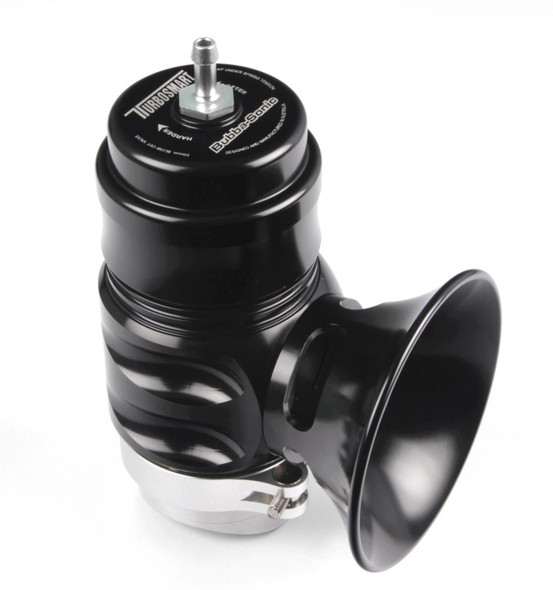
Turbosmart Universal Bubba Sonic BOV - Sleeper - TS-0204-1303
Turbosmart
MSRP: $512.99$461.69How do I confirm fitment for the Turbosmart TS BOV - Bubba Sonic?Turbosmart TS BOV - Bubba Sonic fitment is confirmed by verifying your specific vehicle application before purchase.What is the...MSRP: $512.99$461.69 -
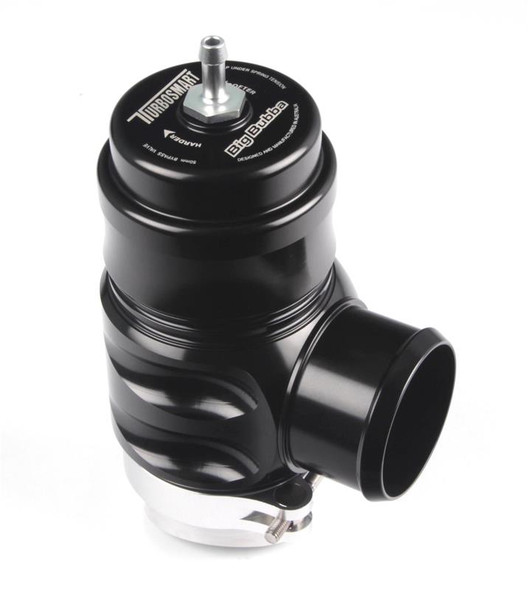

Turbosmart Universal Big Bubba BPV - Sleeper - TS-0204-1203
Turbosmart
MSRP: $483.99$435.59What is the boost pressure range for the TS Big Bubba BOV?The TS Big Bubba BOV accommodates multiple spring options, including 7, 12, 17, and 21 InHg, for precise boost pressure control.Is the TS Big...MSRP: $483.99$435.59 -


Turbosmart BOV RacePort Gen V Supercharger - Black - TS-0204-1152
Turbosmart
MSRP: $355.99$320.39What are the key features of the Turbosmart TS BOV Race Port?The Turbosmart TS BOV Race Port features Milspec hard-anodized valve components, billet aluminum construction, and a quick-release V-band...MSRP: $355.99$320.39 -
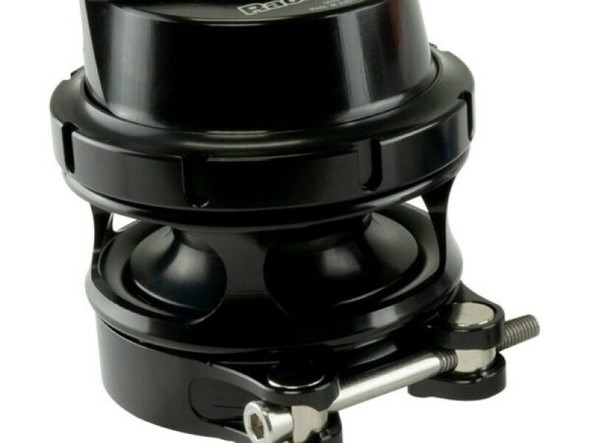
Turbosmart BOV RacePort Female GenV Sleeper (No Weld Flange) - TS-0204-1145
Turbosmart
MSRP: $366.99$330.29What is the primary function of a Blow-Off Valve?A Blow-Off Valve vents excess boost pressure, preventing turbocharger damage and improving throttle response by releasing pressure before it can surge...MSRP: $366.99$330.29 -

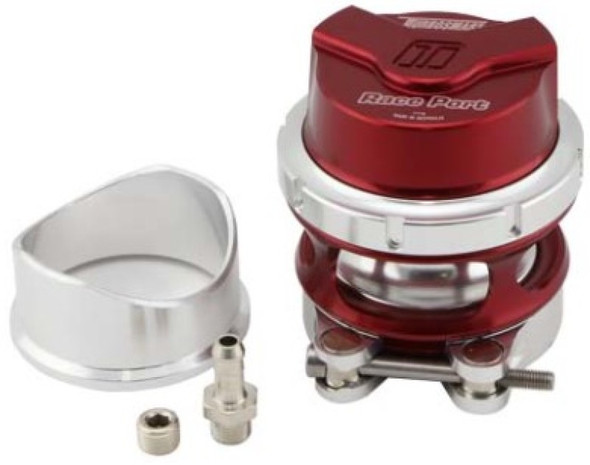
Turbosmart BOV RacePort Female Gen-V Red - No Weld Flange - TS-0204-1144
Turbosmart
MSRP: $343.99$309.59What is the primary function of a blow-off valve?A blow-off valve safely vents excess turbocharger boost pressure, protecting the turbo and engine from damage.How do I determine the correct blow-off...MSRP: $343.99$309.59 -
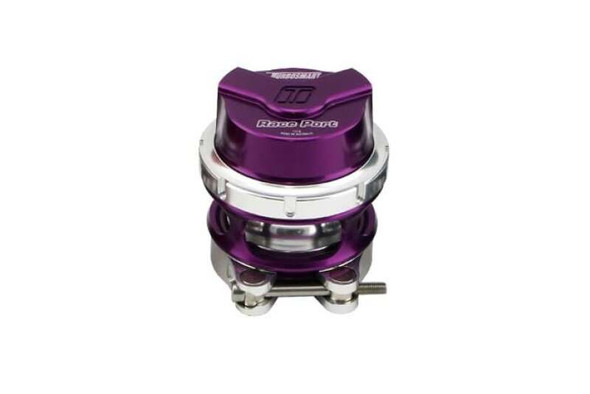

Turbosmart BOV RacePort Female Gen-V Purple - No Weld Flange - TS-0204-1143
Turbosmart
MSRP: $343.99$309.59How do I determine the correct Turbosmart BOV for my vehicle?Confirm fitment with your vehicle's specific application details before purchasing this high-performance Blow Off Valve.Is professional...MSRP: $343.99$309.59 -

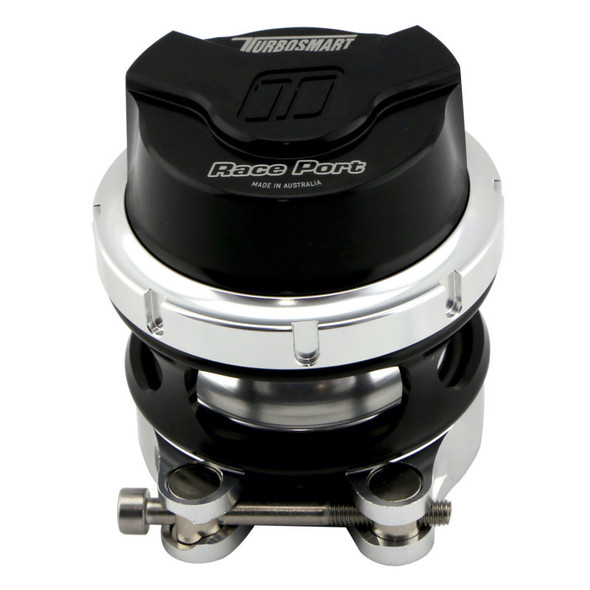
Turbosmart GenV RacePort Blow Off Valve - Black (For Female Flange) - TS-0204-1142
Turbosmart
MSRP: $343.99$309.59What is the primary function of a blow-off valve?A blow-off valve vents excess turbocharger boost pressure to protect your turbocharger and prevent compressor surge.How do I know if this blow-off...MSRP: $343.99$309.59 -

Turbosmart BOV RacePort Female Gen V - Blue No Weld Flange - TS-0204-1141
Turbosmart
MSRP: $343.99$309.59What makes the TS BOV - Race Port ideal for track use?This Blow Off Valve achieves extreme durability for relentless track performance due to its Milspec hard anodized valve guide and billet aluminum...MSRP: $343.99$309.59 -
Turbosmart BOV RacePort - Sleeper - TS-0204-1135
Turbosmart
MSRP: $366.99$330.29What is the primary function of a blow-off valve?A blow-off valve rapidly vents excess turbocharger boost pressure, preventing compressor surge and protecting the turbocharger system.How does a...MSRP: $366.99$330.29 -

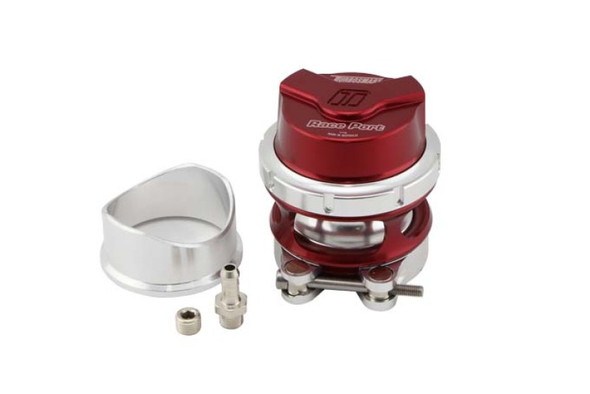
Turbosmart BOV RacePort - Red - Gen V - TS-0204-1134
Turbosmart
MSRP: $355.99$320.39What is the benefit of the MILSPEC hard-anodized valve guide and stem?MILSPEC hard-anodized valve guides and stems deliver ultra-smooth operation and exceptional durability for a lifetime of power...MSRP: $355.99$320.39 -

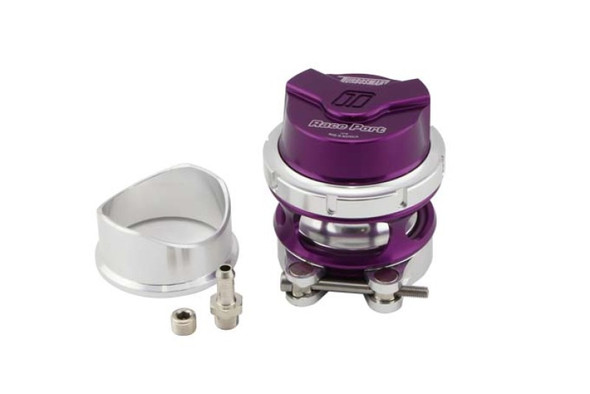
Turbosmart BOV RacePort - Purple - Gen V - TS-0204-1133
Turbosmart
MSRP: $355.99$320.39What is the Turbosmart TS BOV Race Port's performance capability for track use?The TS BOV Race Port delivers precise boost control, achieving ultra-smooth operation and exceptional durability for...MSRP: $355.99$320.39 -
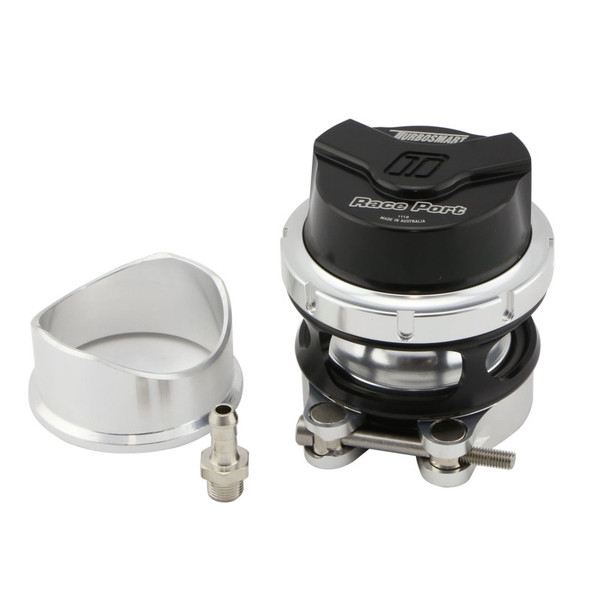
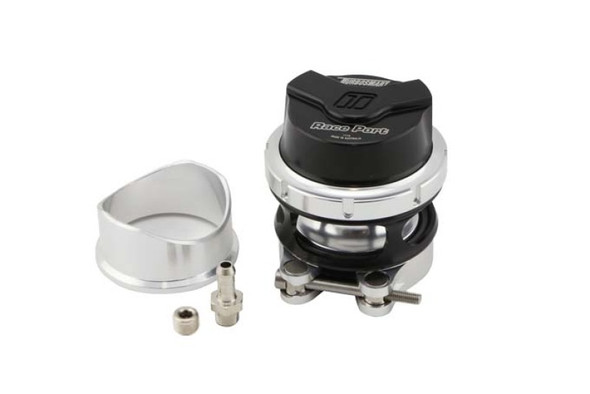
Turbosmart Gen V RacePort BOV - Black - TS-0204-1132
Turbosmart
MSRP: $355.99$320.39Does this Turbosmart blow off valve come with springs?This Turbosmart Race Port Blow Off Valve includes 5 user-configurable spring options, ensuring precise boost control tailored to your specific...MSRP: $355.99$320.39
A blow off valve (BOV) is a pressure relief device mounted in the charge pipe between the turbocharger compressor outlet and the throttle body — it vents pressurized air when the throttle closes to prevent compressor surge, protect turbo bearings, and maintain spool response between gear changes. Motor Sport Mayhem stocks 269 blow off valves across 48 brands, from entry-level OEM replacements to competition-spec piston and diaphragm units capable of handling 50+ psi of boost pressure.
Our Top Picks for Blow Off Valves
Every product below was selected based on demonstrated performance, verified fitment engineering, and real-world results across street, track, and race applications.
ADD Intercooler Upgrade Kits
Addictive Desert Designs | $1,499.99
A complete charge-side thermal management upgrade that reduces intake air temperatures and supports higher sustained boost pressure.
- Full kit format eliminates mismatched charge piping and pressure drop between components
AEM Water/Meth Systems
AEM | $699.95
Water-methanol injection complements forced induction systems by chemically cooling charge air and suppressing detonation at elevated boost levels.
- Internal MAP sensor enables progressive injection control tied directly to boost pressure
AFE Bladerunner I/C & Tubes
aFe | $2,036.00
High-density bar-and-plate core construction maximizes thermal rejection on high-output diesel applications where charge temps are the primary power limiter.
- Matched tube set eliminates OEM plastic end-tank failure points under sustained boost
ABR Solenoids
All Balls Racing | $41.33
A precision-rebuilt solenoid assembly that restores consistent electrical actuation response in boost control and pressure management circuits.
- Rebuild kit format provides OEM-spec tolerances at a fraction of dealer replacement pricing
PA Alta Tensioner Stop
Alta | $99.45
An adjustable tensioner stop that prevents supercharger belt skip under high-boost conditions, a prerequisite for reliable forced induction performance.
- Adjustable design allows tuning of belt tension across a range of pulley and boost configurations
AMS Intercoolers
AMS | $2,178.27
A front-mount intercooler kit engineered to drop charge air temperatures by 40–60°F over stock, directly enabling more aggressive boost and timing maps.
- Includes structural bumper beam replacement to maintain chassis integrity with the OEM crash structure removed
ATS 4000 Turbo Kits
ATS Diesel | $3,549.99
A compound turbocharger system designed to deliver high-volume airflow at elevated boost with dramatically reduced exhaust backpressure versus single-turbo configurations.
- Stage 2 specification targets tow and competition use where sustained full-load thermal management is critical
AWE Intercoolers
AWE Tuning | $3,545.00
A performance intercooler kit engineered for factory-turbocharged sports car platforms where OEM charge cooling capacity becomes a ceiling for power output.
- Precision-fit core sizing maintains OEM clearances while maximizing contact surface area for thermal transfer
GBE Techni-Cooler Systems
Banks Power | $1,829.00
A complete intercooler system validated for high-torque diesel applications where sustained towing loads push charge air temps beyond OEM cooling capacity.
- System-level engineering accounts for charge pipe routing, sealing, and flow path — not just the core
BDD Turbos
BD Diesel | $3,918.95
A high-flow drop-in turbocharger replacement engineered for increased compressor wheel diameter and upgraded bearing systems that support sustained high-boost operation.
- Direct OEM mounting geometry eliminates custom fabrication while delivering measurable flow improvements over stock
How to Choose the Right Blow Off Valve
The single most important variable in BOV selection is matching the valve's pressure rating and flow capacity to your turbo's actual compressor output — an undersized valve will not fully vent peak boost pressure fast enough, allowing surge pulses to reach the compressor wheel and accelerate bearing wear. Beyond flow capacity, the choice between atmospheric venting (the audible "pshhh" sound) and recirculating designs that return air to the intake pre-turbo has real-world implications: recirculating valves are the correct choice for any speed-density or MAF-based tune that has already metered that air mass, while atmospheric vents are fully appropriate on systems with post-BOV MAF placement or standalone ECU setups. Construction quality at the piston-to-body interface is where cheap units fail — look for anodized billet aluminum bodies, PTFE-sealed pistons, and stainless hardware rated for continuous boost cycling rather than cast zinc or polymer bodies with rubber lip seals that harden and leak within 12–18 months of heat cycling.
Key Specifications
Piston diameter directly determines flow capacity — a 34mm piston valve will handle most sub-400whp street applications, while serious track and competition builds running 25+ psi on larger displacement engines require 50mm or larger piston assemblies to vent fast enough to prevent surge on snap-throttle lift events. Spring preload is equally critical: too-light a spring allows the valve to crack open under boost and leak pressure before the throttle closes, robbing power; too-heavy a spring creates a lag spike when the valve finally opens. Most quality valves ship with multiple spring options and allow preload adjustment — verify this feature before purchase if your boost levels fall outside the manufacturer's rated range.
For forced induction systems running external wastegates or compound setups, ensure the BOV inlet and outlet port diameters match or exceed your charge pipe diameter — a 2.5-inch charge pipe feeding into a 1.75-inch BOV inlet creates a measurable restriction that negates the valve's flow advantage. Billet piston designs outperform diaphragm designs above 25 psi because diaphragm material fatigue accelerates exponentially with boost pressure and heat cycles, while a properly toleranced piston with a PTFE or O-ring seal retains consistent actuation force across thousands of cycles. Material matters for longevity: anodized 6061-T6 aluminum is the industry standard for the valve body, while stainless steel internal components resist the combined effects of boost pressure, heat, and blow-by contamination that will corrode unprotected alloy parts.
Vacuum port sizing and hose routing to the intake manifold or compressor inlet determines how quickly the valve receives its actuation signal — a kinked or undersized vacuum line introduces lag between throttle closure and valve opening, which is exactly the millisecond window where surge damage occurs. On street-driven daily applications, a dual-port design that combines atmospheric and recirculating function offers the flexibility to tune the sound profile while maintaining fueling accuracy. Always verify inlet and outlet flange compatibility with your specific charge pipe diameter and connection type (silicone coupler slip-on versus flanged) before ordering to avoid adapters that add restriction and potential leak points to the charge circuit.
If your application uses a engine management system with closed-loop boost control, confirm that the BOV's actuation pressure range is compatible with the solenoid or electronic actuator signals your ECU outputs — mismatch here produces erratic boost behavior that cannot be tuned around without a mechanically correct valve in place first.
Blow Off Valve Sizing Reference: Boost Pressure vs. Piston Diameter vs. Target Power
| Boost Pressure (psi) | Recommended Min. Piston Diameter | Target Power Range (whp) | Recommended Valve Type |
|---|---|---|---|
| 5–10 psi | 30–34mm | Up to 250 whp | Diaphragm or small piston, single-port |
| 10–18 psi | 34–38mm | 250–400 whp | Dual-port piston, adjustable spring |
| 18–25 psi | 38–45mm | 400–600 whp | Billet piston, PTFE-sealed, adjustable preload |
| 25–35 psi | 45–50mm | 600–900 whp | Billet piston, dual-stage spring, stainless internals |
| 35–50 psi | 50–60mm | 900–1400 whp | High-pressure rated piston, ported body, race spec |
| 50+ psi | 60mm+ | 1400+ whp | Competition-only, external actuation, custom porting |
Price Guide
Entry ($3.42–$350): This range covers OEM-replacement diaphragm valves, rebuild kits, solenoids, and basic piston BOVs adequate for lightly modified street cars running stock or near-stock boost levels — honest performance for daily drivers that don't push the limits of their factory turbo system.
Mid-range ($350–$900): The majority of enthusiast builds land here — dual-port billet piston valves with adjustable spring preload, quality anodized finishes, and genuine flow capacity ratings up to 25 psi represent the best value intersection of durability, tunability, and fitment breadth across the widest range of platforms.
Premium ($900–$13,288.86): Competition-spec valves, complete forced induction system upgrades, and high-flow compound turbo packages occupy this tier — justified for dedicated track builds, high-horsepower diesel performance, and race applications where valve failure or charge system inefficiency carries a cost far higher than the hardware itself.
Who Is This For?
Blow off valves serve a broad spectrum of applications, from protecting a mildly boosted daily driver to enabling consistent power delivery in a purpose-built competition vehicle — the usage data across 269 products confirms genuine demand at every level of the performance spectrum.
Engine Performance — 8.7/10
Engine protection is the highest-rated use case in this category, and for good reason: compressor surge is a direct mechanical threat to turbocharger bearing and seal life, and a properly spec'd BOV eliminates it entirely. The 8.7/10 score reflects how foundational this component is — it's not optional equipment on a boosted engine, it's a required part of a complete forced induction system. Engine builders and tuners treat BOV selection as part of the charge circuit design, not an afterthought.
Racing Competition — 8.2/10
Competition applications score 8.2/10 because consistent, repeatable valve actuation directly affects power delivery between shifts — a valve that opens too slowly or too early introduces variability in turbo spool behavior that a driver cannot compensate for through technique alone. Race-spec units in this category are built to tighter dimensional tolerances, rated for higher cycle counts, and often feature external actuation options for setups running aggressive boost profiles that standard vacuum-actuated designs cannot reliably control. For forced induction competition builds, the BOV is part of a system that also includes the wastegate, boost controller, and charge piping — all of which must be sized and tuned together.
Street Performance — 8.0/10
Street performance and drag racing both score 8.0/10, reflecting that a BOV upgrade delivers tangible benefits on the street — better throttle response on re-application, elimination of the stock valve's flutter noise under boost, and improved longevity for the turbocharger on vehicles that spend meaningful time at elevated boost. Street-use buyers should prioritize dual-port designs that allow tuning the atmospheric versus recirculating split, and should confirm MAF sensor placement before selecting an atmospheric-only valve to avoid triggering rich/lean conditions post-lift.
Drag Racing — 8.0/10
Drag racing demands a BOV that vents instantly and completely on the shift cut, then reseals immediately without pressure loss as boost rebuilds — valve response time measured in milliseconds translates directly to power loss or gain between gears. Many drag-spec builds run atmospheric vents intentionally for the audible boost pressure confirmation that experienced drivers use as part of their shift timing feedback. The 8.0/10 score across 184 products confirms that serious drag builds treat the BOV as a performance component, not just a protection device.
Track / Autocross — 8.0/10
Track and autocross applications at 8.0/10 emphasize consistent valve behavior across variable throttle inputs — autocross in particular involves rapid, repeated throttle transitions that cycle the BOV dozens of times per run, exposing any inconsistency in spring preload or piston seal integrity. Heat soak is a secondary concern on circuit applications where ambient underhood temperatures build over consecutive laps; billet bodies with anodized finish retain their dimensional stability far better than polymer or cast designs under these conditions. Pairing a quality BOV with cooling upgrades is standard practice on track builds.
Trusted Blow Off Valve Brands We Carry
Turbosmart has built its reputation as the most prolific BOV manufacturer in the aftermarket through decades of piston-valve engineering refinement, offering the broadest fitment coverage and the widest range of pressure ratings in the category — their adjustable dual-port designs are an industry benchmark. Go Fast Bits pioneered the dual-port recirculating/atmospheric design concept and remains the reference standard for tunability on MAF-equipped platforms. HKS brings direct OEM turbocharger supplier engineering credibility to their valve designs, with tolerances and materials that reflect decades of supplying Japanese OEM forced induction programs. Turbosmart, Go Fast Bits, and HKS collectively define the technical standard that the rest of the category is measured against, while brands like aFe and Mishimoto extend coverage into complete charge system kits where the BOV is engineered as part of a matched intercooler and pipe package — ensuring flow compatibility across the entire circuit rather than optimizing a single component in isolation. BorgWarner's standing as an OEM turbocharger supplier to global automakers gives their forced induction components manufacturing tolerances and material certifications that most aftermarket-only brands cannot match.
Frequently Asked Questions
Are blow-off valves bad for your engine?
A properly selected and installed blow off valve protects your engine rather than harming it — specifically, it protects the turbocharger by eliminating compressor surge, which is the pressure wave reversal that occurs when the throttle closes against a sealed charge system. The confusion arises from atmospheric BOVs installed on MAF-equipped vehicles without accounting for metered air mass: when the valve vents post-MAF air to atmosphere, the ECU has already calculated fuel delivery for that air, causing a momentary rich condition that can foul plugs or trigger fault codes over time. The solution is either a recirculating design that returns the air pre-MAF or a retune that accounts for the vented air — a BOV installed correctly for your specific fuel management setup introduces no engine risk whatsoever and meaningfully extends turbocharger service life.
Are aftermarket turbos worth it?
Aftermarket turbochargers deliver genuine performance returns when the OEM unit is the actual bottleneck — most factory turbos are sized conservatively for emissions compliance, fuel economy, and broad powerband characteristics rather than peak output, meaning a larger or higher-flowing aftermarket unit can release substantial power without other major engine modifications. The trade-off is response: larger turbos require more exhaust energy to spool, introducing additional lag that can make street driving less satisfying unless the entire charge and exhaust system is tuned to complement the new unit. For applications where the stock turbo is operating near its compressor map limits — identifiable by falling boost pressure at high RPM or elevated charge air temperatures — an aftermarket replacement is one of the highest-return individual modifications available, but it should be paired with appropriate fuel delivery and tune upgrades to realize the full benefit safely.
Are boost controllers worth it?
Boost controllers are worth the investment any time you need precise, repeatable boost pressure management beyond what the factory wastegate actuator provides — mechanical bleed-type controllers offer simple, cost-effective boost increases, while electronic boost controllers with closed-loop solenoid actuation deliver the consistency that competitive and high-horsepower builds demand. On a stock turbo system, a boost controller lets you run the compressor closer to its actual flow limit without the safety margin the factory tune leaves in place, which translates to measurable power gains without hardware changes. The more important question is whether your engine management system can support the additional boost safely — a boost controller without a corresponding fuel and ignition tune is how engines get damaged, so treat the controller as part of a system upgrade, not a standalone modification.
Are boost pipes and charge pipes the same thing?
Boost pipes and charge pipes refer to the same components — the aluminium or silicone tubing that carries pressurized air from the turbocharger compressor outlet through the intercooler and to the throttle body. The terminology varies by region and platform community, but the engineering requirements are identical: the piping must withstand sustained boost pressure without expansion or collapse, seal perfectly at every coupler junction, and maintain adequate internal diameter to avoid restricting airflow to the throttle body. Factory charge pipes on high-output engines are frequently made from plastic with integrated resonators that create flow restrictions; aftermarket aluminium replacements eliminate both the restriction and the common failure mode of plastic cracking under heat cycling and boost pressure fatigue.
Are boost solenoids universal?
Boost solenoids are not universal — they vary in port size (typically 1/8" NPT to 3/8" NPT), flow rate, duty cycle rating, and electrical connector type, all of which must match your specific boost controller or ECU output and your wastegate's vacuum line diameter. A solenoid with the wrong flow rate will either over- or under-bleed the wastegate reference signal, producing boost that is either lower than target or uncontrolled — neither of which is acceptable on a tuned build. The operating frequency also matters: performance boost control applications typically require solenoids rated for 33Hz or higher duty cycle operation, while generic HVAC or industrial solenoids at lower frequencies produce inconsistent boost response at the valve-opening and closing transitions that a precision tune depends on for repeatability.
Building something specific? Our performance specialists can help you select the right Blow Off Valves for your application — street, track, or full race build.