
Forced Induction
- Product
- Qty in Cart
- Quantity
- Price
- Subtotal
-
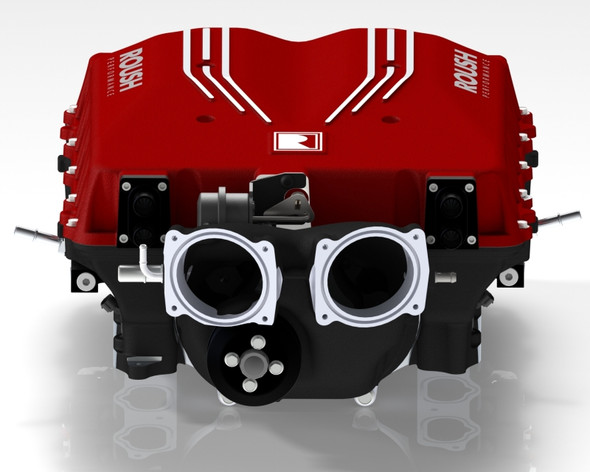
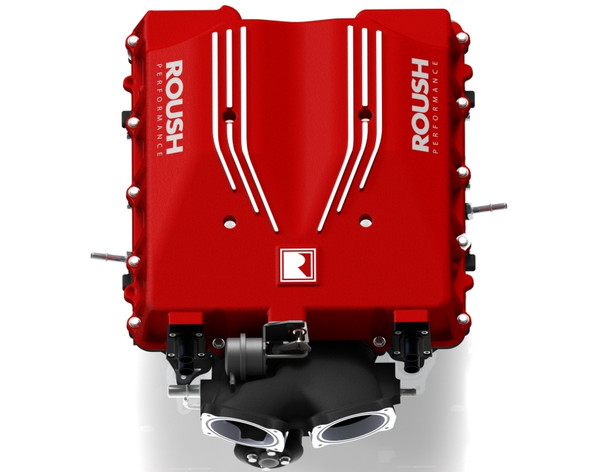
Roush 2024 Ford Mustang GT / Dark Horse 5.0L Phase 2 Supercharger Kit - 422337
Roush
$11,805.99What is the primary function of the RSH Supercharger Kit?RSH Supercharger Kits forcibly induct more air into your engine, significantly increasing horsepower and torque for dramatic performance gains.How much horsepower and torque can I expect to gain...$11,805.99 -
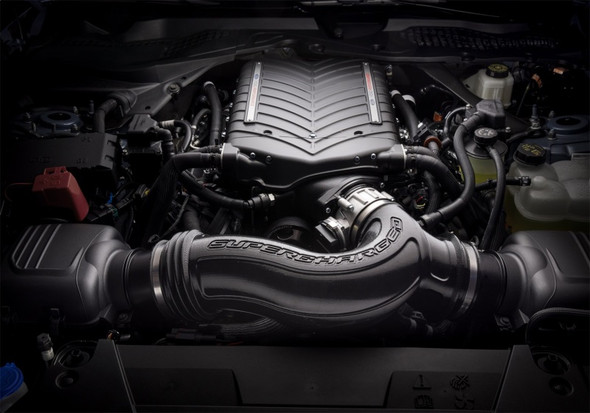
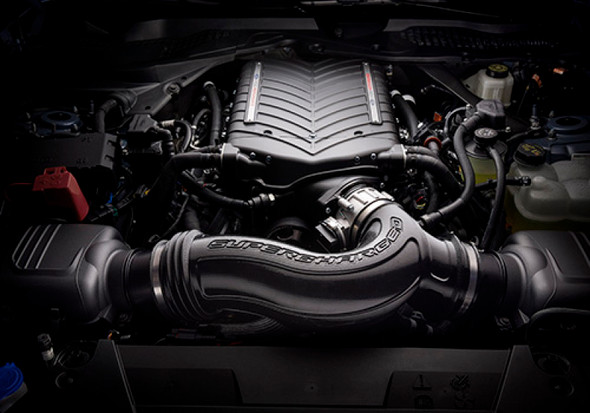
Ford Racing 2024+ Mustang GT/Dark Horse 5.0L Supercharger Kit - M-6066-M8800
Ford Racing
$13,288.86What is the horsepower and torque output of the FR Supercharger Kit for the 2024-2025 Ford Mustang?The FR Supercharger Kit delivers a formidable 810 horsepower and 615 lb-ft of torque, optimizing the 2024-2025 Ford Mustang's performance.Is professional...$13,288.86 -


Ford Racing 21-25 Ford F-150 5.0L Supercharger Kit - M-6066-F150SCA
Ford Racing
$12,970.01What is the horsepower gain with the FR Supercharger Kit for my F-150?This FR Supercharger Kit dramatically boosts your 2021-2025 F-150's power output, delivering exhilarating acceleration and effortless passing power.How difficult is the installation of...$12,970.01
Forced induction — turbocharging, supercharging, and nitrous oxide injection — is the most direct path to significant power gains, forcing more air mass into the combustion chamber than atmospheric pressure alone allows. Motor Sport Mayhem stocks 1,753 forced induction components across 48 brands, spanning entry-level solenoids and BOV rebuild kits all the way to full competition turbo systems rated for four-figure horsepower.
Our Top Picks for Forced Induction
Every product below was hand-selected based on proven performance data, build quality, and real-world results across street, track, and full race applications.
ADD Intercooler Upgrade Kits
Addictive Desert Designs | $1,499.99
A direct-fit intercooler upgrade engineered to reduce charge air temperatures under sustained high-load conditions where the factory core runs out of thermal capacity.
- Larger core volume over stock translates directly to lower intake temps and sustained power under heat soak
AEM Water/Meth Systems
AEM | $699.95
A progressive water-methanol injection system that lowers charge air temperature and raises effective octane rating simultaneously, unlocking additional timing and boost in a single kit.
- Internal MAP-referenced control ensures injection volume scales precisely with boost pressure across the entire RPM range
aFe Bladerunner I/C & Tubes
aFe | $2,036.00
A full bar-and-plate intercooler and charge tube package engineered specifically for high-EGT diesel applications where charge temps and tube pressure ratings must both be elevated over OEM spec.
- Bar-and-plate core construction withstands higher burst pressures and resists deformation better than tube-and-fin alternatives in heavy-duty use
ABR Solenoids
All Balls Racing | $41.33
A precision-spec solenoid rebuild kit that restores correct electrical actuation response for boost control and valve management systems where degraded OEM solenoids introduce boost creep or inconsistent response.
- Correct solenoid response is foundational to boost controller accuracy — a worn solenoid defeats even the best external controller
Alta Tensioner Stop
Alta | $99.45
An adjustable supercharger belt tensioner stop that eliminates belt slip under high boost loads, a common failure point on Roots-type positive displacement supercharger setups running elevated drive ratios.
- Belt slip at peak boost not only drops power output but generates heat that accelerates belt degradation — a hard stop eliminates the variable
AMS Intercoolers
AMS | $2,178.27
A front-mount intercooler kit with integrated bumper beam that replaces the factory top-mount unit, dramatically increasing core volume and ambient airflow exposure for consistent charge temps under track conditions.
- FMIC placement with structural bumper integration solves both thermal management and chassis rigidity without requiring custom fabrication
ATS 4000 Turbo Kits
A Stage 2 compound turbo system engineered for high-demand diesel applications, where the twin-turbo layout extends the compressor map to support elevated flow targets while maintaining low-end spool response.
- Compound turbo architecture splits boost work across two compressor stages, reducing individual turbine heat load and extending component lifespan under towing and competition use
AWE Intercoolers
AWE Tuning | $3,545.00
A performance intercooler kit developed for factory turbocharged platforms where OEM intercooler sizing is the limiting factor preventing consistent power delivery across back-to-back track sessions.
- Engineered to OEM fit standards with measurably improved thermal efficiency — no custom fabrication required for installation
Banks Power Techni-Cooler Systems
Banks Power | $1,829.00
A complete intercooler system replacement that prioritizes both charge air cooling efficiency and charge pipe flow velocity, addressing two separate OEM restrictions with a single bolt-on upgrade.
- Banks Power's engineering background in commercial diesel applications means thermal margins are built conservatively — these systems hold up under sustained high-load use that destroys lighter alternatives
BD Diesel Turbos
BD Diesel | $3,918.95
A drop-in replacement turbocharger with upgraded compressor and turbine wheel specifications that expands the factory flow ceiling without requiring supporting modifications to turbo mounting or exhaust routing.
- Maintaining OEM turbo housing dimensions while improving wheel aero allows significant airflow gains without triggering clearance or heat management issues elsewhere in the engine bay
How to Choose the Right Forced Induction
The difference between a forced induction system that makes power reliably and one that fails at 15 psi comes down to three things: compressor map match to your engine's airflow demand, thermal management capacity for your duty cycle, and material integrity at operating pressure and temperature. A turbocharger or supercharger that is undersized will surge under load; one that is oversized will spool slowly and leave power on the table below peak RPM. Intercoolers that use low-density tube-and-fin cores heat-soak quickly under track conditions, while bar-and-plate cores retain cooling capacity but add pressure drop — understanding that tradeoff is essential before you buy.
Key Specifications
For turbocharger selection, compressor maps are the definitive specification document — not advertised horsepower numbers. A turbocharger's efficiency island on its compressor map tells you exactly what pressure ratio and airflow range the unit operates in without surging or choking. Matching your engine's calculated airflow demand (displacement × RPM × volumetric efficiency ÷ 3456 for CFM) to the turbo's efficiency island at your target boost pressure is the correct selection method. Ignore this step and you will either fight surge at part throttle or run the compressor in a choked, heat-generating condition at peak demand.
Intercooler sizing is governed by two competing requirements: core volume for thermal capacity and pressure drop for charge density. A larger core holds more thermal mass and recovers faster between high-load events, which matters enormously for back-to-back track sessions. However, a core with excessive volume or poor fin geometry introduces pressure drop that reduces the density advantage you gained by cooling the charge — net power can actually decrease with a poorly designed oversized intercooler. The target is the lowest charge outlet temperature achievable at the lowest pressure differential, which is why core design and fin density matter as much as overall size.
Water-methanol injection operates differently from hardware upgrades — it is a chemical intercooling and octane enhancement method that works in parallel with your existing boost hardware. Methanol's latent heat of vaporization (1,174 kJ/kg versus 2,260 kJ/kg for water) absorbs significant heat from the intake charge as it vaporizes, while simultaneously raising the effective octane of the air-fuel mixture by acting as a supplemental fuel with anti-knock properties. Progressive injection systems that scale flow with boost pressure are far superior to fixed-duty systems because they maintain correct fluid ratios across the entire boost curve rather than just at peak.
Boost control hardware — solenoids, electronic boost controllers, and wastegate actuators — must be matched to your target boost level and the response characteristics of your specific turbo and wastegate combination. A boost solenoid controls how much pressure signal reaches the wastegate actuator; a worn or incorrect solenoid introduces lag and inconsistency that no tuning file can fully compensate for. For nitrous systems, jet sizing is the primary tuning variable — nitrous jet diameter controls oxidizer flow rate while fuel jet diameter controls the supplemental fuel enrichment, and the ratio between them determines both power output and air-fuel ratio safety margin.
Intercooler Core Sizing Reference by Boost Pressure and Power Target
| Power Target (whp) | Boost Pressure Range | Minimum Core Volume (in³) | Recommended Core Type |
|---|---|---|---|
| 200–300 whp | 6–12 psi | 600–900 in³ | Tube-and-fin or bar-and-plate — either acceptable at this duty cycle |
| 300–450 whp | 12–18 psi | 900–1,400 in³ | Bar-and-plate recommended — tube-and-fin heat soaks under sustained load |
| 450–600 whp | 18–25 psi | 1,400–2,000 in³ | Bar-and-plate required — fin density 16–18 fpi for optimal pressure/thermal balance |
| 600–800 whp | 25–35 psi | 2,000–2,800 in³ | Bar-and-plate with water-methanol injection recommended as thermal supplement |
| 800–1000+ whp | 35–50+ psi | 2,800+ in³ or water-to-air | Water-to-air or dual-core air-to-air — air-to-air faces diminishing returns above this threshold |
Price Guide
Entry ($3.42–$350): This range covers solenoids, rebuild kits, tensioner hardware, individual fittings, blow-off valve rebuild components, and nitrous jets — the supporting hardware that keeps an existing forced induction system functioning correctly. These are not full system upgrades, but degraded or worn components in this tier are among the most common root causes of boost inconsistency and power loss on existing setups. High-value category for maintenance-minded builders.
Mid-range ($350–$1,500): The most populated tier for complete bolt-on upgrades: full blow-off valve assemblies, boost controllers, water-methanol injection systems, intercooler pipe kits, and entry-level drop-in turbo upgrades land here. This is where most street performance and weekend track builds find their primary forced induction upgrades, and where brands like Turbosmart, Go Fast Bits, Snow Performance, and aFe deliver the strongest price-to-performance ratio. Expect measurable, tunable power gains without requiring supporting drivetrain changes at the lower end of this range.
Premium ($1,500–$13,288.86): Complete turbo system replacements, compound diesel turbo kits, high-flow front-mount intercooler kits for high-power platforms, and purpose-built competition turbochargers occupy this range. Brands like Garrett, BorgWarner, HKS, and AMS operate primarily here because the engineering margin required for 600+ whp targets, sustained race use, or OEM-fit precision on European and Japanese performance platforms demands it. This tier is appropriate when the power target, thermal requirements, or reliability standards of your application exceed what mid-range hardware can support.
Who Is This For?
Forced induction hardware serves everyone from daily drivers chasing 50 additional wheel horsepower to dedicated competition teams building four-figure power numbers — the application determines the hardware tier, not the other way around.
Engine Performance — 8.7/10
Forced induction scores the highest of any use case for engine performance at 8.7 out of 10 across 198 products, which reflects the fundamental reality that adding compressed air mass to the combustion event is the most leverage-per-dollar power modification available on any platform. Unlike naturally aspirated modifications that chase marginal volumetric efficiency gains, forced induction multiplies the air charge directly. Supporting engine components — bearings, rods, and head hardware — should be evaluated in parallel when boost levels climb beyond factory design margins.
Racing Competition — 8.2/10
At 8.2 out of 10 across 167 competition-rated products, forced induction hardware is central to virtually every form of motorsport that permits it. Competition use demands hardware rated for sustained operation at elevated boost and temperature — the duty cycle in racing exposes weaknesses in core construction, actuator materials, and solenoid response time that street use rarely reveals. Compound turbo systems, high-flow intercoolers, and precision boost control components are the tools that separate consistent lap times from power that fades after the second or third hot lap.
Drag Racing — 8.0/10
Drag racing scores 8.0 out of 10 across 184 products and drives some of the most specialized forced induction hardware in the catalog — nitrous oxide systems, high-spool turbochargers optimized for a narrow RPM band, and progressive water-methanol injection setups designed to support maximum ignition timing on a single pass. Unlike road course applications where sustained thermal management dominates, drag racing prioritizes peak airflow and charge density at wide-open throttle over a short duration, which changes intercooler sizing strategy and turbo compressor map selection significantly.
Street Performance — 8.0/10
Street performance ties drag racing at 8.0 out of 10 across 200 products and represents the largest volume use case in this category. Street builds demand a broader operational range than race-only setups — the forced induction hardware must function correctly from cold start, idle, part-throttle cruise, and full boost, not just at peak load. Blow-off valves, boost controllers, and intercooler upgrades that maintain drivability across the full throttle map are the priority here, and many of the 200 street-rated products in this category are specifically engineered for that balance. Pairing forced induction upgrades with a proper cold air intake and fuel delivery upgrades ensures the compressor side gains are supported on both the intake and fueling ends.
Track / Autocross — 8.0/10
Track and autocross applications score 8.0 out of 10 across 183 products, with thermal management being the dominant technical concern that separates good track-day forced induction hardware from components that perform well on the first lap but fade under heat soak by the third. Repeated high-load events without adequate cool-down periods stress intercooler cores, heat exchanger circuits, and blow-off valve response in ways that street or single-pass drag applications never do. Front-mount intercooler systems with high core volume and bar-and-plate construction are the correct specification for this use case — and pairing with upgraded cooling system hardware addresses the broader thermal load that forced induction adds to the engine at sustained track pace.
Trusted Forced Induction Brands We Carry
The 48 brands in this catalog were not assembled arbitrarily — each has a specific technical reason it belongs here. Garrett and BorgWarner are OEM turbocharger suppliers to multiple factory performance programs; their aftermarket compressor wheels and CHRA cartridges are manufactured on the same equipment as their OEM units. Turbosmart developed its blow-off valve and wastegate technology specifically around high-boost aftermarket applications and backs every product with measured flow data. HKS built its reputation on the Japanese performance market's uncompromising standards for precision fitment and boost management hardware that operates consistently across extreme temperature ranges. Go Fast Bits introduced the dual-port recirculating BOV technology that has since become an industry standard reference point, and their products continue to be benchmarked against by competitors. Snow Performance and AEM have defined the water-methanol injection segment through engineering progressively controlled injection systems with documented charge temperature reduction data, rather than generalized claims — and aFe's engineering team produces intercooler and charge pipe systems with measured flow bench and dyno data attached to every core design.
Frequently Asked Questions
Are aftermarket turbos worth it compared to rebuilding the stock unit?
An aftermarket turbocharger is worth the investment when your power target exceeds what the factory compressor map supports, when OEM turbo availability is poor, or when the stock unit's response characteristics — spool speed, peak flow, surge behavior — are the limiting factor in your build. A quality rebuild of a stock unit restores original specification but does not expand the compressor map, so if you have already hit the airflow ceiling of the factory turbo, you are spending rebuild money to maintain a limitation. Aftermarket units from engineering-driven manufacturers include compressor map data so you can verify the match to your application before purchase — that is the correct way to evaluate the decision, not by horsepower marketing claims alone.
Are air-to-air intercoolers good, or should I be looking at water-to-air systems?
Air-to-air intercoolers are the correct choice for the majority of high-power forced induction builds because they reject heat directly to ambient air without requiring a secondary heat exchanger circuit, pump, reservoir, or coolant that can itself heat-soak. Their limitation is physical size — you need enough core volume and ambient airflow to maintain cooling efficiency, which can be a constraint in tight engine bays or in very high-boost applications above roughly 800 wheel horsepower where air-to-air faces diminishing returns. Water-to-air systems have lower pressure drop and can be packaged more compactly, which makes them the correct choice for rear-engine or mid-engine layouts, supercharger applications with short charge paths, or extreme power builds where an ice-water reservoir provides additional thermal capacity for short-duration events. For the majority of front-engine turbocharged builds with front-mounted intercooler placement and adequate airflow, a properly sized air-to-air bar-and-plate core outperforms water-to-air in sustained use.
Are blow-off valves actually bad for your engine?
Blow-off valves vent pressurized charge air to atmosphere when the throttle closes, preventing compressor surge — the violent pressure reversal that occurs when the throttle plate snaps shut against a pressurized charge pipe. Compressor surge is not a harmless sound; repeated surge events stress the turbocharger's compressor wheel, thrust bearings, and shaft seal in ways that accelerate wear and can cause catastrophic failure on high-boost setups. On vehicles with mass airflow sensors upstream of the throttle body, a venting blow-off valve discharges metered air that the ECU has already accounted for, which can cause a momentary rich condition on reapplication — this is why recirculating bypass valves (which return the vented air to the intake pre-compressor) are used on MAF-based systems. A correctly specified BOV is not harmful; running without one on a turbocharged application with a fast-closing throttle is.
Are boost controllers actually worth installing, or does the wastegate handle everything?
A wastegate without an external boost controller defaults to a fixed cracking pressure determined by the wastegate spring — typically a conservative low-boost baseline set by the manufacturer to ensure the wastegate opens before boost can build to damaging levels. A boost controller bleeds pressure off the wastegate actuator signal, allowing you to run boost above the spring rate by delaying actuator opening, and in electronic form, allows boost curves mapped against gear, RPM, and vehicle speed. On any turbocharged application where you are tuning for more than stock boost levels, a boost controller is not optional — it is the mechanism by which target boost is actually achieved and held consistently. Electronic boost controllers from reputable manufacturers add the additional capability of gear-dependent boost maps, which is directly relevant to drivetrain longevity on high-power setups where drivetrain components are operating near their torque limits in lower gears.
Are boost pipes and charge pipes the same thing?
The terms are used interchangeably in the aftermarket, but technically the charge pipe is the pressurized side of the intercooler circuit — the pipe that carries compressed, cooled air from the intercooler outlet to the throttle body — while boost pipe more broadly describes any pipe in the pressurized portion of the intake tract between the turbocharger compressor outlet and the engine. In practical terms, both refer to the same components in a typical single-turbo layout, and both must be rated for your peak boost pressure with adequate clamp engagement to prevent blowoff under pressure spikes. The critical specification is wall thickness and material: thin-wall silicone couplers without adequate reinforcement layers will balloon and burst at high boost, and aluminum pipe with insufficient wall thickness can crack at couplers under the thermal cycling and vibration of sustained boost events — fittings and clamp hardware are equally important to the pipe material itself.
Building something specific? Our performance specialists can help you select the right Forced Induction for your application — street, track, or full race build.