
Steel Tubing
- Product
- Qty in Cart
- Quantity
- Price
- Subtotal
-
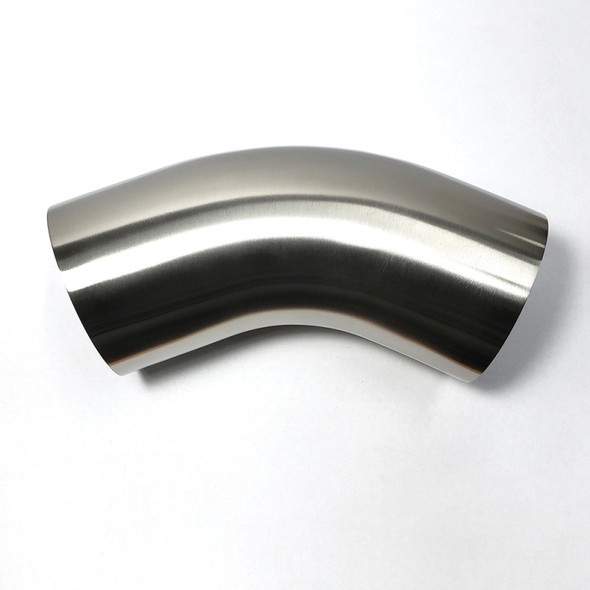
Stainless Bros 1.75in SS304 45 Degree Bend Elbow - 1.5D / 2.625in CLR - 16GA / .065in Wall w/ Leg - 601-04526-4150
Stainless Bros
$17.99Stainless Bros 1.75in SS304 45 Degree Bend Elbow - 1.5D / 2.625in CLR - 16GA / .065in Wall w/ Leg$17.99 -
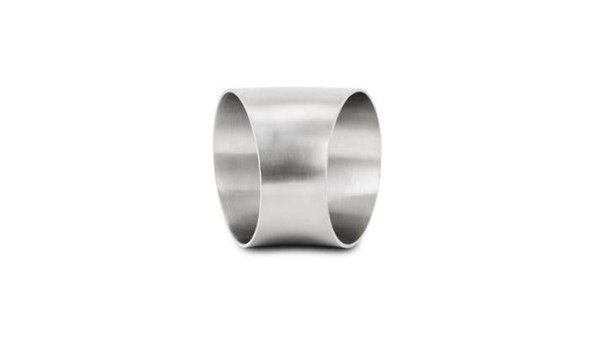
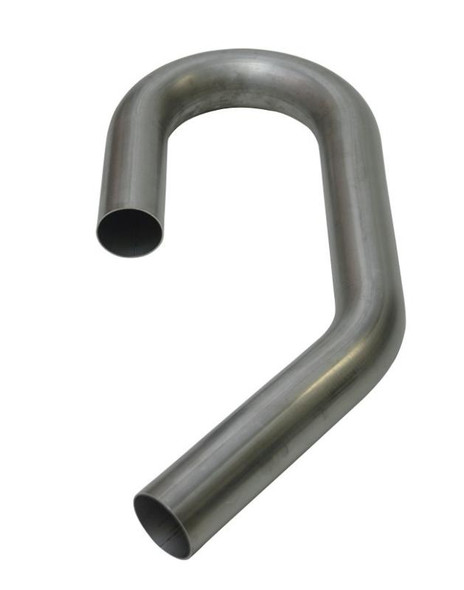
Vibrant 3in O.D. T304 SS 45 deg Mandrel Bend (3in Centerline Radius) - 13332
Vibrant
MSRP: $26.50$19.79304 Stainless Steel Brushed Elbows have become popular among some vehicle fabricators because of their beautiful brushed finish and the fact that they require virtually no preparation for welding. The 90 degree and 45 degree tight radius (1D) elbows also...MSRP: $26.50$19.79 -
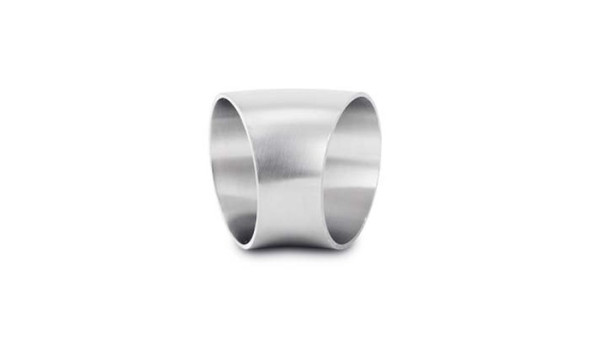

Vibrant 2.5in O.D. T304 SS 45 deg Mandrel Bend (2.5in Centerline Radius) - 13330
Vibrant
MSRP: $19.99$14.99304 Stainless Steel Brushed Elbows have become popular among some vehicle fabricators because of their beautiful brushed finish and the fact that they require virtually no preparation for welding. The 90 degree and 45 degree tight radius (1D) elbows also...MSRP: $19.99$14.99 -
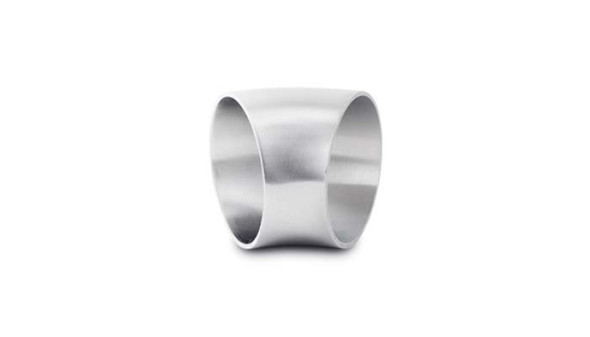
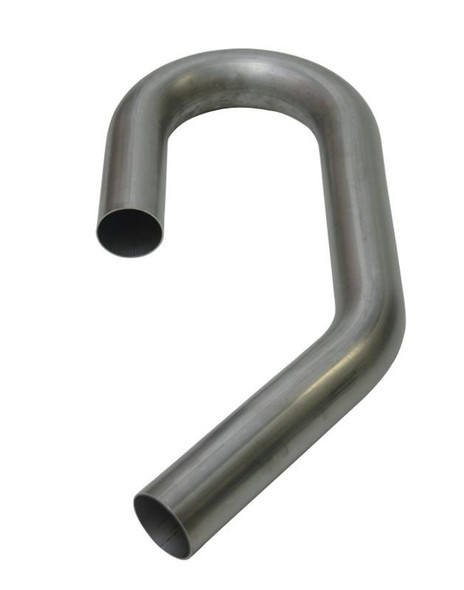
Vibrant 1.75in OD T304 SS 45 Deg Mandrel Bend Elbow (1.75in Centerline Radius) - 13324
Vibrant
$11.29304 Stainless Steel Brushed Elbows have become popular among some vehicle fabricators because of their beautiful brushed finish and the fact that they require virtually no preparation for welding. The 90 degree and 45 degree tight radius (1D) elbows also...$11.29 -
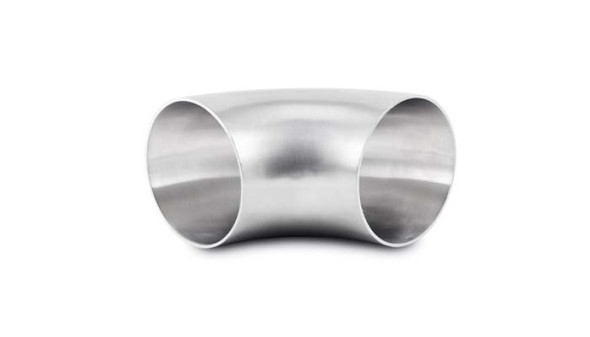
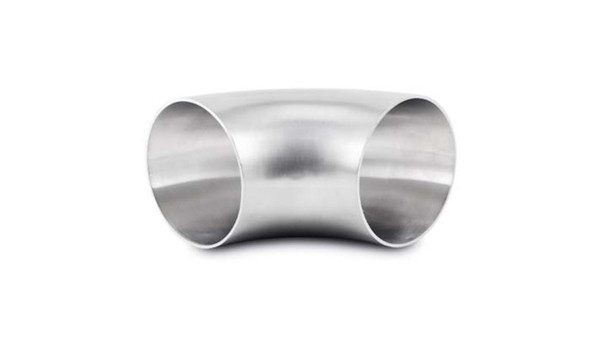
Vibrant 4.0in OD T304 SS 90 Deg Mandrel Bend Elbow (4.0in Centerline Radius) - 13316
Vibrant
MSRP: $57.99$44.99304 Stainless Steel Brushed Elbows have become popular among some vehicle fabricators because of their beautiful brushed finish and the fact that they require virtually no preparation for welding. The 90 degree and 45 degree tight radius (1D) elbows also...MSRP: $57.99$44.99 -
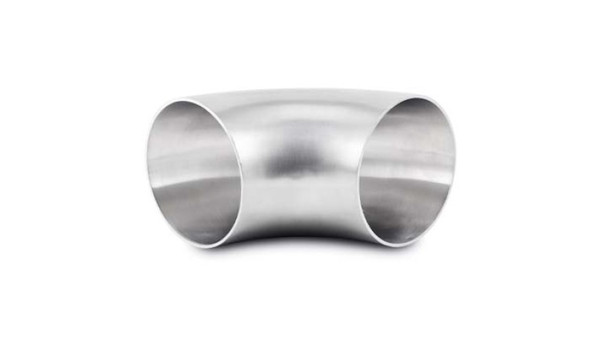
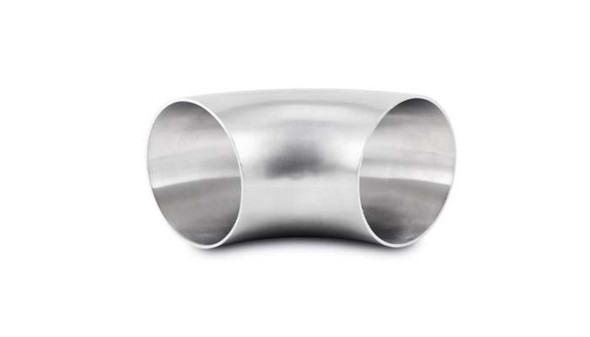
Vibrant 3.5in OD T304 SS 90 Deg Mandrel Bend Elbow (3.5in Centerline Radius) - 13314
Vibrant
MSRP: $35.50$35.36304 Stainless Steel Brushed Elbows have become popular among some vehicle fabricators because of their beautiful brushed finish and the fact that they require virtually no preparation for welding. The 90 degree and 45 degree tight radius (1D) elbows also...MSRP: $35.50$35.36 -
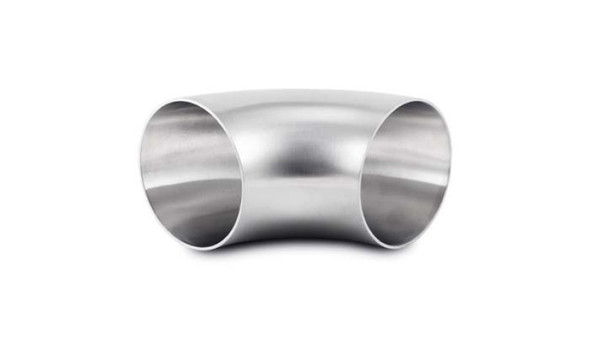

Vibrant 3in OD T304 SS 90 Deg Mandrel Bend (3in Centerline Radius) - 13312
Vibrant
MSRP: $32.29$26.29304 Stainless Steel Brushed Elbows have become popular among some vehicle fabricators because of their beautiful brushed finish and the fact that they require virtually no preparation for welding. The 90 degree and 45 degree tight radius (1D) elbows also...MSRP: $32.29$26.29 -

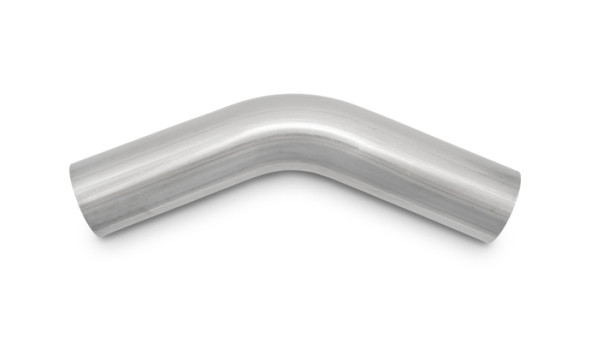
Vibrant 1.375in OD T304 SS 45 Deg Mandrel Bend - 13091
Vibrant
MSRP: $41.50$30.99What makes VIB tubing different from other exhaust tubing?VIB Tubing's 304 Stainless Steel Mandrel Bent program ensures precise bends and superior exhaust flow for optimal automotive performance.Can I cut and weld this tubing to fit my exhaust...MSRP: $41.50$30.99 -


Vibrant 2.75in O.D. T304 SS 60 deg Mandrel Bend 6in x 6in leg lengths (4.125in Centerline Radius) - 13071
Vibrant
MSRP: $70.99$56.99What is the primary advantage of using Vibrant T304SS tubing in extreme environments?Vibrant T304SS tubing provides unparalleled durability, expertly resisting acidic, high heat, and corrosive conditions for lasting performance.Can Vibrant T304SS tubing...MSRP: $70.99$56.99 -

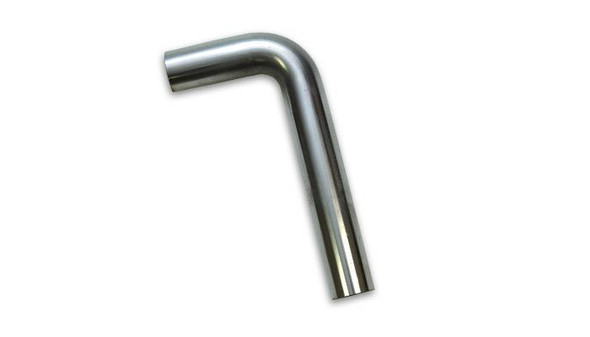
Vibrant 1.625in O.D. T304 SS 90 deg Mandrel Bend 4in x 12in leg lengths (1.625in Centerline Radius) - 13033
Vibrant
MSRP: $38.50$38.18What is the typical lifespan of a T304SS exhaust tubing?VIB Tubing's T304SS round tubing offers exceptional corrosion resistance, ensuring a lasting performance for builds in demanding environments.Is VIB Tubing T304SS Round tubing a direct...MSRP: $38.50$38.18 -


Vibrant 180 Degree Mandrel Bend 1.625in OD x 2in CLR 304 Stainless Steel Tubing - 18282
Vibrant
MSRP: $59.50$46.50What is the typical installation process for VIB T304SS Round Tubing?This steel tubing features a weld-in install type, requiring skilled fabrication for precise integration into your custom exhaust system.How does VIB T304SS Round Tubing affect exhaust...MSRP: $59.50$46.50 -


Vibrant 321 Stainless Steel 90 Degree Mandrel Bend 1.50in OD x 2.25in CLR - 18 Gauge Wall Thickness - 13860
Vibrant
MSRP: $57.99$44.99What is the recommended installation method for VIB Tubing?Professional installation is recommended for VIB Tubing to ensure optimal performance and correct fitment with your specific vehicle.Is this tubing suitable for extreme engine bay...MSRP: $57.99$44.99
Steel tubing is the structural and functional backbone of race car fabrication, covering everything from roll cage construction and chassis bracing to exhaust routing, fuel line support, and custom bracket work — with material grades, wall thickness, and outside diameter determining whether a build holds together at the limit or fails under load. Motor Sport Mayhem stocks 264 steel tubing products across 110 brands, ranging from entry-level mild steel sections to certified chromoly and DOM tube stock engineered for competition-grade applications.
Our Top Picks for Steel Tubing
Each of the following products was selected by our performance specialists based on engineering quality, real-world application, and proven value across street, track, and full race builds.
ADD Brackets and Hardware
Addictive Desert Designs | $318.98
Laser-cut and CNC-formed steel bracket hardware built to withstand high-cycle vibration and extreme off-road loading without deforming or cracking at weld joints.
- High-strength steel construction with precision fitment tolerances for direct-mount reliability
AVN Steering Wheel Bolts
Advan | $38.00
Grade-spec steel fasteners engineered for the torque loads and vibration cycling inherent to performance steering systems at the track.
- Hardened steel construction rated for competition steering column interface loading
AER Brackets
Aeromotive | $981.70
Belt-drive pump mounting system with machined steel bracket assembly designed to maintain precise pulley alignment under sustained high-RPM operation.
- Steel fabrication tolerances hold pulley alignment critical for belt-driven fuel system reliability
ADG Fuel Fittings
AirDog | $150.00
Boost-referenced fuel pressure compensation hardware that integrates with steel fuel line routing to maintain consistent fuel delivery under variable manifold pressure.
- Designed for forced induction fuel delivery systems where pressure compensation is critical
ALF Perf Air Lines
Air Lift | $53.09
Performance-spec air line kit built to handle continuous pressure cycling in air suspension systems, with steel-reinforced fittings that resist pull-out under load.
- Rated for sustained PSI cycling typical of performance air management systems
ABR Primary Bearing Kits
All Balls Racing | $28.69
Precision steel bearing and seal kit engineered to tighter tolerances than OEM spec, reducing primary drive slop and heat buildup under sustained performance operation.
- Steel race construction exceeds OEM hardness ratings for extended service intervals under load
AMP Air Tank Relocation Kit
AMP Research | $89.99
Steel-framed air tank relocation system that repositions the compressor reservoir without compromising system pressure capacity or line routing integrity.
- Maintains factory pressure ratings while clearing space for suspension or skid plate upgrades
AMS Oil Line Kits
AMS | $59.95
Remote-mount oil pressure line kit built with steel-reinforced fittings and burst-rated line to accurately route oil pressure signals to gauges or data acquisition systems.
- Eliminates sending unit proximity errors that corrupt oil pressure readings under hard cornering
ARB Fitting Kits
ARB | $1,535.70
Comprehensive steel fitting and hardware kit engineered for full vehicle integration, providing the structural and fluid routing infrastructure needed for expedition-grade builds.
- Designed for demanding suspension and accessory integration on serious off-road platforms
ARP Crankcase Bolts
ARP | $1,263.79
High-strength steel crankcase through-bolt kit manufactured to ARP's proprietary alloy and heat treatment spec, providing clamp loads that prevent case distortion under high-output conditions.
- Critical for high-performance engine builds where crankcase integrity is non-negotiable at elevated power levels
How to Choose the Right Steel Tubing
The difference between steel tubing that holds up in competition and tubing that fails is almost entirely determined by three variables: alloy grade, wall thickness, and manufacturing process. Mild steel (1018, 1020) is weldable and inexpensive but yields relatively low tensile strength — typically 60,000–70,000 PSI. DOM (Drawn Over Mandrel) tube starts as ERW seam-welded steel and is then cold-drawn over a mandrel to eliminate the seam, improving concentricity and increasing wall consistency to ±10% or better. Chromoly — most commonly 4130 — uses a chrome-molybdenum alloy that achieves tensile strengths of 95,000–120,000 PSI in normalized condition, making it the standard for roll cage and chassis fabrication in sanctioned motorsport. If a tube is going into a structural application, always verify material certification; uncertified offshore tube often fails to meet advertised wall tolerances by 15–20%, which directly compromises weld quality and load capacity.
Key Specifications
Outside diameter (OD) and wall thickness together determine a tube's section modulus — its resistance to bending. For roll cage main hoops, most sanctioning bodies (NASA, SCCA, FIA) specify minimum OD and wall thickness by vehicle weight class, and those numbers exist for load-tested reasons. Going thinner to save weight without the engineering analysis to back it up is how cages fail in real accidents. Always cross-reference your build rules before cutting.
Seamless versus DOM versus ERW matters most when you're bending or welding under stress. ERW (Electric Resistance Welded) tube has a longitudinal seam weld that, under bending loads, can be a stress concentration point — acceptable for exhaust hangers and low-stress brackets, not acceptable for primary chassis structure. DOM eliminates that risk through the cold-drawing process. Seamless tube, produced without any weld seam, offers the highest consistency and is preferred where wall uniformity is critical, such as in hydraulic lines or high-pressure applications.
For exhaust and thermal applications, 409 stainless and 304 stainless tube are increasingly common alternatives to mild steel, but they require different welding techniques (TIG, typically with back-purge) and have different thermal expansion coefficients that affect flange and clamp selection. If you're routing near exhaust components, material selection for adjacent steel structures matters just as much as the tube material itself.
Surface finish and coating should not be overlooked for street or off-road builds. Bare cold-rolled steel will surface-rust within days in a humid environment. DOM and chromoly tube stock is typically shipped with a light oil coating — that is not a corrosion-resistant finish. Plan your paint, powder coat, or ceramic coating into the project timeline before the structure is assembled, not after, when reaching internal surfaces becomes impossible.
Steel Tubing Wall Thickness and OD Selection by Application
| Application | Recommended OD | Minimum Wall Thickness | Recommended Alloy |
|---|---|---|---|
| Roll Cage Main Hoop (under 3,000 lb vehicle) | 1.5"–1.75" | 0.120" | 4130 Chromoly or DOM 1020 |
| Roll Cage Main Hoop (3,000–4,000 lb vehicle) | 1.75"–2.0" | 0.134" | 4130 Chromoly |
| Chassis Bracing / Diagonal Bars | 1.25"–1.5" | 0.095"–0.120" | DOM 1020 or 4130 |
| Exhaust Tube (naturally aspirated) | 2.0"–3.0" | 0.065"–0.083" | 409 Stainless or Mild Steel |
| Exhaust Tube (turbocharged, high output) | 3.0"–4.0" | 0.065"–0.083" | 304 Stainless |
| Custom Brackets / Low-Stress Mounts | 0.75"–1.25" | 0.065"–0.083" | Mild Steel 1018/1020 |
Price Guide
Entry ($1.49–$30): Individual tube sections, basic mild steel hardware, and small-diameter stock for bracket work and low-stress mounting applications. Suitable for shop prototyping, bracket fabrication, and non-structural supports where material certification is not required.
Mid-range ($30–$250): Where most serious builders land — DOM and 4130 chromoly sections, performance-grade fitting and bracket kits, and application-specific tubing assemblies with consistent wall tolerances and proper surface finish. The right tier for track cars, restorations, and custom fabrication projects.
Premium ($250–$1,535.70): Complete system kits, certified competition-grade assemblies, and engineered hardware packages for full race builds, expedition vehicles, and high-output engine applications where material traceability and assembly precision are non-negotiable.
Who Is This For?
Steel tubing serves an unusually wide range of performance builders — from weekend autocrossers adding chassis stiffness to full-time racers constructing sanctioned roll structures and drag car frames.
Track / Autocross — 7.6/10
Track and autocross builds score the highest in this category because steel tubing is foundational to the stiffness improvements that make handling upgrades actually work. Chassis flex masks suspension geometry changes; eliminating it with properly placed tube bracing lets coilovers and alignment settings perform as designed. At this use level, DOM and light chromoly tubing deliver the strength-to-weight ratio needed without the full certification overhead of dedicated roll cage work.
Racing Competition — 7.6/10
Competition-level builds match track scores because sanctioned racing directly mandates steel tubing specifications — particularly for roll structures, fuel cell mounts, and harness bar integration. Chromoly 4130 is the dominant material at this level, required by most rulebooks for primary safety structures. The broad in-stock selection here matters because competition prep rarely happens on a predictable timeline, and waiting weeks for tube stock kills build schedules.
Drag Racing — 7.6/10
Drag racing scores equally high due to the combination of chassis bracing requirements, driveshaft loop mandates, and the structural demands of high-horsepower drivetrain loads concentrated over short, violent acceleration events. Tube-framed front clips and rear frame connectors are bread-and-butter applications where wall thickness tolerances and weld-prep surface quality directly affect build integrity at speed.
Street Performance — 7.3/10
Street performance applications for steel tubing center on sub-frame connectors, custom exhaust work, engine mount fabrication, and bracket hardware — all areas where mild steel and DOM tubing handle the job without the cost of chromoly. The slightly lower score reflects that street builds rarely require the material certifications or tight tolerances that competition builds demand, giving builders more flexibility in sourcing.
Engine Performance — 7.2/10
Engine performance applications use steel tubing primarily for oil line routing, fuel system plumbing supports, turbo oil drain fabrication, and intercooler piping mounting — all areas where tube rigidity and heat resistance matter alongside the associated fittings that complete the system. The 7.2 score reflects that many engine-bay tubing applications overlap with hose and AN line categories, but where rigid tube is the right call, material quality directly affects long-term leak-free operation.
Trusted Steel Tubing Brands We Carry
The brands that consistently rise to the top of this category do so through material traceability, manufacturing process control, and genuine motorsport validation. ARP has built its reputation on proprietary steel alloys and in-house heat treatment that produces fastener and hardware tensile strengths beyond what off-the-shelf steel stock can achieve — their traceability standards are benchmarks in the industry. Aeromotive engineers their bracket and mounting hardware to the load demands of high-output fuel systems, where material failure means engine-bay fire risk. Addictive Desert Designs applies military-grade steel fabrication standards to off-road hardware that sees sustained shock loading most performance parts never encounter. ARB's fitting and bracket systems are engineered to full vehicle integration specs, validated in genuine expedition and competition environments across multiple continents. AMS Performance and Stainless Bros both bring race-proven design to steel tubing applications, with Stainless Bros specifically known for mandrel-bent stainless exhaust tube quality that maintains consistent wall thickness through tight-radius bends — a failure point for lesser tube stock. Across all of these brands, the common thread is that their steel products are engineered to a performance specification, not just sourced to a price point.
Frequently Asked Questions
Are 45-degree and 90-degree elbows interchangeable in steel tubing fabrication?
No — 45-degree and 90-degree elbows are not the same and cannot be substituted for each other without changing the routing geometry of the entire assembly. A 90-degree elbow makes a square-corner direction change, while a 45-degree elbow changes direction at half that angle, meaning you need two 45s to replicate a single 90-degree turn — but with a straight section between them, which affects total centerline length and clearance differently. Beyond geometry, bend radius matters: a long-radius 90-degree elbow has lower pressure drop and better flow characteristics than a short-radius 90, and that gap in flow performance between a long-radius 90 and two 45s is measurable in high-flow exhaust or intake applications. Always confirm centerline-to-end dimensions and bend radius specifications before substituting elbow angles in a fabricated system.
Are aftermarket radiator hoses worth it for a performance build?
For a vehicle operating at or beyond factory power and cooling limits, aftermarket silicone radiator hoses deliver meaningful improvements over OEM rubber — specifically, higher burst pressure ratings (typically 90–130 PSI versus 50–70 PSI for OEM rubber), better resistance to electrochemical degradation from coolant chemistry, and dimensional stability that doesn't allow the hose to balloon under pressure and reduce effective flow area. OEM rubber hoses are engineered for factory temperature and pressure windows; when you add a larger cooling system, increase boost, or run higher coolant temperatures on track, those windows get exceeded. The cost difference between OEM-style replacement and quality aftermarket silicone is small relative to the labor cost of a coolant failure at an event.
Are all brake line fittings the same?
Brake line fittings are absolutely not universal — thread pitch, flare type, and material all vary by application and region. The two primary flare standards are SAE double-flare (common in domestic applications) and DIN/ISO bubble flare (common in European vehicles), and these are not cross-compatible — forcing the wrong fitting onto a flare type will result in a joint that either leaks immediately or fails under pedal pressure. Thread sizes vary as well: 3/8"-24 and 10mm x 1.0 are common but not interchangeable without an adapter. For any performance or brake system modification, always identify the existing flare standard, thread pitch, and tubing OD before purchasing fittings — a wrong fitting in a brake line is a safety-critical failure waiting to happen.
Are aftermarket radiators actually better than OEM units?
For performance applications, quality aftermarket radiators typically outperform OEM units on core thickness and fin density — a 2-row or 3-row aluminum core moves significantly more heat than a single-pass OEM plastic-tank design. The key metric is core volume: more core means more surface area for heat exchange, which directly lowers steady-state coolant temperature under sustained load. Where aftermarket units sometimes fall short is in fit precision — mounting tab locations, hose connection angles, and overflow routing don't always match OEM exactly, which adds installation time. Brands with vehicle-specific engineering put the same design rigor into fitment as they do into thermal performance, and that combination is what makes a radiator upgrade genuinely worth the cost on a performance or track build.
Are all crank bolts the same across engine families?
Crank bolts vary significantly in thread pitch, diameter, torque specification, and whether they require a specific stretch or are reusable — and substituting an incorrect bolt is a catastrophic failure risk. Most performance engines use metric threads (commonly M20 x 1.5 or M24 x 2.0), but thread engagement depth, underhead length, and washer requirements differ between engine families, and many OEM crank bolts are torque-to-yield (single-use) designs that must be replaced rather than retorqued. ARP and similar performance fastener manufacturers produce crank bolt upgrades with higher clamp load capacity than OEM spec, which is relevant when running underdrive pulleys or high-revving applications where harmonic damper retention load increases. Always use a torque specification sourced from the engine builder or OEM service manual — never estimate crank bolt torque.
Building something specific? Our performance specialists can help you select the right Steel Tubing for your application — street, track, or full race build.