
Heat Shields
- Product
- Qty in Cart
- Quantity
- Price
- Subtotal
-
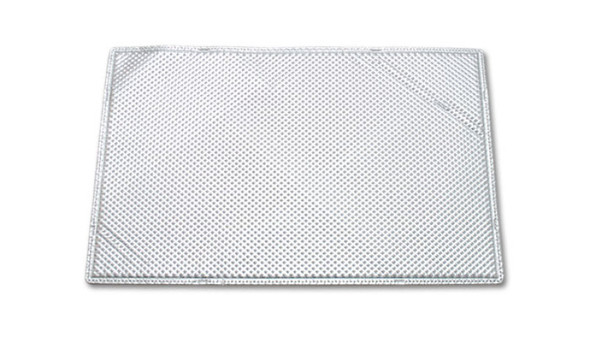

Vibrant SHEETHOT TF-400 4 ply AL heat shield 26.75inx17in Sheet Size - 25400L
Vibrant
$93.50What is the material composition of VIB Heat Shields?VIB Heat Shields feature a four-layered dimpled aluminum material specifically designed for optimal heat resistance and formability.Are VIB Heat Shields easy to install?Professional installation is...$93.50 -
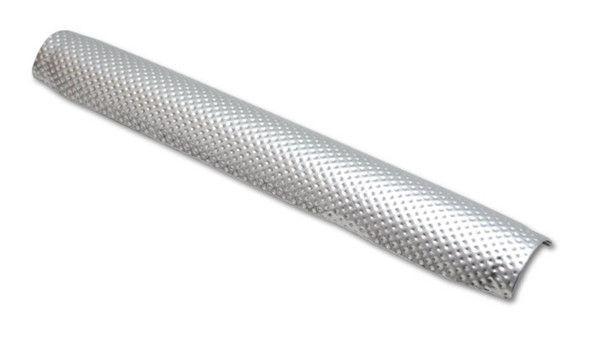

Vibrant SHEETHOT Premed Pipe Shield 2in-3in OD Straight Tubing 2 foot length rated direct heat 1100F - 25324
Vibrant
MSRP: $138.99$109.99What is the primary purpose of Vibrant Heat Shields?Vibrant Heat Shields deliver superior thermal protection for critical engine components, ensuring enhanced longevity and performance.How easy is the installation process for Vibrant Heat...MSRP: $138.99$109.99 -
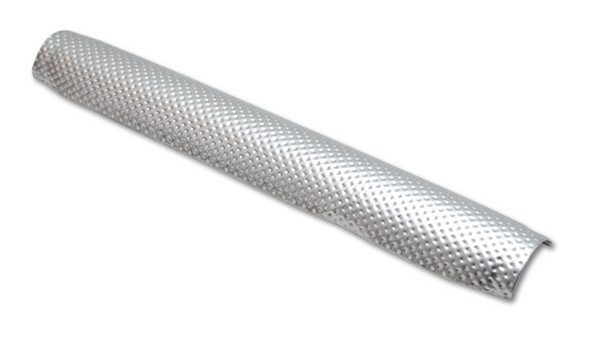
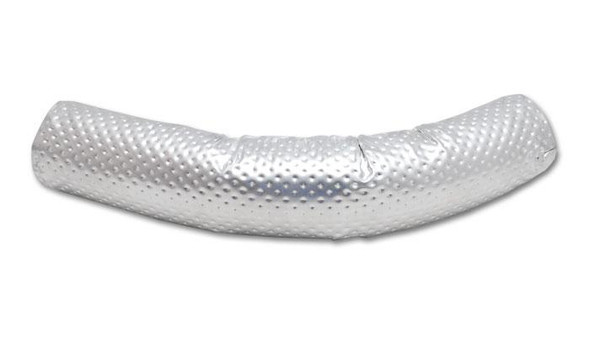
Vibrant SHEETHOT Premed Pipe Shield 2in-3in OD Straight Tubing 1 foot length rated direct heat 1100F - 25312
Vibrant
MSRP: $87.99$68.99What is the main function of a heat shield?Heat shields protect vital engine bay components from extreme exhaust temperatures, ensuring optimal performance and component longevity.How easy is it to install a Vibrant heat shield?Installation is...MSRP: $87.99$68.99 -

FMF Racing Titanium Header Heat Shield (Universal) - 040230
FMF Racing
$53.41Will these heat shields fit my FMF header?FMF Heat Shields are engineered to fit all FMF Titanium and Stainless Steel Megabomb Header systems, ensuring a secure and precise match.How do I install these heat shields?Professional installation is...$53.41 -
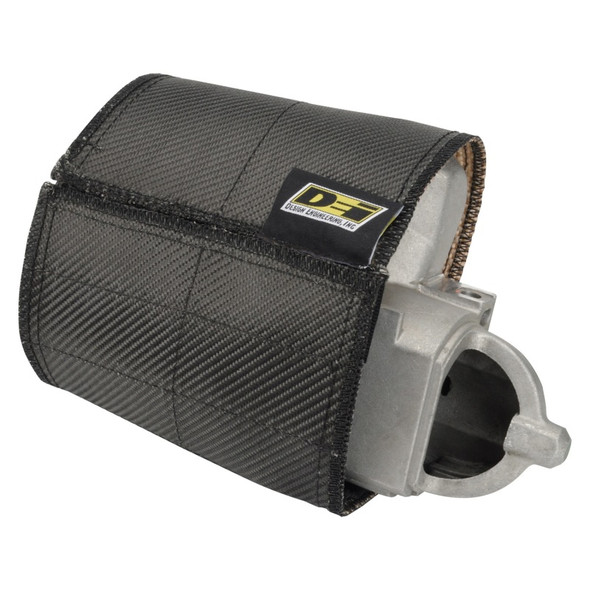
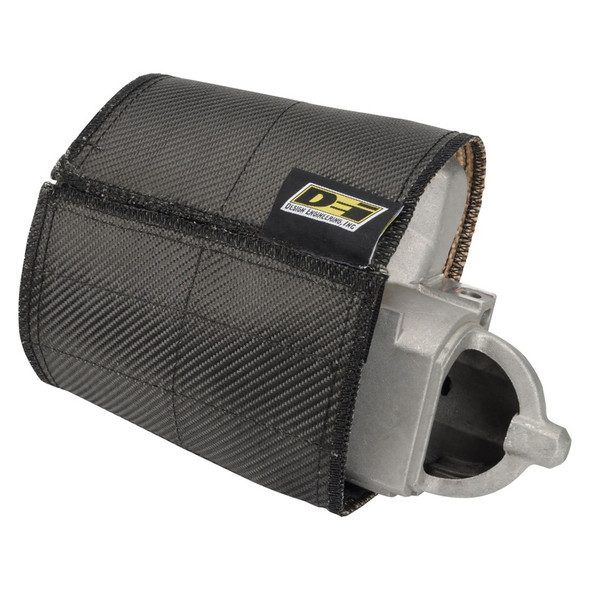
DEI Starter Shield 2ft x 7in Wide - Onyx - 10236
DEI
MSRP: $98.25$74.98How much clearance is needed for the DEI Starter Shield?This starter shield requires only 1/4 inch of clearance, ensuring a snug fit for optimal heat protection on your vehicle.Is DEI Starter Shield easy to install?Featuring a hook and loop fastening...MSRP: $98.25$74.98 -


DEI Hub and Rotor Cover - 10485
DEI
MSRP: $88.85$75.48What is the best way to install these heat shields?Professional installation is recommended for DEI Heat Shields to ensure optimal fitment and secure application for maximum component protection.What is the maximum heat these heat shields can...MSRP: $88.85$75.48 -


DEI Universal Boom Mat Acoustic Tiles - 4.25 sq. ft. - 2 Pack - 50231
DEI
MSRP: $46.99$46.74Sound control with a finished look! Boom Mat Acoustic combines premium sound damping with a clean, professional finish. Its dense acoustic barrier and felt liner work together to absorb and block unwanted noise while enhancing interior appearance. Easy...MSRP: $46.99$46.74 -


DEI Universal Boom Mat Acoustic Tiles - 17 sq. ft. - 8 Pack - 50233
DEI
MSRP: $155.99$128.00Is this compatible with all vehicle makes and models?Confirm fitment with your specific vehicle application before purchase to ensure perfect integration with your automotive interior.What is the installation process like for Boom Mat...MSRP: $155.99$128.00 -


DEI Universal Boom Mat Acoustic Tiles - 8.5 sq. ft. - 4 Pack - 50232
DEI
MSRP: $83.99$71.66How does DEI Boom Mat Acoustic perform in reducing road noise?DEI Boom Mat Acoustic excels at eliminating road noise, creating a tranquil cabin environment by effectively absorbing sound waves.Is DEI Boom Mat Acoustic easy to install for a...MSRP: $83.99$71.66 -


DEI Jeep JK VLP 42RLE 4-Speed Transmission Pan Heat Shield - 10377
DEI
$45.16Adhesive backed transmission pan heat shield installs between the transmission pan and cross over pipe on JK Wranglers with VLP 42RLE 4 Speed transmissions. It blocks radiant heat from the exhaust, preventing heat soak into the transmission pan and fluid...$45.16 -


DEI Jeep JK W5A580 Transmission Pan Heat Shield - 10376
DEI
$45.16Adhesive backed transmission pan heat shield installs between the transmission pan and cross over pipe on JK Wranglers with W5A580 transmissions. It blocks radiant heat from the exhaust, preventing heat soak into the transmission pan and fluid. The...$45.16 -


DEI Jeep JL 850RE 8-Speed Transmission Pan Heat Shield - 10375
DEI
$45.16Will this transmission heat shield fit my vehicle?Confirm fitment with your specific vehicle's make, model, and year before purchase to ensure proper installation and coverage.How difficult is the installation of the DEI transmission heat...$45.16
Heat shields are engineered thermal barriers that redirect, absorb, or reflect radiant and convective heat away from temperature-sensitive components — protecting fuel lines, wiring, intake tracts, and structural elements from heat soak damage. Motor Sport Mayhem stocks 121 heat shields across 110 brands, ranging from entry-level wraps to full fabricated stainless assemblies built for professional competition.
Our Top Picks for Heat Shields
Every product below was hand-selected based on real-world thermal performance, build quality, and proven value across street and competition applications.
ADD Brackets and Hardware
Addictive Desert Designs | $318.98
Heavy-duty mounting hardware engineered for high-stress environments where heat and vibration are constant factors.
- Precision-CNC-fabricated from high-grade steel for reliable component positioning in thermally demanding builds
AVN Steering Wheel Bolts
Advan | $38.00
High-tensile fastener set built to retain integrity in cockpit environments where underhood heat transfer is a real concern.
- Heat-resistant coating maintains clamp load in thermally cycled competition environments
AER Brackets
Aeromotive | $981.70
Bracket and mounting system designed to position fuel system components away from primary heat sources under the hood.
- Engineered clearance geometry keeps fuel components out of the critical radiant heat zones near exhaust and headers
ADG Fuel Fittings
AirDog | $150.00
Fuel system fittings rated for high-temp exposure, critical when routed near exhaust or turbo plumbing without full shielding coverage.
- Material specification supports elevated ambient temperatures common in forced induction and diesel performance bays
ALF Perf Air Lines
Air Lift | $53.09
Performance air line kit built to resist heat degradation when routed through engine compartments lacking dedicated shielding.
- Rated for sustained elevated temperatures, making it a reliable pairing alongside thermal management upgrades
ABR Primary Bearing Kits
All Balls Racing | $28.69
Bearing and seal kits engineered to survive the thermal cycling generated by high-output air-cooled and liquid-cooled powerplants.
- Heat-tolerant seal compound maintains integrity in proximity to exhaust routing and primary drive heat buildup
AMP Air Tank Relocation Kit
AMP Research | $89.99
Relocation kit that moves air system components out of high-heat underbody zones, complementing any thermal protection strategy.
- Bracket geometry places the tank in a lower-temperature environment, reducing heat-related air system degradation
AMS Oil Line Kits
AMS | $59.95
Braided oil line kit for remote sensor mounting, essential for keeping heat-sensitive electronics away from direct exhaust and turbo radiant zones.
- Stainless overbraid adds a meaningful layer of abrasion and heat resistance when routed near hot components
ARB Fitting Kits
ARB | $1,535.70
Comprehensive OEM-grade fitting kit designed for extreme-duty builds where every underhood connection must withstand prolonged heat exposure.
- Built to ARB's expedition and competition standards, where thermal durability is a non-negotiable requirement
ARP Crankcase Bolts
ARP | $1,263.79
Aircraft-grade fasteners with proven thermal cycle resistance, critical in high-output engines where heat shield effectiveness directly impacts clamping integrity.
- ARP's proprietary alloy maintains tensile strength well beyond the temperature ranges that cause standard fasteners to relax and lose clamp load
How to Choose the Right Heat Shields
The difference between an effective heat shield and a decorative one comes down to material selection, coverage geometry, and installation integrity — not price alone. The best heat shields use either aluminized fiberglass, stainless steel with a ceramic or embossed air gap, or multi-layer composites combining a reflective outer face with an insulating inner substrate. Single-layer foil wraps reflect radiant heat adequately at lower temperatures but fail above 1,200°F; for headers, turbine housings, and downpipes running sustained high exhaust temperatures, you need a product rated to at least 1,800°F surface exposure. Fitment tolerance matters too — a shield that gaps at the mounting points allows convective bypass, negating most of the thermal benefit regardless of the material's rated performance.
Key Specifications
Material composition is the first specification to evaluate. Aluminized fiberglass and silica-based wraps are effective for mid-range applications — typically rated 1,200–1,800°F continuous — and work well on exhaust wraps, turbo blankets, and fuel line sleeves. Stainless steel stamped shields with embossed or corrugated surfaces create an insulating air gap that outperforms flat foil by a significant margin, and they hold their shape permanently unlike wrap materials that compress over time and lose insulating capacity. Ceramic-coated or titanium-faced shields represent the top tier, maintaining reflectivity after extended exposure where aluminum facing oxides and darkens, reducing reflective efficiency by up to 40%.
Coverage geometry directly affects how much heat actually reaches the protected component. A shield must overlap the heat source by at least 1–2 inches in every direction to account for radiant spread and convective flow patterns — undersized shields create hot spots at the edges that can be worse than no shielding at all. For turbo and exhaust applications, a tight-fitting blanket or formed shield that conforms to the component profile outperforms a generic flat shield mounted with an air gap, because it eliminates the convective current that would otherwise circulate hot air underneath.
Mounting hardware and attachment method determine long-term durability. Stainless steel locking clips, band clamps, and wire ties rated for high-temperature use maintain clamping force through thermal cycling; standard zinc-plated hardware corrodes and loosens after the first heat cycle. For firewall and floor pan applications, proper insulation requires both a radiant barrier on the heat-source-facing side and a thermal mass layer on the cabin-facing side — using only a single reflective layer without mass absorbs and re-radiates heat rather than blocking it.
Verify temperature ratings against your actual application temperatures, not ambient underhood temperatures. Exhaust manifold surface temperatures on a naturally aspirated engine commonly reach 1,000–1,300°F; turbocharged applications can push turbine housings and downpipes to 1,600–1,800°F under sustained load. Selecting a shield rated at exactly those temperatures means it's operating at its limit — choose products rated at least 20–25% above your expected peak to maintain performance margin across the full operating range.
Heat Shield Temperature Rating vs. Application Guide
| Application | Typical Surface Temp (°F) | Recommended Shield Rating (°F) | Recommended Material |
|---|---|---|---|
| Fuel line / wiring near exhaust | 200–400°F ambient | 500–800°F | Aluminized sleeving or fiberglass wrap |
| NA exhaust manifold / headers | 900–1,300°F | 1,500°F+ | Stainless stamped shield or ceramic wrap |
| Turbocharged downpipe / turbine housing | 1,400–1,800°F | 2,000°F+ | Turbo blanket (silica/vermiculite) or titanium shield |
| Catalytic converter underbody | 800–1,200°F | 1,500°F+ | Stainless steel formed shield with air gap |
| Firewall / floor pan (cabin heat soak) | 150–350°F radiant | 500°F+ reflective, mass-backed | Multi-layer composite (foil + insulation batt) |
| Intake / air filter near turbo | 150–250°F ambient | 400°F+ | Reflective aluminized shield or heat sleeve |
Price Guide
Entry ($1.49–$30): Sleeve wraps, adhesive foil sections, and single-layer aluminized tape products live here — they're legitimate solutions for protecting a fuel line or wiring loom from moderate radiant heat, but don't expect performance under sustained high temperatures or in direct-contact applications.
Mid-range ($30–$300): This is where most builders find the best balance of material quality, coverage area, and fitment precision. Formed stainless shields, quality turbo blankets, and multi-layer composite kits are all accessible in this range, and for the majority of street performance and track builds, mid-range products deliver professional-grade thermal protection.
Premium ($300–$1,535.70): Fabricated systems, full underbody thermal kits, competition-spec turbo containment blankets, and complete heat management packages for purpose-built race cars and extreme overland builds justify the cost through material grade, coverage completeness, and durability under conditions that destroy cheaper alternatives within a season.
Who Is This For?
Heat shields serve a wide spectrum of builders — from daily-driven street cars dealing with heat soak to full competition vehicles managing extreme underhood and underbody thermal loads.
Track / Autocross — 7.6/10
Track applications score at the top of the usage matrix because sustained high-rpm, high-load driving generates exhaust and brake temperatures that dwarf anything seen on the street. Heat shields protect brake fluid from boiling, keep fuel system temperatures stable through long sessions, and prevent intake heat soak that robs power on repeated hot laps. A properly shielded car is a consistent car — thermal variables are one of the most overlooked performance differentials in lap time.
Racing Competition — 7.6/10
At the competition level, heat shielding is a safety and reliability requirement, not an option — sanctioning bodies in many classes mandate firewall and fuel system thermal protection. Beyond compliance, competition-level shielding reduces the risk of heat-related failures during events where no cool-down laps exist between sessions. The investment in quality shields at this level is measured directly against the cost of a DNF or worse.
Drag Racing — 7.6/10
Drag racing creates intense short-duration heat spikes — a single full-power pass subjects headers, turbo systems, and brakes to thermal loads that can exceed sustained road course temperatures in concentrated form. Consistent quarter-mile times depend on intake air temperature control, and heat shields around the intake tract and air filter are often worth measurable tenths in back-to-back runs during eliminations.
Street Performance — 7.3/10
Modified street vehicles consistently run hotter under the hood than stock — upgraded exhaust, added boost, or high-output camshaft profiles all increase radiant and convective heat into the engine bay. Heat shields for street builds focus on protecting rubber, wiring, and fuel components that OEM engineers never designed to survive near a higher-output powerplant. A solid heat management strategy also directly improves intake air temperature, which is one of the most accessible free power gains on a street build.
Overlanding / Expedition — 7.1/10
Overland builds spend long hours at sustained load — towing, climbing grades, running in high ambient temperatures — all of which compound underbody and underhood heat accumulation. Protecting fuel and air system components from exhaust heat is particularly critical when running remote terrain where a heat-related failure means an expensive recovery. Floor pan and firewall shielding also meaningfully improves cabin comfort on long expedition days, which is a legitimate quality-of-life factor in serious overlanding builds.
Trusted Heat Shields Brands We Carry
DEI (Design Engineering Inc.) built their reputation specifically in automotive thermal management and remains the benchmark brand for heat wrap, turbo blankets, and formed shields — their products are found in professional race shops and OEM supplier programs alike. Vibrant Performance brings fabrication-grade materials and hardware to the heat management category, with a broad catalog that serves both fabricators building custom shielding solutions and bolt-on enthusiasts. Mishimoto approaches thermal protection from a cooling system background, producing heat shields and thermal barriers that integrate directly with their cooling and intake ecosystem. Stainless Bros brings heavy-gauge stainless fabrication experience to formed shield applications, with material grades that hold their geometry through thousands of heat cycles. ARP's contribution to the category comes from the fastener side — their high-temperature alloy hardware is essential for maintaining clamp load on shield mounting points that see extreme thermal cycling. Radium Engineering rounds out the category with precision-engineered heat management components built to the tolerances that forced induction and fuel system applications demand.
Frequently Asked Questions
Do aftermarket radiator hoses actually need heat shielding in a modified engine bay?
In a stock or lightly modified engine bay, OEM hose routing keeps coolant lines clear of the worst heat sources by design. Once you add headers, a turbo system, or relocate components, that engineered clearance disappears and radiator hoses can be exposed to radiant heat well above their rated continuous operating temperature. Quality silicone hoses handle higher peak temperatures than rubber, but neither material is a substitute for proper shielding when the hose routes within a few inches of an exhaust component. A reflective sleeve or formed shield between the heat source and the hose is the correct fix — it addresses the cause rather than just upgrading the hose material.
Are aftermarket radiators worth the investment from a heat management perspective?
An upgraded radiator improves coolant temperature management, which indirectly reduces underhood ambient temperatures and lowers the thermal load on surrounding components. For a modified vehicle producing significantly more power than stock, the OEM radiator is often undersized for the heat rejection required — coolant temperatures run chronically high, which elevates underhood ambient and makes every heat-sensitive component work harder. Pairing a quality aftermarket radiator with proper heat shielding between the exhaust and the cooling system creates a compounding benefit: lower coolant temps mean lower ambient temps, and the shields prevent heat from re-entering the cooled airflow path. You can browse our full cooling category for radiators and supporting hardware.
Are all heat shield mounting hardware and fasteners interchangeable?
No — and using the wrong fastener hardware on a heat shield is one of the most common reasons shields fail or loosen prematurely. Standard zinc-plated or cadmium hardware corrodes rapidly from the combined exposure to high heat, moisture, and road contamination, and the thermal cycling causes zinc-plated hardware to lose clamp load within a few heat cycles. Stainless steel hardware is the minimum for any shield mounted near an exhaust or turbo system, and for extreme applications, nickel-alloy or ARP-grade hardware maintains clamping force through the full temperature range. Thread engagement depth also matters — exhaust stud threads are typically short, and backing off even a partial turn from proper torque causes shield rattle and eventual contact with the exhaust surface.
Do heat shields actually improve performance, or are they just a safety item?
Heat shields deliver measurable performance gains through intake air temperature reduction — every 10°F drop in intake air temperature is worth approximately 1% more power on a naturally aspirated engine, and more on a boosted application where the charge cooler has less thermal headroom to work with. Shielding the air filter and intake tract from exhaust and engine radiant heat is one of the highest return-per-dollar thermal modifications available, particularly on vehicles where the cold air intake routes near hot underhood components. Beyond intake temps, shielding brakes reduces fluid boiling risk, which is a direct safety and performance factor — brake fade from fluid boiling feels identical to a brake system failure at the worst possible moment. Treating heat shields as purely a safety measure undersells their contribution to consistent, repeatable performance.
How do I know if my current heat shielding is failing or inadequate?
The most reliable indicator is IAT (intake air temperature) sensor data logged before and after aggressive driving — if intake temps climb steadily over multiple laps or pulls rather than tracking closely with ambient, heat soak from inadequate shielding is the most likely cause. Physically, degraded shields show discoloration shifting from silver to brown or black (indicating the reflective layer has oxidized), compression of the insulating substrate, and separation at mounting points that allows direct exhaust contact. On wrap-style shields, look for brittle or crumbling fibers, which signal that the material has exceeded its rated temperature repeatedly. Any shield showing direct contact marks from the exhaust surface — typically a contact discoloration pattern — has failed structurally and needs immediate replacement, because that contact point is now a conduction path rather than an insulating gap.
Building something specific? Our performance specialists can help you select the right Heat Shields for your application — street, track, or full race build.