
Aluminum Tubing
- Product
- Qty in Cart
- Quantity
- Price
- Subtotal
-


Vibrant 4.5in OD T6061 Aluminum Mandrel Bend 90 Degree - Polished - 2946
Vibrant
MSRP: $149.99$119.99What type of aluminum is used for the VIB Tubing?VIB Tubing utilizes both 6063 and 6061 aluminum alloys, renowned for their superior strength and corrosion resistance in demanding automotive environments.Can I bend the VIB Tubing myself?Achieve precise...MSRP: $149.99$119.99 -

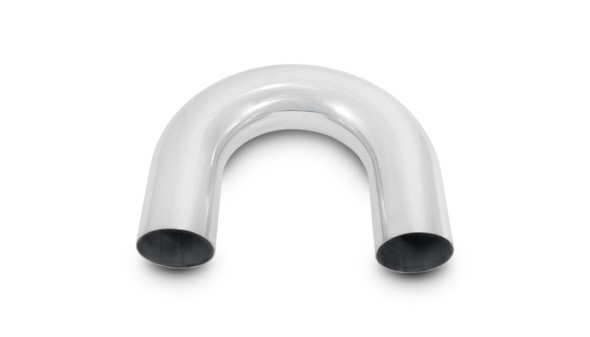
Vibrant 4in O.D. Universal Aluminum Tubing (180 degree Bend) - Polished - 2871
Vibrant
MSRP: $156.99$124.99What is the primary benefit of using Vibrant aluminum tubing for custom projects?Vibrant aluminum tubing achieves superior airflow for maximum engine power and responsiveness in your custom build.Can Vibrant aluminum tubing be used in both...MSRP: $156.99$124.99 -

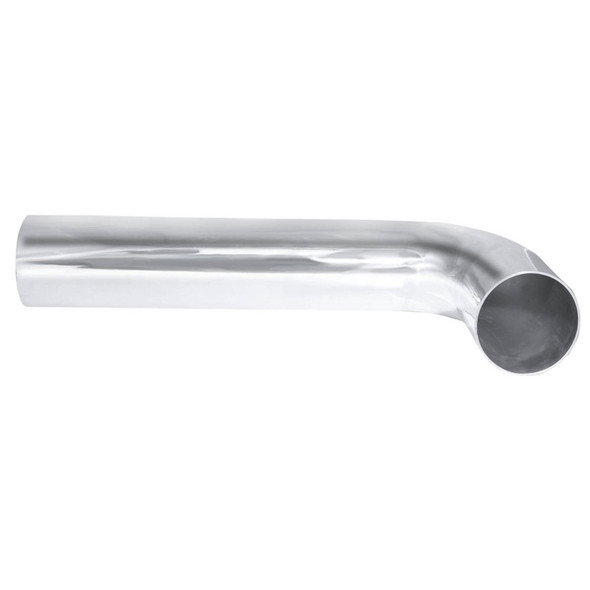
Spectre Universal Tube Elbow 4in. OD x 16in. Length / 90 Degree - Aluminum - 97991
Spectre
MSRP: $133.99$131.97Is this tubing compatible with my vehicle?Confirm fitment with your vehicle for precise integration, ensuring this aluminum tubing meets your specific air intake requirements.How difficult is it to install this tubing?Weld-in installation is required,...MSRP: $133.99$131.97
Aluminum tubing is the backbone of performance fabrication — used in intake systems, intercooler piping, coolant routing, roll cage bracing, and custom plumbing where low weight, corrosion resistance, and dimensional precision are non-negotiable. Motor Sport Mayhem stocks 102 in-stock aluminum tubing products from top fabrication brands, ranging from basic straight sections to fully mandrel-bent elbows and custom kits priced from $1.49 to $1,535.70.
Our Top Picks for Aluminum Tubing
Every product below was hand-selected by our performance specialists based on proven real-world results, material quality, and application versatility across street, track, and competition builds.
ADD Brackets and Hardware
Addictive Desert Designs | $318.98
Precision-fabricated aluminum mounting hardware engineered for structural rigidity under sustained off-road stress loads.
- Aircraft-grade aluminum construction delivers a high strength-to-weight ratio without corrosion risk in harsh environments
AVN Steering Wheel Bolts
Advan | $38.00
Race-spec fastener set machined to tight tolerances for secure steering component attachment in competition environments.
- Precision threading and consistent torque spec make these a reliable choice for track day and competition steering setups
AER Brackets
Aeromotive | $981.70
Complete belt-drive fuel pump mounting system built for sustained high-demand fuel delivery in serious forced induction applications.
- Billet aluminum bracket construction resists flex under high-RPM accessory belt loads where stamped steel would fatigue
ADG Fuel Fittings
AirDog | $150.00
Boost-referenced fuel pressure compensation hardware that keeps fuel delivery in sync with boost pressure across the full RPM range.
- Direct-connection fittings machined for leak-free sealing under the pressure cycling demands of turbocharged diesel applications
ALF Perf Air Lines
Air Lift | $53.09
Reinforced air line hose kit designed for consistent pressure delivery in performance air management systems.
- Rated for sustained pneumatic pressure with fittings that resist vibration-induced loosening in active suspension environments
ABR Primary Bearing Kits
All Balls Racing | $28.69
Complete bearing and seal kit built to OEM dimensional specs with upgraded materials for extended service intervals.
- Tighter tolerance bearing races reduce lateral play and heat buildup compared to worn factory units
AMP Air Tank Relocation Kit
AMP Research | $89.99
Bolt-on air tank relocation solution that clears underbody clearance for lift kits without compromising air suspension system function.
- Aluminum bracket and hardware construction keeps overall system weight minimal while maintaining the structural integrity needed for pneumatic loads
AMS Oil Line Kits
AMS | $59.95
Remote oil pressure sender mounting kit with braided line assembly for accurate oil pressure data without sensor heat soak errors.
- Relocating the sender away from block heat sources gives cleaner pressure readings critical for diagnosing turbocharged engine health
ARB Fitting Kits
ARB | $1,535.70
Comprehensive vehicle-specific fitting kit engineered for complete ARB system integration with zero improvised connections.
- Every fitting, bracket, and line in the kit is matched to exact OEM attachment points, eliminating the fitment guesswork that causes pneumatic leaks in the field
ARP Crankcase Bolts
ARP | $1,263.79
High-tensile crankcase through-bolt kit manufactured from ARP's proprietary aerospace alloy for superior clamping force retention under thermal cycling.
- ARP's in-house metallurgy and multi-step heat treatment process produces fasteners that maintain clamp load where OEM hardware loses preload under sustained high-output operation
How to Choose the Right Aluminum Tubing
The single biggest mistake builders make with aluminum tubing is treating it as a commodity — assuming any tube of the right diameter will do the job. Alloy grade, wall thickness, temper condition, and surface finish all directly affect burst pressure, weld integrity, fatigue life, and corrosion resistance. On a street build, a substandard tube might last years before failing. On a track car running sustained high boost or thermal cycling, it can fail within a session. Understanding the specs before you buy is what separates a build that holds together from one that doesn't.
Key Specifications
Alloy grade is the starting point. 6061-T6 is the industry standard for performance tubing — it offers a tensile strength of approximately 45,000 PSI, excellent weldability, and strong corrosion resistance. For applications requiring a tighter bend radius without cracking, 3003-H14 is softer and more formable but carries lower structural strength, making it appropriate for low-pressure routing and non-structural applications. 6063 sits between the two in terms of formability and strength and is commonly used in extrusion-heavy applications like intercooler end tanks and intake pipes. Avoid unspecified or unlabeled alloy tubing in structural or high-pressure applications — the alloy designation is not just marketing, it defines the material's mechanical properties entirely.
Wall thickness directly governs burst pressure and rigidity. For intake and intercooler piping on naturally aspirated and mildly boosted applications, 0.060" to 0.083" wall is standard and keeps weight low. Forced induction systems running aggressive boost pressures — especially with boost spikes — benefit from 0.090" to 0.120" wall to handle pressure transients without deformation. For structural tubing in roll cages, chassis bracing, or suspension components, 0.120" wall and above is the baseline, with DOM (drawn-over-mandrel) or seamless tube required — welded seam tube is not acceptable for structural safety applications. Always verify whether you need seamless, DOM, or ERW (electric resistance welded) before ordering, as they carry different structural ratings.
Bend quality determines flow efficiency as much as any other spec. Mandrel-bent elbows maintain the full inside diameter through the bend, preventing the flow restriction that crush-bent or press-bent tube creates at the throat. On intercooler and intake systems, a collapsed bend can reduce effective cross-sectional area by 15–30%, limiting airflow more than a restrictive filter would. For plumbing runs where the tube is visible or where flow velocity is critical, mandrel bending is non-negotiable. For low-pressure, low-velocity return lines or coolant routing where flow rate is not a limiting factor, standard bent tube is acceptable and significantly less expensive.
Surface finish matters most when welding. Anodized tubing must be stripped at the weld zone — anodizing introduces aluminum oxide into the weld pool, causing porosity and brittleness. Mill-finish 6061 welds cleanly with TIG using ER4043 or ER5356 filler, with 5356 providing higher tensile strength in the finished weld joint. For polished or show-quality builds, post-weld polishing restores the surface, but welds should always be completed before any final surface treatment. If you are purchasing pre-bent elbows for silicone coupler connections rather than welding, surface finish is primarily an aesthetic consideration, and anodized finishes are fine.
Aluminum Tubing: Outer Diameter vs. Wall Thickness vs. Recommended Application
| Outer Diameter (OD) | Common Wall Thickness | Alloy Grade | Recommended Application |
|---|---|---|---|
| 1.0" – 1.5" | 0.060" – 0.083" | 6061-T6 | NA intake piping, coolant bypass lines, low-pressure fluid routing |
| 1.75" – 2.5" | 0.065" – 0.090" | 6061-T6 | Intercooler piping (mild boost), air intake tubes, coolant hose replacement |
| 2.5" – 3.5" | 0.083" – 0.120" | 6061-T6 | High-boost intercooler piping, turbo inlet/outlet, large-bore intake systems |
| 3.5" – 4.0" | 0.090" – 0.120" | 6061-T6 / 6063 | Intercooler end tanks, large-diameter inlet tubes, pro-touring air systems |
| 1.0" – 2.0" | 0.120" – 0.188" | 6061-T6 (Seamless) | Suspension arms, chassis bracing, non-structural roll cage supplemental tubing |
| 1.5" – 2.0" | 0.083" – 0.120" | 3003-H14 | Coolant tank fabrication, low-pressure fluid reservoirs, non-structural panels |
Price Guide
Entry ($1.49–$30.00): Individual straight sections, short elbows, and basic couplers in standard dimensions — right for prototype builds, non-critical plumbing runs, and builders sourcing tube to fabricate their own custom routing. Material quality at this tier is generally acceptable for street use, but verify alloy designation and avoid unlabeled tube for anything structural.
Mid-range ($30.00–$300.00): This is where the majority of performance builders land, and for good reason — mandrel-bent elbow kits, complete intercooler pipe sets, and quality fitting-integrated tubing assemblies all fall here. At this price point you get verified alloy grades, consistent wall thickness, and in many cases pre-polished or anodized finish ready to install. Brands like Vibrant, Mishimoto, Turbosmart, and Radium Engineering deliver repeatable quality in this range.
Premium ($300.00–$1,535.70): Full system kits, billet-machined bracket and tube assemblies, and vehicle-specific complete installation packages justify this pricing through engineering depth — everything is designed together, fitment is guaranteed, and you are paying for R&D, CNC machining time, and application-specific validation. Builders running serious competition programs or demanding off-road builds where field failures are not acceptable will find the premium tier worthwhile.
Who Is This For?
Aluminum tubing serves a wide cross-section of performance builds — from weekend autocross prep to full competition fabrication and overlanding builds — and the usage data reflects just how broadly applicable this category is.
Track / Autocross — 7.6/10
Track and autocross applications score at the top of the usage matrix because aluminum tubing directly addresses two things that matter most at the limit: weight and reliability. Replacing rubber hoses and heavy OEM plumbing with mandrel-bent aluminum reduces unsprung and rotating mass while eliminating the thermal degradation that takes rubber hoses out of service under sustained high-heat track conditions. For time-attack and endurance builds, aluminum plumbing is a standard spec item, not an upgrade.
Racing Competition — 7.6/10
Full competition builds score equally high because aluminum tubing is foundational fabrication material at the race shop level. Roll cage supplemental bracing, coolant routing, oil system plumbing, and forced induction piping all rely on aluminum tube selected to exact OD, wall, and alloy specs. At this level, builders are not buying off-the-shelf assemblies — they are sourcing tube stock and fabricating to print, which makes alloy certification and consistent wall tolerance critical.
Drag Racing — 7.6/10
Drag racing scores identically because the combination of high boost pressures, extreme thermal cycling, and repeated high-stress launches puts severe demand on any fluid and air system plumbing. Aluminum intercooler piping that holds boost without deformation lap after lap, oil system lines that don't fatigue under engine torque movement, and coolant routing that survives burnout heat cycles are all direct performance variables in drag applications — not maintenance items.
Street Performance — 7.3/10
Street applications score slightly lower not because aluminum tubing is less useful, but because the demands are less extreme and OEM rubber plumbing can survive longer under moderate street loads. Where aluminum tubing earns its place on street builds is in boosted applications where factory intercooler piping is a known restriction, in coolant system rebuilds where original hoses have aged, and in intake systems where routing needs to be custom-fabricated to clear aftermarket components. The weight and durability advantages still apply — the urgency is just lower than in race environments.
Overlanding / Expedition — 7.1/10
Overlanding builds score well because the failure consequences in remote environments make material quality and reliability matter more, not less. Aluminum coolant lines, air system plumbing, and mounting hardware that survive repeated off-road vibration, dust, and moisture exposure without corroding or cracking are exactly what long-range expedition vehicles need. Unlike track applications where failure means a DNF, overlanding failures can mean being stranded far from support — which is why serious expedition builds spec aluminum over rubber and plastic wherever possible.
Trusted Aluminum Tubing Brands We Carry
The brands that dominate this category have earned their position through engineering accountability — not just marketing. Vibrant Performance built their reputation on mandrel-bent 6061-T6 tubing with consistent wall thickness that meets professional fabricators' standards for weld prep and fitment, which is why they lead the catalog with the broadest product range. Mishimoto brings OEM-level engineering to aftermarket intercooler and coolant plumbing, with pressure-tested assemblies that carry burst ratings published and verified. Radium Engineering specializes in the detail-level fluid system components — fittings, fuel rails, and custom plumbing kits — where precision machining tolerance is the differentiator. ARP's contribution to the fastener and hardware side of aluminum fabrication is backed by their proprietary aerospace alloy development and in-house heat treating, producing hardware that maintains clamp load where commodity fasteners relax. Turbosmart and Stainless Bros round out the lineup for boosted and exhaust-adjacent aluminum applications, with Turbosmart's boost plumbing rated for sustained pressure and Stainless Bros bringing their tube fabrication precision to the aluminum side of their catalog for builders who need consistent OD for silicone coupler fitment.
Frequently Asked Questions
Are 45-degree and 90-degree elbows interchangeable in a fabricated plumbing run?
They are not interchangeable — the degree of bend changes both the routing geometry and the pressure drop through the elbow. A 90-degree elbow creates significantly more flow restriction than two 45-degree elbows used to achieve the same directional change, because the sharper turn forces the air or fluid column to change direction more abruptly. In high-flow intercooler piping and intake systems, replacing a single 90-degree bend with two 45-degree elbows and a short straight section between them measurably improves flow velocity. For tight-clearance builds where a 90-degree is the only geometric solution, a long-radius 90-degree elbow minimizes restriction compared to a short-radius version — always specify the centerline radius when ordering.
Are aftermarket coolant hoses and aluminum coolant lines worth the upgrade over OEM rubber?
For stock or lightly modified street vehicles, OEM rubber hoses are adequate and cost-effective to replace in kind. The upgrade to aluminum tubing with silicone couplers becomes clearly worth it in three scenarios: boosted applications where underhood temperatures are significantly elevated, track-driven vehicles where sustained high-coolant-temperature operation degrades rubber faster, and builds where custom routing is required because OEM hose geometry no longer fits. Aluminum sections paired with quality silicone couplers don't swell, don't collapse under vacuum, and don't harden and crack with age the way rubber does. The upfront cost is higher, but the service life and reliability in demanding applications make it a net positive over the life of the build. See our full Cooling category for compatible hoses, clamps, and radiator components.
Are aftermarket radiators worth it for a performance build?
On a stock or mildly modified vehicle, a quality OEM-replacement radiator handles the cooling load without issue. The case for an aftermarket performance radiator becomes clear when power output climbs significantly above stock, when the vehicle sees track use where coolant temperatures stay elevated for extended periods, or when the factory cooling system is already working at its thermal limit on hot days. Aluminum-core radiators shed heat faster than the copper-brass units used in older OEM designs and weigh less, both of which matter in performance applications. Tube-and-fin versus bar-and-plate core construction also affects heat rejection efficiency — bar-and-plate cores used in high-performance applications offer greater internal surface area for a given external dimension.
Are all brake line fittings the same, and can I mix fitting types in a brake system?
Brake line fittings are absolutely not universal — mixing incompatible fitting standards is a safety-critical mistake that will result in leaks or catastrophic fitting failure under brake pressure. The two primary standards in use are SAE (American inverted flare, 45-degree) and ISO (metric bubble flare or DIN, 45-degree double flare) — they look similar but are not interchangeable and will not seal correctly if crossed. AN fittings used in race brake systems use a different seat angle and thread pitch entirely and require compatible AN-to-AN or AN-to-inverted-flare adapters when integrating with OEM-spec lines. Always identify the fitting standard on every connection point before selecting replacement or extension hardware — never assume compatibility based on thread diameter alone. For related components, see our Brakes, Rotors & Pads and Fittings categories.
Are aftermarket radiators any good compared to OEM, and what should I look for?
Quality aftermarket radiators from established performance brands are not just good — they frequently outperform OEM in cooling capacity because they are engineered with wider core depths, denser fin counts, and larger inlet/outlet diameters than the thermally conservative factory designs. The key quality indicators to verify are core material (full aluminum is standard for performance), tube configuration (row count and tube width), tank construction (fully welded versus crimped end tanks — welded units hold pressure better long-term), and pressure rating (OEM systems run 15–18 PSI, performance systems may run higher). Brands with race program pedigrees will publish actual heat rejection capacity data rather than relying on marketing language — use those published specs, not just brand recognition, to select the right unit for your cooling load. Pair any radiator upgrade with a review of your entire cooling system, including thermostat rating and water pump flow rate, to ensure the radiator upgrade is not limited by system-level restrictions.
Building something specific? Our performance specialists can help you select the right Aluminum Tubing for your application — street, track, or full race build.