
Doors
- Product
- Qty in Cart
- Quantity
- Price
- Subtotal
-
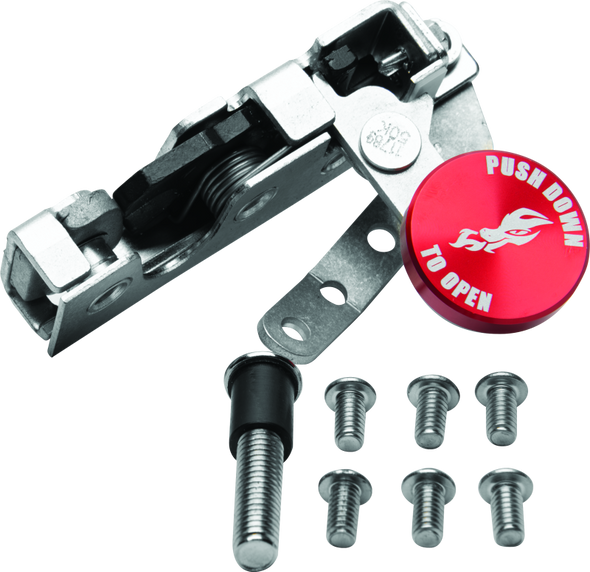
DragonFire Racing Door Latch Repair Kit - Passenger Side - 522708
DragonFire Racing
$49.99How do I know if this DFR Door Latch will fit my UTV?DFR Door Latches are designed for exact passenger-side installation, but always confirm precise fitment with your specific vehicle before purchase...$49.99 -
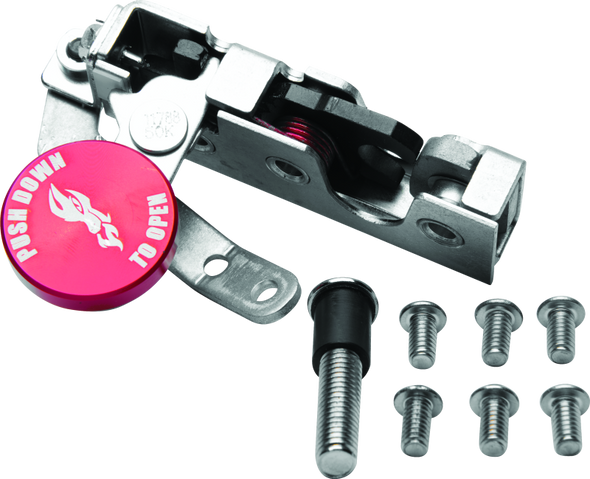
DragonFire Racing Door Latch Repair Kit - Driver Side - 522707
DragonFire Racing
$49.99Will this door latch fit my UTV?Confirm fitment with your specific vehicle model before purchasing to ensure precise driver-side door latch integration.Is this door latch easy to install?Professional...$49.99
Performance doors span everything from lightweight carbon composite race panels that shed rotational mass to heavy-gauge steel off-road half-doors engineered to take brush, rocks, and rollover loads without deforming — Motor Sport Mayhem stocks 74 in-stock options across 90 brands, ranging from $1.95 accessory hardware to $5,390 competition-grade assemblies. Whether you're building a stripped track car, armoring a trail rig, or upgrading a UTV for weekend duty, door selection directly affects weight distribution, occupant protection, ingress ergonomics, and aerodynamic balance.
Our Top Picks for Doors
Each of these products was selected based on verified performance credentials, real-world fitment quality, and value delivered at its price point.
ACB Rear View Mirror
Acerbis | $25.04
Injection-molded housing with a wide-angle lens delivers reliable rearward visibility in demanding ride conditions without adding meaningful weight to the door or fairing assembly.
- Robust UV-stabilized polymer construction resists cracking and fading under prolonged sun and trail exposure
ADD Molle Panels
Addictive Desert Designs | $498.98
Heavy-gauge steel MOLLE panel system mounts flush against the bed side, creating a modular gear-attachment surface that integrates seamlessly with existing body lines.
- Laser-cut steel with powder coat finish provides structural rigidity for load-bearing MOLLE accessories without rattling under off-road vibration
AVN License Plate Frames
Advan | $9.50
Branded aluminum license plate frame provides a clean, track-inspired exterior finish detail at minimal cost and zero installation complexity.
- Anodized aluminum construction resists corrosion and won't crack under thermal cycling like cheap plastic alternatives
AFE Tow Hook
aFe | $200.00
CNC-machined billet aluminum tow hook mounts to factory recovery points and satisfies track day regulations requiring visible, accessible tow points on both ends of the vehicle.
- Anodized red finish and precision machining make this a functional safety component that also sharpens exterior appearance at the rear fascia
AKR Carbon Rear Wing
Akrapovic | $5,028.54
Autoclave-cured dry carbon fiber wing generates measurable rear downforce at speed while weighing a fraction of a steel or fiberglass equivalent, directly improving high-speed stability and corner entry confidence.
- 2×2 twill weave carbon construction achieves a higher fiber-to-resin ratio than wet-layup alternatives, maximizing stiffness-to-weight performance
AMS Anti-Wind Buffeting Kit
AMS | $149.95
Matte carbon fiber wind buffeting kit redirects low-pressure zones created by open windows, eliminating the cabin pressure oscillation that causes ear fatigue at highway and track speeds.
- Precision-cut carbon panels mount to existing door glass channels without drilling, preserving factory seals and weather stripping integrity
Anderson Composites Carbon Gurney Flap
Anderson Composites | $629.10
OEM-grade carbon fiber gurney flap increases effective rear wing angle of attack, boosting rear downforce without requiring a full wing replacement or structural modification.
- Anderson Composites uses the same autoclave cure process as OEM carbon programs, producing panels with consistent fiber alignment and no voids
ARB Deluxe Awning Room
ARB | $307.00
Full-floor awning room system extends your vehicle's living footprint at camp, attaching directly to compatible awning rails and sealing out wind, insects, and light rain.
- Ripstop polyester construction with taped seams and a full PVC floor makes this a genuine all-weather shelter rather than a fair-weather sunshade
Artec Industries Ram Mount Truss
Artec Industries | $709.99
Laser-cut and CNC-bent DOM steel truss system reinforces the front axle and integrates a ram-assist steering mount, providing the structural foundation needed for serious fabrication builds.
- Artec's truss geometry distributes steering and impact loads across the full axle tube rather than concentrating stress at single weld points
AWE Tuning Bay Banner
AWE Tuning | $42.00
Premium shop and garage banner for enthusiasts who want to represent a brand with genuine motorsport engineering heritage in their build space.
- AWE Tuning's motorsport credibility — built on dyno-proven exhaust and intake systems — makes this a banner worth hanging
How to Choose the Right Doors
Door selection is one of the most consequential exterior decisions you'll make on a build because it intersects structural integrity, weight, occupant protection, weather sealing, and aerodynamics simultaneously. A door that looks correct but uses thin-gauge steel, sloppy hinge tolerances, or inferior weatherstrip will flex under load, introduce wind noise, and degrade the feel of every other component it contacts. The baseline question is always application: a competition door optimized for weight savings uses different material grades, hinge geometry, and latching systems than an off-road door designed to take a rock strike and still close properly afterward.
Key Specifications
Material grade and construction method define the performance ceiling of any door. Cold-rolled steel doors for off-road and OEM-replacement applications should use 18-gauge or heavier material at high-stress hinge and latch zones. Carbon fiber doors fall into two construction categories: wet-layup and autoclave-cured. Wet-layup carbon is less expensive but contains more resin by volume, which adds weight and reduces stiffness; autoclave-cured panels achieve tighter fiber-to-resin ratios (typically 60:40 fiber-to-resin by volume versus 50:50 for wet layup), producing genuinely lighter and stiffer panels that justify the price premium for track use.
Hinge and latch tolerances determine long-term reliability and how a door feels in use. Factory-spec hinge pin clearance is typically 0.003–0.005 inches; aftermarket hinges operating at looser tolerances introduce door sag within 12–18 months of regular use, causing misalignment with strikers and weather seals. For off-road applications where doors see repeated removal and reinstallation, bolt-on hinge systems with replaceable bushings outperform welded or press-fit designs by a significant margin. On competition vehicles, consider whether the door must satisfy cage integration requirements — many sanctioned series specify minimum door intrusion bar height and door bar tube diameter.
Weather sealing architecture separates street-duty doors from trail and track-only units. OEM-spec door seals use dual-lip extrusions with hollow bulb sections that compress evenly across the full door perimeter; aftermarket seals that substitute single-lip or foam-core designs fail at corners first, creating wind noise and water intrusion paths. For UTV and off-road doors, channel-mount seals bonded with contact adhesive outperform push-in variants in high-vibration environments. Check that any replacement seal hardness (measured in Shore A) matches your climate — seals in the 40–60 Shore A range remain pliable in cold weather, while seals above 70 Shore A can harden, lose contact, and allow leaks below 30°F.
Aerodynamic interaction matters more than most builders expect. Door gaps directly influence boundary layer separation along the body side, affecting both drag coefficient and rear quarter lift. Competition-legal door replacements typically target door gaps of 4–6mm across the perimeter to minimize pressure differential leakage without risking contact during body flex at speed. Carbon fiber panels also affect torsional rigidity of the body shell; if you're replacing steel doors with carbon on a unibody vehicle, the reduction in stiffness contribution from the door structure may require compensating chassis bracing — a consideration worth discussing with your builder before ordering panels.
Door Material and Application Reference Guide
| Material Type | Typical Weight vs. OEM Steel | Best Application | Key Consideration |
|---|---|---|---|
| OEM-spec cold-rolled steel | Baseline (0% delta) | Street, daily driver restoration | Match gauge to factory spec; thinner panels dent more easily |
| High-strength low-alloy (HSLA) steel | −10% to −15% | Off-road, cage-integrated builds | Requires MIG/TIG welding with correct filler; harder to fabricate than mild steel |
| Wet-layup carbon fiber | −40% to −50% | Street performance, aesthetic builds | Lower fiber-to-resin ratio; adequate for street, marginal for sustained track stress |
| Autoclave-cured prepreg carbon | −55% to −65% | Motorsport competition, time attack | Highest stiffness-to-weight; requires careful panel bonding and edge sealing |
| Fiberglass (chopped strand mat) | −20% to −30% | Budget builds, show cars | Lower stiffness, prone to flex cracks at hinges; not recommended for track use |
| HDPE / UV-stabilized polymer | −30% to −45% | UTVs, side-by-sides, trail rigs | Impact-resistant and corrosion-proof; no structural contribution to body rigidity |
Price Guide
Entry ($1.95–$85): Hardware, seals, trim clips, mirror assemblies, and license plate accessories fall here — essential maintenance and detail items that keep existing door assemblies functioning correctly. Quality varies widely in this range; prioritize UV-stable polymers and corrosion-resistant metals over the cheapest possible option, particularly for anything involving weather sealing.
Mid-range ($85–$500): This is where most enthusiasts land for functional upgrades — replacement door panels, MOLLE and storage systems, fiberglass or entry-level composite panels, and UTV door kits. At this tier, fitment quality and material thickness start meaningfully differentiating brands; verify panel thickness specs and read fitment reviews specific to your application before purchasing.
Premium ($500–$5,390): Autoclave carbon fiber door skins, full carbon aerodynamic assemblies, and competition-spec UTV door systems live at this end of the range. The cost is justified for track builds where every kilogram saved from rotating or unsprung mass has a measurable lap time impact, and for serious off-road builds where structural integrity under rollover or impact loads is a genuine safety requirement rather than a marketing claim.
Who Is This For?
Performance doors serve an unusually broad customer base — from weekend trail riders adding UTV half-doors to time attack drivers chasing every gram of weight reduction — and the usage data reflects that range clearly.
Visual / Aesthetic Upgrade — 7.7/10
The highest-scoring use case in this category reflects the reality that door panels, skins, and trim are among the most visible components on any vehicle — they define the side profile silhouette and set the tone for the entire exterior package. Carbon fiber door skins, custom MOLLE panels, and exterior styling components in this category deliver immediate visual transformation without requiring mechanical disassembly. Even entry-level door hardware upgrades — flush-mount handles, billet hinge covers, and door edge trim — contribute meaningfully to a cohesive build aesthetic.
Overlanding / Expedition — 7.4/10
Expedition builds score this high because doors are a functional critical system in remote-use contexts: they need to seal against dust and water crossing, survive rock contact without binding, and support modular accessory systems for gear organization. MOLLE panels, reinforced door skins, and upgraded weather seals are high-priority investments for overlanders because a door that won't close correctly 300 miles from pavement is a genuine problem, not an inconvenience. ARB's approach of engineering door-adjacent accessories around system integration — where awnings, panels, and protection components work as a kit — reflects best practice for expedition builds.
Weekend Off-Roading — 7.4/10
Weekend trail use creates a specific set of door requirements: the ability to remove doors quickly for open-air driving, resistance to brush and rock contact, and reliable re-installation without seal degradation. Half-door and tube door systems score particularly well in this context because they protect the occupant's lower body without blocking trail sightlines, and polymer or HDPE construction handles repeated rock contact without permanent deformation. Hinge system quality matters more here than in any other application — quick-disconnect designs that maintain alignment through dozens of removal cycles are worth the premium over standard bolt-on hardware.
Track / Autocross — 6.3/10
Track use demands door solutions that are either stripped entirely (where regulations permit) or replaced with the lightest compliant option available. Autoclave carbon fiber door skins and gurney flap extensions that interact with door-adjacent aerodynamic surfaces are the meaningful upgrades at this level. Sanctioning body rules govern minimum door structure requirements in most competitive classes, so verify FIA, SCCA, or your specific series' technical regulations before removing OEM door structures or replacing them with non-structural carbon skins on a cage-equipped car.
Street Performance — 6.1/10
Street performance applications score mid-range because most door upgrades on daily-driven performance cars are hybrid investments — they improve aesthetics and reduce weight without the same lap time accountability as a dedicated track build. Anti-wind buffeting kits, carbon door skins, and upgraded mirror assemblies address real ergonomic and aerodynamic issues at street speeds without requiring the extreme material costs of full competition hardware. For street-focused builds, wet-layup carbon panels offer a reasonable compromise between weight savings, aesthetics, and cost.
Trusted Doors Brands We Carry
The brands that dominate this category earned their positions through material engineering and application-specific design rather than generic manufacturing. Seizmik leads in UTV door systems with precision-fit polymer and polycarbonate assemblies engineered specifically for side-by-side chassis geometry, averaging $384 across their lineup — a reflection of the engineering depth required to build doors that integrate with roll cage architecture. Rugged Ridge and DV8 Offroad anchor the off-road segment with heavy-gauge steel and powder-coated aluminum systems designed for repeated trail use, with DV8's average price point of $288 reflecting their focus on structural fabrication rather than trim components. Anderson Composites and Akrapovic represent the competition carbon end of the spectrum — both brands use autoclave cure processes and 2×2 twill or unidirectional fiber layups that produce panels competitive with OEM motorsport suppliers. OMIX fills the OEM-replacement and restoration segment with factory-spec door hardware, seals, and hinge components that meet original dimensional tolerances, making them the correct choice when accurate restoration rather than performance modification is the goal.
Frequently Asked Questions
Are aftermarket mirrors worth it?
Yes, for most builds — but the value depends entirely on the application. OEM mirrors are engineered as cost-optimized assemblies; aftermarket mirrors serving off-road, motorsport, or performance street applications are designed to different priority sets: wider field of view, vibration-damped housings, or reduced aerodynamic profile. Wide-angle convex glass eliminates the rearward blind spots that flat OEM glass creates, which is a genuine safety improvement on trail and track. For builds that have removed or modified factory door panels, aftermarket mirrors may also be the only compliant option for street legality in jurisdictions that mandate both-side mirror coverage.
Are carbon fiber body panels worth it?
For dedicated track and competition builds, yes — autoclave-cured carbon fiber door skins save 55–65% of the weight versus steel equivalents, which directly reduces unsprung and reciprocating mass, improving acceleration, braking, and handling responsiveness. For street builds, the answer is more nuanced: wet-layup carbon panels save real weight but cost 3–5 times more than equivalent fiberglass, and the aesthetic benefit diminishes quickly if panels aren't UV-protected and properly sealed at edges. The critical distinction is construction method — autoclave prepreg carbon has a structurally different performance profile than wet-layup, and conflating the two leads to misplaced expectations. Verify cure method, fiber weave spec, and edge finishing quality before purchasing any carbon body panel at any price point.
Are car door protectors any good?
Door edge protectors and guard strips perform their stated function reliably when the backing adhesive and material hardness are matched correctly to the application. Rubber and foam-core guards absorb parking lot impact energy effectively but degrade in UV exposure within 12–24 months on vehicles parked outdoors; thermoplastic elastomer (TPE) guards maintain hardness and adhesion significantly longer. For vehicles with factory paint clearcoat, verify that the adhesive used is 3M or equivalent automotive-grade — generic adhesives leave residue and can lift clearcoat when removed. Magnetic door guards used during detailing and paintwork prep are a separate category and work well for scratch prevention during panel installation.
Are billet hood hinges worth it?
Billet aluminum hood hinges are worth the cost on builds where the factory stamped-steel hinges are a weight or aesthetic liability, but they are not a universal upgrade. Stamped steel OEM hinges are already engineering-optimized for load distribution across the hinge pin and body mounting points; billet hinges save weight (typically 30–50% per hinge pair) and deliver a cleaner underhood appearance. The functional upgrade that matters most is torsional stiffness — a billet hinge with a larger-diameter pin bore and tighter clearance tolerances eliminates hood flutter at highway speeds better than a worn OEM hinge. Verify that any billet hinge maintains the factory hood-to-fender gap tolerance (typically ±1.5mm) before purchasing, as some aftermarket designs introduce fitment variation that requires shimming.
Are cheap mirrors any good?
Budget mirrors in the $10–$30 range are adequate for low-stress applications — trail rigs that rarely exceed 35 mph, UTVs used at closed venues, or as temporary replacements while sourcing quality units. The failure modes on cheap mirrors are consistent and predictable: injection-molded bracket arms crack at the mount boss under vibration, glass adhesive fails in temperature cycling causing the mirror face to separate, and adjustment mechanisms lose retention torque and drift. For any vehicle used on public roads at speed, or in any competition context, investing in a mirror with a metal bracket structure, quality glass adhesive, and a positive-retention adjustment mechanism is not optional — it is a basic safety requirement that cheap hardware cannot reliably meet.
Building something specific? Our performance specialists can help you select the right Doors for your application — street, track, or full race build.