
Powersports Exhausts
- Product
- Qty in Cart
- Quantity
- Price
- Subtotal
-


Vance & Hines 17-24 Harley-Davidson Touring Supersport Slip-On - Black - 46721
Vance and Hines
$769.95What are the key technologies that power Vance & Hines exhaust systems?Vance & Hines exhaust systems leverage proprietary PCX technology and a chambered high-flow catalyst for superior exhaust flow and performance.Is this exhaust system a direct bolt-on...$769.95 -

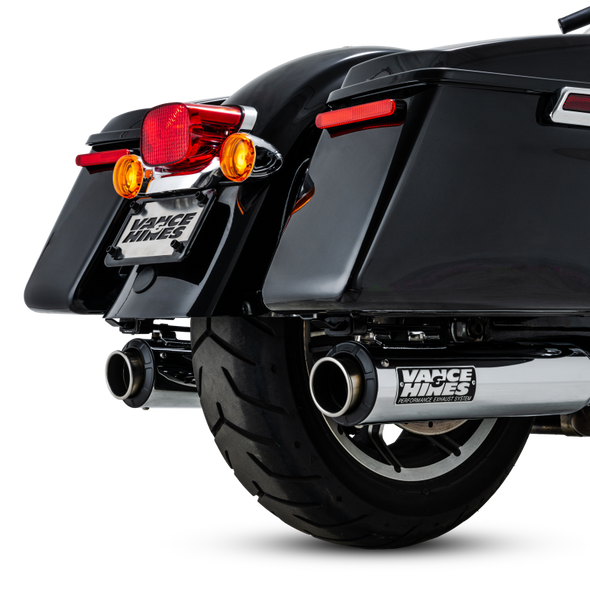
Vance & Hines 17-24 Harley-Davidson Touring Supersport Slip-On - Chrome - 16721
Vance and Hines
$769.95What is the main benefit of the Vance & Hines VAH Supersport Slip-On Exhaust?The VAH Supersport Slip-On Exhaust delivers a richer, more resonant exhaust note and achieves optimized flow for a noticeable boost in power and throttle response.How difficult...$769.95 -
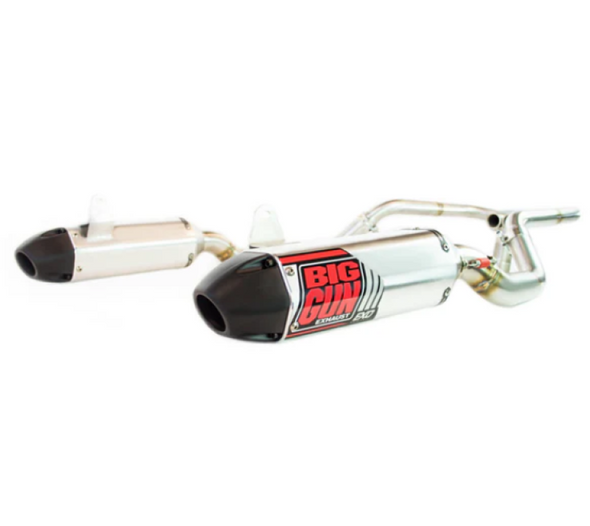
Big Gun 06-14 Yamaha Raptor 700 EXO Aluminum Dual Full Syst Exhaust - 13-3663
Big Gun
$890.78Is this exhaust system compatible with my ATV?BIG EXO Aluminum ATV Dual Full Systems require precise fitment confirmation for your specific ATV model to ensure perfect integration and performance.Is professional installation of the exhaust system...$890.78 -

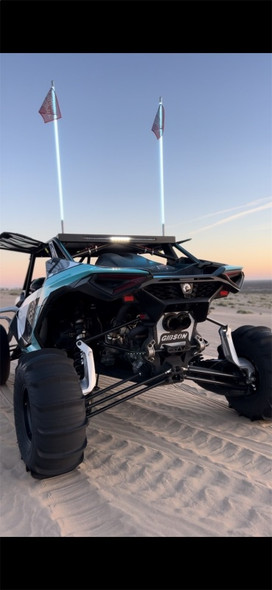
Gibson 2024 Cam-Am Maverick R 4in. T304 Stainless Round Dual Wall Slash-Cut Tip - Black Ceramic - 98057
Gibson
$953.45Will this X pipe fit my Can-Am Maverick R?Confirm precise fitment for your Can-Am Maverick R by checking our detailed compatibility guide before ordering your GIB Performance X-Pipe.How difficult is installation?Professional installation is recommended...$953.45 -

Gibson 04-07 Yamaha YXR66F Rhino 660 Base Single Exhaust - Stainless - 96002
Gibson
$703.26Will this exhaust fit my UTV?Confirm your vehicle's specific fitment to ensure this Gibson UTV exhaust is engineered for your exact UTV model, guaranteeing a perfect match.How difficult is the installation process?Experience hassle-free, bolt-on...$703.26 -

Big Gun 15-23 Yamaha Raptor 700 EVO R Series Dual Full Syst Exhaust - 09-3673
Big Gun
MSRP: $904.49$753.66What is the primary purpose of the removable screen-type spark arrestor?The integrated, removable spark arrestor provides peace of mind, ensuring safe trail riding by meeting environmental regulations.How does the BIG EVO R ATV Full System improve ATV...MSRP: $904.49$753.66 -

Big Gun 01-05 Yamaha Raptor 660 EVO R Series Full System Exhaust - 09-2613
Big Gun
MSRP: $748.49$694.57Will the BIG EVO R ATV Full Systems fit my ATV?Confirm your ATV's specific make, model, and year with our fitment guide to ensure a precise installation of your BIG EVO R ATV Full System.How much horsepower will I gain with the BIG EVO R ATV Full...MSRP: $748.49$694.57
Powersports exhausts span every form factor from full cat-back systems and long-tube headers to slip-on mufflers, downpipes, and exhaust manifolds — each targeting specific gains in flow efficiency, exhaust scavenging, and acoustic character. Motor Sport Mayhem stocks 90 in-stock units across 64 brands, covering street performance builds, track-day setups, diesel towing applications, and off-road ATV and motorcycle platforms.
Our Top Picks for Powersports Exhausts
Every product below was hand-selected by our engineering team based on demonstrated performance gains, material quality, and proven real-world results across multiple applications.
AFE Exhaust Cat Back
aFe | $2593.00
A full stainless cat-back system with a mandrel-bent 3-inch-to-3.5-inch stepped diameter that maximizes velocity at low RPM and total flow at peak power.
- 304 stainless construction with black ceramic coating resists corrosion and heat cycling across high-mileage street applications
AKR Slip-On Line - Titanium
Akrapovic | $5768.53
A race-pedigree titanium slip-on system engineered for near-stock fitment with measurable weight reduction and an unmistakable high-frequency acoustic signature.
- Grade 1 titanium construction drops significant unsprung weight versus OEM stainless units, directly benefiting high-revving track applications
AMS Downpipes
AMS | $2249.95
Purpose-built turbocharged-engine downpipes that reduce turbine housing backpressure immediately post-spool, accelerating spool time and extending usable boost range.
- Larger-diameter tubing over OEM dramatically reduces exhaust backpressure at the turbine outlet, the most restrictive point in any forced-induction exhaust path
ATS Exhaust Manifolds
ATS Diesel | $894.99
A pulse-flow manifold design that preserves exhaust gas velocity to the turbocharger inlet, improving turbine response under heavy tow loads where OEM manifolds notoriously crack.
- High-silicon ductile iron construction handles extreme thermal cycling from diesel EGTs that destroy standard cast manifolds over time
AWE Cat-Back SwitchPath
AWE Tuning | $3895.00
A valve-controlled cat-back system with two distinct acoustic modes, letting the driver select between refined street tone and full-aggression track character without any hardware changes.
- Electronically actuated SwitchPath valves allow on-the-fly mode selection, making this system genuinely dual-purpose between daily driving and track days
GBE Torque Tube Systems
Banks Power | $569.00
A torque-optimized exhaust tube system designed around mid-range power delivery for off-road platforms that need pulling torque at low RPM rather than peak power at redline.
- Tuned tube diameter and length target the torque curve specifically, rather than simply maximizing peak flow — a critical distinction for trail and tow use
BBK Full Header & Cat
BBK | $1499.99
A complete long-tube header and high-flow catted mid-pipe package in silver ceramic coating — the most comprehensive bolt-on exhaust upgrade available from the cylinder head rearward.
- 1-3/4-inch primary tubes are USA-made from mandrel-bent stainless with a silver ceramic finish that survives the extreme heat of long-tube header positioning near the floorpan
BDD Exhaust Brakes
BD Diesel | $1685.95
A universal 4.0-inch exhaust brake system with an integrated air compressor that creates backpressure on demand to supplement friction braking during heavy downhill towing.
- Butterfly-valve exhaust brakes are the only effective solution for controlling descent speed in heavy diesel tow rigs without overheating brake friction material
BIG EXO Aluminum ATV Dual Full System
Big Gun | $944.22
A full dual exhaust system in aluminum construction purpose-built for ATV racing applications where weight savings and ground clearance matter as much as flow gains.
- Aluminum canister construction sheds significant weight over stainless alternatives — critical on ATVs where total vehicle weight directly impacts handling and acceleration
BKM Exhaust Bungs B
BikeMaster | $12.99
A muffler repacking kit that restores factory-spec sound attenuation and exhaust flow characteristics to worn powersports mufflers without a full canister replacement.
- Muffler packing degrades over time from heat and oil contamination — repacking is the most cost-effective maintenance step before a blown-out muffler fails a noise inspection
How to Choose the Right Powersports Exhausts
The exhaust system is one of the few bolt-on modifications that simultaneously affects power output, torque curve shape, acoustic character, weight, and emissions compliance — and the wrong choice in any one of those dimensions compromises the others. Cheap exhausts fail at the collector welds, crack at the header flanges, and use pressed rather than mandrel-bent tubing that creates flow-restricting deformation at every bend. Quality separates itself through material grade (304 vs 409 stainless vs titanium vs aluminum), wall thickness, weld quality, flange machining tolerance, and whether the system was tuned on a dyno or simply sized by eye. Before selecting any system, understand your primary objective: peak power, torque curve shape, sound level, weight reduction, or service life — because these goals pull in different directions and no single exhaust maximizes all of them.
Key Specifications
Pipe diameter is the most misunderstood specification in exhaust selection. Bigger is not universally better — oversized tubing at low RPM drops exhaust gas velocity below the threshold needed for effective scavenging, which costs low-end torque even while peak power improves. The correct primary tube diameter for headers depends on displacement and target RPM range; the correct cat-back diameter depends on total engine output. The reference table below provides the engineering-based starting point for pipe sizing by power target.
Material selection defines service life and weight. T304 stainless is the baseline for quality street systems — it resists road salt, heat cycling, and decades of thermal expansion without cracking. T409 stainless is a cost-down material that is adequate for moderate-temperature applications but less corrosion-resistant. Titanium is the premium choice for weight-critical or track-only applications, typically saving 30–50% mass over equivalent stainless systems. Aluminized steel is entry-level and will develop rust through the coating within a few years in wet climates — acceptable only for budget applications or dry-region vehicles.
Header design — shorty versus long-tube — is not a preference question but an engineering one tied to your RPM power band target. Shorty headers improve packaging and low-to-mid RPM response by preserving some exhaust pulse separation near the head. Long-tube headers extend primary tube length to move peak scavenging effect higher in the RPM range, generating significantly more peak power at the cost of low-RPM torque and installation complexity. For street builds that spend most time below 5,000 RPM, a properly sized shorty or mid-length header often produces better real-world results than a long-tube optimized for 6,500 RPM.
For forced induction applications, the downpipe is the single most impactful exhaust component — it is the immediate restriction downstream of the turbine housing, and any backpressure there directly counters boost pressure and slows spool. Larger downpipe diameter and a high-flow or catless configuration is the first exhaust upgrade on any turbocharged platform. Similarly, if you are building out a full intake-to-exhaust flow chain, pairing upgraded exhaust work with a quality cold air intake ensures you are not creating a new restriction at the inlet to match what you removed at the outlet.
Exhaust Pipe Diameter vs. Engine Power Target
| Engine Power Target (HP) | Recommended Cat-Back Diameter | Recommended Header Primary OD | Notes |
|---|---|---|---|
| Under 200 HP | 2.0–2.25 in | 1-3/8 – 1-1/2 in | Prioritize velocity over flow area; oversizing hurts torque |
| 200–300 HP | 2.25–2.5 in | 1-1/2 – 1-5/8 in | Standard street performance range; broadest product availability |
| 300–450 HP | 2.5–3.0 in | 1-5/8 – 1-3/4 in | Most bolt-on performance builds land here; dyno tuning recommended |
| 450–600 HP | 3.0–3.5 in | 1-7/8 – 2.0 in | Single or dual 3-inch; stepped diameter systems beneficial |
| 600–900 HP | 3.5–4.0 in (dual 3 in) | 2.0 – 2-1/8 in | Dual exhaust paths or 4-inch single; requires full system matching |
| 900 HP+ | Dual 4.0 in or custom | 2-1/8 in+, application-specific | Custom fabrication typically required; consult fabrication components |
Price Guide
Entry ($3.99–$500): This range covers maintenance components like muffler repacking kits, exhaust bungs, slip-on mufflers for smaller displacement powersports equipment, and basic aluminized steel replacement parts. These are legitimate purchases for keeping an existing system functional or adding a basic acoustic upgrade to an ATV or motorcycle on a tight budget — not for building power.
Mid-range ($500–$2,500): Where the majority of serious street performance builds land. This price band includes full cat-back systems in T304 stainless, shorty and mid-length headers, ATV full systems, diesel manifold upgrades, and quality downpipes for turbocharged platforms. Material quality is genuinely strong at this level, and dyno-verified flow numbers are standard from the reputable brands in this range.
Premium ($2,500–$11,935.89): Titanium systems, electronically valve-controlled cat-backs, full race exhausts with race-line catalysts, and application-specific systems engineered for a single platform to a very high tolerance. The cost is justified for track-day builds where weight reduction is measurable in lap times, for flagship sports cars where OEM-level fit quality is non-negotiable, or for high-power builds where a generic system simply will not flow enough. At this level you are paying for engineering depth, exotic materials, and acoustic tuning that took dozens of dyno and track sessions to finalize.
Who Is This For?
Powersports exhausts serve a spectrum of applications from daily-driven street trucks to ATV racing to dedicated track cars — the usage data below reflects where these products actually deliver.
Street Performance — 7.9/10
Street performance is the strongest use case in this category, tied at the top of the usage matrix alongside engine performance, and it is easy to understand why — an exhaust upgrade is one of the first modifications most street enthusiasts make because the gains are immediately audible and measurable. On the street, the practical priorities are sound quality, fitment quality that survives daily exposure to road debris and moisture, and torque delivery in the mid-RPM range where street driving actually happens. Systems optimized for street use prioritize durable materials, broader torque curves, and noise levels that remain livable on long highway runs.
Engine Performance — 7.9/10
Tied with street performance at 7.9/10, engine performance reflects the fact that exhaust backpressure is a direct tax on every combustion event — reducing it releases power the engine was already producing but couldn't get out. The gains are most pronounced when paired with complementary engine breathing improvements upstream; an exhaust upgrade on a stock intake and stock throttle body recovers less than the same upgrade on a fully breathed engine. Headers, high-flow cats, and mandrel-bent cat-backs all contribute to measurable dyno gains, with the largest single improvements typically coming from downpipe upgrades on turbocharged platforms and long-tube headers on naturally aspirated V8 applications.
Exhaust Note / Sound — 7.7/10
At 7.7/10, sound character is a primary purchase driver for a significant portion of buyers — not a secondary benefit. Different exhaust configurations produce fundamentally different acoustic signatures: straight-through perforated core mufflers produce a raspy, high-frequency note; chambered mufflers produce a deeper, more resonant tone; turbine-style mufflers deliver a moderate, controlled sound that remains livable at highway speeds. Pipe diameter, collector design, and muffler internal volume all contribute to the final sound, and buying purely based on brand reputation without understanding the acoustic design of the specific product often leads to disappointment.
Easy DIY Install — 7.8/10
A 7.8/10 score for DIY install reflects the reality that most modern cat-back and slip-on systems are genuinely designed for home installation with basic hand tools — direct-fit clamp or band-clamp connections, pre-assembled midsections, and included hardware make the process accessible. The exceptions are long-tube headers, which require exhaust manifold removal, oxygen sensor relocation, and often mid-pipe modification — a task that crosses into professional installation territory for most street builds. Downpipes on turbocharged vehicles also require careful torque sequencing at the turbine housing flange to avoid warping and leaks.
Track / Autocross — 7.2/10
Track and autocross applications score 7.2/10 — strong, but tempered by the reality that noise regulations at most competitive venues impose strict sound limits that rule out the loudest systems regardless of performance. The ideal track exhaust balances maximum flow with a controlled decibel level that passes tech inspection, which is why valve-controlled systems with selectable modes have become increasingly popular for dual-purpose street-and-track builds. Weight reduction from titanium systems also becomes genuinely relevant at track level, where every kilogram removed from the vehicle rear improves yaw response and braking stability.
Trusted Powersports Exhausts Brands We Carry
The brands that lead this category share one trait: they validate their systems on a dyno and on track before selling them, not after. Borla has built its reputation on patented straight-through perforated core muffler technology and stringent acoustic tuning across an enormous vehicle fitment range. Magnaflow holds CARB EO numbers on a broad catalog of street-legal systems, making it the go-to choice for enthusiasts in emissions-regulated states. AWE Tuning brings wind-tunnel and dyno development to every system with engineering rigor uncommon at its price points. Akrapovic operates out of a purpose-built facility with CNC-welded titanium fabrication and FIA-recognized race pedigree that transfers directly to their street products. FMF Racing has decades of two-stroke and four-stroke powersports racing heritage that makes them the benchmark for ATV and motorcycle exhaust performance. CORSA Performance pioneered reflective sound cancellation technology that eliminates drone without sacrificing aggressive exhaust character — a technically distinct approach from traditional absorption-based muffler design. The breadth of engineering philosophies across these brands means there is a genuine best-fit solution for almost every application in this category.
Frequently Asked Questions
Are aftermarket exhaust tips worth buying?
Exhaust tips are a purely aesthetic modification — they have no effect on backpressure, exhaust velocity, or power output because they attach downstream of the muffler outlet where exhaust gas is already at atmospheric pressure. The value is entirely visual: a larger-diameter or polished tip changes the appearance of the rear of the vehicle without any performance trade-off. If your goal is sound or power, the money is better spent on the muffler, mid-pipe, or header rather than the tip. Tips do matter for corrosion resistance in wet climates — stainless or titanium tips outlast chrome-plated steel significantly.
Are Akrapovic exhausts worth the money?
For track use and weight-critical builds, yes — Akrapovic titanium systems are among the few aftermarket exhausts where the engineering investment is genuinely reflected in the product. Their CNC-welded titanium construction, multi-map acoustic tuning, and race-validated flow numbers justify a premium over comparable stainless systems. For a daily-driven street vehicle where weight reduction is not a priority, the performance gap between Akrapovic and a high-quality stainless system from a brand like Borla or AWE narrows considerably, and the price premium becomes harder to justify on pure performance grounds alone. The choice ultimately comes down to whether weight reduction and premium build quality matter enough in your specific application to warrant the cost.
Are axle-back exhausts good for performance?
Axle-backs — which replace only the muffler section rearward of the rear axle — are the lowest-impact exhaust upgrade for outright power because they address the least restrictive section of the exhaust path. Their primary contribution is sound character modification, not flow improvement, since the muffler at the rear of a well-designed OEM system is rarely the dominant restriction. However, for vehicles where the OEM muffler is unusually restrictive or where the goal is a specific acoustic target without changing mid-pipe emissions equipment, an axle-back is a cost-effective and reversible modification. Pairing an axle-back with a high-flow mid-pipe recovers much of the performance gap compared to a full cat-back system.
Are BBK headers made in the USA, and are they stainless steel?
BBK Performance headers are manufactured in the USA and constructed from mandrel-bent stainless steel tubing, with ceramic coating available as an upgrade that significantly improves heat retention inside the tube — keeping exhaust gas hot and moving faster — while protecting the exterior from the extreme temperatures generated by headers routed close to chassis components. The stainless construction provides long-term corrosion resistance critical for headers that are exposed to road spray and high heat cycles simultaneously. USA manufacturing means tighter quality control on tube wall thickness consistency and weld penetration compared to imported alternatives at similar price points.
Are exhaust brakes effective for towing and downhill control?
Exhaust brakes are one of the most effective engine braking aids available for diesel tow vehicles, working by restricting exhaust flow to create backpressure that resists piston downstroke and slows the engine without requiring friction brake application. On steep grades with heavy trailer loads, an exhaust brake can reduce service brake temperatures dramatically — the primary cause of brake fade and rotor warping during extended downhill runs. Effectiveness scales with engine displacement and turbocharger configuration; larger turbocharged diesels generate more backpressure for a given valve restriction, making exhaust brakes particularly potent on late-model high-output diesel platforms. If you are building a serious tow rig, pairing an exhaust brake with upgraded brake rotors and pads covers both the emergency and sustained braking scenarios.
Building something specific? Our performance specialists can help you select the right Powersports Exhausts for your application — street, track, or full race build.