
Headers & Manifolds
- Product
- Qty in Cart
- Quantity
- Price
- Subtotal
-

Stainless Works 20-21 Ford F-250/F-350 7.3L Headers 1-7/8in Primaries 3in Collectors High Flow Cats - FT220188HCAT
Stainless Works
MSRP: $2,695.00$2,560.25What is the primary benefit of installing SSW Long Tube Headers?SSW Long Tube Headers unleash aggressive exhaust notes and deliver a noticeable surge in horsepower and torque for thrilling acceleration.How much horsepower and torque can I expect to gain...MSRP: $2,695.00$2,560.25 -
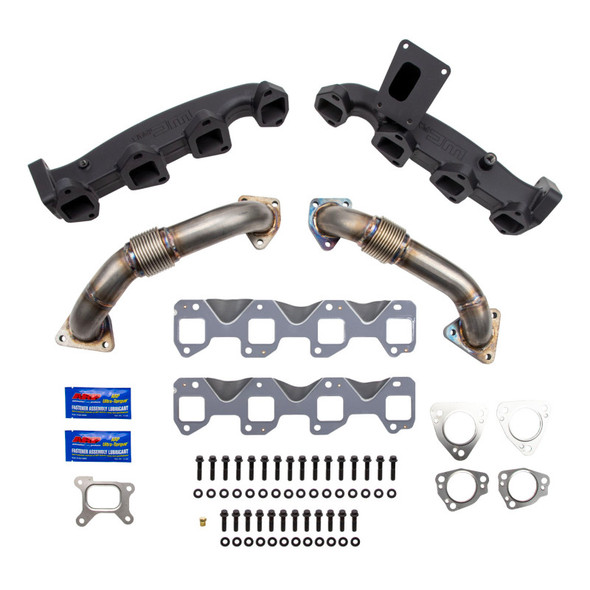

Wehrli 17-24 Chevrolet Duramax Billet Exhaust Manifold & Stainless Up Pipe Kit w/ Gaskets & Hardware - WCF100226
Wehrli
MSRP: $2,225.00$2,158.25What is the primary benefit of the Wehrli Exhaust Manifold Kit?This Wehrli Exhaust Manifold Kit delivers unrestricted exhaust flow for immediate throttle response and significant horsepower gains, optimizing engine efficiency.How do I know if this...MSRP: $2,225.00$2,158.25 -
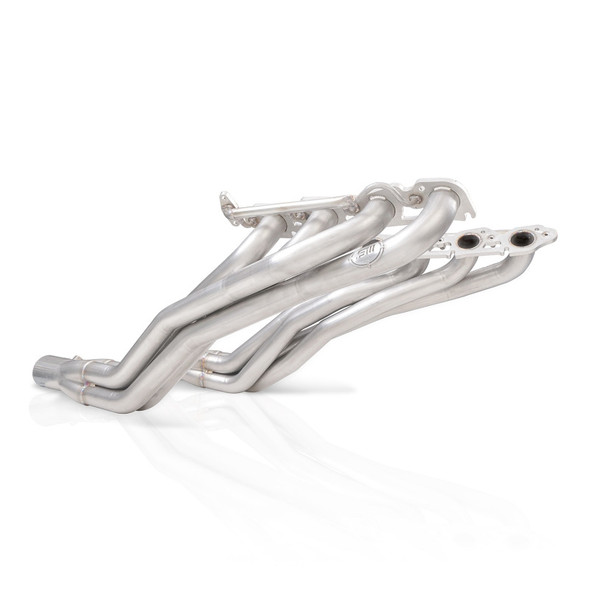

Stainless Works 2014+ Toyota Tundra 5.7L Headers 1-7/8in Primaries w/High-Flow Cats - TOYT14HCAT
Stainless Works
MSRP: $2,595.00$2,465.25How do I determine if these headers are compatible with my specific vehicle model and year?Confirm precise fitment using our comprehensive vehicle compatibility tool before purchase to ensure seamless integration with your specific vehicle.Can I install...MSRP: $2,595.00$2,465.25 -
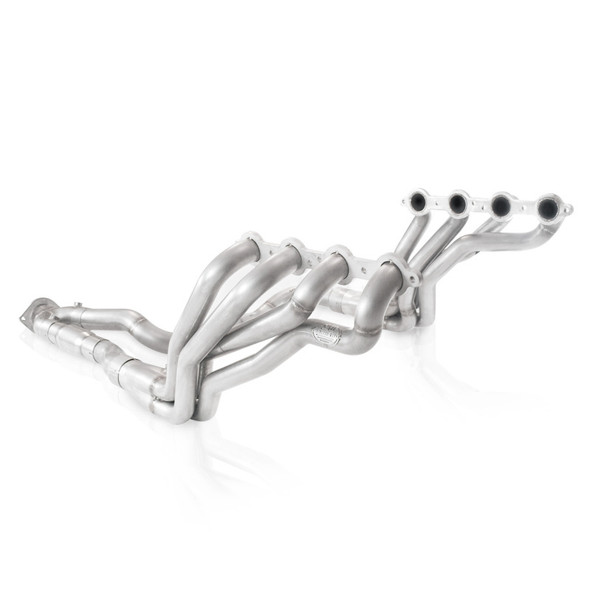

Stainless Works 2006-09 Trailblazer SS 6.0L Headers 1-3/4in Primaries 2-1/2in High-Flow Cats - TBSSY
Stainless Works
MSRP: $2,395.00$2,275.25Are these headers specifically designed for my vehicle?Confirm fitment with your vehicle; these bolt-on headers are engineered for precise integration with your specific make and model.What is the typical horsepower gain with these headers?Experience a...MSRP: $2,395.00$2,275.25 -
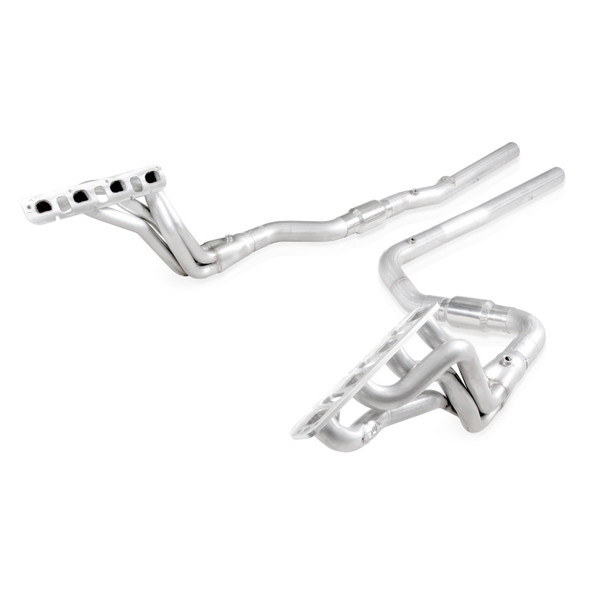
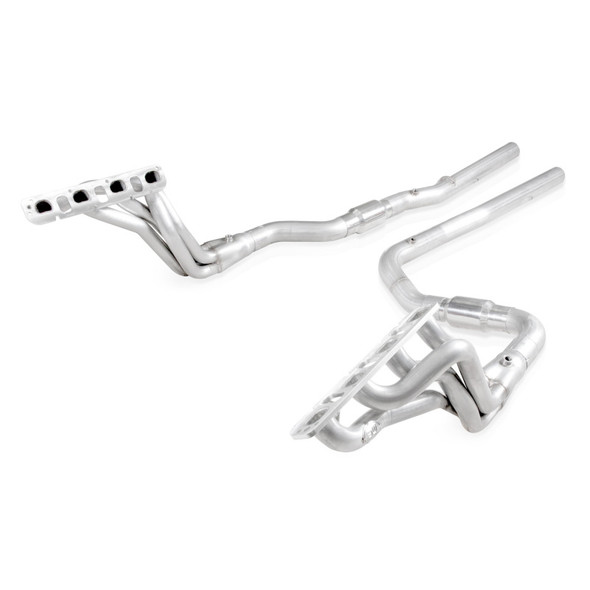
Stainless Works 2009-16 Dodge Ram 5.7L Headers 1-7/8in Primaries 3in High-Flow Cats - RAM09HCAT
Stainless Works
MSRP: $2,695.00$2,560.25How do I confirm fitment for my vehicle?Confirm fitment for your specific vehicle application using the provided compatibility checker to ensure seamless installation of these headers.Are these headers a direct bolt-on installation?Achieve a significant...MSRP: $2,695.00$2,560.25 -
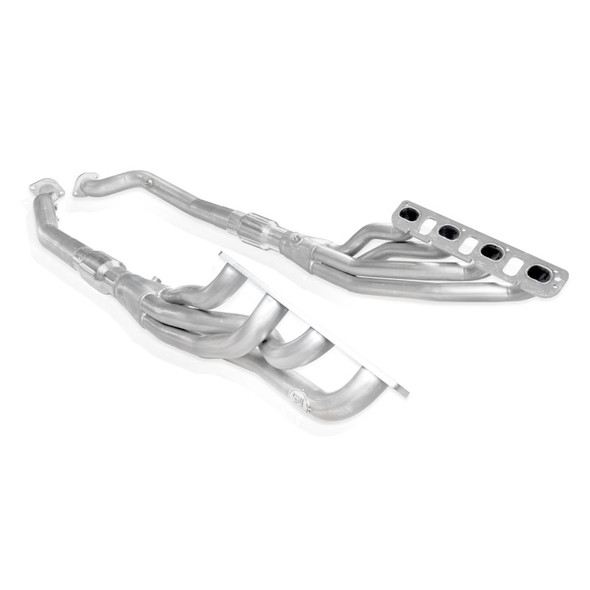

Stainless Works 2012-17 Jeep Grand Cherokee 6.4L Headers 1-7/8in Primaries 3in High-Flow Cats - JEEP64HCAT
Stainless Works
MSRP: $2,695.00$2,560.25Do these headers fit my 2012 Jeep Grand Cherokee?These Stainless Works Long Tube Headers are specifically designed for a bolt-on fitment on 2012-2018 Jeep Grand Cherokee models, ensuring perfect integration.What is the horsepower gain from these...MSRP: $2,695.00$2,560.25 -

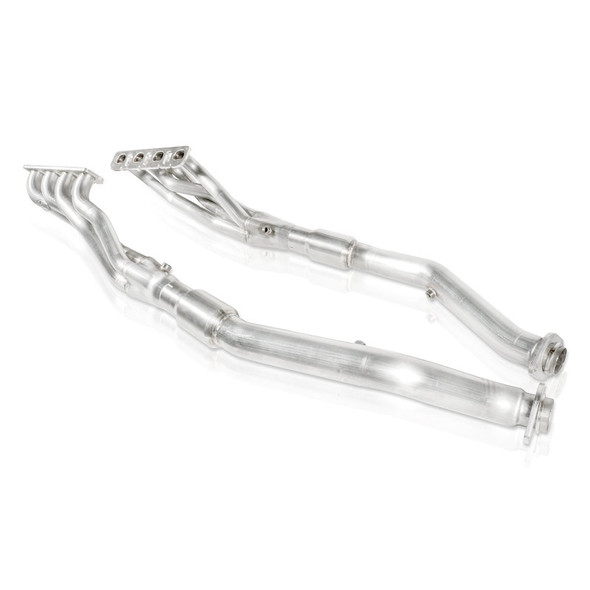
Stainless Works 2018 Jeep TrackHawk 6.2L Headers 1-7/8in Primaries High-Flow Cats 3in Leads - JEEP1862HCAT
Stainless Works
MSRP: $2,695.00$2,560.25Are these headers difficult to install?These bolt-on SSW Long Tube Headers are engineered for a direct fit on your 2018-2020 Jeep Grand Cherokee, ensuring an easy installation process.What kind of performance increase can I expect?Expect a significant...MSRP: $2,695.00$2,560.25 -
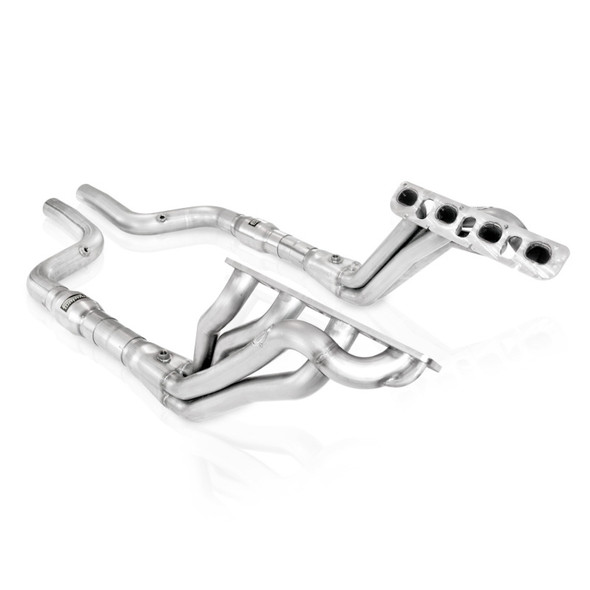

Stainless Works 2008-17 Hemi Headers 1-7/8in Primaries 3in High-Flow Cats - HM64HDRCAT
Stainless Works
MSRP: $2,695.00$2,560.25Are Stainless Works Headers bolt-on?Stainless Works headers are designed for a seamless bolt-on installation, ensuring a straightforward fitment process for your vehicle.Will these headers improve my car's performance?Experience a significant increase in...MSRP: $2,695.00$2,560.25 -
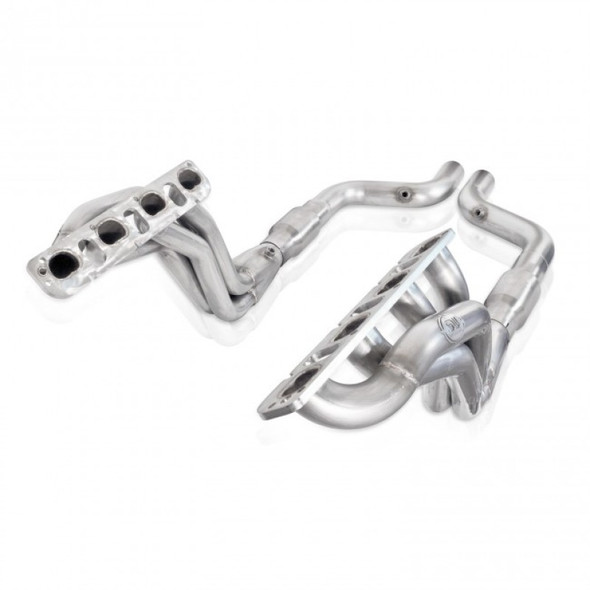

Stainless Works 2015-18 Hemi Headers 2in Primaries 3in High-Flow Cats - HM642HDRCAT
Stainless Works
MSRP: $2,695.00$2,560.25What vehicles do these Stainless Works headers fit?These Stainless Works long tube headers are a direct bolt-on upgrade for 2005-2020 Chrysler 300, Dodge Challenger, Charger, and Magnum models.Are these headers pre-tuned for my car?Achieve significant...MSRP: $2,695.00$2,560.25 -
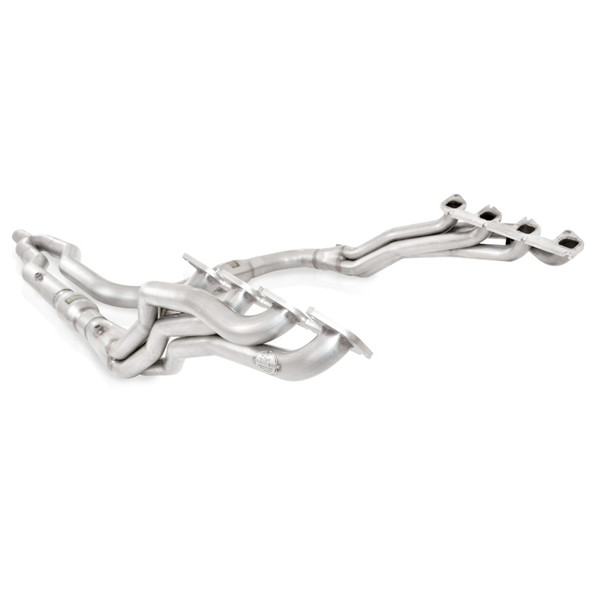

Stainless Works 2010-14 Ford F-150 Raptor 1-7/8in Primaries 3in High-Flow Cats Y-Pipe - FTR11HCATYSC
Stainless Works
MSRP: $2,595.00$2,465.25Will these SSW Long Tube Headers fit my vehicle?These SSW Long Tube Headers are engineered as a bolt-on upgrade; always confirm vehicle fitment before purchase to ensure proper installation.Are these SSW Long Tube Headers difficult to install?Installing...MSRP: $2,595.00$2,465.25 -
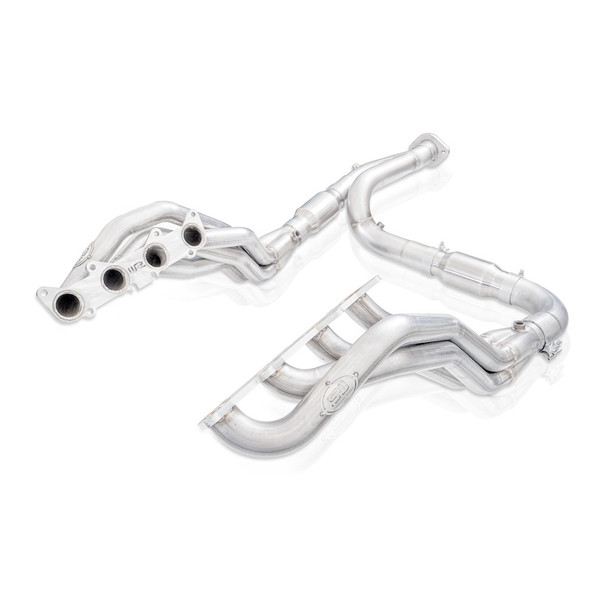

Stainless Works 15-19 Ford F-150 5.0L Catted Factory Connect Headers 1-7/8in Primaries 3in Collector - FT18HCATY
Stainless Works
MSRP: $2,550.00$2,422.50What are the primary tube sizes for these headers?These Stainless Works headers feature 1-7/8 inch primaries, meticulously engineered for optimal exhaust gas velocity and superior engine performance.How do these headers improve my vehicle's...MSRP: $2,550.00$2,422.50 -
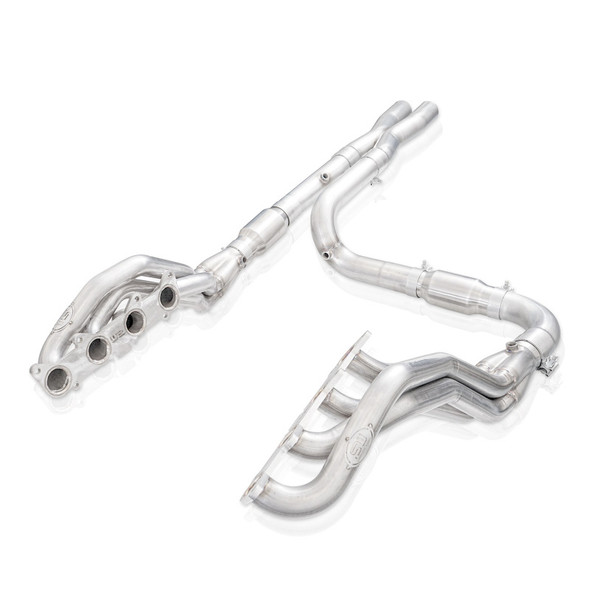

Stainless Works 15-19 Ford F-150 5.0L Catted Perf Connect Headers 1-7/8in Primaries 3in Collectors - FT18HCAT
Stainless Works
MSRP: $2,695.00$2,560.25Are Stainless Works headers made from 304 stainless steel?Yes, Stainless Works headers are expertly TIG welded from premium 304 stainless steel for superior corrosion resistance and longevity.What is the benefit of installing long tube headers?Installing...MSRP: $2,695.00$2,560.25
Headers and exhaust manifolds are the single most impactful bolt-on modification for improving scavenging efficiency, reducing exhaust backpressure, and unlocking real power across the RPM range. Motor Sport Mayhem stocks 306 headers and manifolds from 64 performance brands, covering everything from budget street upgrades to titanium race systems priced up to $11,935.
Our Top Picks for Headers & Manifolds
Each of the following products was hand-selected based on engineering quality, verified fitment, real-world dyno results, and value for the application.
AFE Exhaust Cat Back
aFe | $2,593.00
Mandrel-bent stainless steel construction with a stepped 3-inch to 3.5-inch diameter transition delivers measurable low-end torque and top-end flow gains without sacrificing street manners.
- Black ceramic finish resists corrosion and retains heat for sustained scavenging efficiency
AKR Slip-On Line – Titanium
Akrapovic | $5,768.53
Grade 1 and Grade 5 titanium construction delivers a significant weight reduction over OEM steel while producing a race-validated acoustic profile built to FIA and ACO noise regulations.
- Slip-on fitment retains OEM header routing while unlocking measurable top-end power and dramatic weight savings
AMS Downpipes
AMS | $2,249.95
High-flow downpipes eliminate the most restrictive section of a turbocharged exhaust path, directly reducing turbine backpressure and improving spool response on boosted applications.
- Designed specifically for high-output turbocharged engines where OEM downpipe restriction is the primary power ceiling
ATS Exhaust Manifolds
ATS Diesel | $894.99
A pulse-flow exhaust manifold design preserves individual cylinder exhaust energy rather than allowing pressure waves to cancel each other out, translating directly into improved turbo spool and low-RPM torque on diesel platforms.
- Cast construction rated for sustained high-EGT diesel operation where cast iron or thin-wall steel OEM manifolds crack under load
AWE Axle-Back SwitchPath
AWE Tuning | $3,895.00
The SwitchPath valve system gives the driver real-time control over exhaust tone — from subdued street mode to full-open track mode — without requiring a separate valve controller or tune.
- Axle-back configuration preserves OEM mid-pipe and catalytic hardware while delivering the most audible acoustic improvement per dollar spent
GBE Torque Tube Systems
Banks Power | $569.00
A torque tube exhaust system routes gases through a single optimized collector path that maximizes low-RPM scavenging, which is exactly where off-road and tow applications demand the most usable torque.
- Banks Power's OEM-supplier-grade engineering brings commercial truck exhaust flow principles to light-duty 4x4 applications
BBK Full Header & Cat
BBK | $1,499.99
Long-tube headers with a high-flow catted mid-pipe represent the most complete bolt-on exhaust upgrade a naturally aspirated V8 can receive, addressing primary tube length, collector design, and catalytic restriction in one package.
- Silver ceramic coating provides thermal management and corrosion protection without the fitment compromises of raw or chrome-plated steel headers
BDD Exhaust Brakes
BD Diesel | $1,685.95
An exhaust brake creates controlled backpressure at the turbine outlet to produce engine braking on diesel applications, reducing service brake wear and controlling descent speed on loaded tow rigs without power loss during normal operation.
- Universal 4.0-inch configuration with integrated air compressor fits a broad range of heavy-duty diesel exhaust diameters
BIG EXO Aluminum ATV Dual Full System
Big Gun | $944.22
A full-system ATV exhaust — header, mid-pipe, and canister — eliminates every OEM restriction simultaneously, which is the only way to extract the full performance benefit of an exhaust upgrade on small-displacement single-cylinder applications.
- Aluminum canister construction prioritizes weight reduction over aesthetics, a deliberate engineering choice for performance ATV applications
BKM Exhaust Bungs B
BikeMaster | $12.99
Muffler repacking is essential maintenance on any fiberglass-packed exhaust canister — degraded packing dramatically increases noise, reduces backpressure control, and accelerates internal corrosion of the core tube.
- The lowest-cost, highest-impact maintenance item for any rider running an aftermarket or OEM slip-on muffler
How to Choose the Right Headers & Manifolds
The difference between a header that makes real power and one that looks like it should is primary tube diameter, tube length, collector design, and material quality — four variables that OEM manifolds compromise on for packaging and cost reasons. A cast iron OEM exhaust manifold prioritizes durability and emissions compliance over flow; a properly designed aftermarket header prioritizes scavenging, which means tuning primary tube length to produce exhaust pressure wave timing that actively pulls spent gases out of the cylinder at the precise moment the exhaust valve opens. Get that wrong and you lose torque instead of gaining it.
Key Specifications
Primary tube diameter and length are the most misunderstood specs in header selection. Bigger is not always better — oversized primaries reduce exhaust gas velocity at low RPM, destroying torque in exactly the range most street drivers live in. A street performance engine making 300–450 hp typically benefits from 1-5/8-inch to 1-3/4-inch primaries tuned to 28–32 inches in length. A high-revving naturally aspirated race engine making peak power above 6,500 RPM can use 1-7/8-inch or 2-inch primaries, but that same header on a street car will produce a noticeable torque dip below 3,500 RPM.
Material selection determines longevity under thermal cycling. Mild steel headers are the least expensive option but require coating or ceramic treatment to survive the heat cycles of normal operation without rusting through within two to three years. 304 stainless steel is the benchmark for street performance — it withstands continuous temperatures up to approximately 1,600°F, resists corrosion without additional coating, and retains dimensional stability through thousands of heat cycles. 321 stainless steel adds titanium stabilization for higher sustained temperatures and is the correct choice for turbocharged applications where header temps run consistently above 1,400°F. Titanium is the top tier: roughly 40% lighter than stainless with comparable strength and superior heat resistance, but at a significant cost premium that is only justified on weight-sensitive track and race builds.
For turbocharged engines, the manifold design changes fundamentally. A naturally aspirated header optimizes for scavenging; a turbo manifold optimizes for even exhaust pulse delivery to the turbine wheel and thermal management of the turbine housing. Equal-length tubular manifolds improve spool consistency and reduce turbo lag compared to cast iron log manifolds. On diesel platforms, pulse-flow manifold designs preserve individual cylinder energy and are proven to improve turbo response at low boost levels where torque is most critical for towing and off-road applications.
Fitment tolerance separates performance headers that install cleanly from those that require grinding, shimming, or custom gaskets. Reputable manufacturers fixture-weld their headers on actual production vehicles or precise dimensional jigs, verify O2 bung positioning against factory ECU sensor locations, and include factory-spec hardware. Cheap headers manufactured to loose tolerances regularly produce exhaust leaks at the collector or head flange within the first heat cycle — a leak at those temperatures is a fire risk, not just a noise complaint. Always verify that the header you select includes a matching gasket set and that the O2 sensor bung count matches your vehicle's OEM configuration before ordering.
Exhaust Pipe Diameter vs. Horsepower Target Reference Guide
| Primary Tube Diameter | Collector / Outlet Diameter | Peak HP Range (N/A) | Recommended Application |
|---|---|---|---|
| 1-1/2 inch | 2-1/2 inch | 150–250 hp | 4-cylinder street, mild cam, stock compression |
| 1-5/8 inch | 2-1/2 to 3 inch | 250–400 hp | V6/small V8 street performance, daily driver |
| 1-3/4 inch | 3 inch | 350–500 hp | Performance V8 street/strip, moderate cam, headers most common choice |
| 1-7/8 inch | 3 to 3-1/2 inch | 450–600 hp | High-output V8, aggressive cam, track-focused street build |
| 2 inch | 3-1/2 to 4 inch | 550–750+ hp | Dedicated race engine, high-RPM naturally aspirated or large-displacement forced induction |
| Turbo manifold (log or equal-length) | Turbine inlet flange matched | All — turbine sizing governs | Forced induction applications — pipe diameter secondary to pulse timing and turbine match |
Price Guide
Entry ($3.99–$400): This range covers maintenance items, muffler packing kits, exhaust bungs, gaskets, and budget slip-on mufflers for small-displacement motorcycles and ATVs. You are not buying fabrication quality here — you are buying consumables and service parts. Perfectly appropriate for what they are; do not expect them to be something they are not.
Mid-range ($400–$2,000): The vast majority of street performance header and manifold purchases land here, and for good reason. This range delivers genuine 304 stainless construction, proper mandrel bending, verified fitment, and measurable dyno-proven gains. Long-tube header kits with catted mid-pipes, high-flow diesel exhaust manifold replacements, and quality turbo-back systems for popular performance platforms all live in this price band. This is where value and real performance overlap most effectively.
Premium ($2,000–$11,935.89): Premium pricing is justified by titanium or 321 stainless material specifications, handmade or CNC-mandrel construction, race-validated acoustic engineering, and OEM-supplier quality control processes. This tier is appropriate for track cars where weight reduction directly translates to lap times, for turbocharged builds where sustained high-EGT operation demands superior material, and for enthusiasts who demand the acoustic and visual quality of marques like Akrapovic or AWE Tuning on high-value vehicles where the exhaust system is part of the ownership experience.
Who Is This For?
Headers and exhaust manifolds serve a genuinely broad audience — from the street driver extracting every reliable horsepower from a daily commuter to the dedicated racer who needs every gram of weight removed and every exhaust pulse optimized.
Street Performance — 7.9/10
Headers and manifolds score highest in street performance application because this is exactly the use case aftermarket exhaust engineering has been optimized for over five decades. The OEM exhaust manifold is the most deliberately compromised performance component on any production vehicle — packaging constraints, emissions requirements, and cost targets all force design decisions that leave real power on the table. A properly matched aftermarket header restores that power without requiring any other modifications, making it the highest-return single bolt-on upgrade for street-driven performance vehicles.
Engine Performance — 7.9/10
The 7.9/10 score for engine performance reflects how directly exhaust flow improvement translates to measurable output gains across the RPM range. Reducing pumping losses — the work the engine does pushing exhaust gases out against manifold restriction — improves thermal efficiency and frees up crankshaft energy that was previously wasted. When paired with complementary air intake system upgrades, the combined improvement in volumetric efficiency consistently produces additive gains that exceed either modification alone.
Exhaust Note / Sound — 7.7/10
The acoustic improvement from a quality header and exhaust system upgrade is not incidental — it is a direct result of changing the harmonic frequency of exhaust pulses through altered tube geometry and reduced internal resonance. Long-tube headers produce a fundamentally different exhaust note than shorty headers because the pressure wave timing is different, which changes the frequency and amplitude of the sound that reaches the tailpipe. Buyers who prioritize exhaust note should understand that the most satisfying sound profiles come from systems engineered specifically for acoustic output, not systems where sound is a side effect of flow optimization.
Track / Autocross — 7.2/10
The 7.2/10 track score reflects a real consideration: many dedicated track applications are noise-regulated and emissions-scrutineered, which limits the most aggressive header configurations. Within those constraints, headers deliver genuine lap-time improvement through mid-range torque density and top-end power, both of which translate directly to corner exit acceleration and straight-line speed. For unrestricted track builds, eliminating catalytic converters entirely and running straight-pipe collectors extracts the maximum theoretical flow benefit, though this configuration is not street-legal in most jurisdictions.
Easy DIY Install — 7.8/10
The 7.8/10 DIY score is well-earned for axle-back and slip-on configurations, which are genuinely accessible to an enthusiast with basic hand tools and a floor jack. Long-tube header installation is a more demanding job — it frequently requires removing the starter, O2 sensor relocation, and careful management of heat shield clearances — but it remains within reach of an experienced DIY builder with a proper lift. The key variable is fitment quality: a header built to accurate dimensions installs in hours; a poorly toleranced header can require half a day of modification work before it seals correctly.
Trusted Headers & Manifolds Brands We Carry
The brands that consistently earn repeat business in this category are the ones with verifiable engineering infrastructure behind their products. aFe Power brings computational fluid dynamics to their exhaust routing designs and backs every fitment claim with physical vehicle testing. AWE Tuning engineers acoustic profiles on a dedicated sound dyno in addition to flow testing, producing systems where the sound quality is as deliberate as the power output. BBK Performance manufactures their headers domestically with a direct focus on popular American V8 platforms, using mandrel-bent 304 stainless and silver ceramic coating as a standard specification. Akrapovic is the benchmark for titanium exhaust engineering globally, with an OEM supply relationship with multiple factory racing programs that validates every design before it reaches the aftermarket. ATS Diesel specializes in heavy-duty diesel exhaust manifold engineering where sustained EGT management is a durability-critical requirement, not a marketing claim. Banks Power brings commercial and military vehicle exhaust engineering principles to performance street applications, giving their exhaust system designs a depth of thermal and flow analysis that most aftermarket manufacturers do not invest in.
Frequently Asked Questions
Are aftermarket intake manifolds worth it?
On most modern fuel-injected engines, an aftermarket intake manifold delivers measurable power gains only when paired with supporting modifications — primarily a camshaft with more duration and lift, larger throttle body, and adequate fueling. An OEM intake manifold is designed for emissions compliance, idle quality, and broad torque spread across the RPM range; an aftermarket manifold optimizes runner length and plenum volume for a specific RPM target, which means you gain at the top and may lose at the bottom if the rest of the engine is not matched to the same operating window. High-output naturally aspirated builds and forced induction applications swapping to larger throttle bodies benefit most — a stock engine running stock cams will see marginal gains from the manifold alone. The ROI improves significantly when the intake manifold is part of a complete top-end build rather than a standalone upgrade.
Are BBK headers made in the USA and are they stainless steel?
BBK Performance manufactures their performance headers domestically in the United States, which directly supports the fitment accuracy and quality control consistency their products are known for — domestic production allows for physical fitment verification on actual production vehicles during the development process. Their headers are constructed from 304 stainless steel as a standard specification, which provides genuine corrosion resistance and the ability to withstand repeated heat cycling without scaling or cracking the way mild steel headers do. The silver ceramic coating applied to many BBK long-tube headers is an additional thermal management layer, not a substitute for stainless construction. This combination of domestic manufacturing, stainless substrate, and ceramic coating puts BBK headers in a quality tier well above imported mild steel alternatives at a comparable price point.
Are Akrapovic exhausts worth the money?
Akrapovic exhausts are worth the premium specifically when the application demands what only titanium construction can deliver: measurable unsprung and rotating mass reduction, sustained high-temperature performance above 1,600°F, and acoustic engineering validated by factory racing programs. For a street car used as a daily driver, the functional performance benefit over a quality stainless steel system is real but modest — the primary value proposition shifts toward the craftsmanship, acoustic quality, and ownership experience. For a track-focused build where every kilogram of weight reduction translates directly to braking distance and corner entry speed, the weight savings of a titanium system versus stainless is a legitimate performance investment. The question is not whether Akrapovic delivers what it promises — it consistently does — the question is whether your application specifically requires what titanium construction provides.
Are axle-back exhausts good?
Axle-back exhausts are the most accessible and reversible exhaust upgrade available, and they deliver exactly what they are designed for: improved exhaust note and aesthetic improvement with minimal installation complexity. They do not improve power output in any meaningful way because they do not address the primary restriction points in an exhaust system — the headers, catalytic converters, and mid-pipe — but that is not their purpose. For vehicles where the owner wants a better exhaust note without voiding warranties, removing emissions equipment, or undertaking a major install, an axle-back from a quality manufacturer is a completely legitimate and satisfying upgrade. Combine one with a quality catback system if power gains are also a goal.
Are aftermarket exhaust tips worth it?
Exhaust tips are a purely aesthetic modification — no tip design, diameter change, or finish at the tailpipe end of an exhaust system has any measurable effect on engine performance or exhaust flow because the tip is downstream of every restriction and pressure event in the system. The exhaust gas has already expanded to atmospheric pressure before it reaches the tip, so tip geometry cannot influence scavenging, backpressure, or power output in any meaningful way on a properly designed exhaust system. Where tips provide genuine value is on vehicles with a quality header and mid-pipe setup where the tailpipe finish looks out of place — upgrading the visible end of a performance exhaust to match the quality of the rest of the system is a reasonable finishing step. Budget accordingly: tips are a cosmetic line item, not a performance investment.
Building something specific? Our performance specialists can help you select the right Headers & Manifolds for your application — street, track, or full race build.