
Exhaust Gaskets
- Product
- Qty in Cart
- Quantity
- Price
- Subtotal
-
BD Diesel 19-24 Ram 3500/4500/5500 Cab & Chassis 6.7L Cummins Exhaust Manifold Gasket Set - 1045998
BD Diesel
$95.95This kit includes all gaskets required for a replacement of the turbocharger, as well as gaskets for exhaust manifold replacement, and EGR port(s).Downpipe to turbo gaskets (x1)Turbo to manifold gaskets (x1)Exhaust manifold gaskets (x6)Turbo oil drain...$95.95 -
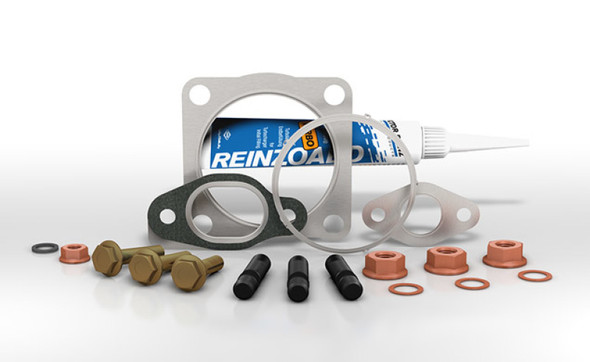
MAHLE Original Chevrolet Express 2500 09-06 Turbocharger Mounting Set - GS33678
Victor Reinz
$79.37How often should I replace my turbocharger gaskets?Replace these turbocharger gaskets when performing turbo maintenance or if leaks are detected to ensure optimal exhaust gas sealing.Are these gaskets difficult to install?Professional installation is...$79.37 -
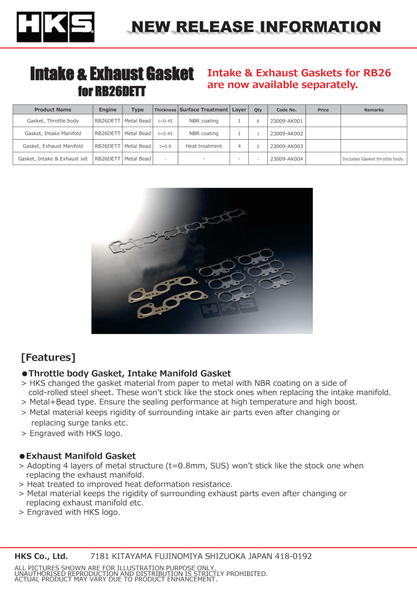
HKS RB26DETT Exhaust Manifold Gasket - 23009-AK003
HKS
$88.00What is the typical lifespan of an HKS exhaust gasket?HKS exhaust gaskets are engineered for exceptional durability, providing reliable sealing and performance for thousands of miles under demanding conditions.Are HKS exhaust gaskets suitable for daily...$88.00 -
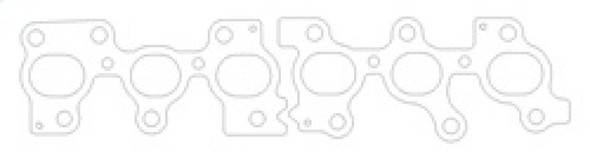

Cometic Toyota 2JZGTE 93-UP 2 PC. Exhaust Manifold Gasket .030 inch 1.600 inch X 1.220 inch Port - C4209-030
Cometic Gasket
MSRP: $92.91$83.62Will these exhaust gaskets fit my 1995 Toyota Supra?Yes, Cometic Exhaust Gaskets are specifically engineered for a precise fitment on your 1995 Toyota Supra, ensuring optimal performance.Are these exhaust gaskets easy to install?Professional installation...MSRP: $92.91$83.62 -
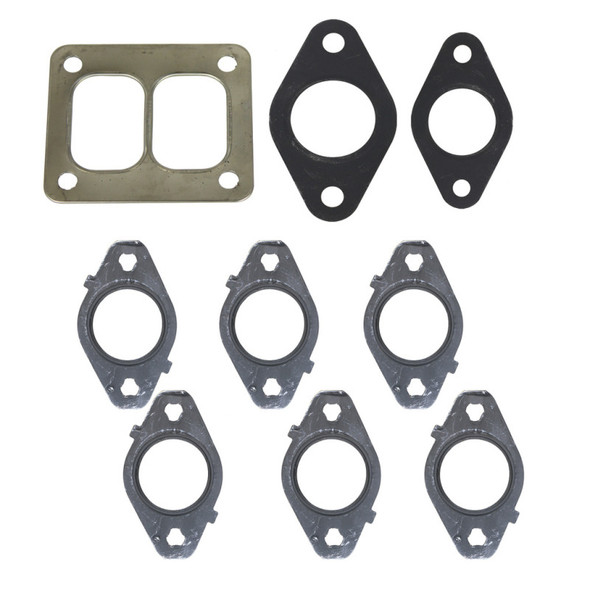
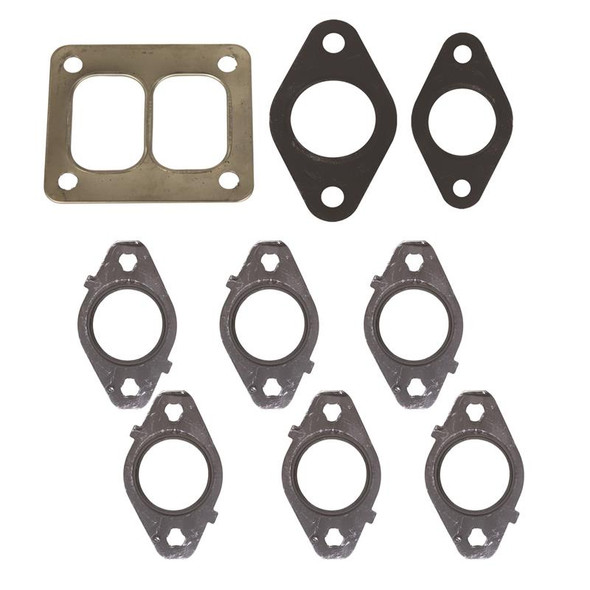
BD Diesel GASKET SET Exhaust Manifold w/ T4 Flange - 2007.5-2018 Dodge 6.7L - 1045992-T4
BD Diesel
$97.95How do I know if these exhaust manifold gaskets are the right fit for my truck?BDD Exhaust Manifold Gaskets specifically fit 2007.5-2018 Dodge 6.7L Ram 2500 and 3500 trucks, ensuring precise OEM-level compatibility.Can I install these exhaust manifold...$97.95 -
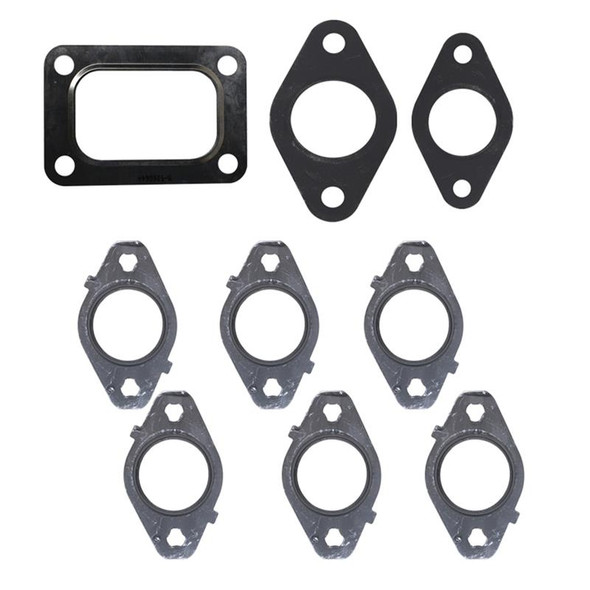
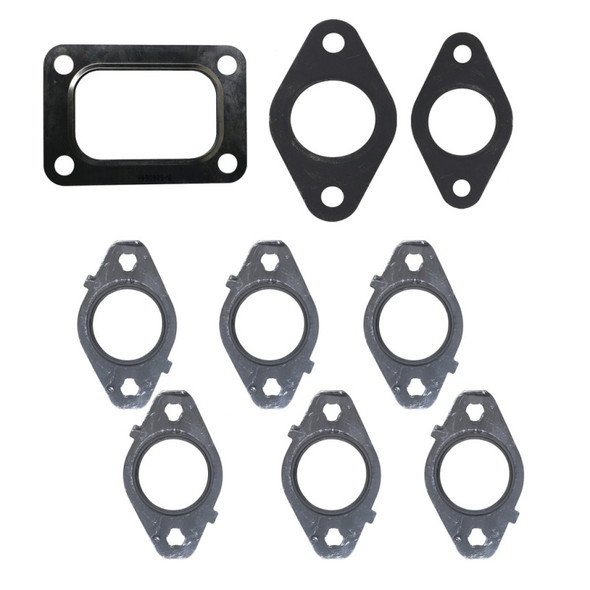
BD Diesel GASKET SET Exhaust Manifold - Dodge 6.7L 2008-2012 - 1045992
BD Diesel
$93.95How often should exhaust manifold gaskets be replaced?BDD Exhaust Manifold Gaskets are designed for long-term durability; replacement is typically needed only when experiencing leaks or performing major engine work.Can I install these gaskets myself or...$93.95
Exhaust gaskets are the critical sealing components between every flanged joint in your exhaust system — from the cylinder head to the collector to the cat-back — and a failed gasket means lost backpressure, exhaust leaks, and inaccurate O2 sensor readings that kill both power and emissions compliance. Motor Sport Mayhem carries 157 in-stock exhaust gaskets from 64 brands, spanning basic OE replacements to race-grade multi-layer steel and composite designs engineered to hold seal under repeated heat cycling above 1,400°F.
Our Top Picks for Exhaust Gaskets
Every product below was selected by our performance specialists for proven sealing integrity, material quality, and real-world durability across street, track, and competition applications.
AFE Exhaust Cat Back
aFe | $2593.00
Mandrel-bent stainless steel construction with precision-fit flanged joints that demand equally capable sealing hardware at every exhaust interface.
- Stainless steel flange design requires high-temp gaskets rated for sustained thermal expansion cycling
AKR Slip-On Line - Titanium
Akrapovic | $5768.53
Titanium slip-on construction runs exhaust gas temperatures that push the absolute limit of conventional sealing materials, making gasket material selection critical at every connection point.
- Titanium systems operate at higher sustained temps than steel — only graphite or MLS gaskets rated above 1,400°F should be used at mating flanges
AMS Downpipes
AMS | $2249.95
High-flow downpipe design routes post-turbo exhaust gases through precision flanged connections where turbine-outlet heat and pressure spikes demand the most durable gasket interfaces in the system.
- Turbine-outlet flanges see pressure pulses that accelerate gasket fatigue — multi-layer steel construction is the benchmark here
ATS Exhaust Manifolds
ATS Diesel | $894.99
Pulse-flow manifold geometry maximizes scavenging efficiency, but only when every head-flange and collector joint is properly sealed to prevent exhaust cross-contamination between cylinders.
- Diesel manifold gaskets must resist sustained high-EGT cycles and coolant-side oil contamination that degrades lesser materials
AWE Cat-Back SwitchPath
AWE Tuning | $3895.00
Electronically actuated valve routing creates alternating pressure and flow paths that make leak-free gasket interfaces essential to preserving both sound character and back-pressure tuning across modes.
- Active exhaust valve systems amplify the consequences of any flange leak — precision gasket tolerances are non-negotiable in switchpath configurations
GBE Torque Tube Systems
Banks Power | $569.00
Torque tube exhaust systems route gases through tightly packaged off-road underbody runs where vibration, flex, and mud ingestion put constant mechanical stress on every flange seal.
- Off-road and 4x4 exhaust gaskets must handle torsional chassis flex that progressively loosens clamped flange joints on-trail
BBK Full Header & Cat
BBK | $1499.99
Long-tube header and high-flow cat combinations place cylinder head gaskets and collector gaskets under the most extreme heat and pressure conditions found in any street performance exhaust build.
- Long-tube headers run significantly hotter at the head flange than shorty or stock manifold designs — ceramic-coated headers demand gaskets with matching thermal tolerance
BDD Exhaust Brakes
BD Diesel | $1685.95
Exhaust brake valves generate significant back-pressure spikes upstream of every flange in the system, making gasket clamping load and crush resistance critical to long-term seal integrity.
- Exhaust brake installations require gaskets rated for reverse-pressure loading, not just forward exhaust flow — most OE gaskets are not designed for this load cycle
BIG EXO Aluminum ATV Dual Full System
Big Gun | $944.22
Dual full-system ATV exhausts run through the entire exhaust path from header to tip, requiring properly spec'd gaskets at the head flange and mid-pipe connections to preserve the tuned scavenging characteristics of the system.
- ATV and powersports exhaust gaskets must handle extreme vibration loads and repeated removal cycles for trail maintenance access
BKM Exhaust Bungs B
BikeMaster | $12.99
Muffler packing and bung hardware is the entry point of exhaust sealing — essential for motorcycle and powersports applications where muffler repacking is part of regular maintenance.
- Correct bung thread spec and sealing compound selection prevents exhaust leaks at the muffler canister, which are notoriously difficult to diagnose once a bike is fully assembled
How to Choose the Right Exhaust Gaskets
The single biggest mistake builders make with exhaust gaskets is treating them as a generic consumable rather than an engineered sealing component matched to the specific thermal, pressure, and mechanical demands of their application. A gasket that fails at a header-to-head flange dumps raw exhaust gases into the engine bay, throws off wideband O2 readings, and can accelerate corrosion on surrounding components — none of which is cheap to fix. The separating factor between a gasket that lasts 100,000 miles and one that blows in 10,000 is material construction, correct crush thickness for the flange surface finish, and clamping load matching.
Key Specifications
Material construction is the primary specification. Stamped steel gaskets with embossed sealing beads are adequate for low-output, low-temperature applications where flange surfaces are flat and bolt torque is consistent. Composite gaskets — layers of graphite, fiber, or compressed mineral material — conform better to irregular flange surfaces and handle moderate heat cycling. Multi-layer steel (MLS) gaskets are the benchmark for high-performance applications: precision laser-cut steel layers with embossed sealing rings provide exceptional resistance to pressure pulses, thermal fatigue, and the micro-movement that kills soft gaskets over time. For turbo and diesel applications where exhaust gas temperatures routinely exceed 1,200°F, only graphite or stainless MLS construction should be considered at turbine-outlet and manifold-to-head interfaces.
Crush thickness and flange surface finish are equally critical and often overlooked. Gasket manufacturers spec a crush range — typically 0.010" to 0.040" — that determines how much the gasket compresses under torque to achieve a gas-tight seal. If a flange surface has been machined to a fine finish below 125 Ra microinch, a thicker soft composite gasket will over-crush and extrude; a thin MLS gasket is the correct choice. Rougher surfaces from casting or older steel flanges need a gasket with enough compliance to fill surface valleys — this is where composite and graphite materials earn their place. Always check flange flatness with a straightedge before installation: warpage beyond 0.005" per foot will defeat even a premium gasket.
Port shape and bore diameter must match the exhaust port opening precisely. An undersized gasket bore creates a flow restriction that costs horsepower — particularly relevant when upgrading to larger-diameter aftermarket headers or manifolds. An oversized bore risks the gasket edge being unsupported and burning out under sustained heat. For aftermarket exhaust systems with non-stock port shapes, always source gaskets specifically designed for the header or manifold you are installing rather than relying on OE cross-references.
Bolt hole pattern and stud spacing determine whether a gasket will actually install — and whether clamping load will be evenly distributed. Uneven bolt patterns or oversized bolt holes reduce the clamping force per unit area at the sealing bead, which is a primary cause of localized blow-out between cylinders on multi-port designs. For any competition or forced induction build, consider sourcing gaskets with steel fire rings around each port — these provide a secondary sealing zone that resists the cyclic pressure loading that OE composite designs cannot handle at elevated boost levels.
Exhaust Gasket Material Selection by Application
| Application | Recommended Material | Max Sustained Temp | Key Consideration |
|---|---|---|---|
| Stock replacement / low output | Stamped steel or composite fiber | Up to 900°F | Match OE crush thickness; flange must be flat within 0.003" |
| Street performance / naturally aspirated | Graphite composite or single-layer steel | Up to 1,200°F | Port-match bore to header for flow; use anti-seize on studs |
| Turbocharged street / mild boost | Multi-layer steel (MLS), 2–3 layer | Up to 1,400°F | Turbine-outlet flanges require MLS; torque in stages to spec |
| High-boost forced induction / diesel | MLS with stainless fire rings | Up to 1,600°F | EGT spikes demand full stainless MLS; re-torque after first heat cycle |
| Track / endurance racing | Pure graphite or Inconel-core MLS | Up to 1,800°F | Inspect every service interval; thermal fatigue accelerates at race duty cycles |
| Powersports / ATV / motorcycle | Aluminum or copper crush ring | Up to 1,100°F | Small-bore single-cylinder ports; crush rings allow precise re-seating on frequent removal |
Price Guide
Entry ($3.99–$200): Single-gasket or small kit purchases for OE replacement, powersports applications, and collector or pipe-flange seals. Stamped steel and basic composite materials dominate this range — entirely adequate for naturally aspirated, stock-power street applications where flanges are flat and exhaust temperatures are moderate. This is also where muffler packing, bung hardware, and accessory sealing components live.
Mid-range ($200–$1,500): Where most serious street and track builders spend their money. Full header gasket kits, manifold-to-head sets, and multi-component exhaust sealing packages with MLS or graphite construction fall here. The quality jump is real: proper port matching, correct crush spec for performance applications, and hardware that will survive a forced induction build without requiring annual replacement.
Premium ($1,500–$11,935.89): Complete exhaust system packages from race-pedigreed manufacturers where the gaskets and sealing hardware are engineered as an integrated part of the system. At this price point, you are buying not just sealing material but precision-fit flanges, race-grade hardware, and in some cases manufacturer-supplied installation documentation that specifies exact torque sequences and re-torque intervals — the kind of detail that determines whether a $5,000 titanium system lasts a season or a decade.
Who Is This For?
Exhaust gaskets serve every level of build — from a basic OE seal replacement to a full race system installation — and the usage data from our in-stock catalog reflects that the demand is highest where sealing integrity directly translates to measurable performance gains.
Street Performance — 7.9/10
Street performance is the highest-scoring use case in our catalog at 7.9/10, and it reflects the reality that most exhaust upgrades happen on daily-driven vehicles where a leaking gasket is immediately noticed as a ticking or hissing exhaust note and a check engine light from skewed O2 readings. Upgrading headers, cat-back systems, or manifolds on a street car requires gaskets that handle repeated cold-start-to-operating-temperature cycles — a thermal demand that OE composite gaskets often cannot sustain once the exhaust system has been modified for higher flow. Graphite composite and MLS options at the mid-price tier are the correct choice for street performance installs.
Engine Performance — 7.9/10
Tied with street performance at 7.9/10, engine performance applications are where gasket selection most directly impacts power output — a leaking header gasket between two adjacent ports allows exhaust pressure pulses to interfere with each other, reducing scavenging efficiency and costing measurable horsepower at the wheel. Proper port-matched gasket bore dimensions are critical here: even a 2mm mismatch between the gasket opening and the header tube creates a turbulence-generating step that robs flow at high RPM. For any engine build targeting a specific power number, gasket selection should be part of the engine component specification process, not an afterthought.
Exhaust Note / Sound — 7.7/10
Scoring 7.7/10, sound tuning is a genuine technical consideration — exhaust leaks upstream of the muffler fundamentally alter the tone, introducing a raspy, uncontrolled frequency that no muffler design can compensate for. Builders who invest in premium cat-back or axle-back systems to achieve a specific exhaust note will find that a blown header or manifold gasket eliminates any benefit the downstream tuning provides. Proper sealing at every upstream joint is the foundation of intentional sound tuning.
Easy DIY Install — 7.8/10
At 7.8/10, the DIY install score reflects that exhaust gasket replacement is one of the most accessible performance maintenance tasks — no special tooling beyond basic hand tools, a torque wrench, and anti-seize compound. The key to a successful DIY gasket job is following the correct torque sequence (work from center bolts outward in a star pattern), using the manufacturer's specified torque value rather than guessing by feel, and returning to re-torque after the first full heat cycle when the gasket reaches its final seated crush. Skipping the re-torque step is the number one cause of premature DIY gasket failure.
Track / Autocross — 7.2/10
Track and autocross applications score 7.2/10, which is appropriate — sustained high-RPM operation, repeated heat cycles in a single session, and the vibration inputs from aggressive driving all accelerate gasket fatigue compared to street use. Race-duty exhaust gaskets for track applications should be inspected at every service interval, and any sign of carbon tracking — the black sooting pattern that radiates outward from a micro-leak — means the gasket needs immediate replacement before the leak progresses to a full blow-out. MLS construction with steel fire rings is the minimum specification for anything turning consistent lap times.
Trusted Exhaust Gaskets Brands We Carry
The brands that dominate our exhaust gasket and exhaust system catalog earned their position through consistent engineering standards and real-world sealing performance across a range of applications. Vibrant Performance brings a fabrication-first approach with precision-cut flanges and sealing hardware that integrates directly with their custom exhaust component ecosystem — at an average price point of $128, they are the value benchmark for builder-grade sealing hardware. FMF Racing leads the powersports segment with exhaust gaskets and sealing components proven in off-road racing where vibration and repeated serviceability demands are severe. Magnaflow supplies complete exhaust sealing solutions engineered to OE-plus tolerances, maintaining emissions compliance while supporting performance upgrades. HKS brings motorsport-grade manufacturing precision from their Japanese performance engineering heritage, with exhaust components and associated sealing hardware used in both street and circuit competition. aFe rounds out the credentialed tier with exhaust hardware designed and tested for high-output applications, including forced induction where gasket thermal limits are routinely pushed. Across all these brands, the consistent thread is that the gasket is treated as a precision sealing component — not a commodity part.
Frequently Asked Questions
Are aftermarket exhaust tips worth it from a performance standpoint?
Exhaust tips themselves contribute negligible performance gain — the tip is downstream of every component that actually affects flow, backpressure, and scavenging. Their value is primarily aesthetic and acoustic: larger-diameter tips can reduce exit restriction marginally on systems that are already undersized at the tailpipe outlet, but this is only relevant on heavily modified builds where the tip diameter is the actual restriction. What matters from a sealing perspective is that the slip-fit or welded connection between the tip and the cat-back pipe is properly sealed — a loose tip creates resonance and allows moisture ingestion that accelerates internal corrosion of the muffler. If you are upgrading tips, ensure the flange or clamp seal is addressed at the same time.
Are Akrapovic exhausts worth the money?
Akrapovic exhausts justify their price tier through materials and manufacturing precision that is genuinely difficult to replicate at a lower price point — titanium and carbon fiber construction delivers measurable unsprung and rotating mass reduction that shows up in acceleration, handling balance, and lap times, not just on a dyno sheet. Their titanium slip-on and full-system products are developed using computational fluid dynamics alongside real-world race testing, which means the internal geometry is optimized for the specific engine's pulse timing rather than being a universal tube bend. The sealing interfaces and flange designs are engineered to maintain gas-tight joints through the extreme thermal cycling of race-pace operation where cheaper systems begin to distort and leak. For a dedicated track car or high-end street build where system longevity and weight matter, the cost is justified — for a casual street upgrade, there are more cost-effective options in the catalog.
Are axle-back exhausts a good upgrade?
Axle-back systems are a legitimate entry point for exhaust upgrading because they replace only the section rearward of the rear axle — muffler and tips — which means no catalytic converter modification, no emissions risk, and straightforward bolt-on installation in most applications. The performance gain from an axle-back alone is modest since the primary flow restrictions in a stock exhaust are typically in the headers, manifolds, and cats — not the rear muffler. However, axle-backs deliver significant improvements in exhaust note character and drone reduction compared to OE mufflers, which makes them the right choice for daily drivers where sound tuning is the primary goal. Ensure the inlet flange gasket or clamp seal is properly torqued during installation — an axle-back leak at the mid-pipe connection is the most common cause of post-install complaints on otherwise well-executed jobs.
Are BBK headers made in the USA, and are they stainless steel?
BBK Performance manufactures their headers domestically in the United States, which contributes to the consistent quality control and precise fitment tolerances their products are known for in the American muscle car market. Their header product lineup spans both mild steel with ceramic coating and full stainless steel construction depending on the specific application — the stainless variants use T304 stainless for corrosion resistance and high-temperature stability. Ceramic-coated mild steel headers offer good thermal management and corrosion resistance at a lower price point, while the stainless versions provide long-term durability in high-humidity climates and under sustained high-output use. For either construction, the header gasket at the cylinder head flange must be matched to the specific primary tube diameter and port shape BBK uses for that application — using a generic OE replacement gasket on an aftermarket long-tube header is one of the most common installation errors we see.
Are long-tube headers actually worth it for performance gains?
Long-tube headers produce the largest measurable power gains of any bolt-on exhaust modification by maximizing exhaust scavenging efficiency across a broader RPM range — primary tube length directly determines where in the RPM band the scavenging pulse returns to assist cylinder evacuation, and longer tubes optimize this for peak power at higher RPM. The trade-off is installation complexity: long tubes require removal of significant underbody components, often require professional installation, and in most street-registered vehicles require high-flow catalytic converters to maintain emissions compliance. From a gasket perspective, long-tube header installations are the most demanding application for cylinder head exhaust gaskets because the longer primary tubes create greater thermal expansion differential between the tube and the head — only MLS or high-temp composite gaskets should be used here. The power gains are real and documented in dyno testing, but the full benefit requires proper sealing at the head flange; any leak at that joint will reduce scavenging efficiency and negate part of the advantage the long-tube design provides. Pair your header install with a quality set of cat-back components to extract the full system benefit.
Building something specific? Our performance specialists can help you select the right Exhaust Gaskets for your application — street, track, or full race build.