
Valves
- Product
- Qty in Cart
- Quantity
- Price
- Subtotal
-


Hot Cams 19-20 FTR 1200 Rally LE/2019 FTR 1200 S Shim Conversion Kit - HC00134
Hot Cams
MSRP: $436.95$295.83Adjust engine valve clearance using commonly available 9.48mm shims rather than costly Polaris shim buckets. For use with Polaris 570,900, 1000 and Turbo Prostar engines (see application chart for...MSRP: $436.95$295.83 -


Hot Cams 14-15 Ranger 900 4x4 Crew Steel Exhaust Valve - HC00038
Hot Cams
MSRP: $51.40$34.80Hot Cams Valves are forged from a single blank with improved grain flow to enhance the mechanical characteristics of the valve without welding.Precision machined valve head and seat surfacesInduction...MSRP: $51.40$34.80 -


Hot Cams 2017 Polaris Sportsman Touring 570 EPS Built Before 8-29 570cc Steel Intake Valve - HC00034
Hot Cams
MSRP: $39.95$27.05Hot Cams Valves are forged from a single blank with improved grain flow to enhance the mechanical characteristics of the valve without welding.Precision machined valve head and seat surfacesInduction...MSRP: $39.95$27.05 -

Hot Cams 2017 Polaris Sportsman Touring 570 EPS Built Before 8-29 570cc Steel Exhaust Valve - HC00030
Hot Cams
MSRP: $54.95$37.21Special PVD, CVD processes leave a (Black Nitride Coating) BrN coating that provides high micro-hardness and low friction surfaces for reduced heat generation and carbon build-upSpecial PVD, CVD...MSRP: $54.95$37.21 -

Hot Cams 08-13 Yamaha WR 250 R Dual Sport 250cc 1.90mm Shim Kit - 5 Pack - 5PK748190
Hot Cams
$7.79Hot Cams Shim Kit includes 3 shims of each size, all made from 4140 cold rolled steel for high strength and uniformity of hardness.Available for modern Japanese (7.48mm, 9.48mm), KTM (8.90mm, 10mm)...$7.79 -
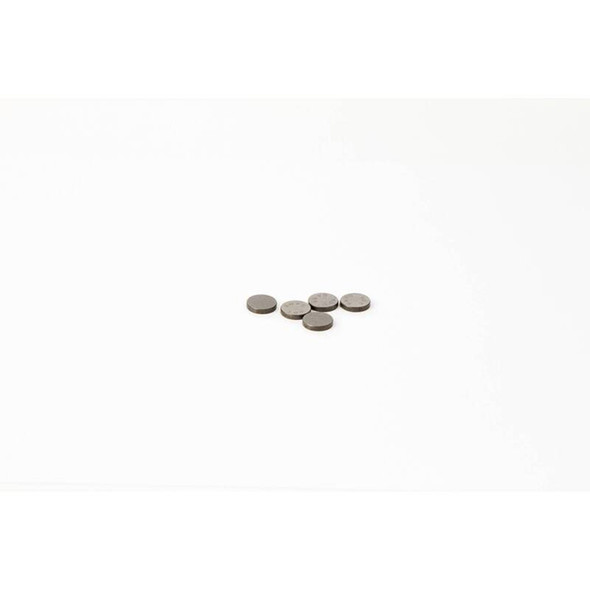
Hot Cams Shim Kits 2.250mm Thickness - 5 Pack - 5PK1000225
Hot Cams
$8.49Hot Cams Shim Kit includes 3 shims of each size, all made from 4140 cold rolled steel for high strength and uniformity of hardness.Available for modern Japanese (7.48mm, 9.48mm), KTM (8.90mm, 10mm)...$8.49 -
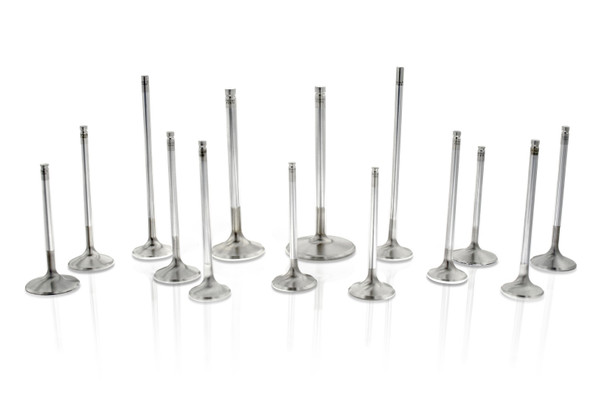

Ferrea Chevrolet LS1 1.6in 0.313in 4.915in 24 Deg S-Flo Rad Grv Super Alloy Exhaust Valve - Set of 8 - F1892P
Ferrea
$362.28Ferrea Chevrolet LS1 1.6in 0.313in 4.915in 24 Deg S-Flo Rad Grv Super Alloy Exhaust Valve - Set of 8$362.28 -
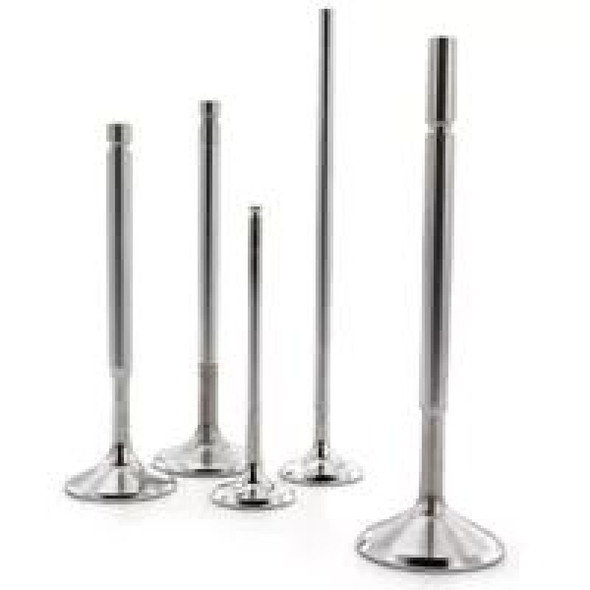
Ferrea 02-06 Honda CRF 450 36mm Head 5.49mm Stem Dia Competition Intake Valve - Set of 2 - F0305
Ferrea
$62.15Ferrea 02-06 Honda CRF 450 36mm Head 5.49mm Stem Dia Competition Intake Valve - Set of 2$62.15 -
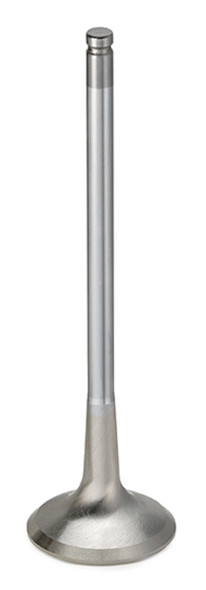
Supertech Audi/VW EA113 Std Triple Groove Inconel Exhaust Valve - Set of 8 - VWEVI-1002T-8
Supertech
MSRP: $396.78$317.51What is the primary benefit of SPT Exhaust Valves for performance applications?SPT Exhaust Valves deliver enhanced airflow, unlocking improved engine breathing for a noticeable power increase and...MSRP: $396.78$317.51 -
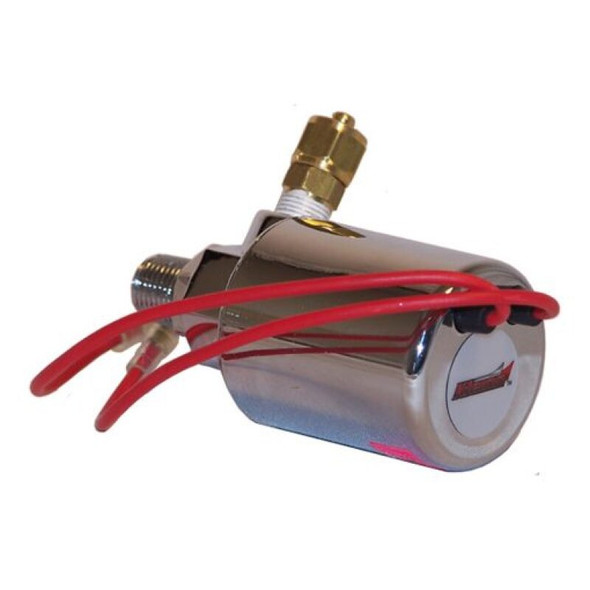
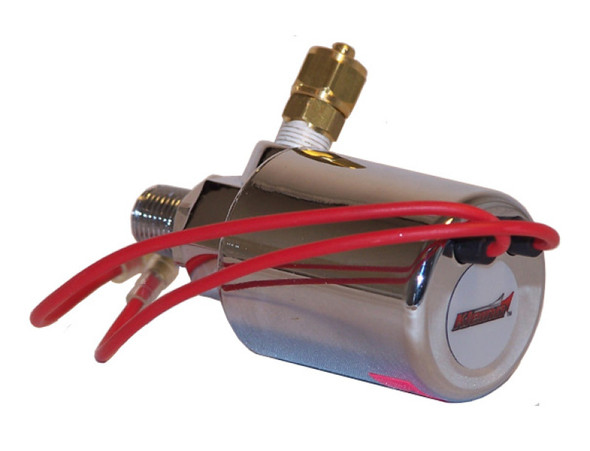
Kleinn Vortex 4 Series 12-Volt Chrome Solenoid Valve - 307
Kleinn Air Horns
MSRP: $35.04$26.95What is the voltage of the Kleinn Air Horn Solenoid Valve?The Kleinn Air Horn solenoid valve operates on a standard 12 volt system, ensuring compatibility with most vehicle electrical setups.Can I...MSRP: $35.04$26.95 -
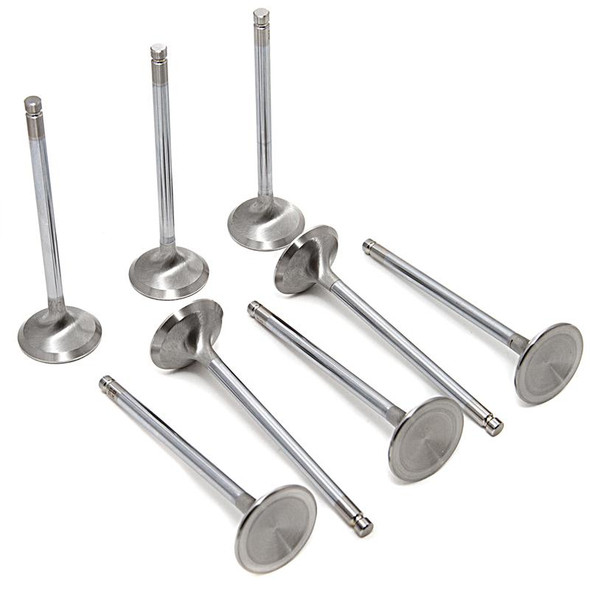
GSC P-D Nissan VR38DETT 21-4N Chrome Polished Intake Valve - 37.15mm Head (STD) - Single - 2050-01
GSC Power Division
MSRP: $29.51$25.08Will these GSC Intake Valves fit my Nissan GT-R?Confirm fitment for your specific Nissan GT-R vehicle before purchase to ensure proper installation and optimal valve performance.Can I install these...MSRP: $29.51$25.08 -
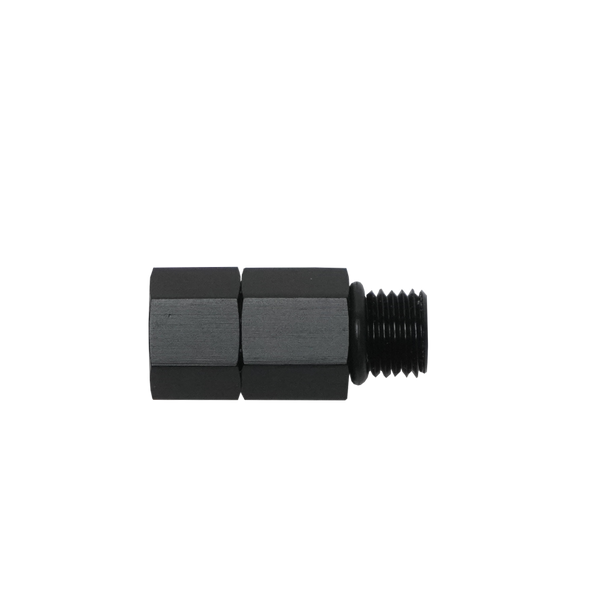
DeatschWerks 4ORB Male to Female Check Valve (Use w/ DW810 Male Inlet) - 6-02-0450-B
DeatschWerks
$29.00What is the primary function of a check valve in a fuel system?Check valves prevent fuel backflow, ensuring consistent pressure and reliable delivery critical for optimal engine performance under all...$29.00
Engine valves are the gatekeepers of combustion efficiency — controlling the precise timing, volume, and seal of intake and exhaust gases through every cycle your engine produces. Motor Sport Mayhem stocks 421 valves from 161 brands, spanning everything from cost-effective street replacements to full-titanium race-spec pieces built for sustained high-RPM abuse.
Our Top Picks for Valves
Every product below was selected by our engineering team based on demonstrated performance, material quality, and proven results across street and competition applications.
ACL Race Series Main Bearings
ACL | $329.72
Tri-metal bearing construction with extra oil clearance delivers reliable protection under sustained high-load engine operation.
- Extra oil clearance specification supports builds running elevated boost or aggressive camshaft profiles
ACT Pilot Bearing
ACT | $17.00
A precision-fit pilot bearing that prevents input shaft misalignment and reduces wear at the crankshaft interface during clutch engagement.
- Essential supporting component when upgrading clutch systems for track or performance street use
AON Clutch Components
Action Clutch | $89.69
A universal pedal stop that defines a precise engagement point and protects drivetrain components from over-travel under race conditions.
- Adjustable design suits a wide range of pedal box configurations without permanent modification
AEM Wiring Connectors
AEM | $430.95
K-type thermocouple sensors provide accurate real-time exhaust gas and thermal monitoring critical to protecting valves and combustion chamber components at the limit.
- Four-sensor pack enables simultaneous monitoring of multiple cylinder banks or heat zones in a single build
AER Wiring Kits
Aeromotive | $358.52
A heavy-duty 60A wiring harness that ensures consistent fuel pump voltage delivery, directly affecting injector pulse width accuracy and valve timing under load.
- Relay-based circuit design eliminates voltage drop that causes lean conditions and valve seat recession on performance builds
AFE PFADT Mount Set
aFe | $660.00
Polyurethane subframe mounts that reduce chassis flex and maintain drivetrain alignment geometry under hard acceleration and braking loads.
- Stiffer durometer rating minimizes subframe movement that can induce vibration harmonics affecting engine bay component longevity
ALF Wiring Harness
Air Lift | $97.23
A second-generation wireless air management harness engineered for clean, interference-free signal transmission in high-vibration performance environments.
- Plug-and-play connector architecture reduces install complexity without sacrificing connection integrity under sustained load
ABR CVT Belts
All Balls Racing | $200.40
A performance-rated CVT belt built to handle the torque spike and heat cycles generated in high-output powersport applications.
- Reinforced cord construction resists delamination under repeated wide-open-throttle engagement common in competition use
ARX Tail Light Converters
AlphaRex | $395.00
Full LED tail light assemblies that deliver faster activation response and higher visibility output compared to incandescent OEM units.
- Direct-fit housing design maintains OEM mounting points while upgrading light output for improved safety at track or on the street
PA Alta Crank Pulley
Alta | $129.20
A lightened crank pulley that reduces rotational inertia and frees up measurable horsepower by decreasing parasitic accessory drive losses.
- Reduced rotating mass improves throttle response and engine acceleration, which directly complements aggressive valve timing profiles
How to Choose the Right Valves
The valve is the single most thermally and mechanically stressed component in the combustion chamber — it opens and closes thousands of times per minute while sealing against combustion pressures exceeding 1,000 psi and temperatures that can exceed 1,300°F on the exhaust side. Valve failure modes are direct and brutal: head separation, stem seizure, face guttering, and seat recession — all of which result in catastrophic cylinder damage. Choosing correctly means matching material, stem diameter, head diameter, overall length, and face angle to your specific application load.
Key Specifications
Material selection is the first and most consequential decision. One-piece stainless steel valves — typically manufactured from alloys like 21-4N for exhaust or 21-2N for intake — are the standard for serious street and entry-level competition builds. They offer excellent corrosion resistance, adequate thermal conductivity, and are significantly more forgiving of minor detonation events than exotic alternatives. For forced-induction or naturally aspirated race engines pushing sustained high-RPM operation, hollow-stem sodium-filled exhaust valves become relevant — the sodium liquefies at operating temperature and conducts heat away from the valve head roughly 40% more efficiently than a solid stem, directly reducing the risk of face guttering and seat burning.
Titanium valves sit at the top of the material hierarchy for naturally aspirated competition engines. At roughly 40% lighter than equivalent stainless steel valves, they reduce reciprocating mass in the valvetrain, allowing higher RPM limits and enabling more aggressive spring rates without exceeding retainer stress thresholds. The tradeoff is that titanium has poor tribological properties — it galls against iron seats — so titanium valves require hardened steel or beryllium copper seats and cannot be run without adequate lubrication. Tungsten Disulfide (WS2) or Diamond-Like Carbon (DLC) coatings are routinely applied to titanium valve stems to address this limitation in race applications.
Stem diameter and length tolerances are non-negotiable — valves must be matched precisely to guide bore diameter, typically within 0.001"–0.002" clearance on intake and 0.002"–0.003" on exhaust to account for greater thermal expansion on the hot side. Oversize stem valves are available for engines with worn guides that have been reamed out, but attempting to run incorrect clearances causes stem scoring, guide seizure, and oil consumption. Head diameter is the other critical spec: oversized valves improve airflow and are often used in conjunction with ported cylinder heads, but they must clear the bore at TDC and require verified piston-to-valve clearance checks — minimum 0.080" intake and 0.100" exhaust is the standard starting point, verified with clay or dial indicator methods.
Face angle matters more than most builders acknowledge. The factory 45-degree seat angle is a compromise — many race head builders move to a three-angle or five-angle valve job, with the seating angle itself sometimes cut at 44 degrees to create a narrow interference fit with a 45-degree seat, concentrating sealing load on a fine line that improves both sealing and heat transfer into the seat. For street engines, the factory angle is typically retained, but verifying seat concentricity and width — ideally 0.040"–0.060" on intake and 0.050"–0.070" on exhaust — is essential when installing any new valve into a used head.
Valve Material and Application Reference Guide
| Material | Best Application | Max Temp Rating | Weight vs. OEM Steel |
|---|---|---|---|
| 21-4N Stainless Steel | Exhaust — street, mild track | ~1,300°F (704°C) | Baseline (0%) |
| 21-2N Stainless Steel | Intake — street, mild track | ~1,100°F (593°C) | Baseline (0%) |
| Sodium-Filled Hollow Stem | Exhaust — forced induction, sustained high-RPM | ~1,500°F (816°C) | -5% to -10% |
| Inconel 751 | Exhaust — extreme boost, nitrous, endurance race | ~1,800°F (982°C) | +5% to +8% |
| Grade 5 Titanium (DLC coated) | Intake/Exhaust — naturally aspirated competition | ~900°F (482°C) sustained | -35% to -42% |
| Beryllium Copper Alloy | Intake — extreme heat transfer, oval/drag race | ~1,000°F (538°C) | +10% to +15% |
Price Guide
Entry ($1.19–$130): This range covers OEM-replacement stainless steel valves, individual valve components, and seals for engines returning to stock specification. Quality at this level is adequate for naturally aspirated street engines running within factory power parameters — do not expect these to survive sustained boost, aggressive cam profiles, or high-RPM operation beyond factory redline.
Mid-range ($130–$500): The sweet spot for the vast majority of performance builds. This tier brings you into multi-piece sodium-filled exhaust valves, premium 21-4N stainless sets with tighter stem tolerances, and entry-level titanium intake valves from established brands. Builders running forced induction at moderate boost levels, aggressive naturally aspirated builds, and dedicated track day cars will find the right hardware here.
Premium ($500–$11,495.95): Full titanium valve sets, Inconel exhaust valves for extreme heat environments, DLC-coated stems, and complete engineered valve train packages for purpose-built competition engines. This investment is justified on endurance race engines, high-boost drag applications, or any build where a valve failure means a destroyed engine — the cost of the valve is trivial relative to the cost of the rebuild it prevents.
Who Is This For?
Valves serve every level of performance build — from a daily-driven street car getting a freshen-up to a dedicated drag or circuit race engine built from a bare block.
Engine Performance — 8.5/10
This is the highest-scoring use case in our catalog and for good reason — valves are a direct determinant of volumetric efficiency, combustion seal integrity, and maximum RPM capability. An engine cannot outperform its valvetrain, and upgrading to properly spec'd performance valves is one of the highest-return internal engine modifications available. Whether the goal is more airflow through larger heads, better sealing on a high-compression build, or extended component life under increased thermal load, valves are at the center of it.
Racing Competition — 8.2/10
Competition engines demand valves that maintain dimensional stability across thousands of heat cycles without relaxing seat pressure or developing stem-to-guide slop. Race valves are specified with tighter tolerances, higher-grade materials, and often specific coatings that the street market doesn't require. At this score, the catalog depth reflects real availability of competition-grade components — not just upgraded street parts relabeled for racing.
Track / Autocross — 8.2/10
Track and autocross applications stress valves differently than pure drag racing — sustained high-RPM operation through corners and repeated heat cycling over a full day's lapping session demands thermal fatigue resistance more than peak power tolerance. Sodium-filled exhaust valves and premium stainless intake valves are the standard specification for engines that see regular track use, as the repeated thermal cycling of street-to-track and back is where OEM-grade valves begin showing recession and face wear prematurely.
Drag Racing — 8.2/10
Drag engines live at maximum throttle for short bursts, which creates extreme instantaneous thermal and mechanical shock loads on exhaust valves in particular. Builds running nitrous or high-boost forced induction should default to Inconel exhaust valves given the spike in combustion temperatures those power adders produce. The 8.2 score here reflects strong catalog coverage across the power levels and configurations common in drag competition, from bracket racing builds to pro-level applications.
Street Performance — 7.6/10
Street performance applications benefit most from premium stainless steel valves with improved seat geometry and tighter stem clearances rather than exotic materials that require specialized maintenance. A well-specified stainless valve set in a ported head with a proper multi-angle valve job delivers measurable airflow improvements and extended service life compared to OEM parts on a modified engine — without the material sensitivities that come with titanium in a street environment.
Trusted Valves Brands We Carry
The brands that dominate this category have earned their position through documented metallurgy, verified dimensional tolerances, and proven race results — not marketing. Supertech Performance has built a reputation on ultra-tight stem tolerance specs and an extensive offering of one-piece and hollow-stem designs across a massive range of applications, making them one of the most widely specified brands in the performance engine building community. Brian Crower comes from a motorsport engineering background with deep roots in high-RPM Asian performance engines, offering titanium and stainless sets designed for the aggressive cam profiles common in those platforms. GSC Power Division focuses heavily on the forced-induction market with valves engineered specifically for the heat and pressure loads that boosted engines generate, and their Inconel exhaust valve offerings are a staple in the high-boost community. Manley Performance brings decades of American motorsport manufacturing to the valve market — their Pro Series and Moly Shield offerings cover drag racing, circle track, and road race applications with geometry and alloy specs developed from actual competition data. Wiseco, while primarily known for pistons, extends its engineering rigor into valve components that are designed to work as part of a balanced reciprocating assembly rather than as standalone aftermarket parts. Together, these brands cover the full spectrum from street upgrades through elite competition builds.
Frequently Asked Questions
Are aftermarket head gaskets good, and how do they affect valve operation?
Aftermarket performance head gaskets from established manufacturers like Cometic are generally superior to OEM gaskets for modified engines — they use multi-layer steel (MLS) construction with embossed fire rings that maintain consistent clamping load under the higher cylinder pressures generated by performance builds. The direct connection to valve operation is through combustion chamber sealing: a compromised head gasket allows combustion gases to bypass the valve seat area, accelerating seat recession, oxidizing valve faces, and in severe cases allowing coolant ingestion that causes hydraulic lock. For any engine running more than stock compression or boost, an MLS head gasket torqued to spec on a properly surfaced deck is not optional — it's the foundation that lets valve and seat geometry do its job. Always verify head surface finish meets the gasket manufacturer's specification, typically Ra 60–125 microinches for MLS gaskets.
Are ACL race bearings any good, and how do they compare to competitors?
ACL Race Series bearings are genuinely well-engineered components — they use a tri-metal construction with a copper-lead or aluminum alloy intermediate layer and a lead-tin overlay that provides both conformability and load capacity well beyond OEM specifications. Their extra oil clearance variants are particularly valuable in performance builds where oil viscosity, pump pressure, and journal temperatures deviate significantly from factory parameters. Compared to King Engine Bearings — the other brand our catalog carries that draws frequent comparison — ACL tends to offer slightly more conservative clearance specifications that suit a wider range of street and mild track applications, while King's HP and XP series are often preferred for maximum clearance builds running thinner high-performance oils. Both are legitimate choices; the decision comes down to your oil specification, target clearances, and whether the engine will see sustained race loads or primarily street use. You can explore the full bearing selection in our engine bearings category.
Are aftermarket ignition coils okay to run on a performance engine?
Quality aftermarket ignition coils from reputable manufacturers are not just acceptable — they're often necessary on modified engines where the OEM coil's spark energy output is insufficient to reliably ignite a denser, leaner, or higher-pressure air-fuel charge. The critical specifications are peak voltage output (measured in kV), dwell time capability, and thermal durability — a coil that cannot maintain consistent spark energy under sustained high-RPM operation will cause misfires that show up as valve float events and incomplete combustion, which damages valve faces over time through carbon buildup and heat concentration. Avoid no-name coils without published specifications — they frequently suffer from poor lamination quality in the core, which leads to early failure from heat cycling. Any coil swap should be accompanied by verification that the ignition system's dwell control is properly calibrated for the new coil's resistance and inductance values.
Are aftermarket camshaft position sensors reliable on performance builds?
Aftermarket camshaft position sensors vary significantly in quality, and this is one area where going cheap creates real risk — the CMP sensor directly informs the ECU of valve timing position, and an inaccurate or intermittent signal causes timing errors that can result in valve-to-piston contact on variable valve timing engines or severe detonation on high-compression builds. Sensors from established electrical suppliers that meet or exceed OEM signal voltage, reluctance, and response time specifications are reliable; generic sensors with loose tolerances or inferior magnet assemblies are not. On performance engines running aftermarket camshafts, it's also critical to verify that the sensor's trigger wheel or reluctor ring is compatible with the new cam's timing marks — a mismatch causes ECU misinterpretation of actual valve timing position regardless of sensor quality.
Are aftermarket belt tensioners worth it on a performance engine?
On engines where belt-driven components influence valve timing — specifically those with timing belts rather than chains — aftermarket tensioners are worth the investment on any build that sees elevated RPM or temperature cycling beyond the OEM design envelope. The failure mode of an underperforming tensioner on a timing belt system is total valve timing loss when the belt skips or snaps, which on interference engines results in immediate valve-to-piston contact and catastrophic internal damage. Aftermarket tensioners designed for performance use typically feature stiffer spring rates, higher-quality bearing assemblies, and improved sealing against oil and heat contamination compared to OEM units that are designed for a specific service life at stock power levels. For accessory drive tensioners, the performance benefit is less catastrophic but still real — consistent belt tension maintains alternator output voltage and power steering response, both of which affect overall vehicle behavior on track. Always replace the tensioner bearing at the same time as any belt service interval.
Building something specific? Our performance specialists can help you select the right Valves for your application — street, track, or full race build.