
Throttle Cable
- Product
- Qty in Cart
- Quantity
- Price
- Subtotal
-
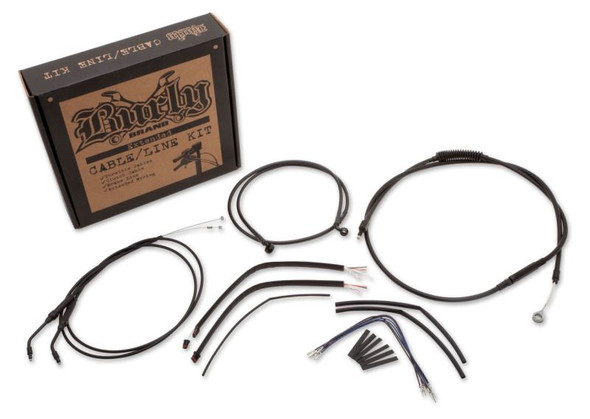

Burly Brand Control Kit 14in Ape XL - B30-1004
Burly Brand
$252.95How do Burly Brand cable kits ensure proper fitment for my motorcycle?Burly Brand cable kits provide specific fitment information to ensure compatibility, guaranteeing a precise match for your motorcycle's throttle cable needs.Are Burly Brand cable kits...$252.95 -

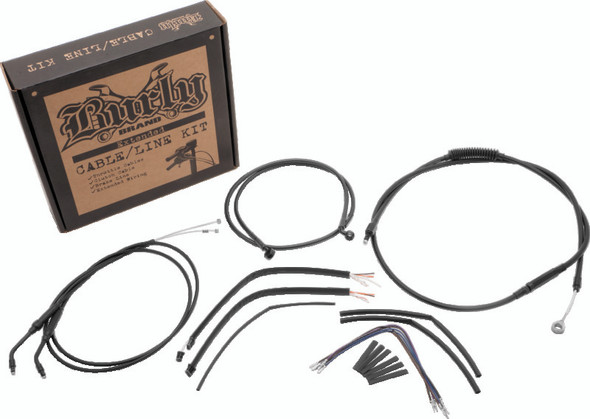
Burly Brand XL Control Kit 16in Ape - B30-1001
Burly Brand
$252.95Do I need to confirm fitment before ordering?Confirming fitment before ordering ensures these extended throttle cables integrate perfectly with your specific motorcycle model for optimal performance.How difficult is the installation process?Enjoy a...$252.95 -
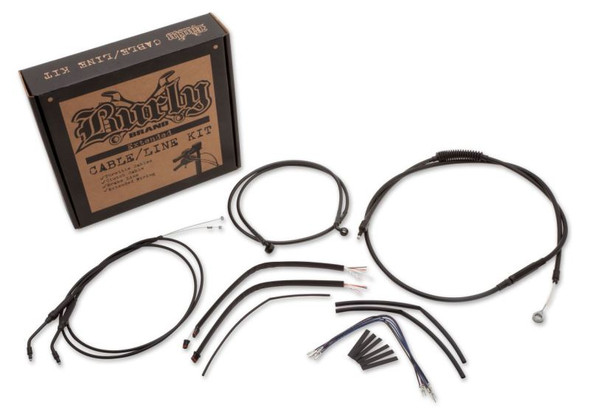

Burly Brand Control Kit 14in Ape XL - B30-1000
Burly Brand
$252.95What is included in the Burly Brand Cable Kits?Each Burly Brand cable kit includes throttle cables, clutch cable, brake line, and wiring specifically designed for your motorcycle's year, make, and model.Are Burly Brand throttle cables easy to...$252.95
A throttle cable is the direct mechanical link between your foot and the engine's throttle body or carburetor, and its condition, length accuracy, and liner friction determine how precisely and consistently power is delivered at every point in the rev range. Motor Sport Mayhem carries 58 in-stock throttle cables spanning from budget OE-replacement units to full competition-spec assemblies, covering carbureted builds, throttle body conversions, and custom fabrication applications across a $1.19–$11,495.95 price range.
Our Top Picks for Throttle Cable
Each of the following products was selected by our performance specialists based on proven real-world results, engineering quality, and value across street and competition applications.
ACL Race Series Main Bearings
ACL | $329.72
Engineered with tri-metal construction and tighter-than-OEM clearance tolerances to support high-output engine builds under sustained load.
- Extra oil clearance specification supports high-RPM and forced induction applications where bearing film thickness is critical
ACT Pilot Bearing
ACT | $17.00
A precision-fit pilot bearing that ensures proper input shaft alignment and reduces rotational friction at the interface between engine and drivetrain.
- Essential foundation component when upgrading clutch systems on performance builds
AON Clutch Components
Action Clutch | $89.69
A universal race pedal stop that allows precise adjustment of clutch pedal travel to optimize engagement point for competition driving.
- Directly improves throttle-to-clutch coordination response in high-demand race and autocross environments
AEM Wiring Connectors
AEM | $430.95
K-type thermocouple connectors engineered for precision data acquisition in high-temperature engine and exhaust monitoring applications.
- Supports accurate thermal mapping essential for tuning throttle response and fuel delivery on performance builds
AER Wiring Kits
Aeromotive | $358.52
A heavy-duty 60-amp wiring kit that provides clean, reliable power delivery to high-demand fuel system components without voltage drop under load.
- Stable fuel system power is foundational to consistent throttle response across the full RPM range
AFE PFADT Mount Set
aFe | $660.00
Polyurethane subframe mount set engineered to eliminate chassis flex that can distort throttle cable routing geometry under hard acceleration.
- Stabilizing the subframe keeps cable routing consistent and prevents binding during high-load cornering and acceleration events
ALF Wiring Harness
Air Lift | $97.23
A second-generation wireless air management harness that routes cleanly through the engine bay without interfering with mechanical cable runs.
- Clean harness routing is critical on any build where throttle cable clearance through the firewall or engine bay is tight
ABR CVT Belts
All Balls Racing | $200.40
A high-strength CVT drive belt built to handle the peak torque spikes and sustained heat loads generated during aggressive throttle application on performance utility vehicles.
- CVT belt integrity is directly tied to throttle control consistency — a degraded belt introduces unpredictable power delivery lag
ARX Tail Light Converters
AlphaRex | $395.00
LED tail light assemblies engineered for direct OE fitment with significantly reduced current draw compared to incandescent units, freeing amperage for performance electronics.
- Reducing parasitic electrical load improves the stability of throttle position sensor and ECU power supply on modified builds
PA Alta Crank Pulley
Alta | $129.20
A lightened crank pulley that reduces rotational inertia at the front of the engine, improving throttle response and rev speed through the full RPM range.
- Rotational mass reduction directly sharpens throttle-to-rev correlation — one of the highest-value mechanical throttle response upgrades available
How to Choose the Right Throttle Cable
The throttle cable is a safety-critical component that must deliver consistent, zero-binding, full-return operation under every operating condition — from cold starts to sustained wide-open-throttle on a road course. Most failures trace back to three root causes: incorrect length causing kinking or tension at full lock, degraded inner liner creating friction spikes, and inadequate end fitting retention leading to freeplay growth over time. Choosing correctly means matching cable geometry to your specific routing path, selecting the right liner material for your heat environment, and confirming end fitting compatibility with your throttle body or carburetor linkage style.
Key Specifications
Cable length and conduit length are not the same measurement — the inner wire must have enough travel to achieve 100% throttle opening with zero slack at idle, while the conduit must route without any radius tighter than the manufacturer's minimum bend specification. Cables that are even slightly too short will hold partial throttle under full steering lock, a dangerous condition on track. Always measure your routing path with the wheels turned to full lock in both directions before selecting a cable length.
Inner wire construction varies significantly across the price spectrum. Entry-level cables use single-strand or low-count multi-strand steel wire that is prone to fraying at the end fittings under repeated high-cycle use. Performance and competition cables use high-strand-count stainless steel wire — typically 7x7 or 7x19 construction — which distributes bending stress across far more individual filaments, extending service life dramatically and maintaining consistent pull weight throughout the cable's operational life.
Liner material is the most overlooked specification. Standard PVC liners absorb moisture, swell in heat, and develop static friction that makes throttle feel notchy and inconsistent. PTFE-lined conduits offer a coefficient of friction roughly one-third that of PVC and are dimensionally stable from below freezing to well above underhood temperatures — which is why every credible performance cable uses PTFE regardless of price point. On competition builds where underhood temperatures are elevated by turbochargers or close-coupled exhaust, verify the conduit's continuous temperature rating before installing.
End fitting geometry must match your throttle body or carburetor barrel precisely. The two common configurations are barrel-and-cable (where a cylindrical fitting drops into a slotted drum) and threaded-adjuster (where the conduit terminates in a threaded ferrule that threads into a bracket for fine freeplay adjustment). Freeplay specification matters — most OEM throttle systems specify 1–3mm of freeplay at the pedal, and deviating outside this range either creates a dead zone that slows throttle response or holds partial throttle inadvertently. On engine component upgrades like larger throttle bodies or carburetor swaps, the stock cable geometry rarely transfers directly, making correct end fitting selection the most critical dimension of the purchase.
Throttle Cable Specification Guide by Application
| Application | Recommended Wire Construction | Liner Type | End Fitting / Adjuster |
|---|---|---|---|
| OE Replacement / Daily Driver | Multi-strand galvanized steel | PVC or basic nylon | OE-matched barrel or hook |
| Street Performance / Modified Engine | 7x7 stainless steel | PTFE-lined conduit | Threaded adjuster ferrule for fine freeplay tuning |
| Carbureted Race Engine (naturally aspirated) | 7x19 high-strand stainless | PTFE, min. 125°C rated | Barrel-and-cable with safety clip retention |
| Forced Induction / Turbocharged Build | 7x19 stainless with swaged ends | PTFE, min. 150°C rated | Threaded adjuster with locking nut, heat-sleeved conduit |
| Motorcycle / Off-Road / ATV / UTV | 7x7 stainless, corrosion-coated | PTFE or sealed nylon | Nipple-end or cable-end to match OEM pull geometry |
| Full Competition / Sprint / Endurance Race | 7x19 aircraft-grade stainless | Racing-grade PTFE, 175°C+ rated | Custom-length with dual-adjuster and retention hardware |
Price Guide
Entry ($1.19–$130): OE-spec replacement cables and basic universal units aimed at restoring stock function on street-driven vehicles. Wire construction is adequate for normal operating cycles but will show wear faster under the higher pull-frequency demands of performance driving. Correct choice for a daily driver where budget is a constraint and the engine remains stock.
Mid-range ($130–$500): Where the majority of performance builders land, and where the meaningful jump to PTFE liners, higher-strand wire, and precision-machined end fittings happens. These cables deliver measurably lower and more consistent pedal effort, improved throttle modulation on track, and service life that often exceeds the OE specification by a significant margin. The right tier for any modified street car, dedicated autocross build, or track day vehicle.
Premium ($500–$11,495.95): Full competition assemblies, custom-fabricated cable systems for race-prepared vehicles, and complete throttle linkage conversion kits for engine swap or carbureted multi-throttle-body setups. The cost is justified by application-specific engineering, materials certified to competition sanctioning body standards, and the kind of dimensional precision that matters when you are tuning throttle response in tenths-of-a-millimeter increments on a purpose-built race car.
Who Is This For?
Throttle cables serve a wide range of applications from weekend track days to full endurance race builds, and the usage data across our in-stock catalog reflects genuine demand at every performance level.
Engine Performance — 8.5/10
The highest-scoring application in our catalog, and it makes complete sense: throttle cable condition and specification have a direct, measurable effect on how accurately and quickly the engine responds to driver input. On any build where the engine has been modified for higher output — whether through camshaft work, forced induction, or displacement changes — the throttle cable becomes the first mechanical link in the power delivery chain and deserves the same engineering attention as the internal components. A cable with high liner friction or worn end fittings introduces a dead band that a dyno will never show but a driver will feel on every corner exit.
Racing Competition — 8.2/10
Competition rules in most sanctioning bodies require throttle cables to meet specific construction and retention standards — typically dual-cable or safety-clip configurations that prevent stuck-open throttle conditions. Beyond compliance, the consistency of pull weight lap after lap is what separates a performance cable from a street unit: as underhood temperatures climb through a race session, a PTFE-lined competition cable maintains the same friction coefficient while a standard liner swells and stiffens. Drivers in timed competition will feel that consistency directly in their ability to modulate throttle precisely at the limit.
Track / Autocross — 8.2/10
Autocross in particular demands rapid, high-frequency throttle inputs — short straights, immediate transitions, and constant partial-throttle modulation through technical sections. A cable with any binding, sticking, or inconsistent return spring interaction destroys the precision that this discipline requires. PTFE-lined cables with correctly tensioned return springs and zero freeplay variation corner to corner are the baseline expectation for any serious autocross build, and the usage score of 8.2 reflects how central this component is to competitive lap times.
Drag Racing — 8.2/10
In drag racing, the throttle cable must survive repeated snap-to-WOT inputs from a dead stop, often combined with launch control or two-step systems that hold the engine at high RPM against the cable's full-open position. The stress on end fittings and the inner wire at maximum tension is highest in this application, making wire construction the primary specification to verify. On high-horsepower builds where a stuck-open throttle is a genuine safety risk, dual-cable configurations with independent return paths are the correct engineering choice regardless of rulebook requirements.
Street Performance — 7.6/10
Street performance applications score slightly lower not because cable quality matters less, but because the operating cycle is less demanding than dedicated competition use — fewer full-throttle events, lower sustained underhood temperatures, and more forgiving freeplay tolerances. That said, any street car with engine modifications that increase throttle body size or alter the pedal-to-throttle ratio will benefit from a properly specified performance cable, particularly in terms of pedal feel consistency and the elimination of the vague, spongy throttle response that often accompanies oversized throttle bodies on stock cables.
Trusted Throttle Cable Brands We Carry
The brands that lead in this category share a common engineering foundation: precision end fitting machining, verified liner materials, and multi-application fitment data developed over years of motorsport and OEM supplier experience. Gates brings OEM-supplier credibility and dimensional consistency across a broad fitment range, making them the benchmark for replacement-spec applications. All Balls Racing has built a reputation specifically in off-road, ATV, and UTV applications where cable routing complexity and environmental exposure demand sealed, corrosion-resistant construction. Aeromotive and AEM contribute precision-engineered supporting hardware and wiring infrastructure that ensures the electrical and mechanical systems surrounding the throttle circuit perform reliably under competition loads. Action Clutch and Alta bring race-proven throttle system refinement through pedal geometry and rotational mass components that directly sharpen driver-to-throttle communication. ACL and Brian Crower round out the catalog with engine-side components built to the same tight tolerances that precision throttle systems demand — ensuring the entire power delivery system from pedal to combustion chamber performs as an engineered unit.
Frequently Asked Questions
Are 2-piece or 3-piece crankshafts better for high-performance builds?
A 2-piece crankshaft is a single forged or billet unit, while a 3-piece design uses a pressed or bolted center section — a construction method more common in certain OEM applications and older inline engines. For performance and competition use, a single-piece forged crankshaft is always the preferred choice: it eliminates the joint interface that can develop fretting wear under high torsional loads and provides superior rigidity for high-RPM operation. The 3-piece design can be adequate for stock replacement on lower-stress applications but introduces a potential failure point that no serious race engine builder would accept. Material specification — 4340 chromoly steel versus cast iron — matters far more than piece count at the competition level.
Are ACL or King bearings better for a built engine?
Both ACL and King Engine Bearings are legitimate, race-proven manufacturers used in professional competition engines worldwide — the better choice depends specifically on your application and clearance requirements. ACL's Race Series uses a tri-metal construction with a copper-lead intermediate layer and a precision overlay that handles high-RPM and high-load environments well; their extra-clearance variants are favored on forced induction builds where oil viscosity and flow rate demand more running clearance. King's performance line uses a similar tri-metal approach with strong fitment coverage across a wide engine range and consistent dimensional tolerances. The honest answer for most builds is that proper installation, correct clearance specification, and oil system health matter more than brand selection between these two.
Are ACL Race Series bearings any good?
ACL Race Series bearings are used in professional motorsport applications including time attack, drag racing, and circuit racing at the highest levels — they are genuinely good performance bearings, not a marketing-only designation. The tri-metal construction provides a harder backing for load resistance combined with a softer overlay that embeds microscopic debris rather than scoring the journal. Their manufacturing tolerances are tighter than OEM specification, and the extra-clearance variants are specifically engineered for engines running high-viscosity racing oil or operating at sustained high oil temperatures. They represent strong value relative to purpose-built competition bearings at significantly higher price points.
Are ACL Race Series bearings coated?
Standard ACL Race Series bearings use a tri-metal construction — steel backing, copper-lead or aluminum alloy intermediate layer, and a tin or lead-based overlay — rather than a dedicated dry-film coating. Some variants in the ACL range incorporate a polymer coating applied to the overlay layer that improves initial break-in protection and provides a measure of scuff resistance during the first start when oil film is not yet fully established. The coating, where present, is a thin sputter-deposited or electroplated layer that does not significantly change the running clearance but does meaningfully reduce the risk of bearing damage during cold starts or oil pressure delays. Always verify whether the specific variant you are ordering includes the coated overlay, as not all ACL Race Series SKUs carry it.
Are aftermarket head gaskets good — or should I stick with OEM?
Aftermarket head gaskets from established performance manufacturers are not only good — for modified engines they are frequently superior to OEM units, which are engineered around stock cylinder pressure and thermal load specifications. Multi-layer steel construction, used by most performance aftermarket suppliers, provides more consistent clamp load retention under thermal cycling than the composite gaskets used by many OEM suppliers, which can relax over time at elevated temperatures. For any engine running elevated boost pressure, higher compression, or increased thermal output, an aftermarket MLS gasket with the correct fire ring bore and compressed thickness matched to your desired combustion chamber volume is the technically correct choice. The critical variable is surface finish on the mating surfaces — MLS gaskets require a finer surface finish than composite gaskets, typically Ra 60 microinches or better, and skipping that step is the primary cause of aftermarket head gasket failures in the field.
Building something specific? Our performance specialists can help you select the right Throttle Cable for your application — street, track, or full race build.