
Rod Bolt Kits
- Product
- Qty in Cart
- Quantity
- Price
- Subtotal
-

ARP Mini N12/N14 1.6L Rod Bolt Kit - 201-6305
ARP
MSRP: $84.96$82.73How do I know if ARP Rod Bolt Kits will fit my vehicle?Confirm precise fitment for your specific vehicle application using our detailed interchange guide before installation.Are ARP Rod Bolt Kits easy to install?Professional installation is strongly...MSRP: $84.96$82.73 -
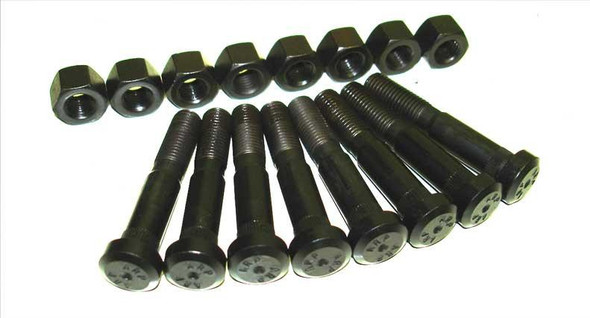
ARP BMW E36-E46 Rod Bolt Kit (M10-1.25, 1.772in UHL) - 201-6102
ARP
$123.18Are ARP Rod Bolt Kits compatible with my specific vehicle?Confirm fitment for your vehicle's application using the provided compatibility tool before purchasing these critical engine components.What is the recommended installation process for ARP Rod...$123.18 -


ARP Opel/Vauxhall 2.0L M9 16-valve Rod Bolt Kit - 109-6001
ARP
$83.55How do I know if ARP rod bolt kits will fit my vehicle?Confirm fitment with your specific vehicle's make, model, and year before purchasing ARP rod bolt kits.Is special training required to install ARP rod bolt kits?Professional installation is...$83.55 -

ARP BMW M10 Rod Bolt Kit - 201-6304
ARP
$130.21Are ARP Rod Bolt Kits compatible with my specific vehicle model?Confirming rod bolt kit fitment with your specific vehicle model is crucial for ensuring optimal performance and secure installation.What level of expertise is required for installing ARP...$130.21 -
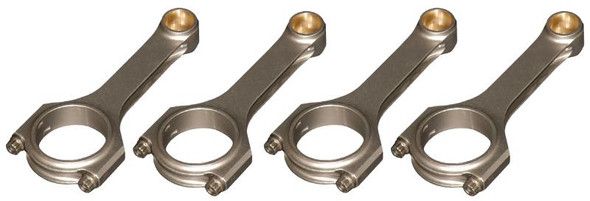
Eagle Replacement Rod Bolt Set (8 pcs) ARP2000 3/8in Thread 7/16in Socket 1.5in Under Head - EAG20060
Eagle
$122.54What makes these rod bolts superior to stock bolts?Eagle Replacement Rod Bolts feature ARP2000 material, delivering superior strength for high-performance engines under extreme stress.Can I install these myself?Professional installation is recommended...$122.54 -

ARP 3/8in CA625+ General Replacement Rod Bolt Kit (Set of 2) - 300-6724
ARP
$94.48What is the tensile strength of ARP Rod Bolt Kits?ARP Rod Bolt Kits achieve an impressive 200,000 psi tensile strength, ensuring unparalleled connecting rod security for your engine.Do ARP Rod Bolt Kits require special tools for installation?Professional...$94.48 -


ARP Suzuki Hayabusa GSX1300 Rod Bolt Kit - 271-6301
ARP
$108.52Are ARP Rod Bolts a direct replacement for OEM rod bolts?ARP Rod Bolts offer superior strength but professional installation is strongly recommended to ensure correct fitment and optimal performance.Can I install ARP Rod Bolts myself?Professional...$108.52 -

ARP Subaru FA20 2.0L Rod Bolt Kit - 260-6303
ARP
$98.78How do I ensure I order the correct ARP Rod Bolt Kit for my specific vehicle application?Verify your vehicle's specific year, make, model, and engine configuration using our detailed fitment guide to select the correct ARP Rod Bolt Kit.What is the...$98.78 -

ARP Subaru EJ25 DOHC Turbo Rod Bolt Kit - 260-6302
ARP
$109.58What engines do these ARP rod bolt kits fit?ARP Subaru EJ25 DOHC Turbo Rod Bolt Kits are engineered to fit 2004-2012 Saab 9-2X, Subaru Baja, Forester, and Impreza models.What is the recommended installation procedure for these ARP rod bolt...$109.58 -
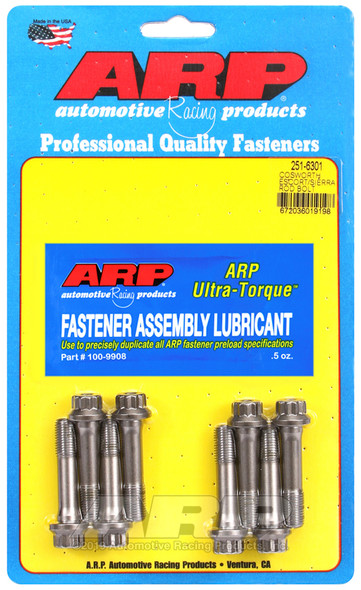
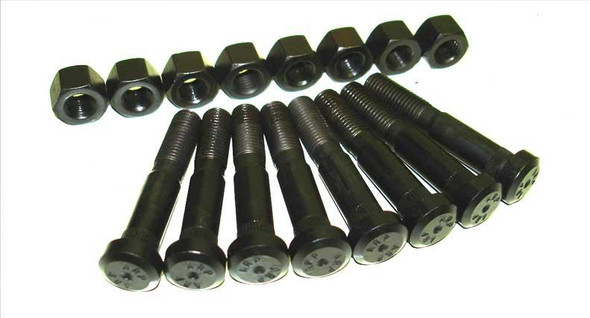
ARP Ford Cosworth Sierra/Escort Pro Rod Bolt Kit - 251-6301
ARP
$84.90What is the tensile strength of ARP Rod Bolt Kits?ARP Rod Bolt Kits achieve an exceptional 200,000 psi tensile strength, ensuring unparalleled connecting rod security under extreme loads.Are ARP Rod Bolt Kits easy to install?Professional installation is...$84.90 -
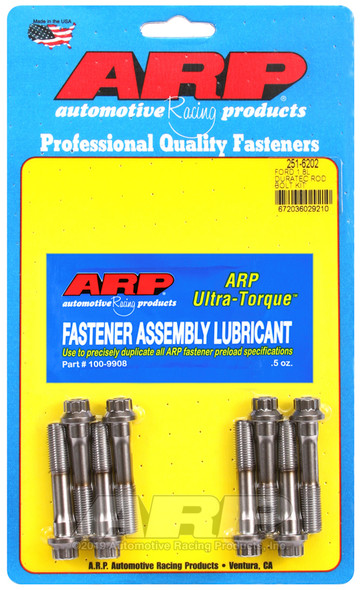

ARP Ford 1.8L Duratec Rod Bolt Kit - 251-6202
ARP
$85.05What are ARP Rod Bolt Kits made of?ARP Rod Bolt Kits are typically forged from premium ARP2000 or Custom Age 625+ materials for exceptional tensile strength and durability.Can I install ARP Rod Bolt Kits myself?Professional installation is strongly...$85.05 -


ARP Renault Clio 16V M9 Rod Bolt Kit - 216-6301
ARP
$99.20What is the primary purpose of ARP Rod Bolt Kits?ARP Rod Bolt Kits provide superior clamping force and tensile strength, ensuring ultimate engine reliability under extreme loads for your specific vehicle.Are ARP Rod Bolt Kits suitable for...$99.20
Rod bolt kits are the single most load-critical fastener in a performance engine build — they hold the connecting rod cap against the crankshaft journal through explosive combustion forces, high-RPM inertia loads, and sustained thermal cycling that destroys inferior hardware. Motor Sport Mayhem stocks 72 in-stock rod bolt kits from over 161 brands, spanning entry-level street replacements to full race-spec wave bolts engineered for 1,000+ horsepower applications.
Our Top Picks for Rod Bolt Kits
Every product below was hand-selected based on material traceability, clamping force consistency, and documented real-world results across street and competition builds.
ACL Race Series Main Bearings
ACL | $329.72
ACL's race series bearings are manufactured with a tri-metal construction and tighter-than-OEM clearance tolerances that support high-RPM rod journal loads in built engines.
- Extra oil clearance option supports increased film thickness under sustained boost and high-horsepower conditions
ACT Pilot Bearing
ACT | $17.00
A precision-fit pilot bearing is essential when upgrading drivetrain components to ensure the input shaft is properly supported with zero runout at the crank centerline.
- Correct pilot bearing fitment prevents input shaft wobble that accelerates clutch and transmission bearing wear
AON Clutch Components
Action Clutch | $89.69
A properly adjusted clutch pedal stop protects the pressure plate fingers and ensures consistent engagement point repeatability during hard launches and track sessions.
- Universal fit design allows precise over-travel elimination that prevents pressure plate damage at the limit of engagement
AEM Wiring Connectors
AEM | $430.95
Accurate thermocouple monitoring at the rod journal oil feed and cylinder head is critical for diagnosing thermal stress on engine internals during a high-output build.
- K-type thermocouples deliver accurate readings across the full temperature range relevant to engine oil, coolant, and exhaust monitoring
AER Wiring Kits
Aeromotive | $358.52
Adequate, dedicated fuel pump wiring is non-negotiable in any high-output build — voltage drop at the pump directly causes lean conditions that load connecting rod bolts beyond their design envelope.
- 60-amp dedicated relay circuit eliminates resistive voltage drop that starves high-flow pumps at peak demand
AFE PFADT Mount Set
aFe | $660.00
Solid or polyurethane subframe mounts reduce drivetrain flex and vibration transmission, which is directly relevant when building high-torque engines where powertrain movement affects fastener fatigue cycles.
- Stiffer subframe location reduces dynamic powertrain movement that creates micro-fatigue cycling in engine and drivetrain fasteners
ALF Wiring Harness
Air Lift | $97.23
Clean, purpose-built wiring harnesses keep engine bay electrical installations organized, reducing heat-induced insulation failure that can cause sensor faults in performance applications.
- Second-generation wireless design eliminates physical switch harness routing in high-temperature engine bay environments
ABR CVT Belts
All Balls Racing | $200.40
In CVT-equipped performance powersports applications, the drive belt is the torque-transfer link equivalent to a connecting rod bolt — correct tensile strength and heat resistance determine drivetrain longevity under load.
- OEM-spec or above tensile rating ensures consistent clamp force transfer without slip or thermal degradation at sustained high-load operation
ARX Tail Light Converters
AlphaRex | $395.00
LED lighting upgrades reduce parasitic electrical load on the charging system, which contributes to stable voltage delivery across all engine management and ignition components in a high-output build.
- Lower current draw compared to incandescent assemblies frees charging system headroom for high-demand fuel pump and ignition systems
PA Alta Crank Pulley
Alta | $129.20
A lightened crank pulley reduces rotational inertia at the front of the crankshaft, decreasing parasitic load on the rod bolts and crank during deceleration and high-RPM rev events.
- Reduced rotating mass at the crank nose lowers harmonic stress amplitude transmitted through the rod journal and fastener stack
How to Choose the Right Rod Bolt Kits
Rod bolts fail in one of two ways: they stretch beyond their elastic limit under repeated tensile loading, or they fatigue from improper preload that allows micro-movement between the rod cap and beam. The difference between an OEM bolt and a race-spec fastener comes down to alloy composition, heat treatment, and dimensional precision — not marketing. Inferior bolts use standard grade-8 or 10.9 metric steel that lacks the fatigue resistance required above 7,000 RPM or in boosted applications where peak cylinder pressure regularly exceeds 1,200 PSI. Quality rod bolt kits are manufactured from high-strength aircraft-grade alloys, heat-treated to specific tensile ratings, and held to thread and shank tolerances tight enough to ensure consistent stretch measurement during installation.
Key Specifications
Tensile strength is the foundational specification — measured in PSI or MPa, it defines the maximum load the bolt can sustain before permanent deformation. For naturally aspirated street performance applications, bolts rated at 180,000–200,000 PSI tensile strength are typically adequate. Boosted and nitrous applications generating over 700 horsepower should target 220,000 PSI and above, which corresponds to purpose-built aerospace alloys used by the top-tier manufacturers in this space.
Preload method matters as much as the bolt itself. Torque-to-spec installation introduces ±25% preload variability due to thread friction differences. Stretch measurement using a dedicated rod bolt stretch gauge delivers ±2–3% consistency, which is the only acceptable method for any application turning above 6,500 RPM or operating under forced induction. Kits that include stretch specification data in their documentation are engineered for precision installation — treat missing stretch specs as a red flag on any fastener marketed for performance use.
Thread engagement length and shank diameter directly affect how uniformly clamping force is distributed across the rod cap parting surface. Wave-form bolt designs used in some competition applications provide a controlled elastic zone that maintains consistent clamp load across a broader stretch range, reducing sensitivity to installation variation. For connecting rods that have been resized or that feature non-standard cap geometry, always verify thread reach and shank-to-bore clearance before ordering — interference fit dimensions vary between rod families and bolt designs.
Material traceability is a non-negotiable quality indicator for any rod bolt used in a serious build. Reputable manufacturers can trace every lot to its raw material certification, confirming alloy composition and heat treatment compliance. If a rod bolt kit's documentation doesn't reference the base alloy (e.g., 8740 chromoly, H-11 tool steel, or similar), treat it as an unknown quantity and buy accordingly. For engine components under sustained race loads, material certification is not optional.
Rod Bolt Tensile Strength vs. Application Guide
| Application | Recommended Tensile Strength | Alloy Type | Install Method |
|---|---|---|---|
| Street OEM Replacement | 150,000–170,000 PSI | Grade 8 / 10.9 Metric | Torque-to-spec |
| Street Performance (N/A, <500 HP) | 180,000–200,000 PSI | 8740 Chromoly | Torque-to-spec or stretch |
| Boosted Street / Mild Track (500–700 HP) | 200,000–220,000 PSI | 8740 Chromoly or ARP2000 | Stretch measurement required |
| High-Boost Track / Drag (>700 HP) | 220,000–240,000 PSI | L19 / ARP2000 / H-11 | Stretch measurement required |
| All-Out Competition (>1,000 HP) | 240,000+ PSI | H-11 Tool Steel / Custom Alloy | Stretch measurement + re-check every teardown |
| Powersports / Small Displacement | 160,000–190,000 PSI | 8740 Chromoly | Torque-to-spec with thread lube |
Price Guide
Entry ($1.19–$130): This range covers OEM-equivalent replacement fasteners and single-bolt purchases for common platforms where the goal is restoring factory spec rather than exceeding it — appropriate for low-mileage refreshes on naturally aspirated engines staying near stock power output.
Mid-range ($130–$500): The majority of serious street performance and track-day builders land here, where kits are manufactured from certified 8740 chromoly or equivalent alloy, include proper stretch specifications, and are engineered to support power levels well above what factory bolts can safely handle — this is where the engineering value-per-dollar peaks.
Premium ($500–$11,495.95): Purpose-built competition hardware in H-11 tool steel, L19, or proprietary high-cycle alloys with full material traceability — these are for professional race programs where a rod bolt failure means a destroyed engine in a car worth six figures, and the cost of the fastener is irrelevant compared to the cost of failure.
Who Is This For?
Rod bolt kits serve a wide spectrum of builders, from weekend street performance enthusiasts doing their first engine refresh to professional race teams assembling engines that will see 9,000 RPM and 1,500 horsepower on a regular basis.
Engine Performance — 8.5/10
This is the highest-scoring use case in the category, and for good reason — rod bolts are a foundational engine performance component, not an optional upgrade. Any engine build targeting meaningful power gains above factory spec requires fasteners engineered to match the increased cylinder pressure and RPM demands being placed on the connecting rod assembly. Skipping rod bolt upgrades during an engine build is one of the most common causes of catastrophic failure in otherwise well-executed performance engines.
Racing Competition — 8.2/10
Competition engines score 8.2/10 across 190 products in this category because race use introduces sustained high-RPM operation, repeated thermal cycling, and peak cylinder pressures that expose every weakness in substandard fasteners over time. Race-spec rod bolt kits in this tier are designed to maintain consistent clamp load through hundreds of heat cycles without relaxation, which is a fundamentally different engineering target than a street replacement bolt.
Track / Autocross — 8.2/10
Track and autocross applications match the competition score because these disciplines involve extended high-RPM operation that OEM fasteners were not designed to sustain repeatedly — factory bolts are engineered for normal driving duty cycles, not lap after lap at redline. Builders preparing dedicated track vehicles should treat rod bolt replacement as standard practice during any engine refresh, regardless of current mileage on the original hardware.
Drag Racing — 8.2/10
Drag racing generates the highest instantaneous cylinder pressure loads of any motorsport discipline, particularly in forced induction and nitrous-assisted applications where peak combustion pressure can exceed 2,000 PSI on a hard pass. The short-duration, maximum-effort nature of drag racing means rod bolts experience extreme tensile spikes on every launch, making tensile strength rating and installation preload accuracy especially critical in this application.
Street Performance — 7.6/10
Street performance scores 7.6/10 across 196 products — slightly lower than pure race applications because street engines operate at lower sustained RPM and power levels, but the score reflects that any meaningful street performance build still benefits significantly from upgraded fastener hardware. Street builders running boosted applications, forced induction upgrades, or aggressive cam profiles should prioritize rod bolt kits rated for their target power output from the start of the build rather than treating them as an afterthought.
Trusted Rod Bolt Kits Brands We Carry
The brands that define this category have earned their reputations through decades of documented race results and engineering credibility that can be verified in teardown data, not just marketing copy. ARP built their foundation on aerospace fastener manufacturing standards and remains the benchmark reference for tensile strength specifications across the industry — their alloy development program has produced materials adopted by professional race teams at every level of motorsport. Brian Crower brings a competition-focused engineering approach refined through professional drag racing and circuit programs, with connecting rod and fastener designs validated under sustained high-boost operation. Manley Performance combines their internal rod manufacturing expertise with fastener specifications developed to work specifically with their own connecting rod geometry, ensuring the bolt-to-rod interface is engineered as a matched system rather than a generic fit. GSC Power Division focuses heavily on high-RPM Asian-market performance platforms and delivers fastener specifications matched to the cylinder head and bottom-end loads those engines generate at elevated power outputs. Wiseco rounds out the top tier with fastener programs developed alongside their piston and rod lineups, ensuring the complete reciprocating assembly is designed to work together under the thermal and mechanical loads their target applications produce.
Frequently Asked Questions
Are ACL or King bearings better for a performance engine build?
Both ACL and King manufacture bearings to high standards, and the correct answer depends on your specific application and clearance targets rather than brand preference alone. ACL's race series uses a tri-metal construction with a lead-free overlay that provides excellent fatigue resistance and conforms well to journals that aren't perfectly round — a real-world advantage in high-mileage block rebuilds. King bearings are widely respected for their dimensional precision and are the OEM supplier for several European performance platforms, which gives them a strong track record in those specific bore and journal geometries. In practice, both brands consistently outperform OEM replacement bearings in high-output applications, and the decision often comes down to which brand offers the correct clearance specification for your specific rod journal diameter and target oil viscosity.
Are ACL race bearings any good?
ACL race series bearings are genuinely well-engineered products with a documented track record in professional motorsport, not just enthusiast street builds. The tri-metal construction — steel backing, copper-lead intermediate layer, and lead-free overlay — provides a bearing surface that handles both the high load capacity needed for boosted applications and the conformability required to survive momentary oil starvation events that would destroy a harder bearing. ACL's extra oil clearance option is particularly valuable in built engines running thicker oil or operating in high-temperature environments where increased film thickness reduces bearing surface contact. They are a legitimate choice for any engine build operating above stock power levels.
Are ACL race bearings coated?
Standard ACL race series bearings use a lead-free tri-metal construction that does not feature an additional polymer or DLC coating in the traditional sense — the overlay layer itself provides the low-friction surface that performs the same function coatings serve on competing designs. Some ACL variants and application-specific configurations do incorporate additional surface treatments, so it's worth confirming the specific part's construction against your operating requirements. For most high-performance street and competition builds, the standard ACL race construction performs well without requiring additional coating — where coatings provide a meaningful advantage is in applications with marginal oiling, extreme cylinder pressure, or sustained boundary lubrication conditions beyond what the standard design is rated for.
Are aftermarket head gaskets good?
Quality aftermarket head gaskets from purpose-built performance manufacturers are not just good — in high-output applications, they are significantly better than OEM gaskets designed for factory power levels and combustion pressures. Multi-layer steel construction used by the leading aftermarket suppliers provides superior clamp load resistance, better recovery after thermal cycling, and the ability to seal higher cylinder pressures without the gasket material compressing beyond its recovery range. The critical factor is matching the gasket's bore size, thickness, and fire ring design to your specific block deck height, piston-to-deck clearance, and target compression ratio — a head gasket that's correct for one build specification can compromise combustion efficiency or sealing in a different application. For any engine running above stock boost levels or with elevated compression, an aftermarket performance head gasket is the correct choice over an OEM unit. These often pair directly with rod bolt and bearing upgrades as part of a complete bottom-end and top-end refresh.
Are aftermarket ignition coils okay for a performance build?
Aftermarket ignition coils from reputable manufacturers are not just acceptable — they are a necessary upgrade in any application running aggressive ignition timing, elevated boost, or alternative fuel blends that demand higher spark energy to achieve consistent combustion. Factory ignition coils are sized to fire stock compression ratios and fuel mixtures reliably; when cylinder pressure increases, the ionization threshold rises and a weak coil delivers incomplete combustion that shows up as misfires, power loss, and increased knock sensitivity. Quality aftermarket coils are rated by peak spark energy output in millijoules and secondary coil voltage — specifications that directly translate to combustion reliability under the conditions your build will actually operate in. For any forced induction or high-compression build, coil output should be confirmed against your ignition system's total discharge capability before finalizing the build.
Building something specific? Our performance specialists can help you select the right Rod Bolt Kits for your application — street, track, or full race build.