
Pulleys - Crank, Underdrive
- Product
- Qty in Cart
- Quantity
- Price
- Subtotal
-

Weapon R 96-00 Honda Civic Engine Damper - 959-111-101
Weapon R
MSRP: $249.00$178.05Will this engine damper fit my 1997 Honda Civic?This WR Engine Damper is engineered to fit 1996-2000 Honda Civic CX and DX models.What is the primary benefit of installing an engine damper?Installing this Pulleys - Crank, Underdrive component delivers...MSRP: $249.00$178.05 -
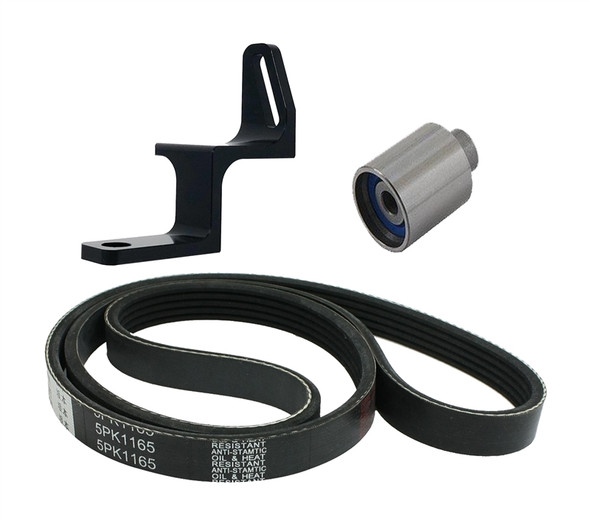

Torque Solution Reversed Intake Manifold Alternator Relocation Bracket Kit: 02-14 Subaru WRX - TS-SU-440BK-K
Torque Solution
MSRP: $177.77$156.83Will this pulley kit fit my Subaru?Torque Solution Alternator Pulleys fit 2002-2020 Subaru Forester, Impreza, and Legacy models, plus one additional platform for versatile application.Is this a direct bolt-on installation?Professional installation is...MSRP: $177.77$156.83 -

Weapon R 02-04 Acura RSX Engine Damper - 959-111-102
Weapon R
MSRP: $249.00$178.05Does this fit my 2005 Subaru WRX?Confirm specific vehicle fitment for your 2005 Subaru WRX before purchasing; professional installation is strongly recommended.How does this pulley improve performance?This WR Engine Damper reduces engine vibration,...MSRP: $249.00$178.05 -


PERRIN 22-26 Subaru WRX/BRZ & Toyota GR86 / 20-25 FXT/OBXT Lightweight Crank Pulley - Red - PSP-ENG-106RD
Perrin Performance
MSRP: $216.00$183.60What is the benefit of an underdrive pulley?Underdrive pulleys reduce parasitic drag, delivering quicker engine response and improved acceleration for a more engaging driving feel.How much horsepower can I expect to gain?Reducing rotational mass by 3.5...MSRP: $216.00$183.60 -
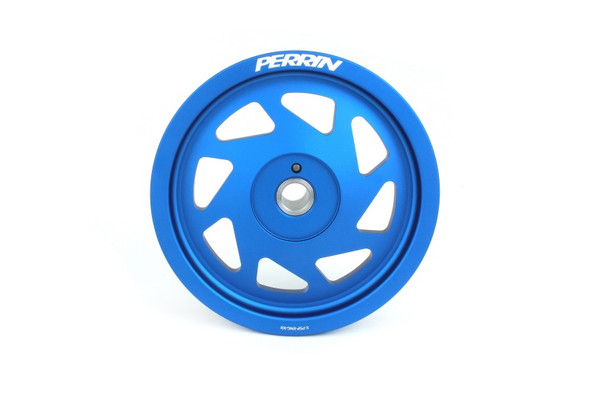

PERRIN 22-26 Subaru WRX/BRZ & Toyota GR86 / 20-25 FXT/OBXT Lightweight Crank Pulley - Blue - PSP-ENG-106BL
Perrin Performance
MSRP: $216.00$183.60Do I need to have this installed by a professional?Professional installation is recommended for the PA Crank Pulley to ensure proper fitment and optimal performance gains.What is the performance gain from this crank pulley?Reducing rotational mass by 3.5...MSRP: $216.00$183.60 -
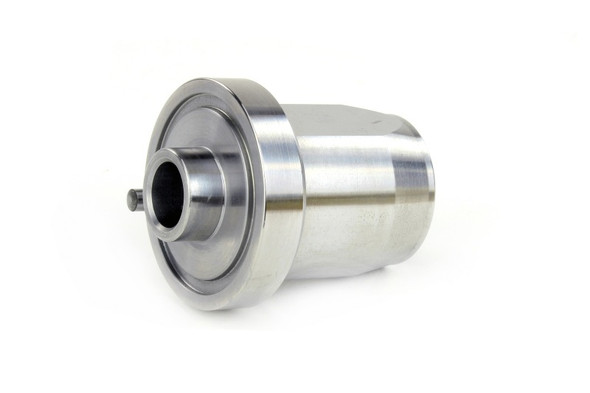

PERRIN 22-26 Subaru WRX/BRZ & Toyota GR86 / 20-25 FXT/OBXT Lightweight Crank Pulley - Black - PSP-ENG-106BK
Perrin Performance
MSRP: $216.00$183.60Will this Perrin Crank Pulley fit my Subaru WRX STI?Confirm fitment with your specific vehicle model using our compatibility tool before purchasing this pulley.Is professional installation required for the Perrin Crank Pulley?Professional installation is...MSRP: $216.00$183.60 -

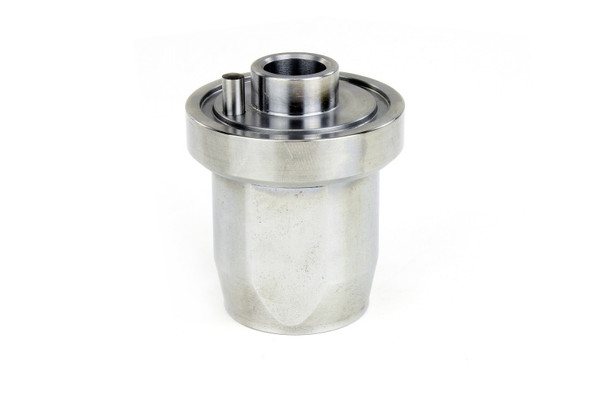
PERRIN 19-21 Subaru WRX / 16-18 Forester / 15-19 Legacy Lightweight Crank Pulley - Red - PSP-ENG-104RD
Perrin Performance
MSRP: $216.00$183.60What is the typical horsepower gain from installing an underdrive pulley?Underdrive pulleys can deliver up to a 5 horsepower increase by reducing rotational mass and parasitic drag on your engine.Are underdrive pulleys generally loud or...MSRP: $216.00$183.60 -


PERRIN 19-21 Subaru WRX / 16-18 Forester / 15-19 Legacy Lightweight Crank Pulley - Blue - PSP-ENG-104BL
Perrin Performance
MSRP: $216.00$183.60How much rotational mass does the Perrin Performance crank pulley reduce?The Perrin Performance crank pulley reduces rotational mass by 3.5 pounds, delivering a significant power gain across various driving scenarios.Is professional installation...MSRP: $216.00$183.60 -
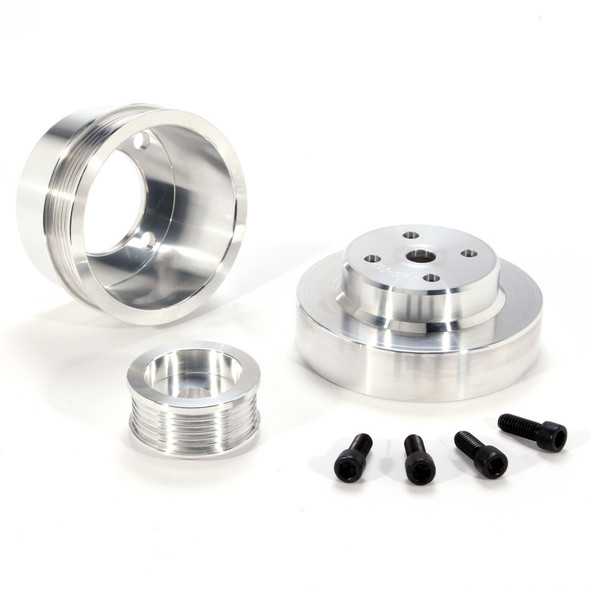
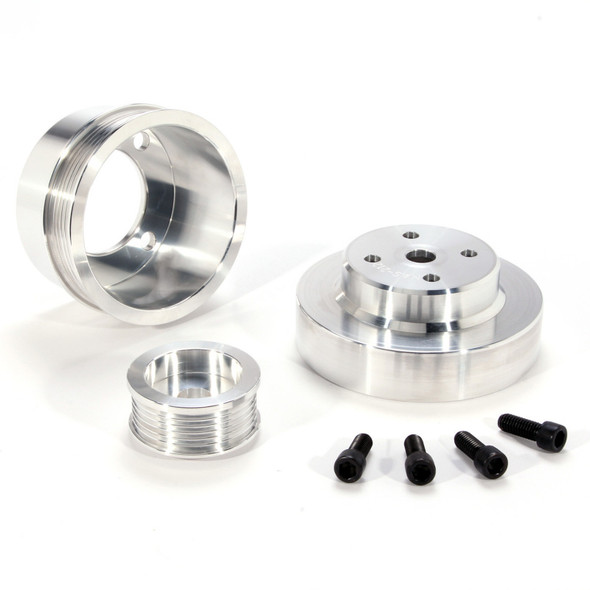
BBK 86-93 Mustang 5.0 Underdrive Pulley Kit - Lightweight CNC Billet Aluminum (3pc) - 1553
BBK
MSRP: $239.99$199.99Will this pulley kit affect my vehicle's charging system?This BBK Underdrive Pulley Kit re-uses the factory serpentine belt, ensuring your vehicle's charging system operates as designed.Can I reuse my stock serpentine belt with this kit?Yes, the BBK...MSRP: $239.99$199.99 -
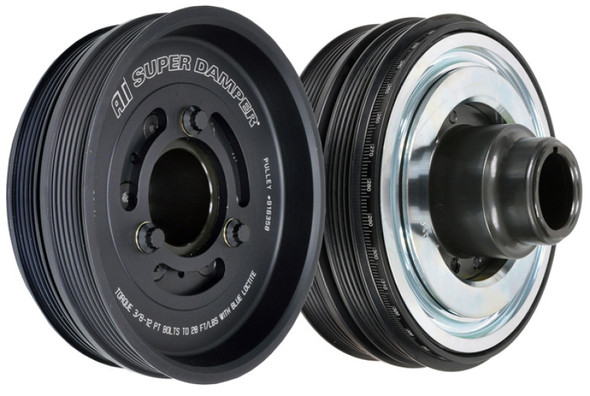
ATI Pulley - Supercharger - 7.99 - 8 Grv - 09-15 - CTS-V LSA - OEM Size - ATI916153
ATI
$199.85Is this an upgrade over the stock crank pulley?APP Pulleys are a significant upgrade, reducing parasitic drag to unlock up to 10 horsepower and improve engine response.Do I need special tools to install this?Professional installation is recommended for...$199.85 -

ATI Pulley - Supercharger - 8.86 - 8 Grv - 09-15 - CTS-V LSA - 10 Percent OD - ATI916106
ATI
$199.85Do I need to confirm fitment for the ATI underdrive crank pulley?Always confirm fitment for ATI underdrive crank pulleys to ensure compatibility with your specific vehicle's engine before installation.Is professional installation recommended for the ATI...$199.85 -
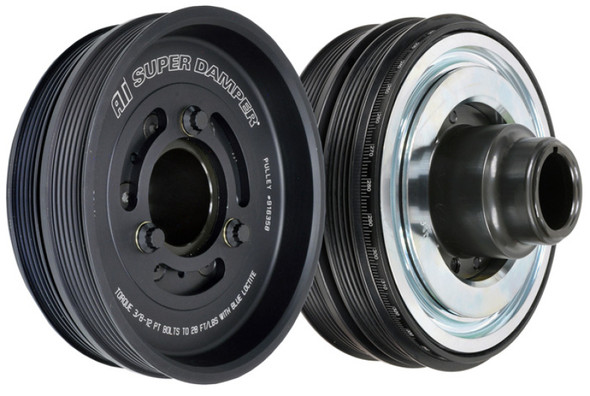
ATI Pulley - Supercharger - 8.46 - 8 Grv - 09-15 - CTS-V LSA - 5 Percent OD - ATI916105
ATI
$199.85What is the difference between an underdrive pulley and a standard pulley?Underdrive Pulleys - Crank, Underdrive spin accessories slower than the engine crankshaft, reducing parasitic drag and improving horsepower.Is professional installation recommended...$199.85
Underdrive crank pulleys reduce the rotational speed of accessory drives — alternators, power steering pumps, and A/C compressors — relative to the crankshaft, recovering parasitic horsepower losses that otherwise bleed straight off your engine's output. Motor Sport Mayhem stocks 64 in-stock underdrive and crank pulley options across a broad range of applications, from street-driven enthusiast builds to dedicated race engines where every fraction of a horsepower counts.
Our Top Picks for Pulleys - Crank, Underdrive
Each of these products was selected by our in-house performance specialists based on demonstrated performance value, engineering quality, and real-world results across street and competition applications.
ACL Race Series Main Bearings
ACL | $329.72
Tri-metal construction with extra oil clearance spec delivers the bearing reliability that high-output engine builds demand at the rotating assembly level.
- Extra oil clearance variant engineered for boosted and high-RPM applications where standard clearances fall short
ACT Pilot Bearing
ACT | $17.00
A precision pilot bearing from a clutch-focused manufacturer ensures proper input shaft alignment and smooth engagement at the crankshaft interface.
- High-quality steel race construction for durability under repeated engagement loads
AON Clutch Components
Action Clutch | $89.69
A race-spec pedal stop that tightens clutch engagement feel and protects drivetrain components from over-travel damage during aggressive driving.
- Universal fitment with adjustable design for precise engagement point calibration on track or strip
AEM Wiring Connectors
AEM | $430.95
K-type thermocouple sensors provide accurate thermal data critical for monitoring heat loads across engine and drivetrain components in competition environments.
- Four-pack value configuration reduces per-sensor cost on multi-channel data acquisition setups
AER Wiring Kits
Aeromotive | $358.52
A 60-amp dedicated wiring kit eliminates voltage drop across high-draw fuel pump circuits, keeping fuel delivery consistent at wide-open throttle.
- Deluxe configuration includes relay, fuse, and proper-gauge wiring for safe, dyno-proven install
AFE PFADT Mount Set
aFe | $660.00
Polyurethane subframe mounts that reduce chassis flex and sharpen steering response by eliminating compliance built into factory rubber isolators.
- Precision-machined aluminum housing with urethane inserts balances rigidity and NVH at the subframe level
ALF Wiring Harness
Air Lift | $97.23
A second-generation wireless air management harness that enables on-the-fly ride height adjustment without compromising electrical system integrity.
- Plug-and-play harness design simplifies integration with existing Air Lift management systems
ABR CVT Belts
All Balls Racing | $200.40
HD-rated CVT drive belts built for sustained high-load off-road operation where OEM belts routinely overheat and fail under aggressive throttle use.
- Premium compound construction resists heat soak and glazing better than OEM spec belts under desert running conditions
ARX Tail Light Converters
AlphaRex | $395.00
Full LED tail light assemblies that deliver faster response time and higher visibility output versus incandescent OEM units in a direct-fit housing.
- OEM-grade housing fit with sequential turn signal function adds a functional safety and aesthetic upgrade simultaneously
PA Alta Crank Pulley
Alta | $129.20
A lightened crank pulley that reduces rotational inertia and accessory drive load, translating directly to faster engine response and measurable horsepower gains at the wheels.
- Billet construction with precision-machined pulley grooves ensures belt retention and long-term dimensional stability under sustained load
How to Choose the Right Pulleys - Crank, Underdrive
The difference between a quality underdrive crank pulley and a cheap casting comes down to three things: material grade, dimensional accuracy, and harmonic damper integration. On factory engines, the OEM crank pulley often doubles as a torsional vibration damper — a critical function that absorbs crankshaft harmonics that would otherwise crack journals and fatigue timing components over time. Any aftermarket underdrive pulley that eliminates or compromises that damping function on a street-driven engine is a liability, not an upgrade. Race-only engines built with forged rotating assemblies and stiff crankshafts can typically run undamped underdrive pulleys safely, but street motors need a unit that retains damping properties while reducing accessory drive speed.
Key Specifications
Material selection is the first separator between catalog filler and real performance hardware. Billet 6061-T6 aluminum is the accepted standard for underdrive pulleys — it provides adequate strength at a weight that meaningfully reduces rotational inertia compared to the factory cast iron or stamped steel unit. Cheaper pulleys sourced from offshore casting operations often use lower-grade aluminum alloys or uncontrolled heat treatment, resulting in pulleys that distort under sustained belt tension or crack at the hub bore under high-RPM torsional loads. Always verify the alloy grade and confirm CNC machining on all critical surfaces.
Underdrive ratio is the core performance variable. Most street-performance underdrive pulleys reduce accessory drive speed by 10–25% relative to OEM. A 10% reduction is conservative and preserves alternator output and power steering response at idle — appropriate for a daily-driven vehicle. A 20–25% reduction yields more parasitic recovery but demands verification that your alternator maintains adequate charge voltage under low-RPM city driving, and that power steering assist remains safe. For track-only applications with electric power steering or no power steering at all, aggressive underdrive ratios can be used without these concerns.
Fitment precision matters at the crankshaft snout. The pulley bore must match the crankshaft snout diameter to within OEM tolerances — typically ±0.001" on a properly manufactured piece. Sloppy bore tolerances allow micro-movement between the pulley and snout under load, which progressively damages the key and keyway, and in worst cases, spins the pulley on the crank. Verify that the keyway is broached, not milled with an end mill, and that the retention hardware — ARP-grade fasteners are the benchmark — is included or specified. On interference-fit crank snouts, verify compatibility with your specific bottom-end configuration before ordering.
Belt groove geometry must match the OEM serpentine belt profile exactly. Mismatched groove angles accelerate belt wear dramatically and can cause belt walk-off at high RPM. Reputable manufacturers specify the groove count, angle, and pitch to match the OEM belt specification, allowing the use of a standard replacement belt rather than a proprietary part that becomes a supply chain problem at a race weekend. Confirm belt compatibility before purchase, especially on multi-accessory setups where a single mismatched groove puts load on the belt at an angle and generates heat at every pulley interface.
Underdrive Ratio vs. Accessory Impact Reference
| Underdrive Ratio | Accessory Speed Reduction | Alternator Impact at Idle | Recommended Application |
|---|---|---|---|
| 5–8% | Minimal | Negligible — <0.2V drop | Mild street build, daily-driven performance vehicle |
| 10–15% | Moderate | Small — 0.2–0.5V drop at idle | Street/track dual-purpose, weekender with upgraded alternator |
| 16–20% | Significant | Moderate — 0.5–1.0V drop at idle | Dedicated track car, occasional street use, verify charge output |
| 21–25% | High | Noticeable — may require high-output alternator | Aggressive street/strip, drag-focused builds with minimal street time |
| 26–30%+ | Maximum | Significant — not suitable for street alternator specs | Race-only, electric accessories, no power steering |
Price Guide
Entry ($1.19–$130): This tier covers individual hardware components, pilot bearings, and accessory-side pulleys — not full underdrive crank pulley assemblies. Useful for replacing worn hardware or sourcing a single-component fix within an existing setup. Quality varies widely; stick to known brands even at the low end.
Mid-range ($130–$400): The majority of bolt-on underdrive crank pulley assemblies land here, and this is where most enthusiasts will find the best value. Billet aluminum construction, precision tolerances, and proper belt groove geometry are standard at this price point from reputable manufacturers. This range covers both street-performance and dual-purpose track builds effectively.
Premium ($400–$11,495.95): Upper-tier pricing reflects complete accessory drive systems, damped underdrive pulley assemblies engineered for high-displacement or forced-induction engines, and professional-grade rotating assembly components. Purpose-built race applications where marginal horsepower recovery and rotating mass reduction justify the cost will find value here — street builds rarely need to exceed the mid-range tier.
Who Is This For?
Underdrive crank pulleys and rotating assembly components serve a wide spectrum of users, from street enthusiasts chasing accessible horsepower gains to full-competition race builders where every parasitic watt recovered matters.
Engine Performance — 8.5/10
This is the highest-scoring use case in our matrix, and it reflects the core mechanical purpose of the category. Reducing accessory drive load directly recovers horsepower at the crank — no tuning required, no fuel modifications needed. The gains are modest on mildly built engines (typically 4–12 whp depending on underdrive ratio and displacement) but consistent and repeatable, making these parts a rational first step in any engine performance build before moving to more invasive modifications.
Racing Competition — 8.2/10
At the competition level, underdrive crank pulleys are standard equipment. Every fraction of parasitic loss eliminated translates directly to lap time, and in classes with engine displacement limits, recovering accessory-drive horsepower is one of the few legal gains available. Race-prepared engines also benefit from reduced rotating inertia — a lighter crank pulley assembly allows the engine to rev faster and respond more crisply to throttle inputs, which is measurable on a data overlay in any time-attack or road race environment.
Track / Autocross — 8.2/10
Track and autocross applications score identically to competition, reflecting how common these parts are in grassroots racing where budget efficiency matters. An underdrive pulley offers a high return on investment compared to most other power-adding modifications, requires no dyno tuning, and is fully reversible if regulations require a return to stock. For autocross specifically, the improved engine response from reduced rotational inertia is often more perceptible than the raw horsepower number suggests.
Drag Racing — 8.2/10
Drag racing builds benefit from aggressive underdrive ratios that would be impractical on a street car, since track time is short and battery charge state can be managed between runs. Eliminating power steering pumps, A/C compressors, and running a dedicated high-output alternator allows maximum underdrive of remaining accessories, extracting the most mechanical power possible. Combined with other engine components like ported heads and aggressive camshaft profiles, accessory drive optimization becomes part of a complete power budget calculation.
Street Performance — 7.6/10
Street performance scores slightly lower because the aggressive underdrive ratios that maximize horsepower recovery create real-world tradeoffs — reduced alternator output at idle, lighter power steering feel, and potential charging system issues in stop-and-go traffic with high electrical loads. A well-selected street underdrive pulley in the 10–15% reduction range avoids these issues entirely while still delivering meaningful horsepower and improved throttle response. This is a smart modification for the street builder who understands the tradeoffs and sizes the underdrive ratio accordingly.
Trusted Pulleys - Crank, Underdrive Brands We Carry
Alta has a strong track record in the underdrive pulley segment with billet CNC-machined units engineered specifically for their target applications rather than adapted from generic blanks — the kind of application-specific engineering that shows up in proper groove geometry and hub bore tolerances. Gates brings OEM-supplier credibility to the belt and accessory drive side of this category, with a manufacturing standard that sets the benchmark for groove profile consistency across the industry. ACL and King Engine Bearings dominate the rotating assembly bearing segment with metallurgically distinct approaches — ACL's tri-metal construction and King's coated bearing technology both address the same problem of protecting journals under high load, through different engineering paths. GSC Power Division and Brian Crower round out the performance rotating assembly side with components engineered for high-RPM and high-boost applications where OEM specifications are a starting point, not a ceiling. Wiseco and Manley Performance address the forged and billet rotating assembly market for builders who are replacing OEM components entirely rather than supplementing them.
Frequently Asked Questions
Are 2-piece or 3-piece crank pulleys better?
A 3-piece crank pulley — consisting of a hub, damper ring, and outer shell bonded by an elastomeric element — retains torsional vibration damping function and is the correct choice for any street-driven engine or an engine that spends meaningful time at low RPM. The 2-piece or single-piece billet design eliminates the damper entirely, reducing rotating mass to the minimum but exposing the crankshaft to harmonic stress cycles that were previously absorbed. On a stock or mildly modified engine running at street RPM ranges, the harmonics that OEM dampers address are real — crankshaft fatigue failure from undamped torsional vibration is a documented failure mode. Reserve undamped single-piece pulleys for dedicated race engines with stiff forged crankshafts and short event durations where cumulative fatigue is not a concern.
Are ACL or King bearings better for performance engine builds?
Both ACL Race Series and King Engine Bearings are legitimate, competition-proven choices — the real answer depends on your specific clearance requirements and engine configuration. ACL's Race Series uses a tri-metal overlay with a controlled extra oil clearance specification that suits boosted and high-RPM applications particularly well, providing a larger hydrodynamic wedge under extreme load. King's coated bearings apply a proprietary polymer coating over a bi-metal substrate that reduces friction during cold-start and break-in while maintaining load capacity at operating temperature. In back-to-back dyno testing and competition use, both brands hold up at power levels well beyond OEM design intent — the choice often comes down to builder preference, available clearance specifications for your particular crank journal dimensions, and which brand your machinist has verified data for on your specific application.
Are ACL race bearings coated?
ACL Race Series bearings use a tri-metal construction — a steel backing, copper-lead or aluminum alloy intermediate layer, and a thin Babbitt or overlay on the working surface — rather than a polymer coating layer like some competing products. The overlay on ACL race bearings provides conformability and embeddability, allowing small particles to be absorbed into the surface rather than scoring the journal. Some ACL bearing variants incorporate a surface treatment for additional protection, but the core technology is the tri-metal layered construction rather than a deposited polymer coating. If a coated bearing with a dedicated polymer layer is your target specification, King's coated series uses that approach explicitly, and the two technologies address the same goal through different metallurgical strategies.
Are aftermarket belt tensioners worth using?
Aftermarket belt tensioners are worth the investment specifically in two scenarios: when you are running an underdrive pulley system that changes accessory drive geometry or tension requirements, and when your OEM tensioner has a documented failure pattern on your engine family. Factory tensioners are engineered to a cost target and a specific belt load curve — an underdrive pulley that changes rotational speed ratios can alter the load on the tensioner spring mechanism, causing either over-tensioning that burns belt ribs or under-tensioning that allows belt slip under high accessory load. Quality aftermarket tensioners from manufacturers with genuine engineering investment — not rebranded generic units — use higher-grade spring steel, improved pivot bushings, and are often tunable for different belt loads. On a modified accessory drive, pairing an underdrive pulley with a properly specified tensioner is the complete solution; the pulley alone without verified tensioner compatibility is a partial modification.
Are aftermarket head gaskets good for performance builds?
Aftermarket head gaskets from established manufacturers are not just good — they are the correct choice for any engine build exceeding factory power targets, because OEM multi-layer steel gaskets are engineered for OEM combustion pressures, not the elevated cylinder pressures of turbocharged, supercharged, or high-compression naturally aspirated builds. Brands like Cometic produce MLS (multi-layer steel) gaskets in application-specific bore sizes and compressed thicknesses that allow the builder to dial in compression ratio and ensure proper sealing surface contact around the combustion chamber. The critical variables are surface finish specification — typically 45–125 Ra microfinish on both the head and block deck — and proper torque procedure using quality fasteners. A quality aftermarket gasket installed on a properly prepared surface with good head studs will outlast and outperform the OEM unit in a modified engine; the gasket itself is rarely the weak link when those conditions are met. For the full picture on engine sealing and rotating assembly components, browse our engine components category.
Building something specific? Our performance specialists can help you select the right Pulleys - Crank, Underdrive for your application — street, track, or full race build.