
Piston Rings
- Product
- Qty in Cart
- Quantity
- Price
- Subtotal
-


Wiseco 81.00MM RING SET Ring Shelf Stock - 8100XX
Wiseco
$33.99What are Wiseco piston rings made of?Wiseco piston rings utilize advanced materials engineered for superior durability and optimal engine sealing performance.Do Wiseco piston rings require special installation?Professional installation is recommended for...$33.99 -

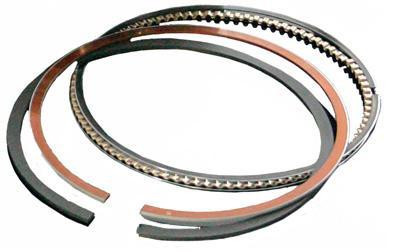
Wiseco 79.00MM RING SET Ring Shelf Stock - 7900XX
Wiseco
$33.99Are these piston rings compatible with my specific vehicle model?Confirming piston ring fitment with your specific vehicle is essential before professional installation to ensure optimal engine performance.Do these piston rings require professional...$33.99 -
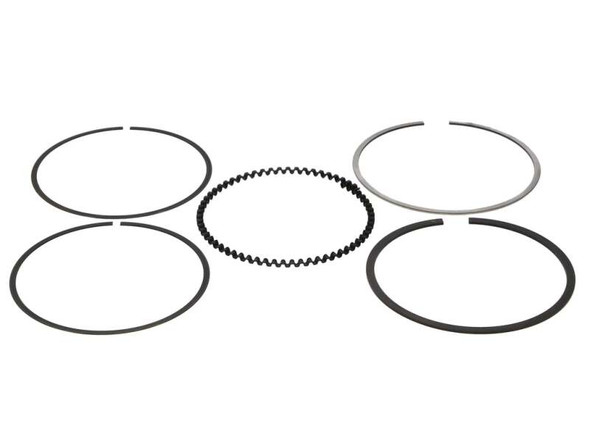
Wiseco 78.50MM RING SET Ring Shelf Stock - 7850XX
Wiseco
$33.99Will these piston rings fit my 1990 Mazda Miata?Wiseco Piston Rings are engineered to precisely fit the 1990-1993 Mazda Miata, ensuring optimal engine performance and sealing.Can I install these piston rings myself?Professional installation is strongly...$33.99 -


Wiseco 77.0mm Ring Set (GNH) Ring Shelf Stock - 7700XX
Wiseco
$33.99Are these piston rings compatible with my 2002-2006 Mini Cooper?Wiseco piston rings are engineered to precisely fit 2002-2006 Mini Cooper models, ensuring optimal engine performance.Can I install these piston rings myself?Professional installation is...$33.99 -
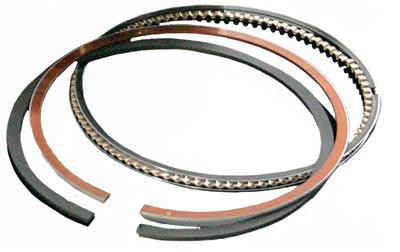
Wiseco 103.429mm (4.072inch) Auto Ring Set- 1 cyl. Ring Shelf Stock - 4072GFX
Wiseco
$38.99What is the proper installation procedure for Wiseco Piston Rings?Professional installation is recommended for Wiseco Piston Rings to ensure optimal sealing and maximum engine performance.How do Wiseco Piston Rings contribute to engine performance?Wiseco...$38.99 -

Wiseco 102.41mm (4.032inch) Auto Ring Set- 1 cyl. Ring Shelf Stock - 4032GFX
Wiseco
$33.99How do I ensure proper installation of my Wiseco piston rings?Professional installation is strongly recommended to guarantee the precise seating and optimal performance of Wiseco piston rings within your engine.What is the primary benefit of Wiseco...$33.99 -
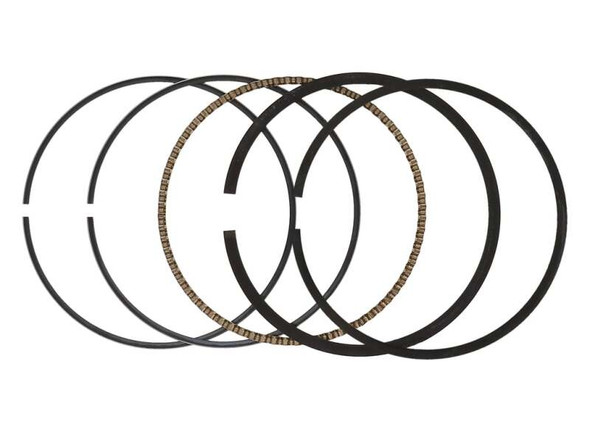

Wiseco 100.0mm Ring Set 1.2 x 1.5 x 2.0mm Ring Shelf Stock - 10000VF
Wiseco
$28.99Are Wiseco piston rings compatible with my vehicle?Wiseco piston rings are designed for specific vehicle fitments; always confirm compatibility using the provided tools before purchasing.Can I install Wiseco piston rings myself?Professional installation...$28.99 -
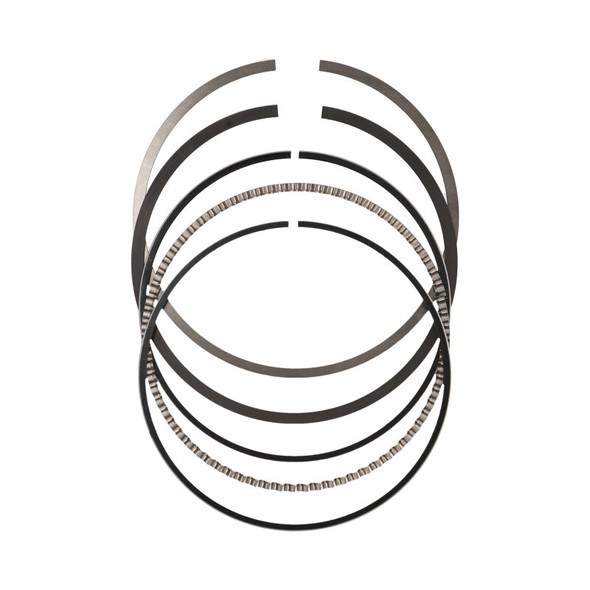

JE Pistons Ring Sets 1.0-1.2-2.8-3.250 - JG1001-3250
JE Pistons
$40.99What is the primary function of piston rings?Piston rings seal the combustion chamber, transfer heat, and regulate oil consumption, ensuring optimal engine performance and longevity for your vehicle.Can I install these piston rings myself?Professional...$40.99 -

Supertech 89mm Bore Piston Rings - 1x3.30 / 1.2x3.70 / 2.8x3.30mm High Performance Gas Nitrided - R89-GNH8900
Supertech
MSRP: $31.88$27.51What is the primary function of piston rings?Piston rings seal the combustion chamber, control oil, and transfer heat, maximizing engine efficiency and power output.Are piston rings difficult to install?Professional installation is recommended to ensure...MSRP: $31.88$27.51 -

Supertech 88mm Bore Piston Rings - 1x3.30 / 1.2x3.60 / 2.8x3.30mm High Performance Gas Nitrided - R88-GNH8800
Supertech
MSRP: $31.88$27.51What is the primary function of piston rings?Piston rings ensure robust engine sealing, maximizing compression and controlling oil for optimal power output and cleaner combustion cycles.Can I install these myself?Professional installation is strongly...MSRP: $31.88$27.51 -

Supertech 87.5mm Bore Piston Rings - 1x3.30 / 1.2x3.60 / 2.8x3.30mm High Performance Gas Nitrided - R87.5-GNH8750
Supertech
MSRP: $31.88$27.51What is the purpose of piston rings?Piston rings seal combustion chambers, control oil, and transfer heat, crucial for optimal engine function and performance.Can I install these myself?Professional installation is strongly recommended to ensure precise...MSRP: $31.88$27.51 -

Supertech 87mm Bore Piston Rings - 1x3.30 / 1.2x3.60 / 2.8x3.30mm High Performance Gas Nitrided - R87-GNH8700
Supertech
MSRP: $31.88$25.51Do SPT Piston Rings fit my 2005 Subaru WRX STI?SPT Piston Rings require users to confirm exact fitment for their specific vehicle to ensure proper installation and optimal performance.What is the recommended installation procedure for SPT Piston...MSRP: $31.88$25.51
Piston rings are the critical sealing interface between the piston and cylinder wall — controlling compression, managing combustion gases, regulating oil consumption, and directly determining how much power actually reaches the crankshaft. Motor Sport Mayhem stocks over 150 piston ring sets spanning entry street rebuilds to full competition engines, with pricing from $1.19 to $11,495.95 across brands trusted by professional engine builders worldwide.
Our Top Picks for Piston Rings
Each product below was hand-selected by our in-house engine specialists based on demonstrated performance, material quality, and real-world results across street and competition builds.
ACL Race Series Main Bearings
ACL | $329.72
Engineered with additional oil clearance for high-output forced induction applications where standard tolerances fall short under sustained load.
- Tri-metal construction with sputter coating delivers measurably higher load capacity than OEM-spec bearings
ACT Pilot Bearing
ACT | $17.00
A precision-ground bearing designed to support transmission input shaft concentricity under repeated high-torque clutch engagement cycles.
- Hardened race-grade steel tolerances prevent the input shaft deflection that prematurely wears ring land sealing surfaces
AON Clutch Components
Action Clutch | $89.69
A universal race pedal stop that gives the drivetrain consistent clutch engagement, reducing shock loads transmitted back through the rotating assembly to the pistons and rings.
- Adjustable engagement point prevents ring land fatigue caused by aggressive clutch dumps under full throttle
AEM Wiring Connectors
AEM | $430.95
K-type thermocouple kits provide accurate multi-point exhaust gas temperature monitoring — essential for diagnosing ring seal degradation and cylinder-to-cylinder combustion variance.
- Real-time EGT data is the earliest indicator of a failing ring seal before catastrophic piston damage occurs
AER Wiring Kits
Aeromotive | $358.52
A high-current fuel pump wiring kit that ensures consistent fuel delivery at elevated demand — fuel starvation events are a leading cause of lean combustion that destroys ring land integrity.
- Dedicated relay and 60-amp rated circuit eliminates voltage drop that compromises pump output under wide-open throttle
AFE PFADT Mount Set
aFe | $660.00
Polyurethane transmission mounts reduce drivetrain movement, minimizing the torsional shock cycles that accelerate piston-to-bore wear in high-output applications.
- Stiffer mount durometer keeps the drivetrain aligned under power, which directly reduces side-loading on piston skirts and ring grooves
ALF Wiring Harness
Air Lift | $97.23
A second-generation wireless harness for air suspension systems, enabling precise ride height management that keeps weight transfer balanced and reduces engine bay vibration transmitted to rotating components.
- Clean plug-and-play wiring integration eliminates the voltage noise that can affect sensor-driven fueling accuracy and ring-safe AFR targets
ABR CVT Belts
All Balls Racing | $200.40
Heavy-duty CVT belts rated for high-desert performance driving where elevated belt temps and shock loads put extreme cyclic stress on the entire rotating assembly including piston rings.
- HD construction maintains consistent clamping force under heat, reducing the RPM surges that accelerate ring flutter and bore wear
ARX Tail Light Converters
AlphaRex | $395.00
LED tail light assemblies that reduce electrical load on the charging system, contributing to stable voltage supply across ignition and fuel management components that govern combustion quality and ring longevity.
- Lower parasitic draw means the alternator maintains target voltage more consistently, supporting accurate injector pulse width and clean combustion
PA Alta Crank Pulley
Alta | $129.20
A lightened underdrive crank pulley that reduces rotational inertia and accessory belt drag, allowing the engine to rev more freely through the RPM range where ring seal and blow-by are most critically tested.
- Reduced reciprocating mass at the crank nose lowers harmonic vibration that over time fatigues ring end gaps and degrades groove-to-ring contact
How to Choose the Right Piston Rings
The single most important factor separating a ring set that holds power for 50,000 miles from one that blows by in 10,000 is material and coating selection matched to the application — followed closely by end gap specification and ring tension. OEM replacement rings are manufactured to factory tolerances for reliability and longevity at stock power levels; performance ring sets use tighter tolerances, harder face coatings, and lower tension designs optimized for specific operating conditions. What fails in most poorly specified ring installations is not material weakness but incorrect end gap — too tight and the ring butts under thermal expansion, scoring the bore; too loose and combustion gases bypass the seal, loading the oil with carbon and washing lubrication from the skirt.
Key Specifications
Ring material determines wear resistance and friction characteristics across temperature extremes. Cast iron rings remain the baseline — durable, self-lubricating, and forgiving in mildly built engines. Ductile iron offers improved tensile strength for slightly elevated boost levels. Chrome-faced rings extend service life in abrasive environments and are standard on most performance street applications. Moly-faced rings, filled with porous plasma-sprayed molybdenum, hold an oil film better under high-heat and high-load conditions and are the correct choice for naturally aspirated race engines and moderately boosted builds. For extreme forced induction or nitrous applications, PVD (Physical Vapor Deposition) or DLC (Diamond-Like Carbon) coatings provide the lowest friction coefficient and highest surface hardness available — critical when cylinder pressures routinely exceed 1,500 PSI.
Ring pack configuration matters as much as material. A standard 3-ring pack consists of a top compression ring, a second compression/scraper ring, and a 3-piece oil control ring. Reducing ring pack height — for example from a 1.5mm/1.5mm/4.0mm set to a 1.2mm/1.2mm/3.0mm thin-ring package — measurably reduces friction and allows the rings to conform more rapidly to bore geometry, improving seal at lower break-in mileage. Thin-ring packs are standard on dedicated race engines but require precise bore finishing; they are unforgiving of cylinder wall surface finish errors. The second ring design — whether it uses a Napier-style taper face or a reverse-taper hook — directly influences how effectively combustion gas pressure is used to assist ring seal on the top ring.
End gap specification is non-negotiable for performance builds. Standard file-fit rings ship with intentional excess material on the ends so the builder can gap them to the bore and application. For a naturally aspirated street engine, top ring end gap is typically set at 0.004" per inch of bore diameter; a forced induction application requires additional clearance — often 0.005" to 0.006" per inch of bore — to accommodate greater thermal expansion under boost. The second ring is typically gapped 0.005" larger than the top ring to prevent a pressure trap between the rings that lifts the top ring off its seat. Oil ring end gap is generally less critical but should never be tight enough to create back-pressure in the oil return grooves.
Bore surface finish is the invisible specification that determines whether any ring set — regardless of cost — will seat and seal correctly. A 45-degree cross-hatch pattern at 30–45 degrees with a plateau finish between Ra 20–35 microinches provides the correct oil retention texture for performance ring materials. Too smooth and the rings hydroplane on oil; too rough and they wear prematurely. Torque plate honing — boring the block with a simulated head gasket and torque plate installed — produces a bore geometry that matches the distorted shape of the actual assembled engine, ensuring the ring maintains consistent contact pressure around the full circumference at operating temperature. Skipping this step on high-output builds is one of the most common causes of chronic blow-by despite correct end gap specification.
Piston Ring End Gap Reference by Application
| Application | Top Ring Gap (per inch of bore) | Second Ring Gap (per inch of bore) | Recommended Ring Material |
|---|---|---|---|
| Street Rebuild / OEM Power | 0.003" – 0.004" | 0.004" – 0.005" | Chrome or Moly-faced cast iron |
| Street Performance / Mild Boost (<10 psi) | 0.004" – 0.005" | 0.005" – 0.006" | Plasma moly or chrome-moly |
| High Boost / Forced Induction (10–25 psi) | 0.005" – 0.006" | 0.006" – 0.007" | Plasma moly or PVD-coated |
| Extreme Boost / Race (25+ psi) | 0.006" – 0.007" | 0.007" – 0.008" | PVD or DLC-coated steel |
| Naturally Aspirated Race / High RPM | 0.004" – 0.0045" | 0.005" – 0.0055" | Thin-pack moly or DLC steel |
| Nitrous Applications | 0.006" – 0.008" | 0.007" – 0.009" | Hard-anodized or DLC steel — full floating preferred |
Price Guide
Entry ($1.19–$130): Single-cylinder replacement rings, basic cast iron sets for stock rebuilds, and individual ring components for budget engine refreshes. Appropriate for low-mileage stock power restorations where OEM tolerances are being maintained and long-term durability at modest operating temperatures is the priority. Do not expect these to hold up under sustained elevated boost or high-RPM race use.
Mid-range ($130–$500): This is where the majority of serious street performance and track day builders land, and for good reason — full ring sets with moly or PVD face treatments, correct thin-pack geometry, and file-fit ends are readily available in this bracket. Material quality makes a measurable difference in friction reduction and heat resistance, and most sets in this range include adequate end gap stock for proper custom fitting.
Premium ($500–$11,495.95): Purpose-built competition ring sets using DLC coatings, ultra-thin ring packs (1.0mm or below), gas-ported designs, and matched sets engineered for specific forged piston profiles. The cost is justified by measurable dyno gains from friction reduction, extended service intervals between rebuilds in pro motorsport environments, and the engineering precision required to survive cylinder pressures and thermal cycles that destroy conventional ring sets within a single race weekend.
Who Is This For?
Piston rings span the full performance spectrum — from a weekend DIY engine refresh to full professional race engine assembly — and usage data across our catalog reflects that breadth clearly.
Engine Performance — 8.5/10
This is the highest-scoring use case in our catalog and it reflects the fundamental role piston rings play in every aspect of engine output: compression retention, combustion efficiency, oil control, and friction management. Every horsepower figure your engine produces depends on the ring seal holding combustion pressure in the cylinder rather than bleeding past into the crankcase. Upgraded ring sets consistently deliver measurable compression improvement over worn or budget replacement rings, and the reduction in blow-by directly extends oil service life and reduces the carbon loading that degrades combustion chamber geometry over time.
Racing Competition — 8.2/10
Competition engines are rebuilt on fixed intervals regardless of apparent condition, and the ring set is always replaced — the tolerance for degradation at race pace is essentially zero. Race-spec rings must survive elevated cylinder pressures, extreme thermal cycling, and sustained high-RPM operation where standard rings experience flutter and lose seal. Gas-ported top rings and thin-pack configurations that reduce pumping losses are standard practice in professional engine programs, and the ring specification is typically one of the first areas where engine builders find incremental power improvements.
Track / Autocross — 8.2/10
Track and autocross use places engines under sustained high-load conditions that expose ring seal degradation far faster than street driving — repeated wide-open throttle pulls, elevated oil temperatures, and the thermal cycling of hard driving followed by cool-down expose any weakness in ring seating or end gap specification. Builders targeting track use should prioritize moly-faced or PVD-coated sets with correct end gap for the boost level, as the cost of a ring failure at the track far exceeds the cost of specifying correctly at build time. This use case scores identically to racing competition because the operating conditions, while shorter in duration, are comparably demanding on the ring seal.
Drag Racing — 8.2/10
Drag racing presents a unique ring challenge: extreme cylinder pressure spikes at launch combined with very short operating durations and frequent thermal cycling between runs. Nitrous and high-boost drag applications demand wider end gaps than any other use case to prevent ring butt on the first hard pass, and ring land integrity — the strength of the piston groove itself — must be matched to a ring pack that does not exert excessive radial pressure on a potentially softened groove. Many drag race engine builders spec a specific second ring design to manage inter-ring pressure dynamics under the violent combustion events associated with power adders.
Street Performance — 7.6/10
Street performance scores slightly lower than pure competition use cases not because rings are less important here, but because street builds must balance power density with long service intervals and tolerance for varying fuel quality, oil change schedules, and temperature swings. A correctly specified performance ring set on a street car should deliver 60,000–100,000 miles of reliable service while still supporting meaningful power gains over OEM spec. The priority at this level is matching ring coating and tension to the actual power level of the build — over-speccing a race ring pack on a street engine often results in longer break-in periods and higher oil consumption until the rings fully seat.
Trusted Piston Rings Brands We Carry
The brands that dominate the performance piston ring space have earned their position through measurable material engineering and decades of race-proven development. Wiseco manufactures rings matched specifically to their forged piston profiles, holding tolerances that make end gap work predictable and consistent — their average catalog price of $617 reflects the engineering depth behind every set. Brian Crower brings race-engine precision to street and competition applications, with ring sets that complement their high-strength connecting rod and valve train components as part of a complete rotating assembly philosophy. Manley Performance, with an average product price approaching $700, produces rings engineered for the extreme cylinder pressures generated by their forged pistons in boosted race applications. Supertech covers a broad range of performance applications at competitive price points, making proper ring specification accessible for builders working with quality forged pistons from multiple manufacturers. GSC Power Division rounds out the top tier with competition-focused ring sets that reflect their deep roots in high-output turbocharged four-cylinder engine development. Across all these brands, the consistent differentiator is coating technology and manufacturing tolerance — not marketing.
Frequently Asked Questions
Are ACL or King bearings better for performance builds?
Both ACL and King Engine Bearings are legitimate choices for performance and race applications, and the answer depends on the specific engine and power level. ACL uses a tri-metal construction with a sputter-coated overlay that provides excellent fatigue resistance under high dynamic load — particularly effective in high-revving naturally aspirated engines and moderately boosted builds. King bearings offer similar tri-metal architecture with a focus on oil clearance consistency and are widely used in professional engine programs where measurable clearance uniformity matters. In direct comparison testing on high-boost applications, both brands outperform OEM bearings substantially; the more critical variable is selecting the correct clearance specification for your oil viscosity and operating temperature rather than choosing between these two brands.
Are ACL race bearings any good for high-output applications?
ACL Race Series bearings are genuinely well-regarded in professional engine building circles — not just enthusiast marketing. The sputter overlay used in their race line is the same technology used in OEM bearings for high-output factory performance engines, and the fatigue strength of the tri-metal substrate is significantly higher than standard bi-metal replacement bearings. ACL also offers an extra oil clearance option in their race series, which is important for engines running higher-viscosity racing oil or those with tight oil passages under sustained high RPM. Their quality control consistency has been a reason professional engine builders return to the brand repeatedly across different engine platforms.
Are ACL race bearings coated, and what does that mean for performance?
Yes — ACL Race Series bearings use a sputter-deposited overlay coating, which is a vacuum-deposited layer of lead-tin or aluminum-tin alloy applied at the microscopic level to the bearing surface. This coating serves two functions: it provides a sacrificial wear layer that conforms to minor surface irregularities in the journal during initial startup, and it offers genuine emergency run capability if oil pressure is momentarily lost. The sputter coating is significantly thinner than conventional overlay — typically 0.001" or less — which means it contributes less to overall bearing clearance change over the bearing's service life compared to thicker electroplated overlays. This dimensional stability is a primary reason race engine builders prefer sputter-coated bearings for applications where maintaining precise oil clearance throughout the service interval matters.
Are aftermarket head gaskets good, and when should you upgrade from OEM?
Aftermarket head gaskets from established manufacturers are not just good — in high-output applications they are mandatory, because OEM multi-layer steel gaskets are engineered to seal at stock cylinder pressure levels and are not designed to survive the clamp load and combustion pressure generated by built engines. The key specifications when selecting an aftermarket head gasket are bore diameter, compressed thickness (which affects compression ratio and deck clearance), and fire ring construction — whether it uses an embossed MLS design, a wire ring insert, or a solid copper sheet. Brands like Cometic Gasket, which averages over 459 products in our catalog, offer application-specific MLS gaskets in varying thicknesses specifically to allow builders to dial in compression ratio while maintaining reliable seal at elevated boost levels. The correct OEM-to-aftermarket transition point is any time cylinder pressure will regularly exceed factory design intent — that includes moderate power adder builds, not just full race engines.
Are aftermarket ignition coils worth the upgrade on a performance build?
On a stock engine running factory boost levels and standard fuel, OEM ignition coils are typically adequate. The case for upgrading becomes technical and quantifiable once cylinder pressure increases — whether from higher compression, forced induction, or power adders — because the coil must overcome greater in-cylinder pressure to fire the spark plug reliably. A coil that saturates and fires consistently at 150 PSI cylinder pressure may misfire at 250 PSI, and even partial misfires at high load represent combustion events where unburned fuel and air pass the ring pack and dilute crankcase oil. High-output aftermarket coils with greater primary inductance and faster saturation times directly support the combustion completeness that keeps ring temperatures and carbon deposits under control in performance applications — they are a legitimate supporting modification, not purely an ignition component upgrade.
Building something specific? Our performance specialists can help you select the right Piston Rings for your application — street, track, or full race build.
Powered by BigCommerce. Theme designed by Papathemes.