
Oil Catch Cans
- Product
- Qty in Cart
- Quantity
- Price
- Subtotal
-
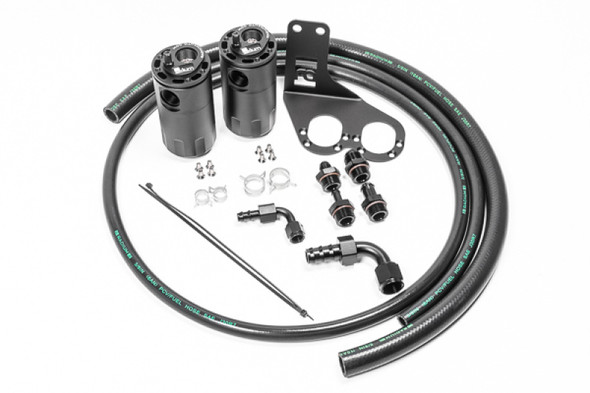

Radium Engineering 10-22 Lotus Evora Catch Can Kit - Fluid Lock - 20-0026-FL
Radium Engineering
MSRP: $419.95$398.95What vehicles is the Radium Engineering dual catch can kit compatible with?This dual catch can kit is specifically engineered for the Lotus Evora, MY2010 and up, ensuring a precise fitment for these models.How difficult is the installation of the Radium...MSRP: $419.95$398.95 -

Moroso 6in Diameter Single -16AN Inlet Aluminum Breather Tank Catch Can - 85754
Moroso
MSRP: $561.05$467.99Will this fit my car?Confirm fitment with your specific vehicle application to ensure proper integration and optimal performance of the oil catch can.How difficult is the installation?Professional installation is recommended for this oil catch can to...MSRP: $561.05$467.99 -
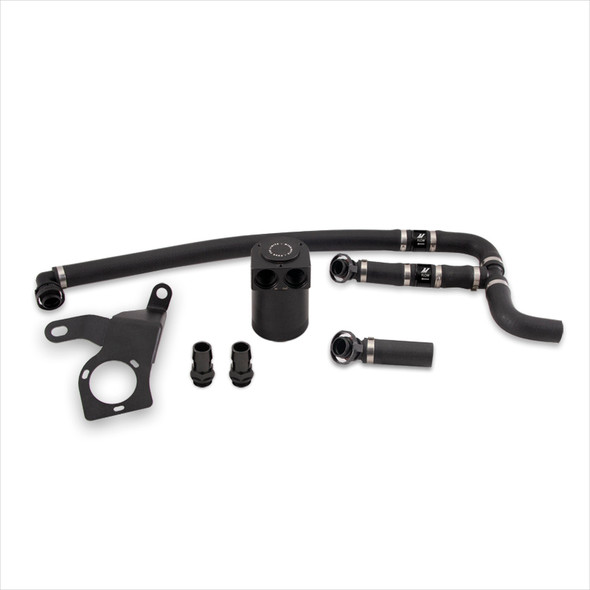

Mishimoto 18+ Audi B9 S4/S5 Baffled Oil Catch Can- PCV Side - MMBCC-S4-18PBE
Mishimoto
MSRP: $473.00$429.95Does the Mishimoto Baffled Oil Catch Can Kit fit my 2018-2021 Audi S4 or S5?Yes, this Mishimoto Baffled Oil Catch Can Kit is engineered as a direct fit for all 2018-2021 Audi S4 and S5 models.How difficult is the installation for the Mishimoto Baffled...MSRP: $473.00$429.95 -
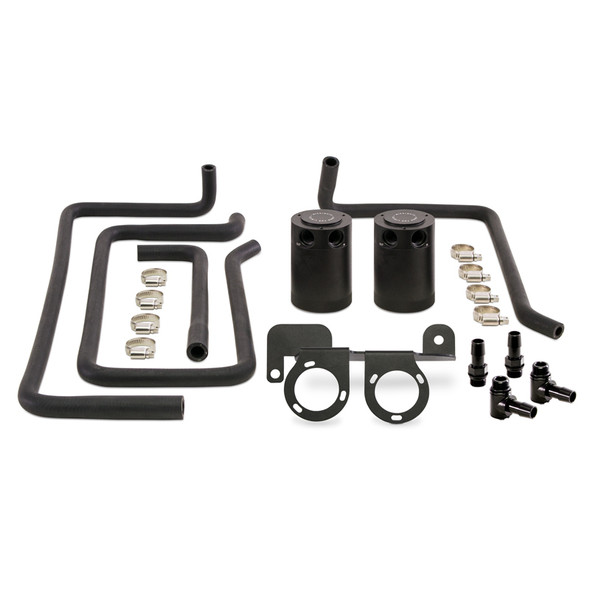
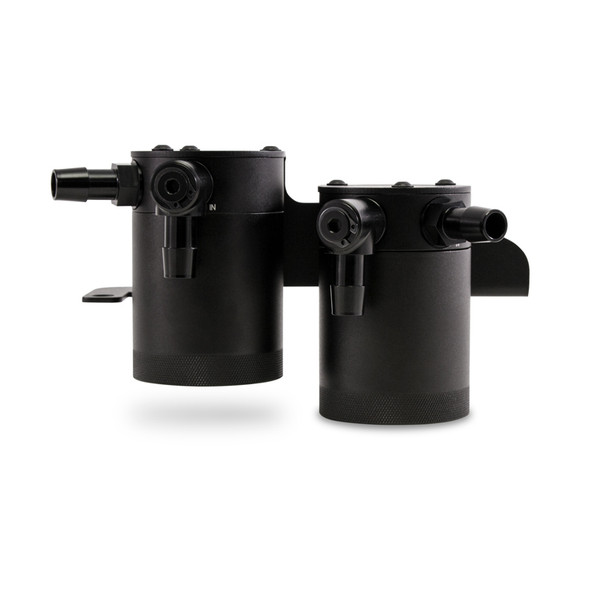
Mishimoto 07-13 Infiniti G37 Baffled Oil Catch Can Kit - MMBCC-G37-08PBE
Mishimoto
MSRP: $473.00$429.95What makes the Mishimoto Baffled Oil Catch Can Kit effective?The dual-can setup and highly engineered baffle maximize contaminant capture by separating oil and contaminants from blow-by gases.Is professional installation recommended for the Mishimoto...MSRP: $473.00$429.95 -
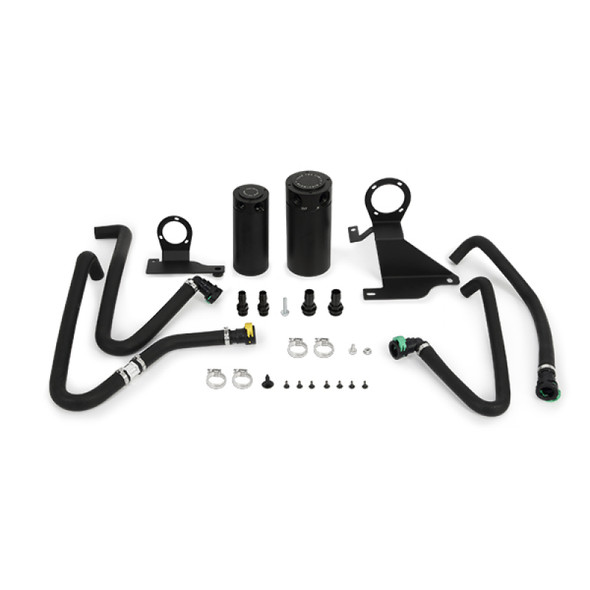

Mishimoto 11-14 Ford F-150 EcoBoost 3.5L Baffled Oil Catch Can Kit - Black - MMBCC-F35T-11SBE
Mishimoto
MSRP: $504.00$457.95Is this oil catch can kit compatible with my vehicle?Confirm vehicle fitment using Mishimoto's online tool to ensure proper installation and optimal performance of your oil catch can.How do I install the oil catch can kit?Professional installation is...MSRP: $504.00$457.95 -

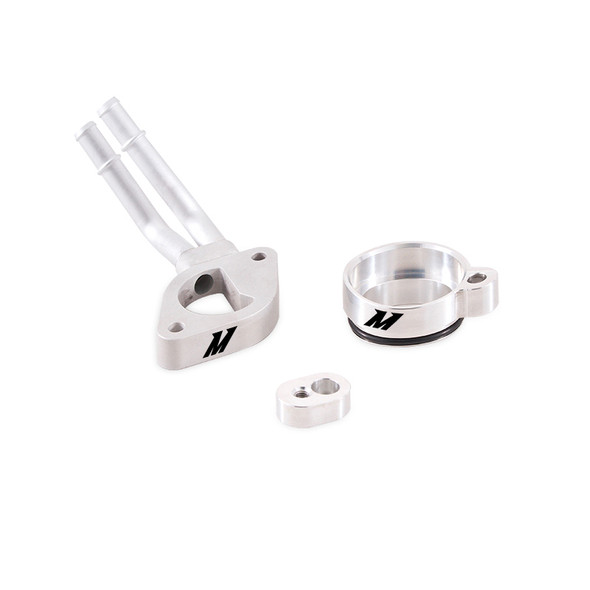
Mishimoto 2017+ Ford 6.7L Powerstroke Baffled Oil Catch Can Kit - MMBCC-F2D-17BE
Mishimoto
MSRP: $440.00$399.95How often do I need to service the Mishimoto Baffled Oil Catch Can Kit?Service your oil catch can kit every 5,000 miles or when the reservoir is full for optimal engine protection and longevity.Will this oil catch can kit affect my vehicle's...MSRP: $440.00$399.95 -
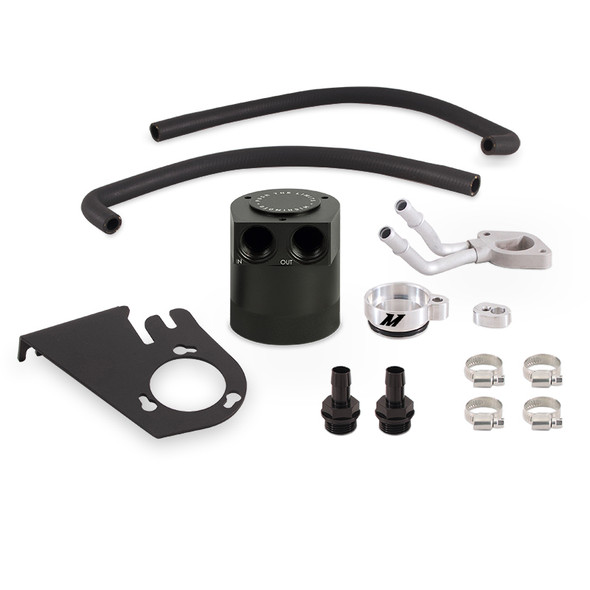

Mishimoto 11-16 Ford 6.7L Powerstroke Baffled Oil Catch Can Kit - MMBCC-F2D-11BE
Mishimoto
MSRP: $439.00$398.95How often should I drain my Mishimoto oil catch can?Drain the Mishimoto Baffled Oil Catch Can kit at least every 3,000 miles or when the can is half full for optimal performance.What is the capacity of the Mishimoto oil catch can?The Mishimoto Baffled...MSRP: $439.00$398.95 -
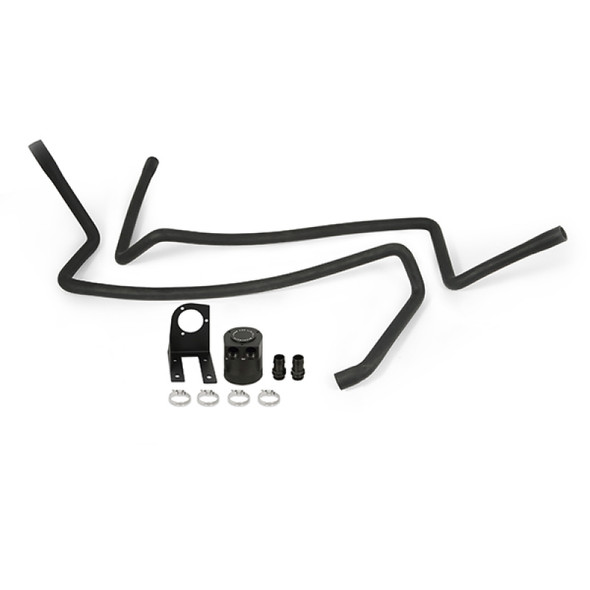

Mishimoto 03-07 Ford 6.0L Powerstroke Baffled Oil Catch Can Kit - MMBCC-F2D-03BE
Mishimoto
MSRP: $443.00$402.95Will this oil catch can fit my vehicle?Confirm your specific vehicle's fitment using our provided tool to ensure compatibility with this precisely engineered oil catch can kit.How difficult is the installation of an oil catch can?Achieve superior engine...MSRP: $443.00$402.95 -


Mishimoto 21-22 Ford Bronco 2.7L Baffled Oil Catch Can System - MMBCC-BR27-21S
Mishimoto
MSRP: $439.95$392.76Will this catch oil blow-by from my engine?The Mishimoto baffled oil catch can system is engineered to effectively capture raw technical phrase exactly as stated in description, protecting your engine.How difficult is this product to install?Professional...MSRP: $439.95$392.76 -

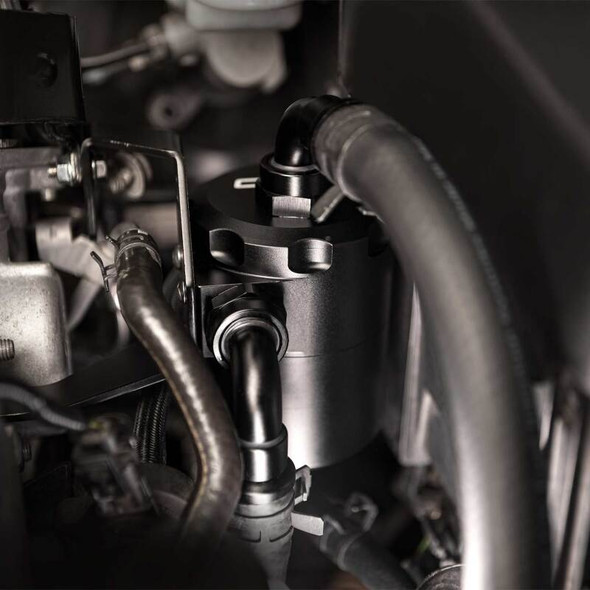
Cobb 13-18 Ford Focus ST Air Oil Separator - 891610
COBB
$430.00What is an oil catch can?An oil catch can captures oil and contaminants from engine blow-by, preventing them from re-entering your intake system for optimal performance.Do I need an oil catch can for my vehicle?Protecting your engine's intake from...$430.00
An oil catch can intercepts crankcase blow-by vapors between the PCV valve and intake manifold, preventing oil-laden mist from coating intake valves, throttle bodies, and intercooler cores — a critical engine protection upgrade on both forced-induction and naturally aspirated builds. Motor Sport Mayhem stocks 213 oil catch cans across 161 brands, ranging from entry-level separators at $1.19 to professional billet competition systems at $11,495.95, with an average price of $260.84.
Our Top Picks for Oil Catch Cans
Each of these products was hand-selected based on verified performance data, engineering quality, and proven real-world results across street, track, and competition builds.
ACL Race Series Main Bearings
ACL | $329.72
Tri-metal race bearing construction with extra oil clearance delivers reliable film thickness under high-load, high-temperature conditions where stock bearings fail.
- Extra oil clearance specification supports elevated oil flow demanded by high-boost and high-revving applications
ACT Pilot Bearing
ACT | $17.00
Precision-ground pilot bearing ensures correct input shaft alignment and eliminates wobble that accelerates clutch disc wear on performance drivetrain builds.
- Hardened race-grade steel construction outperforms OE bronze bushings under repeated high-torque engagement cycles
AON Clutch Components
Action Clutch | $89.69
A universal race pedal stop with adjustable engagement point gives drivers precise clutch modulation control — essential for consistent lap times and drag strip launches.
- Billet construction resists flex under repeated hard engagement, maintaining consistent pedal feel over a full race event
AEM Wiring Connectors
AEM | $430.95
K-type thermocouple kits give data acquisition systems accurate exhaust gas and fluid temperature readings across the full measurement range used in professional motorsport.
- Sealed, vibration-resistant connector design maintains signal integrity in high-heat, high-vibration race environments
AER Wiring Kits
Aeromotive | $358.52
A 60-amp deluxe fuel pump wiring kit with relay and fusing ensures stable, full-voltage delivery to high-demand fuel pumps — voltage drop is the leading cause of fuel pump premature failure on performance builds.
- Heavy-gauge wire and dedicated relay circuit protect pump longevity and maintain consistent fuel pressure under wide-open throttle
AFE PFADT Mount Set
aFe | $660.00
PFADT-engineered polyurethane transmission mounts eliminate driveline slop and reduce powertrain movement under hard acceleration, directly improving shift feel and drivetrain response.
- Dual-durometer polyurethane construction balances NVH isolation with the rigidity required for track and autocross use
ALF Wiring Harness
Air Lift | $97.23
A second-generation wireless air management wiring harness with plug-and-play integration eliminates improvised wiring that causes compressor failures and intermittent faults on air suspension systems.
- Pre-terminated, weather-sealed connectors ensure long-term reliability in underbody environments exposed to moisture and road debris
ABR CVT Belts
All Balls Racing | $200.40
High-tensile aramid-reinforced CVT belt construction handles peak torque loads in powersports applications where OE belts commonly slip or delaminate under hard acceleration.
- Compound rubber formulation maintains consistent clutch engagement angle across a wide operating temperature range, including cold-start desert conditions
ARX Tail Light Converters
AlphaRex | $395.00
LUXX-series full LED tail light assemblies replace factory incandescent units with significantly faster activation response time — a measurable safety improvement in race convoy and track environments.
- OE-grade weatherproof housing with UV-stable lens construction prevents hazing and moisture intrusion common on budget replacement lighting
PA Alta Crank Pulley
Alta | $129.20
A lightened crank pulley reduces rotating mass at the front of the engine, freeing measurable horsepower that would otherwise be consumed spinning a heavy OE unit.
- CNC-machined billet aluminum construction delivers consistent belt-drive geometry without the harmonic resonance issues found in cheap underdrive pulleys
How to Choose the Right Oil Catch Can
The single biggest separator between a quality oil catch can and a cheap decorative part is internal baffle design — a can without baffling simply sloshes oil-saturated vapor through and back into the intake, achieving nothing. Effective units use either stacked mesh baffles, a dividing wall with directional flow routing, or coalescing filter elements to force blow-by vapor to contact a large surface area, condense, and drop into the reservoir before clean air exits toward the intake. Material quality matters too: aluminum billet construction resists heat and chemical attack from acidic blow-by, while thin-wall steel or plastic units can warp, leak, or fail outright under sustained heat cycles. For forced induction applications, volume capacity and drain intervals become critical — a can sized for a naturally aspirated engine will overflow quickly on a turbocharged build producing aggressive blow-by at elevated boost.
Key Specifications
Reservoir volume directly determines how often you need to drain the can and whether it will overflow between service intervals. Street-driven daily vehicles typically generate less blow-by and can operate with smaller 150–300ml cans without issue. Track and competition builds, particularly those running forced induction or high-rpm naturally aspirated engines, should run larger 300–600ml cans or include a drain valve for quick evacuation at pit stops. Undersizing the reservoir is the most common installation mistake — when it overflows, it defeats the entire purpose of the system.
Inlet and outlet port sizing must match your crankcase ventilation hose diameter — mismatch here causes either restricted flow that builds crankcase pressure or loose connections that introduce unmetered air into the intake tract. Most passenger car and light truck applications use 5/8-inch to 3/4-inch hose, while high-displacement or forced induction engines may run larger diameter lines. Always verify port sizing before ordering, and budget for quality AN-fitting adapters or quality hose clamps if your application requires custom routing. A poorly sealed connection is worse than no catch can at all.
Filter element serviceability is often overlooked at purchase. Some baffled cans use replaceable polyester or stainless mesh elements that can be cleaned and reused; others are sealed units where the media degrades over time and cannot be serviced. For a long-term installation, a can with cleanable or replaceable internals is the correct choice — a clogged or oil-saturated filter element restricts crankcase ventilation and can build enough backpressure to push oil past valve cover gaskets or rear main seals. Check the manufacturer's recommended service interval and confirm replacement media is available before committing to a sealed-element design.
Mounting orientation and drain-back design separate purpose-built catch cans from generic separators. Units with check-valve-equipped drain fittings allow you to empty the reservoir without removing the can from the engine bay, which matters on track where time is limited. Some high-end units include sight glasses so you can monitor accumulation without opening the system. For builds where under-hood real estate is tight, low-profile or remote-mount designs with braided line routing offer the same separation efficiency in a more adaptable package — check our fittings section for compatible AN adapters when building a custom routing setup.
Oil Catch Can Sizing Reference by Application Type
| Application Type | Recommended Reservoir Volume | Inlet/Outlet Port Size | Recommended Service Interval |
|---|---|---|---|
| Naturally Aspirated Street / Daily | 150–250 ml | 5/8" – 3/4" | Every 5,000–7,500 miles |
| Forced Induction Street | 300–450 ml | 3/4" – 1" | Every 3,000–5,000 miles |
| Track Day / Autocross (N/A) | 250–350 ml | 5/8" – 3/4" | Every event or 2–3 track days |
| Track Day / Autocross (Forced Induction) | 400–600 ml | 3/4" – 1" | Every event — drain before each session |
| Drag Racing (High-Boost) | 500–800 ml with drain valve | 1" – 1-1/4" | Every race day — inspect element each visit |
| Direct Injection Engine (Street/Track) | 300–500 ml — dual-port setup recommended | 5/8" – 3/4" per port | Every 3,000 miles — DI engines produce elevated blow-by |
Price Guide
Entry ($1.19–$130): This tier covers basic single-chamber separators, replacement fittings, hose adapters, and simple unbaffled cans that offer a degree of separation for low-demand naturally aspirated street applications. Honest assessment: an unbaffled can with no internal media will catch some oil, but separation efficiency is significantly lower than baffled designs. Appropriate for mild builds where any reduction in intake contamination is an improvement over no can at all.
Mid-range ($130–$600): This is where the majority of enthusiasts correctly land — baffled aluminum cans with serviceable filter elements, proper port sizing, integrated sight glasses, and drain valves are all available in this range. Separation efficiency climbs dramatically, and build quality is sufficient for sustained track and competition use. Most street performance and track-day builds are fully served by this tier, and the step up from entry-level to mid-range is the most impactful upgrade you can make in this category.
Premium ($600–$11,495.95): Professional race-spec systems built for endurance competition, dedicated race vehicles, and applications where zero tolerance for intake contamination exists over extended run times. Expect CNC-machined billet aircraft aluminum, welded AN fittings, integrated pressure relief, multi-stage coalescing elements, and optional data integration. The top end of this range covers full crankcase evacuation systems used in purpose-built race engines where conventional PCV systems are eliminated entirely. For a street or occasional track car, the mid-range is sufficient — this tier is for builds where reliability over race distance is the primary engineering concern.
Who Is This For?
Oil catch cans serve a broad spectrum of builds — from commuter cars protecting long-term engine health to purpose-built race engines where intake contamination is a zero-tolerance issue — and the usage data reflects that range clearly.
Engine Performance — 8.5/10
With 185 products scoring an average of 8.5 out of 10 for engine performance relevance, this is the category's strongest use case — and for good reason. Crankcase blow-by contamination of intake valves, particularly on direct injection engines where port wash no longer cleans valve deposits, is a documented cause of power loss, rough idle, and premature valve failure. A properly sized, baffled catch can directly protects combustion quality and long-term engine output. This is the primary technical justification for the category, and the scores reflect it.
Racing Competition — 8.2/10
At 8.2 out of 10 across 191 products, competition use scores identically with track and drag applications, confirming that catch cans are genuinely cross-discipline race equipment. In competition, engine reliability over race distance is as important as peak power, and oil contamination of the intake tract is an insidious failure mode that builds gradually between maintenance intervals. Most sanctioning bodies and technical regulations for endurance and circuit events now either require or strongly recommend crankcase evacuation systems — a catch can is the most practical compliance solution.
Track / Autocross — 8.2/10
The 8.2/10 score across 181 products for track and autocross use reflects the reality that high-g cornering loads cause oil to surge in the crankcase, dramatically increasing blow-by volume compared to straight-line street driving. A can that is adequately sized for street use will fill much faster during an autocross or track session. This application demands both adequate reservoir volume and a can that handles elevated blow-by rates without restricting crankcase ventilation — undersized units can build crankcase pressure that forces oil past seals during hard cornering.
Street Performance — 7.6/10
The 7.6/10 score across 196 products positions street performance as a strong but secondary use case — appropriate, because street-driven engines generate less blow-by volume and see fewer sustained high-load events than dedicated track hardware. That said, forced induction street builds and high-mileage engines benefit significantly from catch can protection, particularly at extended oil change intervals. For any direct injection engine used on the street, a catch can is one of the most cost-effective long-term engine protection investments available.
Drag Racing — 8.2/10
Drag racing scores 8.2/10 across 147 products, driven by the extreme crankcase pressure spikes that occur during full-throttle high-boost passes — conditions that push blow-by volumes far beyond what any street-spec PCV system is designed to handle. High-boost drag builds often route catch can outlets to atmosphere (where regulations permit) rather than back to the intake, completely eliminating blow-by contamination of the charge air path. At this level, catch can capacity and flow rate are engineering specifications, not afterthoughts.
Trusted Oil Catch Can Brands We Carry
The brands that consistently lead in this category earn their position through engineering depth, not just marketing — and across our catalog of 161 brands, several stand out for specific technical reasons. Mishimoto has built a strong reputation for well-baffled, application-specific catch can kits with quality aluminum construction and integrated check valves. Moroso brings decades of professional race shop experience to their catch can and crankcase evacuation systems, with designs validated in NASCAR and drag racing applications. Radium Engineering sets the benchmark for CNC-machined billet precision with modular port configurations and cleanable polyester filter elements that make service straightforward. Perrin Performance produces well-engineered catch cans purpose-built for the specific PCV routing of popular forced induction platforms, eliminating the guesswork of universal fitment. Crawford Performance focuses on high-volume crankcase management for heavily modified engines where standard PCV capacity is genuinely insufficient. Across all these brands, the common thread is real-world validation — these are products that have been tested on running engines under load, not just sized theoretically.
Frequently Asked Questions
Do oil catch cans actually work, or are they just show parts?
A properly baffled catch can with a quality coalescing element genuinely works — this is not disputed in engineering circles. Independent testing on direct injection engines consistently shows measurable accumulation of oil and fuel vapors in the reservoir after normal driving intervals, confirming that the PCV system is routing contaminated vapor toward the intake without interception. The catch can separates that contamination before it reaches the throttle body and intake valves. The caveat is that unbaffled, empty cans with no internal media have very low separation efficiency — they look the part but do little. Spend the money on a baffled design with a real filter element, and the system works as advertised.
Are ACL race bearings any good, and are they coated?
ACL race bearings are among the most widely used aftermarket engine bearings in professional motorsport, which is the clearest endorsement possible — they wouldn't survive in that environment if they didn't perform. The Race Series line uses a tri-metal construction with an aluminum-tin overlay on a copper-lead intermediate layer bonded to a steel back, providing a hard-wearing surface with genuine conformability to shaft geometry. The extra oil clearance specification is a deliberate engineering choice that maintains hydrodynamic film thickness at elevated temperatures and under the higher oil viscosities used in performance applications. Certain ACL Race Series bearings include a polymer or PTFE-based overlay coating, but this varies by application — check the specific part listing, as the standard Race Series and coated variants have different clearance recommendations.
Are ACL or King bearings better for a performance build?
Both ACL and King Engine Bearings are legitimate race-grade products used in professional competition, and the honest answer is that the better choice depends on the specific application and your clearance targets. King bearings are particularly well-regarded for their pMaxKote polymer coating, which provides exceptional break-in protection and tolerance for momentary oil film interruption — a real advantage in high-revving builds where oil delivery timing is critical. ACL's strength is in application breadth and the extra-clearance variants that suit forced induction and high-temperature builds where tighter OE clearances would cause oil film breakdown. In practice, engine builders tend to have strong preferences based on direct experience with specific platforms, and either brand is a significant step above OE replacement bearings for any performance application.
Are aftermarket head gaskets better than OEM for performance applications?
For a stock-power, unmodified engine, a quality OEM replacement head gasket is entirely appropriate — the OE design was engineered for that specific combustion pressure and temperature range. However, once you increase boost, compression ratio, or power output beyond OE parameters, the OE head gasket's sealing capacity becomes a limiting factor. Aftermarket performance head gaskets from brands like Cometic offer multi-layer steel construction with controlled stopper height, allowing builders to tune the compressed thickness to achieve a specific target compression ratio while maintaining sealing integrity at elevated cylinder pressures. The fire ring design and surface finish requirements of aftermarket MLS gaskets are more demanding than OE composite units — they require a properly decked block and head surface finish of 50–80 Ra microinches to seal correctly, so the head gasket upgrade must be paired with correct machine work.
Are aftermarket ignition coils worth the upgrade on a performance build?
On a stock or mildly modified engine, OE-specification replacement coils are sufficient — there is no combustion benefit to exceeding the factory ignition energy at stock air-fuel ratios and timing. The case for aftermarket ignition coils becomes technically valid when cylinder pressure increases through forced induction or high compression, because the ionization voltage required to fire a spark plug across a compressed charge air column rises significantly with boost and compression ratio. A coil that delivers adequate spark energy at 1 bar cylinder pressure may misfire at 2+ bar, causing lean stumbles, detonation risk, and fouled plugs. Quality aftermarket coils with higher peak output and faster charge times also improve combustion consistency at high RPM, where OE coils can run out of saturation time between firing events — this translates directly to more complete combustion and measurable power gains on aggressive cam profiles and high-rpm builds.
Building something specific? Our performance specialists can help you select the right Oil Catch Cans for your application — street, track, or full race build.