
Head Gaskets
- Product
- Qty in Cart
- Quantity
- Price
- Subtotal
-
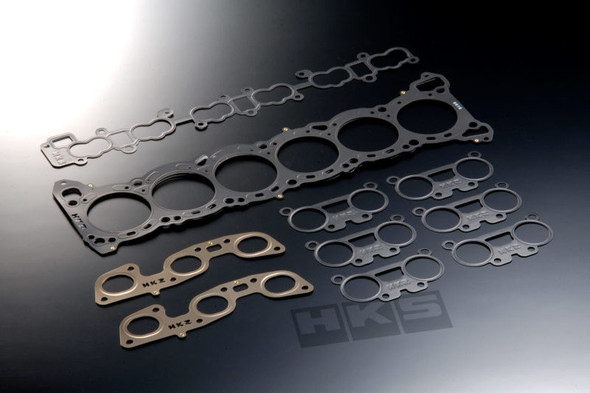
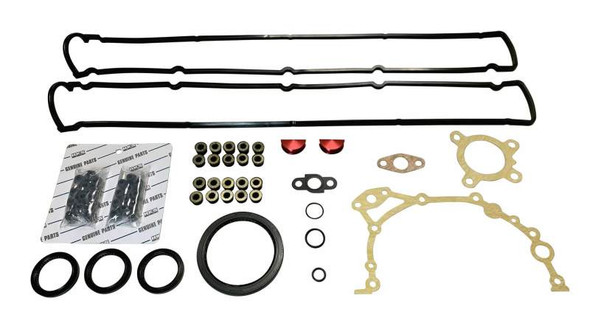
HKS 1.6mm HGK Engine Overhaul RB26 Stopper Head Gasket Kit - 23009-AN012
HKS
$730.00What is the typical lifespan of an HKS head gasket?HKS head gaskets are engineered for enhanced engine reliability and longevity, providing exceptional durability under extreme conditions.Are HKS...$730.00 -

MAHLE Original Ford F-250 Super Duty 10-08 Head Set - HS54657
Victor Reinz
$775.34Are head gaskets a wear item?Head gaskets are critical engine components that can degrade over time due to heat and pressure, necessitating timely replacement.Do I need to replace my cylinder head...$775.34
A head gasket is the most critically loaded static seal in any internal combustion engine, responsible for containing cylinder pressure, coolant, and oil across the joint between block and head under extreme thermal cycling and mechanical load. Motor Sport Mayhem stocks 409 head gaskets spanning 161 brands — from affordable OEM-replacement composite units to race-spec multi-layer steel and copper gaskets engineered for high-boost, high-compression builds where stock sealing solutions simply fail.
Our Top Picks for Head Gaskets
Every product below was selected based on documented performance in demanding applications, verified sealing reliability, and measurable value against competing options at the same price point.
ACL Race Series Main Bearings
ACL | $329.72
Tri-metal bearing construction with tighter-than-OEM oil clearance tolerances delivers measurably better film strength under sustained high-load operation.
- Extra oil clearance variant accommodates high-viscosity racing lubricants and maintains hydrodynamic film at elevated cylinder pressures
ACT Pilot Bearing
ACT | $17.00
Precision-ground pilot bearing ensures true input shaft alignment during high-RPM engagement, protecting the engine's lower end from secondary harmonic loads.
- Hardened steel race construction resists deformation under the repeated shock loading common in motorsport clutch applications
AON Clutch Components
Action Clutch | $89.69
Adjustable pedal stop controls clutch travel to a repeatable engagement point, reducing driver fatigue and protecting drivetrain components from over-release damage.
- Universal fitment and CNC-machined construction make this a practical upgrade for any performance clutch system installation
AEM Wiring Connectors
AEM | $430.95
K-type thermocouple inputs allow direct exhaust gas and coolant temperature monitoring at the data logger, critical for detecting early head gasket failure signatures before catastrophic damage occurs.
- Four-pack configuration supports full cylinder-bank thermal mapping for precision tuning on turbocharged and high-compression applications
AER Wiring Kits
Aeromotive | $358.52
A properly wired high-flow fuel pump is essential to maintaining the fuel delivery consistency that prevents lean conditions — one of the most common root causes of head gasket failure under boost.
- 60A relay-based circuit handles sustained current draw from high-output pumps without voltage drop that degrades injector pulse width accuracy
AFE PFADT Mount Set
aFe | $660.00
Solid subframe mounting reduces chassis flex that can induce block-to-head micro-movement under hard acceleration, protecting the head gasket sealing surface from cyclical mechanical distortion.
- Polyurethane compound chosen for optimal durometer balance between NVH isolation and structural rigidity in track and street applications
ALF Wiring Harness
Air Lift | $97.23
Second-generation wireless compressor harness delivers clean, interference-free control signals critical for maintaining consistent system operation in electrically noisy engine bay environments.
- Pre-terminated, sheathed construction eliminates the improvised wiring that creates voltage irregularities affecting sensor accuracy near the engine
ABR CVT Belts
All Balls Racing | $200.40
High-temp aramid fiber CVT belt construction withstands the heat cycling that destroys OEM rubber belts in high-output powersport applications.
- Precision-molded cog profile maintains correct sheave engagement angle under full load, preventing the belt slip that generates destructive heat in the CVT housing
ARX Tail Light Converters
AlphaRex | $395.00
Full LED sequential tail light assemblies provide vastly superior reaction-time lighting performance over incandescent OEM units while drawing significantly less current from the charging system.
- Direct-fit housing eliminates wiring adapter complexity and maintains factory connector integrity for long-term reliability
PA Alta Crank Pulley
Alta | $129.20
A lightened crank pulley reduces rotational inertia at the front of the engine, freeing up measurable power while also reducing torsional stress on the front seal and timing components.
- CNC-machined from billet aluminum to OEM-specification runout tolerances, preventing the harmonic imbalance that accelerates front main seal and head gasket degradation
How to Choose the Right Head Gaskets
The head gasket fails when clamping load, sealing material, and surface finish can no longer contain cylinder pressure and thermal expansion differentials simultaneously — understanding which of these variables is your limiting factor determines which gasket type you actually need. Composite gaskets use a graphite or fiber core with steel eyelets at combustion openings; they conform well to imperfect surfaces but compress permanently and cannot be reused, making them a viable OEM-replacement option under stock or near-stock power levels. Multi-layer steel (MLS) gaskets use two to five embossed stainless steel layers that spring back under load cycles, maintaining seam pressure across the thermal range of a modified engine — this is the standard choice for forced induction, high-compression, or high-RPM applications. Copper head gaskets offer the highest conformability and can be re-annealed and reused, making them the choice for all-out race engines where the head comes off frequently, but they require a near-perfect surface finish (typically 60 Ra or finer) to seal correctly.
Key Specifications
Bore size and compressed thickness are the two most critical dimensions. Bore size must match your actual cylinder bore — using a gasket with too small a fire ring exposes the gasket edge to direct combustion gas erosion. Compressed thickness determines your final compression ratio; increasing thickness reduces compression, which matters when you are lowering CR to accommodate boost. Most MLS gaskets are available in multiple thicknesses, typically ranging from around 0.027 inches to 0.051 inches compressed, allowing you to fine-tune static compression ratio during assembly.
Stud vs. bolt installation matters more than most builders acknowledge. Head bolts stretch and yield during torquing, generating inconsistent clamping load across the head — this is why high-output builds use ARP head studs, which apply consistent clamping force and allow precise torque-to-yield control. A premium MLS gasket paired with stock head bolts will underperform the same gasket with proper hardware. Always factor fastener quality into your gasket selection decision.
Surface finish on both the block deck and cylinder head is a non-negotiable requirement for MLS gasket performance. The industry standard for MLS requires a surface finish of 50–125 Ra (roughness average) microinches; copper requires 60 Ra or better. Composite gaskets are more tolerant, typically sealing on surfaces up to 250 Ra. If your block or head has not been freshly machined, measure or at minimum visually inspect the deck surface before selecting gasket type — a composite gasket on a warped or pitted surface will seal better than an MLS that has no conformability to fill surface irregularities.
Coolant port and oil passage configuration must match your specific application. Aftermarket gaskets occasionally delete or resize coolant passages to increase water jacket flow or reduce gasket land width — this can improve cooling but requires confirming that the modified port layout is compatible with your block's water jacket layout. Always cross-reference the gasket fire ring diameter, coolant ports, and oil passages against your block deck before purchase, especially when sourcing gaskets for stroked or bored engines that differ from the published displacement specification the gasket was catalogued under.
Head Gasket Material Selection by Application
| Application Type | Recommended Material | Typical Cylinder Pressure | Surface Finish Required |
|---|---|---|---|
| Stock replacement / mild street | Composite (graphite/fiber) | Up to ~1,100 psi | 125–250 Ra microinches |
| Naturally aspirated performance (up to 13:1 CR) | MLS 2–3 layer | 1,100–1,500 psi | 50–125 Ra microinches |
| Forced induction street/track (up to 25 psi boost) | MLS 3–5 layer | 1,500–2,200 psi | 50–100 Ra microinches |
| High-boost competition (25+ psi) | MLS 5-layer or copper | 2,200–3,000+ psi | 60 Ra or finer |
| All-out race / frequent disassembly | Copper (re-annealable) | 3,000+ psi | 60 Ra or finer |
| Diesel high-compression | Solid copper or heavy MLS | 2,500–4,000 psi | 60–80 Ra microinches |
Price Guide
Entry ($1.19–$130): This range covers OEM-equivalent composite and basic MLS replacement gaskets suited to stock or mildly modified engines where you are restoring a failed seal rather than upgrading sealing capacity. Quality control varies significantly at this price point — known brands with documented OEM supplier relationships are worth the modest premium over generic catalog options.
Mid-range ($130–$500): The majority of performance enthusiasts land here, where brand-name MLS gaskets with documented bore, thickness, and layer specifications are widely available. This is the appropriate range for any forced induction or high-compression build — the material and manufacturing precision step up meaningfully from entry-level options, and head stud compatibility is typically confirmed and documented.
Premium ($500–$11,495.95): Premium pricing covers complete head sealing kits, application-specific copper gaskets with custom bore dimensions, and multi-component packages that include head gasket, head bolts or studs, and supplementary seals as a verified system. Racers who pull heads frequently, builders chasing cylinder-pressure records, or those requiring custom bore sizes for heavily machined blocks are the legitimate buyers at this tier — the cost is justified by confirmed sealing at extreme pressure levels and the ability to service and reuse components across multiple rebuilds.
Who Is This For?
Head gaskets are required any time a cylinder head is removed or a higher-performance sealing solution is needed — the application determines which material, layer count, and thickness specification is appropriate.
Engine Performance — 8.5/10
Head gaskets score highest in the engine performance category because the sealing joint between block and head is a direct limiting factor on how much cylinder pressure — and therefore power — an engine can sustain. An upgraded MLS gasket is frequently the first internal engine component a builder specifies when moving to forced induction or increasing compression ratio. The 8.5 score reflects how directly this component enables performance gains that other modifications target.
Racing Competition — 8.2/10
In competition environments, head gasket failure is a race-ending event with no recovery — the 8.2 score reflects that seriousness. Race-spec gaskets are typically specified to a known safety margin above the peak cylinder pressure the tuner is targeting, not just to match it. The ability to reuse copper gaskets across multiple engine refreshes also makes them economically sensible for teams pulling engines on a regular service interval.
Track / Autocross — 8.2/10
Track and autocross applications generate sustained high-load thermal cycles that OEM composite gaskets were not designed for — repeated heat soaking and cooling accelerates their compression set and degradation. Drivers running track days on modified engines consistently report MLS upgrades as among the most reliable investments for long-term durability at the track, particularly where coolant temperature management through the cooling system may be marginal under extended sessions.
Drag Racing — 8.2/10
Drag racing subjects head gaskets to the most violent and brief cylinder pressure spikes in motorsport — a full-throttle pass generates peak cylinder pressures that can exceed anything a street or road course engine encounters. The combination of extreme boost, aggressive ignition timing, and high compression ratio in purpose-built drag engines makes gasket selection and head clamping load the difference between a consistent performer and an engine that walks a gasket after a handful of passes.
Street Performance — 7.6/10
Street performance applications score slightly lower not because gasket quality matters less, but because the continuous duty cycle of street driving — frequent cold starts, variable load, longer idle periods — places different demands on sealing materials than pure race use. MLS gaskets are still the preferred upgrade for any modified street engine, but the thermal management requirements are generally less extreme, and a quality mid-range MLS gasket is appropriate for the majority of street performance builds without needing race-level copper or maximum-layer-count specifications.
Trusted Head Gaskets Brands We Carry
Cometic Gasket has built its reputation on application-specific MLS offerings with documented bore sizes, layer counts, and compressed thicknesses, making them a go-to for builders who need confirmed specifications rather than catalog approximations. GSC Power Division focuses on high-output Asian performance engines with gasket and valvetrain solutions developed directly from endurance racing and time-attack programs. Brian Crower approaches sealing as part of a complete bottom-end and top-end solution, with gasket selections matched to their camshaft and valvetrain specifications for validated system compatibility. Wiseco's gasket offerings complement their piston programs, ensuring bore-to-gasket fire ring alignment is confirmed at the engineering level rather than left to the builder to verify independently. ACL brings tri-metal and polymer bearing expertise that cross-pollinates into their approach to engine sealing tolerances, and Gates — known for timing belt and water pump system engineering — rounds out the category with cooling system sealing components that must work in concert with the head gasket under thermal load. These brands collectively represent decades of race-verified engine sealing development across every major performance platform.
Frequently Asked Questions
Are aftermarket head gaskets good?
Aftermarket head gaskets from established performance brands are not only good — for modified applications they are measurably better than OEM. OEM composite gaskets are engineered to seal at stock cylinder pressure with stock clamping hardware; as soon as you increase compression ratio, add forced induction, or increase power output, you exceed the design envelope of the original equipment seal. Purpose-built MLS and copper aftermarket gaskets use superior materials, tighter manufacturing tolerances, and application-specific bore dimensions that allow them to maintain a reliable seal at cylinder pressures the OEM gasket would walk within a few heat cycles. The critical variable is buying from a brand with documented specifications and a track record in your specific application — a no-name gasket at a fraction of the price of a known brand is not a bargain when it fails at the track.
Are ACL race bearings any good?
ACL Race Series bearings are among the most thoroughly validated performance bearings in the aftermarket, with documented use in professional motorsport across multiple series. The tri-metal construction — steel backing, copper-lead or aluminum intermediate layer, and a thin babbitt overlay — provides a combination of load capacity and conformability that OEM bearings typically sacrifice one for the other. ACL's extra oil clearance variants are specifically engineered for high-viscosity racing oils that require a larger hydrodynamic wedge to maintain film thickness under sustained load. For any engine build targeting sustained high RPM or high cylinder pressure, ACL bearings represent a genuine engineering upgrade over stock replacement bearings, not merely a brand preference.
Are ACL race bearings coated?
ACL Race Series bearings use a multi-layer metallic construction rather than the polymer or DLC coatings seen on some competing products, though specific variants do incorporate a thin babbitt overlay that provides break-in conformability and protection during the initial run-in period before a full oil film establishes. The tri-metal design is inherently self-lubricating during momentary oil film breakdown in a way that single-material bearings are not. Some ACL race variants intended for extreme applications incorporate additional surface treatments on the overlay material; the best source for current coating specifications on a specific part number is the ACL technical data sheet rather than general catalog descriptions, as the product line is updated periodically.
Are ACL race series bearings good for high-boost builds?
ACL Race Series bearings are specifically designed to handle the elevated main and rod loads that accompany high-boost operation, where cylinder pressure spikes translate directly into bearing load through the connecting rod and crankshaft. The extra oil clearance variants are the appropriate choice for high-boost engines running oil viscosities above the OEM specification, as the additional clearance maintains adequate film thickness across the operating temperature range. Proper installation — correct crush, verified oil clearance with Plastigage, and an appropriate break-in procedure — is as important as the bearing specification itself; even the best bearing fails quickly if installed with incorrect clearance or in a block with inadequate oil delivery to the galleries.
Are aftermarket ignition coils okay for performance use?
Aftermarket ignition coils from performance-focused manufacturers deliver meaningfully higher peak voltage and faster saturation times than OEM coils, both of which directly affect spark energy and combustion efficiency — particularly at high RPM where dwell time is compressed and fuel mixtures are enriched for power. On modified engines running wider plug gaps, higher cylinder pressure, or alcohol-blended fuels, OEM coils frequently cannot deliver sufficient voltage to fire the plug reliably under all conditions, resulting in misfires that show up as power loss and can cause lean cylinder events damaging to pistons and head gaskets. Quality aftermarket coils from brands with documented output specifications are a legitimate performance and reliability upgrade on any engine that has been modified beyond stock ignition system design parameters. The key is selecting coils with confirmed compatibility with your ECU's coil driver output — mismatched coils can damage ignition drivers or produce inconsistent firing.
Building something specific? Our performance specialists can help you select the right Head Gaskets for your application — street, track, or full race build.