
Connecting Rods - 4Cyl
- Product
- Qty in Cart
- Quantity
- Price
- Subtotal
-
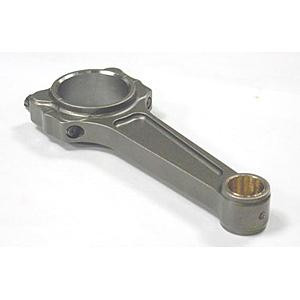
Brian Crower Connecting Rods - Nissan SR20DET - 5.366 - BC625+ w/ARP Custom Age 625+ Fasteners - BC6208
Brian Crower
$980.70What is the length of the Brian Crower 4Cyl Connecting Rods?Brian Crower Connecting Rods - Nissan SR20DET measure 5.366 inches, ensuring precise fitment for optimal engine performance.Are Brian Crower 4Cyl Connecting Rods suitable for all SR20DET...$980.70 -

Brian Crower Connecting Rods - Honda/Acura K24A - 5.985 - BC625+ w/ARP Custom Age 625+ Fasteners - BC6045
Brian Crower
$980.70What is the difference between H-beam and I-beam connecting rods?H-beam rods offer superior strength for extreme loads compared to I-beam designs, making them ideal for high-performance engines.Do I need special tools to install connecting...$980.70
Four-cylinder connecting rods are the critical link between piston and crankshaft, and the wrong rod — wrong material, wrong geometry, wrong tolerance — is the single most common cause of catastrophic engine failure under boost or high RPM load. Motor Sport Mayhem stocks 102 in-stock 4Cyl connecting rods from the industry's most trusted forged and billet manufacturers, covering everything from mild street builds to all-out drag and circuit race engines.
Our Top Picks for Connecting Rods - 4Cyl
Every product below was hand-selected by our engine build specialists based on proven performance, material quality, and real-world results across street and competition applications.
ACL Race Series Main Bearings
ACL | $329.72
Tri-metal bearing construction with extra oil clearance engineered specifically for high-output forced-induction four-cylinder applications.
- Extra oil clearance specification provides improved hydrodynamic film thickness under sustained high-load conditions
ACT Pilot Bearing
ACT | $17.00
Precision-ground pilot bearing designed to maintain concentricity between input shaft and crankshaft under aggressive clutch engagement cycles.
- Essential replacement component during any performance clutch or flywheel upgrade to eliminate vibration and premature wear
AON Clutch Components
Action Clutch | $89.69
Universal race pedal stop engineered to provide consistent clutch bite point repeatability critical in high-RPM four-cylinder race applications.
- Adjustable stop eliminates pedal over-travel and reduces drivetrain shock load during aggressive launches
AEM Wiring Connectors
AEM | $430.95
K-type thermocouple kit delivers precision thermal data acquisition necessary for monitoring engine bay and exhaust temperatures in performance four-cylinder builds.
- Multi-channel setup allows simultaneous monitoring of cylinder head, oil, and intake temps to protect high-output engines
AER Wiring Kits
Aeromotive | $358.52
Deluxe 60-amp fuel pump wiring kit eliminates voltage drop across the fuel circuit — a critical upgrade when running high-flow pumps that feed demanding four-cylinder performance engines.
- Relay-based design ensures the pump receives full battery voltage regardless of chassis wiring condition or load
AFE PFADT Mount Set
aFe | $660.00
Polyurethane transmission mount set engineered to reduce powertrain movement and improve shift feel in track and performance street applications.
- Stiffer durometer rating over OEM reduces drivetrain flex that robs power and creates inconsistent clutch engagement
ALF Wiring Harness
Air Lift | $97.23
Second-generation wireless air management harness providing clean, routed electrical integration for air suspension systems on performance builds.
- Pre-terminated, color-coded connections eliminate wiring errors and reduce install time significantly over custom harness fabrication
ABR CVT Belts
All Balls Racing | $200.40
High-tensile CVT drive belt engineered for consistent power transfer under the thermal and mechanical stress of performance four-cylinder powersport applications.
- Aramid fiber cord construction resists stretch and heat degradation far longer than OEM replacement belts
ARX Tail Light Converters
AlphaRex | $395.00
LUXX Series LED tail lights deliver plug-and-play lighting upgrades with substantially reduced current draw compared to OEM incandescent assemblies.
- Direct-fit OEM-style harness connection eliminates the need for load resistors or relay modification in most applications
PA Alta Crank Pulley
Alta | $129.20
Lightened crank pulley reduces rotational inertia at the front of the engine, freeing up measurable horsepower that would otherwise be consumed spinning an oversized OEM unit.
- Machined from billet aluminum to tight tolerances for zero runout and reliable belt tracking at sustained high RPM
How to Choose the Right Connecting Rods - 4Cyl
The connecting rod is one of the highest-stress components in any reciprocating engine — it must withstand tension on the power stroke, compression on every other stroke, and rotational bending loads at every point in the RPM range. Failure modes are unforgiving: a rod that lets go at 8,000 RPM under boost doesn't just break — it destroys the block, the crankshaft, and everything attached to them. Choosing correctly means understanding material properties, beam geometry, bearing clearance requirements, and bolt specification — not just matching a part number to an application.
Key Specifications
Material is the first and most critical decision. OEM connecting rods are typically cast or powdered metal, adequate for factory power levels but not for significant power increases. Forged 4340 chromoly steel is the baseline for any serious performance application — it offers a favorable strength-to-weight ratio, resists crack propagation under cyclic fatigue, and can be heat-treated to precise tensile strength targets. Billet 4340 goes a step further by starting from a single solid piece with consistent grain structure throughout, making it the choice for extreme horsepower and RPM applications where forging flash lines or inclusions would be unacceptable. Some specialty manufacturers also offer titanium rods for applications where rotating mass reduction justifies the significant cost premium.
Beam geometry — H-beam versus I-beam — is the second major decision and is genuinely application-dependent, not just a marketing distinction. I-beam rods excel under tension loads and are typically lighter for a given strength rating, making them well-suited to high-RPM naturally aspirated engines where tensile stress dominates. H-beam rods handle compressive loads better due to their wider cross-section, which is why they dominate turbocharged and supercharged four-cylinder applications where combustion pressure spikes are extreme. Center-to-center length must match your stroke and piston pin height combination precisely — an error here changes compression ratio, alters piston dwell at TDC, and affects the rod-to-stroke ratio that governs side loading on cylinder walls.
Rod bolt specification is frequently overlooked and is responsible for a disproportionate number of failures. The rod bolt holds the big-end cap under tension — if it stretches, yields, or fatigues, the bearing shell loses crush and the rod can spin or separate. ARP hardware dominates this segment because of their proprietary alloy and controlled manufacturing process, and for any engine making serious power, upgrading to performance rod bolts is non-negotiable even if the rods themselves are adequate. Torque-to-yield versus angle-torque installation procedures must be followed exactly — these are not components where close enough is acceptable.
Bearing clearance — the oil film gap between the rod journal and the bearing shell — is what separates an engine that runs clean for 100,000 miles from one that spins a bearing at 50 hours. Stock clearances are typically 0.001"–0.0015" for a street engine. Performance and race applications often run tighter clearances on the mains and slightly looser clearances on the rod bearings to ensure adequate oil film under the higher loads and temperatures of sustained performance driving. Always measure actual clearances with Plastigauge or a bore micrometer during assembly — catalog specifications are starting points, not final answers for a built engine.
4-Cylinder Connecting Rod Material vs. Application Reference
| Application / Power Level | Recommended Material | Beam Profile | Rod Bolt Spec |
|---|---|---|---|
| Street / Mild Tune (up to ~250whp) | OEM cast or powdered metal | Stock profile | OEM specification |
| Street Performance (250–350whp) | Forged 4340 chromoly | I-beam or H-beam | ARP 8740 or equivalent |
| Boosted Street / Light Track (350–500whp) | Forged 4340 chromoly | H-beam preferred | ARP 2000 series |
| Competition Track / Time Attack (500–700whp) | Forged 4340 or billet 4340 | H-beam | ARP 2000 or L19 series |
| Drag Racing (700–1000+whp) | Billet 4340 chromoly | H-beam heavy duty | ARP L19 or Custom Age 625+ |
| Extreme / Pro-Level (1000+whp) | Billet 4340 or Titanium | Application-specific | Custom Age 625+ or equivalent |
Price Guide
Entry ($1.19–$130): This range covers bearing sets, hardware components, individual fasteners, and ancillary engine components rather than complete connecting rod assemblies. These are the supporting parts — pilot bearings, rod bolts, and alignment tooling — that are essential to any rod replacement job done correctly. Quality here directly affects how well more expensive components perform.
Mid-range ($130–$500): This is where the majority of serious street and track builders land, covering complete forged 4340 connecting rod sets from established performance manufacturers. You get proper material certification, precise machining tolerances, and hardware rated for significant power increases over OEM. Most turbocharged or supercharged street and track four-cylinder builds will find their solution in this range.
Premium ($500–$11,495.95): Billet 4340 and specialty alloy rod sets, full engine component kits, and professional-grade hardware for engines making extreme power or operating at sustained high RPM competition duty cycles. The cost reflects tighter machining tolerances, material traceability, individual quality inspection, and the engineering development behind parts proven in sanctioned racing. If your engine is a purpose-built competition unit, this is where reliability at the limit is bought.
Who Is This For?
Four-cylinder connecting rod components span a wide range of builders — from enthusiasts doing a first engine refresh to professional race engine builders constructing purpose-built competition units — and the usage data from our product catalog reflects exactly that breadth.
Engine Performance — 8.5/10
This is the highest-rated use case in our catalog at 8.5 out of 10 across 185 products, and it's the correct primary application for this category. Connecting rods are fundamentally an engine performance component — every horsepower and RPM increase puts additional load on the rod, and upgrading to appropriate materials and geometry is what makes a built engine reliable rather than a liability. Whether you're refreshing with tighter tolerances or stepping up to forged components to support a power adder, this category is purpose-built for engine performance work.
Racing Competition — 8.2/10
Racing competition scores 8.2 out of 10 across 190 products, reflecting the fact that a significant portion of this catalog is engineered explicitly to meet the demands of sanctioned competition. Race engines operate at sustained RPM levels, elevated oil temperatures, and power outputs that eliminate any margin for error in component selection. Rod geometry, beam profile, bolt specification, and bearing clearance are all dialed to tighter tolerances than any street application requires.
Track / Autocross — 8.2/10
Track and autocross applications score equally at 8.2 out of 10 across 180 products — a strong rating that reflects the reality of sustained high-RPM operation at the circuit. Unlike drag racing, which involves short-duration peak loads, track driving subjects connecting rods to continuous thermal cycling and sustained high engine speeds that demand consistent material integrity across hundreds of heat cycles. Components selected for track duty need to handle fatigue as much as outright strength.
Drag Racing — 8.2/10
Drag racing also scores 8.2 out of 10 across 146 products, with the character of the load being distinctly different from road course use — short duration but extreme peak cylinder pressure, particularly in turbocharged four-cylinder applications where combustion events are compressed and intensified. H-beam geometry and premium rod bolt specification become especially critical here, where a single detonation event or oil film breakdown can destroy a connecting rod in milliseconds.
Street Performance — 7.6/10
Street performance scores a solid 7.6 out of 10 across 196 products, and this is actually the highest product count segment in the catalog — meaning there's more selection here than anywhere else. Street performance builds involve lower sustained duty cycles than competition applications, which allows forged 4340 rod sets at mid-range price points to deliver excellent reliability margins over OEM components without requiring the extreme specifications of purpose-built race hardware.
Trusted Connecting Rods - 4Cyl Brands We Carry
The brands that dominate four-cylinder engine component building have earned their positions through decades of proven performance in both street and competition applications, not marketing spend. Brian Crower has built a reputation for precision-machined forged and billet rods used extensively in high-output import four-cylinder builds, with manufacturing processes that emphasize dimensional consistency across a complete set. Manley Performance brings a similar level of engineering depth with a catalog that spans from street-friendly forged units to race-only billet components, backed by decades of development in domestic and import motorsport. Wiseco is one of the most recognized names in high-performance reciprocating assembly components globally, supplying both OEM racing programs and aftermarket builders with forged connecting rods that have been validated across countless competition applications. ACL supplies both OEM vehicle manufacturers and the performance aftermarket with bearing components manufactured to tolerances that match or exceed factory specifications, and their Race Series line is engineered specifically for the clearance requirements of built performance engines. GSC Power Division focuses on high-output Asian four-cylinder applications with internal engine components — including valvetrain and bottom-end hardware — developed through direct competition use rather than catalog engineering. ARP, while known primarily for fasteners, supplies the rod bolt hardware that holds every major manufacturer's connecting rod set together under load, making them an indispensable part of any serious four-cylinder engine build regardless of which rod manufacturer you choose.
Frequently Asked Questions
Are ACL or King bearings better for a performance four-cylinder build?
Both ACL and King Engine Bearings manufacture high-quality performance bearing sets, and the honest answer is that the better choice depends on your specific application and clearance requirements. ACL's Race Series bearings are engineered with extra oil clearance built into the specification, making them a strong choice for boosted applications where increased bearing clearance is needed to maintain adequate oil film thickness under higher loads and temperatures. King bearings are also used extensively in OEM and performance applications and offer excellent material quality with precise dimensional control. In practice, both brands are trusted by professional engine builders — the differentiating factors are available sizes for your specific application, the clearance specification you're targeting, and whether coated or standard shells better suit your build.
Are ACL race bearings coated, and does the coating matter?
ACL Race Series bearings are available in both standard and coated variants depending on the application — the coating is not universal across their entire lineup. The coating used on performance bearing shells is typically a polymer-based or DLC (diamond-like carbon) material that reduces friction during boundary lubrication conditions — specifically during cold starts, low-speed high-load situations, and the initial moments after an oil pressure drop. For a high-output four-cylinder under boost, coated bearings provide a meaningful safety margin during those vulnerability windows. Whether the coating is necessary depends on your oil system, warm-up routine, and how hard the engine is used — for a dedicated track or drag engine with a robust dry-sump or accusump system, the benefit is real and worth the typically modest price premium.
Are aftermarket head gaskets good for performance four-cylinder engines?
Aftermarket head gaskets are not just good for performance four-cylinder applications — for any engine making significant power over stock, they are mandatory. OEM head gaskets are designed for factory cylinder pressure, thermal cycling ranges, and surface finish specifications, none of which apply to a built engine. Performance head gaskets from reputable manufacturers use multi-layer steel construction with precision-embossed fire rings that seal against higher cylinder pressures and are far more resistant to the thermal shock of boosted applications. The key variables are compressed thickness — which affects compression ratio and piston-to-head clearance — bore size, and the surface finish requirement of the gasket, which must be matched by your machine shop's deck and head resurfacing procedure. Pairing a quality head gasket with proper ARP head stud hardware is the combination that actually seals; the gasket alone is only half the equation. See our full Engine Components catalog for head bolts, studs, and related hardware.
Are aftermarket ignition coils worth it on a modified four-cylinder?
On a stock or mildly modified four-cylinder, OEM ignition coils are typically adequate and replacing them for performance gains alone produces minimal real-world results. Where aftermarket coils become genuinely important is in high-boost, high-compression, or ethanol-fueled applications — environments where ionized, pressurized combustion chambers demand significantly higher spark energy to initiate and complete combustion reliably. Upgraded coils with higher peak output and faster saturation times reduce misfire events at high RPM and load, which is especially critical on direct-injected four-cylinders running aggressive timing maps. If you're running a modified engine with forced induction and you're experiencing misfires above a certain boost threshold, the coils — not just the plugs — are the correct diagnostic starting point.
Are aftermarket belt tensioners worth it on a performance four-cylinder?
Aftermarket belt tensioners are a legitimate upgrade on any four-cylinder that is being driven hard or that has accumulated significant mileage on the OEM tensioner spring and bearing. The OEM tensioner is designed for stock accessory loads and standard operating conditions — on a modified engine with an upgraded alternator, power steering pump, or higher-RPM operation, the spring rate and damping characteristics of the stock tensioner may be insufficient to prevent belt skip or flutter under load. Quality aftermarket tensioners use stiffer spring rates, higher-grade bearings, and more durable pivot mechanisms that maintain consistent belt tension across a wider range of operating conditions. For a street-driven performance build, it's a sensible preventive component during any accessory drive service. For a dedicated competition engine, it's a non-negotiable reliability item.
Building something specific? Our performance specialists can help you select the right Connecting Rods - 4Cyl for your application — street, track, or full race build.