
Camshafts
- Product
- Qty in Cart
- Quantity
- Price
- Subtotal
-
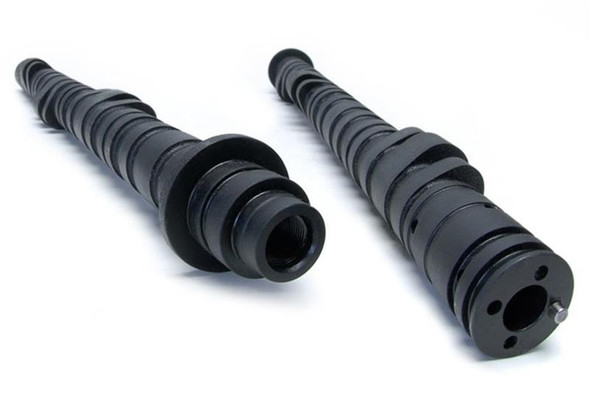
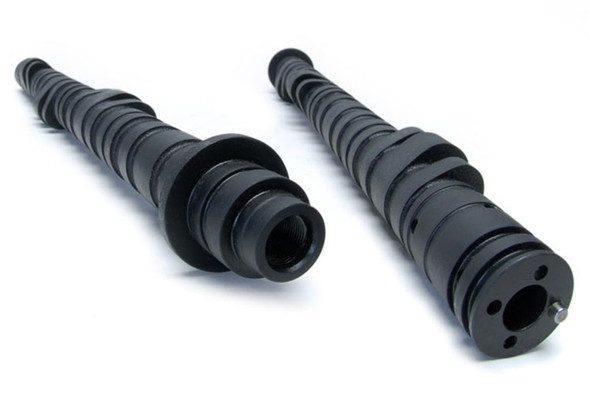
Skunk2 Tuner Series Honda/Acura K20A/ A2/ Z1/ Z3 & K24A2 DOHC i-VTEC 2.0L Stage 1 Cam Shafts - 305-05-0220
Skunk2 Racing
MSRP: $749.95$712.45What is the main advantage of installing Skunk2 Racing Tuner Camshafts?Skunk2 Racing Tuner Camshafts deliver an exhilarating 12 to 15 horsepower boost, enhancing acceleration significantly for your vehicle.Is it possible to retain factory idle and...MSRP: $749.95$712.45 -
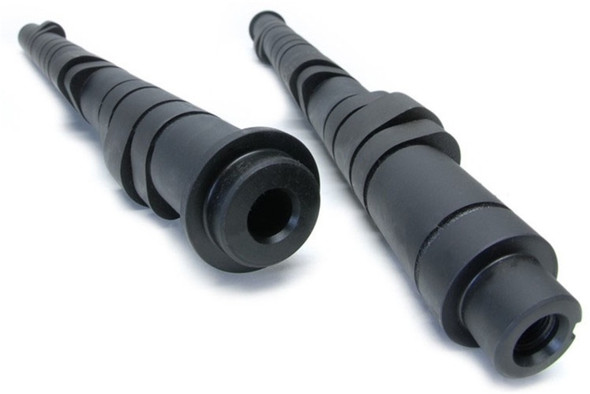
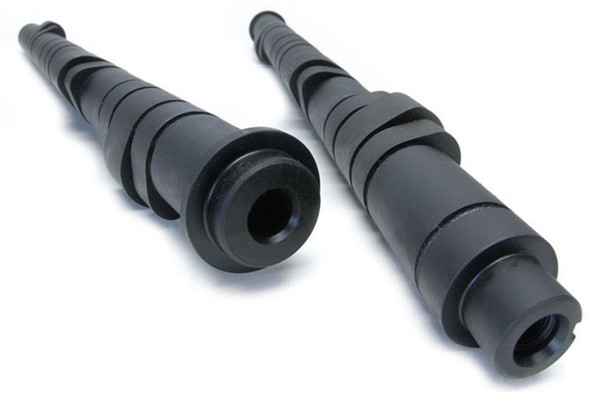
Skunk2 Tuner Series Honda H22A/F20B DOHC VTEC Stage 2 Cam Shafts - 305-05-0205
Skunk2 Racing
MSRP: $655.05$622.30Will these camshafts fit my specific vehicle?Confirm camshaft fitment with your specific vehicle's VIN and year before purchase for guaranteed compatibility and optimal performance.Can I install these camshafts myself?Professional installation of these...MSRP: $655.05$622.30 -
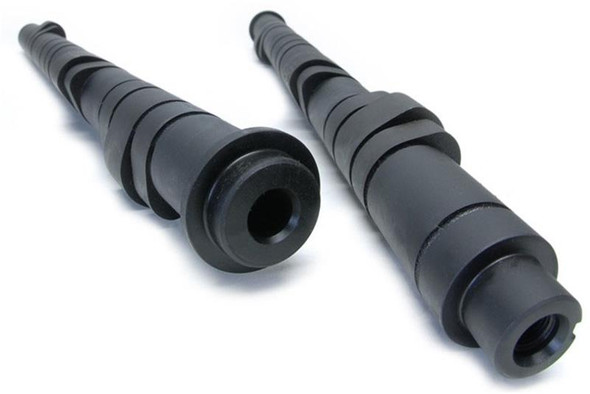
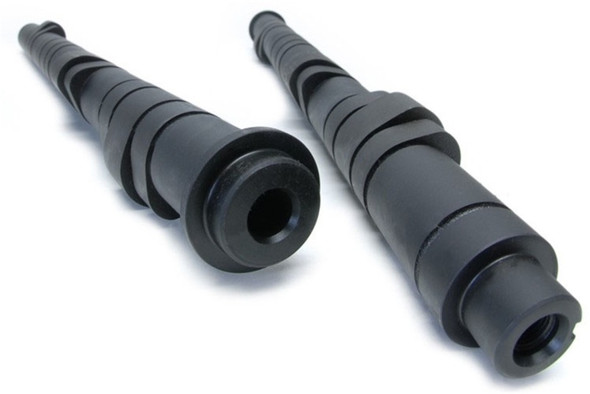
Skunk2 Tuner Series Honda B16A/B17A/B18C DOHC VTEC Stage 3 Cam Shafts - 305-05-0150
Skunk2 Racing
MSRP: $655.05$622.30What is the best way to install SK Tuner Camshafts?SK Tuner Camshafts require professional installation due to their advanced tuning capabilities for 1992-2001 Acura Integras and Honda Civics.How do SK Tuner Camshafts improve engine performance?CNC...MSRP: $655.05$622.30 -

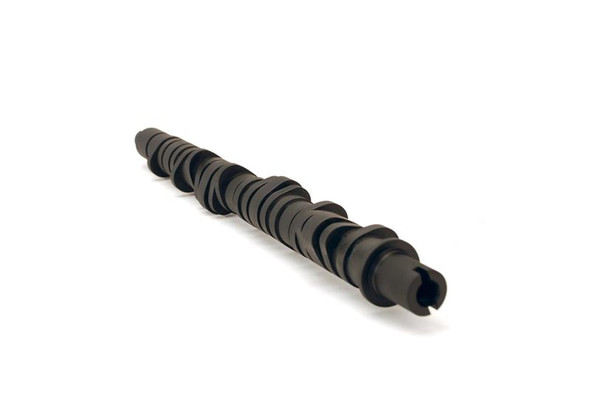
Skunk2 Tuner Series D-Series Honda Stage 4 Camshaft - 305-05-0055
Skunk2 Racing
MSRP: $419.95$398.95How do I know if these camshafts will fit my D VTEC engine?SK Tuner Camshafts require confirming fitment with your specific vehicle model and D VTEC engine before installation.What kind of performance gains can I expect from these camshafts?Aggressive...MSRP: $419.95$398.95 -


S&S Cycle 17-19 M8 Touring Models 475 Chain Drive Camshaft & Dynojet PV-3 Kit - 330-0725
S&S Cycle
$628.95What is a Camshaft's role in an engine?Camshafts precisely control intake and exhaust valve timing, dictating an engine's breathing and ultimately its power output.How do camshafts affect engine performance?Advanced camshaft profiles optimize airflow and...$628.95 -


S&S Cycle 2017 M8 Models 550C Chain Drive Camshaft Kit - 330-0643
S&S Cycle
MSRP: $299.95$286.19What is the typical installation time for a camshaft?SSC Camshafts professional installation is recommended, requiring specialized knowledge to ensure optimal engine breathing and performance gains.Can I install this camshaft myself?Install SSC Camshafts...MSRP: $299.95$286.19 -


S&S Cycle 2017+ M8 Models 475C Chain Drive Camshaft Kit - 330-0641
S&S Cycle
MSRP: $299.95$265.52What is the part number for the S&S Cycle 475C rear camshaft?The S&S Cycle 475C rear camshaft features a specific timing profile for optimal performance when correctly installed.How does the S&S Cycle 475C rear camshaft improve throttle...MSRP: $299.95$265.52 -


S&S Cycle 2017+ M8 Models 465C Chain Drive Camshaft Kit - 330-0620
S&S Cycle
MSRP: $299.95$287.34What is the primary purpose of the S&S Cycle 465C camshaft?The 465C rear camshaft is designed for increased airflow and power, boosting engine output significantly for street performance applications.Do I need special tools to install the S&S Cycle...MSRP: $299.95$287.34 -


S&S Cycle 2017+ Models Chain Drive Camshaft Installation Kit - 330-0619
S&S Cycle
$51.95What is the primary benefit of the S&S Cycle camshafts for 2017+ M8 engines?SSC Camshafts ensure a seamless installation experience for your 2017+ M8 engine, providing essential components for a secure upgrade.Are these camshafts designed for...$51.95 -

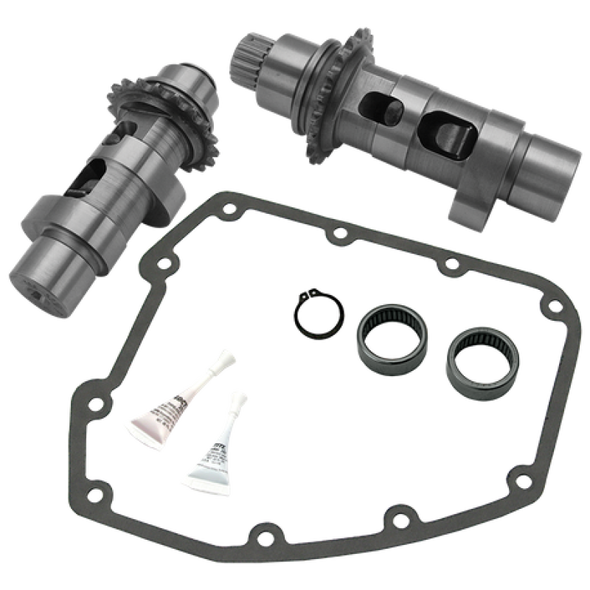
S&S Cycle 07-17 Easy Start MR103CE Chain Drive Camshaft Kit - 330-0299
S&S Cycle
$540.95What is the main purpose of the S&S Cycle MR103 Camshaft Kit?The MR103 Camshaft Kit unleashes thrilling acceleration and a broader powerband for 2007-2017 Harley-Davidson big inch engines.What kind of modifications are needed for the S&S Cycle MR103...$540.95 -
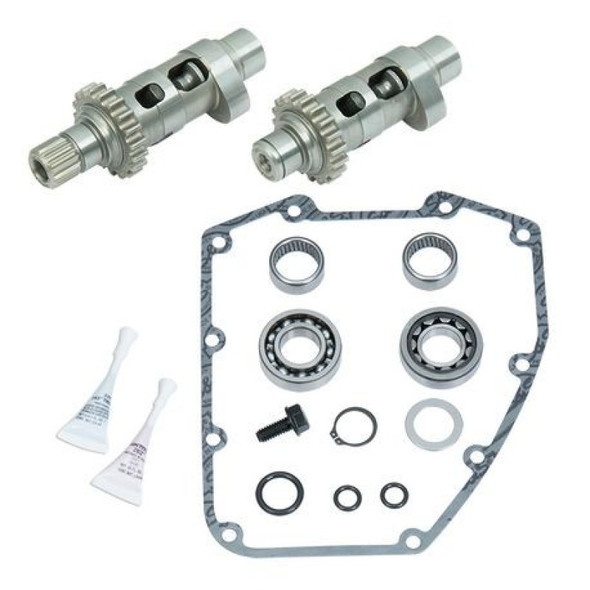
S&S Cycle 99-06 BT 509C Chain Drive Camshaft Kit - 330-0016
S&S Cycle
$399.95What is the cranking compression ratio of the S&S Cycle camshaft?These S&S Cycle camshafts achieve 180 psi of cranking compression, ensuring powerful and reliable engine starts for 88 cubic inch engines.Do I need compression releases with these...$399.95 -

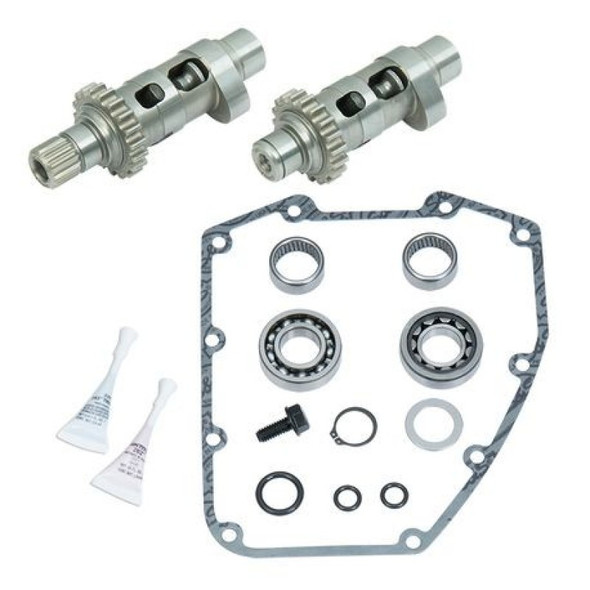
S&S Cycle 99-06 BT 585C Chain Drive Camshaft Kit - 330-0005
S&S Cycle
$399.95What is the typical install type for S&S Cycle camshafts?S&S Cycle camshafts are designed as direct bolt-in replacements, simplifying installation for most Harley-Davidson engines.Do S&S Cycle camshafts require upgraded valve springs?Higher lift S&S...$399.95
A camshaft is the single most influential mechanical component in determining an engine's power band, idle character, and usable RPM range — it controls valve lift, duration, and timing simultaneously across every cylinder. Motor Sport Mayhem stocks 158 in-stock camshafts across 161 brands, ranging from mild street grinds to full competition billet profiles, priced from $1.19 to $11,495.95.
Our Top Picks for Camshafts
Every product below was selected by our performance specialists based on real-world results, engineering quality, and demonstrated value across street and competition applications.
ACL Race Series Main Bearings
ACL | $329.72
Extra oil clearance specification engineered for high-load, high-RPM rotating assembly environments where standard clearances are insufficient.
- Tri-metal bearing construction with overlay designed for sustained racing loads and elevated oil temperatures
ACT Pilot Bearing
ACT | $17.00
A precision pilot bearing that ensures correct crankshaft input shaft alignment, which directly affects valvetrain geometry under high-RPM conditions.
- Manufactured to tight dimensional tolerances that prevent input shaft deflection during aggressive clutch engagement
AON Clutch Components
Action Clutch | $89.69
A universal race pedal stop that gives consistent, repeatable clutch engagement feel essential when managing aggressive cam-induced power delivery.
- Adjustable stop position allows fine-tuning engagement point to match cam lobe profiles with high seat pressure springs
AEM Wiring Connectors
AEM | $430.95
K-type thermocouple inputs allow real-time thermal monitoring critical for validating cam timing changes against cylinder head temperature response.
- Four-pack configuration supports simultaneous multi-cylinder exhaust temperature logging for cam event verification
AER Wiring Kits
Aeromotive | $358.52
A properly spec'd fuel pump wiring kit ensures the consistent fuel delivery that aggressive cam profiles demand at peak valve lift events.
- 60A relay-based circuit design eliminates voltage drop that causes lean conditions under high-duration cam operation
AFE PFADT Mount Set
aFe | $660.00
Solid-bushing transmission mounts reduce drivetrain deflection that can mask the true power delivery characteristics of a modified cam profile.
- Polyurethane construction maintains powertrain geometry under the torque pulses generated by high-lift, long-duration camshafts
ALF Wiring Harness
Air Lift | $97.23
A purpose-built second-generation wireless harness that eliminates signal interference which can corrupt camshaft position sensor readings on modified engines.
- Shielded harness architecture prevents EMI-induced timing errors critical on engines with variable cam timing systems
ABR CVT Belts
All Balls Racing | $200.40
HD-rated CVT belts built to handle the torque characteristics generated when engine output is elevated through camshaft and valve timing modifications.
- Premium compound construction resists heat degradation caused by the increased torque pulses from performance cam profiles in utility sport applications
ARX Tail Light Converters
AlphaRex | $395.00
LED tail light assemblies that draw significantly less current than OEM incandescent units, reducing electrical system load on engines running high-output cam-and-ignition setups.
- Reduced accessory load helps maintain charging system stability on high-compression builds with aggressive cam events at idle
PA Alta Crank Pulley
Alta | $129.20
A lightened crank pulley reduces rotating assembly inertia, allowing the engine to more accurately follow the RPM curve defined by an upgraded cam profile.
- Reduced rotational mass improves throttle response and allows the valvetrain to operate at the cam designer's intended lift and duration events
How to Choose the Right Camshaft
The camshaft selection decision comes down to four interdependent specifications — lift, duration, lobe separation angle (LSA), and centerline position — and getting even one wrong for your application will either leave power on the table or create a car that's undriveable below 4,000 RPM. Quality separates itself through material and manufacturing method: billet steel camshafts machined from single-piece bar stock provide superior lobe geometry consistency and fatigue resistance compared to cast or forged blanks, and the difference shows up in valvetrain longevity under sustained high-RPM operation. Hardening processes matter equally — cores that aren't properly heat-treated or chilled iron lobes that aren't correctly induction-hardened will wear rapidly against high-spring-pressure valvetrain components, particularly in flat-tappet applications.
Key Specifications
Lift is measured at the valve and determines how far each valve opens — more lift generally flows more air, but it's limited by piston-to-valve clearance, retainer-to-seal clearance, and the physical geometry of your cylinder head ports. Higher lift without proper head work doesn't always produce more power; the head has to be capable of using what the cam opens up. Most performance street applications operate effectively between 0.480" and 0.560" lift, while purpose-built race engines regularly run 0.650" or more with matching head work.
Duration, measured in degrees of crankshaft rotation, determines how long each valve stays open. Shorter duration (under 220° at 0.050" tappet lift) keeps low-end torque and idle quality intact — critical for street vehicles. Longer duration (240° and above at 0.050") moves the power band higher in the RPM range, which is why a race cam that makes 650 hp at 7,500 RPM often feels gutless below 3,500 RPM on the street. Lobe separation angle — typically between 108° and 116° — controls overlap between intake and exhaust events, with tighter LSAs producing a lumpier idle and stronger midrange but worse top-end and vice versa.
Centerline position (advance vs. retard) allows fine-tuning after the cam is installed. Installing a cam 2–4° advanced biases torque toward the low-to-mid RPM range and is often the correct approach for street-driven vehicles even when running a slightly aggressive grind. Retarding the cam pushes peak power higher in the RPM band, which suits naturally aspirated competition engines where peak power matters more than area under the curve. Variable valve timing systems add another layer — cams designed for VVT applications must match the system's range of movement or the ECU will fault and pull timing.
Fitment tolerances at the bearing journals are non-negotiable — journal diameter, surface finish (Ra value), and runout must meet the engine builder's specs or premature bearing failure follows. On flat-tappet engines, lobe surface finish and the phosphate coating or zinc additive compatibility with your oil formulation are equally critical selection criteria that many buyers overlook entirely.
Camshaft Specification Reference by Application Type
| Application | Duration @ 0.050" (Intake) | Lift Range (Intake) | LSA Recommendation |
|---|---|---|---|
| Daily Street / Mild Performance | 195°–215° | 0.420"–0.490" | 112°–116° |
| Street Performance / Weekend Track | 215°–228° | 0.490"–0.540" | 110°–114° |
| Street/Strip Dual Purpose | 228°–238° | 0.530"–0.580" | 108°–112° |
| Dedicated Drag Racing (NA) | 238°–252° | 0.570"–0.650" | 106°–110° |
| Road Race / Endurance Competition | 230°–245° | 0.540"–0.620" | 108°–112° |
| Forced Induction Street Performance | 210°–225° | 0.480"–0.540" | 112°–116° |
Price Guide
Entry ($1.19–$130): This tier covers accessory components, sensor hardware, and supporting hardware for camshaft-related systems rather than ground camshafts themselves — valid for rounding out a build without inflating the parts budget on items that don't directly affect grind specification.
Mid-range ($130–$500): The core of the catalog and where most enthusiasts find the right balance — ground camshafts in this range from brands like GSC Power Division and Brian Crower offer precise lobe profiles, proper hardening, and application-specific grinds developed from real competition data rather than generic performance claims.
Premium ($500–$11,495.95): Billet one-piece camshafts, custom-ground profiles for specific RPM targets, and full camshaft systems including matched valvetrain hardware — justified for engines building serious power where a cam failure at 8,000 RPM costs far more than the price difference between a cast and billet piece.
Who Is This For?
Camshafts span every level of performance use — from a daily driver needing a modest torque improvement to a dedicated competition engine built around a specific RPM and power target.
Engine Performance — 8.5/10
This category scores highest in pure engine performance applications for an obvious reason: the camshaft is the primary tuning lever for how an engine makes power. A properly selected grind can shift peak power by 1,000 RPM in either direction, increase peak output by meaningful margins, and change the entire character of an engine's delivery. The 8.5 score reflects how directly camshaft selection translates to on-engine results when matched correctly with cylinder head flow, compression ratio, and induction system.
Racing Competition — 8.2/10
Competition-spec camshafts earn their 8.2 score because sanctioned racing often mandates specific camshaft configurations, and even open-class racing demands precise optimization for the track layout — wide-open-throttle circuits favor different grind specs than technical courses with heavy braking zones. Billet construction and tight tolerance profiles are standard at this level because lobe wear under repeated high-RPM valve events is the failure mode that ends race weekends. Paired with appropriate engine bearings, a competition cam delivers consistent power across the full event distance.
Track / Autocross — 8.2/10
Track and autocross use cases score equally with competition at 8.2 because the requirements are specific but different — autocross demands strong mid-range torque and immediate throttle response rather than peak top-end power, which means LSA selection and duration are actually more critical than maximum lift for this application. Cars running dual-purpose setups need cams that don't sacrifice drivability on the street while still producing meaningful gains in the competitive rev range. The 181 products covering this use case reflect the breadth of the category across different engine families.
Street Performance — 7.6/10
The 7.6 score for street performance reflects a genuine trade-off: more aggressive camshaft profiles produce more power but reduce idle quality, vacuum-dependent accessory function, and low-RPM drivability in ways that make daily driving harder. The sweet spot for street performance sits in mild-to-moderate duration specs where power gains are real but the car still pulls cleanly from low RPM, passes emissions if required, and doesn't require constant clutch slipping to move from a stop. This is the largest addressable segment in the camshaft market and where most enthusiasts spend the most time researching before buying.
Drag Racing — 8.2/10
Drag racing's 8.2 score is earned because the application is uniquely uncompromising — a drag car never needs to idle in traffic or pull from 1,500 RPM, so duration and lift can be pushed to extremes that would make any other application unworkable. Full-race drag camshafts are designed around a very narrow RPM window, typically from launch RPM to the top of the track, and every specification is chosen to maximize power in that band exclusively. The 147 products scoring in this category cover a wide range of engine families, reflecting how universally important camshaft selection is across all drag racing classes.
Trusted Camshaft Brands We Carry
The brands that dominate serious camshaft builds earn their reputation through engineering depth, not marketing — GSC Power Division develops application-specific grinds backed by dyno-verified data and is the go-to source for high-revving Asian import platforms, while Brian Crower brings billet manufacturing standards and motorsport pedigree to a wide range of applications with average pricing that reflects the quality of the raw material and machining. Supertech supplies valvetrain components engineered to work in coordination with aggressive cam profiles, with dimensional tolerances that hold up under sustained high-lift operation. Wiseco's involvement in the camshaft and valvetrain space parallels their piston work — purpose-built components developed through real competition programs rather than street-only assumptions. Manley Performance represents the premium tier with race-proven designs that show up in professional motorsport programs where failure is not an option. ACL rounds out the rotating assembly side with bearing sets engineered to survive the elevated loads that high-lift, high-duration camshafts place on the entire bottom end.
Frequently Asked Questions
Are aftermarket camshaft position sensors any good?
Quality aftermarket camshaft position sensors from reputable manufacturers perform as well as OEM units when they're manufactured to the correct signal output specification — the issue is that the market has a significant amount of low-cost units with inconsistent Hall-effect sensor elements that produce signal dropout at high RPM or in high-temperature environments. A failing or inaccurate cam position sensor causes retarded ignition timing, VVT system errors, and misfires that are nearly impossible to diagnose without an oscilloscope because the signal looks correct at idle but breaks down under load. For a build where you've invested in a performance camshaft, spending the difference on a quality sensor is not optional — a $15 sensor error will cost you every dyno pull you make trying to find the power the cam should be delivering. Stick to brands with documented OEM supplier relationships or motorsport application data.
Are ACL race bearings any good?
ACL Race Series bearings are genuinely well-engineered components used in professional motorsport programs worldwide — their tri-metal construction with a copper-lead intermediate layer and babbitt overlay provides the conformability needed to survive momentary oil starvation events that destroy cheaper bi-metal bearings. The extra oil clearance variants are particularly valuable when running high-viscosity racing oil or building an engine that will see sustained high-RPM operation where hydrodynamic film thickness becomes critical. ACL holds dimensional tolerances tight enough that they're trusted in class-racing applications where bearing replacement mid-event isn't an option. The answer is straightforward: for a performance or competition build, ACL Race Series bearings are a sound engineering choice at a price point that's well below the cost of a seized crank.
Are ACL or King bearings better?
Both ACL and King Engine Bearings produce competition-grade products that outperform standard OEM bearings significantly, but they use slightly different approaches to the overlay and substrate — King's HP and XP series use a proprietary polymer matrix overlay that excels in contaminated oil environments and provides strong cold-start protection, while ACL's tri-metal construction prioritizes high-load film strength at operating temperature. The practical difference becomes meaningful when you define your use case: King tends to perform better in applications with marginal filtration or variable service intervals, while ACL's construction is optimized for sustained high-load operation with clean, fresh oil. For a dedicated race engine on a controlled maintenance schedule with performance oil, either brand will serve well — the cam-to-bearing journal clearance spec and surface finish of your specific crankshaft matters more than the brand choice between these two.
Are ACL race bearings coated?
Standard ACL Race Series bearings use a babbitt tin-aluminum overlay rather than a DLC or PTFE coating — the overlay is a functional bearing surface rather than a friction-reduction coating in the traditional sense. ACL does offer coated variants in specific applications where additional seizure resistance is required, typically in engines where oil pressure recovery after high-G cornering events is a documented concern. The babbitt overlay provides excellent conformability that allows the bearing to bed into minor journal imperfections during break-in, which is one reason ACL is trusted in rebuilt competition engines running freshly machined but not perfectly mirror-finished journals. If your application specifically requires a coated bearing surface for extreme use, confirming which ACL product line includes that feature for your engine family is worth doing before ordering.
Are aftermarket ignition coils okay to run with a performance camshaft?
A performance camshaft that extends duration and increases overlap creates a more demanding ignition environment — longer intake valve opening increases residual exhaust gas contamination of the incoming charge, which requires a stronger spark to achieve reliable ignition, especially at the higher RPMs where a performance cam does its best work. Quality aftermarket ignition coils with higher peak voltage output and faster saturation times are not just acceptable on a cam-equipped engine — they're often necessary to avoid misfires that show up as power loss and excessive exhaust temperatures. The coil must be compatible with the ECU's dwell control parameters; a high-output coil run at factory dwell settings will overheat and fail prematurely. Verified output specifications and thermal ratings matter significantly more than brand recognition when selecting coils for an engine that's been reground.
Building something specific? Our performance specialists can help you select the right Camshafts for your application — street, track, or full race build.