
Belts - Timing, Accessory
- Product
- Qty in Cart
- Quantity
- Price
- Subtotal
-
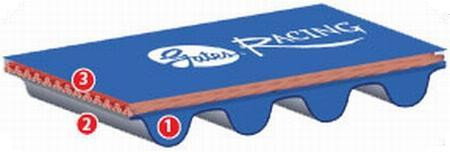
Gates 92-93 Integra 1.7L / 94-97 Del Sol 1.6L DOHC / 99-00 Civic 1.6L DOHC Racing Performance Timing - T227RB
Gates
MSRP: $574.20$145.82Are Gates racing timing belts suitable for high-performance driving?Gates racing timing belts are engineered for racing performance, ensuring optimal timing for your specific engine's peak output...MSRP: $574.20$145.82 -

Gates 93-02 Honda Prelude Racing Performance Timing Belt - T226RB
Gates
MSRP: $674.48$171.28Gates 93-02 Honda Prelude Racing Performance Timing BeltThis Part Fits:YearMakeModelSubmodel1997-2001HondaPreludeBase1993-1996HondaPreludeSMSRP: $674.48$171.28 -
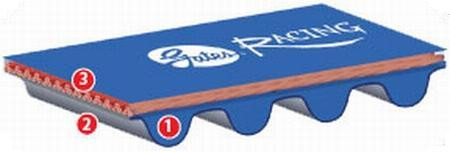
Gates 91-96 Dodge Stealth / 91-99 3000GT 3.0L Racing Performance Timing Belt - T195RB
Gates
$265.52Is this timing belt a direct fit for my 1995 Dodge Stealth?Confirm fitment with your specific vehicle; this timing belt is engineered for 91-96 Dodge Stealth and 91-99 3000GT 3.0L models.Can I...$265.52 -

Gates 03-06 Evo / 95-98 Eclipse Turbo / 90-94 Eclipse / 89-92 Galant DOHC / 90-94 Laser / 90-94 Talo - T167RB1
Gates
MSRP: $824.73$209.44When should I replace my timing belt?Timing belts generally need replacement every 60,000 to 100,000 miles; consult your vehicle's manual for exact intervals.Can I install a timing belt...MSRP: $824.73$209.44 -
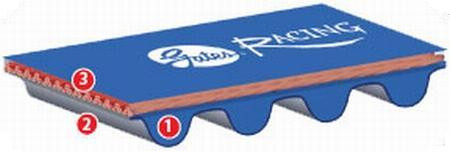
Gates 03-06 Evo / 95-98 Eclipse Turbo / 90-94 Eclipse / 89-92 Galant DOHC / 90-94 Laser / 90-94 Talo - T167RB
Gates
$254.92What is the recommended installation procedure for Gates Racing Timing Belts?Professional installation is strongly recommended for Gates Racing Timing Belts to ensure proper fitment and optimal...$254.92 -
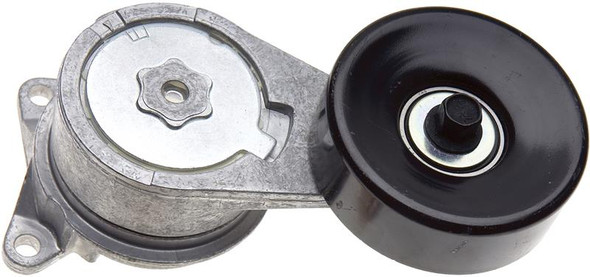
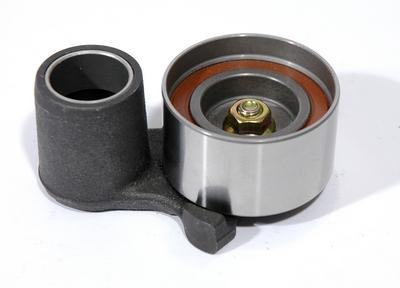
Gates Lexus/Toyota 93-05 GS300/92-00 SC300/94-98 Supra 3.0L Drive Automatic Belt Tensioner Assembly - 38170
Gates
$217.40How often should I replace my timing belt?Timing belt replacement intervals vary by vehicle; always consult your owner's manual for specific recommendations and confirm fitment for your model.What...$217.40 -
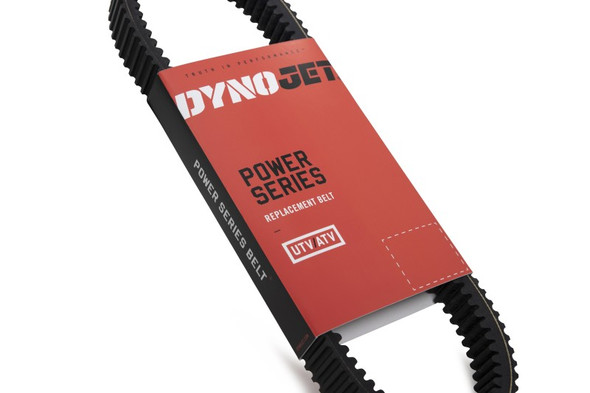
Dynojet 16-21 Can-Am Maverick Power Series CVT Belt Kit - 25-DCB2X
Dynojet
MSRP: $211.10$189.99How do I know if this CVT belt kit will fit my vehicle?Confirm fitment with your specific vehicle details to ensure proper installation and optimal performance of this timing belt.What is the...MSRP: $211.10$189.99 -

Dynojet 14-21 Polaris RZR XP1000/900 Power Series CVT Belt Kit - 19-DCB2X
Dynojet
MSRP: $199.99$179.99How do I know if the DOJ CVT Belt Kit will fit my vehicle?Confirm vehicle fitment using our detailed application guide to ensure precise compatibility with your vehicle's Belts - Timing, Accessory...MSRP: $199.99$179.99 -
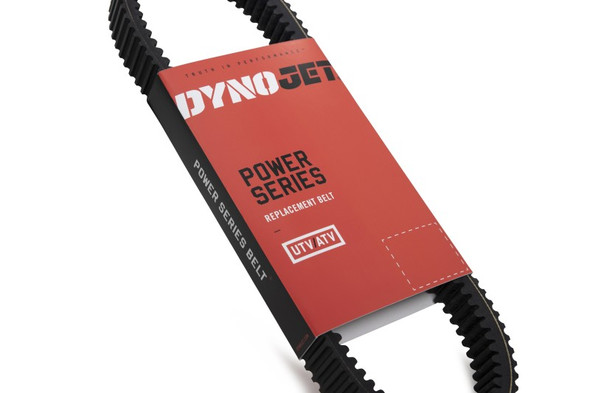
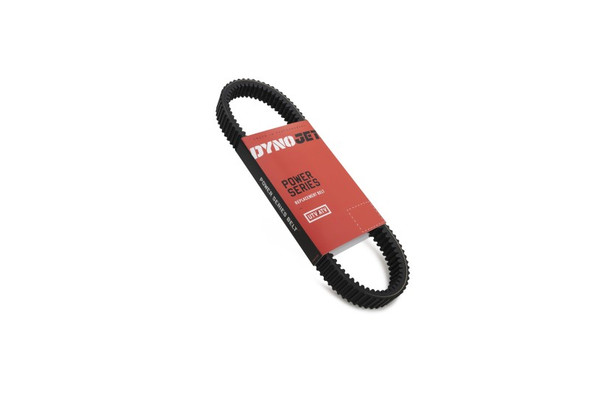
Dynojet 14-21 Polaris RZR XP1000/900 Dura Series CVT Belt Kit - 19-DCB2A
Dynojet
MSRP: $188.88$169.99What is the typical lifespan of a CVT belt?CVT belt lifespan varies; professional installation ensures optimal positioning for extended operational life as a Timing, Accessory Belt.Can I install the...MSRP: $188.88$169.99 -

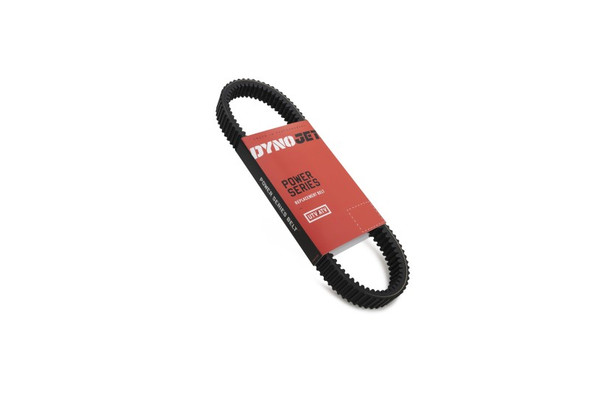
Dynojet 16-21 Polaris RZR XP Turbo Power Series CVT Belt Kit - 19-DCB1X
Dynojet
MSRP: $211.10$189.99How often should I replace my CVT belt?Consult your vehicle's service manual; regular inspection and replacement of Belts - Timing, Accessory ensure optimal performance and prevent unexpected...MSRP: $211.10$189.99 -


COMP Cams Belt Tensioner W/Idler GM LS - 54021
COMP Cams
$218.30What is the primary function of the COMP Cams CCA Belt Tensioner?CCA Belt Tensioners provide a fully adjustable solution for controlling damaging resonance, ensuring desired timing and accessory belt...$218.30 -

All Balls Racing 16-20 Can-Am Defender 800 All Traxion HD CVT Belts - 25-9016
All Balls Racing
MSRP: $210.95$200.40Are ABR CVT Belts made with strong materials?ABR CVT Belts utilize a compound featuring high-strength aramid cords and fibers for significantly increased grip and durability.Do ABR CVT Belts improve...MSRP: $210.95$200.40
Timing and accessory belts are the mechanical link between your engine's rotating assembly and every system it drives — get them wrong and you face jumped timing, accessory failure, or catastrophic valve-to-piston contact. Motor Sport Mayhem stocks 246 in-stock timing and accessory belt products across 161 brands, covering everything from OE-replacement serpentine belts to purpose-built CVT drive belts and performance crank pulley systems priced from $1.19 to $11,495.95.
Our Top Picks for Belts - Timing, Accessory
Every product below was hand-selected by our engineering team based on verified performance data, material quality, and real-world results across street, track, and competition builds.
ACL Race Series Main Bearings
ACL | $329.72
ACL's race-spec tri-metal bearing construction delivers tighter oil clearance tolerances and superior crush characteristics compared to OE replacements under high-load, high-RPM conditions.
- Extra oil clearance variant engineered specifically for forced-induction and high-boost applications where bearing film thickness is critical
ACT Pilot Bearing
ACT | $17.00
ACT's pilot bearing uses precision-machined tolerances and high-quality sintered bronze or needle construction to support input shaft alignment and reduce drivetrain vibration during clutch engagement.
- Correct pilot bearing spec is essential when upgrading to a higher-clamping-force clutch to prevent premature input shaft wear
Action Clutch Race Pedal Stop
Action Clutch | $89.69
A properly set pedal stop eliminates over-travel that accelerates clutch disc and flywheel wear, making it a low-cost component that directly extends the life of your entire clutch assembly.
- Universal fitment with adjustable stop point lets you dial in the exact engagement bite zone for launch consistency in drag and circuit applications
AEM K-Type Thermocouple Kit
AEM | $430.95
Accurate thermal data from AEM's K-type thermocouple array lets you monitor belt-adjacent component temperatures — coolant, oil, and intake — to catch heat-related belt degradation before it becomes a failure event.
- Four-pack configuration supports comprehensive engine bay thermal mapping essential for high-output builds where heat is the primary belt life killer
Aeromotive Fuel Pump Wiring Kit
Aeromotive | $358.52
Aeromotive's 60A deluxe wiring kit provides a dedicated, properly gauged power circuit for high-current fuel pump systems driven off the accessory belt, eliminating voltage drop that degrades pump performance under load.
- Relay-based design ensures the alternator-driven accessory circuit sees stable amperage demands, reducing electrical load spikes that stress belt-driven charging systems
aFe PFADT Transmission Mount Set
aFe | $660.00
Solid transmission mount sets reduce driveline deflection that can misalign belt-driven supercharger snouts and accessory drive systems under high-torque conditions.
- Polyurethane construction with durometer-tuned firmness controls rotational torque reaction without transmitting excessive NVH to the cabin
Air Lift WirelessAir Harness
Air Lift | $97.23
A clean, purpose-built wiring harness for belt-driven compressor-fed air management systems ensures reliable compressor activation without improvised wiring that introduces resistance and heat into the circuit.
- Second-generation plug-and-play architecture reduces install time and eliminates the loose connectors responsible for most compressor-side electrical failures
All Balls Racing CVT Belt
All Balls Racing | $200.40
All Balls Racing CVT belts are constructed with high-tenacity aramid fiber cords and heat-resistant rubber compounds that maintain dimensional stability and grip under the extreme clamping forces and heat generated by high-performance CVT systems.
- Engineered to exceed OEM burst strength ratings, making them the correct upgrade for CVT-equipped performance UTVs running aggressive throttle inputs and variable terrain loads
AlphaRex LUXX Series LED Tail Lights
AlphaRex | $395.00
LED tail light upgrades eliminate the parasitic electrical draw of incandescent bulbs on the alternator and belt-driven charging system, reducing accessory load by up to 80% per circuit.
- DOT-compliant construction with sequential turn signal and full LED brake arrays provides safety visibility improvements alongside real measurable reductions in alternator belt strain
Alta Lightened Crank Pulley
Alta | $129.20
A lightened crank pulley reduces rotational inertia at the heart of the accessory drive system, freeing measurable horsepower and allowing the engine to rev more freely while maintaining correct belt path geometry.
- Machined from billet aluminum to precise OD tolerances, ensuring the accessory belt maintains correct tension and tracking without the harmonic damper sacrificing rev response
How to Choose the Right Belts - Timing, Accessory
The most common mistake buyers make in this category is treating belts as commodity items — they are not. Belt construction material, tooth profile, width, and tensile rating are engineering specifications that determine whether your valvetrain stays in time at 8,000 RPM or whether your supercharger drive survives a 150-mph pass. OE-style EPDM rubber belts are fine for stock applications, but the moment you increase boost, raise the rev limit, or start generating more accessory load, you need belts built to higher thermal and tensile thresholds.
Key Specifications
For timing belts, tooth profile is the most critical spec. HDPE (High-Duty Polyester) and aramid fiber cord construction resist stretch under load far better than standard fiberglass-reinforced designs. A timing belt that stretches even 0.5mm under load at high RPM can retard cam timing enough to cost 15–20 horsepower on a performance build, and in interference engines, worst-case is catastrophic. Always verify whether the belt is rated for the operating temperature range your application generates — forced induction systems routinely see sustained underhood temps that reduce standard belt service life by 30–40%.
For accessory/serpentine belts, the key specs are rib count, effective length, and material compound. Multi-rib EPDM belts outperform older neoprene designs in wet-grip and temperature tolerance, but on high-load accessory drives — those running upgraded alternators, belt-driven superchargers, or heavy-duty power steering pumps — you need to verify the belt's tension rating matches the increased clamping load. An undersized belt on an upgraded accessory drive will squeal, slip, and fail under load in a fraction of its rated service interval.
Belt tensioners are the unsung failure point in this category. An aftermarket or upgraded tensioner with stiffer spring rates and higher-quality bearing internals is not optional on a performance build — it is a required complement to any upgraded belt. A worn OEM tensioner with a quality aftermarket belt will fail in the tensioner before the belt. On CVT applications, belt width and included angle must match the driven and driving clutch sheave geometry precisely; a belt with incorrect geometry will heat unevenly, shed material, and fail without warning, often mid-trail or mid-race.
Service interval is a spec that varies dramatically between applications and is frequently ignored on performance builds. Manufacturers publish timing belt intervals based on OEM power levels and ambient operating conditions. If you have increased power output, added forced induction, or regularly run the engine at high sustained RPM, cut the service interval by at least 25–30% compared to the factory specification and inspect tensioners and idler pulleys at every change.
Timing Belt Tooth Pitch and Application Reference Guide
| Belt Type / Tooth Profile | Typical Pitch | Recommended Application | Key Failure Risk if Mismatched |
|---|---|---|---|
| HTD (High Torque Drive) 3M | 3mm | High-revving NA engines, light accessory drives | Tooth shear under high torque load |
| HTD 5M | 5mm | Performance street and light track timing drives | Pitch mismatch causes skip under load |
| HTD 8M | 8mm | High-torque supercharger and diesel timing systems | Belt whip and vibration at high RPM if oversized |
| AT / Trapezoidal | 5mm–10mm | OEM replacement, standard street timing belts | Stretch and tooth rounding under sustained boost |
| GT2 / GT3 (Curvilinear) | 2mm–5mm | Race-spec high-precision cam drive systems | Incorrect pulley engagement reduces timing accuracy |
| CVT V-Belt (Wide) | N/A — angle-dependent | UTV/ATV performance CVT transmissions | Width/angle mismatch causes sheave overheating and slippage |
Price Guide
Entry ($1.19–$100): This tier covers OE-equivalent replacement timing belts, individual idler pulleys, and serpentine belt replacements for lightly modified or stock-power street builds. Quality at this level varies considerably by brand — Gates and comparable OEM-supplier brands are legitimate at this price; generic no-name alternatives introduce real reliability risk. Correct choice for daily drivers and low-stress applications.
Mid-range ($100–$500): The majority of serious enthusiasts land here. This price range covers performance timing belt kits with tensioner and idler upgrades included, CVT belt replacements for modified off-road platforms, and crank pulley systems that optimize accessory belt geometry. You get measurably improved materials, tighter manufacturing tolerances, and often a complete system approach rather than belt-only replacement.
Premium ($500–$11,495.95): Purpose-built competition belt drive systems, complete supercharger drive belt and pulley packages, and high-end CVT performance upgrade systems populate this tier. The cost is justified when you are running sustained high-boost forced induction, professional-level racing where a belt failure ends a season, or CVT platforms where upgraded drive systems are a prerequisite for competitive performance. This is not aspirational spending — it is failure-mitigation spending for serious builds.
Who Is This For?
Timing and accessory belts serve everything from daily commuters needing reliable OE replacement parts to professional racing teams where belt failure means a destroyed engine — the application defines the spec, and our catalog covers the full range.
Engine Performance — 8.5/10
This category scores highest for engine performance applications because belts are directly in the power transmission path — timing belt integrity defines cam timing accuracy, and accessory belt efficiency determines how much power reaches the wheels versus spinning the accessories. On high-output builds, a precision timing belt system with correctly-spec'd tensioner components is foundational to extracting consistent performance. A belt that allows even marginal cam timing variation under load makes every other engine performance upgrade less effective.
Racing Competition — 8.2/10
Competition-level builds score 8.2/10 here because belt failure in a race environment is binary — you either finish or you don't. Race-spec timing belt systems from performance-oriented manufacturers are built to tighter tolerances, use higher-grade cord materials, and are rated for the sustained high-RPM thermal environments that competition generates. Many sanctioned classes also specify belt service intervals that are far shorter than street equivalents, making quality and availability of race-grade belts a pit preparation essential.
Track / Autocross — 8.2/10
Track and autocross use scores identically to full racing at 8.2/10 because the operating profile — repeated high-RPM bursts, sustained elevated coolant and oil temperatures, and aggressive accessory loads from upgraded cooling fans and fuel systems — stresses belts in ways that street driving never replicates. The high-heat, high-cycle environment of a track day accelerates belt degradation faster than mileage alone, and inspecting timing belt condition after each event is standard practice for serious track drivers.
Drag Racing — 8.2/10
Drag racing presents a unique belt stress profile: massive instantaneous torque input at launch loads the timing belt and accessory drive simultaneously, followed by sustained high-RPM operation through the full quarter mile. Belt systems on drag builds must be specified not just for RPM capability but for the shock-load characteristics of aggressive launches, particularly on high-boost applications where supercharger belt tension management is a tuning element in its own right. Proper forced induction drive belt specification is non-negotiable in this discipline.
Street Performance — 7.6/10
Street performance applications score 7.6/10 — meaningful but not at the ceiling — because street builds tolerate a wider tolerance band in belt specification than pure competition use. The primary upgrade driver here is reliability over the OEM service interval on modified vehicles, where increased power output or accessory loads exceed the design envelope of stock belt components. For street builds also running upgraded engine components, matching the belt system spec to the rest of the build prevents the belt from becoming the weakest link.
Trusted Belts - Timing, Accessory Brands We Carry
Gates brings over a century of belt engineering to the performance market and supplies OEM timing systems to major manufacturers globally — their performance-tier products carry the same dimensional precision as their factory supply contracts. All Balls Racing has built a strong reputation specifically in CVT and powersports belt applications, with construction specs validated against the brutal thermal and mechanical loads of performance off-road use. Alta Performance has decades of experience optimizing accessory drive geometry through lightened pulleys and precision belt path components that deliver real power gains without compromising drive reliability. ACL and Gates both have OEM-supplier heritage that translates directly into dimensional consistency that generic alternatives cannot match. Across the broader catalog, brands like Brian Crower, GSC Power Division, and Wiseco bring race-validated engineering philosophies to components that interact directly with the belt drive system — ensuring the full rotating assembly is matched in specification, not just individual parts in isolation.
Frequently Asked Questions
Are aftermarket belt tensioners worth it on a performance build?
Yes — and on any modified engine, an upgraded tensioner is arguably more important than the belt itself. OEM tensioners are engineered for stock power and accessory loads; add boost, increase engine speed, or upgrade to a heavier-duty alternator or power steering pump and the stock tensioner's spring rate and bearing load rating can be exceeded within thousands of miles. Aftermarket tensioners use higher-grade bearing assemblies and firmer spring specifications to maintain correct belt tension across the full RPM and load range of a modified engine. A quality belt running on a worn or under-rated tensioner will fail prematurely regardless of its own specification. Always replace tensioners and idler pulleys as a complete system when changing the timing belt on a performance application.
Are aftermarket timing belts as good as OEM?
For performance applications, the correct aftermarket timing belt from an established brand is not just as good as OEM — it is frequently better, because OEM belts are engineered to cost targets at stock power levels. Performance aftermarket timing belts use higher-tenacity aramid or HDPE cord construction, more heat-resistant rubber compounds, and tighter tooth pitch tolerances that maintain cam timing accuracy at high RPM better than standard OEM equivalents. The critical qualifier is brand selection: a quality aftermarket belt from a manufacturer with OEM supply credentials outperforms stock; an off-brand belt with no published tensile or thermal specifications does not. Verify that the aftermarket belt matches the OEM tooth profile and width exactly, since even small pitch deviations introduce timing error under load.
How often should timing belts be replaced on performance engines?
The OEM service interval is a starting point, not a ceiling, on a modified engine. Most manufacturers publish timing belt intervals between 60,000 and 105,000 miles based on stock power output and normal operating temperatures — neither of which applies to a built performance engine. A reasonable guideline for modified street engines is to reduce the interval by 25–30%, and for dedicated track or drag applications, inspect the belt and tensioner after every season or every 15,000 miles of hard use, whichever comes first. High underhood temperatures — a near-universal condition on forced-induction builds — are the single greatest accelerant of belt degradation, hardening the rubber compound and reducing the cord's flex fatigue resistance. When in doubt, change it: a timing belt is one of the lowest-cost insurance policies in a high-dollar engine build.
What causes CVT belts to fail prematurely on performance applications?
CVT belt failure on performance platforms almost always traces back to one of four causes: incorrect belt geometry for the clutch sheave specifications, sustained operation at the thermal limit of the belt compound, shock loading from aggressive throttle inputs beyond the belt's tensile rating, or contamination from water, mud, or oil intrusion that reduces friction coefficient and causes slippage-induced heat buildup. The slippage-to-heat failure mode is particularly destructive — a CVT belt that slips even briefly generates localized heat spikes that degrade the rubber compound irreversibly, leading to delamination and cord exposure. On modified CVT platforms, the correct response is to upgrade to a belt with higher burst strength and improved thermal compound rather than expecting the OEM-spec belt to tolerate the additional load. Verify sheave alignment after any clutch upgrade, as misalignment causes asymmetric belt wear that dramatically shortens service life.
Does a lightened crank pulley actually make power, and does it affect belt reliability?
A lightened crank pulley delivers real, measurable power gains by reducing rotational inertia in the accessory drive — the engine no longer has to accelerate the full mass of a cast iron or heavy steel OEM pulley through every rev cycle, which translates to faster throttle response and improved peak power particularly at higher RPM. The power gain is typically modest on naturally aspirated builds — commonly 3–7 horsepower depending on displacement — but the rev response improvement is immediately noticeable in driving feel. Regarding belt reliability: a correctly manufactured billet aluminum lightweight pulley machined to OEM outer diameter specifications maintains the same belt wrap angle and tension as the factory unit, so belt reliability is unchanged. The risk only arises with poorly manufactured pulleys that deviate from OEM OD tolerances or misalign the belt path, so purchase only from manufacturers with documented dimensional validation. Note that many OEM crank pulleys incorporate a harmonic damper — if your application uses one, confirm whether the lightened replacement retains damper function before fitting it to a street-driven vehicle.
Building something specific? Our performance specialists can help you select the right Belts - Timing, Accessory for your application — street, track, or full race build.