
Bearings
- Product
- Qty in Cart
- Quantity
- Price
- Subtotal
-
 $115.99
 -

KING Main Bearings
King Engine Bearings
$69.73What is the primary benefit of using KING Main Bearings?KING Main Bearings deliver extreme durability and superior oil film strength, crucial for sustained high-RPM racing performance under intense loads.Can I install KING Main Bearings...$69.73 -
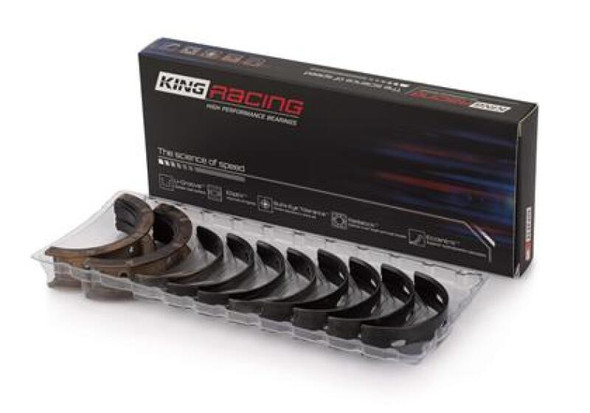
KING Main Bearings
King Engine Bearings
$50.29What is the general consensus on the necessity of professional installation for these KING Main Bearings?Professional installation is strongly recommended to ensure precise fitment and optimal performance for these KING Main Bearings.Can these KING Main...$50.29 -
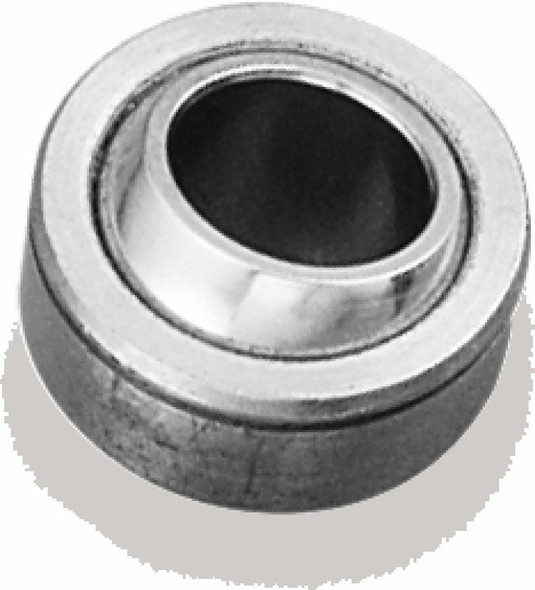
TWP Bearings B
TwinPower
$50.99What is the specific fitment for this swingarm bearing?This TwinPower swingarm bearing is engineered specifically for 1984 to 1999 Harley-Davidson Softail models, replacing H-D part number 9076.Is this swingarm bearing a direct replacement for the stock...$50.99 -

EPI Bearings
EPI
$53.01What is the primary function of an EPI Clutch Bearing?An EPI Clutch Bearing ensures smoother clutch engagement for a more responsive driving feel by maintaining consistent clutch operation for reliable performance.Is professional installation required...$53.01 -
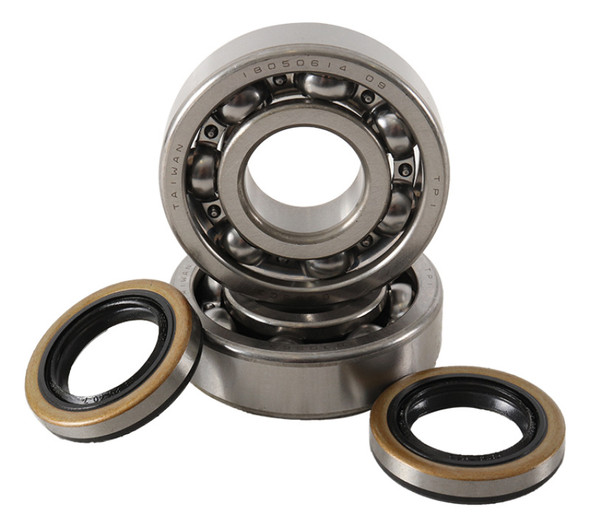
HDS Main Bearing & Seal Kit
Hot Rods
MSRP: $55.95$53.73Is this a direct replacement for my stock bearings?This HDS Main Bearing & Seal Kit is engineered as a direct replacement for the 80-81 KX 125, ensuring precise fitment and function for your specific engine.Can I install this myself or do I need a...MSRP: $55.95$53.73 -
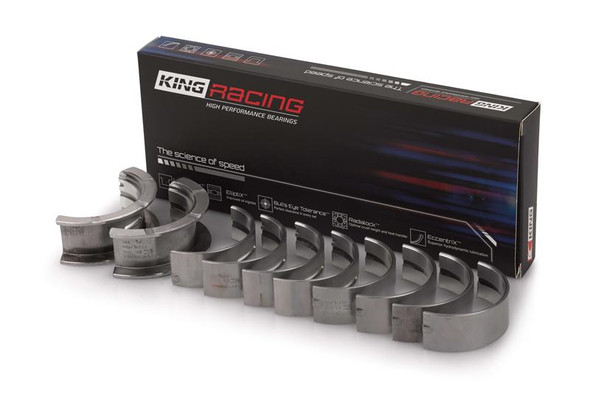
KING Main Bearings
King Engine Bearings
$161.01Are these bearings compatible with my 426 or 440 HEMI engine?These KING Main Bearings are specifically engineered to provide optimal crankshaft support for your Chrysler 426ci and 440ci V8 OHV engines.Can I install these bearings myself?Professional...$161.01 -

QBS Bearings
QuadBoss
$52.37What is the primary benefit of upgrading to a QuadBoss Taper Steering Bearing Kit?QuadBoss taper steering bearings deliver smoother steering, providing effortless control and a more predictable, secure ride on any terrain.Can I install this QBS bearing...$52.37 -

KING Connecting Rod Bearings
King Engine Bearings
$55.12How do I know if these bearings are compatible with my specific engine?Confirming fitment with your vehicle's exact Holden 175/190 3.6L engine ensures these precision bearings deliver optimal performance.Can I install these bearings myself or should I...$55.12 -
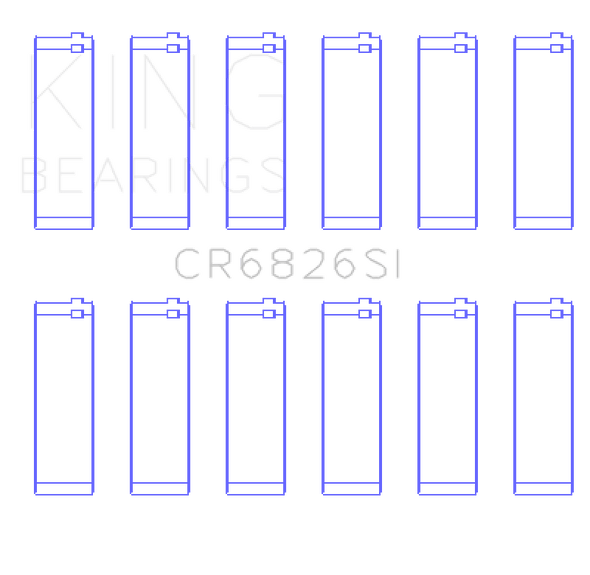
KING Connecting Rod Bearings
King Engine Bearings
$55.12What is the recommended clearance for these bearings?KING Connecting Rod Bearings for Holden 175/190 3.6L, size +0.50mm, require precise machinist installation for optimal engine performance.Can I install these bearings myself?Professional installation...$55.12 -
 $55.34
 -

QBS Bearings
QuadBoss
$53.42What is the expected lifespan of these steering bearings?QBS Bearings for your 83-86 Honda ATC250R are engineered for longevity, offering reliable steering performance for extended off-road adventures.How do tapered bearings improve steering?Tapered...$53.42
Performance bearings are the last line of defense between your rotating assembly and catastrophic engine failure — the right material, clearance, and surface coating determine whether your build survives 10,000 RPM or grenades on the first hard pull. Motor Sport Mayhem stocks 870 bearings across 161 brands, from entry-level replacements to full race-spec tri-metal sets engineered for turbocharged, high-boost, and endurance competition applications.
Our Top Picks for Bearings
Every product below was hand-selected based on verified performance data, material engineering, and real-world results across street, track, and competition builds.
ACL Race Series Main Bearings
ACL | $329.72
Extra oil clearance specification provides a thicker hydrodynamic film layer under high-boost, high-RPM conditions where stock clearances starve the bearing surface.
- ACL's race-series overlay uses a sputter or polymer coating that dramatically outperforms standard bimetal shells under sustained heat and load cycles
ACT Pilot Bearing
ACT | $17.00
A precision-fit pilot bearing is a non-negotiable component in any clutch replacement or drivetrain rebuild — loose or worn pilot bearings cause input shaft misalignment and premature clutch disc failure.
- ACT manufactures pilot bearings to tighter dimensional tolerances than OEM spec, supporting upgraded clutch systems that transmit significantly higher torque loads
AON Clutch Components
Action Clutch | $89.69
Proper clutch pedal geometry directly affects release bearing wear rate and engagement consistency, making pedal-stop hardware a legitimate performance and longevity component.
- Race-spec clutch components designed to work in coordination with upgraded bearing and clutch assemblies for repeatable, consistent engagement under competition conditions
AEM Wiring Connectors
AEM | $430.95
Accurate oil and coolant temperature sensing is critical for bearing health monitoring — thermocouple kits provide real-time thermal data that tells you when bearing loads are approaching dangerous thresholds.
- K-type thermocouples provide the response speed and accuracy range required to detect the early temperature rise signatures that precede bearing failure in endurance and track applications
AER Wiring Kits
Aeromotive | $358.52
A properly wired, dedicated fuel pump circuit ensures consistent fuel pressure delivery — fuel starvation is one of the leading indirect causes of bearing damage through detonation events in high-output builds.
- Aeromotive's deluxe wiring kit is engineered for sustained high-current draw without voltage drop, maintaining pump performance that directly protects downstream engine components including bearings
AFE PFADT Mount Set
aFe | $660.00
Subframe mount bearings and bushings directly influence drivetrain alignment under load — sloppy subframe movement introduces misalignment stress into driveshaft and transmission bearings that accelerates wear.
- PFADT-series mounts use high-durometer polyurethane bearing surfaces that eliminate the compliance-induced movement responsible for bearing misload in performance and track applications
ALF Wiring Harness
Air Lift | $97.23
Suspension system wiring harnesses that enable precise ride height and load management — critical for maintaining correct bearing pre-load angles in air suspension and adjustable chassis setups.
- Second-generation wireless harness architecture provides reliable, interference-resistant control of suspension components that affect wheel bearing loading and alignment geometry
ABR CVT Belts
All Balls Racing | $200.40
CVT belt condition directly drives variator bearing load cycles — a degraded belt creates harmonic vibration inputs that destroy variator and jackshaft bearings at an accelerated rate.
- All Balls Racing CVT belts are manufactured to tight dimensional tolerances that maintain correct pulley contact geometry and minimize the lateral force variation that causes premature bearing failure
ARX Tail Light Converters
AlphaRex | $395.00
LED tail light assemblies with sealed bearing-supported pivot mechanisms provide improved durability over OEM units subject to vibration and thermal cycling in performance and off-road environments.
- AlphaRex LUXX-series units use precision-fit mounting hardware that eliminates the micro-movement and fretting corrosion common in OEM light assemblies on performance trucks
PA Alta Crank Pulley
Alta | $129.20
A lightened crank pulley reduces rotational inertia at the front of the crankshaft, lowering the harmonic stress inputs that contribute to main bearing wear over high-rev duty cycles.
- Underdrive crank pulley designs reduce parasitic accessory load and decrease the torsional vibration amplitude that fatigues main and rod bearing surfaces in sustained high-RPM applications
How to Choose the Right Bearings
The single biggest mistake builders make is selecting bearings purely on fitment and price, ignoring material construction, overlay technology, and oil clearance specification — three variables that separate a bearing that survives 100,000 street miles or a full race season from one that spins at the worst possible moment. Bearing failure is almost always predictable in retrospect: wrong clearance, wrong overlay for the oil viscosity used, or a material that couldn't handle the combined load and heat of a modified engine. Understanding what you're actually buying before you close the engine is the difference between a bulletproof build and an expensive paperweight.
Key Specifications
Material and overlay technology is the primary differentiator in performance bearings. The base structure is typically a steel backing bonded to a copper-lead or aluminum alloy middle layer, but the overlay — the thin surface layer that contacts the journal — determines real-world performance. Bimetal aluminum-tin bearings offer excellent corrosion resistance and adequate load capacity for mild street builds. Tri-metal bearings with a copper-lead intermediate layer and a thin lead-tin or polymer overlay handle higher loads and are the standard for built motors. Sputter-coated bearings represent the top tier: applied in a vacuum deposition process, the sputter layer offers exceptional fatigue resistance and is used in Formula 1, endurance racing, and serious high-output street builds where bearing loads exceed what conventional overlays can sustain.
Oil clearance is specified as the difference between the journal diameter and the bearing inner diameter, and it is not one-size-fits-all. Stock clearances are designed around OEM oil viscosity and load — the moment you increase power output, raise RPM limits, or switch to a dry-sump oiling system, you typically need tighter or looser clearances depending on the application. High-boost turbocharged builds generally benefit from slightly tighter clearances to maintain oil film pressure under extreme cylinder pressures. High-RPM naturally aspirated race engines often run slightly looser clearances to ensure adequate oil flow through the bearing at peak speed. Race-spec bearing sets are available in standard, 0.001-inch, 0.010-inch, and 0.020-inch undersize to allow precise clearance adjustment during assembly.
Crush and spread are mechanical properties that determine how a bearing shell seats in its housing. Proper crush ensures the bearing back makes full contact with the bore, transferring heat efficiently and preventing the micro-movement that causes fretting and premature failure. Performance bearing sets are manufactured with tighter dimensional consistency than OEM replacements, which becomes critical in engines where the block and cap bores may have been align-honed or have slight wear. Always measure actual installed clearance with Plastigage or a calibrated micrometer rather than relying solely on catalog specs — real-world tolerances vary, and bearing life is directly proportional to the accuracy of your assembly.
Application-specific sets exist for a reason. Main bearings handle radial load from combustion pressure transferred through the connecting rods and must resist fatigue from the pulsing load cycles of a firing engine. Rod bearings handle the same combustion loads but also experience significant inertia loading at the top and bottom of each stroke, making overlay fatigue resistance especially critical at high RPM. Thrust bearings manage the axial load from the clutch, torque converter, or any axial force introduced by helical gears. Cam bearings operate at lower loads but must maintain precise journal clearance for accurate valve timing — critical in performance camshaft applications. Select bearing sets engineered specifically for each location rather than using universal or generic replacements.
Engine Bearing Oil Clearance Reference Guide by Application
| Application Type | Main Bearing Clearance | Rod Bearing Clearance | Recommended Overlay Type |
|---|---|---|---|
| Stock Replacement / Daily Driver | 0.0010"–0.0020" | 0.0010"–0.0020" | Bimetal aluminum-tin |
| Street Performance (Mild Boost / NA) | 0.0018"–0.0025" | 0.0018"–0.0025" | Tri-metal copper-lead with polymer overlay |
| High-Boost Forced Induction Street/Track | 0.0022"–0.0028" | 0.0020"–0.0026" | Tri-metal or sputter-coated |
| Drag Racing (Short Duration, High Load) | 0.0025"–0.0030" | 0.0022"–0.0028" | Sputter-coated or coated polymer |
| Road Race / Endurance (Sustained High RPM) | 0.0020"–0.0026" | 0.0018"–0.0024" | Sputter-coated tri-metal |
| Full Race / Dedicated Competition Engine | 0.0028"–0.0035" | 0.0025"–0.0032" | Premium sputter or bi-metal high-load race spec |
Price Guide
Entry ($1.19–$130): This range covers individual pilot bearings, cam bearings, single-position replacements, and OEM-spec bimetal sets suitable for stock rebuilds and mild street applications. You are getting serviceable dimensional accuracy and adequate load capacity for unmodified or lightly modified engines — not the overlay technology or material quality needed for forced induction or track use.
Mid-range ($130–$450): The majority of serious street and track builders land here, and for good reason. This tier covers full main and rod bearing sets from established performance manufacturers using tri-metal construction, coated overlays, and tighter dimensional tolerances than OEM. These bearings are engineered for modified engines running elevated boost, aggressive cam profiles, and sustained high-RPM operation — they represent the genuine performance-per-dollar sweet spot for builds that see both street and occasional track duty.
Premium ($450–$11,495.95): Sputter-coated race sets, full rotating assembly bearing kits for built competition engines, and application-specific sets for high-displacement or exotic platforms occupy this tier. The cost is justified for dedicated race engines where bearing failure means a DNF, a destroyed block, or a blown budget on a second rebuild — the material science and dimensional precision at this level is categorically different from street products, and serious competitors treat it as mandatory rather than optional.
Who Is This For?
Performance bearings serve applications ranging from a careful daily-driven street build to a full endurance race engine, and the right bearing for each application is genuinely different — here is how the category breaks down across real-world use cases.
Engine Performance — 8.5/10
Bearings score highest in the engine performance category because they are a foundational component — no other single part class has a more direct relationship to whether a built engine survives its power level. The 8.5 score reflects the density of purpose-engineered products in this category designed specifically for engines running elevated compression, boost pressure, or RPM. Selecting the correct bearing specification is not optional in a serious engine build; it is the engineering decision that either validates or undermines every other component choice in the rotating assembly. This is the primary use case for tri-metal and sputter-coated bearing technology.
Racing Competition — 8.2/10
The 8.2 competition score is driven by the breadth of race-spec bearing options available across drag, road course, and endurance disciplines — each with meaningfully different clearance and material requirements. Competition engines operate at load levels, oil temperatures, and RPM ranges that eliminate bimetal and standard tri-metal bearings from consideration, making the sputter-coated and high-performance polymer-overlay products in this category the only viable choices. Race builders also frequently require undersized bearings to accommodate journal grinding after a close inspection or a previous failure, and the range of sizes available in competition-spec sets directly supports this need.
Track / Autocross — 8.2/10
Track and autocross use ties competition at 8.2 because these applications push engines hard in repeated short cycles that are arguably more thermally challenging than sustained steady-state racing — oil temperature spikes between runs, and bearing surfaces see repeated high-load events without the benefit of consistent operating temperature. Engines used for track days and autocross benefit significantly from upgraded bearing sets even when not fully built, because the combination of high lateral g-loading, elevated RPM, and thermal cycling accelerates wear in OEM-spec bearings that were not designed for this duty cycle. Coated performance bearings in this application typically deliver two to three times the service life of stock replacements under the same conditions.
Street Performance — 7.6/10
The 7.6 street performance score reflects the large segment of enthusiasts running modified engines on public roads — boosted, cammed, or high-compression builds that still see varied RPM, cold starts, and extended idle periods that a pure race bearing is not optimized for. Street performance bearings need to balance the load capacity of a modified engine with the cold-start oil film requirements of daily use, which is why tri-metal bearings with polymer or coated overlays designed for mixed-duty applications dominate this segment. The clearance specification is particularly important here — too loose and you sacrifice oil pressure at idle; too tight and you risk contact under hot, high-load conditions.
Drag Racing — 8.2/10
Drag racing scores 8.2 primarily because bearing selection in this application is defined by extreme short-duration load rather than sustained fatigue — the combustion pressure spike at launch in a high-compression, nitrous, or supercharged drag engine generates bearing loads that can exceed those seen in any other motorsport discipline. Rod bearings in particular are the critical failure point in drag applications, subjected to the combined inertia reversal load at TDC and the full combustion pressure load within milliseconds. Sputter-coated bearings and aggressive clearance specifications that ensure oil film thickness at maximum load are standard practice for serious drag builds, and the product selection in this category reflects that demand.
Trusted Bearings Brands We Carry
The brands that define this category have earned their positions through demonstrable engineering, material science, and race-proven performance rather than marketing — and their differences are technical, not cosmetic. King Engine Bearings brings OEM supplier credibility to the performance aftermarket, manufacturing to the same dimensional tolerances that automakers require while offering race-spec clearance and overlay options not available from the factory. ACL has been a benchmark in performance engine building for decades, with their race-series overlay technology developed for and validated in circuit racing applications across multiple continents. Supertech covers a broader engine component spectrum and is trusted by engine builders for the consistency and material quality of their bearing sets across a wide range of applications. GSC Power Division focuses tightly on performance engine internals with a race development background that shows in their bearing specifications — their products are designed around modified engine requirements, not adapted from OEM specs. Brian Crower and Wiseco both approach the market from a complete rotating assembly engineering perspective, and their bearing recommendations are calibrated to work with the rods, pistons, and crankshafts they manufacture — a systems-level approach that matters when specifying clearances for a fully built engine. Manley Performance rounds out the top tier with premium materials and the manufacturing precision that serious engine builders demand when the cost of failure exceeds the cost of doing it right the first time.
Frequently Asked Questions
Are ACL or King bearings better?
Both are legitimate top-tier choices and the honest answer is application-dependent rather than brand-dependent. ACL's race-series products use a proprietary overlay developed specifically for high-performance and competition applications, with particular strength in sustained high-RPM and high-load environments. King's performance line brings OEM-level dimensional consistency with race-spec clearance options, and their HP and XP series have strong validation data in turbocharged street and track applications. For most performance builds, the clearance specification and overlay selection within each brand's lineup matters more than the brand itself — measure your actual journal dimensions, determine your target clearance, and select the product from either manufacturer that matches your oil viscosity and load requirements.
Are ACL race bearings coated, and what does that actually mean for performance?
ACL race-series bearings use an advanced overlay technology — depending on the specific set, this is either a sputter-applied coating or a high-performance polymer overlay rather than the conventional electroplated lead-tin used on standard replacement bearings. The practical benefit is significantly higher fatigue resistance: the coating can absorb the micro-deformation caused by journal flex and combustion pressure spikes without developing the fatigue cracking that eventually leads to overlay spalling and bearing failure. Coated bearings also provide better compatibility with modern fully synthetic oils, which have different film-building characteristics than the conventional oils that older tri-metal overlays were optimized for. In high-boost and high-RPM applications, the coating is not a marketing feature — it is the physical property that extends bearing life beyond what uncoated overlays can deliver.
Are 2-piece or 3-piece crankshafts better for engine performance?
A 3-piece crankshaft — typically a built-up design with a separately manufactured center section — allows each journal and throw to be individually heat-treated and ground to tighter tolerances than is practical in a single-piece forging, which is why they dominate in Formula 1 and high-end endurance racing. However, for the vast majority of performance builds including high-output street engines and club-level race motors, a high-quality single-piece forged or billet crankshaft is superior in practice because it eliminates the joint interfaces where a 3-piece design can develop issues under torsional loading. The bearing implication is significant: a 3-piece crank requires extremely precise journal sizing at each assembly joint to maintain correct bearing clearance, and any distortion at those joints creates uneven bearing load distribution. For anything short of a purpose-built unlimited-class race engine, a quality single-piece forged crank with properly specified bearings is the more reliable and cost-effective choice.
Are aftermarket head gaskets better than OEM for performance applications?
For modified engines — particularly those running elevated boost, increased compression, or high-output naturally aspirated configurations — quality aftermarket head gaskets from manufacturers like Cometic, ARP, and similar performance brands are not just better than OEM, they are often the only viable option. OEM head gaskets are engineered for stock combustion pressures and temperatures — a turbocharged engine making twice the factory boost level generates cylinder pressures that exceed the clamp load capacity of a factory multi-layer steel gasket. Aftermarket performance gaskets use thicker MLS construction with higher surface tension coatings, tighter bore diameter tolerances relative to the cylinder, and are designed to work with the increased head bolt clamp load provided by aftermarket studs. The interaction between head gasket specification and head stud selection is direct — both must be matched to the power level and block/head surface finish for the combination to seal reliably.
Are aftermarket belt tensioners worth it on a performance build?
On any engine where the accessory drive or timing system has been modified — or where the engine is operated at sustained high RPM beyond the OEM design envelope — an upgraded belt tensioner is a legitimate reliability investment, not an optional accessory. OEM tensioners are calibrated for stock belt load and RPM range; when you upgrade to a high-output alternator, an underdrive pulley, or simply run the engine at higher sustained RPM than the factory intended, the stock tensioner spring rate and damping characteristics may be inadequate to prevent belt flutter and harmonic resonance. Belt flutter at high RPM causes accelerated belt wear, introduces timing variation in interference engines, and generates the kind of vibration inputs that fatigue the tensioner bearing itself. Aftermarket tensioners with upgraded internal bearings and recalibrated spring rates address all three failure modes simultaneously.
Building something specific? Our performance specialists can help you select the right Bearings for your application — street, track, or full race build.