
Sprockets
- Product
- Qty in Cart
- Quantity
- Price
- Subtotal
-

Renthal 84-24 Honda CR 125R/250R/500R/CRF 450L/RL/RX/X/250R Rear Twinring - Black 520-51P Teeth - 1540-520-51GPBK
Renthal
MSRP: $142.50$128.26Renthal Twinring motocross rear sprocket was developed as the ultimate dirt bike rear sprocket for those looking to ride more and work less. The unique, dual-material design combines a hardened steel...MSRP: $142.50$128.26 -

Renthal 2021 KTM 300 EXC CKD BR Rear Twinring - Orange 520-52P Teeth - 2240-520-52GPOR
Renthal
MSRP: $134.99$133.39What are the benefits of the dual-material design?This dual-material design offers superior strength and wear resistance, ensuring consistent performance and an extended lifespan for your sprocket...MSRP: $134.99$133.39 -

Renthal 16-17 KTM 250 EXC/ 300 EXC Rear Twinring - Orange 520-50P Teeth - 2240-520-50GPOR
Renthal
MSRP: $149.98$134.99Are these sprockets compatible with my KTM 125 SX?REN Rear Sprockets fit 1990-2018 KTM 125 SX models, ensuring precise fitment and function for your motorcycle's drivetrain.Is professional...MSRP: $149.98$134.99 -
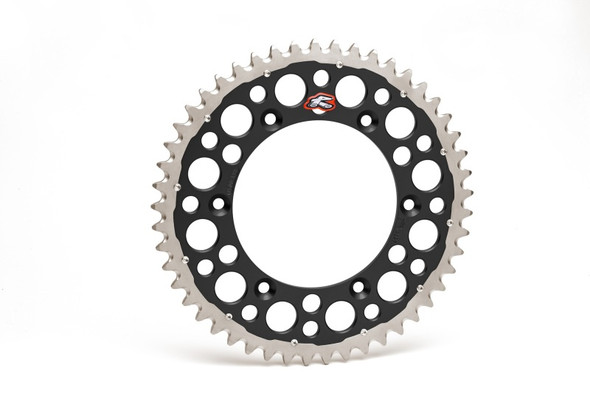
Renthal 16-17 KTM 250 EXC/ 300 EXC Rear Twinring - Black 520-50P Teeth - 2240-520-50GPBK
Renthal
MSRP: $142.50$128.26What is the primary benefit of the dual-material design?The dual-material design delivers exceptional durability and longevity for extended riding sessions, enhancing sprocket lifespan.Is...MSRP: $142.50$128.26 -
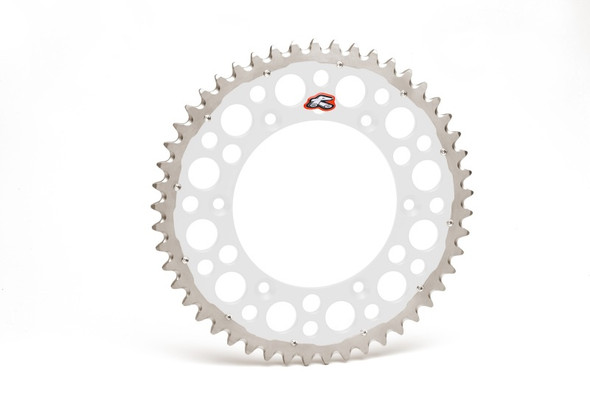
Renthal 20-24 Husq TC250/TX350/FC450/ KTM 250-450 SX/XC/SX-F Rear Twinring - Silver 520-49P Teeth - 2240-520-49GPSI
Renthal
MSRP: $142.50$128.26Is this sprocket compatible with my KTM 125 SX?REN Rear Sprockets fit 1990-2018 KTM 125 SX models, ensuring precise fitment for your motorcycle.How difficult is the installation process for this...MSRP: $142.50$128.26 -
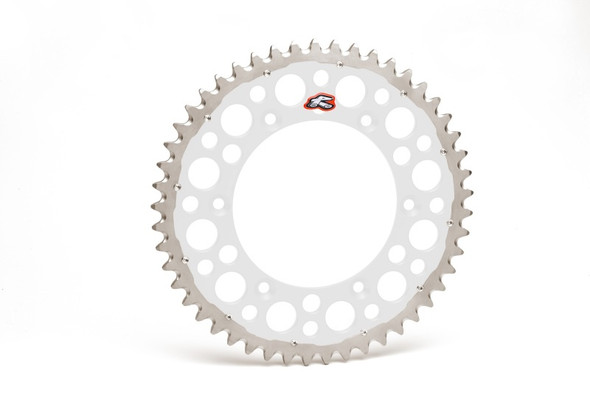
Renthal 23-24 Husqvarna FX350-450/ KTM 350 XC-F Rear Twinring - Silver 520-47P Teeth - 2240-520-47GPSI
Renthal
MSRP: $142.50$128.26Are these sprockets compatible with my motorcycle?Confirming precise fitment with your specific vehicle is essential before installation to ensure optimal performance and safety of these sprockets...MSRP: $142.50$128.26 -
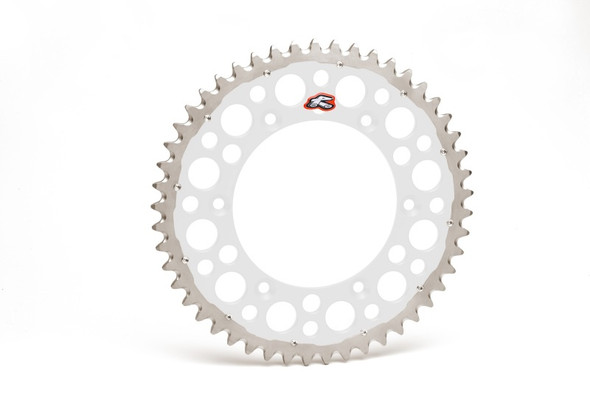
Renthal 00-07 Honda CR 125R Rear Twinring - Silver 520-52P Teeth - 1540-520-52GPSI
Renthal
MSRP: $142.50$128.26What is the recommended installation method for REN Rear Sprockets?REN Rear Sprockets require professional installation, ensuring precise fitment and optimal performance for your specific vehicle...MSRP: $142.50$128.26 -
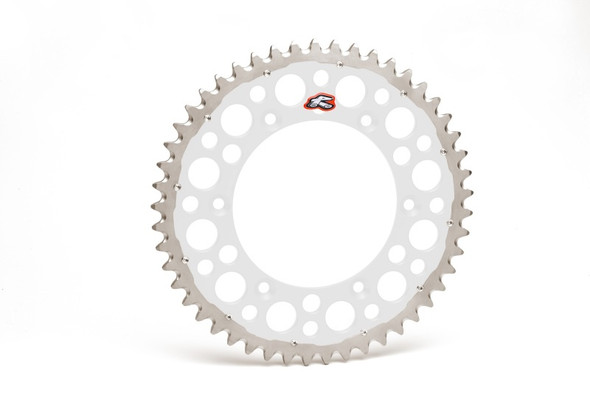
Renthal 84-24 Honda CR 125R/250R/500R/CRF 450L/RL/RX/X/250R Rear Twinring - Silver 520-51P Teeth - 1540-520-51GPSI
Renthal
MSRP: $142.50$128.26What is the warranty period for Renthal sprockets?Renthal sprockets do not have a specific warranty period, but their durable construction ensures exceptional longevity for your motorcycle.Can I...MSRP: $142.50$128.26 -
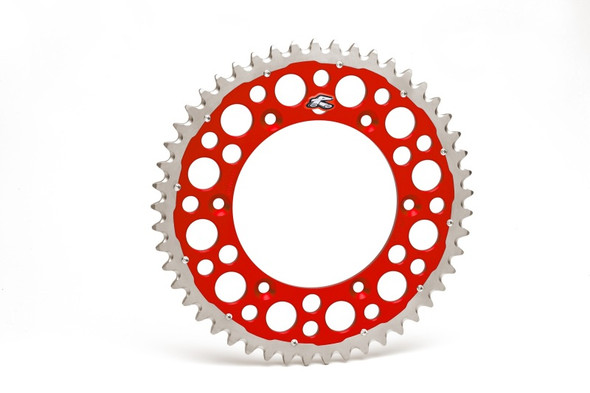
Renthal 84-24 Honda CR 125R/250R/500R/CRF 450L/RL/RX/X/250R Rear Twinring - Red 520-51P Teeth - 1540-520-51GPRD
Renthal
MSRP: $149.98$134.99What is the best way to install a Renthal sprocket?Professional installation is recommended for Renthal sprockets to ensure correct fitment and optimal drivetrain performance.What is the expected...MSRP: $149.98$134.99 -

Renthal 96-17 Honda CRF 230F/ CR250R/ CRF450R Rear Twinring - Red 520-50P Teeth - 1540-520-50GPRD
Renthal
MSRP: $134.99$133.26What is the primary advantage of the Renthal Ultralight Sprocket?Renthal Ultralight Sprockets deliver exceptional durability and extended lifespan, achieving superior chain engagement for smooth...MSRP: $134.99$133.26 -

Renthal 96-17 Honda CRF 230F/ CR250R/ CRF450R Rear Twinring - Black 520-50P Teeth - 1540-520-50GPBK
Renthal
MSRP: $142.50$128.26Do I need to do any modification to the sprocket?REN Rear Sprockets are designed for professional installation and confirm fitment with your specific vehicle for seamless integration.How long does...MSRP: $142.50$128.26 -

Renthal 92-24 Honda CR125R/250R/500R/ CRF250R/X/450R/RWE/RX Rear Twinring - Red 520-49P Teeth - 1540-520-49GPRD
Renthal
MSRP: $149.98$134.99What is the typical lifespan of a Renthal sprocket?REN Rear Sprockets deliver superior durability, achieving an extended lifespan that significantly outlasts standard sprockets through their advanced...MSRP: $149.98$134.99
Sprockets are the direct link between engine power and rear wheel acceleration — tooth count, material, and pitch determine final drive ratio, chain wear rate, and how aggressively your powertrain responds across every RPM range. Motor Sport Mayhem stocks over 650 sprockets from 92 brands spanning $1.99 to $4,999.99, covering everything from budget daily riders to full competition setups built for maximum torque transfer and minimal drivetrain loss.
Our Top Picks for Sprockets
Each of these products was selected by our performance specialists based on engineering quality, real-world application results, and consistent customer feedback across street, track, and off-road use.
ACT Mod-Twin Kits
ACT | $2104.00
A twin-disc race clutch system engineered for extreme torque capacity well beyond what stock drivetrain components can handle.
- Sprung mono drive hub design absorbs driveline shock and reduces transmission stress under aggressive power delivery
AON Clutch - Twin - 7.25in
Action Clutch | $1377.45
A compact 7.25-inch twin-disc race clutch paired with a chromoly flywheel for maximum rotational efficiency and heat resistance.
- Chromoly flywheel significantly reduces rotational mass compared to cast iron OEM units, sharpening throttle response
AFE Diff/Trans/Oil Covers
aFe | $430.00
A machined billet transmission pan designed to increase fluid capacity and improve thermal management in high-load drivetrain applications.
- Increased fluid volume lowers operating temperature, directly extending transmission component life under towing or performance use
ABR Prop Shafts
All Balls Racing | $790.35
A heavy-duty prop shaft replacement engineered for UTV applications where stock shafts fail under hard off-road and performance use.
- Built to exceed OEM torque ratings, making it the correct upgrade when running oversized tires or increased engine output
AMS Master Cylinder Conversion
AMS | $494.95
A complete clutch master cylinder conversion kit that resolves the chronic hydraulic fade and inconsistent engagement feel common in high-power builds.
- Larger bore master cylinder increases hydraulic leverage, delivering firmer, more consistent clutch pedal feel under race conditions
ARB Air Locker Kits
ARB | $2604.95
A pneumatically actuated differential locker that delivers 100% torque lock on demand while reverting to open differential behavior when disengaged.
- Air actuation provides positive, repeatable engagement without the electrical failure points associated with e-locker systems
ART Easy Link Kit
Artec Industries | $1484.99
A fully adjustable three-link suspension fabrication kit designed to provide precise axle geometry control in serious off-road builds.
- Geometry-adjustable upper link allows pinion angle tuning without cutting or rewelding, critical for driveshaft vibration elimination
ATS Flex Plates
ATS Diesel | $804.99
An SFI-certified billet flexplate built to withstand the extreme torque loads produced by modified diesel powerplants where stock stampings crack and fail.
- SFI certification confirms the flexplate meets rigorous safety standards required for sanctioned drag racing competition
GBE Diff Covers
Banks Power | $425.00
A ram-air differential cover engineered to actively cool differential fluid using vehicle forward motion, reducing gear and bearing wear in sustained high-load use.
- Integrated hardware kit ensures a complete, leak-free installation without sourcing additional components separately
BBK Clutch Cable & Fwall Adjt
BBK | $169.99
An adjustable clutch quadrant, cable, and firewall adjuster kit that eliminates the slop and inconsistent engagement point of worn stock cable clutch systems.
- Firewall adjuster allows precise engagement point tuning without tools, essential when running an upgraded pressure plate or flywheel
How to Choose the Right Sprockets
The single most important decision when selecting a sprocket is tooth count relative to your final drive ratio goal — not brand, not price. A difference of one tooth on a front sprocket produces a larger ratio change than two or three teeth on a rear, and getting that wrong means either over-revving at highway speed or lugging the engine out of its powerband in corners. Beyond ratio, material and manufacturing quality determine whether a sprocket lasts 5,000 miles or 25,000, and whether it maintains pitch accuracy long enough to avoid accelerated chain wear.
Key Specifications
Tooth count and pitch must match your existing chain standard — 420, 428, 520, 525, or 530 are the most common pitches in performance and racing applications. Lighter 520-pitch chains and sprockets are the go-to conversion for track and competition bikes where rotational mass reduction matters, while 525 and 530 pitches carry more torque capacity for high-displacement or forced-induction applications. Never mix pitches between front sprocket, rear sprocket, and chain — even a partial mismatch causes immediate accelerated wear and can lead to chain skip under load.
Material selection breaks down into three tiers: stamped steel OEM replacements, heat-treated chromoly steel, and aluminum. Chromoly steel sprockets offer the best balance of weight, durability, and cost for performance street and track use — they resist wear significantly better than mild steel while staying within a reasonable weight penalty. Aluminum sprockets, typically 7075-T6 or 6061, cut rear sprocket weight by 60–70% compared to steel but wear faster, making them appropriate for race-only builds where sprockets are inspected and replaced on a schedule rather than run to failure.
Tooth profile geometry is where budget sprockets fall apart. Precision-cut narrow-wide or undercut tooth profiles maintain chain engagement under tension and reduce the tendency for the chain to skip or jump under hard acceleration or deceleration. Stamped sprockets with inconsistent tooth-to-tooth spacing accelerate chain elongation because the load isn't distributed evenly across all engaged links — you'll see uneven wear patterns on the chain plates within a few thousand miles if the sprocket tolerances are loose.
For drivetrain builds where you're also upgrading the clutch or transmission, confirm your sprocket selection after finalizing gearbox ratios — changing a gearbox sprocket or final drive ratio without accounting for overall gearing can result in a setup that's fast in one condition and slow in every other. The sprocket is the cheapest and easiest variable to adjust in the final drive equation, so use it deliberately.
Sprocket Tooth Count vs. Final Drive Ratio Reference Guide
| Front Teeth | Rear Teeth | Final Drive Ratio | Typical Application |
|---|---|---|---|
| 13 | 50 | 3.85:1 | Motocross / short-circuit racing — maximum low-end pull |
| 14 | 48 | 3.43:1 | Enduro / trail — balanced low-end torque and mid-range |
| 15 | 45 | 3.00:1 | Supermoto / track day — neutral street-to-track compromise |
| 16 | 42 | 2.63:1 | Street performance — strong top speed, reduced fuel consumption |
| 17 | 40 | 2.35:1 | Highway / touring — overdrive feel, low RPM cruising |
| 15 | 38 | 2.53:1 | Drag / roll racing — tall gearing for maximum terminal speed |
Price Guide
Entry ($1.99–$120): Stamped steel or basic sintered sprockets suited for stock-power daily riders and casual weekend use. Brands like BikeMaster and ProTaper cover this segment with reliable OEM-spec replacements that are a direct fit and offer acceptable service life when maintained properly. Not the right choice for track use or significantly modified powertrains.
Mid-range ($120–$500): This is where the majority of performance riders land, and for good reason — heat-treated chromoly steel and entry-level aluminum sprockets from brands like Renthal and Vortex Racing deliver measurably better wear resistance, tighter manufacturing tolerances, and genuine weight savings over budget options. Most street performance and track day builds are well-served at this price point without paying for features only a professional racer will exploit.
Premium ($500–$4,999.99): Full race kits, billet machined components, complete drivetrain conversion packages, and high-end clutch system bundles that include sprocket-adjacent drivetrain hardware sit in this tier. The cost is justified for sanctioned competition builds, high-horsepower applications with strict safety requirements, and off-road builds where component failure is a safety issue rather than just an inconvenience.
Who Is This For?
Sprockets serve applications from relaxed daily commuting all the way to professional drag competition, and the right product differs substantially between those extremes — here's how our catalog maps to real use cases.
Drag Racing — 8.1/10
Sprockets score highest in drag racing because final drive ratio optimization is one of the few remaining variables a racer can dial in cheaply after the engine and suspension are sorted. Changing rear tooth count by two or three teeth can move the shift point into a stronger RPM window or raise terminal speed without touching the engine. Combined with a lightweight chromoly or steel front sprocket, the rotational mass reduction directly improves 60-foot times on launched applications.
Racing Competition — 8.0/10
Circuit and road racing applications demand sprockets that maintain pitch accuracy through sustained high-RPM loading across full race distances, not just a single pass. Aluminum rear sprockets are standard in this environment because the weight reduction at the outermost point of the wheel assembly has a disproportionate effect on acceleration and deceleration response. Teams running scheduled maintenance intervals can tolerate the faster wear rate of aluminum because sprockets are checked and replaced proactively.
Track / Autocross — 7.8/10
Track day and autocross riders benefit from a slightly taller or shorter ratio than street spec depending on course layout — shorter, tighter courses favor a lower ratio for quicker drive out of corners, while flowing circuits reward taller gearing for better top-end pull. Heat-treated steel sprockets are the practical choice here because track day frequency is typically lower than professional racing, and steel's longer service life means a single sprocket set covers multiple seasons without concern.
Street Performance — 7.7/10
Street performance builds represent the largest volume of sprocket sales because a ratio correction or upgrade sprocket is often the first modification a rider makes after buying a used machine tuned for a different purpose. The priority on the street is durability and consistent engagement under varying load conditions, not maximum weight reduction — chromoly steel hits the sweet spot here. Upgraded sprockets also correct for the ratio change introduced when moving to taller tires, which is a common requirement after a suspension or wheel upgrade.
Weekend Off-Roading — 7.7/10
Off-road applications score well because chain drive UTVs and dirt bikes require sprocket replacements more frequently due to mud, debris, and the high shock loads from trail riding — having quality sprockets in the maintenance cycle matters. Steel is the correct material choice for off-road because trail conditions are corrosive and abrasive in ways that chew through aluminum quickly. The drivetrain as a whole takes significant abuse off-road, and a quality sprocket combined with a matching chain kit is one of the most effective preventive maintenance investments available.
Trusted Sprockets Brands We Carry
Renthal has been the benchmark for road racing sprockets for decades, with their 428 and 520 hard-anodized aluminum rear sprockets used at every level of professional competition globally — their alloy specification and tooth profile geometry are industry reference points. Vortex Racing manufactures in-house in the USA with CNC-machined 7075-T6 aluminum and induction-hardened steel sprockets held to tolerances tighter than most competitors, making them the preferred choice for club racers who want professional-grade hardware without factory team pricing. ProTaper and BikeMaster serve the high-volume OEM-replacement and entry-level performance market with consistent quality and broad application coverage across dirt bike and ATV platforms. EBC Powersports brings the same materials engineering discipline from their brake product lines into drivetrain components, offering sprocket kits with matched chain combinations that have documented wear compatibility. BikeMaster's catalog depth across hundreds of applications makes them a reliable source for riders who need a direct OEM replacement that ships fast without compromising on fit or steel hardness rating.
Frequently Asked Questions
Are ACT clutches hard to drive in daily traffic?
ACT's performance clutch kits span a wide range of clamp load ratings, and pedal effort scales directly with pressure plate clamp force — their street-oriented units with sprung hub discs are generally comparable to a firm OEM clutch and manageable in stop-and-go driving. It's the full race, unsprung disc configurations with maximum clamp load that become genuinely fatiguing in city traffic, because those setups prioritize torque capacity over modulation. If you're building a dual-purpose car, selecting an intermediate clamp load with a sprung disc gives you meaningful capacity gains without the leg fatigue. The engagement point on high-clamp clutches is also narrower, which requires more driver adaptation than a stock clutch but becomes natural within a few hundred miles.
Are aftermarket brake discs any good?
Quality aftermarket brake rotors from reputable manufacturers are not only as good as OEM — they're often engineered specifically for the thermal loads that OEM rotors weren't designed to handle. The critical variables are metallurgy, heat treatment, and dimensional tolerance: a properly spec'd aftermarket rotor in cast iron or two-piece floating design will outperform OEM under repeated hard braking where thermal cycling causes stock rotors to warp. Budget rotors from unknown sources fail this test because they use inferior iron alloys with inconsistent carbon content, which leads to uneven hardness and hot spotting. Brands with documented track records in competition — where rotor failure has real consequences — are the safest reference point for street buyers. Pair any rotor upgrade with matched performance brake pads to realize the full benefit of the upgrade.
Are aftermarket differential covers worth it?
A quality aftermarket differential cover is worth the investment for any vehicle that tows regularly, runs higher power output than stock, or sees sustained high-load operation — the stock stamped steel covers offer minimal fluid capacity and no thermal management. Billet aluminum and nodular iron aftermarket covers increase fluid volume by 20–50% depending on design, which directly lowers operating temperature and slows gear and bearing wear. Some designs integrate cooling fins or active airflow channels that reduce differential temperature by 20–40°F under sustained load — meaningful numbers when you're talking about fluid viscosity stability and additive life. The installation is typically a direct bolt-on requiring no machining, making the cost-to-benefit ratio one of the strongest in the drivetrain upgrade category.
Are aftermarket master cylinders better than stock?
Aftermarket master cylinders are a genuine functional upgrade when the OEM bore size is mismatched to the clutch or brake system's hydraulic requirements — and on many performance builds with upgraded clutches or big brake kits, the stock master cylinder becomes the limiting factor in pedal feel and modulation. A larger bore master cylinder displaces more fluid per millimeter of pedal travel, increasing clamping force and firming up pedal feel, while a smaller bore increases travel sensitivity at the cost of maximum force. The OEM master cylinder is sized for stock components; once you've upgraded the pressure plate clamp load or caliper piston area, a matched aftermarket master cylinder recalibrates the hydraulic ratio to suit. Stainless steel internals and CNC-machined bodies on quality aftermarket units also resist the corrosive effects of high-performance brake fluids better than OEM plastic and cast aluminum assemblies.
Are air lockers more reliable than electronic lockers?
Air lockers have a well-established reliability advantage over e-lockers in sustained off-road use, primarily because the pneumatic actuation system has fewer failure points in harsh environments — the solenoid valve, compressor, and lines are all external to the differential and serviceable without disassembly. E-lockers rely on an electric motor or solenoid mounted inside the differential housing, where heat, mud ingress, and vibration can cause failures that require full axle disassembly to diagnose and repair. Air lockers disengage fully when not activated, restoring open differential behavior and eliminating the binding that partially engaged e-lockers sometimes produce on tight turns. The tradeoff is compressor dependency — a failed air compressor or kinked line leaves you without locker function, so a backup compressor or manual inflation capability is worth carrying on remote trips. Overall, for serious off-road and rock crawling use, air lockers are the preferred choice among professional build shops for their positive engagement and field-serviceable design.
Building something specific? Our performance specialists can help you select the right Sprockets for your application — street, track, or full race build.