
Driveshafts
- Product
- Qty in Cart
- Quantity
- Price
- Subtotal
-
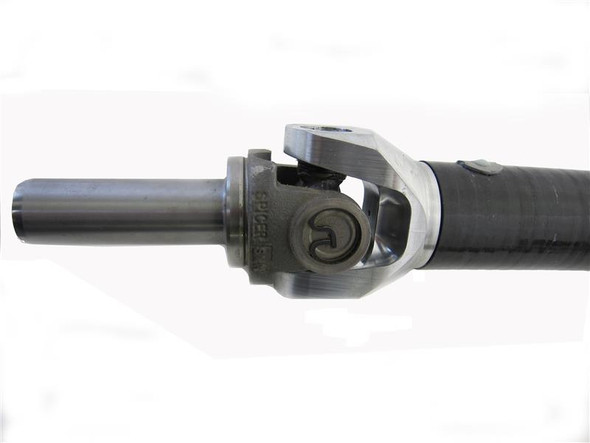
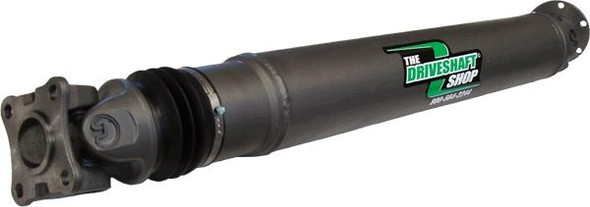
DSS Subaru 2008-2014 WRX STi 1-Piece Carbon Fiber Driveshaft SUSH9-C - 610166
Driveshaft Shop
$1,299.98Is this driveshaft compatible with my 2008 Subaru Impreza?Yes, the DSS Carbon Imp Driveshaft is engineered to precisely fit your 2008 to 2014 Subaru Impreza models.How much weight does this carbon...$1,299.98 -
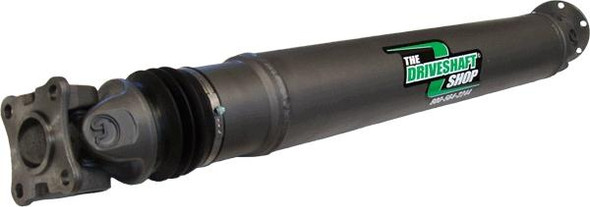
DSS 2004-2006 Cadillac CTS-V 6-Speed Manual 3.5in Aluminum 1-Piece Dual CV Driveshaft GMCTSV-2-A - 610118
Driveshaft Shop
$1,554.87What is the typical lifespan of a DSS Aluminum Dom Driveshaft?Proper installation and regular inspection of your DSS Aluminum Dom Driveshaft are vital for maximizing its lifespan for your 2004-2006...$1,554.87 -

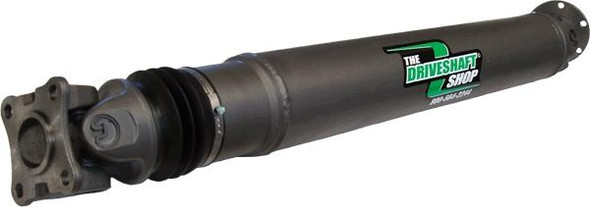
DSS Subaru 2004-2007 STI 6-Speed (R180 Rear) 1-Piece Carbon Fiber Driveshaft SUSH2-C - 610098
Driveshaft Shop
$1,299.98DSS Subaru 2004-2007 STI 6-Speed (R180 Rear) 1-Piece Carbon Fiber Driveshaft SUSH2-CThis Part Fits:YearMakeModelSubmodel2004-2007SubaruImprezaWRX STI2007Subaru$1,299.98

DSS Mitsubishi 2001-2007 Evo VII / VIII / IX 2-Piece Rear Driveshaft (Non-AYC) MISH8 - 610090
Driveshaft Shop
$1,631.60DSS Mitsubishi 2001-2007 Evo VII / VIII / IX 2-Piece Rear Driveshaft (Non-AYC) MISH8This Part Fits:YearMakeModelSubmodel2003-2006MitsubishiLancerEvolution2005-2006$1,631.60
A driveshaft is the rotating assembly that transfers torque from your transmission or transfer case to the axles, and the wrong one — undersized, improperly balanced, or built from inferior steel — will detonate under load before you ever hit your power ceiling. Motor Sport Mayhem stocks 64 driveshafts and drivetrain components spanning $1.99 to $4,999.99, sourced from brands that supply everyone from weekend trail runners to full-competition drag and road race programs.
Our Top Picks for Driveshafts
Every product below was selected based on verified performance results, material engineering, and real-world application across street, off-road, and competition builds.
ACT Mod-Twin Kits
ACT | $2104.00
A race-spec twin-disc clutch kit engineered to handle torque loads that destroy factory clutch assemblies under sustained competition use.
- Rated to 895 ft-lbs of torque — purpose-built for forced induction and high-output competition powerplants
AON Clutch - Twin - 7.25in
Action Clutch | $1377.45
A 7.25-inch twin-disc race clutch paired with a chromoly flywheel for a complete drivetrain engagement upgrade in a single kit.
- Chromoly flywheel included — eliminates the common failure point of mismatched components from separate purchases
AFE Diff/Trans/Oil Covers
aFe | $430.00
A CNC-machined transmission pan cover that increases fluid capacity and thermal management in heavy-duty and performance drivetrain applications.
- Precision-machined aluminum construction adds structural rigidity and dramatically improves heat rejection over stamped OEM pans
ABR Prop Shafts
All Balls Racing | $790.35
A direct-replacement prop shaft engineered to exceed OEM specifications in strength and wear resistance for off-road and powersport applications.
- All Balls Racing components are built to handle abuse that factory shafts fail under — particularly under high-angle articulation and impact loads
AMS Master Cylinder Conversion
AMS | $494.95
A complete clutch master cylinder conversion kit that restores consistent hydraulic engagement feel when factory units fade or fail under performance demands.
- Full conversion kit — cylinder included — so there's no hunting for compatible hardware separately
ARB Air Locker Kits
ARB | $2604.95
A pneumatically actuated locking differential system that delivers on-demand 100% torque lock for maximum traction in demanding off-road terrain.
- ARB air lockers are the benchmark for reliability in the locking differential segment — trusted by professional expedition and competition off-road teams globally
ART Easy Link Kit
Artec Industries | $1484.99
A geometry-correcting three-link suspension fabrication kit with adjustable upper links designed to restore proper driveline angles under extreme lift scenarios.
- Gussetted, laser-cut steel construction with adjustable upper links — critical for eliminating driveshaft vibration caused by incorrect pinion angle after a lift
ATS Flex Plates
ATS Diesel | $804.99
An SFI 29.3-certified billet steel flexplate engineered to survive the torque spikes and harmonic stress that crack and destroy factory flexplates in high-output diesel builds.
- SFI certification confirms independently verified burst strength — mandatory for sanctioned competition and a strong indicator of real-world durability
GBE Diff Covers
Banks Power | $425.00
A cast aluminum differential cover that increases gear oil capacity and improves thermal management to protect ring and pinion longevity in towing and performance applications.
- Banks' finned cover design actively dissipates heat — a real engineering advantage over stamped steel OEM covers that trap heat and accelerate gear oil breakdown
BBK Clutch Cable & Fwall Adjt
BBK | $169.99
An adjustable clutch cable and firewall adjuster kit that eliminates the slop and imprecise engagement caused by worn or undersized factory clutch actuation hardware.
- Firewall adjuster included — allows precise clutch pedal engagement point tuning without cutting or modifying factory sheet metal
How to Choose the Right Driveshafts
The single most common driveshaft failure mode is under-specced material meeting over-specced power — a factory 1310-series U-joint yoke rated for 350 ft-lbs does not survive behind a built motor pushing 600. Choosing correctly means matching the shaft's torque rating, U-joint series, tube diameter, wall thickness, and balance specification to your actual power output and RPM range — not the platform's stock numbers.
Key Specifications
Tube material and diameter are the foundation of any driveshaft selection. DOM (Drawn Over Mandrel) steel is the industry baseline — strong, weldable, and cost-effective for street and mild track use. Chromoly (4130 or 4340) adds tensile strength without significant weight gain, making it the correct choice for high-torque drag and off-road builds. Carbon fiber driveshafts reduce rotational mass by 60–70% compared to steel, which directly raises the critical speed threshold and reduces driveline inertia — the performance gain on road race and time attack applications is measurable on a data logger.
U-joint series determines the torque ceiling of the entire assembly. The 1310 series handles up to approximately 1,000 ft-lbs in ideal alignment, the 1350 series bumps that to roughly 1,800 ft-lbs, and the 1480 series is used where torque exceeds 2,500 ft-lbs. Mismatching a small-series U-joint to a high-output build is a guaranteed parts-destruction event — the joint fails first, typically at the worst possible moment. Always spec the U-joint to the application's peak torque with a safety margin, not the engine's rated output.
Balance specification is non-negotiable for anything running above 3,500 RPM at the driveshaft. Factory shafts are balanced to ANSI standards adequate for OEM power levels. Performance shafts should be balanced to ISO 1940 Grade G6.3 or better — high-performance aluminum and carbon fiber shafts are typically balanced to G2.5. An unbalanced shaft introduces harmonic vibration that accelerates bearing wear, destroys transmission tail shaft seals, and creates a resonance that drivers incorrectly diagnose as a worn wheel bearing or bad tire.
Slip yoke and flange compatibility must be confirmed before any driveshaft purchase. Changing transmission or differential ratios, adding a transfer case drop, or installing a lift changes the operating angles and slip-yoke travel requirements. A shaft that binds at full suspension droop or pulls out of the slip yoke at full compression is not just an annoyance — it's a safety failure. Always measure working angle, compressed length, and extended length before ordering, and cross-reference the manufacturer's operating angle specifications.
Driveshaft Tube Diameter and Wall Thickness by Torque and Application
| Torque Range (ft-lbs) | Recommended Tube OD | Wall Thickness | Typical Application |
|---|---|---|---|
| Up to 350 | 2.5" DOM Steel | 0.120" | Street, mild performance, stock engine builds |
| 350–600 | 3.0" DOM or Chromoly | 0.120"–0.134" | Bolt-on modified street, light track, stock-class autocross |
| 600–1,000 | 3.5" Chromoly or 3.0" Carbon Fiber | 0.134" steel / 0.090" CF | Forced induction street, drag prep, moderate off-road |
| 1,000–1,800 | 4.0" Chromoly or 3.5" Carbon Fiber | 0.156" steel / 0.120" CF | High-output drag, competition off-road, built diesel |
| 1,800–2,500 | 4.5" Chromoly | 0.180" | Pro drag, full competition, extreme off-road |
| 2,500+ | 5.0"+ Chromoly — two-piece recommended | 0.200"+ | Pro Mod, top-level competition, custom fabrication required |
Price Guide
Entry ($1.99–$180): Clutch actuation hardware, replacement U-joints, basic prop shaft components, and ancillary drivetrain hardware fall into this range. These are legitimate, functional parts — the value is in getting quality components for wear items and supporting hardware rather than compromising on structural driveline components.
Mid-range ($180–$900): This is where the majority of complete replacement and performance driveshafts live — prop shafts for powersport and off-road applications, performance differential covers, clutch conversions, and flex plates. Most performance enthusiasts building a reliable street or weekend track car find everything they need here, from brands with proven engineering behind them.
Premium ($900–$4,999.99): Full twin-disc clutch systems, air locker kits, high-torque billet driveline components, and complete fabrication kits occupy this tier. The cost is justified when the alternative is repeated parts replacement under competition stress — one destroyed factory shaft during an event costs more in downtime and labor than the upgrade would have.
Who Is This For?
Driveshafts and driveline components serve a wide spectrum of builds — from dedicated drag cars needing maximum torque capacity to daily-driven vehicles that simply need reliable replacement hardware.
Drag Racing — 8.1/10
Drag racing scores highest in this category because driveline torque multiplication under hard launches is precisely where factory shafts, U-joints, and flex plates fail catastrophically. The combination of launch RPM, traction bite, and torque shock loads in a straight-line run creates spike loads that dwarf steady-state numbers. Chromoly shafts, upgraded U-joint series, and SFI-certified flex plates are not optional upgrades in serious drag builds — they are structural safety components.
Racing Competition — 8.0/10
Road racing and competition use scores 8.0 because driveline reliability under sustained high-RPM operation, combined with the weight sensitivity of lap time, makes shaft material selection and balance specification genuinely performance-relevant. A carbon fiber driveshaft that reduces rotating mass by 6–8 lbs at the driveshaft has a measurable effect on throttle response and corner exit acceleration. Reliability under heat and sustained load — not just peak strength — is the competition standard here.
Track / Autocross — 7.8/10
Track day and autocross builds benefit from driveline upgrades primarily through improved clutch engagement precision and elimination of the driveline slop that makes consistent, repeatable lap times difficult. A worn slip yoke, stretched clutch cable, or improperly balanced shaft introduces variables that no driver skill compensates for. Clutch actuation hardware, prop shafts, and balance work are high-return investments for drivers chasing personal bests.
Street Performance — 7.7/10
Street performance applications score 7.7 — strong but appropriately lower than competition categories because the torque cycles and RPM exposure are less severe than track use. The primary driver here is supporting power adder upgrades: a turbocharged or supercharged street build that exceeds factory driveline ratings needs shaft and clutch upgrades before those parts fail on the road. Differential covers and fluid management products are particularly relevant for street performance builds that see occasional towing or spirited driving.
Weekend Off-Roading — 7.7/10
Off-road applications match street performance at 7.7 because the demands are fundamentally different but equally real — high articulation angles, impact loads from rocks and obstacles, and sustained low-speed high-torque crawling all stress driveline components in ways that pavement use never does. Prop shafts, air locker systems, and differential covers are the core upgrade path here. A failed front prop shaft at a trail obstacle is a recovery operation; a properly specced upgrade prevents it entirely.
Trusted Driveshafts Brands We Carry
Yukon Gear & Axle has built its reputation on axle shafts and ring-and-pinion sets engineered to OEM-replacement tolerances with material upgrades — their chromoly axle shafts are a benchmark for off-road builds. ACT (Advanced Clutch Technology) produces clutch systems from proprietary friction material compounds developed through direct motorsport testing, with torque ratings that are conservatively stated and real-world verified. ARB's air locker systems have logged decades of field use in professional expedition and competition off-road environments, earning a reliability record no marketing claim can replicate. Exedy supplies OEM clutch components to multiple major automakers and applies that precision manufacturing to their performance aftermarket line. All Balls Racing focuses on powersport and off-road driveline components — prop shafts, bearing kits, and u-joints — built to exceed OEM specifications rather than simply match them. ATS Diesel specializes in heavy-duty driveline components for high-output diesel applications, where torque levels demand billet construction and SFI certification that most aftermarket brands don't pursue.
Frequently Asked Questions
Are performance clutch kits difficult to drive on the street?
The answer depends entirely on the friction material and clamp load specification of the clutch. Stage 1 and Stage 2 performance clutches using organic or Kevlar-based friction materials typically engage progressively and feel similar to a firm OEM clutch — daily drivability is largely preserved. Once you move to full-face ceramic or multi-disc race clutch configurations, engagement becomes significantly more abrupt and the friction zone narrows considerably, which demands precise throttle and clutch coordination. Race-spec twin and triple-disc systems are genuinely not suitable for street use — they're engineered for full-engagement launches, not stop-and-go traffic. Match the clutch specification to the application honestly; overspending on a race clutch for a street car creates an unpleasant driving experience without any performance benefit in that context.
Are aftermarket differential covers actually worth buying?
Yes, for any application that runs the differential hard — towing, off-road, or performance driving. The OEM stamped-steel differential cover holds the minimum fluid volume required for normal operation with zero thermal management engineering. Aftermarket covers in cast aluminum or nodular iron add 20–50% more fluid capacity, which directly lowers operating temperature and extends gear oil and gear life. Finned designs actively dissipate heat, which is measurable with a thermal camera after a hard run. The return on investment is straightforward: differential rebuilds cost several times more than a cover upgrade, and the failure mode — overheated, broken-down gear oil leading to accelerated wear or spalling — is entirely preventable.
Are aftermarket master cylinders a reliable upgrade over OEM?
When sourced from reputable manufacturers, aftermarket clutch and brake master cylinders are not only reliable but can improve on OEM specifications in bore diameter, seal material, and fluid compatibility. The OEM unit is engineered for cost and longevity at stock power levels — an aftermarket unit can be specced with a different bore diameter to adjust pedal feel and mechanical advantage. Larger bore = more fluid volume per stroke = firmer, shorter pedal travel. Smaller bore = greater mechanical advantage = lighter pedal effort. For clutch applications, the master cylinder works in tandem with the slave cylinder, so both units should be evaluated together rather than upgrading one in isolation.
Are air lockers more reliable than electric lockers?
ARB-style air lockers have an extensive field record and are generally considered more reliable in extreme conditions because the actuation mechanism — compressed air — is simple, powerful, and not dependent on electrical continuity through potentially corroded or damaged wiring. Electric lockers rely on a solenoid and electric motor, which are vulnerable to water intrusion, connector corrosion, and wiring damage in serious off-road environments. The tradeoff is installation complexity: air lockers require an onboard air compressor and plumbing, which adds cost and component count. Both systems lock the differential 100% when engaged — the reliability difference is in the actuation system, not the locking mechanism itself.
Are aftermarket wheel bearings as good as OEM for performance applications?
Quality aftermarket wheel bearings from established manufacturers meet or exceed OEM dimensional and material specifications — the bearing itself, when manufactured to proper tolerances, performs identically. The critical variable is manufacturing tolerance and material grade: a bearing built to ABEC-5 or ABEC-7 standards with through-hardened races and proper cage material is a legitimate OEM replacement. The risk with wheel bearings is in the budget tier, where loose tolerances lead to premature preload loss and accelerated wear. For performance and track applications, selecting a bearing with a higher radial load rating than the OEM specification provides margin against the increased lateral loads generated by performance tires and suspension setups. Proper installation preload and torque specification compliance matters as much as the bearing quality itself.
Building something specific? Our performance specialists can help you select the right Driveshafts for your application — street, track, or full race build.