
Clutch Lines
- Product
- Qty in Cart
- Quantity
- Price
- Subtotal
-

Kuryakyn Brake & Clutch Control Dress-Up Kit Single Disc Front Brakes 96-14 - 9126
Kuryakyn
$116.99Do these clutch lines fit my 2018 Harley Davidson Street Glide?Confirm your specific vehicle's fitment data to ensure these Kuryakyn clutch line components are compatible with your 2018 Harley Davidson Street Glide.Can I install these clutch line parts...$116.99 -
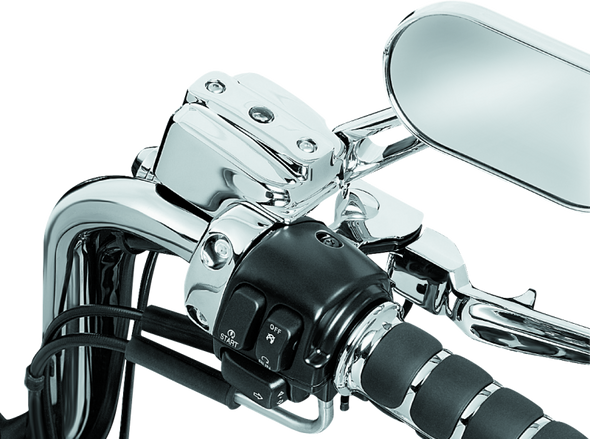
Kuryakyn Brake & Clutch Control Dress-Up Kit Dual Disc Front Brakes 96-07 - 9119
Kuryakyn
$117.99Will the Kuryakyn Clutch Perch Covers fit my 2008 Harley Davidson Road King?Yes, these Kuryakyn Clutch Perch Covers are designed to fit 1996-2017 Harley-Davidson FLHR Road King models and their classic variants.Are these Kuryakyn Clutch Perch Covers...$117.99 -

Cusco Clutch Line 2012+ Scion FRS / Subaru BRZ / Toyota 86 - 965 022 CL
Cusco
MSRP: $125.00$112.50Are Cusco clutch lines compatible with my vehicle?Cusco clutch lines are engineered for specific vehicle applications; always confirm exact fitment for your car model before installation to ensure optimal performance.What is the recommended installation...MSRP: $125.00$112.50 -

Cusco Clutch Line Subaru Impreza GDB/GGB/GRB/GRF / Legacy BL/BP (6spd Only) - 672 022 CL
Cusco
MSRP: $125.00$112.50Do Cusco clutch lines fit my specific car?Cusco clutch lines are engineered for precise vehicle fitment; always confirm compatibility before purchase and installation.Are Cusco clutch lines difficult to install?Professional installation is strongly...MSRP: $125.00$112.50 -
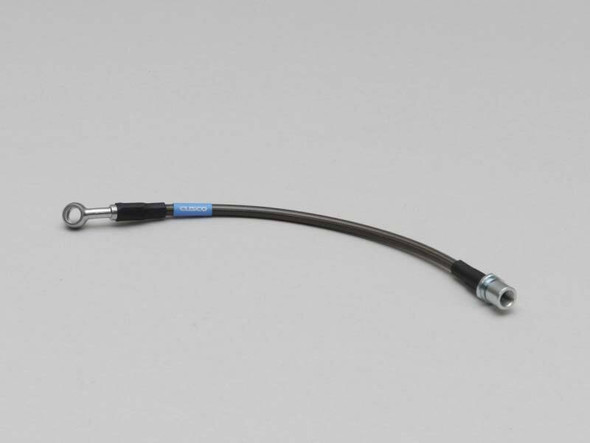
Cusco Clutch Line Subaru Impreza GC8/GF8/GDA / Legacy BC/BD/BE/BF/BG/BH - 660 022 CL
Cusco
MSRP: $125.00$112.50What is the primary benefit of upgrading to Cusco Clutch Lines?Cusco Clutch Lines deliver a crisper, more responsive clutch pedal feel for precise gear changes, significantly enhancing driver control.Are Cusco Clutch Lines designed for aggressive...MSRP: $125.00$112.50
Clutch lines are the hydraulic conduit between your master cylinder and slave cylinder, and the difference between a stock rubber hose and a reinforced braided stainless line is the difference between spongy, inconsistent engagement and a firm, repeatable clutch pedal feel that holds up under sustained heat and pressure. Motor Sport Mayhem stocks 58 clutch line options from 92 brands — ranging from budget-friendly OE replacements to full race-spec hydraulic assemblies built for the highest-demand competition environments.
Our Top Picks for Clutch Lines
Every product below was hand-selected based on verified performance credentials, material quality, and real-world results across street, track, and full competition builds.
ACT Mod-Twin Kits
ACT | $2,104.00
A purpose-built twin-disc race system engineered for maximum torque transfer and consistent pedal feel under full competition loads.
- Rated for extreme torque capacity with a sprung mono drive hub that absorbs driveline shock and reduces transmission stress at the limit
AON Clutch - Twin - 7.25in
Action Clutch | $1,377.45
A compact 7.25-inch twin-disc configuration paired with a chromoly flywheel delivers reduced rotating mass and sharper clutch response for high-revving applications.
- Chromoly flywheel construction reduces rotational inertia while maintaining the structural rigidity needed under aggressive launch and repeated heat cycling
AFE Diff/Trans/Oil Covers
aFe | $430.00
A precision-machined transmission pan that improves fluid capacity and thermal management in high-torque diesel drivetrain applications.
- Machined finish ensures precise sealing surface contact and increased fluid volume, directly supporting the hydraulic system that controls clutch engagement behavior
ABR Prop Shafts
All Balls Racing | $790.35
A heavy-duty propshaft assembly built for powersports drivetrain applications where vibration, misalignment, and shock loading are constant factors.
- Engineered to handle the torsional stress of aggressive off-road use where clutch engagement and disengagement put repeated shock loads through the driveline
AMS Master Cylinder Conversion
AMS | $494.95
A complete master cylinder conversion kit that addresses a known hydraulic bottleneck in the factory clutch actuation system on high-performance turbocharged applications.
- Replaces the OEM master cylinder with a unit sized to deliver firmer, more linear pedal feel — critical when clutch line integrity alone isn't resolving sponginess
ARB Air Locker Kits
ARB | $2,604.95
An air-actuated locking differential system that uses compressed air delivered through dedicated lines to positively lock the differential on demand.
- The pneumatic actuation lines in this system are a direct parallel to hydraulic clutch line engineering — pressure delivery, line integrity, and seal quality determine system responsiveness
ART Easy Link Kit
Artec Industries | $1,484.99
A fully adjustable three-link suspension fabrication kit that brings geometry precision to serious off-road and trail builds where axle articulation demands are extreme.
- Proper three-link geometry directly affects how much axle movement the clutch hydraulic lines must accommodate — line routing and slack tolerance are critical in high-articulation builds
ATS Flex Plates
ATS Diesel | $804.99
An SFI-certified billet flexplate designed for high-torque diesel powerplants where factory stamped steel units crack or fatigue under sustained power.
- SFI 29.3 certification confirms this component meets verified safety and strength standards — the same certification framework that governs race clutch components throughout the drivetrain
GBE Diff Covers
Banks Power | $425.00
A high-capacity differential cover with integrated airflow management that keeps differential fluid cooler under sustained towing, towing, and performance driving conditions.
- Thermal management at the differential directly supports drivetrain longevity — overheated diff fluid degrades the same axle seals that clutch hydraulic lines must route past without contamination
BBK Clutch Cable & Fwall Adjt
BBK | $169.99
An adjustable clutch cable and firewall adjuster kit that gives cable-actuated clutch systems the same engagement point precision that hydraulic clutch lines deliver on modern vehicles.
- The firewall adjuster eliminates cable slack drift over time, restoring a firm, consistent bite point that cable systems lose as the OEM quadrant and cable stretch under heat and use
How to Choose the Right Clutch Lines
The clutch line is the single most overlooked component in a hydraulic clutch system — it sits between a properly sized master cylinder and a correctly spec'd slave cylinder, and if it expands under pressure, every other upgrade you've made to the clutch system is compromised. Factory rubber hoses are rated for OEM pressure ranges and OEM fluid temperatures; once you add power, run the car on track, or upgrade to an aggressive clutch assembly that demands more hydraulic force, the rubber hose becomes the weak point. A braided stainless-over-PTFE (polytetrafluoroethylene) line eliminates radial expansion under pressure, translating pedal input directly into slave cylinder movement with zero compliance loss. That firmness isn't just a feel preference — it's a functional difference in how precisely you can modulate clutch engagement, particularly on corner exits or during high-RPM launches.
Key Specifications
Inner diameter is the first specification to confirm. Most hydraulic clutch lines run a 3/16-inch (4.75mm) inner bore, matching standard automotive brake and clutch hydraulic fittings. Upsizing the inner bore without recalculating the master cylinder bore diameter and pedal ratio can actually reduce hydraulic pressure at the slave cylinder — more volume moved per stroke does not automatically equal more force. The goal is matching line ID to the system's designed hydraulic ratio, not simply going larger because it looks more capable.
End fittings determine both sealing integrity and installation simplicity. Banjo fittings with copper crush washers are common at the master cylinder end; AN-style fittings with -3AN or -4AN threads are standard in competition builds. The fitting material matters: cold-forged steel or aircraft-grade aluminum fittings hold torque specification reliably through repeated heat cycling, while zinc die-cast fittings can fatigue and weep under track conditions. Always confirm end fitting thread pitch and flare type match your master cylinder and slave cylinder ports before ordering — a mismatched fitting on a clutch line is a guaranteed hydraulic leak at the worst possible moment.
PTFE liner quality separates budget lines from race-worthy units. The PTFE inner tube must be smooth-bore, not convoluted — convoluted PTFE adds flexibility but introduces microturbulence in the fluid column and is harder to fully bleed. For street performance and track use, smooth-bore PTFE lined in 304 or 316 stainless braiding gives the best balance of pressure resistance, corrosion resistance, and clean bleeding. The outer jacket — whether PVC-coated for abrasion protection or left bare — affects durability in routing environments where the line contacts chassis or suspension components.
Certification and pressure rating should match the application. DOT-approved lines carry a minimum burst pressure rating well above any clutch hydraulic system demand, but race-specific lines certified to FMVSS 106 or SAE J1401 confirm the line has been independently tested for pressure, temperature, and impulse cycling. If you're running a high-clamp-load aftermarket clutch — particularly twin-disc or multi-disc setups that demand higher actuation force — confirm the line's rated working pressure exceeds the peak pressure your master cylinder can generate, typically calculated from master cylinder bore area and maximum pedal force applied.
Clutch Line Specification Guide by Application
| Application | Recommended Line Type | Inner Diameter | Minimum Burst Pressure |
|---|---|---|---|
| Daily Driver / OE Replacement | Rubber OE-spec or PVC-coated braided | 3/16 in (4.75mm) | 1,500 psi |
| Street Performance / Modified | Braided stainless over PTFE, PVC jacket | 3/16 in (4.75mm) | 2,000 psi |
| Track / Autocross | Smooth-bore PTFE, 304 SS braid, AN ends | 3/16–1/4 in | 2,500 psi |
| Drag Racing | Smooth-bore PTFE, 304 SS braid, swaged AN ends | 1/4 in (-4AN) | 3,000 psi |
| Full Race / Twin-Disc Clutch Systems | 316 SS braid, PTFE, race-end AN fittings | 1/4 in (-4AN) | 3,500+ psi |
| Off-Road / High-Articulation | Braided stainless with protective sleeve, swivel ends | 3/16 in (4.75mm) | 2,000 psi |
Price Guide
Entry ($1.99–$120): OE-replacement rubber hoses and basic braided lines with PVC jackets fall in this range — correct choice for a daily driver restore or a mild street car that hasn't exceeded the OEM clutch's torque capacity. Expect DOT compliance but limited temperature and pressure headroom above stock operating conditions.
Mid-range ($120–$500): This is where most performance and track-day enthusiasts should be shopping. Braided stainless PTFE lines with proper AN end fittings, swaged construction, and verified burst pressure ratings live here. The improvement in pedal feel over OEM rubber is immediate and measurable, and these lines will outlast the rest of the clutch system if routed correctly.
Premium ($500–$4,999.99): Complete hydraulic clutch system overhauls — including master cylinder conversions, custom-length race lines, and integrated slave cylinder assemblies — occupy the upper tier. This is the territory of purpose-built race cars, high-horsepower forced induction builds running twin-disc clutch assemblies, and applications where the entire hydraulic actuation system needs to be re-engineered from the firewall to the bellhousing.
Who Is This For?
Clutch lines serve every level of build from a daily driver in need of an OE refresh to a purpose-built drag car demanding maximum hydraulic integrity under repeated high-load launches — the usage data reflects exactly that spread.
Drag Racing — 8.1/10
Drag racing is the highest-scoring application in this category, and that makes technical sense: a drag car subjects the clutch hydraulic system to the most violent single-event load cycles of any motorsport discipline. Line integrity at the moment of launch — when clutch actuation force peaks and fluid temperature spikes simultaneously — is non-negotiable. Braided stainless PTFE lines with swaged, leak-proof end fittings are standard equipment in any serious drag build, and the AMS-style master cylinder conversion approach is common for builds that have outgrown the OEM hydraulic ratio.
Racing Competition — 8.0/10
Broad competition use scores 8.0/10, reflecting the fact that circuit racing, time attack, and endurance competition all demand clutch hydraulic systems that remain consistent as fluid temperature climbs across a stint. Rubber lines that expand at operating temperature introduce pedal feel variability that makes smooth, consistent clutch engagement — particularly critical at race starts and during pit lane procedures — impossible to repeat. Competition-grade lines maintain a fixed internal volume regardless of temperature, keeping engagement point location stable from the first lap to the last.
Track / Autocross — 7.8/10
Track and autocross use scores 7.8/10 — slightly below full competition because the session durations are shorter and the hydraulic system has recovery time between runs. That said, the upgrade from OEM rubber to braided stainless is one of the highest-value modifications a track-day driver can make relative to cost, because the pedal feel improvement is felt on the first lap and requires zero ongoing maintenance adjustment. Autocross in particular rewards precise clutch modulation on launch, where a firm, consistent pedal directly improves reaction time and launch repeatability.
Street Performance — 7.7/10
Street performance scores 7.7/10 — high enough to make an aftermarket clutch line a legitimate upgrade for any enthusiast running an upgraded clutch assembly. When you install a higher-clamp-load pressure plate or a performance disc, the OEM rubber line becomes the compliance point that softens the very engagement characteristics you paid for in the clutch upgrade. Replacing it with a braided stainless line is a relatively low-cost way to ensure the rest of your clutch system performs as designed. The drivetrain is only as strong as its weakest hydraulic link.
Daily Driving Comfort — 6.3/10
Daily driving scores the lowest at 6.3/10, which is honest: a stock rubber clutch line on an unmodified car works correctly by design, and replacing it purely for comfort on a daily driver is a low-priority modification. The score also reflects that braided lines can transmit slightly more NVH (noise, vibration, harshness) to the pedal than rubber, since they don't absorb minor pressure fluctuations the way OEM hoses do. For a daily driver that's also used on weekends in a performance capacity, the braided line is still the correct choice — the benefits in a performance context outweigh the marginal comfort difference in normal driving.
Trusted Clutch Lines Brands We Carry
The brands that dominate this category earned their position through engineering credibility, not marketing spend. ACT has built race clutch systems for professional motorsport for decades and understands the hydraulic actuation demands of high-clamp-load assemblies better than almost anyone. Clutch Masters brings a similar pedigree with an average product price reflecting their focus on complete, engineered clutch system solutions rather than individual components. Exedy is an OEM supplier to major manufacturers and applies that manufacturing precision to their performance line. Competition Clutch has strong roots in road racing and time attack, where consistent hydraulic feel across varying ambient temperatures is a technical requirement. BBK has spent years solving specific hydraulic and cable actuation problems on high-volume performance platforms, offering bolt-in solutions with real engineering behind the fitment. AMS Performance rounds out the lineup with a focus on complete system conversions that address fundamental hydraulic limitations in factory clutch actuation designs on modified turbocharged platforms.
Frequently Asked Questions
Are ACT clutches hard to drive in daily conditions?
ACT clutches span a wide range of clamp loads and disc materials, so the answer depends entirely on which product line you're looking at. Their street-oriented units with organic friction material are designed to retain close-to-OEM pedal effort and a progressive engagement zone, making them fully manageable in daily traffic. Their race-spec assemblies — particularly twin-disc configurations — use significantly higher clamp loads and sintered or ceramic disc materials that require a deliberate, practiced foot to engage smoothly at low speeds. If your primary concern is daily drivability, stick to their street or street/strip series; if you're building a dedicated track or drag car, the heavier pedal effort of their competition units is a known trade-off for the torque capacity you need.
Are aftermarket brake discs worth buying?
For a vehicle used on track or in any sustained high-speed braking application, yes — the difference between OEM rotors and a quality aftermarket unit in thermal capacity and fade resistance is significant and measurable. Slotted rotors improve pad degassing and bite consistency under repeated hard stops; two-piece floating rotor designs reduce heat transfer to the hub and allow controlled thermal expansion that prevents warping. For a pure daily driver that never sees track use, OEM-spec replacement rotors are often the correct choice because they're engineered to the specific NVH targets of that vehicle. The decision comes down to use case: if you're pushing the brakes hard enough to cause fade or excessive wear on stock rotors, the aftermarket upgrade pays for itself in consistency and longevity.
Are aftermarket master cylinders actually better than OEM?
In a stock application, OEM master cylinders are correctly sized for the hydraulic ratio the system was designed around — they work as intended. The case for an aftermarket master cylinder appears when the rest of the system has been modified: a higher-clamp-load clutch changes the force required at the slave cylinder, and if the master cylinder bore wasn't designed for that demand, you get either insufficient disengagement travel or excessive pedal effort. Aftermarket units allow you to alter the bore diameter to rebalance the hydraulic ratio — a smaller bore increases pressure output per unit of pedal force, while a larger bore increases fluid volume per stroke. The AMS-style clutch master cylinder conversion approach is a good example of addressing this problem with an engineered solution rather than a workaround.
Are aftermarket pressure plates worth the cost over OEM?
If your power output has exceeded the torque capacity of the OEM pressure plate, an aftermarket unit isn't optional — it's a functional requirement to prevent clutch slip under load. Aftermarket pressure plates are engineered with higher diaphragm spring loads to increase clamp force on the friction disc, directly increasing torque capacity. The trade-off is increased pedal effort proportional to the clamp load increase, which is why matching the pressure plate to the actual power level of the build matters — an over-clamped plate on a mild build is just extra pedal effort with no benefit. Quality aftermarket pressure plates also use heat-treated spring fingers and precision-balanced covers that reduce the wear and vibration that factory units develop when subjected to repeated high-RPM engagement cycles.
Are air lockers more reliable than electronic lockers for off-road use?
Air lockers like ARB's system have an exceptionally strong reliability record in serious off-road use, primarily because the actuation mechanism — a compressed air seal engaging a mechanical dog ring — is mechanically simple and easy to diagnose when it fails. The failure modes of an air locker are typically a leaking seal or a failing air supply component, both of which are repairable in the field with basic tools. Electronic lockers integrate an electromagnetic actuator that can be affected by water intrusion, wiring damage, or control module issues — failure modes that are harder to diagnose and repair on the trail. For dedicated off-road and expedition use where recovery from a locker failure in a remote location is a real consideration, the mechanical simplicity of a pneumatic system is a genuine advantage, though modern e-lockers have improved significantly in seal quality and durability.
Building something specific? Our performance specialists can help you select the right Clutch Lines for your application — street, track, or full race build.