
Fans & Shrouds
- Product
- Qty in Cart
- Quantity
- Price
- Subtotal
-
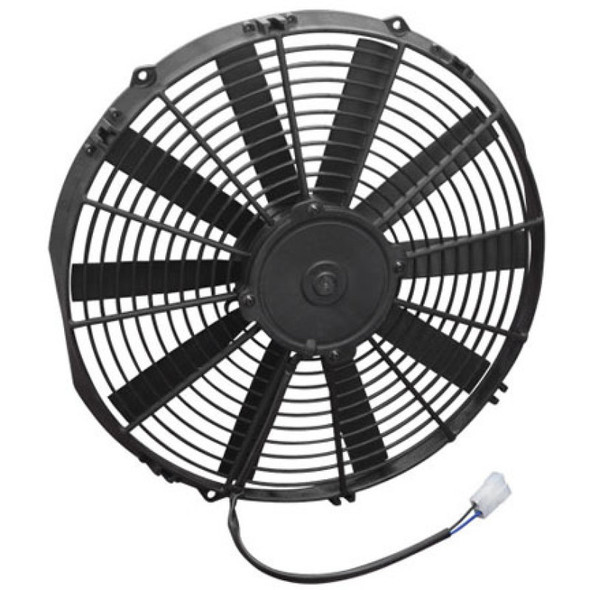
SPAL 1310 CFM 14in Medium Profile Fan - Pull (VA08-AP51/C-23A) - 30101509
SPAL
MSRP: $150.15$122.17Will this fan fit my specific vehicle model?Confirm fitment details with your vehicle's specifications before purchase to ensure proper installation and optimal performance of this fan.Can I install...MSRP: $150.15$122.17 -

SPAL 1186 CFM 13in Medium Profile Fan - Push (VA13-AP51/C-35S) - 30101508
SPAL
MSRP: $138.83$122.17How do I know if this SPAL fan is compatible with my vehicle?Confirm exact vehicle fitment by referencing your specific make, model, and year before proceeding with installation of these Fans &...MSRP: $138.83$122.17 -

SPAL 1168 CFM 13in Medium Profile Fan - Pull (VA13-AP51/C-35A) - 30101507
SPAL
MSRP: $152.84$122.17What is the airflow of the SPAL Pull Fan?This SPAL Pull Fan achieves an impressive 1300 CFM airflow, delivering superior cooling capacity for demanding performance applications.Is professional...MSRP: $152.84$122.17 -
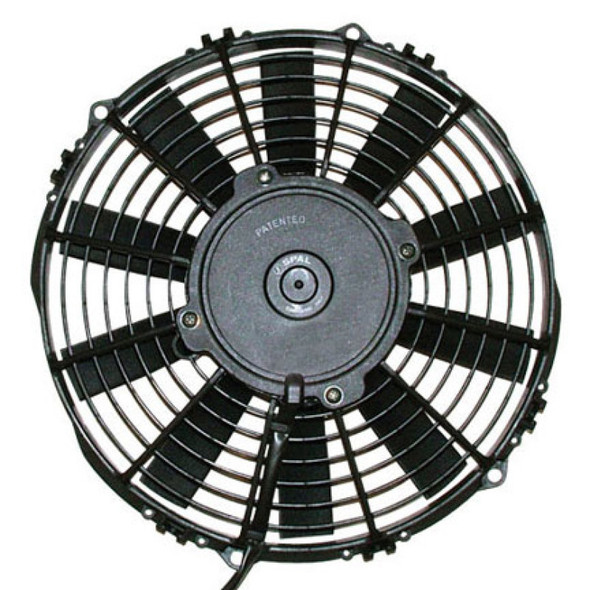
SPAL 1009 CFM 12in Medium Profile Fan - Push (VA10-AP50/C-25S) - 30101505
SPAL
MSRP: $152.84$119.21How do I know if this SPAL fan will fit my vehicle?Confirm your vehicle's specific dimensions and mounting points against product specifications to ensure optimal fitment for this SPAL fan.Is this...MSRP: $152.84$119.21 -
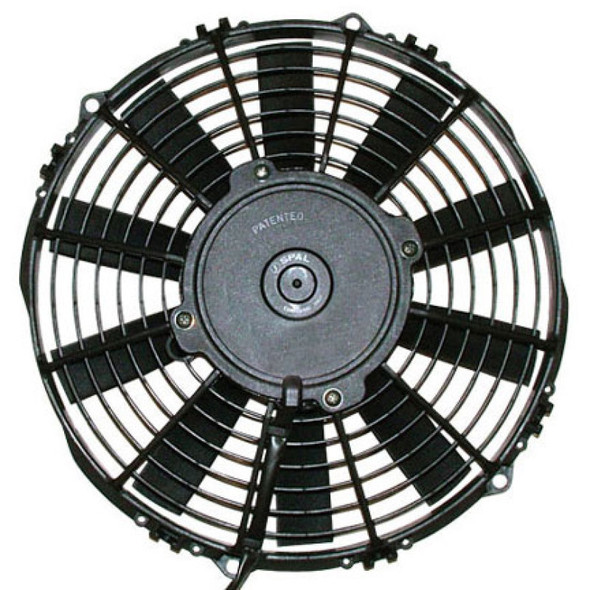
SPAL 1097 CFM 12in Medium Profile Fan - Pull (VA10-AP50/C-25A) - 30101504
SPAL
MSRP: $132.39$119.21What is the airflow rating of this fan?SPAL Fans achieve 1300 CFM airflow, ensuring superior cooling capacity for your vehicle's Fans & Shrouds system.Do I need professional installation for this...MSRP: $132.39$119.21 -
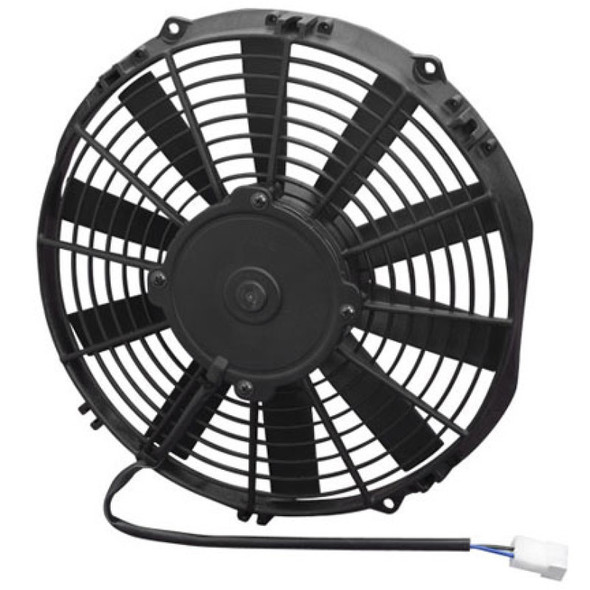
SPAL 932 CFM 11in Medium Profile Fan - Pull (VA09-AP50/C-27A) - 30101500
SPAL
MSRP: $146.63$113.05What is the primary function of a SPAL puller fan?A SPAL puller fan's primary function is to create consistent airflow through the radiator for optimal engine cooling under demanding conditions.What...MSRP: $146.63$113.05 -

QuadBoss 94-95 Polaris 400L 2x4 Fan Motor Only - 495825
QuadBoss
$158.34What vehicles does the QuadBoss fan fit?These fans fit 1990-1997 Polaris 400L 2x4/400L 4x4/Big Boss 400L 6x6 and over ten other specific Polaris models.How hard is it to install this fan?Experience a...$158.34 -
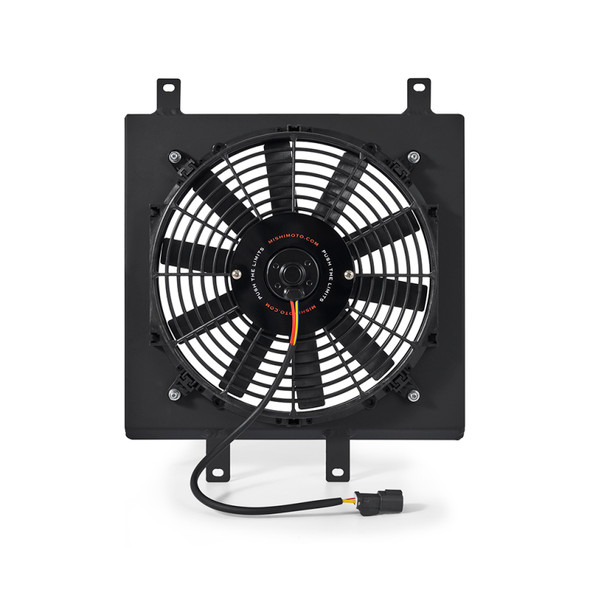

Mishimoto 92-00 Honda Civic Aluminum Fan Shroud Black - MMFS-CIV-92BK
Mishimoto
MSRP: $235.00$213.95Is this a direct fit?Confirm fitment with your vehicle to ensure a direct, plug-and-play installation for your Mishimoto fan shroud kit.How much weight does this save?Achieve a lighter front end as...MSRP: $235.00$213.95 -

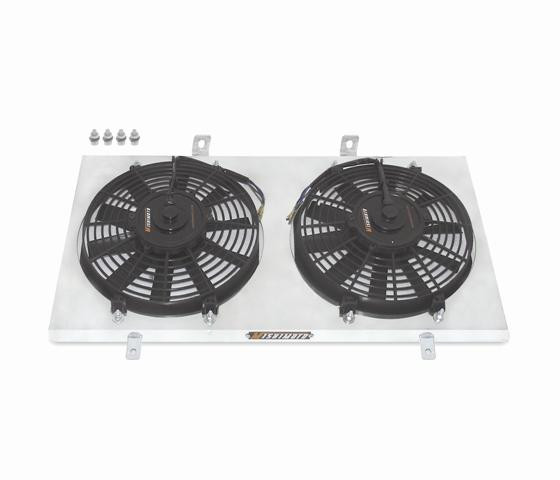
Mishimoto 92-00 Honda Civic / 93-97 Del Sol Aluminum Fan Shroud Kit - MMFS-CIV-92
Mishimoto
MSRP: $209.00$189.95Does the Mishimoto Fan Shroud Kit fit my 1998 Honda Civic?This Mishimoto Fan Shroud Kit precisely fits 1992-2000 Honda Civic models, ensuring seamless integration with your 1.5L engine.What is the...MSRP: $209.00$189.95 -
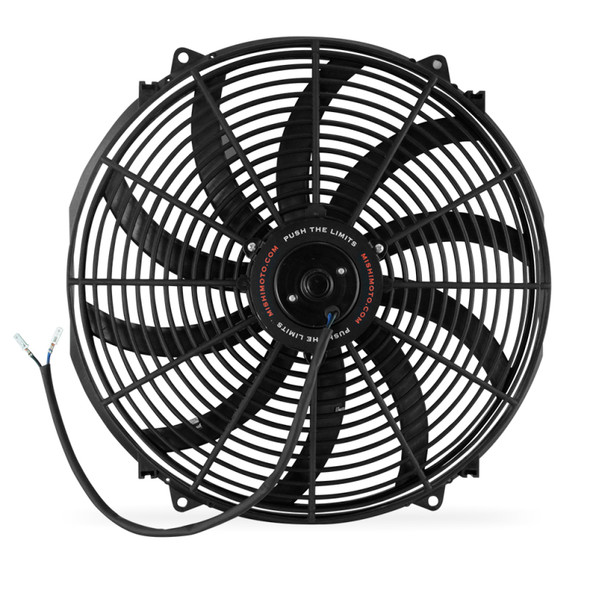

Mishimoto 16 Inch Curved Blade Electrical Fan - MMFAN-16C
Mishimoto
MSRP: $130.00$117.95What is the overall thickness of the MM Electric Fan?The Mishimoto MM Electric Fan boasts an overall thickness of only 2.87 inches, ensuring ample clearance for various vehicle installations.How much...MSRP: $130.00$117.95 -
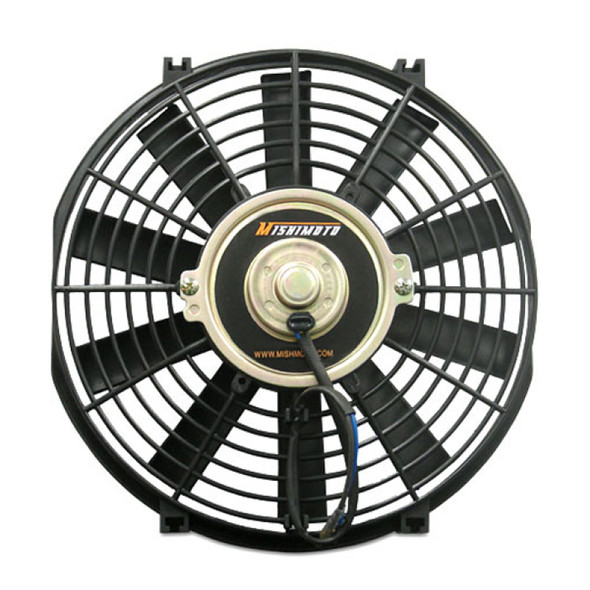
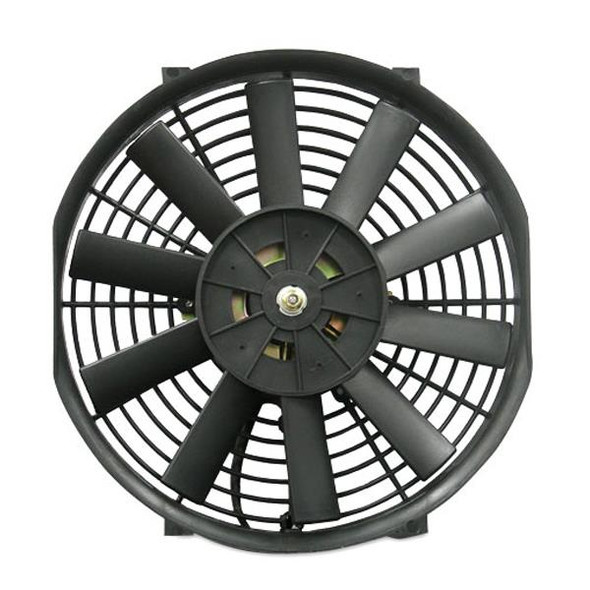
Mishimoto 16 Inch Electric Fan 12V - MMFAN-16
Mishimoto
MSRP: $128.00$115.95How many CFM does the Mishimoto Electric Fan provide?This high-flow fan delivers an impressive 1850 CFM, ensuring superior engine cooling for optimal performance.Is this fan a universal fit?Universal...MSRP: $128.00$115.95 -


Mishimoto 12 Inch Race Line High-Flow Electric Fan - MMFAN-12HD
Mishimoto
MSRP: $203.00$184.95What is the primary benefit of upgrading to a Mishimoto MM Electric Fan?Mishimoto MM Electric Fans deliver superior engine cooling, achieving 1850 CFM of airflow for peak performance under demanding...MSRP: $203.00$184.95
Fans and shrouds are the last line of defense against thermal overload — they determine whether your radiator pulls enough airflow at low speed, in traffic, and on the cooling system's hardest days, and Motor Sport Mayhem stocks 155 in-stock options across 45 brands to cover everything from street builds to full race competition.
Our Top Picks for Fans & Shrouds
Each of these products was selected based on engineering quality, proven real-world thermal performance, and documented value across street, track, and towing applications.
AER Coolant Pumps
Aeromotive | $375.55
A brushless electric coolant pump with remote mount capability delivers consistent high-volume flow independent of engine RPM — critical for idle-heavy applications and race environments where belt-driven pumps cavitate.
- 27 GPM flow rate with 3/4 NPT porting supports high-displacement and forced induction cooling circuits demanding precise, constant flow at all engine speeds
AFE Radiators
aFe | $1,268.00
A bar-and-plate core construction offers superior structural rigidity and dramatically greater turbulence-inducing surface area compared to tube-and-fin OEM radiators, making it purpose-built for sustained high-heat applications.
- Engineered for vehicles subject to continuous heavy load and high ambient temperatures where OEM cooling capacity is measurably insufficient
AMS Expansion Tanks
AMS | $449.95
An auxiliary intercooler tank upgrade addresses the thermal soak limitations of factory coolant reservoir designs on turbocharged platforms by increasing total fluid volume and improving heat dissipation rates between pull sequences.
- Larger reservoir volume delays charge air temperature rise on back-to-back runs — a measurable advantage on track days and street pulls in warm climates
AND Cooling Plates
Anderson Composites | $539.10
A composite radiator cover controls underhood airflow by directing incoming air exclusively through the radiator core rather than bypassing around it — a simple but measurably effective thermal management solution for modified vehicles.
- Carbon fiber construction provides precise fitment with minimal weight addition while surviving underhood temperatures that would deform plastic OEM components
AWE Heat Exchangers
AWE Tuning | $995.00
A larger-core heat exchanger reduces charge air temperatures entering the intake manifold on supercharged platforms by maximizing the surface area available for heat transfer within the factory mounting envelope.
- Designed as a direct OEM replacement with performance-spec core density — no relocating, no fabrication, and full compatibility with factory fan and shroud assemblies
BDD Xtruded Trans Coolers
BD Diesel | $999.95
A double-stacked extruded aluminum transmission cooler design doubles the effective cooling surface area compared to single-pass tube-and-fin units, directly addressing the number-one cause of automatic transmission failure under tow load.
- Universal 1/2-inch tubing fittings and extruded channel construction handle sustained high-temperature ATF cycles that destroy stock coolers during continuous towing or competitive drag racing
BX Radiators
BLOX Racing | $180.00
A two-row aluminum core radiator delivers genuine performance cooling capacity at an accessible price point — the smart upgrade for naturally aspirated builds where OEM plastic-tank radiators are aging or restricting power potential.
- All-aluminum construction eliminates the plastic end-tank failure mode common on high-mileage OEM units and provides better thermal conductivity than the original stamped steel and plastic assembly
BMR Radiator Supports
BMR Suspension | $199.95
A tubular steel radiator support with integrated sway bar mount replaces the stamped OEM cradle with a significantly more rigid structure — directly improving front suspension geometry consistency and cooling component stability under hard cornering.
- Combines chassis rigidity improvement with a direct-bolt cooling support replacement, making it a dual-purpose upgrade suited to both track builds and aggressive street cars
BOS Water Pumps
Bosch | $226.46
A 50-watt OE-spec electric water pump from Bosch provides the precision flow control and long-term durability that aftermarket alternatives frequently fail to match — the correct choice when OEM replacement quality is the non-negotiable priority.
- OE-grade brushless motor construction with matched OEM flow specifications ensures compatibility with factory ECU-controlled cooling circuits without requiring calibration changes
COBB Radiator Shroud
COBB | $435.00
A carbon fiber radiator shroud seals the gap between the fan assembly and radiator core to eliminate recirculated hot air — a precision airflow management upgrade that directly lowers operating coolant temperatures at low vehicle speeds and idle.
- Carbon fiber construction maintains dimensional stability at sustained high underhood temperatures where OEM plastic shrouds warp, gap, and allow hot air recirculation back through the core
How to Choose the Right Fans & Shrouds
The single biggest mistake buyers make in this category is selecting a fan by amperage draw or blade count without accounting for shroud sealing efficiency — an unshrouded fan moves roughly 40–60% of the airflow it would achieve with a properly fitted shroud directing the full face of the radiator core through the fan disc. Fans and shrouds are a system, not independent components, and that system must be matched to your radiator's core dimensions, your vehicle's idle-speed airflow requirements, and the sustained thermal load your application generates.
Key Specifications
Fan CFM ratings are the most cited — and most misunderstood — specification in this category. Manufacturers test peak CFM against zero static pressure, which bears no resemblance to the real-world resistance created by a mounted radiator core. When comparing fans, look for CFM ratings tested at realistic static pressure values (typically 0.10–0.25 inches of water column for a street radiator core), or use blade pitch, motor winding density, and shroud throat diameter as proxy indicators of real-world performance.
Motor type separates budget from performance-grade fans at a fundamental level. Brushed motors are cheaper and acceptable for mild street use but degrade meaningfully after 50,000–80,000 cycles, particularly in high-heat underhood environments. Brushless motors eliminate contact wear entirely, maintain consistent CFM output across their full service life, and handle the duty cycles required for track use, towing, and high-ambient-temperature operation without thermal shutdown events. For any application beyond basic street replacement, brushless is the correct specification.
Shroud material matters more than aesthetics. Injection-molded OEM-style plastic shrouds are adequate for stock power levels but become a liability when underhood temperatures climb above 230°F — they warp at the sealing edges, creating recirculation gaps that defeat the entire purpose of the shroud. Fiberglass and carbon fiber shrouds maintain dimensional stability across the full operating temperature range and are the correct choice for any turbocharged, supercharged, or track-driven application. When the shroud gaps, coolant temperatures rise; it is that direct a relationship.
Blade count, pitch angle, and tip clearance collectively define where in the RPM range a fan is most efficient. Fewer blades with aggressive pitch move more air at lower speeds — correct for electric fans that operate at a fixed RPM. More blades with shallow pitch reduce noise and work better as mechanical fans where RPM varies with engine speed. Tip clearance between the blade outer diameter and the shroud inner wall should be 3–5mm; tighter than 3mm risks blade contact during thermal expansion, wider than 5mm allows bypass air to recirculate rather than drawing through the core.
Electric Cooling Fan Sizing Reference by Cooling Demand
| Application / Heat Load | Minimum Fan CFM (at 0.10" H2O) | Recommended Fan Diameter | Shroud Specification |
|---|---|---|---|
| Naturally aspirated street, stock power | 1,500–2,000 CFM | 12–14 inch single | Full-face plastic acceptable |
| Naturally aspirated street, +20–30% power | 2,000–2,500 CFM | 14–16 inch single or dual 12" | Full-face sealed, fiberglass preferred |
| Forced induction street / mild track | 2,500–3,000 CFM | Dual 12–14 inch | Full-face sealed fiberglass or carbon |
| Dedicated track / road course | 3,000–3,500 CFM | Dual 14–16 inch brushless | Carbon fiber, machined-tolerance seal |
| Heavy towing / diesel | 3,000–4,000 CFM | Dual 14–16 inch high-torque brushless | Full-face sealed, high-temp rated |
| Full race / purpose-built competition | 4,000+ CFM | Dual 16"+ or triple-fan array | Precision-fit carbon, gasket-sealed perimeter |
Price Guide
Entry ($1.38–$150): This tier covers replacement shrouds, rubber sealing strips, fan mounting hardware, basic brushed single-fan assemblies, and budget pusher fans for auxiliary cooling circuits. Perfectly serviceable for lightly modified street cars running near-stock cooling systems, but brushed motors in this range have a defined service life and modest static-pressure performance. Set expectations accordingly.
Mid-range ($150–$800): The majority of enthusiasts building street performance or occasional track cars land here, and it's where value is strongest. This tier delivers brushless motor fan assemblies, complete dual-fan kits with wiring harnesses and relay packages, quality aluminum radiators, and shroud kits from established brands with documented performance data. Most builds running up to 500 wheel-horsepower are fully satisfied in this range.
Premium ($800–$2,390): Competition radiators, double-stacked transmission coolers, bar-and-plate cores sized for sustained maximum thermal load, and fabricated shroud systems built to racing tolerances occupy this range. The cost is justified by materials that survive conditions that destroy mid-range components — not by marketing. If your build runs sustained high heat, competes in endurance events, tows at max payload, or regularly sees coolant temperatures that push the OEM spec ceiling, this is where you need to be buying.
Who Is This For?
Fans and shroud components serve an unusually broad range of builds — from weekend autocross cars to diesel trucks hauling at capacity — and the usage data reflects that breadth clearly.
Track / Autocross — 8.2/10
Track and autocross applications score at the top of the matrix for good reason: these environments combine low-speed operation between runs with sustained maximum thermal load during them, which is exactly the condition that exposes inadequate fan and shroud systems fastest. At low vehicle speeds in the paddock, airflow through the radiator depends entirely on the fan system, and a shroud gap of even 8mm can drop effective fan efficiency by 20–30%. Investing in sealed, high-CFM brushless fan systems is not optional for serious track builds — it is a minimum requirement to protect the rest of the powertrain investment.
Racing Competition — 8.2/10
Competition builds at this score level demand fans and shrouds engineered to continuous-duty specifications, not peak specifications. A fan rated for 3,000 CFM that hits thermal cutout at 45 minutes of operation provides zero protection during the second half of a race. Competition-grade fan systems use brushless motors with high-temperature ratings, thermally stable shroud materials, and multi-stage fan controllers that modulate speed rather than cycling on and off — sustained output under sustained load is the specification that actually matters here.
Heavy Towing — 8.2/10
Towing applications tie with track and competition for the highest score in the matrix, which makes engineering sense: a vehicle towing at maximum payload on a grade in summer heat is generating as much or more thermal load as most track applications, for far longer sustained durations. Fan systems for towing need to prioritize torque at low speeds — the fan must move air effectively when the vehicle is climbing at 35 mph, not just when it's moving at highway speed. Oversized dual-fan assemblies with high-static-pressure brushless motors are the correct specification for heavy-duty towing, particularly on diesel platforms where transmission and engine oil temperatures compound the cooling demand.
Street Performance — 7.8/10
Street performance builds at 7.8/10 represent the largest single customer group in this category — modified vehicles that see daily use but also generate meaningfully more heat than OEM cooling was designed to manage. The most common failure mode in this group is an undersized or aging OEM fan assembly paired with an upgraded radiator — the radiator gains capacity that the fan system cannot exploit at idle. A properly matched fan and shroud upgrade completes the cooling system improvement that a radiator-only upgrade starts, and the street performance application is where that pairing delivers its most visible return.
Easy DIY Install — 7.8/10
At 7.8/10 across 75 products, this category scores genuinely well for home-garage installation difficulty — most fan and shroud kits include wiring harnesses, relay packages, mounting brackets, and detailed instructions that make a full electric fan conversion achievable with basic hand tools in a half-day. The caveat is electrical work: relay wiring must be done correctly to prevent voltage drop that degrades fan performance over time, and fuse sizing must match the fan's locked-rotor amperage, not just its running amperage, to prevent nuisance trips under hot restart conditions. Plan the electrical side carefully and the mechanical portion is straightforward.
Trusted Fans & Shrouds Brands We Carry
SPAL has been the benchmark for electric fan motor engineering for over 30 years — their brushless assemblies are used as OEM equipment by Ferrari, BMW, and Lamborghini, and they bring the same motor winding tolerances to their aftermarket lineup. Mishimoto backs every cooling product with a lifetime warranty because their aluminum radiators, fan kits, and shroud systems are manufactured to tolerances that support that commitment — their internal pressure testing exceeds 200 PSI burst before anything ships. CSF builds race-proven bar-and-plate cores that have won at Le Mans and in Formula 1 support series, and their street products share the same core construction. BD Diesel's towing-specific cooler systems are engineered to the sustained thermal requirements of diesel trucks under real tow loads — not dynamometer test cycles. COBB approaches fan and shroud development from a tuning-data perspective, optimizing airflow management to complement the ECU calibrations they're known for. DEI rounds out the category with heat management solutions — wraps, shields, and barriers — that reduce the underhood ambient temperature the fan and shroud system is working against, addressing the thermal problem from the source rather than purely managing the result.
Frequently Asked Questions
Do aftermarket electric fans and shrouds actually outperform OEM assemblies?
On modified or high-mileage vehicles, the answer is yes with qualification. OEM fan systems are engineered to maintain safe coolant temperatures at the factory power output with a reasonable margin — they are not designed for power-added applications, high-ambient towing, or track environments. Aftermarket high-CFM brushless fan assemblies deliver measurably more airflow at idle and low vehicle speed where the fan carries the full cooling burden. The shroud is equally important: aftermarket shrouds designed for full-face coverage of an upgraded radiator core will outperform an OEM shroud sized for the original, smaller radiator. The combination of a matched fan and sealed shroud consistently produces 10–20°F lower steady-state coolant temperatures compared to the OEM assembly on the same upgraded radiator.
Are aluminum radiators better than plastic-tank OEM units for performance applications?
For any modified or high-heat application, all-aluminum construction is the correct choice. Aluminum provides approximately 25% better thermal conductivity than the copper-brass alloys used in older OEM radiators, and dramatically better than the stamped plastic end tanks common on modern OEM units. Plastic end tanks are the single most common failure point in aging cooling systems — they become brittle from repeated thermal cycling, crack at the crimped seam, and fail without warning. All-aluminum radiators with TIG-welded or brazed end tanks eliminate this failure mode entirely, maintain dimensional stability under pressure, and can be repaired rather than replaced if they sustain damage. On any build generating more heat than stock, all-aluminum construction is not a luxury — it's the baseline.
Are aluminum coolant tanks and reservoirs better than plastic?
Aluminum coolant reservoirs outperform plastic in every specification that matters for performance applications. Aluminum conducts heat away from the coolant stored in the reservoir rather than insulating it, which helps stabilize system pressure between heat cycles. Aluminum does not suffer the UV degradation, chemical brittleness from extended coolant contact, or pressure-induced deformation that causes plastic reservoir failures — and plastic reservoir failures typically happen under pressure, which means the cap blows and the system depressurizes at the worst possible moment. The weight penalty of aluminum over plastic in this application is negligible. For any build that runs the cooling system near its thermal ceiling, the switch to an aluminum reservoir is a low-cost, high-reliability upgrade that removes a common failure point from the system.
Are aftermarket transmission coolers worth the investment?
For towing, performance driving, or any vehicle with an automatic transmission subjected to above-average thermal load, the answer is unambiguously yes. Automatic transmission fluid begins to oxidize and lose viscosity above 250°F, and each 20°F reduction in sustained ATF operating temperature roughly doubles the fluid's effective service life — and by extension, the transmission's service life. Factory transmission coolers are sized for normal driving at normal ambient temperatures; they are not engineered for sustained towing grades, repeated drag strip passes, or performance driving in hot weather. Aftermarket extruded aluminum coolers with significantly larger surface areas keep ATF temperatures in the 160–200°F optimal range under conditions that push OEM coolers above 275°F. The cost of an aftermarket transmission cooler is a fraction of a transmission rebuild.
Are aftermarket water pumps as reliable as OEM, and are they worth it?
Quality aftermarket water pumps from established OE-supplier brands match or exceed factory reliability specifications. The key distinction is between OE-supplier brands that manufacture to OEM tolerances — and in some cases supply directly to vehicle manufacturers — versus low-cost offshore replacements that use inferior impeller materials and bearing grades. High-flow performance water pumps from reputable manufacturers deliver 10–20% greater coolant flow velocity compared to stock, which improves heat transfer efficiency particularly in high-RPM applications where stock pump flow becomes a system bottleneck. Electric water pumps add the advantage of RPM-independent flow control, which is valuable for engine builds where the cooling demand at idle is disproportionately high relative to engine speed. For a straightforward OEM replacement, match the OE flow specification and use a name-brand unit; for a modified build, a high-flow or electric pump is a legitimate performance upgrade with measurable thermal results.
Building something specific? Our performance specialists can help you select the right Fans & Shrouds for your application — street, track, or full race build.