
Hand Guards
- Product
- Qty in Cart
- Quantity
- Price
- Subtotal
-

Acerbis X- Ultimate Handguard - Black/Orange - 2645481009
Acerbis
MSRP: $45.95$39.39Upper and lower shields removable for maximum ventilationUpper and lower shields removable for maximum ventilationUniversal mounting behind the brake master cylinderHorizontally adjustableOpen handguardNylon mountMSRP: $45.95$39.39 -
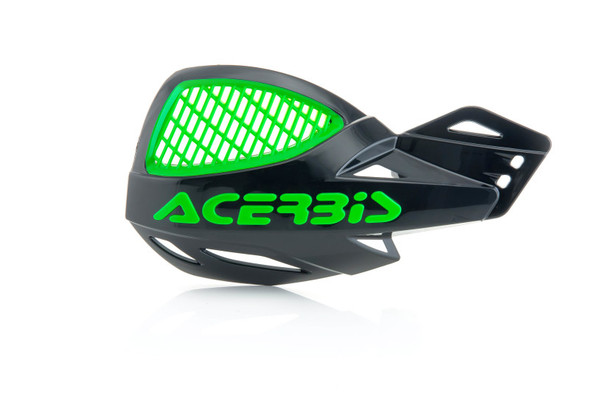
Acerbis Vented Uniko Handguard - Black/Green - 2072671043
Acerbis
MSRP: $45.95$36.22The Vented Uniko features a large vent to direct airflow past the leversThe Vented Uniko features a large vent to direct airflow past the leversUniversal PA 6.6 mounting bracket suitalbe for all MX bikesPolypropylene guard with printed Acerbis logoMSRP: $45.95$36.22 -
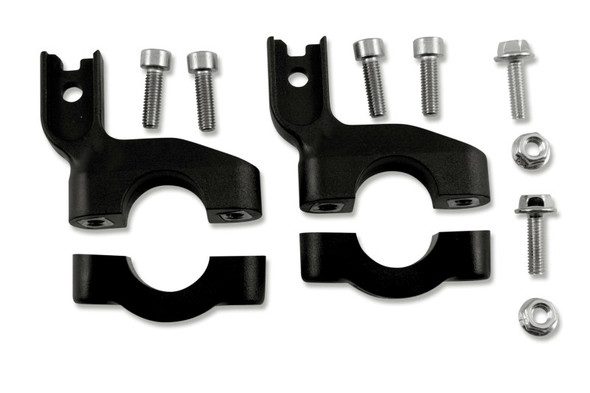
Acerbis Uniko Aluminum Handguard Mount - Black - 2041800001
Acerbis
$22.08Universal mount kit allows the guards to be positioned independently of the angle of the leversUniversal mount kit allows the guards to be positioned independently of the angle of the levers$22.08
Hand guards are the first line of defense for your controls, protecting brake and clutch levers from impact, brush, and rotor wash while simultaneously shielding your hands from debris and wind blast. Motor Sport Mayhem stocks 223 hand guard options across 16 brands — from budget-friendly bark busters to full wrap competition units engineered for hard enduro and expedition riding.
Our Top Picks for Hand Guards
Every product below was selected based on verified performance data, construction quality, and proven results across street, trail, and competition applications.
ACB Endurance X
Acerbis | $158.12
A full-wrap hard shell guard built for ADV and enduro punishment, pairing high-impact polypropylene outer structure with reinforced inner mounting that absorbs and redirects energy rather than transferring it to the bar clamp.
- Dual-compound construction distributes impact load — reduces lever breakage probability versus open-ended guard designs
ABR Accel Pump Rebuild Kits
All Balls Racing | $25.13
A precision rebuild kit that restores accelerator pump function to factory spec, eliminating throttle hesitation caused by worn seals and degraded check valves in carbureted performance applications.
- OEM-spec toleranced components restore fuel delivery consistency — directly affects throttle response and control feel
BKM Heated Grips
BikeMaster | $113.99
Heated grip system with an integrated LCD controller that delivers consistent warmth across five heat settings — a critical comfort and safety upgrade for cold-weather street and touring applications.
- LCD switch provides real-time heat level feedback — eliminates guesswork and prevents overheating that degrades grip compound
BKC Mid Controls
Bikers Choice | $958.99
A complete extended mid-control conversion kit that repositions foot controls forward for improved ergonomics and rider triangle geometry without requiring fabrication or custom hardware.
- 2-inch extension changes rider weight distribution measurably — affects both comfort on long hauls and stability during spirited riding
BUR Handlebars
Burly Brand | $531.95
A 12-inch rise handlebar machined from high-tensile steel with precision bend geometry that dramatically alters riding posture for a more upright, commanding seating position on custom and touring builds.
- 12-inch rise requires cable and line extensions on most applications — plan the full controls upgrade to avoid tension and routing issues
CRG RC2 Clutch
CRG Constructors | $199.95
A fully adjustable billet aluminum clutch lever assembly with a universal fitment design and eight-position reach adjustment — engineered for riders who demand precise engagement point control.
- CNC-machined pivot and blade geometry reduce fatigue during high-frequency clutch use in racing and technical trail environments
CYC Probend Ultra
Cycra | $192.78
A competition-proven hand guard system featuring a high-clamp mount designed for 1-1/8 inch bars, combining a rigid aluminum backbone with a replaceable polycarbonate deflector for maximum impact resistance.
- HCM clamp system distributes load across the bar rather than concentrating stress at a single mount point — significantly extends bar and guard service life
HRL E-bike Foot Pegs
Hardline | $70.14
Platform foot pegs designed specifically for electric bike applications, delivering improved grip surface area and a lower center of gravity contact point that enhances stability during aggressive trail riding.
- E-bike specific mounting dimensions ensure proper fitment without the slop or misalignment that results from using generic MX pegs on electric platforms
KUR Floorboards G
Kuryakyn | $699.99
A chrome driver floorboard kit that replaces stock pegs with a wider, articulating platform — reducing vibration transmitted to the foot and improving long-distance rider comfort on touring applications.
- Articulating platform pivots with foot movement — eliminates the ankle fatigue that develops over multi-hour highway stretches on rigid peg setups
NAT Footpeg Hardware
National Cycle | $40.46
A precision-machined footpeg bracket in black finish that provides the dimensional foundation for proper peg positioning, ensuring correct leverage geometry when upgrading or relocating foot controls.
- 76mm specification matches factory dimensional standards — critical for maintaining correct brake and shift lever alignment after a peg swap
How to Choose the Right Hand Guards
The single most important decision in a hand guard purchase is mount system design — not the deflector material. A guard is only as strong as its attachment to the bar, and the vast majority of field failures happen at the mount, not the shield. Open-end guards attach only at the bar clamp and leave the outer tip unsupported; full-wrap systems tie into both the bar clamp and the bar end, creating a rigid triangle that resists rotational and lateral impact forces. For serious off-road use, full-wrap is not optional — it is the minimum effective standard.
Key Specifications
Bar diameter compatibility is the first hard constraint. The two standard diameters are 7/8 inch (22mm) and 1-1/8 inch (28.6mm) — sometimes called "fat bar" — and the clamp bore on your guard must match exactly. Running a guard on an undersized clamp creates micro-movement that fatigues aluminum and cracks composite mounts over time. Confirm your bar diameter before ordering and verify whether the guard kit includes adapters for alternative diameters.
Deflector material determines both protection level and repairability. High-density polyethylene (HDPE) and polypropylene shields resist shattering on cold-weather impacts and can be replaced independently of the aluminum backbone on modular systems. Full polycarbonate deflectors offer higher rigidity but are more prone to cracking at low temperatures. For expedition and overlanding use cases where replacement parts availability is limited, prioritize guards with independently replaceable shield components over integrated one-piece designs.
Backbone construction on competition-grade guards is almost universally 6061-T6 aluminum — the same alloy used in aircraft structural components. Look for wall thickness specifications when available; a 2mm minimum wall on the backbone is the threshold for real-world crash worthiness. Stamped steel backbones on budget units are heavier and more prone to permanent deformation on first impact, whereas extruded or CNC-machined aluminum backbones absorb and spring back from glancing blows. For controls integration, confirm the guard does not interfere with lever sweep or bar-end weight installation.
Fitment geometry matters beyond just bar diameter. The offset between the clamp center and the deflector's leading edge determines how much lever coverage you actually achieve — a guard that sits 20mm too far inboard leaves your lever tips exposed in exactly the spot where rocks and brush make contact first. Check manufacturer coverage diagrams or installed photos against your specific lever configuration before committing, especially if you run aftermarket adjustable levers with longer blade profiles.
Hand Guard Mount Type vs. Recommended Application
| Mount Type | Bar Diameter Support | Impact Resistance | Best Application |
|---|---|---|---|
| Open-End Single Clamp | 7/8" and 1-1/8" (adapter) | Low — rotates on impact | Street commuting, light trail |
| Full-Wrap Dual Mount | 7/8" and 1-1/8" | High — triangulated structure | Enduro, hard trail, ADV |
| HCM / High Clamp Mount | 1-1/8" primary | Very High — distributed load | Competition MX, hard enduro |
| Bark Buster (wrap + tip) | 7/8" standard | Medium-High | Woods riding, trail enduro |
| Touring Wind Deflector | 7/8" standard | Low — not impact rated | Highway wind and weather only |
| Integrated Bar-End | 22mm bar end bore | Medium | Street sport, naked bike |
Price Guide
Entry ($1.99–$49): Covers basic open-end brush guards, replacement deflectors, mounting hardware, and bark buster-style single-clamp units. Functional for light trail and street use but will not withstand a significant impact without rotating or deforming. Appropriate for casual riders or as a starting point before a full competition build.
Mid-range ($49–$200): This is where the majority of serious riders land and for good reason — full-wrap aluminum backbone systems, modular replaceable shields, and dual-clamp mounts all exist at this price point. Construction quality jumps significantly, impact resistance becomes genuinely useful, and fitment accuracy improves. Most ADV, enduro, and trail riders should not need to go above this tier.
Premium ($200–$1524.95): Complete control system overhauls including premium floorboard kits, full handlebar and control conversions, and race-specification guard and mounting systems fall here. Justified for full custom builds, serious competition applications, or touring setups where ergonomics and durability over tens of thousands of miles make the investment rational. Not necessary for recreational riding.
Who Is This For?
Hand guards and associated controls hardware serve a wide range of riders — from weekend trail explorers to full-time expedition riders to club racers — and the usage data from our catalog reflects that breadth clearly.
Weekend Off-Roading — 8.2/10
Off-road use is the highest-scoring application in our catalog at 8.2 out of 10, and that reflects the reality of how hand guards are used in the field. Branch strike, rock deflection, and tip-over lever protection are constant hazards on trail and enduro riding, and a quality guard is one of the few upgrades that pays for itself on the first ride. The 109 products in this use-case segment span the full range from basic open-end units to competition full-wrap systems — matching budget and capability to riding intensity is the key selection decision here.
Racing Competition — 7.5/10
Competition applications score 7.5 out of 10 across 157 products, driven by the requirement for guards that can withstand repeated contact without transferring destructive force to the bar or lever. Race-specification mounts use load-distributing clamp systems and replaceable shield components specifically because consumable parts in a race environment must be swappable quickly at the trailer. The lever and control hardware in this segment prioritizes zero-slop pivots and consistent engagement point geometry over cosmetics.
Track / Autocross — 7.5/10
Track use matches the competition score at 7.5 out of 10 across 109 products, with the emphasis shifting slightly toward controls ergonomics and repeatability rather than impact protection alone. Adjustable lever systems that allow precise reach setting are valued here because consistent hand position directly affects lap time consistency. Wind deflection is less relevant on a closed circuit; structural integrity and control precision are the dominant selection criteria.
Street Performance — 7.2/10
Street use scores 7.2 out of 10 across 187 products — the largest product pool in the matrix — reflecting the broad range of street riders who use this category. Urban commuters want lever protection from slow-speed tip-overs and traffic-lane brush contact; sport riders want wind management and aesthetic integration. Mid-range full-wrap guards satisfy both requirements and are the most versatile choice for street-primary applications.
Overlanding / Expedition — 7.2/10
Overlanding scores 7.2 out of 10 across 72 products, with selection criteria that emphasize durability over absolute weight and repairability over performance. An expedition rider thousands of miles from the nearest dealer needs a guard system that can take repeated low-speed impacts on rough tracks without requiring specialized tools or replacement parts to restore function. Full-wrap systems with independently replaceable polypropylene shields are the correct choice for this application category.
Trusted Hand Guards Brands We Carry
The brands that dominate this category have earned their positions through engineering credibility and real-world validation — not marketing spend. Cycra pioneered the full-wrap aluminum backbone guard design that is now the competition standard, and their HCM clamp geometry is copied throughout the industry. Acerbis brings decades of European enduro and motocross OEM supply experience to their guard designs, with deflector compounds developed specifically for cold-weather impact resistance. ProTaper's involvement in this space connects handlebar and guard geometry as a system — their bar taper dimensions inform guard clamp design across the industry. Renthal, whose handlebars are used by more motocross world champions than any other brand, supplies bars and controls hardware that sets the dimensional standard competitors design around. Kuryakyn leads the touring and custom segment with chrome and billet finishing standards that match factory-level quality, while CRG Constructors brings Italian racing lever engineering — including the kind of precision pivot tolerances found on GP machinery — to the aftermarket controls space.
Frequently Asked Questions
Are 36cm handlebars too narrow for most riding styles?
36cm (approximately 14.2 inches) is significantly narrower than the 800–810mm (31.5 inches) that most modern enduro and trail-focused bikes run from the factory, and for off-road applications it is genuinely restrictive. Narrow bars reduce leverage, make slow-speed technical riding harder to manage, and limit your ability to weight the front wheel effectively in steep terrain. For street and track use, narrower bars are more contextually appropriate — sportbike geometry benefits from reduced width — but 36cm remains on the short end even there. Measure your specific application against shoulder width and intended use before dismissing width as a purely personal preference issue.
Are adjustable clutch and brake levers actually worth the upgrade cost?
Yes, with a specific caveat: they are worth it if you ride more than casually and if the adjustability range matches your hand size and riding style. The core benefit is not luxury — it is that a properly reach-adjusted lever allows you to maintain a fuller grip on the bar while still covering the lever, which reduces fatigue and improves reaction time on emergency inputs. For competition use, the ability to dial in engagement point repeatability is a measurable performance advantage. Budget adjustable levers with stamped steel blades and plastic pivots defeat the purpose — invest in billet aluminum units with steel pivot hardware for durability that justifies the cost.
Are aftermarket foot pegs worth replacing the stock units?
On most stock motorcycles, the factory footpegs are designed to the minimum acceptable specification for cost reasons — folding pins wear quickly, grip patterns are shallow, and platform size is often smaller than optimal for active riding. Aftermarket pegs in the mid-range price tier typically offer wider platforms, deeper grip teeth or interchangeable grip inserts, and harder-wearing pivot hardware. The performance difference is most pronounced in off-road and track use where active foot position changes affect body English and bike control. For purely urban commuting on smooth roads, the upgrade is cosmetic more than functional.
Are aluminum throttle tubes a meaningful upgrade over stock plastic?
Aluminum throttle tubes reduce flex under hard grip, which translates to more consistent throttle input feel — particularly relevant for riders who grip aggressively in rough terrain or during hard acceleration. The dimensional consistency of a machined aluminum tube also means the snap-back spring rate behaves more predictably over time, whereas plastic tubes can deform slightly at elevated temperatures and develop binding. The weight delta is minimal in absolute terms but the stiffness improvement is real and perceptible on the first ride. Confirm bore diameter compatibility with your throttle cable housing before ordering — a tube that binds due to a 0.5mm diameter mismatch is worse than the stock unit it replaced.
Are bar end weights worth installing and do they actually reduce vibration?
Bar end weights work on a straightforward mechanical principle — adding mass at the tip of the handlebar raises the resonant frequency of the bar assembly, which shifts harmful vibration nodes out of the frequency range your hands are most sensitive to. On bikes with high-frequency engine vibration (particularly parallel twins and inline fours at certain RPM ranges), the difference between stock hollow bar ends and weighted units is immediately perceptible during sustained highway riding. The fatigue reduction on long rides is not placebo — hand numbness and wrist soreness correlate directly with vibration transmission, and properly spec'd bar end weights address the root cause rather than masking it with gel grips. Match the weight to your bar diameter and confirm thread pitch compatibility before installation.
Building something specific? Our performance specialists can help you select the right Hand Guards for your application — street, track, or full race build.