
Brake Rotors - OE - Cryo
- Product
- Qty in Cart
- Quantity
- Price
- Subtotal
-
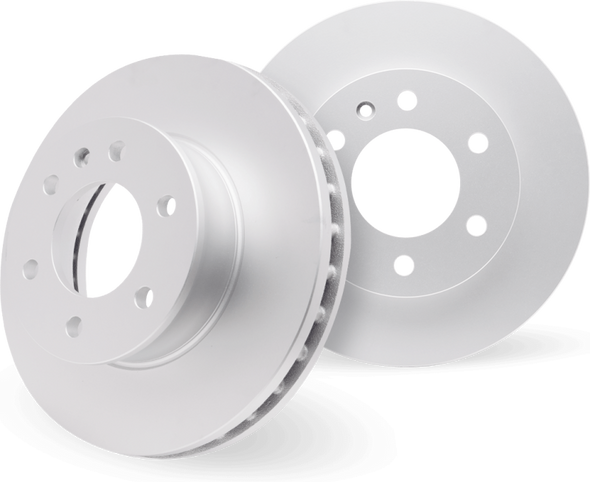
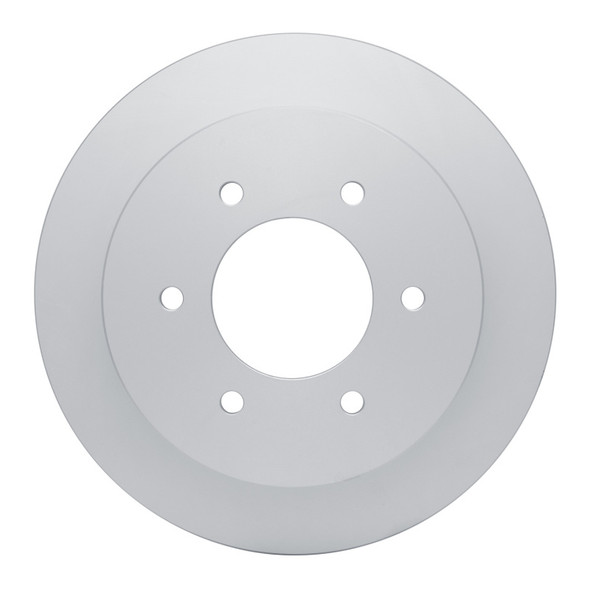
DFC 24-25 Ford Ranger (Usa/Canada) Rear GEOSPEC Coated Rotor - 604-54312
DFC
$98.89Are DFC GeoSPEC Coated Rotors - Plain a direct bolt-on replacement?DFC GeoSPEC Coated Rotors - Plain are engineered for a direct bolt-on installation, confirming fitment ensures seamless integration with your vehicle's braking system.What is the main...$98.89 -

DFC 16-25 Audi Q3 Rear Hi-Carbon Alloy Geomet Coated Rotor - 900-73082
DFC
$65.10What is the primary benefit of using DFC Geomet Coated Rotors?DFC Geomet Coated Rotors deliver consistent stopping power and a smooth, quiet ride by optimizing heat dissipation for extended brake life.Are these rotors easy to install?Professional...$65.10 -

DFC 11-18 Audi A6 (USA/Canada) Rear Hi-Carbon Alloy Geomet Coated Rotor - 900-73063
DFC
$98.65Are DFC Geomet Coated Rotors - Plain compatible with my vehicle?DFC Geomet Coated Rotors - Plain offer precise fitment; confirm compatibility with your specific vehicle's make, model, and year before purchase for optimal performance.What is the...$98.65 -


DFC 16-23 Mercedes-Benz GLC43 AMG Rear Hi-Carbon Alloy Geomet Coated Rotor - 900-63162
DFC
$89.82Are DFC rotors a good direct OE replacement?DFC Geomet Coated Rotors offer precise OE vane configuration and mill-balancing for a seamless direct replacement, ensuring confident fitment for your vehicle.How long will DFC rotors last?Achieving optimal...$89.82 -


DFC 16-25 BMW M440iX Rear Hi-Carbon Alloy Geomet Coated Rotor - 900-31130
DFC
$99.47What is the difference between cryo treated brake rotors and standard brake rotors?Cryo treated Brake Rotors - OE - Cryo undergo extreme cold, reducing molecular stress for enhanced durability compared to standard rotors.Can I install these rotors...$99.47 -


DFC 23-25 Mazda CX-50 Rear GeoSPEC Coated Rotor - 604-80085
DFC
$60.23Are these rotors pre-coated or do they need to be coated before installation?DFC GeoSPEC Coated Rotors arrive ready for immediate installation, eliminating the need for any additional pre-degreasing preparation.How long do DFC GeoSPEC Coated Rotors...$60.23 -


DFC 22-25 Mazda CX-50 Front GeoSPEC Coated Rotor - 604-80084
DFC
$92.38What is cryo treatment for brake rotors?Cryo treatment subjects Brake Rotors - OE - Cryo to extreme sub-zero temperatures, enhancing molecular structure for improved durability and reduced warping.Are these brake rotors performance-oriented or daily...$92.38 -


DFC 14-25 Mazda CX-3 Rear GeoSPEC Coated Rotor - 604-80079
DFC
$36.10Ready To Install - No Additional Pre-Degreasing Preparation Needed (Saves Time And Money During Installation Process)Ready To Install - No Additional Pre-Degreasing Preparation Needed (Saves Time And Money During Installation Process)100% Precision Cut...$36.10 -


DFC 18-25 Lexus UX300h Front GeoSPEC Coated Rotor - 604-76154
DFC
$76.14Are these brake rotors coated?DFC GeoSPEC Coated Rotors provide superior corrosion protection, outperforming conventional painting and zinc plating for a lasting aesthetic and enhanced durability.Are these brake rotors cryogenically treated?These DFC...$76.14 -


DFC 06-18 Lexus HS250H Rear GeoSPEC Coated Rotor - 604-76134
DFC
$54.09Are DFC GeoSPEC Coated Rotors the same as OEM?DFC GeoSPEC Coated Rotors are designed to meet the same form, fit, and function as original equipment brake rotors for your 2006-2018 Lexus HS250h, Toyota RAV4.How should DFC GeoSPEC Coated Rotors be...$54.09 -

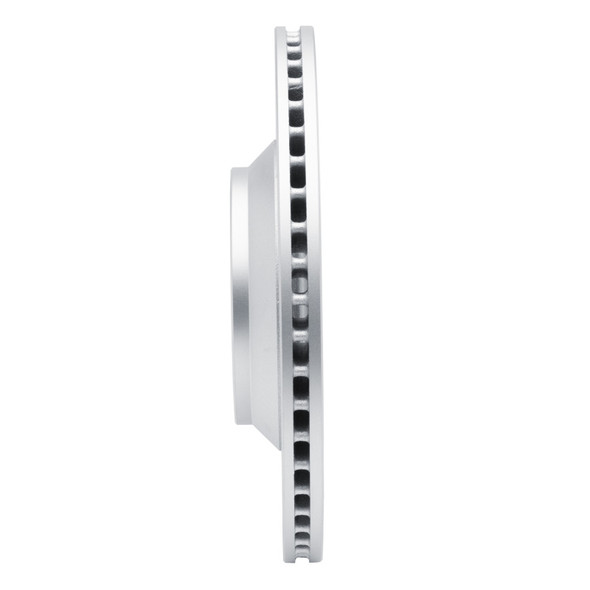
DFC 06-25 Audi RS Q3 (Mexico) Rear GeoSPEC Coated Rotor - 604-74030
DFC
$66.31Are these rotors coated to prevent rust?DFC GeoSPEC Coated Rotors provide superior corrosion protection over conventional painting for lasting durability and a cleaner appearance.What is the expected lifespan of these rotors?Engineered with premium...$66.31 -
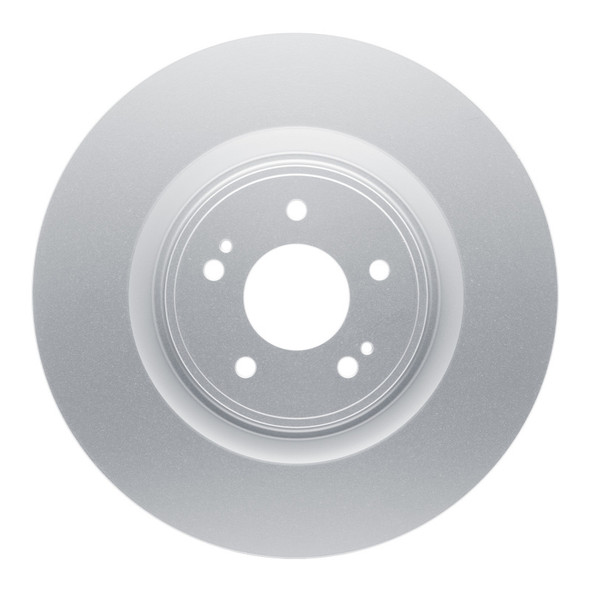

DFC 08-15 Mitsubishi Lancer Front GeoSPEC Coated Rotor - 604-72043
DFC
$100.01Are DFC GeoSPEC Coated Rotors direct bolt-on replacements for my vehicle's original rotors?DFC GeoSPEC Coated Rotors are engineered for direct bolt-on installation, ensuring they meet the same form, fit, and function as your OEM brake rotors.Do these...$100.01
Cryogenically treated OE brake rotors undergo a deep freeze process — typically down to -300°F using liquid nitrogen — that relieves internal stress in the iron matrix, refines grain structure, and produces measurable improvements in wear life, thermal fatigue resistance, and dimensional stability over standard OE replacements. Motor Sport Mayhem stocks 104 cryo-treated OE rotor options across 53 brands, ranging from direct-fit daily-driver replacements to high-spec units engineered for sustained track use.
Our Top Picks for Brake Rotors - OE - Cryo
Each of these products was hand-selected based on engineering quality, real-world performance data, and value within its application bracket.
ALC Front Brake Kits
Alcon | $3,450.00
Race-proven monobloc caliper and rotor package engineered for extreme thermal load in heavy-vehicle applications demanding consistent stopping power.
- Alcon's motorsport-grade rotor metallurgy pairs directly with cryo-treatment principles for extended rotor service life under repeated high-load stops
ABR Caliper Rebuild Kits
All Balls Racing | $73.99
Complete caliper rebuild solution that restores hydraulic integrity and ensures your cryo rotor investment isn't undermined by worn caliper hardware.
- Precision-fit seals and hardware maintain even pad pressure across the rotor face, which is critical to realizing the full wear benefits of cryo treatment
AMS Brake Lines
AMS | $144.95
Stainless steel braided brake lines eliminate pedal sponge under heat, ensuring the pressure your cryo rotors and calipers generate translates to firm, predictable deceleration.
- Braided stainless construction withstands brake fluid temperatures that cause rubber line expansion, a common failure point in performance driving scenarios
ART ABS Kits
Artec Industries | $98.99
Factory-spec ABS tone ring conversion kit that restores proper ABS function when upgrading to larger axle assemblies paired with cryo-treated rotor setups.
- Magnetic tone ring design maintains accurate wheel speed signal integrity essential for ABS calibration with upgraded brake systems
BKM Brake Rotors
BikeMaster | $264.99
OE-specification motorcycle rotor built to tight dimensional tolerances, offering a direct-fit cryo-treatment-ready platform for powersports brake system reliability.
- Consistent rotor thickness variation (RTV) within OE spec ensures uniform pad contact — the baseline requirement before cryo treatment multiplies its benefit
BKC Brake Caliper
Bikers Choice | $399.99
OE-replacement caliper machined to factory specifications, ensuring hydraulic performance matches the improved surface hardness and wear resistance of cryo-treated rotors.
- Black-anodized finish resists corrosion in the same thermal cycling environment where cryo rotors excel, maintaining system integrity long-term
BX Brake Master Cylinders
BLOX Racing | $124.80
Upgraded master cylinder that improves hydraulic pressure consistency, ensuring the full stopping capability of cryo-treated rotors is never limited by brake system upstream components.
- Bore sizing matched to OE caliper pistons maintains proper pedal ratio and pressure delivery without requiring caliper modification
BMR Brake Kits for Conversions - D&S
BMR Suspension | $1,339.95
Complete big brake conversion kit combining drilled and slotted rotors with a matched caliper, delivering a turn-key upgrade path from OE cryo to full competition hardware.
- 15-inch rotor diameter conversion provides significantly greater thermal mass for sustained track session braking without fade
BRB Big Brake Kits
Brembo | $1,995.00
Brembo's GT series big brake kit represents the direct evolution from OE cryo rotor principles, integrating larger swept area and multi-piston clamping force in a race-validated package.
- Two-piece rotor construction with floating aluminum hat reduces unsprung weight while the steel friction ring retains all thermal absorption benefits
BRE OE Equivalent Rotors
Brembo OE | $1,798.75
Factory-spec OE replacement rotor and caliper kit from the same supplier that built the original system, delivering OEM fitment accuracy with Brembo's production-grade metallurgy.
- OEM-supplier sourcing means rotor metallurgy, hat geometry, and vane count are identical to factory spec — the correct foundation for any cryo post-treatment
How to Choose the Right Brake Rotors - OE - Cryo
The cryogenic treatment process is only as good as the base rotor it starts with — a poorly cast rotor with inconsistent carbon content or excessive porosity will not respond to cryo treatment the same way a high-grade grey iron rotor will. What separates a legitimate cryo rotor from a marketing claim is the combination of base material quality, treatment depth (a true deep cryo process reaches -300°F and holds for 20–24 hours, not a shallow -100°F dip), and post-treatment dimensional verification. Rotor thickness variation (RTV) must measure within 0.0005 inches on a finished cryo rotor; anything beyond that will cause brake pedal pulsation regardless of how well the iron was treated. Look for suppliers with documented cryo process specs, not just the word "cryo" stamped on the packaging.
Key Specifications
Base material matters more than any coating or treatment applied afterward. Grey cast iron with a controlled carbon equivalent (CE) between 3.8 and 4.3 provides the right balance of hardness and thermal conductivity for cryo treatment to meaningfully refine the pearlitic matrix. Rotors cast outside this range — either too soft (high CE) or too brittle (low CE) — won't see the same wear life improvements post-treatment. Always verify that a cryo rotor spec sheet references the alloy composition, not just the treatment claim.
Rotor diameter and minimum thickness specifications must be verified against your caliper's swept area and the vehicle's gross weight. A rotor that's undersized for the thermal load it will see will overheat regardless of cryo treatment — the metallurgical improvement buys you wear life and stress resistance, not unlimited thermal capacity. As a general rule, vehicles over 4,000 lbs require rotors with a minimum diameter of 320mm front to manage sustained deceleration without exceeding peak operating temperature of approximately 1,200°F for grey iron.
Vane geometry on the interior of a ventilated rotor controls airflow and, therefore, heat rejection rate. Curved vane designs (also called pillar vane or directional vane) flow more air than straight radial vanes at equivalent rotor thickness — on a cryo-treated rotor, this means the grain-refined iron surface operates at lower sustained temperatures, preserving the crystalline structure improvement for longer. Directional vane rotors must be installed on the correct side of the vehicle; cross-installation reverses airflow and negates the benefit entirely.
When evaluating fitment, hat height and hub bore diameter are the two dimensions most commonly responsible for installation problems. A hat that sits 1–2mm too tall will create caliper-to-knuckle clearance issues; a hub bore even 0.5mm undersized will prevent full rotor seating against the hub face, introducing runout immediately. OE cryo rotors sourced from OEM-tier suppliers — Brembo OE, DBA, and Stoptech among them — undergo CNC-machined hub bores as a standard production step, not an afterthought.
Cryo Rotor Sizing Reference: Rotor Diameter vs. Vehicle Weight and Use Case
| Vehicle Weight (lbs) | Recommended Min. Front Rotor Diameter | Recommended Min. Rear Rotor Diameter | Primary Use Case |
|---|---|---|---|
| Under 2,800 | 280mm | 258mm | Daily driving / light street performance |
| 2,800 – 3,500 | 300mm | 280mm | Street performance / occasional autocross |
| 3,500 – 4,200 | 320mm | 300mm | Street performance / track days |
| 4,200 – 5,000 | 350mm | 320mm | Track / towing / high-performance street |
| 5,000 – 6,500 | 380mm | 345mm | Heavy towing / truck performance / off-road |
| Over 6,500 | 400mm+ | 380mm+ | Competition / heavy truck / desert running |
Price Guide
Entry ($0.20–$138): This range covers OE-spec replacement rotors for powersports, ATV, and compact passenger vehicles where cryo treatment provides incremental wear life improvement over standard replacements. Castings at this price point are functional, but base material verification is harder — buy from brands with published metallurgy data, not just a cryo marketing claim. Best suited for maintenance-replacement buyers on lighter platforms.
Mid-range ($138–$900): The majority of serious street and track buyers land here, and for good reason — this bracket contains the highest density of rotors combining verified cryo process depth, CNC-machined fitment surfaces, and engineered vane geometry. Brands like Stoptech, DBA, PowerStop, and R1 Concepts all occupy this range with products that have documented real-world track validation. This is where cryo treatment delivers its most cost-effective return on investment.
Premium ($900–$3,743.73): At this level you're buying OEM-supplier-grade components — the exact rotor specification used by factory racing programs or high-end OE fitment on production supercars and heavy-duty trucks. Brembo OE, Alcon, and Wilwood dominate this bracket, and the cost is justified by tighter metallurgical control, floating two-piece construction, and full system engineering rather than a single component. This is the correct choice for sustained competition use, heavy towing at high GVWR, or direct OE replacement on factory high-performance brake systems where spec deviation has warranty consequences.
Who Is This For?
Cryo-treated OE brake rotors span a wide application range — from daily commuters wanting longer rotor life to full competition builds demanding metallurgical consistency under repeated thermal cycling.
Street Performance — 8.3/10
This is the highest-scoring use case in the category for good reason: cryo-treated OE rotors deliver a tangible, measurable improvement over standard replacements in exactly the conditions street performance driving creates — repeated hard stops from speed, sustained mountain road descents, and the thermal cycling of spirited driving followed by cool-down in traffic. The grain-refined iron surface resists the micro-cracking and heat checking that cause standard rotors to develop pedal pulsation after 20,000–30,000 miles of aggressive use. For drivers who want OE fitment and feel with meaningfully better durability, cryo OE rotors are the most logical single upgrade in the brakes, rotors, and pads category.
Track / Autocross — 7.8/10
Track and autocross applications expose rotors to thermal cycles that standard OE iron cannot handle consistently — repeated stops from 100+ mph generate rotor surface temperatures exceeding 900°F, and the rapid cool-down between stages accelerates thermal fatigue cracking in non-treated iron. Cryo treatment's primary benefit at the track is stress relief: the process eliminates residual casting stresses that become crack initiation sites under cyclic thermal loading. The 7.8/10 score reflects that serious track applications often ultimately graduate to slotted or slotted and drilled rotors with more aggressive venting, but cryo OE is the correct entry point for HPDE drivers not yet generating enough heat to justify that step.
Racing Competition — 7.5/10
In regulated classes where OE rotor specifications are mandated, cryo treatment is one of the few legal modifications available to improve rotor service life without violating class rules — this alone drives significant demand from club racers and time attack competitors. The 7.5/10 reflects the genuine limitation that pure racing applications generating extreme and sustained thermal loads eventually need rotors engineered from the ground up for competition, not OE designs with cryo post-treatment. That said, for endurance racing in stock or street-tire classes, cryo OE rotors routinely last two to three times longer than untreated equivalents under identical duty cycles.
Easy DIY Install — 7.4/10
Cryo-treated OE rotors carry the same installation profile as standard OE replacements — no adapters, no bracket modifications, no caliper spacers required on direct-fit applications. The 7.4/10 score reflects that this category is genuinely accessible to a home mechanic with basic tools; hub cleaning, proper torque sequencing on the hat mounting bolts, and a bedding procedure are the only critical steps. Pair the rotor swap with fresh OE brake pads or performance brake pads to ensure proper bedding and avoid glazing the new rotor surface.
Heavy Towing — 7.0/10
Towing at or near GVWR creates sustained thermal loading that accelerates rotor wear faster than almost any other road-use scenario — trailer weight shifts brake bias rearward under deceleration, overworking rear rotors, and downhill grades with loaded trailers generate brake temperatures that conventional OE rotors handle poorly over time. Cryo treatment improves wear life and reduces heat checking in exactly this environment, and the 7.0/10 score reflects strong but application-specific value. Buyers in this segment should verify rotor diameter meets the sizing recommendations in the table above for their actual tow weight before selecting a cryo OE option.
Trusted Brake Rotors - OE - Cryo Brands We Carry
The brands that define this category earn their position through engineering depth, not marketing spend. Brembo OE supplies brake systems directly to major vehicle manufacturers and brings the same metallurgical control to its aftermarket OE equivalent line that its factory contracts demand. DBA (Disc Brakes Australia) pioneered the T3 slotting and cryo process combination and publishes independent wear test data to back its performance claims. Stoptech's parent-company relationship with racing programs gives its OE cryo line real-world validation data that purely catalog-sourced brands cannot match. PowerStop and R1 Concepts both deliver verified cryo treatment at price points that make the technology accessible to daily drivers and weekend track enthusiasts without compromising base material quality. At the top end, Wilwood and Alcon source their rotor iron from controlled foundries with documented CE specifications, ensuring cryo treatment is applied to a consistent, high-grade substrate every time — a standard that separates genuine performance hardware from commodity parts carrying a cryo label.
Frequently Asked Questions
Are aftermarket brake calipers any good?
Quality aftermarket brake calipers from established manufacturers are not just "good" — in many cases they outperform OE units in specific performance metrics. The critical variables are bore finish quality (which directly affects seal longevity and piston retraction), caliper body stiffness (aluminum monoblock designs eliminate the flex inherent in multi-piece OE cast iron calipers), and piston material compatibility with high-temperature brake fluid. Brands like Brembo, Wilwood, and Stoptech manufacture calipers to tighter tolerances than many OEM suppliers, using aerospace-grade aluminum and phenolic or titanium piston materials that reduce heat transfer from pad to fluid. The caveat is fitment: an aftermarket caliper with correct hydraulic specs but imprecise mounting geometry introduces runout and uneven pad wear that negates every engineering advantage.
Are Akebono brakes better than OEM?
Akebono is an OEM supplier — they manufacture original equipment brake components for numerous major vehicle brands, so the comparison between "Akebono" and "OEM" is often a comparison between the same manufacturer's product at different specification levels. Their aftermarket ceramic pads and rotors use the same ceramic compound formulation developed for factory fitment, which means lower dust output, lower operating noise, and good initial bite without the aggressive fade resistance of a full racing compound. For daily driving and mild street performance, Akebono products consistently meet or exceed the original factory specification because they're engineered to that exact standard. Where they fall short is sustained high-heat performance: ceramic formulations optimized for quiet street use lose friction coefficient at track temperatures above 700°F, which is where a high-performance sintered or semi-metallic compound on a cryo-treated rotor becomes the better choice.
Are black coated rotors worth it?
The functional value of a black coating on a brake rotor depends entirely on where the coating is applied. Zinc-flake or e-coat finishes applied to the hat, vanes, and non-swept areas of the rotor prevent corrosion in those regions during storage and break-in, which is a genuine benefit — rust contamination from an uncoated hat migrating onto the swept surface causes early brake judder. The coating on the swept area itself burns off within the first few heat cycles and contributes nothing to long-term performance. Black coatings marketed as friction surface treatments are cosmetic after the first week of driving. Where cryo treatment provides lasting metallurgical benefit throughout the rotor's service life, a surface coating's "benefit" is measured in days. Choose rotors based on base material quality and treatment process depth; the color is irrelevant to stopping power.
Are ABS tone rings magnetic?
Standard passive ABS tone rings — the toothed or windowed metal rings most commonly found on older and mid-range vehicles — are ferromagnetic, meaning they are made from low-carbon steel that a magnetic sensor can detect as each tooth passes. The variable reluctance sensor reads the magnetic field disruption created by each tooth passing at a frequency proportional to wheel speed, which the ABS module uses to calculate deceleration rate and intervene when wheel lock is detected. Active tone rings used in newer systems embed alternating magnetic poles directly into a rubber ring — these generate their own signal and allow sensors to detect both speed and rotation direction, enabling advanced stability and torque vectoring systems. When upgrading brake hardware, it's critical to verify that the tone ring specification (tooth count and ring diameter) matches the vehicle's ABS sensor calibration; a mismatch in tooth count alters the wheel speed calculation and can trigger false ABS activation or fault codes.
Are backing plates necessary?
Brake backing plates — also called dust shields or splash shields — serve a functional purpose that becomes more important in certain operating environments than others. They prevent road debris, mud, and water from being flung directly onto the rotor surface from the inboard side, which matters significantly in off-road use, wet climates, and heavy towing where consistent rotor temperature and surface cleanliness affect braking consistency. On a dedicated track car or a clean street build in a dry climate, backing plates contribute minimal functional benefit and are often removed to improve airflow around the rotor and reduce unsprung weight. For cryo-treated OE rotors used in daily driving or towing applications, retaining the backing plate in good condition protects the rotor surface and the wheel bearing behind it from contamination — a corroded or missing backing plate accelerates bearing wear by allowing abrasive debris direct access to the hub area.
Building something specific? Our performance specialists can help you select the right Brake Rotors - OE - Cryo for your application — street, track, or full race build.